
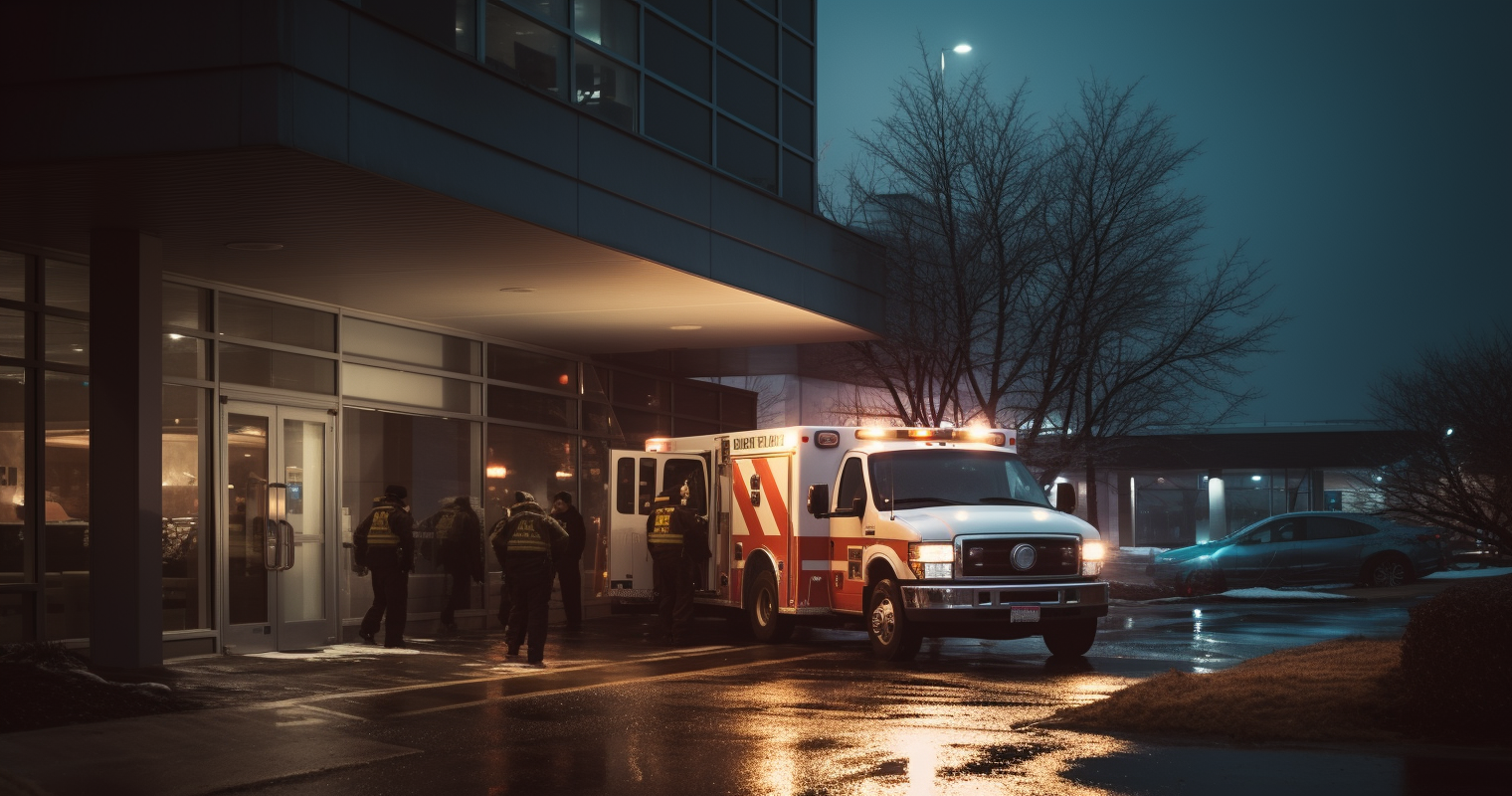
Dealing with emergencies in Venezuela demands thorough advance planning and a clear-eyed view of what official services can realistically deliver. The principal emergency number is 171, covering police, fire, and ambulance, while 911 also functions as a general emergency line (as of 2025). Public hospitals are free to use but are critically under-equipped; private clinics charge fees and generally require upfront payment or proof of insurance. Comprehensive international health insurance — with medical evacuation coverage included — is a non-negotiable requirement for every expat in the country.
| Item | Details |
|---|---|
| Primary emergency number | 171 (police, fire, ambulance — as of 2025); 911 also in use as a general emergency line |
| Public hospital costs | Free at the point of use, but severe supply and staffing shortages (as of 2025) |
| Private clinic emergency room costs | Approximately USD $100–$500 per visit depending on treatment (as of 2025 — verify with provider) |
| International health insurance (typical cost) | Approx. USD $2,000–$5,000 per adult per year; medical evacuation cover strongly recommended |
| Ambulance reliability | Unreliable, particularly outside major cities; private transport often advised for emergencies |
| Major travel advisory level (US State Dept.) | Level 4: Do Not Travel (reissued December 2025) |
What is the primary emergency number in Venezuela, and does it cover all services?
Venezuela does not operate a single universal emergency number in the way that 112 serves most of Europe or 999 covers the United Kingdom. The key emergency numbers are 911, used for general emergencies, and 171, which routes callers to police, fire, and ambulance services. Both numbers are intended to connect callers with the appropriate response agency, though in reality the system does not function as a fully integrated dispatch centre in the way those in many other countries do.
Both numbers are available around the clock and are free to dial from landlines and mobile phones. Response capability varies considerably by location, with major cities such as Caracas, Maracaibo, and Valencia generally faring better than rural regions. If you are outside an urban centre, never assume a prompt response — always maintain backup contacts for private services and your nearest embassy.
Emergency operators are almost exclusively Spanish-speaking, making a working knowledge of the language essential. Response times may be slower than in other countries due to infrastructure pressures. When calling, be prepared to speak clearly in Spanish, provide a precise address — ideally written out in Spanish beforehand — and describe the nature of the emergency concisely.
Always cross-check current emergency numbers with your embassy or a credible official source both before and during your stay in Venezuela, since the telecommunications infrastructure is under considerable strain and services may change without prior notice.
How do you request emergency medical help in Venezuela, and what should you expect when you call?
To call for an ambulance or emergency medical assistance in Venezuela, dial 171 or 911 (as of 2025). Provide your exact location — street name, neighbourhood, and the nearest recognisable landmark — and describe the medical situation clearly in Spanish. Having your insurance details and a Spanish-speaking contact on hand will help ensure smoother access to treatment.
Ambulance services across Venezuela are not dependable. In practice, it is frequently faster and more reliable to take a taxi or arrange for someone to drive the patient directly to a private clinic, rather than waiting for a dispatched ambulance to arrive. This is a fundamental difference from systems in which a government-operated ambulance is the default first response — in Venezuela, getting to a facility under your own arrangements is often the more effective approach.
Venezuela’s Civil Protection agency can also be reached in disaster scenarios at 0800-467-6804, and the Venezuelan Red Cross is contactable at 0212-907-3610. Always confirm that these numbers remain active and accurate before depending on them, as service availability and contact details can shift.
Upon arrival at a facility — particularly a private clinic — you should expect to be asked for identification, insurance documentation, and potentially an upfront deposit before treatment commences. Keep these documents within easy reach at all times.
What steps should you take during a mental health crisis in Venezuela?
Venezuela lacks a widely promoted or nationally recognised dedicated mental health emergency hotline comparable to crisis lines available in many other countries. If you or someone nearby is experiencing an acute mental health crisis — including any risk of self-harm or harm to others — the most practical immediate course of action is to dial 171 or 911, contact a private clinic with a psychiatric unit, or engage your employer’s assistance programme if one is available to you.
Venezuela is contending with extreme shortfalls in medications, equipment, and medical supplies, and a large proportion of doctors and nurses have emigrated in response to low wages and inadequate working conditions, leaving healthcare facilities severely understaffed. Specialist mental health services tend to be the first to suffer when a healthcare system is in crisis, and Venezuela is no exception.
Private clinics in Caracas are considerably more likely to be able to offer psychiatric consultation than public hospitals. If you are an expat, contact your international health insurer’s 24-hour helpline — most comprehensive international policies include a medical assistance service that can direct you to appropriate mental health support or arrange a teleconsultation. In a life-threatening situation, go directly to the nearest private emergency department.
Before relocating to Venezuela, it is strongly advisable to research private mental health providers in your specific area, as availability differs considerably between major cities and smaller communities. Expats managing existing mental health conditions should discuss continuity of care and emergency access with their insurer prior to arrival.
Where can you go for emergency medical treatment in Venezuela?
Healthcare in Venezuela is divided across three systems: a public system open to everyone, a national insurance system known as the Instituto Venezolano de los Seguros Sociales (IVSS), and a private sector made up of both large hospitals and smaller clinics. For expats facing an emergency, the practical choice generally comes down to a public hospital or a private facility.
Public hospitals offer care that is free or heavily subsidised, while private facilities typically provide quicker access, more diagnostic services, and specialist care — particularly in major cities such as Caracas, Maracaibo, Valencia, and Barquisimeto. Given the current condition of public facilities, most expats are strongly advised to seek out a private clinic in any emergency.
Expats predominantly rely on private hospitals and clinics, with Caracas offering the widest range of options. Facilities such as Clínica El Ávila and Hospital de Clínicas Caracas are well regarded among the expatriate community. Institutions including Centro Médico de Caracas and Sanatorio de Los Andes often have more advanced diagnostic imaging capabilities. Before any emergency occurs, prepare a written list of private clinic addresses close to both your home and your place of work.
Waiting times at public facilities can be lengthy, equipment may be outdated, and major surgical procedures or intensive care may ultimately necessitate medical evacuation abroad. For serious emergencies requiring surgery or specialist treatment, contact your international insurer at the earliest opportunity to assess whether evacuation to a neighbouring country is warranted.
Is emergency medical treatment free in Venezuela, and does this differ for residents versus visitors?
Public hospitals (hospitales públicos) are free but are plagued by severe shortages of medicines and equipment. In principle, public hospital care is open to anyone regardless of nationality or residency — neither residents nor short-term visitors are billed for treatment in the public sector. In practice, however, the quality and availability of that care is gravely undermined by persistent supply shortfalls.
Private hospitals remain the preferred option for those seeking prompt, effective medical attention — provided you have the financial means. As a guide to the cost level involved: a routine doctor’s visit at a private clinic typically costs over USD $40, hospitalisation can exceed USD $1,000 per day, and basic surgical procedures can run upward of USD $3,500. These are indicative figures; actual charges vary by facility and treatment and should be confirmed directly with the clinic, as costs are subject to change with economic conditions (as of 2021 reporting — verify current rates with private providers).
Emergency room consultations at private clinics in Caracas generally fall in the range of USD $100–$500 depending on what treatment is required. Private facilities may request payment or evidence of insurance before treatment begins, or ask for an upfront deposit. No national scheme automatically entitles foreign nationals to subsidised private care.
The most important practical distinction is therefore not primarily between residents and tourists, but between public care (free but unreliable) and private care (costly but considerably more dependable). Given the real risk of being unable to meet private clinic costs in an emergency, comprehensive insurance is the single most important safeguard for anyone living in or visiting Venezuela.
Do expats in Venezuela need health or travel insurance to access emergency care, and what happens without it?
International health insurance is indispensable in Venezuela. Local insurance products exist but offer limited coverage and may not be accepted at leading private facilities. The majority of expats choose international plans from providers such as Cigna, Allianz, or BUPA that incorporate medical evacuation coverage — a feature that is critical given the limitations of the local healthcare system.
Any international policy covering Venezuela must include medical evacuation — covering flights to Bogotá or Miami in the event of a serious emergency. Local Venezuelan insurance, while available, is less comprehensive and may not cover treatment at private clinics. Medical evacuation is far from a luxury add-on in Venezuela; given the fragility of the local system, it can be the difference between life and death for conditions requiring surgery, intensive care, or specialist intervention.
If you arrive at a private clinic without insurance or the financial means to pay, you may face delays in receiving care, be redirected to a public hospital, or be required to provide a substantial deposit. Public hospitals will not turn patients away, but the effects of inflation and chronic medicine shortages mean that patients are frequently asked to bring their own food, water, soap, and medical supplies including basic surgical equipment. This reality makes treating the public system as a safety net a significant gamble.
International health insurance plans typically include a medical evacuation benefit covering emergency transport to the nearest suitable city or a neighbouring country such as Colombia. Save your insurer’s 24-hour emergency line in your phone, and make sure a trusted contact knows how to reach your insurer on your behalf if you are incapacitated.
Are there bilateral health agreements between Venezuela and other countries for emergency treatment?
Venezuela is not party to any broad multilateral reciprocal healthcare arrangement comparable to the European Health Insurance Card (EHIC) scheme covering EU and EEA countries, or equivalent Commonwealth arrangements. There are no widely documented bilateral agreements that would automatically entitle nationals from most countries to free or subsidised emergency treatment in Venezuela’s private sector.
Venezuela’s public healthcare system is nominally open to all, regardless of nationality, as noted above — but this reflects domestic policy rather than any formal treaty entitlement, and access in practice is severely constrained by the system’s resource limitations. Some citizens of countries with historically close political ties to Venezuela may encounter certain administrative arrangements, but these are neither standardised nor reliably documented for healthcare purposes.
If you are a national of a country that has a bilateral social security agreement with Venezuela covering the IVSS (the national social security institute), you may theoretically be entitled to access IVSS facilities. However, the IVSS system has itself suffered significant resource constraints. Check with your home country’s social security authority and Venezuela’s IVSS directly for the most current position, as these arrangements can change and are difficult to verify from outside the country in advance.
In the absence of any dependable reciprocal arrangement, expats and visitors from all countries should treat comprehensive international health insurance as a necessity rather than an optional extra when in Venezuela.
How does Venezuela’s emergency healthcare compare to systems expats may know?
Venezuela’s healthcare system is divided between a struggling public sector and a more functional private sector. This dual structure will be broadly familiar to people from countries that operate both public and private healthcare — but the gulf between the two is extreme by any international measure.
Unlike a fully integrated public system such as the NHS in the United Kingdom — where all residents access emergency care through a single network, free at the point of use, with dependable ambulance services and well-stocked emergency departments — Venezuela’s public sector cannot currently be counted on to deliver consistent emergency care. Supply shortages have made healthcare access in emergency situations an ever-worsening problem, with public hospitals reporting medicine shortfalls of up to 95%.
The system is also unlike a well-functioning mixed model such as France’s, where private providers operate within a regulated framework and social insurance covers a substantial share of costs for residents. In Venezuela, the private sector operates largely outside any social safety net for most foreign nationals, meaning costs fall entirely on the individual or their insurer.
The most useful framing for an expat from a country with universal public healthcare is to treat the public system as effectively unavailable for their needs and plan accordingly — approaching Venezuela as a country where, for all practical purposes, expats who can afford to do so must rely on private healthcare, with medical treatment potentially very expensive for those requiring private assistance.
What non-medical emergency services — police and fire — exist in Venezuela?
If your personal safety is at risk at any point, dial 171 to be connected to police. The number 171 is the primary number for police and fire services as well as ambulance, with 911 functioning as an alternative general emergency line (as of 2025). Store both numbers in your phone before you need them.
Police response times are poor or non-existent across most of the country, and the overwhelming majority of reported crimes do not result in prosecution. This represents a significant departure from policing standards in many other nations, and expats should not assume that calling the police will produce a swift response, especially outside Caracas. There are also documented cases of police officers, airport staff, and immigration officials harassing and extorting money from travellers — be alert to this risk and, if it occurs, report it to your embassy where possible.
Violent crimes including homicide, armed robbery, kidnapping, and carjacking are prevalent throughout Venezuela. Political instability and civil unrest add further layers of risk. Protests and demonstrations can erupt quickly and escalate into violence with little warning. Expats should avoid all demonstrations and large gatherings and maintain a well-considered plan for sheltering in place.
Fire services are also reached via 171. As with ambulance services, response times and equipment standards vary considerably by location. In the event of a fire — as in most countries — the priority is to evacuate safely first, then call for assistance. Do not rely solely on official services arriving promptly; ensure your home is equipped with functioning smoke detectors and that you are thoroughly familiar with your building’s evacuation routes.
What country-specific emergency risks face expats in Venezuela?
Venezuela presents a serious combination of security, health, and environmental hazards that expats must fully understand before taking up residence. These include the risks of wrongful detention, terrorism, kidnapping, arbitrary enforcement of local laws, violent crime, civil unrest, and a severely depleted health infrastructure. Multiple governments — including those of the United States, Canada, and the United Kingdom — maintain their highest-level travel advisories for Venezuela as of late 2025.
On the health front, the United Nations estimated in 2019 that 2.8 million Venezuelans had unmet healthcare needs, and preventable illnesses including diphtheria, malaria, measles, and tuberculosis are on the rise, alongside hepatitis A, owing to deteriorating sanitation and restricted access to clean water. In states with elevated malaria transmission, Médecins Sans Frontières continues to operate prevention and treatment programmes covering early diagnosis and vector control. Ensure your vaccinations are fully up to date and carry appropriate malaria prophylaxis if travelling to at-risk regions.
Colombian terrorist groups are active in Venezuela’s border zones with Colombia, Brazil, and Guyana. The security situation along the border between Venezuela and Guyana is volatile due to an ongoing territorial dispute. Expats should avoid border areas unless travel there is genuinely necessary and has been carefully planned.
Shortages of petrol, electricity, water, medicine, and medical supplies persist across much of Venezuela. These infrastructure failures directly affect emergency response capacity — hospitals have suffered extended power outages that compromise critical care functions. Natural hazards including flooding and landslides, especially during rainy seasons, present additional risks. The Venezuelan Civil Protection agency is the primary authority for natural disaster information and response. Monitor local and international news for real-time alerts.
How should expats prepare for emergencies before they occur in Venezuela?
Preparation carries greater importance in Venezuela than in most other countries, given that official emergency infrastructure cannot always be depended upon. The checklist below outlines the practical steps expats should take before arriving and on an ongoing basis during their stay.
- Register with your embassy or consulate. Most governments operate a registration or notification service for their nationals abroad. The US government, for example, runs the Smart Traveler Enrollment Program (STEP), and Canada operates the Registration of Canadians Abroad service. Registering allows your government to send you timely information and locate you in a crisis. Note that some embassies — including the US Embassy in Caracas — have suspended operations; check the current status of your own country’s diplomatic presence before relying on in-country consular support.
- Arrange comprehensive international health insurance. Most expats choose international plans from providers such as Cigna, Allianz, or BUPA that include medical evacuation coverage — enabling flights to Bogotá or Miami for serious emergencies. Medical evacuation cover is not an optional extra in Venezuela.
- Build a personal emergency contact list. Include: 171 and 911; the address and phone number of your nearest private clinic; your insurer’s 24-hour emergency line; your embassy’s emergency contact number (even if operated remotely); the Venezuelan Red Cross (0212-907-3610); and a trusted local contact who is fluent in Spanish.
- Maintain a stock of essential supplies. Be prepared to shelter in place and keep an adequate supply of food, water, cash, and medication on hand at all times.
- Learn key Spanish emergency phrases. Keep physical addresses written out in Spanish, since many areas lack well-marked street signs.
- Monitor the situation daily. Follow local news, your embassy’s alert system, and international media for security or infrastructure developments. Conditions in Venezuela can deteriorate rapidly.
- Plan an exit route in advance. Know how you would leave Venezuela at short notice — which airport or border crossing you would use and what documentation you would require. Agree on a communication plan with family members outside Venezuela.
Where can expats find authoritative emergency information about Venezuela?
Given how rapidly the situation in Venezuela can shift, it is vital to draw on authoritative, regularly updated sources. The following are the most relevant official and institutional resources for emergency information:
- Your home country’s foreign ministry travel advisory service. These are updated in real time in response to security developments. The US State Department Venezuela advisory and the Government of Canada Venezuela travel advice are among the most detailed publicly accessible sources available.
- Venezuelan Civil Protection Agency (Protección Civil). The national authority for disaster preparedness and emergency management, contactable at 0800-467-6804 and the primary source of guidance on natural disasters.
- Venezuelan Red Cross. Reachable at 0212-907-3610 and able to provide humanitarian assistance across a broad range of emergency situations.
- Your international health insurer’s 24-hour emergency line. This should be your first call in a medical emergency, as they can advise on the most suitable nearby facility and coordinate evacuation if required.
- Médecins Sans Frontières (MSF). MSF teams provide healthcare in Amazonas, Anzoátegui, Bolívar, Miranda, Táchira, and the Capital District and may be able to advise on local health resources in those areas.
- The Pan American Health Organization (PAHO). Monitors and reports on public health conditions across the Americas, including Venezuela, and is a useful source for disease outbreak and health system updates.
Verify all phone numbers and contact details against official sources before and throughout your time in Venezuela, as the telecommunications infrastructure is fragile and information can become outdated.
Frequently asked questions
What is the main emergency number to call in Venezuela?
The principal emergency numbers in Venezuela are 911 (general emergencies) and 171, which covers police, fire, and ambulance services. Both are free to dial from landlines and mobile phones (as of 2025). Confirm these numbers remain current before travelling and save them in your phone ahead of time.
Will I be treated at a public hospital in Venezuela if I can’t pay?
Venezuela’s public healthcare system is open to everyone — locals and foreigners alike — and public hospitals do not charge for treatment. However, chronic shortages of medical supplies make accessing meaningful care in emergency situations an increasingly serious problem, and patients are often expected to bring their own basic materials. Public hospitals should be regarded as a last resort rather than a primary option for expats.
Is an ambulance reliable in Venezuela?
Ambulance services in Venezuela are not dependable. In an emergency, arranging your own transport to the nearest private clinic — by taxi or with someone you trust — is frequently more practical than waiting for an ambulance. Response times also differ markedly between urban and rural settings, with major cities performing better.
Do I need medical evacuation insurance for Venezuela?
Yes — medical evacuation cover is strongly recommended and is widely regarded as essential by expat advisers and insurers alike. Serious illness or injury may require evacuation out of the country, with flights to Bogotá or Miami being the typical route for critical cases. Ensure your policy explicitly includes medical evacuation and familiarise yourself with the conditions that trigger it.
Can my home country’s embassy help me in a medical emergency in Venezuela?
Consular support varies by nationality. The US Department of State withdrew all diplomatic personnel from the US Embassy in Caracas in 2019; all consular services remain suspended and the US government has no capacity to provide emergency assistance to US citizens in Venezuela. The Embassy of Canada in Venezuela has also been closed since 2019, and Canada’s ability to provide consular help is severely limited and handled remotely. Check the current status of your own country’s embassy before travelling.
What are the main health risks to be aware of in Venezuela?
Preventable diseases including diphtheria, malaria, measles, and tuberculosis are increasing, alongside hepatitis A. Outbreaks of measles and malaria have been reported across the country, making up-to-date vaccinations essential. Consult a travel health clinic before departure and carry any prescribed prophylactic medication, as availability within Venezuela cannot be relied upon.
Is there a mental health crisis line in Venezuela?
There is no widely recognised dedicated national mental health crisis line in Venezuela. In a mental health emergency, call 171 or 911 and seek out the nearest private clinic offering psychiatric services. Expats should identify private mental health providers in their area before any crisis arises, and confirm that their international insurance policy covers mental health emergencies, including access to teleconsultation services.
Should I register with my embassy before going to Venezuela?
Yes, without question. Registering allows your government to reach you in an emergency and ensures you receive real-time security alerts. Even where embassies are no longer physically present in Caracas, registration systems such as the US STEP programme and Canada’s Registration of Canadians Abroad continue to operate remotely and provide real value. Check the current status of your country’s consular presence and available registration options before you travel.