
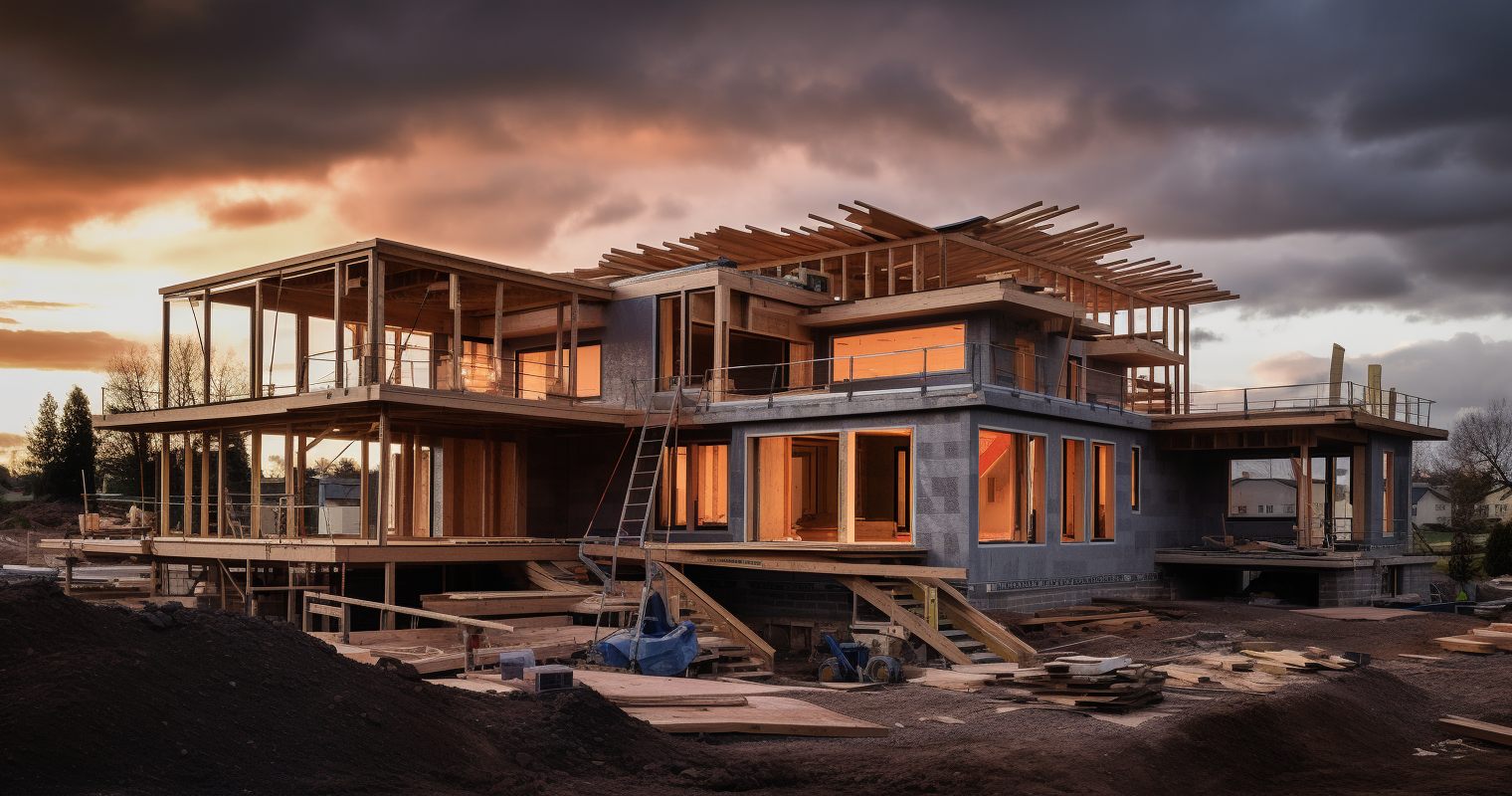
Anyone planning to build or renovate property in Vietnam will, in most circumstances, need to obtain a construction permit (Giấy phép xây dựng), which is issued by the relevant local People’s Committee. The sector falls under the authority of the Ministry of Construction and is subject to legislation that has been substantially updated for 2024–2025. For foreign nationals in particular, the restrictions are considerable: direct land ownership is not available to foreigners, and land use rights cannot be acquired by most non-Vietnamese individuals. Engaging qualified legal and technical professionals before making any commitment is an absolute necessity.
| Item | Details |
|---|---|
| Construction permit required? | Yes, for most new builds, extensions, and major renovations (as of 2025) |
| Permit processing time | Currently 15–20 working days; proposed reduction to fewer than 7 working days under draft 2025 Construction Law |
| Issuing authority | District- or provincial-level People’s Committee, depending on project grade |
| Foreign land ownership | Not permitted; foreigners may own buildings/apartments on a 50-year leasehold (renewable once) under the Housing Law 2023 and Land Law 2024 |
| Foreign apartment ownership cap | 30% of units per building; 250 houses per ward-equivalent area (as of 2025) |
| Key regulatory body | Ministry of Construction (MOC): moc.gov.vn, 80 Tran Hung Dao St, Hanoi |
Do you need planning permission to build or renovate a property in Vietnam?
In Vietnam, the closest equivalent to planning permission is the construction permit (Giấy phép xây dựng). The legal foundation for this process rests primarily on the Law on Construction 2014 (as amended), with detailed procedural provisions set out in Decree 15/2021/ND-CP. Noteworthy reforms took effect from July 2025, and further changes are anticipated through a revised Construction Law due to come into force in January 2026.
For a permit to be granted, the proposed project must accord with applicable urban, rural, or sectoral master plans, and the design must satisfy standards for structural integrity, environmental compliance, and fire protection. Unlike countries such as Australia or Canada, where planning oversight and building control tend to be handled by separate bodies, Vietnam consolidates both functions into a single permit procedure administered by the local People’s Committee.
The draft revised Construction Law introduces three distinct categories of construction permit: one covering new construction; one for repair, renovation, or relocation of existing works; and one for structures intended to exist only for a limited duration. The practical implication is that most substantive renovation projects — not only new builds — will fall within the permit requirement.
What work is exempt from a construction permit?
Internal alterations — meaning works that leave load-bearing elements intact, do not change the building’s designated function, and have no bearing on fire safety separation distances — may fall within an exemption. Rural properties located in areas without an approved urban development plan may also be subject to lighter requirements, though you should always confirm the position with local authorities before proceeding.
A qualified professional should always be consulted to determine whether an exemption genuinely applies, since misreading the rules can result in substantial penalties. Proposed 2025 legislation is expected to broaden the scope of exemptions, so checking the latest guidance from your district authority or the Ministry of Construction is essential.
How do you apply for a construction permit — step by step?
- Confirm land use rights: Secure legal land documentation demonstrating that the land use purpose and ownership are appropriate for the issuance of a construction permit, in accordance with Article 53 of Decree 175/2024/ND-CP. A Land Use Rights Certificate or other qualifying documents will serve this purpose.
- Prepare design drawings: Two complete sets of construction design drawings are required, together with evidence of compliance with fire prevention and fighting requirements, a site plan indicating the position of the proposed structure on the land plot, floor plans, elevations and principal cross-sections, and foundation plans accompanied by a diagram showing connections to external technical infrastructure.
- Submit a written commitment (if required): Where the proposed works are in proximity to neighbouring buildings, a written undertaking to safeguard adjacent structures must be provided.
- Lodge the application: The completed dossier is submitted to the competent People’s Committee. Project grading is determined by factors including the scale and nature of the works: Grade I projects — typically large or technically complex structures — may require approval from the Ministry of Construction, while Grade II and Grade III projects are handled at provincial level or by the relevant management board.
- Await appraisal: The licensing authority will assess whether the construction design drawings accord with the basic design previously evaluated by the specialised construction agency. Where additional documents are needed, the authority is obliged to advise the applicant within five working days of receiving the dossier.
- Receive permit and begin construction: Under the current 2025 framework, the standard processing period is 15–20 working days. The Ministry of Construction has signalled its intention to reduce this to fewer than seven working days through proposed legislative changes.
Permit fees differ according to project type, location, and complexity. As of 2025, specific schedules are determined by provincial authorities — always confirm the applicable charges with your local People’s Committee or a licensed legal adviser, as these are revised on a regular basis.
What are the rules around listed buildings, conservation areas, and heritage protection in Vietnam?
Vietnam maintains formal mechanisms for protecting heritage buildings and areas, although these operate differently — in both scope and the rigour of their enforcement — from comparable systems such as the UK’s Listed Buildings register or France’s Monuments Historiques. Responsibility is divided between cultural heritage law, administered by the Ministry of Culture, Sports and Tourism, and architectural heritage law, which falls under the Ministry of Construction and provincial People’s Committees.
How are heritage buildings and areas classified?
Provincial administrations are required to compile inventories of architecturally significant works and to review and reassess these on an annual basis. Buildings already classified as historical-cultural relics are managed in accordance with cultural heritage legislation. This produces two overlapping layers of protection: architecturally significant structures governed by planning law, and formally ranked cultural relics subject to the Law on Cultural Heritage.
As of 2025, Vietnam has nine UNESCO World Heritage Sites, comprising six cultural sites, two natural sites, and one mixed site. Among these, Hội An Ancient Town, the Complex of Huế Monuments, and Mỹ Sơn Sanctuary attract the most stringent controls. Any construction or renovation activity in the vicinity of a World Heritage Site requires prior approval from heritage authorities and may also engage UNESCO’s oversight processes.
Who is responsible for heritage protection?
The Ministry of Culture, Sports and Tourism (website: en.bvhttdl.gov.vn) holds national responsibility for ranked cultural heritage sites. At the provincial level, Departments of Culture, Sports and Tourism manage local heritage registers. The Ministry of Construction exercises oversight of architectural heritage designations and urban conservation areas.
The Law on Architecture obliges provincial People’s Committees to conduct research and surveys that identify features of national cultural identity, and to incorporate these into architectural management regulations based on the distinctive characteristics of local traditional cultures. Conservation requirements therefore vary considerably across different provinces.
What restrictions apply and what are the consequences of breaching them?
Where a property lies within a conservation zone or is entered on a provincial heritage register, any renovation or building work will require supplementary prior authorisation from the relevant cultural authority, in addition to the standard construction permit. Unauthorised changes to ranked relics may attract administrative fines, compulsory restoration orders, and — in the most serious cases — criminal liability under the Law on Cultural Heritage (Law No. 28/2001/QH10, as amended). The pace at which historic structures in cities such as Ho Chi Minh City have been lost in recent years has prompted growing concern.
Before acquiring any property that may carry heritage significance, commission a heritage status check through the local Department of Culture, Sports and Tourism and review the relevant provincial register. A qualified local lawyer should conduct this due diligence as an integral part of the conveyancing process.
What permits and licences are required when building or renovating in Vietnam?
A typical construction project in Vietnam requires a range of approvals beyond the principal construction permit. The precise combination will depend on the scale of the project, its location, and the purpose for which the completed building will be used. Navigating this process is not merely a matter of paperwork — it involves coordinating legal, technical, and regulatory requirements across a number of separate authorities.
Fire safety approval
For projects subject to fire safety review, the construction design drawings must be shown to comply with requirements already approved by the competent authority. Fire safety sign-off is issued by the provincial police (fire prevention department) and must be in place before a construction permit can be granted for most residential and commercial developments. The most common reason for failure at this stage is submitting designs that do not fully satisfy QCVN 06:2022/BXD (Fire Safety of Buildings) or other applicable Vietnamese National Standards (TCVN).
Environmental permits
Larger projects — typically sizeable residential developments or commercial builds — must obtain an Environmental Impact Assessment (EIA) or an Environmental Protection Commitment from the provincial Department of Natural Resources and Environment (DONRE). Smaller individual house builds do not generally require a full EIA, but the design must nonetheless conform to the environmental standards embedded in construction legislation.
Utility connection approvals
Separate applications are needed to connect to public water supply, sewerage networks, and the electricity grid. These are processed through the relevant provincial utility companies and the local People’s Committee. It is advisable to confirm utility availability before acquiring a plot, as both connection costs and waiting times differ significantly from one location to another.
Investment Registration Certificate (IRC) — for foreign investors
An Investment Registration Certificate (IRC) confirms the legal authority to execute a project and forms a core element of the construction permit pathway — particularly for industrial facilities and foreign direct investment (FDI) projects. Foreign nationals undertaking construction projects will ordinarily need to obtain an IRC from the provincial Department of Planning and Investment before advancing to the permit stage.
Post-construction acceptance
On completion of construction, a formal acceptance inspection must be carried out and recorded. The completed structure must be certified as conforming to the approved permit before it may be legally occupied. Fees and precise timescales for all the above approvals vary by province and project grade — confirm current figures with the relevant authority or a licensed construction law practitioner (as of 2025).
How do you find a reliable, trustworthy builder in Vietnam?
Vietnam’s construction industry is regulated under the Law on Construction, with national oversight vested in the Ministry of Construction (MOC). Contractors and construction firms are required to hold a construction activity licence (Giấy phép hoạt động xây dựng) covering the relevant type and grade of work. Individual site supervisors and project managers must separately hold appropriate practice certificates.
How is the construction industry regulated?
The Ministry of Construction exercises state management over building activity, construction materials, housing, architecture, urban and rural planning, and urban infrastructure. The MOC maintains publicly accessible registers of licensed contractors and construction organisations, searchable through the MOC portal at moc.gov.vn. At the provincial level, Departments of Construction (Sở Xây dựng) handle contractor licensing and represent the primary point of contact for verifying a builder’s credentials.
Professional and trade bodies
The Vietnam Association of Construction Contractors (VACC) is the principal industry body representing construction businesses in Vietnam.
- Website: vacc.org.vn
- Address: 37 Le Dai Hanh Street, Hai Ba Trung District, Hanoi, Vietnam
VACC membership is a reasonable indicator of professional standing, but it does not replace the need to verify a firm’s official licence directly with the Department of Construction.
Practical advice on vetting contractors
- Verify the licence: Request the contractor’s construction activity licence number and cross-check it with the local Department of Construction or through the MOC portal before entering into any agreement.
- Check references: Ask for a list of comparable completed projects and visit at least two in person. Where possible, speak with previous clients directly.
- Use a written contract: Always insist on a detailed written contract in both Vietnamese and your own language. It should clearly specify the scope of works, materials to be used, a payment schedule, completion milestones, and penalty provisions for delays.
- Stage payments: Avoid paying the full contract sum at the outset. Structure payments in stages linked to verified progress milestones — for example, an initial deposit, a mid-project payment, and a final payment upon satisfactory completion and inspection.
- Verify insurance: Confirm that the contractor carries third-party liability insurance. Professional indemnity cover for design and supervision services is also worth requiring.
Common pitfalls for expat clients
Foreign property owners can attract unlicensed builders offering prices that appear attractive but carry considerable risk. Be wary of contractors who demand large upfront cash payments, decline to provide a written contract, or are unable to produce their licence documentation. Disputes with builders can be lengthy and expensive to resolve — engaging a competent local lawyer or project manager at the outset is strongly recommended. Vietnam’s court system can enforce contracts, but local arbitration tends to be faster and more practical for commercial disagreements.
How do you find a qualified local architect in Vietnam?
Practising architecture in Vietnam requires a valid licence. The framework governing this is established by the Law on Architecture (Law No. 40/2019/QH14), which introduced a national system of architecture practice certificates and professional conduct standards.
The licensing requirement
Details of licensed architecture organisations and individual practitioners are published on local authority websites and on the Ministry of Construction portal. This means that licensed architects can be searched through the MOC’s online portal at moc.gov.vn. The relevant professional body is the Vietnam Association of Architects (VAA):
- Website: hkts.vn
- Address: 23 Dinh Le Street, Hoan Kiem District, Hanoi, Vietnam
The VAA maintains a directory of its members and can help identify qualified architects working in particular regions or specialist areas. For province-level enquiries, the local Department of Construction (Sở Xây dựng) should also hold records of licensed architecture practitioners operating in that jurisdiction.
Can foreign architects practise in Vietnam?
Under the Law on Architecture, a foreign national may practise architecture in Vietnam provided they hold an architecture practice certificate issued in Vietnam, or a valid certificate granted by a competent foreign authority that has been formally recognised or converted in Vietnam. They must observe Vietnamese law and the professional conduct requirements applicable to architecture practice in the country.
A foreign architect who holds a valid certificate issued by a competent foreign authority and has been providing architectural services in Vietnam for fewer than six months must follow the procedure for recognition of that certificate. Those who have delivered architectural services for six months or more are required to apply for conversion of their certificate through the specialised architecture agency at provincial level.
One of the most frequent sources of difficulty is international design teams failing to adapt their work to strictly observed local technical requirements. Whether you engage a local or overseas architect, confirm that they have genuine practical experience operating within Vietnam’s regulatory environment — with particular attention to fire safety codes (QCVN 06:2022/BXD) and Vietnamese National Standards (TCVN). The ability to work in both Vietnamese and your preferred language is important for permit submissions and dealings with local authorities.
What are the common pitfalls when buying land to build on in Vietnam?
Acquiring land in Vietnam for a construction project ranks among the most legally complex steps available to an expatriate in the country. The framework is fundamentally different from freehold ownership systems found elsewhere, and the consequences of proceeding without thorough due diligence can be severe.
The land ownership framework
Vietnamese law provides that all land belongs collectively to the people, with the State acting as administrator on their behalf. Neither Vietnamese citizens nor foreign nationals own land outright. What individuals and entities hold are Land Use Rights (LURs) — the entitlement to use a specific parcel of land for a defined purpose and period. The Land Law 2024 reaffirms that foreign nationals are not permitted to hold land use rights directly in Vietnam.
Zoning and land-use classification
Not all land carries equivalent rights: LURs are categorised according to permitted use — agricultural, residential, or commercial and industrial. Foreign investors are primarily concerned with commercial and industrial land, which provides the legal basis for constructing factories, offices, and other business facilities. Converting land from one category to another is tightly regulated. Verifying that land is properly classified for your intended use — and that any necessary conversion is achievable — is essential before you proceed with a purchase.
Title verification and boundaries
A thorough examination of the property is indispensable, covering its ownership history, the validity of the land use rights, and the absence of any outstanding debts or legal encumbrances. In Vietnam, land title is evidenced by a Land Use Rights Certificate — known colloquially as the “Red Book” for land, or the “Pink Book” for residential properties with buildings attached. The certificate’s validity must always be confirmed with the local land registry (the Office of Land Registration, operating under the provincial Department of Natural Resources and Environment) before any agreement is signed.
Planning confirmations before purchase
Before committing to a purchase agreement, obtain written confirmation that a construction permit can actually be secured for your intended project. An overseas Vietnamese or foreign-connected buyer seeking a permit for a private house in an urban area must ensure that the project aligns with the permitted land use purpose under the approved land use plan, and with architectural management regulations issued by the competent authority. Request a planning certificate (thông tin quy hoạch) from the local People’s Committee — this document sets out precisely what may be built on a given plot.
Utilities and flood risk
Before committing to any plot, verify that water, electricity, and sewerage connections are available, as provision varies markedly between urban and rural locations. Flood risk deserves serious attention across many parts of the country, especially in the Mekong Delta and low-lying coastal areas. Contact the local DONRE to obtain any recorded information on environmental issues, flooding, or contamination affecting the site.
Using professional advisers
A qualified Vietnamese notary (công chứng viên) and a licensed real estate lawyer should be engaged for all land transactions. Notarisation of land transfer agreements is a legal requirement in Vietnam. Appointing a reputable real estate agent with solid local market knowledge can also help guide you through each stage of the acquisition process. Since contracts for land transactions must be in Vietnamese to have legal effect, having access to a bilingual legal adviser is important.
What are the rules around foreign ownership and financing for construction projects in Vietnam?
The framework governing foreign property ownership in Vietnam was considerably reformed by the Housing Law 2023 (effective 1 August 2024) and the Land Law 2024 (effective 1 January 2025). Together, these statutes define what foreign nationals may and may not own in the current legal environment.
What can foreign nationals own?
Foreign nationals are permitted to own residential property — apartments and standalone houses — in Vietnam, but ownership of the underlying land is not available to them. Ownership is subject to firm limits:
- The maximum ownership term for foreign individuals is 50 years, with one possible renewal.
- Foreign ownership of apartments is restricted to 30% of total units in any single building. For landed residential properties, the ceiling is 250 units within an area equivalent to one administrative ward.
- Foreigners may not acquire agricultural land or properties in areas designated for national defence or security purposes.
- Foreigners can legally purchase apartments and, in certain approved projects, landed homes such as villas or townhouses, but exclusively within authorised commercial housing developments.
Overseas Vietnamese
Articles 41, 43, and 44 of the Land Law 2024 establish that Vietnamese nationals residing abroad who retain Vietnamese citizenship are treated as Vietnamese citizens and therefore enjoy the same land use rights and obligations as domestic individuals. This represents a meaningful improvement on the previous legislative position. Overseas Vietnamese now hold full rights and obligations in relation to land, equivalent in all respects to those of Vietnamese citizens residing in the country.
Construction by foreign-invested companies
Foreign investors in Vietnam can acquire land use rights through a joint venture company to which a Vietnamese partner contributes land use rights as capital, or by leasing land directly from permitted lessors such as the State. Establishing a Foreign-Invested Enterprise (FIE) is the most commonly used route for foreigners wishing to undertake construction beyond straightforward residential acquisitions.
Mortgages and construction financing
In principle, foreign nationals can access mortgage products from Vietnamese commercial banks, though lending criteria are demanding in practice and many banks require a local guarantor or evidence of stable income earned in Vietnam. Foreign-currency mortgages for residential purchases are generally unavailable. Construction loans for individual foreign buyers are uncommon; most expatriates who undertake renovation projects finance the work from their own resources or through offshore arrangements. The State Bank of Vietnam (sbv.gov.vn) publishes current regulations governing foreign access to credit in Vietnam.
Visa and residency conditions
Foreign individuals seeking to own property in Vietnam must hold a valid passport and be lawfully permitted to enter the country. All legal procedures relating to notarisation, certification, and property registration in Vietnam must be observed. There is no requirement to hold permanent residency in order to own an apartment within a commercial housing development, but long-stay or investor visas are advisable for anyone undertaking a significant construction project. Current visa guidance is available through the Ministry of Public Security’s immigration portal.
What official sources should you consult when planning to build or renovate in Vietnam?
Vietnam’s regulatory environment for construction shifts frequently, and major legislative changes occurred in both 2024 and 2025. All requirements should be verified against official sources, and local professional advice should be obtained before embarking on any project.
| Body | Responsibility | Contact / Website |
|---|---|---|
| Ministry of Construction (MOC) | National construction law, architect and contractor licensing, housing policy | moc.gov.vn/en 80 Tran Hung Dao St, Cua Nam Ward, Hanoi |
| Local People’s Committee (district/provincial) | Issues construction permits; handles local planning and zoning | Contact your district or provincial authority directly |
| Provincial Department of Construction (Sở Xây dựng) | Local construction regulation, contractor licensing, permit advice | Located in each provincial capital; searchable via MOC portal |
| Ministry of Culture, Sports and Tourism | Cultural heritage sites, ranked relics, heritage registers | en.bvhttdl.gov.vn |
| Department of Natural Resources and Environment (DONRE) | Land registry, land use rights certificates, environmental permits | Located in each provincial capital; operates the Office of Land Registration |
| Ministry of Planning and Investment | Investment Registration Certificates for foreign investors | mpi.gov.vn/en 6B Hoang Dieu St, Ba Dinh District, Hanoi |
| State Bank of Vietnam | Regulations on foreign access to mortgages and construction loans | sbv.gov.vn |
| Vietnam Association of Architects (VAA) | Directory of licensed architects; professional standards | hkts.vn 23 Dinh Le St, Hoan Kiem District, Hanoi |
Requirements, fees, and procedures in Vietnam are subject to regular revision. Always verify current obligations directly with the relevant authority and retain a licensed local legal adviser for any substantial transaction or construction undertaking.
Frequently asked questions
How much does it cost to build a house in Vietnam in 2025?
Construction costs in Vietnam differ widely depending on the location, specification level, and contractor selected. As a broad indication (as of 2025), basic residential construction in provincial areas may begin at around VND 3–5 million per square metre, while mid-range builds in major urban centres such as Ho Chi Minh City or Hanoi generally fall in the range of VND 7–15 million per square metre, with high-specification finishes pushing costs higher still. These figures are indicative only — always obtain detailed quotes from a minimum of three licensed contractors and seek current market guidance from a local quantity surveyor.
How long does it typically take to build a house in Vietnam?
A standard single-family residence in Vietnam typically requires between six and eighteen months from the date the permit is granted through to completion, depending on the project’s scope, contractor capacity, and whether any materials need to be imported. Permit applications currently take 15–20 working days for straightforward projects, though this may shorten under proposed 2025 legislation. Allow additional time for pre-permit approvals, including fire safety sign-off and design appraisal.
Do I need to speak Vietnamese to manage a building or renovation project?
All permit applications, construction contracts, and official communications with Vietnamese authorities must be produced in Vietnamese in order to be legally valid. While architects and contractors in major cities frequently speak English or other languages, official documentation must exist in Vietnamese. Appointing a bilingual project manager or legal representative who can liaise directly with authorities on your behalf — and ensure that nothing is misunderstood or misrepresented — is strongly advisable.
Are overseas building standards or qualifications recognised in Vietnam?
All construction projects in Vietnam must conform to Vietnamese National Standards (TCVN) and National Technical Regulations (QCVN). Overseas qualifications and international building standards do not carry automatic recognition. Foreign architects may have their credentials recognised or converted through the relevant provincial architecture agency, provided they satisfy all applicable Vietnamese professional conduct obligations. Design teams working from abroad must adapt their proposals to Vietnamese technical codes — most critically fire safety regulations — or face refusal of the permit application.
What happens if I build without a permit or breach planning rules in Vietnam?
Carrying out construction without the required permit, or in contravention of permit conditions, constitutes a serious offence under Vietnamese law. Consequences under the Law on Construction include administrative fines, compulsory demolition orders for unauthorised structures, and — in the most egregious cases — criminal prosecution. Buildings constructed without authorisation cannot be legally registered, transferred, or passed on through inheritance. If you are purchasing a property that includes unpermitted works, this must be resolved before the transaction completes, as it can render the asset effectively unsaleable and expose you to significant legal liability.
Can I dispute a decision by my contractor or builder in Vietnam?
Yes. Construction disputes in Vietnam may be addressed through negotiation, mediation, arbitration, or litigation. While the Vietnamese court system is capable of enforcing contractual obligations, local arbitration is generally faster and more suited to commercial disputes. The Vietnam International Arbitration Centre (VIAC) is the most widely used forum for resolving construction and commercial disputes. Your construction contract should always contain a clearly drafted dispute resolution clause specifying the chosen mechanism and the governing law.
What is a “Pink Book” and do I need one?
The Pink Book (Sổ hồng) is Vietnam’s Certificate of Land Use Rights, Ownership of Houses, and Assets Attached to Land — a document that consolidates what were formerly issued as two separate certificates for land and for residential property. For foreign buyers, the Pink Book constitutes the primary legal proof of ownership of a residential property. It is indispensable: without it, you are unable to sell, mortgage, or transfer the property through inheritance. Ensure that the Pink Book is formally issued in your name following purchase, and have its authenticity verified with the local land registration office.
Are there any restrictions on renovating a property in a popular tourist area like Hội An or Huế?
Yes — the restrictions are substantial. Both Hội An Ancient Town and the Complex of Huế Monuments hold UNESCO World Heritage Site status, and properties situated in or near these areas are subject to rigorous conservation controls administered jointly by the Ministry of Culture, Sports and Tourism and local heritage management boards. Any renovation, extension, or modification to the exterior of a building within these zones requires advance authorisation from the heritage authority in addition to the standard construction permit. Unauthorised works can attract heavy fines and mandatory reinstatement at the owner’s cost. Before purchasing or planning any works in such areas, consult the local heritage management board and the provincial Department of Culture, Sports and Tourism.