
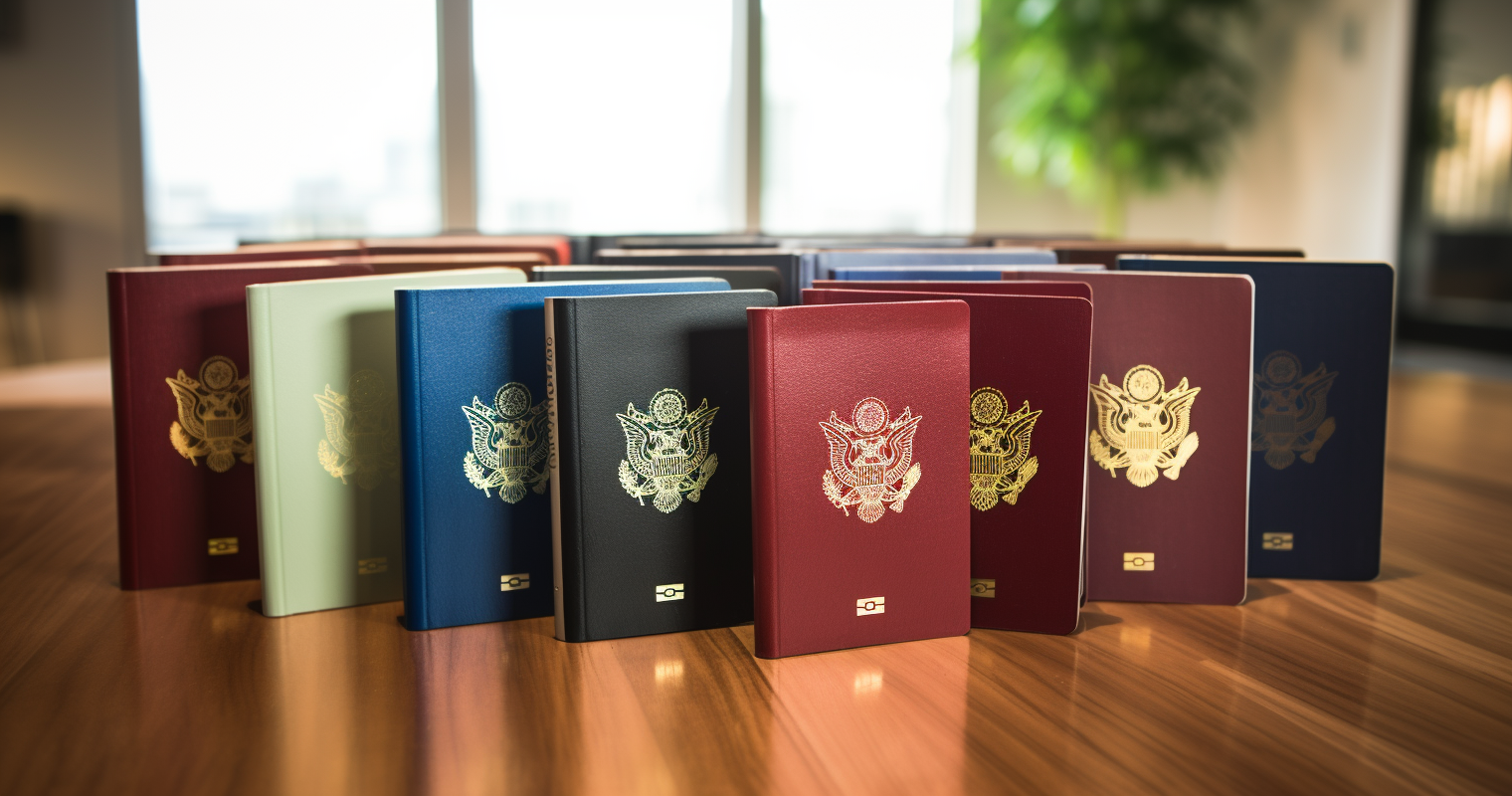
Acquiring citizenship in Brunei Darussalam is a protracted and demanding undertaking, governed by the Brunei Nationality Act. The principal pathways include citizenship by descent, by registration for those born on Bruneian soil, by naturalisation following an exceptionally long period of residence, and by marriage to a Bruneian national. Brunei does not generally permit dual citizenship, which means that most successful applicants will be required to give up their existing nationality.
| Item | Details |
|---|---|
| Governing legislation | Brunei Nationality Act (1961, amended 1984 and 2002) |
| Naturalisation residency requirement | 20 years out of the preceding 25 years, including 2 consecutive years immediately before application (as of 2025) |
| Registration (born in Brunei) residency requirement | 12 out of the preceding 15 years, including a continuous 2-year period (as of 2025) |
| Marriage route (spouse of male citizen) | 10 years’ residence after marriage (as of 2025) |
| Marriage route (spouse of female citizen) | 15 years’ residence plus permanent residency status (as of 2025) |
| Dual citizenship | Not recognised — applicants must renounce existing nationality |
| Brunei passport ranking | Visa-free or visa-on-arrival access to approximately 164 countries (as of 2025, Henley Passport Index) |
| Processing time | Can take many years — check the Immigration and National Registration Department for current figures |
Who is eligible to apply for citizenship in Brunei?
Bruneian nationality law regulates citizenship and national status for all individuals residing in Brunei as well as those of Bruneian heritage living abroad. The Brunei Nationality Act forms the legal foundation of this framework, laying out specific routes to citizenship while keeping rigorous control over who qualifies. Each pathway carries its own distinct set of criteria.
Citizenship by descent (jus sanguinis)
One avenue through which Bruneian nationality may be acquired is via jus sanguinis — citizenship through bloodline — whereby a person may obtain nationality irrespective of where they were born, subject to certain conditions. A child born in lawful wedlock to a Bruneian father acquires citizenship by descent regardless of their country of birth. A child born out of wedlock to a Bruneian mother, where the father is unknown or stateless, similarly acquires citizenship regardless of birthplace.
Citizenship is conferred automatically where a child is born abroad to a Bruneian father who registers the birth at a Bruneian diplomatic mission within six months. The father must be serving the Bruneian government or employed by a company incorporated in Brunei to be eligible for this provision. A 2002 amendment to Brunei’s nationality legislation extended the ability to confer citizenship through the mother as well as the father.
Citizenship by registration (born in Brunei)
A person born on Bruneian territory who does not belong to one of the recognised indigenous Malay communities may seek citizenship by registration, provided they are at least 18 years of age and have resided in Brunei for 12 of the 15 years immediately before the date of application, including an unbroken two-year period. Being born in Brunei does not in itself grant citizenship. The applicant must also demonstrate proficiency in the Malay language and be of good character.
Citizenship by naturalisation
A naturalisation route exists for non-citizens in Brunei. To be eligible, an applicant must have lived in Brunei for at least twenty of the twenty-five years preceding their application, with two of those years being continuous and immediately prior to applying. This threshold is considerably more demanding than that of many other nations — for example, the standard naturalisation period in the United Kingdom is five years and in Australia four years — placing Brunei among the most restrictive countries in the world for this requirement.
Citizenship by marriage
A foreign woman who marries a Bruneian male citizen may apply for citizenship following ten years of residence in Brunei. Foreign men married to Bruneian women face considerably stricter conditions, including fifteen years of marriage and residence combined with the need to have obtained permanent residency before lodging a citizenship application. It is critical to note that marriage to a Bruneian does not in itself confer citizenship — all residency and other conditions must be fully satisfied.
Exceptional contribution
In rare circumstances, Bruneian citizenship may be awarded through special recognition to individuals who have rendered extraordinary service to the nation. This pathway is seldom invoked and generally requires direct authorisation from the highest levels of government.
No citizenship by investment
Unlike certain other countries in the region, Brunei does not operate a formal citizenship by investment programme. While significant financial investment in the country may bolster a standard citizenship application in some respects, it does not constitute an independent route to nationality.
What are the steps involved in applying for citizenship in Brunei?
Those wishing to apply for Bruneian citizenship must assemble a thorough documentation package, which typically includes completed application forms obtained from the Immigration and National Registration Department. The Bruneian government exercises careful oversight of its citizenship processes, with applications ultimately requiring the approval of His Majesty the Sultan. Always check the Immigration and National Registration Department (INRD) official website for current fees and processing times, as these change.
- Establish qualifying residency: Confirm that you satisfy the minimum residency requirement for your chosen pathway — 20 out of 25 years for naturalisation, 12 out of 15 years for registration if born in Brunei, or the applicable marriage-route duration. Maintain thorough records of all time spent in Brunei, as any gaps may jeopardise your eligibility.
- Obtain permanent resident status: Before lodging a citizenship application, most applicants must already hold lawful permanent residence in Brunei. Permanent residency may be pursued through an Entry Permit Card or via the appropriate visa and residence permit arrangements.
- Gather required documents: The documentation package typically includes completed application forms, a valid passport and residence permits, and a birth certificate. You will also need evidence of long-term residence such as a residence permit or work visa; evidence of economic contributions such as tax records, investment documents, or business licences; criminal background clearances from Brunei and your country of origin; proof of identity; and letters of recommendation or support from relevant local authorities or organisations.
- Submit your application to the INRD: Completed applications are lodged with the Immigration and National Registration Department. All forms must be filled out with precision, and supporting documents must be duly certified and translated into Malay where required.
- Attend a language assessment: Applicants must demonstrate fluency in Malay by passing the Malay Language Board examinations, demonstrate good character, and take a military oath. The assessment examines both spoken and written proficiency in formal Malay.
- Undergo background checks and interviews: Authorities will carry out thorough background investigations and may invite you to attend a formal interview to evaluate your character, depth of connection to Brunei, and sincerity of intent to settle permanently in the country.
- Await a decision: Citizenship applications may remain under consideration for a number of years. Once a determination has been reached, the INRD will communicate the outcome to the applicant. No fixed processing timeframe is publicly stipulated.
- Take the oath of allegiance and receive citizenship: Successful applicants must swear an oath of allegiance to Brunei and formally renounce all prior citizenships, as Brunei does not recognise dual nationality except in very narrowly defined circumstances. The oath as set out in the Brunei Nationality Act requires the applicant to “renounce and abjure all loyalty to any country, state or sovereign” and to pledge full allegiance to Brunei Darussalam.
What tests, interviews, or ceremonies are required as part of the citizenship process in Brunei?
The path to Bruneian citizenship via naturalisation demands not only command of the Malay language but also an intimate familiarity with Malay customs, traditional cuisine, and poetry. The examination is reputed to be so exacting that even ethnic Malays themselves are said to struggle to pass it. This contrasts markedly with the civic and language assessments used in countries such as the United Kingdom (the Life in the UK Test) or Australia (the Australian citizenship test on values and history), which are generally regarded as more standardised and accessible.
The formal Malay used by officials differs considerably from the colloquial variety spoken in everyday life, meaning applicants should direct their study toward written and formal registers of the language rather than conversational Malay alone. Passing the examination set by the Malay Language Board is a mandatory component of the process.
Beyond the language test, applicants must demonstrate exemplary character through background checks covering both their time in Brunei and their record in their country of origin. A formal security and loyalty assessment is also conducted, after which successful candidates must take an oath of allegiance. This oath requires the applicant to declare that they will not exercise any rights, powers, or privileges arising from any other nationality or citizenship, and that they wholly and utterly renounce and abjure all loyalty to any other country, state, or sovereign.
There is no equivalent of the public naturalisation ceremony found in countries such as Australia, Canada, or the United Kingdom, where citizenship is formally conferred in a communal gathering. In Brunei, the process is conducted administratively by the INRD, with the oath generally sworn in a formal yet private setting.
What are the benefits of citizenship in Brunei?
Brunei is a prosperous sultanate, and acquiring its citizenship brings with it an array of substantial rights and entitlements unavailable to permanent residents or visa holders. Achieving Bruneian citizenship is a major milestone for those seeking to make a permanent life in this stable and affluent Southeast Asian nation, which is widely recognised for its high standard of living.
Bruneian citizens enjoy an extensive range of benefits, including the unconditional right to live in Brunei without visa restrictions; access to the country’s broad social welfare provisions; healthcare entitlements under the national health system; educational opportunities including subsidised tertiary study; the right to own property free from foreign ownership limitations; and legal protections while residing or travelling abroad. The government funds all medical services and provides free education through to university level, sustaining a high quality of life for its citizens.
In terms of international mobility, the Bruneian passport is exceptionally strong. As of 2025, Bruneian citizens enjoy visa-free or visa-on-arrival access to 164 countries and territories, placing the Brunei passport 20th globally according to the Henley Passport Index. Brunei is notably the first country whose citizens may travel without a visa to all five permanent member states of the UN Security Council — China, France, Russia, the United Kingdom, and the United States.
Citizens also hold the right to enlist in Brunei’s armed forces and to take up positions in the civil service and government — roles that are ordinarily reserved for citizens only. Non-citizens, including permanent residents, are generally barred from these positions and from certain economic activities such as the outright ownership of land or real property. Citizenship additionally confers eligibility to vote, to participate fully in national civic life, and to receive the complete range of consular protection when abroad.
Does Brunei allow dual citizenship, or will you have to renounce your existing nationality?
Brunei does not permit dual citizenship. Any citizen who acquires a foreign nationality automatically forfeits their Bruneian citizenship. This is a foundational element of Brunei’s nationality law and applies in virtually all circumstances. Those taking on Bruneian citizenship should therefore expect to formally surrender their existing nationality as an integral part of the process.
One limited exception exists: a child born abroad to Bruneian parents who acquires the citizenship of their country of birth may hold dual nationality until reaching adulthood at 18, at which point they must elect which citizenship to keep. This is the sole formally recognised exception within Brunei’s nationality legislation.
Dual citizenship is not recognised in Brunei; a citizen who voluntarily acquires the nationality of another state will “cease to have” Bruneian citizenship. If a Bruneian woman acquires a foreign nationality through marriage, she will likewise lose her Bruneian citizenship. No equivalent provision applies to Bruneian men, a gender asymmetry that remains a notable feature of the current legislation.
It is equally vital to consider the rules governing your existing nationality. Some countries treat the voluntary acquisition of a new citizenship as an automatic termination of the original, while others may allow you to retain your existing nationality even after obtaining Bruneian citizenship. You should contact your home country’s immigration authority or ministry of foreign affairs before proceeding, as the consequences of renunciation can be irreversible.
How long does it typically take to become a citizen of Brunei?
The journey toward Bruneian citizenship is among the most time-consuming of any country in the world. The qualifying residency period alone is extraordinarily demanding, and processing adds further years on top of that. Anyone considering this pathway should anticipate a commitment spanning several decades from the moment they first set foot in Brunei.
| Stage | Estimated time |
|---|---|
| Naturalisation route: qualifying residency period | 20 years within a 25-year period, including 2 consecutive years immediately before applying |
| Registration route (born in Brunei): qualifying residency | 12 years within the preceding 15 years, including 2 consecutive years |
| Marriage route (spouse of male citizen): qualifying residence | Minimum 10 years after marriage |
| Marriage route (spouse of female citizen): qualifying residence | Minimum 15 years plus permanent residency |
| Application processing time | Multiple years — no fixed timeline published |
Pursuing Bruneian citizenship is a serious long-term undertaking that requires sustained planning, meaningful cultural integration, and unwavering adherence to exacting requirements. The process calls for patience and meticulous documentation of the extensive 20-year residency window within a 25-year timeframe, with particular attention to the two consecutive years immediately prior to the application.
It should be noted that applications may remain under active consideration for many years following submission. Processing durations are not officially guaranteed, and outcomes depend on individual circumstances including language examination results, character assessments, and the discretionary nature of the approval process. Always consult the Immigration and National Registration Department for the most current official information.
What are the main reasons an application for citizenship in Brunei might be refused?
Brunei’s citizenship process is highly selective and discretionary in nature. The Bruneian government maintains careful oversight, with applications ultimately requiring approval from His Majesty the Sultan. This means there is no automatic entitlement to citizenship even when formal requirements appear to be satisfied on paper.
Common grounds for refusal include the following:
- Failure to meet residency requirements: Any breaks in your qualifying residency period — for example, prolonged absences from Brunei — may cause the qualifying period to be restarted or the application to be rejected altogether.
- Failure to pass the Malay language test: Obstacles to citizenship include exclusion from eligible ethnic categories under legislation, inability to produce evidence of lawful residence, and failure to pass the Malay language examination. For applicants from non-indigenous backgrounds, falling short in the language assessment is among the most frequently encountered barriers.
- Criminal record or adverse character assessment: Applicants must be demonstrably of good character. Any criminal history — whether incurred in Brunei or elsewhere — is likely to result in refusal. Background checks are comprehensive and cover both the applicant’s conduct in Brunei and their history prior to arrival.
- Incomplete or fraudulent documentation: Submitting an incomplete, inaccurate, or falsified application will lead to refusal and may permanently preclude re-application.
- Failure to demonstrate genuine intent to settle permanently: Applicants are expected to show a sincere, enduring commitment to Brunei. Evidence of property ownership, family connections, employment, and participation in community life all contribute to this assessment.
- Discretionary refusal: Because applications require royal approval, a degree of subjective judgment applies that extends beyond simply satisfying the formal checklist of requirements.
An individual who has renounced, or been deprived of, the status of a subject of His Majesty the Sultan and Yang Di-Pertuan under the Nationality Act shall not ordinarily be eligible to be registered again under that provision, but may be so registered with the approval of His Majesty the Sultan and Yang Di-Pertuan. There is no publicly documented independent appeals mechanism, and a refused applicant’s options are generally limited to reapplying or seeking a discretionary review at the ministerial or royal level.
Where can you find reliable, up-to-date information about citizenship in Brunei?
Given the complexity, duration, and discretionary character of the Brunei citizenship process, it is essential to rely solely on official government sources for current requirements, fees, and processing information. Third-party websites and immigration forums may be out of date or inaccurate.
- Immigration and National Registration Department (INRD): The principal authority responsible for processing citizenship applications in Brunei. The official website at www.immigration.gov.bn provides application forms, requirements, and contact information.
- Attorney General’s Chambers of Brunei Darussalam: The full text of the Brunei Nationality Act and its amendments is published by the AGC. It can be accessed at www.agc.gov.bn.
- Ministry of Home Affairs, Brunei Darussalam: The Ministry has overarching responsibility for immigration and nationality policy. Visit www.moha.gov.bn for policy-level guidance.
- Ministry of Foreign Affairs, Brunei Darussalam: For consular matters and overseas citizenship-related services, the MFA may be consulted at www.mfa.gov.bn.
- Your home country’s official immigration or foreign affairs authority: Before surrendering any existing citizenship, contact your own government’s relevant ministry to understand how acquiring Bruneian citizenship may affect your current nationality status.
Official government portals are the only dependable source for current requirements, fees, and processing timelines. Requirements have shifted in the past and may do so again — always verify directly with the INRD before taking any action.
Frequently asked questions about citizenship in Brunei
Do children born in Brunei automatically receive citizenship?
Being born on Bruneian soil does not automatically confer citizenship. Children born to at least one Bruneian parent will acquire Bruneian citizenship automatically. Children born in Brunei to two foreign parents are not automatically granted citizenship, reflecting the country’s emphasis on family lineage rather than place of birth as the primary determinant of nationality.
Can citizenship be lost or revoked after it has been granted?
Brunei citizenship may be lost if a citizen voluntarily takes on the nationality of another country or fails to fulfil ongoing residency obligations. It may also be revoked where citizenship was obtained through fraud, misrepresentation, or deliberate concealment of material information. Under the Nationality Act, His Majesty the Sultan retains the authority to deprive a person of citizenship in serious cases.
What happens to a citizenship application if the applicant moves abroad during the process?
Sustaining continuous qualifying residence is central to the citizenship process in Brunei. Departing from Brunei for an extended period either during or preceding an application may interrupt the mandatory two consecutive years of residence immediately prior to applying, potentially resetting or nullifying your eligibility. Applicants should consult the INRD before making any plans for extended travel once the application process has commenced.
Is there a formal citizenship ceremony in Brunei?
Brunei does not hold large public naturalisation ceremonies of the kind seen in countries such as Australia or the United States. The citizenship process is managed administratively by the Immigration and National Registration Department, and successful applicants swear an oath of allegiance in a formal but typically private setting. Those who are approved attend a citizenship ceremony and receive Bruneian nationality at that point.
Does marrying a Bruneian citizen guarantee citizenship?
Marriage to a Bruneian citizen does not automatically confer citizenship. However, it may accelerate the process under certain conditions. Spouses of Bruneian men must still reside in Brunei for a minimum of 10 years; spouses of Bruneian women are subject to a 15-year residency requirement and must additionally have secured permanent residency before applying.
Are there any ethnic or religious requirements for citizenship in Brunei?
Brunei’s citizenship legislation contains provisions that are both racially and gender-discriminatory, with Malay ethnicity and citizenship being closely intertwined. The restriction of nationality to certain prescribed ethnic groups — specifically “indigenous groups of the Malay race” — is the leading cause of statelessness in Brunei. Those from non-indigenous backgrounds must pursue citizenship through the registration or naturalisation routes, both of which carry demanding residency and language requirements. There is no formal religious prerequisite for citizenship, though the country is an Islamic sultanate and its laws reflect Islamic principles.
How many people have been granted Brunei citizenship?
Between 1962 and 2014, only 35,100 individuals obtained Bruneian citizenship — a figure that underscores how selective the process truly is. Even those who have lived in Brunei for many years may fail to qualify or may be unable to clear the language examination. Brunei reported 20,863 stateless persons to UNHCR in 2022, representing a considerable share of a total population of 455,400 persons as of that year.
Can someone who previously renounced Brunei citizenship reapply?
A person who has renounced or been deprived of the status of a subject of His Majesty the Sultan and Yang Di-Pertuan will not ordinarily be eligible to be registered again, but may be so registered with the express approval of His Majesty the Sultan and Yang Di-Pertuan. Readmission following renunciation is therefore only possible through a special royal dispensation and is not a standard or guaranteed pathway.
Does Brunei have a citizenship by investment programme?
Brunei Darussalam does not currently operate any formal citizenship by investment scheme. While substantial financial investment in the country may lend additional weight to a standard citizenship application in some respects, it does not represent an independent route to nationality. All applicants must still satisfy the standard residency and language requirements irrespective of their financial standing.
What rights do permanent residents have compared to citizens?
Permanent resident status does not entitle holders to a Bruneian passport, curtails freedom of movement, excludes them from fully subsidised healthcare and higher education, and bars them from owning property, land, or operating a business, among other restrictions. Citizens, by contrast, benefit from free healthcare, subsidised education, full property ownership rights, and the considerable international travel freedom afforded by one of the world’s most powerful passports.