

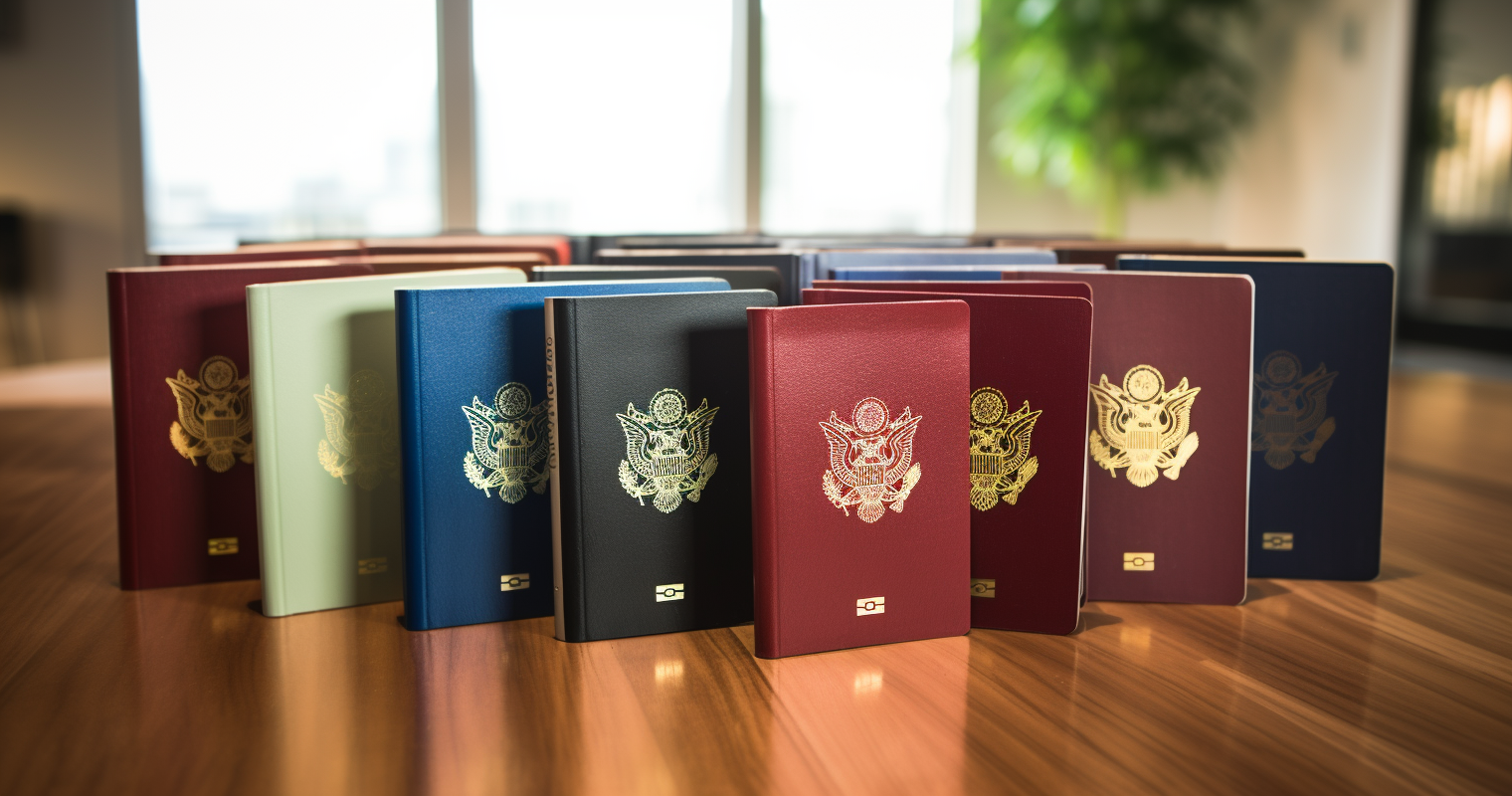
Polish citizenship may be acquired through naturalisation following a qualifying period of residency (generally a minimum of three years on a permanent residence permit), through descent from a Polish ancestor, via a presidential grant, or by restoring citizenship that was previously lost. Most naturalisation routes require a Polish language certificate at B1 level. Poland recognises dual citizenship — there is no obligation to give up your existing nationality — though you should check whether your country of origin imposes restrictions on holding a second passport.
| Item | Details |
|---|---|
| Minimum residency for naturalisation (standard route) | 3 years continuous legal residence on a permanent residence permit (as of 2025) |
| Marriage route residency requirement | At least 2 years legal residence on a permanent residence permit, married to a Polish citizen for at least 3 years (as of 2025) |
| Polish language requirement | B1 level certificate required for the recognition (administrative) route |
| Application fee (recognition route) | PLN 1,000 from 1 July 2025 (previously PLN 219); descent confirmation: PLN 58 |
| Processing time (recognition route) | Up to 2 months (voivodeship); presidential grant typically more than 1 year |
| Dual citizenship permitted? | Yes — Poland does not require renunciation of existing nationality |
Who is eligible to apply for citizenship in Poland?
Poland provides multiple routes to citizenship, among them descent (jus sanguinis), naturalisation, and special exemptions. Identifying which pathway applies to your individual circumstances is the essential first step, as each route carries its own distinct requirements and documentary demands.
Naturalisation (recognition as a Polish citizen)
A foreign national who has been living continuously in Poland for a minimum of three years on the basis of a permanent residence permit, a long-term EU resident’s residence permit, or the right of permanent residence — and who can demonstrate a stable, regular source of income together with legal entitlement to residential accommodation — may apply to be recognised as a Polish citizen. This is the standard pathway for long-term residents, broadly analogous to naturalisation after five years in countries such as Germany or the Netherlands, though Poland’s qualifying period is shorter in certain situations.
The required residency period is reduced to two years where the applicant has been married to a Polish citizen for at least three years, holds an EU long-term or permanent residence permit, and has lived continuously and lawfully in Poland on that basis. From 2025, scrutiny of relationship authenticity has been tightened, with applicants now required to supply joint financial and utility documents as supporting evidence.
A foreign national who has been residing continuously in Poland for at least one year on the basis of a permanent residence permit granted in connection with Polish origin or the Pole’s Card (Karta Polaka) may also be eligible.
In October 2024, the Polish government published the “Polish Migration Strategy for 2025–2030”, which anticipates growing demand for Polish citizenship and highlights the need to reform the rules governing its acquisition. Under current rules, applicants must have at least three years of permanent residency, though that period is shorter in certain circumstances. Interior ministry proposals would extend the requirement to eight years of residency in total — three years temporary followed by five years permanent. These remain proposals only; readers should consult the official government website for the most current requirements before proceeding.
Citizenship by descent
Claiming Polish citizenship by descent requires proving an unbroken line of citizenship running from a Polish ancestor through to the applicant. The core requirement is demonstrating that at least one ancestor held Polish citizenship after 31 January 1920 — when Poland’s first Citizenship Act came into force — and that this citizenship was not lost at any point across subsequent generations.
There must be no interruption in the chain of Polish citizenship between the emigrant ancestor and the applicant. If an ancestor lost Polish citizenship — for instance by acquiring the citizenship of another country before 1951 — any descendants born after that loss cannot inherit Polish citizenship. This is a nuanced and technically complex area of law, and specialist legal advice is frequently advisable before commencing the application.
Presidential grant
The granting of Polish citizenship is a constitutional prerogative of the President, who is not bound by any fixed criteria. The President may confer citizenship on any individual upon their request, regardless of their existing nationality, connections to Poland, knowledge of the Polish language, or financial standing. This route is entirely discretionary and decisions made under it cannot be appealed.
Restoration of previously lost citizenship
The restoration procedure applies to foreign nationals who lost Polish citizenship under various legal grounds before 1 January 1999. Such individuals may have their citizenship restored upon application. By law, restoration is not available to persons who may pose a threat to the Polish state or who acted against Poland’s interests during World War II.
Children and adoption
A child acquires Polish citizenship at birth when at least one parent is a Polish citizen, regardless of whether the birth occurs in Poland or abroad. A child adopted through full adoption by one or more Polish citizens will acquire Polish citizenship provided the adoption is completed before the child reaches the age of 16.
What are the steps involved in applying for citizenship in Poland?
The application process varies depending on whether you are pursuing recognition (the administrative naturalisation route), a presidential grant, confirmation by descent, or restoration. The steps outlined below concentrate on the most common pathway for expats — recognition as a Polish citizen — with notes on relevant differences for other routes.
- Confirm your eligibility and identify the correct pathway. Polish law provides several distinct routes to citizenship. One of the most frequent errors is assembling documentation for the wrong route — for example, conflating recognition with descent or restoration. Establish clearly which route applies before you begin gathering paperwork.
- Assemble your supporting documents. Your application should include items such as a valid passport, residence cards, birth and marriage certificates, and notarised copies of those documents. Applicants for recognition must additionally supply evidence of a stable and regular income in Poland — such as an employment certificate, the previous year’s PIT tax return, or confirmation of a pension — as well as proof of legal entitlement to residential accommodation, such as a title deed or tenancy agreement.
- Obtain a Polish language certificate. To be recognised as a Polish citizen through the administrative route, you must demonstrate Polish language ability at B1 level and provide official certification of this. Details of how to obtain the relevant certificate are available on the official Polish government website.
- Have all foreign-language documents translated. Any documents in a language other than Polish that are submitted with your application must be translated into Polish by a sworn translator or by the Polish consul. Translations by non-accredited parties will not be accepted.
- Submit your application to the appropriate authority. Recognition as a Polish citizen takes place at the applicant’s request. The application for recognition is lodged with the voivode (regional governor) whose jurisdiction covers the applicant’s place of actual residence — meaning the location where the centre of the person’s vital interests lies. If you are resident abroad, the application is submitted to the relevant consulate.
- Security and background checks are carried out. Prior to issuing a decision, the voivode seeks information from the provincial police commander, the director of the local Internal Security Agency branch, and where necessary other authorities, to establish whether granting citizenship to the applicant poses any risk to national defence or security, or to the protection of public safety and order.
- Wait for a decision. The processing time for the recognition route is up to two months. For presidential grants, the President of the Republic of Poland typically takes more than one year to reach a decision.
- Pay the applicable fee. The stamp duty for a recognition decision was PLN 219, rising to PLN 1,000 from 1 July 2025. The presidential grant route carries no charge. For a descent confirmation decision, the fee is PLN 58, with an additional PLN 17 for a power of attorney where applicable. Always verify current figures on the official government website, as fees are subject to change.
- Collect your certificate and apply for a Polish passport. You will receive either a certificate of naturalisation or a refusal notice from the authority with which you filed your application. Once citizenship has been confirmed, you may apply for a Polish passport at your local voivodeship office or through a consulate.
The authority responsible for processing recognition applications is the voivode (regional governor) for your place of residence. Appeals against recognition decisions are directed to the Minister of the Interior and Administration (Ministerstwo Spraw Wewnętrznych i Administracji, MSWiA) and must be submitted in writing within 14 days of receiving the decision.
What tests, interviews, or ceremonies are required as part of the citizenship process in Poland?
Polish language test
Applicants pursuing the recognition (administrative naturalisation) route are required to demonstrate proficiency in Polish. Third-country nationals must provide a document confirming either that they have completed Polish schooling or that they have passed the State examination in Polish as a foreign language at a minimum of B1 level. This requirement is broadly comparable to the language threshold for naturalisation in Germany (also B1) and somewhat lower than in countries such as the Netherlands, where B1 to B2 proficiency is expected. These examinations are held four times a year.
Integration and civics knowledge (proposed)
Interior ministry proposals would add assessments covering not only Polish language skills but also applicants’ broader “level of integration”, encompassing familiarity with Polish values, principles, law, and history. Applicants would additionally be required to take an oath of loyalty to the Polish state. At the time of writing, these remain proposals under discussion and have not yet been enacted into law. Readers must verify the current position through official government sources before applying.
Background checks
A clean criminal record — in Poland and in the applicant’s country of origin — is a requirement for naturalisation. The Internal Security Agency and the national police are consulted during the review process to assess whether granting citizenship poses any threat to state security or public order.
Citizenship by descent — no interview required
The citizenship-by-descent route requires no interview; it is based entirely on documentary evidence. This contrasts with naturalisation procedures, which typically include language assessments and integration requirements. While Ireland’s Foreign Births Registry route similarly relies on documentation, Poland’s process accommodates a broader generational range of applicants.
Presidential grant route
Any third-country national may petition the President to be granted Polish citizenship; the procedure has no specific qualifying conditions or eligibility criteria. The applicant need only complete a form providing personal details and a statement of reasons, submitted either to a consul or to a voivode. Knowledge of Polish is not a prerequisite under this route.
What are the benefits of citizenship in Poland?
EU citizenship and freedom of movement
As a member state of the European Union, Poland confers EU citizenship on its nationals under EU law. Acquiring Polish citizenship therefore simultaneously makes you an EU citizen, entitling you to move freely, live, and work in any of the 27 EU member states without needing to obtain separate residence or work authorisation.
Passport strength and global travel
According to the 2025 Henley Passport Index, the Polish passport is ranked 7th in the world, providing visa-free or visa-on-arrival access to 185 countries — placing it among the most powerful travel documents globally. When in a non-EU country that has no Polish diplomatic mission, Polish citizens are entitled to seek consular protection from the embassy of any other EU member state present in that country.
Healthcare and education
Polish citizens are entitled to access public healthcare in Poland and, under the same conditions as local nationals, in other EU countries. The European Health Insurance Card (EHIC) enables citizens to receive necessary medical treatment during temporary stays in other EU states. Polish citizenship also opens the door to free or reduced-cost higher education across many European countries, and as an EU citizen you are eligible to participate in student exchange programmes such as Erasmus.
Political rights and civic participation
Polish citizens hold the full right to vote in national, local, and European Parliament elections. They are also eligible to stand as candidates in elections and to hold public office — positions that are generally reserved for citizens rather than permanent residents.
Business and property rights throughout the EU
As a Polish citizen, you can incorporate companies, purchase property, and access financial services freely across the EU. A Polish passport enables you to establish a business in Poland or another EU country without first needing to secure a separate work or residence permit in order to operate within the EU.
Hereditary citizenship
Polish citizenship passes by descent, meaning it can be transmitted to children and grandchildren, who in turn inherit the same entitlements — including access to education and employment markets and the right to travel freely.
Does Poland allow dual citizenship, or will you have to renounce your existing nationality?
Polish law permits dual citizenship, meaning it is possible to hold Polish nationality alongside that of another country simultaneously — offering additional options and flexibility in both professional and personal life. Those acquiring Polish citizenship while already holding another nationality are not required to surrender their original passport.
Poland does require its citizens — including dual nationals — to use Polish identification documents when dealing with Polish authorities. This is especially relevant at border crossings, where Polish citizens are generally expected to present a Polish passport when entering or departing the country.
It is essential to check whether your primary country of citizenship also permits dual nationality, as some states do not. In such cases, you may be required to elect which citizenship to keep. Polish law operates independently of the laws of your home country, and Poland’s acceptance of dual nationality carries no guarantee that your country of origin will take the same position. You should consult the relevant immigration or foreign affairs authority in your home country before proceeding with your application.
Poland’s approach to citizenship is set out in Article 34 of the Polish Constitution, which provides that citizenship may not be taken away except through voluntary renunciation. Since 1962, Poland has not permitted involuntary revocation of citizenship; renunciation must be initiated by the citizen and requires the consent of the President. The loss of citizenship takes effect 30 days after the President’s decision, or earlier if so specified in that decision.
How long does it typically take to become a citizen of Poland?
The overall timeline to Polish citizenship depends considerably on the route taken, the speed with which documents can be gathered, and the workload of the authority handling the application.
| Route | Qualifying period | Processing time |
|---|---|---|
| Naturalisation (standard — permanent residence permit) | 3 years continuous residence (as of 2025) | Up to 2 months at voivodeship level |
| Naturalisation (marriage to Polish citizen) | 2 years residence + 3 years married (as of 2025) | Up to 2 months at voivodeship level |
| Naturalisation (Pole’s Card / Polish origin) | 1 year on relevant residence permit | Up to 2 months at voivodeship level |
| Presidential grant | No minimum qualifying period | Typically more than 1 year |
| Citizenship by descent | No residency requirement | Approximately 12–24 months (as of 2024–2025) |
| Restoration of citizenship | Must have lost citizenship before 1 January 1999 | Decision issued promptly; typically several months |
Current processing times for the citizenship-by-descent route average 12 to 16 months, though cases involving extensive archival research can stretch to 24 to 36 months. The volume of applications has generated backlogs at certain offices; the Masovian Voivode reported a standard processing time of 12 months as of December 2024.
After citizenship is confirmed by descent, applicants must register their foreign birth certificates with Polish civil registration authorities before applying for a passport — a step that adds approximately one to three months to the overall timeline.
For the standard naturalisation route, the minimum realistic timeline from initial arrival as a resident is approximately three to four years: three years to meet the qualifying residency requirement, plus the processing period. Always consult the official website of the Ministry of the Interior and Administration for current processing times, as these are subject to change.
What are the main reasons an application for citizenship in Poland might be refused?
Polish citizenship applications may be refused on a variety of grounds. Familiarity with the most common pitfalls before submitting your application helps ensure that it is complete, accurate, and credible.
- Failure to satisfy residency requirements: Inadequate evidence of “continuous lawful stay” or gaps in residence documentation are a frequent cause of rejection. Every qualifying period of residence must be clearly documented.
- Absent or invalid language certificate: For the recognition route, not holding an officially recognised Polish language certificate at B1 level constitutes a ground for refusal. The certificate must come from an approved certifying body.
- Incorrect or inconsistent documents: Applying via the wrong pathway — for instance, conflating recognition with descent or restoration — results in the wrong set of evidence being submitted and will typically lead to refusal.
- Untranslated or improperly translated documents: Foreign-language documents that have not been translated by a sworn translator or the Polish consul will not be accepted.
- Criminal record or security concerns: An application for recognition as a Polish citizen must be refused if granting citizenship to that person poses a threat to national defence or state security. A criminal record in Poland or abroad is also grounds for refusal.
- Missing consents in cases involving children: Failing to include the other parent’s consent — or the written consent of a child aged 16 or over — in family applications is a common procedural reason for rejection.
- Insufficient evidence of income or accommodation: Applicants must demonstrate both a stable and regular source of income and a legal right to reside in their accommodation. Omitting these documents will render the application incomplete.
Appeals process
If you wish to challenge the voivodeship governor’s decision on recognition, you may lodge an appeal with the Minister of the Interior and Administration (MSWiA). The appeal must be submitted in writing within 14 days of receiving the decision, either in person at the office or by post. If you also contest the MSWiA’s decision, you may further appeal to the competent administrative court within 30 days of receiving that decision.
It should be noted that presidential grant decisions are treated differently: the President’s refusal is final and is not subject to appeal.
Where can you find reliable, up-to-date information about citizenship in Poland?
Polish citizenship law is an area of active legislative development. Requirements, fees, and processing times can and do change. The only authoritative sources of information are official Polish government websites and registered legal professionals. You should never rely solely on third-party blogs or community forums when establishing specific requirements.
- Ministry of the Interior and Administration (MSWiA): The principal authority for citizenship policy, legislation, and appeals. Their official portal covers both the recognition route and the presidential grant route. gov.pl/web/mswia-en
- Apply for recognition as a Polish citizen (official Gov.pl page): Sets out eligibility criteria, required documents, applicable fees, and processing times for the administrative recognition route. gov.pl — Apply to be recognised as a Polish citizen
- Apply for Polish citizenship via presidential grant (official Gov.pl page): Covers the discretionary presidential route in full. gov.pl — Get Polish citizenship
- Migrant.info.pl: An official information portal for foreign nationals in Poland, providing guidance on citizenship, residency, and associated matters in multiple languages. migrant.info.pl
- Ministry of Foreign Affairs of Poland: For consular services, locating the nearest Polish consulate, and passport-related matters when abroad. gov.pl/web/diplomacy
Where an application involves complex ancestry research, gaps in documentation, or unusual historical circumstances, it is advisable to engage a qualified Polish immigration lawyer registered with the Polish Bar Association or the Polish Attorneys-at-Law Association. Official government websites remain the only reliable source for current requirements, fees, and processing times.
Frequently asked questions about citizenship in Poland
Do children born in Poland automatically receive Polish citizenship?
Polish citizenship is conferred on the basis of jus sanguinis — the fact of birth on Polish territory does not in itself entitle a child to Polish citizenship. The principle of birthright citizenship by place of birth applies only in the specific circumstance where a child is born or found in Poland and both parents are either unknown or stateless. In that situation, the child acquires Polish citizenship by operation of law.
Can Polish citizenship be lost or revoked?
Poland’s constitutional framework, as set out in Article 34 of the Polish Constitution, guarantees that citizenship may not be taken away except through voluntary renunciation. Since 1962, Poland has not permitted involuntary revocation of citizenship; any renunciation must be initiated by the citizen and requires the approval of the President.
What happens to a citizenship application if the applicant moves abroad during the process?
If an application for recognition as a Polish citizen has been submitted while separate proceedings for the grant of citizenship are also pending, the recognition proceedings will be discontinued. If you relocate abroad after submitting an application at a voivodeship office, you should notify the relevant authority without delay. For the presidential grant route, applications may be channelled through a Polish consulate. If your situation changes during the application process, seek legal advice promptly.
Does a child adopted by Polish citizens automatically get citizenship?
A foreign minor who is subject to a full adoption by Polish citizens acquires Polish citizenship by operation of law, provided the adoption is completed before the child reaches the age of 16.
Do I need to live in Poland to apply for citizenship by descent?
No. An application for descent confirmation may be submitted in person to the relevant voivode, through a Polish consul, or via a legal representative such as a solicitor or attorney. Applicants living abroad must appoint a representative to receive correspondence in Poland on their behalf. Physical presence in Poland is not a requirement for this route, making it accessible to descendants living anywhere in the world.
How far back in ancestry can I go to claim Polish citizenship by descent?
You may be eligible if a parent, grandparent, or great-grandparent was born in or lived in Poland after January 1920 and never relinquished their Polish citizenship. There is no absolute generational cut-off, but an unbroken, fully documented chain of citizenship must be established. The further back the relevant ancestor, the more demanding — and often more time-consuming — the task of assembling documentary evidence becomes.
Is there a Pole’s Card and how does it help?
In December 2007, Poland introduced the Karta Polaka (Pole’s Card), a document available to people of Polish descent who do not hold Polish citizenship and who reside in former Soviet Union states. Holding a Pole’s Card can reduce the qualifying residency period for naturalisation to just one year, making it a significant benefit for those who are eligible.
Are there any investment or exceptional contribution routes to Polish citizenship?
Poland does not operate a standalone citizenship-by-investment programme comparable to those available in certain other EU member states. The presidential grant route may be used for individuals who have made a significant contribution to Poland — such as scientists or athletes — through an application submitted via the voivode or a Polish consulate. Investors typically need to establish residency through a business activity permit and then progress along the standard naturalisation pathway.
Will becoming a Polish citizen affect my tax obligations?
Citizenship alone does not ordinarily determine tax residency, which is generally governed by where you are physically resident and the number of days spent in a particular country. However, holding dual citizenship can have tax implications in certain jurisdictions. You should seek independent advice from a qualified tax professional with expertise in both Polish and home-country tax law before submitting your citizenship application.
What if my Polish ancestor lost citizenship before my parent was born?
Loss of Polish citizenship through the acquisition of a foreign nationality, service in a foreign military, or holding public office abroad without the consent of the Polish government can break the chain of descent. It is also critical to establish whether the applicant was born before or after the ancestor’s loss of citizenship occurred. If the ancestor lost citizenship before the subsequent generation was born, that generation and all descendants thereafter are unable to claim citizenship by descent. Legal advice is strongly recommended in such circumstances.