
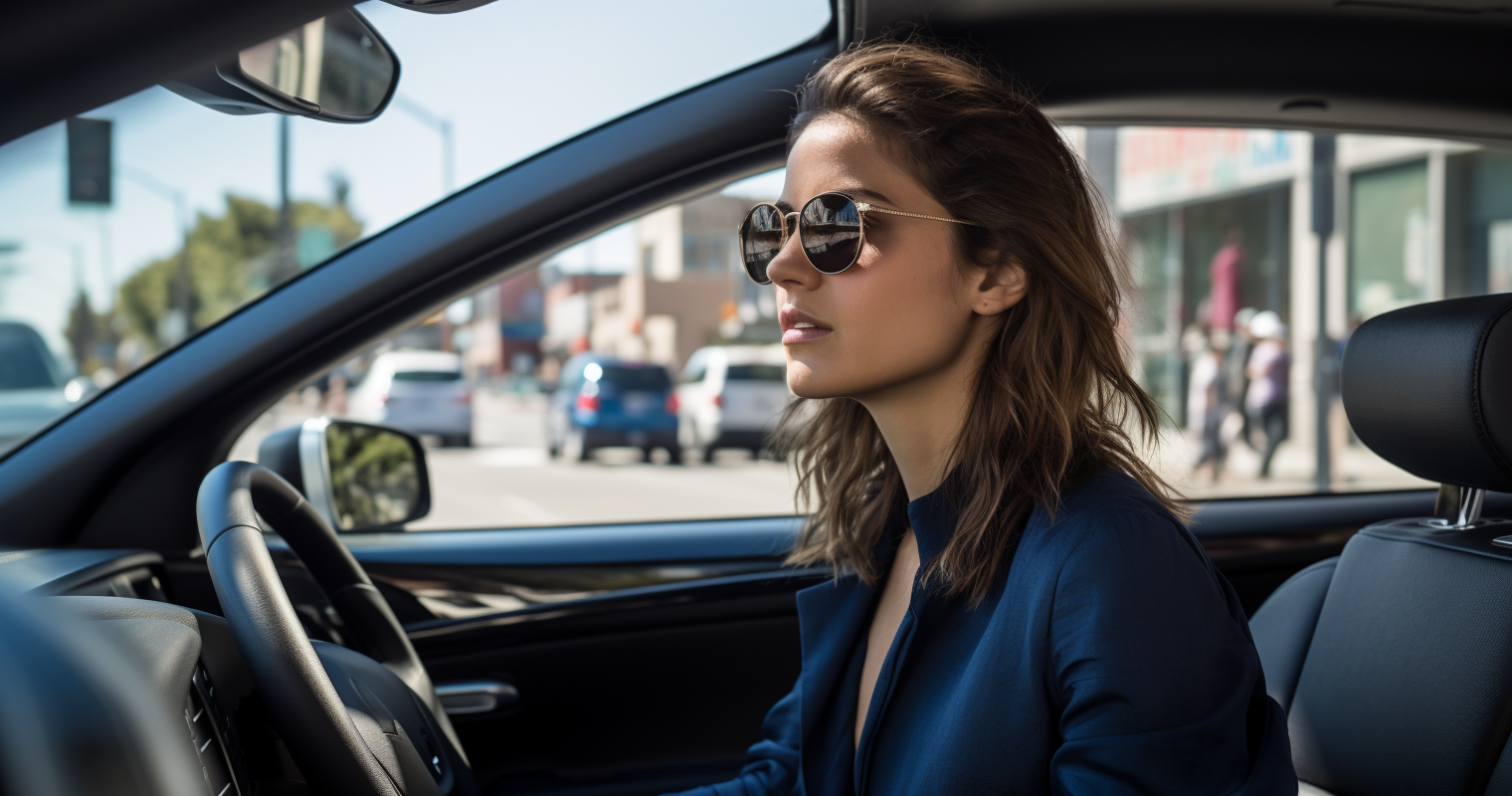
Getting behind the wheel in Singapore means operating a right-hand-drive vehicle on a well-maintained, highly regulated left-hand road network. Roads are modern, consistently signposted in English, and traffic laws are rigorously enforced — with serious consequences for offences including speeding and drink-driving. Those visiting for up to 12 months may drive on a valid foreign licence; anyone staying longer is required to obtain a Singapore licence.
| Item | Details |
|---|---|
| Side of road | Left (right-hand drive vehicles) |
| Speed limits (as of 2025) | Urban roads: 50 km/h; arterial roads: 60–70 km/h; expressways: up to 90 km/h |
| Drink-driving limit (as of 2024) | 80 mg alcohol per 100 ml blood / 35 µg per 100 ml breath (review underway — check official sources) |
| Foreign licence validity | Up to 12 months for visitors; conversion required for longer-term residents |
| Licence conversion requirement | Pass the Basic Theory Test (BTT); apply via a Singapore driving school |
| Emergency services | Police: 999 | Ambulance/Fire: 995 |
| Road tolling system | Electronic Road Pricing (ERP) — automated, gantry-based congestion charging |
| Key authority | Traffic Police (SPF) / Land Transport Authority (LTA) |
Is Singapore safe to drive in?
Singapore’s road safety record ranks among the strongest in Asia, yet recent trends indicate the situation should not be treated as static or assured. The country’s road fatality rate stood at 1.9 deaths per 100,000 people in 2021 — a figure far below the Asia-Pacific average of 15.2 and the South East Asia average of 14.4. More recent data, however, tells a more troubling story.
In 2024, 142 people died on Singapore’s roads — up from 136 fatalities recorded the previous year — while the number of road injuries climbed from 8,941 to 9,302. Traffic deaths reached their highest level in a decade, not seen since 2016. In response, authorities have introduced tougher penalties and broadened the use of camera-based enforcement.
Traffic enforcement cameras recorded 100,720 speeding violations in 2024 — more than twice the figure from 2023. Approximately one in ten of these were captured by red-light cameras after Traffic Police activated their speed-detection functions in April 2024. Unlike in parts of Western Europe where automated enforcement is widely accepted and generally obeyed, a number of drivers in Singapore have been observed continuing to exceed speed limits even in the vicinity of clearly visible cameras.
Motorcycles accounted for just 14.7% of Singapore’s total vehicle population in 2024, yet motorcyclists or pillion riders were involved in 55.2% of all traffic accidents and represented 59.9% of all road fatalities. If you travel by motorcycle, heightened caution is essential.
Elderly people made up 12.5% of Singapore’s overall population in 2024, yet they were involved in 42.3% of all fatal accidents involving pedestrians and accounted for 44% of pedestrian deaths. Drivers must exercise particular care at pedestrian crossings and in residential neighbourhoods. Current statistics are available on the Singapore Police Force (Traffic Police) website and through the Land Transport Authority (LTA).
Singapore’s road infrastructure is of a high standard throughout. Expressways are well-kept, lane markings are clear, and signage is entirely in English. There are no rural single-track roads of the kind found in parts of Europe or regional Asia — as a city-state, virtually all driving in Singapore takes place in urban or suburban settings. The tropical climate brings frequent and often heavy rainfall, making roads slippery; drivers should reduce speed and increase their stopping distances accordingly during wet conditions.
What side of the road do you drive on in Singapore?
Traffic in Singapore travels on the left side of the road, with right-hand-drive vehicles. This is the same arrangement used in countries such as the United Kingdom, Australia, Japan, Malaysia, and India. Drivers arriving from countries where traffic moves on the right — including most of continental Europe, the United States, and China — will need to make a conscious adjustment.
The transition can be disorienting, especially at junctions, roundabouts, and when exiting car parks. Those coming from right-hand-traffic countries frequently make errors such as drifting into the wrong lane when turning, misjudging the vehicle’s width from the unfamiliar driver’s position, and incorrectly estimating distances in a right-hand-drive car. Allowing additional time and care for every manoeuvre during the initial weeks of driving is strongly recommended.
Singapore’s entirely urban and semi-urban road network is consistently marked with lane lines and junction signage that reinforce left-hand-traffic behaviour. Drivers accustomed to more open road environments should pay particular attention to roundabout behaviour, lane discipline, and shorter merging distances that are characteristic of dense city driving.
What are the main driving rules in Singapore?
Singapore enforces its traffic regulations rigorously and operates a zero-tolerance approach to violations, with penalties applied consistently. A thorough understanding of the key rules before you drive is essential.
Speed limits (as of 2025): The maximum speed on expressways is 90 km/h on open sections, with certain tunnels limited to 70–80 km/h — posted signs must always be followed. Major arterial roads are generally capped at 60–70 km/h, while built-up urban streets are typically limited to 50 km/h. School zones and Silver Zones (areas near facilities serving elderly residents) carry lower limits. Speed limits vary according to location, so always observe posted signs. Speeding penalties were increased from 1 January 2026; consult the Traffic Police website for current fines and demerit point allocations.
Drink-driving (as of 2024): Singapore law sets the legal alcohol limit at 35 microgrammes per 100 millilitres of breath, or 80 milligrammes per 100 millilitres of blood. Note that Singapore announced in February 2026 its intention to substantially lower this limit — visit the Ministry of Home Affairs website for the most up-to-date threshold before consuming any alcohol prior to driving.
Under current law (as of 2025), a first-time drink-driving conviction may result in a fine of between S$2,000 and S$10,000, imprisonment for up to 12 months, or both. Repeat offenders face fines of between S$5,000 and S$20,000, a jail term of up to two years, or both. First offenders are disqualified from driving for a minimum of two years; repeat offenders face a minimum disqualification period of five years.
Mobile phones: Using a handheld mobile phone while driving is prohibited. Hands-free use is permitted, as is the case in most of Europe and Australia, but enforcement in Singapore is active and penalties are significant. Secure your phone in a holder and configure your navigation before setting off.
Seatbelts and child restraints: All vehicle occupants — whether seated in the front or rear — must wear seatbelts. Children under 1.35 metres in height are required to use a suitable child restraint system or booster seat. Unlike some jurisdictions where car seat requirements are based on age, Singapore’s rule is based on height. Always bring an appropriate restraint for any child travelling with you.
Demerit points: Singapore operates a Demerit Points System to track driver conduct. Accumulating 24 demerit points within any 24-month period may lead to licence suspension. Points are issued for a broad range of offences, including speeding, running red lights, and handheld mobile phone use. Newly qualified drivers are subject to lower thresholds before suspension applies.
Right of way and general conduct: Drivers are required to give way to pedestrians at zebra crossings and signalised pedestrian crossings. An amber traffic signal means “prepare to stop” — not an invitation to accelerate through the junction. Lane discipline is expected; always signal when changing lanes. Unnecessary use of the horn is discouraged, road rage is uncommon, and aggressive driving is socially unacceptable.
What equipment are you legally required to carry in your car in Singapore?
The statutory requirements for equipment carried in private vehicles in Singapore are relatively limited compared to many other countries. There is no legal obligation to carry warning triangles, high-visibility vests, first aid kits, fire extinguishers, or breathalysers as standard in-car equipment — in contrast to countries like France, where breathalysers are mandatory, or Germany and Austria, where first aid kits and warning triangles are compulsory.
Vehicles must nonetheless be roadworthy and meet all requirements set out in the Road Traffic Act, as administered by the Land Transport Authority (LTA). Every vehicle must have functioning seatbelts for all occupied seats, working lights, mirrors, and windscreen wipers, and must have passed the relevant periodic vehicle inspection. Private cars in Singapore are subject to inspections by Vicom or an equivalent approved inspection centre at prescribed intervals.
All vehicles must be fitted with an In-Vehicle Unit (IU) or the newer On-Board Unit (OBU) for use with the Electronic Road Pricing (ERP) tolling system. The ERP scheme requires cars to be equipped with an In-Vehicle Unit (IU), a rectangular device affixed to the inside lower right of the front windscreen, which deducts the applicable toll charge from a CashCard. The CashCard must be inserted into the device when driving through ERP gantries; failing to do so is a legal offence. If you are hiring a car, verify that this equipment is in place and that the CashCard has sufficient credit before you drive.
While not a legal requirement, carrying a warning triangle or reflective cone is strongly advisable in the event of a breakdown, particularly on expressways. For the most current requirements, refer to the LTA website and the Traffic Police website, as regulations may be updated.
What are the most important road signs in Singapore?
Singapore’s road signs follow broadly recognised international conventions and are displayed in English alongside internationally understood symbols and shapes. Drivers from countries using Vienna Convention-style signage — encompassing most European, Commonwealth, and Asian nations — will generally find the system familiar. The consistent use of English throughout Singapore’s road network is a considerable advantage for newcomers to the country.
Signs are grouped into the standard international categories: regulatory signs (circular, typically with a red border), warning signs (triangular with a red border), and informational signs (rectangular, usually in blue or green). Speed limit signs take the form of a red-bordered circle containing a number — for example, “50” within a red circle denotes a maximum speed of 50 km/h. The No Entry sign is a red circle with a white horizontal bar across the centre.
Some specific features of Singapore’s road environment are worth noting. School Zones and Silver Zones are indicated by dedicated signage and reduced speed limits; Silver Zones are areas with higher concentrations of elderly pedestrians and incorporate additional road-safety infrastructure. Electronic Variable Message Signs (VMS) installed on expressways provide real-time traffic information and display live speed limits — these carry the same legal force as fixed signs and must be observed accordingly.
Traffic lights operate on a standard red-amber-green sequence. An amber light means “prepare to stop” — this rule is strictly enforced, and drivers who habitually treat amber as a cue to accelerate may face penalties. At certain junctions, green arrow signals permit turns in the indicated direction even while the main signal is red; these must be obeyed carefully. Pedestrian crossing lights use a green man signal — vehicles must yield to any pedestrian crossing under a green man, even when the vehicular light is also green.
Yellow box junctions — hatched yellow squares painted at busy intersections — must not be entered unless your exit is clear, following the same principle as in the United Kingdom. Entering a yellow box when your exit is blocked is a fineable offence.
What must you do if you have a road accident in Singapore?
If you are involved in a road accident in Singapore, specific legal obligations apply under the Road Traffic Act. Leaving the scene of an accident without stopping is a criminal offence. The following steps outline the correct procedure (as of 2025):
- Bring your vehicle to an immediate stop and remain at the scene. Leaving without stopping constitutes a criminal offence under Singapore law.
- Contact emergency services if there are injuries. Call 999 for the police or 995 for an ambulance. If no one has been hurt and your vehicles are obstructing traffic, move them to a safe spot before swapping details with the other party.
- Exchange details with all parties involved. Provide your name, contact number, and insurance information, and collect the same from the other driver. Note the licence plate number, make and model of the other vehicle, along with the driver’s name and their insurer.
- Photograph and record the scene. Take pictures of all vehicles and any visible damage, road markings, and the surrounding area. Record the time, date, and exact location of the incident.
- Notify your insurer within 24 hours, regardless of whether you plan to make a claim. Singapore insurers typically impose a mandatory reporting requirement within this window — failing to comply may compromise your insurance cover.
- Submit a police report where required. A formal report is mandatory when there are injuries, when another party declines to provide their details, when a government or foreign-registered vehicle is involved, or in the event of a hit-and-run. Reports may be lodged at any Traffic Police divisional headquarters.
Road incidents in Singapore fall under the jurisdiction of the Traffic Police, a division of the Singapore Police Force (SPF). For non-emergency enquiries, contact the Traffic Police on 6547 0000, or dial 999 in an emergency. Further guidance on accident reporting is available at www.police.gov.sg. Always verify procedures against official sources, as requirements may be subject to change.
Where can you find up-to-date road traffic information for Singapore?
Singapore offers drivers a comprehensive range of traffic information tools, primarily developed and maintained by the Land Transport Authority (LTA). The key resources available are outlined below:
- MyTransport.SG: The official government portal and mobile application for real-time traffic updates, ERP charges, road works, and incident alerts. Accessible at www.mytransport.sg and as a smartphone app. This is the most authoritative source for current ERP gantry rates and road closures. ERP rates are reviewed quarterly by LTA Singapore, so visit MyTransport Singapore for the latest rates and new gantries.
- One Motoring: The LTA’s dedicated portal for vehicle-related matters, including road tax renewals, vehicle inspections, and traffic advisories. Available at www.onemotoring.lta.gov.sg.
- Google Maps and Waze: Both platforms are extensively used in Singapore and offer live traffic data, awareness of ERP zones, and community-based incident reporting. Waze in particular benefits from an active Singapore user base that flags speed cameras, accidents, and roadworks in real time.
- Radio traffic updates: Local stations including 938NOW (93.8FM) and GOLD 905 (90.5FM) broadcast regular traffic bulletins during peak commuting hours — a useful option for drivers who prefer audio information while navigating.
- Variable Message Signs (VMS): Overhead electronic displays installed along all major expressways show live traffic conditions, current speed limits, and incident alerts. These are legally binding and must always be followed.
Confirm that any app or website address is current before relying on it, as official platforms are periodically updated. The LTA website remains the most reliable starting point for authoritative traffic and transport information.
How does parking work in Singapore?
Parking in Singapore is managed through a combination of public and private car parks, with the majority of paid parking now handled electronically. The country has largely moved away from paper-based payment methods towards cashless and app-based solutions.
Coupon and electronic parking: A paper coupon system remains in use at some surface car parks, requiring drivers to purchase and display coupons showing their arrival time. However, most car parks — particularly those in Housing Development Board (HDB) estates, shopping centres, and commercial buildings — operate on the Electronic Parking System (EPS), where charges are automatically deducted from a CashCard or processed via NETS through the vehicle’s IU or OBU unit. In many upgraded car parks, charges are deducted directly from the CashCard inserted in the vehicle’s IU, removing the need for on-site attendants.
Parking apps: The Parking.sg app, developed by the LTA and the Urban Redevelopment Authority, enables drivers to pay for surface parking via smartphone, doing away with the need for physical coupons. Sessions can be extended remotely, and unused time is refunded automatically. This is the recommended approach for short-stay surface parking.
Parking fines (as of 2024): Penalties for illegal parking range from S$50 to S$300, depending on the nature and location of the offence. Parking on double yellow lines, in restricted zones, or obstructing fire hydrants and driveways attracts the highest fines. Always check posted signs for time restrictions before leaving your vehicle unattended.
Resident parking permits: Residents of HDB estates and certain private housing developments may apply for season parking passes through the HDB or their relevant Town Council, granting access to designated parking spaces at a monthly rate. Applications are submitted via the HDB website or through the relevant building management. Prices are subject to periodic review, so confirm current rates directly with the HDB.
Disabled parking: Disabled parking in Singapore is administered under the Disabled Persons Parking Scheme. Vehicles displaying a valid Handicapped Parking Label (HPL), issued by the LTA, are permitted to use designated disabled bays at HDB estates, government premises, and many private car parks. Foreign disabled parking permits — such as the UK Blue Badge or equivalent from another country — are not recognised in Singapore. Drivers who require disabled parking access must apply for a local HPL through the LTA; visit the LTA website for current eligibility criteria and application details.
Can you drive in Singapore on a foreign or international licence?
Foreign nationals holding a valid overseas driving licence who plan to remain in Singapore for fewer than 12 months and are not seeking residency may drive in Singapore without converting their licence — their foreign licence is sufficient for this period.
However, if the licence is not issued in English, an International Driving Permit (IDP) is required even when the visit meets the above conditions. Where an IDP cannot be obtained, a certified English translation of the foreign licence must be carried. In all cases, both the original licence and the IDP or translation should be kept together and carried at all times when driving.
ASEAN licence holders: Drivers from ASEAN member states are required to hold a valid domestic driving licence but do not need an IDP when driving in Singapore, in accordance with the ASEAN Agreement on the Recognition of Domestic Driving Licences. This applies to drivers from countries including Malaysia, Thailand, Indonesia, the Philippines, Vietnam, and other regional member states.
Converting your foreign licence: Anyone intending to remain in Singapore for more than 12 months is required to convert their overseas licence to a Singapore driving licence. This conversion process involves passing the Basic Theory Test (BTT), which assesses knowledge of Singapore’s Highway Code and local traffic regulations. Applications must be made through one of Singapore’s approved driving schools.
The BTT is a computer-based multiple-choice examination covering road rules, traffic signs, and safe driving practices as they apply in Singapore. While a full learner driver programme in Singapore can cost in the region of S$3,000 to S$4,000 for a Class 3 or 3A licence, the cost of a direct licence conversion for an experienced foreign driver is considerably lower. Contact your chosen driving school for current conversion fees.
For complete and current information on licence conversion procedures, bilateral recognition agreements, and approved testing centres, consult the Land Transport Authority (LTA) or the Traffic Police websites, as requirements and recognised licence categories are subject to change.
Frequently Asked Questions About Driving in Singapore
Do I need insurance to drive in Singapore, and is my foreign policy valid?
Every vehicle operated on Singapore’s roads must carry at minimum third-party insurance, as required by Singapore law. An overseas insurance policy will almost certainly not provide valid coverage for driving in Singapore — a locally issued motor insurance policy is required. If you are hiring a vehicle, insurance is generally bundled into the rental agreement, but you should carefully review the excess amounts and the scope of cover. If you own or lease a vehicle in Singapore, you must arrange a policy directly with a Singapore-registered insurer.
How do toll roads work in Singapore, and how do I pay?
The Electronic Road Pricing (ERP) system is Singapore’s electronic toll collection scheme, introduced to manage traffic flow through road pricing. Designated roads and expressways are subject to ERP charges, which apply during morning and evening peak periods. Tolls are deducted automatically from your vehicle’s IU or OBU; there are no toll booths and no option to pay in cash. Rental vehicles are normally equipped with an IU and either use a CashCard or charge tolls directly to the rental company. ERP rates are reviewed quarterly by the LTA — current charges are available at MyTransport.sg.
Are there any winter driving requirements in Singapore?
No. Singapore lies close to the equator and experiences a tropical climate with consistently hot and humid conditions throughout the year. There is no winter, no snow or ice, and no requirement for winter tyres, snow chains, or any cold-weather driving provisions. The primary weather-related hazard for drivers is heavy tropical downpours, which can significantly reduce visibility and cause roads to become slippery. During and after rainfall, reduce your speed and allow greater distance between your vehicle and the one ahead.
What are the penalties for using a mobile phone while driving?
Holding and using a mobile phone while driving is illegal in Singapore, carrying a financial penalty and demerit points. Hands-free use — via a phone secured in a mount and operated through Bluetooth or a speakerphone — is permitted, provided the driver does not physically handle the device at any stage. Traffic enforcement in Singapore has intensified considerably in recent years; refer to the Traffic Police website for current penalty amounts and demerit point values, as these are subject to revision.
Can children travel in the front seat of a car in Singapore?
Children under 1.35 metres in height must be secured in a suitable child restraint system or booster seat, regardless of which seat they occupy in the vehicle — this applies equally to front and rear seats. Singapore’s child restraint rules are based on height rather than age. Wherever possible, young children should be seated in the rear of the vehicle. Child restraints must be appropriate for the child’s height and weight; consult current LTA guidance for approved seat standards.
What is Singapore’s demerit points system, and how does it affect expats?
Singapore’s Demerit Points System is used to track driver behaviour; reaching 24 demerit points within a 24-month period may result in the suspension of a Singapore driving licence. This system applies to holders of Singapore-issued licences. Drivers operating on a foreign licence remain subject to prosecution for traffic offences in Singapore, and fines must be settled, though demerit points may not be transmitted to your home country licence — this does not, however, reduce the severity of penalties applied locally. It is essential to pay any composition fines promptly, as outstanding fines can affect your ability to renew a visa or long-term pass.
Is it expensive to own a car in Singapore?
Car ownership in Singapore is among the most costly in the world, a consequence of deliberate government policy to limit vehicle numbers and manage road congestion. The single largest expense is the Certificate of Entitlement (COE) — a permit to own a vehicle that can amount to tens of thousands of dollars. A COE grants ownership rights for a period of 10 years, after which the vehicle must be deregistered or a further COE obtained for an additional 5 or 10 years of use. Beyond the COE, owners must account for vehicle taxes, annual road tax, motor insurance, and recurring ERP charges. Many expatriates living in Singapore find that the city’s excellent public transport network — comprising the MRT and an extensive bus system — renders car ownership unnecessary, particularly for those based in central areas.
What should I do if I am stopped by the Traffic Police in Singapore?
If a Traffic Police officer or patrol vehicle signals you to pull over, do so promptly and safely to the left side of the road. Stay calm and engage with the officer cooperatively. You will be required to present your driving licence and may be asked for your passport or other identification. Should you receive a composition fine — Singapore’s equivalent of a fixed-penalty notice — it must be paid within the specified timeframe, typically through AXS machines, the AXS mobile app, or online. If you wish to contest the fine, you may opt to have the matter determined by a court. Further information is available on the Singapore Police Force website.