
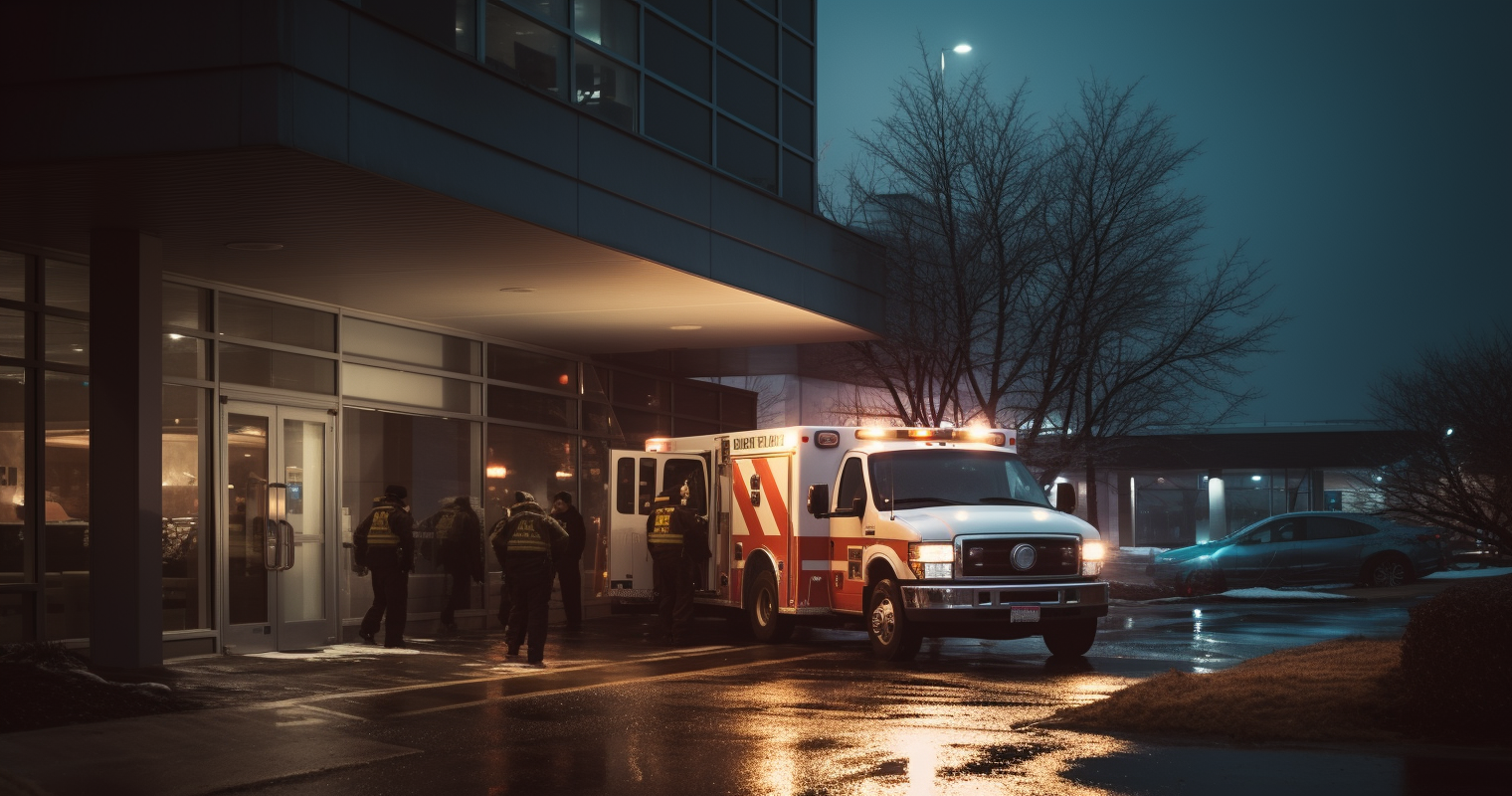
Australia’s national emergency number is Triple Zero (000), which puts callers through to police, fire, and ambulance services. Public hospital emergency treatment is provided at no cost to people covered by Medicare — including most permanent residents and citizens of countries that have reciprocal health agreements with Australia — but overseas visitors who fall outside these entitlements will receive a bill and are strongly advised to arrive with comprehensive travel or health insurance.
| Item | Details |
|---|---|
| Main emergency number | 000 (Triple Zero) — free from any phone, as of 2025 |
| Services covered by 000 | Police, fire, and ambulance |
| Alternative emergency number (mobile) | 112 (redirects to Triple Zero) |
| Non-emergency police line | 131 444 |
| State Emergency Service (SES) | 132 500 (floods, storms) |
| Emergency treatment cost (Medicare holders) | Free at public hospital emergency departments, as of 2025 |
| Emergency treatment cost (overseas visitors without reciprocal agreement) | Charged at hospital rates — travel insurance strongly recommended |
| Mental health crisis line (national) | Lifeline: 13 11 14 (24/7) |
What is the single emergency number in Australia, and does it cover all services?
Triple Zero (000) is the number to call for police, fire, and ambulance assistance anywhere in Australia. It is a single unified number — there is no need to memorise separate numbers for different services. The concept is comparable to 999 in the United Kingdom or 112 across the European Union, though the actual digits are different and those international numbers will not route through to Australian emergency services.
Dialling 911 will not reach emergency services in Australia. The number 911, which is the standard emergency number in the United States, Canada, and certain other countries, cannot be redirected to Triple Zero (000). This is a critical distinction for anyone arriving from North America who might instinctively dial 911 in a crisis.
The Triple Zero system is regulated by the Australian Communications and Media Authority (ACMA) and is intended exclusively for genuine life-threatening or time-critical situations requiring police, fire brigade, or ambulance attendance. All calls to 000 are free, regardless of the type of phone used.
Mobile phone users also have the option of dialling 112 — the internationally recognised emergency number — as an alternative. When dialled from a mobile or satellite phone, 112 is automatically redirected to Triple Zero (000). However, 000 remains the only emergency number that can be dialled from fixed-line telephones, including public payphones.
People with a speech or hearing impairment can access emergency services via the 106 text-based national relay service, though this requires a teletypewriter (TTY) or equivalent device for the deaf. Where a situation is urgent but not life-threatening — such as storm damage or flooding — the State Emergency Service (SES) number 132 500 is the appropriate contact. For routine or non-urgent matters requiring police attention, 131 444 should be used instead of 000.
How do you call for emergency medical assistance, and what should you expect?
In the event of a medical emergency, dial Triple Zero (000) straight away and request an ambulance. Upon connecting, you will hear a brief recorded message confirming your call is being processed; a Telstra operator will then come on the line and ask whether you need police, fire, or ambulance. You may also be asked to state which state or territory you are calling from. The operator will transfer you to the relevant emergency service and remain on the line until the handover is complete.
You will be asked to describe your location in as much detail as possible. Give the street number, street name, nearest cross street, and suburb or locality. If you are in a rural or remote area, include the full address, the name of the property or station, and any recognisable landmarks or nearby roads. Advanced Mobile Location (AML) technology can automatically transmit GPS coordinates from a caller’s mobile phone to emergency services when 000 is dialled, significantly speeding up the process of locating people who cannot describe their exact position.
If you do not speak English, call Triple Zero (000) and state the name of your language or request police, fire, or ambulance as best you can. Triple Zero operators do not have interpreters available directly on the line; calls from non-English speakers are transferred to the police in the relevant capital city, where a translator can be arranged. It is essential to stay on the line and not hang up.
The Emergency+ smartphone app allows you to call Triple Zero (000) directly and simultaneously displays your latitude and longitude coordinates on screen, which you can read out to the operator if you are uncertain of your whereabouts. The app also incorporates ‘what3words’ and ‘drop a pin’ functionality to make location-sharing easier during a crisis — features that are particularly valuable in regional or remote parts of the country where street addresses may not exist.
For non-emergency medical guidance, the healthdirect helpline on 1800 022 222 offers free, round-the-clock health advice from registered nurses, available seven days a week from anywhere in Australia. The Poisons Information Centre on 13 11 26 is the correct number to call if you suspect someone has been poisoned, has overdosed, has taken the wrong medication, or has been bitten or stung by a venomous creature — this service also operates 24 hours a day, seven days a week.
What should you do in a mental health crisis in Australia?
If you or someone nearby is experiencing suicidal thoughts and faces immediate danger, call Triple Zero (000) without delay or proceed directly to the nearest hospital emergency department. A mental health crisis — particularly one in which someone cannot be kept safe — constitutes an emergency in the same way as a physical medical crisis, and hospital emergency departments are fully equipped to provide acute mental health assessment and care.
Lifeline (13 11 14) is a national crisis support and suicide prevention service operating around the clock, every day of the year. The Suicide Call Back Service (1300 659 467) provides free telephone counselling for people who are suicidal, those caring for someone who is suicidal, and those bereaved by suicide. Both services are open to anyone in Australia, regardless of visa or residency status.
Individual states and territories each maintain their own dedicated mental health crisis lines. In the ACT, callers can reach crisis support on 1800 629 354; in New South Wales, the Mental Health Line is 1800 011 511; in the Northern Territory, the number is 1800 682 288. Western Australia operates the Mental Health Emergency Response Line on 1800 676 822, while South Australia’s mental health triage service is available statewide on 13 14 65, around the clock.
When a person in crisis refuses help, you can contact the local Crisis Assessment and Treatment Team (CATT) through your nearest public hospital — in some parts of Australia this team is referred to as the Psychiatric Emergency Team (PET). CATT teams consist of qualified mental health professionals who assess the circumstances and determine the most appropriate response, which might involve attending the person at home or arranging in-patient hospital care.
For younger people, Kids Helpline is Australia’s only free, confidential, 24/7 counselling service dedicated to children and young people aged between 5 and 25, reachable on 1800 55 1800. headspace offers free online and telephone support to young people aged 12 to 25 on 1800 650 890. Always confirm current numbers through official sources, as contact details can change over time.
Where can you go for emergency medical treatment in Australia?
Public hospitals are the primary destination for emergency and acute healthcare needs in Australia. The overwhelming majority of emergency department services are delivered through the public hospital network. Every major city and virtually all significant regional centres have at least one public hospital running a fully staffed emergency department at all hours.
Patients admitted to the emergency department of a public hospital are covered by Medicare. Private hospitals may also operate emergency departments, but attendance there can result in out-of-pocket costs that may or may not be offset by private health insurance, depending on the level of cover you hold. This distinction matters: public and private hospital emergency departments may both be accessible, but the financial consequences of choosing one over the other can differ substantially.
Urgent care clinics operate in various locations across Australia and are designed to treat conditions that are time-sensitive but do not warrant a full hospital emergency department — for example, minor fractures, lacerations, or infections. These clinics often offer shorter waiting times than hospital EDs and serve as a practical middle ground between seeing a GP and attending a hospital. The healthdirect Service Finder can help you locate the nearest hospital, urgent care clinic, or after-hours GP in your area.
During major emergencies such as significant bushfires or severe storms, call volumes to 000 can spike dramatically, causing brief delays before your call is answered. If this occurs, remain on the line — hanging up will cause you to lose your place in the queue. This is especially relevant during the Australian natural disaster season.
Is emergency medical treatment free in Australia, or is there a charge?
Emergency department treatment at a public hospital is provided without charge to patients attending as public patients under Medicare. However, Medicare does not extend to ambulance services, and the cost of ambulance transport varies considerably between states and territories. In short, the emergency treatment itself at a public hospital ED is free for eligible Medicare patients, but the ambulance journey to get there may generate a separate bill.
Ambulance charges differ across the country. Queensland and Tasmania fund ambulance services at no charge to the patient. Residents of other states and territories are generally liable for ambulance costs unless they hold ambulance cover through a private health insurance policy or have paid for a dedicated ambulance subscription. In Victoria, for instance, patients who use the ambulance service may face significant out-of-pocket expenses unless they hold an Ambulance Victoria membership, qualify for a concession entitlement, or have a health insurance policy that covers ambulance services. It is advisable to check the specific ambulance funding arrangements in your state or territory, as these are subject to change.
Overseas visitors are required to meet the costs of their hospital treatment in Australia. Anyone without a Medicare card or Medicare eligibility will be invoiced for services received. Charges for complex emergency hospital care can run to thousands of dollars, which underscores why travel insurance is essential for all visitors. If you are unable to pay immediately but require urgent or emergency treatment, you should nonetheless remain at the hospital and be assessed by a clinician — an Overseas Patient Liaison Officer at many hospitals is available to discuss payment arrangements with you.
Private hospital emergency departments are not covered by Medicare, which means attendance there may result in additional fees even for people who hold Medicare entitlement. As a general principle, if you are uncertain, head to a public hospital emergency department.
Do expats need travel or health insurance to access emergency care, and what happens if they arrive without cover?
Your need for insurance depends on your circumstances in Australia. Permanent residents and Australian citizens are enrolled in Medicare and can access free emergency treatment at public hospitals without additional insurance. However, temporary visa holders, tourists, and short-term visitors are not automatically eligible for Medicare and should obtain comprehensive travel or health insurance before setting foot in the country.
Without Medicare eligibility, you bear the full cost of any medical care and treatment at a public hospital or other healthcare facility. If you hold health insurance with an Australian provider or have valid travel insurance, you may be able to reclaim some expenses after payment. Without any cover, even a single hospital admission can produce a financial burden that is difficult to manage.
Crucially, no person will be refused emergency treatment on the grounds that they cannot pay — if you require urgent or emergency care, remain at the hospital to be assessed by a clinician, and speak with an Overseas Patient Liaison Officer about payment options. The bill, however, will still arrive. Expats on student visas, working holiday visas, or other temporary visas should review what their particular visa category demands in terms of health cover: student visa holders, for example, are required to maintain Overseas Student Health Cover (OSHC) as a condition of their visa.
Once a person obtains permanent residency and enrolls in Medicare, they gain access to the same entitlements as Australian citizens: free treatment as a public patient in a public hospital, subsidised GP visits, and reduced-cost prescription medicines through the Pharmaceutical Benefits Scheme (PBS). It is worth verifying your Medicare eligibility with Services Australia promptly upon receiving permanent residency.
Are there bilateral health agreements entitling some foreign nationals to free or reduced-cost treatment?
Australia has entered into Reciprocal Health Care Agreements (RHCAs) with a number of other countries, operating on a similar principle to the reciprocal arrangements found between many European nations or under various Commonwealth frameworks. Under these agreements, nationals of participating countries are entitled to access certain Medicare-subsidised services — including emergency hospital treatment — when visiting Australia temporarily.
The countries that currently hold a reciprocal health agreement with Australia are the United Kingdom (including Northern Ireland), the Republic of Ireland, New Zealand, the Netherlands, Belgium, Finland, Norway, Sweden, and Slovenia. Citizens of these countries may be entitled to receive medically necessary treatment at a public hospital as a public patient during a temporary visit, without being billed for the care. The scope and terms of each individual agreement vary, however, so it is important to confirm the specific conditions applicable to your nationality with the Australian Department of Health or your home country’s health authority before you travel.
Public hospital treatment in Australia is free for Australian and New Zealand citizens, most permanent residents, and nationals of countries covered by a current reciprocal agreement. Visitors from countries not included on the RHCA list — which accounts for the vast majority of the world’s nationalities — do not benefit from these provisions and must carry adequate travel or health insurance. Always check the current status of any relevant agreement directly with the Australian Department of Health and Aged Care, since agreements can be modified or suspended at any time.
How does the emergency healthcare system compare to systems expats may be familiar with?
Australia’s healthcare system blends government-funded services with private providers, making it a mixed public-private model broadly in line with systems found across much of Western Europe, rather than a purely state-run or purely insurance-driven arrangement. Unlike countries where patients are expected to pay upfront or carry private insurance as a prerequisite for care, Australia delivers free emergency and hospital treatment to Medicare-eligible patients through the public system.
In certain respects the system parallels the NHS in the United Kingdom: every person in Australia holding a Medicare number is entitled to free treatment as a public patient in a public hospital, subsidised GP consultations, and access to the Pharmaceutical Benefits Scheme (PBS), which substantially reduces the cost of many prescription medicines. The key difference from the NHS model — which is funded through general taxation and broadly open to all UK residents — is that Medicare eligibility in Australia depends on citizenship, permanent residency status, or the existence of a qualifying bilateral agreement.
A further distinction from fully public systems lies in the role of private health insurance. In Australia, holding private cover allows you to be treated as a private patient in either a private or public hospital, giving you choice over your treating doctor, potentially shorter waiting times for elective procedures, and a greater likelihood of receiving a private room. This layered approach — where private insurance enhances choice and convenience rather than the quality of emergency care itself — will be recognisable to those arriving from countries such as France, Germany, or Ireland.
One aspect of the system that frequently surprises newcomers, particularly those from countries where emergency ambulance call-outs are free at the point of use, is that ambulance services are not covered by Medicare. Depending on the state or territory, the cost may be absorbed by the state government, or it may fall entirely to the individual unless they hold appropriate ambulance cover through a subscription or private insurance policy.
What emergency services exist beyond medical — how do police and fire services work?
Triple Zero (000) is the gateway to police, fire, and ambulance services throughout Australia. In any genuine emergency involving criminal activity, fire, or an immediate threat to life or safety, 000 is always the correct number to call. While police and fire services are organised and administered at the state and territory level, the 000 system routes your call to the appropriate local service no matter where in Australia you are located.
For matters that are urgent but not life-threatening — reporting a burglary, a minor traffic accident, or passing on information to police — the Police Assistance Line on 131 444 is the appropriate contact, provided you are not in immediate danger. Using 000 for non-emergency matters is actively discouraged, as it diverts resources away from situations where every second counts.
Australia’s fire services are divided between career urban fire brigades and volunteer rural fire services, with the structure varying between states and territories. If you encounter a bushfire, house fire, or any structure fire, call 000 and ask for “Fire.” For weather-related emergencies that do not pose an immediate threat to life — such as flood damage or storm destruction — the State Emergency Service (SES) is the right organisation to contact via 132 500. The SES coordinates flood rescues, storm-damage responses, and similar natural hazard events across the country.
Expats who are accustomed to carrying identity documents as a legal requirement will find that Australia has no general obligation to carry ID at all times, although police may request identification in particular circumstances. Encounters with Australian police generally follow the conventions of other common-law jurisdictions: stay calm, be cooperative, and seek legal representation if you are arrested or questioned under caution. If you do not speak English, you have a right to an interpreter in both police and court settings.
Are there country-specific emergency risks in Australia?
Australia presents a range of natural hazards that may be entirely new to many arriving expatriates. Bushfires represent one of the most serious threats, especially during the summer months from December to February across southern and eastern states, and they can ignite and spread at alarming speed. Cyclones pose a significant risk along the northern and northwestern coastlines, typically between November and April. Flash flooding can strike across large inland regions with little warning. While less frequent, earthquakes also occur across parts of the country.
Australia is additionally home to a number of the world’s most venomous animals, including certain species of snake and spider, as well as several dangerous marine creatures such as jellyfish. In the event of a bite or sting, the Poisons Information Centre on 13 11 26 operates around the clock, every day of the week. If the bite or sting appears life-threatening, call 000 without hesitation.
Emergency Alert is the national telephone-based warning system through which state and territory emergency service organisations can push voice messages to landlines and text messages to mobile phones within a defined geographic area, notifying residents of actual or potential emergencies nearby. Registering your mobile phone number to your current residential address helps ensure these alerts reach you promptly. The ABC Emergency website and the ABC radio network function as the designated national channels for public emergency information during major disasters.
Each state and territory also runs its own hazard-specific alert infrastructure. New South Wales uses the NSW Rural Fire Service app and the RFS website for fire-related alerts; Victoria uses the VicEmergency app; Queensland uses the Get Ready Queensland platform. Download the app relevant to your state as soon as you settle in. The Australian Government’s Disaster Assist website sets out the financial and practical assistance available to individuals affected by declared natural disasters.
What should expats do to prepare for emergencies before they arise?
- Register with your home country’s embassy or consulate. Most governments offer a voluntary registration scheme — variously known as LOCATE, STEP, or a similar name — that enables consular staff to reach you in the event of a major emergency or natural disaster. Visit your home government’s travel advice website for registration instructions. The process is free and is usually completed online.
- Enrol in Medicare as soon as you become eligible. If you hold permanent residency or are a national of a country covered by a reciprocal health agreement, registering with Medicare promptly means you can access free emergency hospital treatment without administrative delays. Contact Services Australia to begin the enrolment process.
- Arrange appropriate health and ambulance cover. Medicare does not cover ambulance services in all states and territories. Review the ambulance funding arrangements specific to where you live and consider either a dedicated ambulance subscription or a private health insurance policy that includes ambulance cover.
- Download the Emergency+ app. This app lets you call Triple Zero (000) directly and simultaneously shows your GPS coordinates on screen, which you can read to the operator if you do not know your exact location. It also features what3words and pin-drop functionality to assist with location sharing during emergencies.
- Download your state’s dedicated hazard alert app. Each state and territory provides its own emergency information app — for example, VicEmergency in Victoria, the NSW RFS app in New South Wales, and GetReady Queensland — delivering real-time updates on fires, floods, and severe weather in your area.
- Identify your nearest public hospital emergency department in advance. Use the healthdirect Service Finder to find the closest public hospital to your home and workplace before an emergency arises.
- Store critical phone numbers before you need them. Save 000 (emergency services), 132 500 (SES), 131 444 (non-emergency police), 1800 022 222 (healthdirect), and 13 11 14 (Lifeline) in your phone well ahead of any emergency situation.
- Assemble a household emergency kit. The Australian Red Cross and state emergency agencies recommend keeping a supply of water, non-perishable food, essential medications, a first-aid kit, a torch, a battery-powered radio, copies of important documents, and cash. Consult the Australian Red Cross emergency kit guidance for a comprehensive checklist.
Where can expats get official and up-to-date emergency information?
The following official sources provide the most reliable and current emergency information for Australia. Given that fees, procedures, and contact details are subject to change, always verify specific details directly with the relevant authority.
- Triple Zero (000) — triplezero.gov.au: The Australian Government’s official site for the national emergency call service, with multilingual resources and guidance on when and how to call.
- Healthdirect — healthdirect.gov.au: The Australian Government’s health information and advice platform, including the Service Finder tool and the 1800 022 222 nurse helpline.
- Services Australia — Medicare: Authoritative information on Medicare eligibility criteria, how to enrol, and what services are covered.
- Australian Department of Health — Reciprocal Health Care Agreements: The current list of countries that have bilateral health agreements with Australia and details of what each agreement covers.
- Australian Communications and Media Authority (ACMA) — Emergency Calls: Regulatory and technical information about the Triple Zero service and how it operates.
- Disaster Assist — disasterassist.gov.au: Information about government financial support and practical assistance available to those affected by declared natural disasters.
- ABC Emergency: The national public broadcaster’s dedicated emergency information hub, activated during major disaster events across Australia.
- Smartraveller — smartraveller.gov.au: The Australian Government’s travel advisory service, which also provides guidance on reciprocal health arrangements relevant to different nationalities.
Frequently asked questions
What is the emergency number in Australia?
Triple Zero (000) is the number to call for police, fire, and ambulance services anywhere in Australia. Calls are free from any type of phone. Mobile phone users can also dial 112, which redirects automatically to Triple Zero. Dialling 911 will not connect you to Australian emergency services under any circumstances.
Will I be treated in an emergency if I don’t have a Medicare card?
Yes — nobody is refused emergency care in Australia on the grounds of inability to pay. If you need urgent or emergency treatment, stay at the hospital and allow a clinician to assess you; an Overseas Patient Liaison Officer is on hand at many hospitals to help you discuss payment options. That said, overseas visitors without Medicare entitlement or a qualifying reciprocal health agreement will be invoiced for the cost of their treatment.
Does Medicare cover ambulance costs?
No — ambulance services fall outside Medicare’s scope of coverage. Some state governments fund ambulance services directly, meaning residents of those states are not charged, while residents of other states must pay out of pocket unless they hold ambulance cover through a private health insurance policy or ambulance subscription. Queensland and Tasmania provide free ambulance trips. Review your own state’s policy and factor ambulance cover into your insurance arrangements.
Which countries have a reciprocal health agreement with Australia?
Australia currently has reciprocal health agreements with the United Kingdom (including Northern Ireland), the Republic of Ireland, New Zealand, the Netherlands, Belgium, Finland, Norway, Sweden, and Slovenia. Nationals of these countries may be entitled to receive medically necessary public hospital treatment under Medicare arrangements during temporary visits to Australia. Before you travel, confirm the exact scope of the agreement applicable to your nationality with the Australian Department of Health, as terms can change.
What should I do in a mental health emergency?
If you or someone you know is in immediate danger due to suicidal thoughts or a mental health crisis, call Triple Zero (000) immediately or go directly to the nearest hospital emergency department. For crisis support that is urgent but not immediately life-threatening, Lifeline on 13 11 14 is available 24 hours a day, seven days a week. Each state and territory also maintains its own dedicated mental health crisis line — refer to the mental health section above for state-specific numbers.
What should I do in a bushfire or natural disaster?
If there is an immediate threat to life, call 000. For non-life-threatening storm or flood situations, contact the SES on 132 500. The national Emergency Alert system will send voice messages to landlines and text messages to mobile phones in affected areas when a hazard is approaching or active. Download the official hazard app for your state — such as VicEmergency or the NSW RFS app — and follow all instructions from emergency services. Keep the ABC Emergency website bookmarked and tune in to local ABC radio for updates during major events.
Can I text 000 in an emergency?
No — 000 and 112 cannot be contacted by text message. The only text-based option for accessing emergency services is the 106 national relay service, which requires a teletypewriter (TTY) or a device specifically designed for the deaf. In all other circumstances, emergency contact must be made by voice call to 000.
Is there a non-emergency medical helpline in Australia?
Yes. The healthdirect helpline on 1800 022 222 gives you free access to registered nurses and doctors who can advise you on illnesses and injuries — available 24 hours a day, seven days a week, from anywhere in Australia at no charge. This service is the ideal first port of call when you are uncertain whether your situation requires an ambulance, a trip to the emergency department, or simply a GP appointment.