
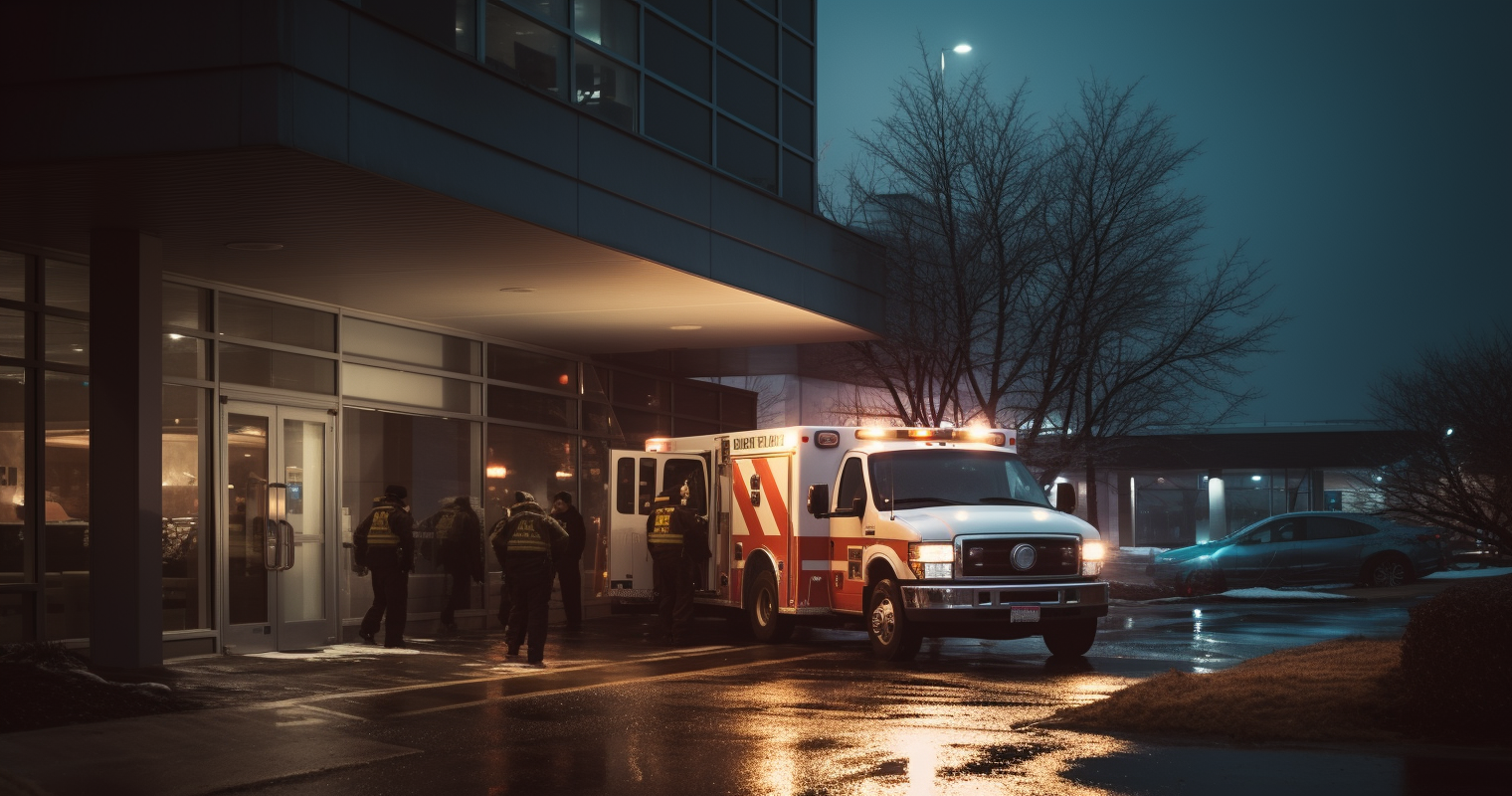
Indonesia runs a layered emergency services framework centred on a single unified number — 112 — capable of routing calls to police, fire, ambulance, and other response agencies. Dedicated specialist lines also operate alongside this central number. Emergency medical care is not provided free of charge to tourists or uninsured visitors; all costs fall to the individual or their insurer. Expats enrolled in the national BPJS Kesehatan programme can access subsidised treatment at public healthcare facilities.
| Item | Details |
|---|---|
| Single emergency number | 112 (as of 2025) — routes to police, fire, ambulance, and other services |
| Ambulance | 118 or 119 (as of 2025) |
| Police direct line | 110 (as of 2025) |
| Fire brigade direct line | 113 (as of 2025) |
| National Disaster Management (BNPB) | 117 and 129 (as of 2025) |
| Emergency treatment cost for tourists | Not free — full out-of-pocket payment required without insurance (as of 2025) |
| BPJS Kesehatan eligibility for expats | Requires KITAS/KITAP, 6+ months residency, and formal employment or investment (as of 2025) |
| Bilateral health agreements | None known to provide free emergency treatment for foreign nationals in Indonesia (verify with your embassy) |
What is the single emergency number in Indonesia, and are there separate numbers for each service?
The number every resident and visitor should store is 112, Indonesia’s national emergency hotline. It serves as the primary contact point whenever you are uncertain which service to call, connecting you with operators who can assess your situation and route your call to the appropriate authority — whether that is medical personnel, the police, or the fire service.
In Indonesia’s main cities, 112 operates around the clock and can be dialled from mobile phones as well as landlines. Crucially, the number can be called even without phone credit, which makes it accessible in urgent scenarios where your ability to communicate may be limited.
Alongside 112, Indonesia maintains individual dedicated lines: 110 for police, 118 for ambulance services, and 113 for fire emergencies. A range of additional numbers cover other urgent situations:
- Search and rescue (Basarnas): 115
- National Disaster Management Agency (BNPB): 117
- Ambulance (secondary line): 119
- Natural disaster reporting (BNPB): 129 — for reporting or seeking information about earthquakes, volcanic eruptions, tsunamis, floods, and landslides
- Ministry of Health Crisis Centre: 0812-1212-319
When you reach an operator on 112, expect to be asked a series of questions to establish what has happened — including your exact location, the nature of the emergency, how many people are involved, and whether there is any ongoing threat to safety. Always confirm current numbers with official sources, as these may be subject to change.
How do you call for emergency medical assistance in Indonesia, and what should you expect when you call?
Indonesia has two primary medical emergency lines — 118 and 119 — both of which provide ambulance dispatch and health-related emergency response. These numbers are intended for injuries, sudden illness, road accidents, or any situation in which someone requires immediate medical attention.
Upon calling, the operator will gather information about the patient’s condition, the nature of the medical problem, and how critical the situation is, before sending an ambulance where appropriate. In many urban centres, ambulances carry trained medical staff and the basic equipment needed to stabilise patients in transit.
An important practical consideration is that no dedicated language translation service is known to be available on Indonesia’s emergency lines, which can present real difficulties for non-Indonesian speakers in a crisis. Wherever possible, prepare a brief description of your location and the emergency in Indonesian before any situation arises — either written on paper or saved on your phone.
Because of traffic congestion and uneven infrastructure, it can sometimes be quicker to make your own way to the nearest medical facility rather than waiting for an ambulance. In areas with poor ambulance coverage, taking a taxi directly to an emergency department or using a private ambulance service — available in larger cities — may be the more effective option. If you are travelling independently to a hospital, call ahead, and make sure your insurance provider’s emergency assistance number is also saved in your contacts.
What should you do in a mental health crisis in Indonesia — is there a dedicated mental health emergency line?
Indonesia currently lacks a nationally standardised, dedicated mental health emergency line of the kind found in some other countries — such as the 988 Suicide and Crisis Lifeline in the United States or the Samaritans service in the United Kingdom. However, several avenues are available to anyone in crisis.
The Into The Light Indonesia organisation (Yayasan Into The Light Indonesia) and the Yayasan Pulih foundation each offer mental health support including crisis referrals. Into The Light Indonesia can be contacted through their website at intothelightid.org. For those who do not speak Indonesian, access to local-language services may be restricted, and contacting your embassy or a private international hospital is generally the most dependable path to appropriate help during a crisis.
In complex or urgent medical situations, the Ministry of Health Crisis Centre can be reached at 0812-1212-319. Public hospital emergency departments — known as IGD (Instalasi Gawat Darurat) — are legally obligated to provide initial emergency care regardless of insurance status, and a mental health crisis that manifests as an acute medical event, such as a suicide attempt, would be handled through this route. The quality and availability of psychiatric emergency services at public hospitals differs considerably by region; Jakarta, Surabaya, and Bali generally offer more reliable access to trained mental health professionals. Always cross-check current contact details for mental health services with official sources, as this area of provision is still developing.
Where can you go for emergency medical treatment in Indonesia?
Indonesia’s healthcare system encompasses both public and private sectors. In a medical emergency, the most suitable option will depend on your location, the seriousness of the situation, and your insurance arrangements.
- Public hospitals (Rumah Sakit Umum / RSUD): Foreign nationals may seek treatment at public hospitals, though they should expect longer waiting times and possible communication challenges with Indonesian-speaking staff. Access to specialists and advanced equipment may also be more limited than at private facilities.
- Private hospitals: Private healthcare is available to both residents and tourists. Many private hospitals and clinics offer multilingual staff and shorter waiting times. Costs are higher, but the level of care and the patient experience — especially at modern facilities catering to expatriates — can meet international standards.
- Community health centres (Puskesmas): An estimated 12,000 Puskesmas operate across Indonesia, providing basic healthcare and serving as the main point of contact in many rural communities. Each is typically staffed with a doctor, dentist, midwife, nurse, and other community health workers. These centres are not equipped to handle serious emergencies.
For most expatriates, private healthcare is the preferred choice, particularly in Jakarta, Bali, and other major urban areas. Hospitals frequently used by the expatriate community include Siloam Hospitals, BIMC Hospitals, and RS Hospitals. Most private hospitals expect upfront payment or a guarantee letter from your insurer before proceeding with treatment. It is worth saving the direct number of your nearest hospital in advance — in Bali, for example, Sanglah Hospital can be reached at +62 (0)361 745 2307 and Wangaya Hospital at +62-361 222-141. A directory of hospitals is available through the Indonesian Ministry of Health at yankes.kemkes.go.id.
Is emergency medical treatment free in Indonesia, and does this differ for residents versus tourists?
Tourists visiting Indonesia have no entitlement to free medical care, regardless of the nature or severity of their emergency. This stands in sharp contrast to systems such as France’s universal emergency coverage model or the UK’s National Health Service, where emergency care is delivered free of charge at the point of use to everyone present in the country. In Indonesia, financial responsibility for treatment lies entirely with the patient or their insurance provider.
Foreign nationals pay the full cost of treatment whether they attend a public or private facility. Since 2018, however, expatriates have been eligible to enrol in BPJS Kesehatan — Indonesia’s national health insurance scheme — provided they hold a residency or work permit valid for six months or longer.
BPJS premiums are modest by international standards. A top-tier Class 1 plan costs approximately IDR 150,000 per month (around USD $10 as of 2025), and in the case of working expats this amount is often partly or wholly covered by the employer. That said, BPJS Kesehatan does not guarantee reimbursement for every expense, and out-of-pocket payments for certain elements of care are common.
To maximise your chances of reimbursement, it is essential to follow the BPJS system correctly — including using BPJS-affiliated facilities where possible during an emergency. Always confirm current contribution rates and what is covered directly with BPJS Kesehatan, as these details are subject to revision.
Do expats in Indonesia need travel or health insurance to access emergency care, and what happens if they arrive without insurance?
The majority of Western governments strongly advise expatriates relocating to Indonesia to obtain comprehensive medical insurance before departure. While Indonesian law does not currently oblige tourists to hold travel insurance as a condition of entry, arriving without cover exposes individuals to potentially serious financial consequences.
Medical evacuation and repatriation cover is widely regarded as indispensable. When complex emergencies or surgical procedures exceed the capabilities of local facilities, patients may need to be transferred to a neighbouring country, and the costs of doing so without insurance can be substantial. As a result, foreign nationals and more affluent local residents routinely opt for private health insurance with broad coverage.
Most private hospitals will require either upfront payment or a guarantee letter from an insurer before admitting a patient. If you arrive without insurance and are unable to demonstrate the ability to meet costs, private facilities may decline to treat you beyond initial assessment, or will require a financial guarantee to be signed before admission. Public hospitals are legally required to provide initial emergency stabilisation, but subsequent treatment without confirmed payment or insurance is not assured, and a bill will follow.
Ambulance provision in Indonesia frequently involves a paid transport service with varying levels of medical equipment on board. Foreigners are strongly encouraged to keep the emergency contact numbers for their insurance provider and their preferred hospital readily to hand. International insurance plans with direct-billing arrangements at private hospitals offer the strongest safety net for expats living in or visiting Indonesia.
Are there bilateral health agreements entitling some foreign nationals to reduced-cost or free emergency treatment in Indonesia?
Unlike the reciprocal healthcare frameworks that operate between European Union member states under EU regulations, or the informal arrangements allowing certain Commonwealth citizens to access reduced-cost care in some countries, Indonesia is not currently a party to any known bilateral reciprocal healthcare agreement that would entitle foreign nationals to free or subsidised emergency medical treatment on the basis of their nationality alone.
This contrasts notably with schemes such as the European Health Insurance Card (EHIC), under which EU citizens can access state-provided emergency care across the EU on broadly equivalent terms to local residents. As of 2025, no comparable arrangement applies in Indonesia for any foreign nationality.
Since 2018, BPJS Kesehatan eligibility has been extended to expatriates holding a residency or work permit valid for six months or more — but this represents a residency-based entitlement dependent on formal enrolment and regular contribution payments, rather than a nationality-based reciprocal agreement. Before assuming any entitlement, always check the current position with your home country’s embassy in Jakarta. A directory of foreign embassies in Indonesia is available through the Indonesian Ministry of Foreign Affairs at kemlu.go.id.
How does Indonesia’s emergency healthcare system compare to systems expats may be familiar with?
Indonesia’s healthcare sector is divided between public and private provision. The national health insurance programme, Jaminan Kesehatan Nasional (JKN), administered by BPJS Kesehatan, is designed to deliver universal coverage but continues to be a work in progress, with approximately 85% of the population enrolled as of 2023.
In contrast to a fully public model like the NHS — where anyone on British soil can receive emergency treatment at no cost regardless of residency or nationality — Indonesia’s system more closely resembles a mixed public-private framework in which upfront payment or active insurance enrolment is the norm. The closest international parallels are countries like the United States or Singapore, where access to quality facilities is tied to private insurance status and where uninsured patients face significant financial exposure.
A notable limitation of the BPJS framework is its gated referral structure: patients are ordinarily expected to visit a primary health facility before being referred on to a specialist or hospital, a process that can be slow and cumbersome — particularly in emergency situations. Private hospitals sidestep this entirely, but doing so requires private insurance or the capacity for direct payment.
The World Health Organization places Indonesia 92nd in its global ranking of healthcare systems, a reflection of the considerable challenges involved in delivering consistent care across an archipelago of 17,000 islands. Government spending on healthcare remains relatively low, at around 3.1% of GDP — below the WHO’s recommended minimum of 5%. Standards in major cities are markedly higher than those available in rural or remote regions.
What emergency services exist beyond medical — how do police and fire services work in Indonesia?
Police (Polisi): To reach the police directly, dial 110. This number covers a broad range of urgent situations, including security disturbances, traffic incidents, road accidents requiring medical assistance, criminal acts, civil unrest, fires, and natural disasters. Indonesia’s national police force is known as Polri (Kepolisian Negara Republik Indonesia). Response times vary considerably between cities and rural areas, and operators may have limited English outside tourist-heavy regions. Remain calm, speak clearly, and if possible have your address or location written in Indonesian ready to give when you call.
Fire Brigade (Dinas Pemadam Kebakaran / Damkar): At the first sign of smoke, flames, or burning, call 113 without delay. Fire departments in Indonesian cities are generally well-equipped for rapid deployment, and operators will typically ask for your precise location and an indication of the scale of the fire.
Search and Rescue: Indonesia’s national search and rescue agency, Basarnas, operates on 115. This service handles maritime rescues, mountain rescue operations, and large-scale emergency responses. If you are planning activities in remote areas — hiking, diving, or travelling between islands — be aware that coverage and response capacity may be limited far from urban centres, and turnaround times can be long. It is advisable to register your planned route with local authorities or your embassy before venturing into isolated terrain.
One significant difference from emergency services in many other countries is that language support on Indonesian emergency lines is not guaranteed for non-Indonesian speakers. Unlike, for example, the 112 service in France — which can provide multilingual assistance — or emergency lines in several other Southeast Asian tourist destinations, Indonesian operators may have limited capacity to communicate in languages other than Indonesian. Saving key phrases and your address in Indonesian well in advance is strongly recommended.
Are there country-specific emergency risks in Indonesia — natural disasters, extreme weather, civil unrest, or endemic diseases?
Indonesia ranks among the most disaster-exposed nations on earth, contending with a broad spectrum of natural hazards including earthquakes, volcanic eruptions, tsunamis, and floods. According to the National Disaster Management Agency (BNPB), between 1 January and 22 December 2024, Indonesia recorded 1,942 disaster events — encompassing floods, landslides, and volcanic eruptions.
The country’s position within the Pacific Ring of Fire and along the Indo-Australian tectonic plate boundary makes it highly susceptible to both geological and hydrometeorological hazards. Geological threats include earthquakes, volcanic eruptions, and tsunamis, while hydrometeorological risks encompass storms, droughts, landslides, floods, and coastal erosion.
The BNPB has invested significantly in developing robust early warning systems capable of issuing timely alerts about imminent events such as tsunamis or volcanic eruptions — a critical priority given that Indonesia’s geography can cause disasters to unfold with very little warning, allowing little time for evacuation once a hazard materialises. Advances in technology have greatly enhanced the reach and responsiveness of these systems, enabling real-time data collection and distribution through multiple channels including mobile applications and social media.
Beyond geological hazards, health risks include dengue fever, malaria in certain regions, typhoid, and occasional outbreaks of other tropical diseases. The Meteorology, Climatology and Geophysics Agency (BMKG) monitors weather and seismic activity; updates and alerts are available at bmkg.go.id. Disaster alerts and guidance from the BNPB can be found at bnpb.go.id. Terrorist incidents have been recorded in Indonesia, and authorities maintain ongoing security operations. Consult your home government’s official travel advisory for current security assessments.
What should expats do to prepare for emergencies before they arise in Indonesia?
- Register with your home country’s embassy or consulate. Most governments offer a registration service — such as the UK FCDO’s Travel Registration, the US State Department’s STEP programme, or national equivalents — enabling your government to contact you in the event of a crisis or evacuation. Locate your nearest embassy through Indonesia’s Ministry of Foreign Affairs.
- Store all key emergency numbers. Save essential contacts in your phone and keep a written backup somewhere accessible — at minimum: 112 (general emergencies), 110 (police), 113 (fire), 118/119 (ambulance), 115 (search and rescue), and the direct emergency line of your nearest private hospital.
- Arrange comprehensive health and evacuation insurance before arriving. Evacuation and repatriation cover is widely considered essential, given that serious emergencies may need to be managed in a neighbouring country.
- Familiarise yourself with local hazards and geography. Know the evacuation routes from both your home and your workplace, and find out whether your area carries risk from flooding, volcanic activity, or tsunamis. The BNPB encourages communities to take part in regular drills and preparedness exercises.
- Keep important documents within easy reach. Maintain copies of your passport, KITAS/KITAP, insurance documents, and blood type information in secure digital storage as well as in a waterproof physical format at home.
- Acquire basic Indonesian phrases relevant to emergencies. Even a rudimentary ability to state your address and describe a medical condition in Indonesian could prove critical when dealing with language barriers on an emergency line.
- Monitor official alerting channels. Follow BMKG and BNPB notifications via their apps and social media feeds, particularly if you live in an area prone to seismic activity or flooding.
Where can expats get official and up-to-date emergency information for Indonesia?
The sources listed below are the most authoritative starting points for emergency-related information in Indonesia. Always verify contact details and procedures directly with these organisations, as information can change over time:
- BNPB (National Disaster Management Agency): bnpb.go.id — emergency numbers 117 and 129
- BMKG (Meteorology, Climatology and Geophysics Agency): bmkg.go.id — earthquake, tsunami, and weather alerts
- Ministry of Health (Kementerian Kesehatan RI): kemkes.go.id
- BPJS Kesehatan (national health insurance): bpjs-kesehatan.go.id — BPJS hotline: 1-500-400
- Basarnas (National Search and Rescue Agency): basarnas.go.id — emergency number 115
- Indonesian Ministry of Foreign Affairs: kemlu.go.id/en — for embassy and consulate contacts
- Your home country’s official travel advisory service (e.g. UK FCDO, US State Department, Australian DFAT, or your national equivalent) — for current health and safety guidance
In addition to knowing the right numbers, it is essential to stay calm in an emergency, follow the instructions given by operators and local authorities, and regularly check for updates to contact information. Travel advisories are revised frequently and should be consulted both before you arrive and throughout your time in Indonesia.
Frequently asked questions
What is the single most important emergency number to save for Indonesia?
The most critical number to have saved is 112, Indonesia’s national emergency hotline. It acts as a central point of contact when you are unsure which service to call, directing your call to police, medical, or fire response as required. It can be dialled without phone credit. As of 2025, confirm availability in your specific area, as coverage in some regions outside major cities may be inconsistent.
Will I be treated in an emergency even if I have no insurance and no money?
Under Indonesian health law, public hospitals (Rumah Sakit Pemerintah) are legally obliged to provide initial emergency stabilisation to anyone facing a life-threatening situation — but continued admission and ongoing treatment will generally require proof of the ability to pay or insurance coverage. Private hospitals almost universally require upfront payment or an insurer’s guarantee letter before proceeding. Do not assume you will receive free care — securing comprehensive insurance before travelling or relocating is strongly advisable.
Can I use my home country’s public health insurance in Indonesia?
As of 2025, no bilateral reciprocal healthcare agreements are known to exist that would allow foreign nationals to draw on their home country’s public health insurance — such as an EU health card or any other national equivalent — to receive free or discounted care in Indonesia. All medical costs should be treated as your personal responsibility unless you hold travel or international health insurance with adequate coverage. Verify the position with both your insurer and your home government’s embassy before departure.
What should I do if I need emergency care and there’s a language barrier?
Indonesian emergency lines do not guarantee language support for non-Indonesian speakers, which can make communication difficult in a crisis. Before an emergency occurs, save your home address and a brief summary of any relevant medical information in Indonesian. Private hospitals in tourist areas such as Bali and Jakarta frequently employ multilingual staff. Your health insurer’s 24-hour assistance line may also be able to assist with translation or direct you to appropriate facilities.
Is Indonesia prone to natural disasters, and how will I be warned?
Indonesia is among the most disaster-exposed countries in the world, regularly experiencing earthquakes, volcanic eruptions, tsunamis, and floods. The BNPB operates early warning systems designed to alert communities to impending hazards. Sign up for alerts from BMKG (bmkg.go.id) and BNPB (bnpb.go.id) for real-time updates, and register with your home country’s embassy to receive emergency notifications if a major event occurs.
Can I join Indonesia’s BPJS Kesehatan health scheme as an expat?
Expatriates are eligible for the same public health coverage as Indonesian nationals provided they satisfy a set of conditions: a minimum of six consecutive months of residency in Indonesia, a valid temporary or permanent residency permit (KITAS or KITAP), and employment with or investment in an Indonesian-registered entity. Short-term visitors and tourists do not qualify. Current eligibility criteria and enrolment information are available at bpjs-kesehatan.go.id.
Is there a dedicated mental health crisis line in Indonesia?
Indonesia does not currently operate a nationally standardised dedicated mental health emergency hotline. If you are experiencing a mental health crisis, dial 112 for general emergency assistance, or go directly to the emergency department (IGD) of the nearest hospital. Organisations such as Into The Light Indonesia (intothelightid.org) can provide mental health resources and onward referrals. For assistance outside major cities, contacting your embassy or a private international hospital is often the most reliable course of action.
What should I do immediately after a natural disaster in Indonesia?
Follow all instructions from local authorities and official BNPB communications. Dial 129 to report disaster-related emergencies or to obtain information from the BNPB, and call 115 if search and rescue assistance is needed. Familiarise yourself with local evacuation routes before any disaster occurs, keep emergency supplies at home, and register with your home country’s embassy so it can reach you if evacuation support becomes necessary.