
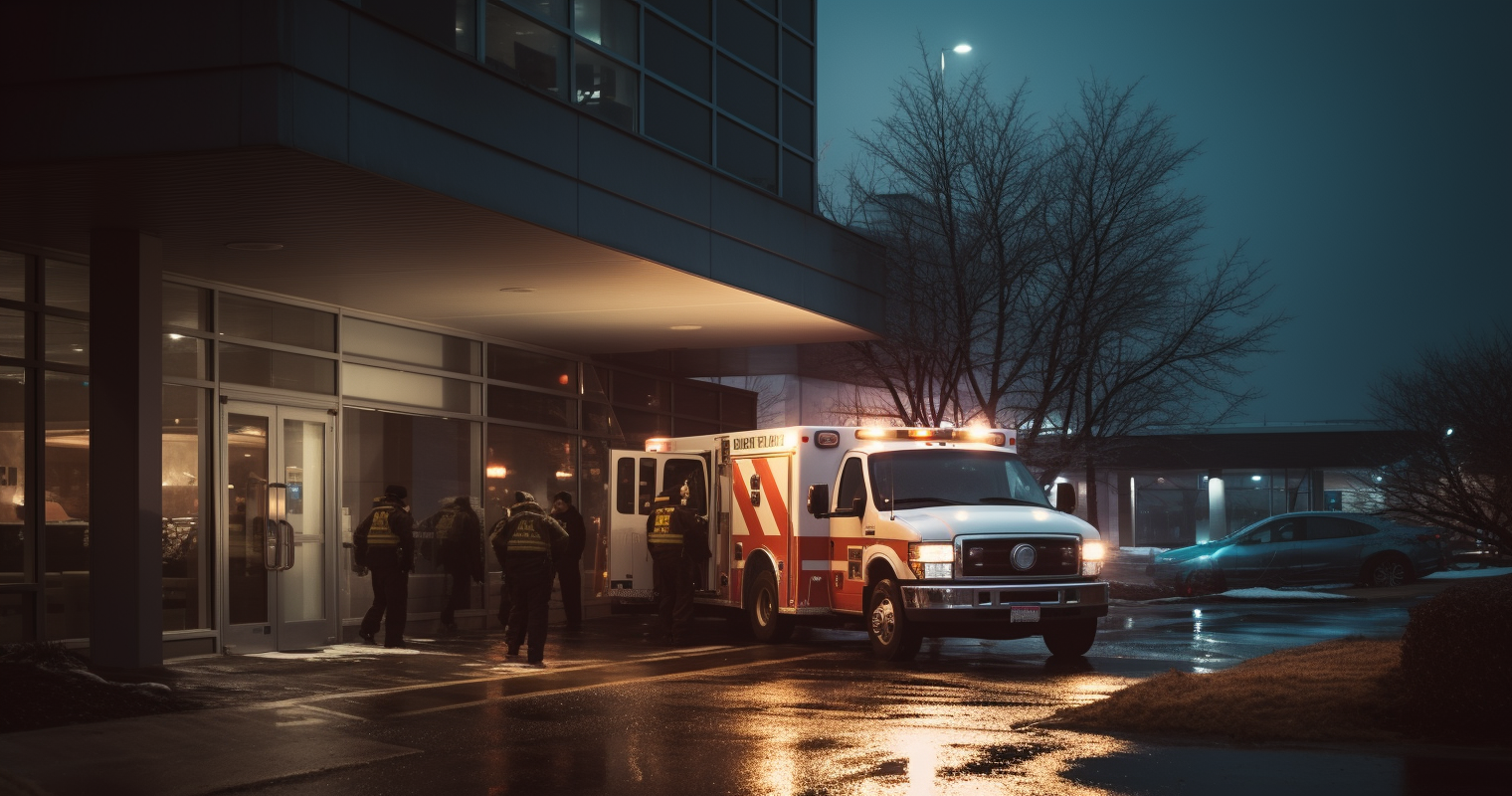
In Trinidad and Tobago, the essential emergency numbers are: 811 for ambulance, 999 for police, 990 for fire, and 511 for the national disaster management line. Emergency and essential medical treatment at public hospitals is provided free of charge to everyone at the point of care — whether residents, expats, or visitors — though private hospitals will expect payment upfront. Taking out comprehensive health insurance is strongly recommended.
| Item | Details |
|---|---|
| Ambulance | 811 (toll-free, as of 2025) |
| Police | 999 or 911 (as of 2025) |
| Fire Service | 990 (as of 2025) |
| Disaster management / ODPM | 511 (as of 2025) |
| Mental health / Lifeline | 645-2800 (as of 2025) |
| Emergency treatment cost (public hospitals) | Free at point of delivery for all, including non-nationals |
| Emergency treatment cost (private hospitals) | Upfront payment required; insurance strongly recommended |
| Tobago emergency management | 211 (Tobago Emergency Management Agency, as of 2025) |
Does Trinidad and Tobago have a single emergency number, or are there separate numbers for police, fire, and ambulance?
In contrast to countries that operate a single universal emergency number — such as the European Union’s 112 or Australia’s 000 — Trinidad and Tobago maintains distinct numbers for each emergency service. Knowing all three numbers before a crisis occurs is essential. Always verify these numbers through official sources, as they are subject to change.
If you are in immediate danger, dial 999 (or 911) to reach the police, 990 for the fire service, and 811 for ambulance assistance. On Tobago specifically, the Tobago Emergency Management Agency is contactable on 211, while the ODPM (Office of Disaster Preparedness and Management) operates the line 511.
Both 990 and 999 are toll-free and accessible from any phone in Trinidad and Tobago. The sensible approach is to save all of these numbers in your mobile as soon as you arrive, rather than attempting to recall them under pressure. For the most current listings, consult the ODPM’s emergency contacts page.
How do you summon emergency medical help in Trinidad and Tobago, and what can you expect when you call?
In the event of a medical emergency, the national ambulance service is reached by dialling 811 toll-free from any telephone in Trinidad and Tobago. This service will transport you at no cost to the nearest public health facility.
Ambulance services can be reached at 811 and are prioritised for serious medical situations. However, it is important to manage your expectations. The availability of ambulance vehicles and the quality of pre-hospital care vary across the country, and response times can differ considerably depending on your location — those in rural or remote areas may face longer waits.
Anyone on the islands can access ambulance services by dialling 811, with patients transported to the Accident and Emergency Department of the closest national health facility. The government advises that ambulance services should be reserved for life-threatening emergencies. For situations that are urgent but not life-threatening, travelling independently to an Accident and Emergency department or urgent care clinic will often be quicker. Always verify current procedures with the Ministry of Health.
What steps should you take during a mental health crisis in Trinidad and Tobago — is there a dedicated helpline, and can you attend a hospital emergency department?
For mental health emergencies, the Ministry of Health has set up a round-the-clock National Lifeline reachable on 645-2800. This service delivers counselling and crisis intervention for people experiencing acute mental health difficulties. A second Lifeline number, 645-6616, is additionally listed by the Ministry of Sport and Community Development (as of 2025 — confirm current details with official sources).
If you are facing a mental health emergency and telephone support is unavailable, you should attend the Accident and Emergency department of your nearest general hospital. Emergency departments are able to assess and stabilise individuals in acute psychiatric distress. St. Ann’s Hospital in Port of Spain is the principal public psychiatric facility in Trinidad and Tobago and can be contacted directly when specialist psychiatric care is required — consult the Ministry of Health website for current contact information.
Where someone presents an immediate risk to themselves or others, also contact the police by dialling 999. Mental health support infrastructure in Trinidad and Tobago is more limited than in countries with well-developed dedicated psychiatric emergency services, which makes having the Lifeline number and the address of your nearest hospital saved in advance all the more important.
Where should you go for emergency medical treatment in Trinidad and Tobago?
There are six major hospitals across the country: five located in Trinidad and one in Tobago. Not every hospital operates a casualty ward. Those that do include District Health Facilities, the Paediatric Department of the Eric Williams Medical Sciences Complex, Point Fortin Area Hospital, Port of Spain and San Fernando General Hospitals, and the Sangre Grande and Scarborough Regional Hospitals.
Key Accident and Emergency contact numbers (as of 2025 — verify before relying on these):
- Port of Spain General Hospital A&E: (868) 623-2951/2/4/6
- San Fernando General Hospital A&E: (868) 652-3581/6
- Tobago County Hospital (Scarborough): (868) 639-2551/2
- Wendy Fitzwilliam Paediatric Hospital (children), Eric Williams Medical Sciences Complex: +1 868 645-2640
The private healthcare sector encompasses well-regarded facilities including St. Clair Medical Centre, Community Hospital of Seventh-day Adventist, Cross Crossing Medical Centre, St. Augustine Private Hospital, and Westshore Medical. Facilities such as St. Augustine Private Hospital offer accident and emergency services alongside ambulance transport, medical laboratory services, radiology, and ultrasound.
A full directory of public health facilities is maintained on the Ministry of Health website. It is prudent to identify your nearest hospital with an A&E department well before any emergency occurs.
Is emergency medical treatment free in Trinidad and Tobago, and does this vary for residents compared to tourists or short-term visitors?
Every person in Trinidad and Tobago is entitled to a basic level of healthcare free at the point of delivery, irrespective of income or nationality — and this extends to emergency, inpatient, and outpatient care. This broad principle bears some resemblance to the NHS in the United Kingdom, where emergency treatment is available regardless of citizenship, though the scope and quality of services differ considerably in practice.
Free primary healthcare at public health centres and hospitals is open to all — including expats and tourists — though certain specific medicines and specialist treatments may require payment or insurance coverage. In practice, this means that presenting at a public hospital A&E without insurance will not result in being denied emergency care.
The situation becomes more complex for ongoing and non-emergency treatment. Management of chronic conditions such as diabetes, asthma, cardiac disease, arthritis, glaucoma, depression, high blood pressure, epilepsy, hypercholesterolaemia, Parkinson’s disease, and thyroid disorders is not covered free of charge for non-nationals. Cancer care and treatment free of charge is available only to Trinidad and Tobago citizens — non-nationals must fund their own treatment.
Anyone seeking care at a private facility must pay before receiving treatment. This expectation applies to tourists and expats alike. Always check current arrangements directly with the relevant facility or the Ministry of Health, as policies may be updated.
Do expats in Trinidad and Tobago need travel or health insurance, and what happens if they arrive at a hospital without insurance or the means to pay?
Arriving at a public hospital without insurance will not prevent you from receiving emergency treatment — emergency care in public hospitals and health centres is provided free of charge to all, including emergency room attendance, diagnostic investigations, and necessary procedures. That said, depending entirely on the public system involves genuine risks.
As an expat, you are entitled to access public healthcare, but the system operates under considerable strain — it is congested and under-resourced, and the standard of equipment and facilities may fall well short of what you are used to elsewhere. Ambulance availability is very limited, and medical evacuation can become necessary; a number of expats choose to seek treatment in the United States, particularly in cities such as Miami.
Expats are strongly advised to obtain an international health insurance policy that covers medical care in Trinidad and Tobago, and especially one that includes provision for medical evacuation. Cover for repatriation and evacuation to another country can prove invaluable during a stay in Trinidad and Tobago. Many expats also look for a policy with a medical evacuation clause enabling treatment in the United States or elsewhere in the region.
It is a common misconception that healthcare cover from a provider in your home country will be recognised in Trinidad and Tobago. This is frequently not the case. Check with your insurer before attending a private medical facility.
Do bilateral health agreements give some foreign nationals access to free or reduced-cost emergency care?
Unlike the reciprocal healthcare arrangements that exist between many European Union countries under the European Health Insurance Card scheme, or certain Commonwealth bilateral agreements such as those between the UK and select nations, Trinidad and Tobago does not appear to be party to any widely recognised bilateral health treaties that automatically entitle foreign nationals to free or subsidised emergency treatment on the basis of nationality alone.
The public healthcare system’s principle of providing free emergency care at the point of delivery applies universally, as described above, but this reflects domestic policy rather than any reciprocal treaty arrangement. There is no EHIC-equivalent system operative in Trinidad and Tobago. Before assuming any entitlement, confirm the current position with your home country’s embassy or high commission in Port of Spain — contact details for embassies accredited to Trinidad and Tobago are available through the Ministry of Foreign and CARICOM Affairs.
CARICOM nationals may benefit from some degree of facilitated access to regional health services through CARICOM frameworks, but specific entitlements should be verified with the relevant authorities before any assumption of coverage is made. Always carry proof of identity and nationality when attending any health facility.
How does the emergency healthcare system compare to systems expats may already know?
Trinidad and Tobago operates a mixed public-private system that shares some characteristics with the NHS model — specifically, the principle that public hospitals deliver free emergency care at the point of use to everyone — but differs markedly in terms of capacity, funding, and the role played by the private sector in routine healthcare.
The public healthcare system in Trinidad and Tobago can be affected by extended waiting times, overcrowding, and prolonged waits for investigations and treatment. Research has pointed to difficulties with inpatient bed availability, which can prevent patients from being moved out of accident and emergency departments — leaving those departments managing more patients than they can comfortably accommodate. This represents a substantially different experience from well-resourced universal health systems where patient flow through emergency departments is more effectively regulated.
Unlike systems in countries such as France or Germany — where comprehensive social insurance models provide broad coverage to most residents and many visitors — the private healthcare sector in Trinidad and Tobago is comparatively modest, and upfront payment is generally required before any treatment is administered. In this sense, attending a private hospital without insurance is more akin to the experience in the United States, where out-of-pocket costs can be considerable.
For specialist or critical care, expats may wish to consider private facilities or arrange for emergency medical transport depending on the nature of the situation. Private hospitals generally offer a higher standard of care, though cases requiring complex or extended treatment may need to be referred overseas.
What non-medical emergency services are available — how do the police and fire services operate in Trinidad and Tobago?
For police emergencies, dial 999 (or 555 for crime reporting). To reach the fire service, call 990. Both numbers are toll-free from any phone in the country. In Tobago, the same numbers are operative, though you may also reach the Tobago Emergency Management Agency on 211 for island-specific emergencies.
Crime rates in Trinidad and Tobago are elevated, with a notable incidence of violent and gang-related offences. Areas associated with higher crime include sections of downtown Port of Spain, Laventille, Barataria, Sea Lots, and Morvant. Bag snatching and pickpocketing are also frequent occurrences. Tobago experiences a significantly lower rate of violent crime, making it a more secure base for residents.
When dealing with the Trinidad and Tobago Police Service (TTPS), remain calm and cooperative. Victims of crime should report incidents at the nearest police station in addition to calling 999. Many embassies advise making a formal report, particularly where an insurance claim or legal proceedings may follow. The non-emergency crime reporting line is 555. A directory of divisional police stations is available on the TTPS website.
The Trinidad and Tobago Fire Service (TTFS) responds to structural and vehicle fires, hazardous materials incidents, and certain rescue operations. The TTFS is one of the ODPM’s designated first-responder agencies, alongside the Municipal Corporations, the Ministry of Works and Transport, and the Emergency Medical Services. As with other emergency services, response times will vary depending on location.
What emergency risks are specific to Trinidad and Tobago, and what official alert systems are in place?
Trinidad and Tobago is a twin-island nation situated in the southern Caribbean, lying within the hurricane belt and positioned along the boundaries of the Caribbean and South American tectonic plates. The islands face a broad range of natural and technological hazards, including earthquakes and associated tsunamis, hurricanes, tropical storms, and periods of extreme rainfall.
Flooding is the most frequently occurring hazard in Trinidad and Tobago, with its effects compounded by longstanding planning and development challenges. Although the country has escaped major hurricane impacts in recent years, it has a documented history of hurricane exposure and is considered overdue for a significant seismic event. Landslides and mudslides pose additional hazards, particularly during flooding episodes.
Technological hazards are also a feature of the environment, arising from the oil and gas sector and the extensive petrochemical industrial estates across the islands. Expats living close to industrial zones are advised to acquaint themselves with local evacuation routes and the emergency protocols applicable to those specific areas.
The primary body responsible for disaster alerts is the Office of Disaster Preparedness and Management (ODPM). The ODPM functions as Trinidad and Tobago’s strategic disaster management coordinating agency. It monitors weather conditions in collaboration with the Trinidad and Tobago Meteorological Service to generate early warning messages about potential flood events, disseminates timely public warnings, and organises preparedness drills. The ODPM’s emergency line is 511, and its office number is (868) 640-1285. Real-time alerts are available through the ODPM’s social media accounts (@ODPMTT) and at odpm.gov.tt.
The Atlantic hurricane season runs from 1 June to 30 November, during which tropical storms and hurricanes are a recurring feature across the Caribbean. In the aftermath of a hurricane, departure from the affected area may be impossible for several days, as roads can be blocked by floodwater or debris, cutting off access to airports and major routes.
How should expats prepare for emergencies before they happen in Trinidad and Tobago?
Advance preparation is far more effective than responding to a crisis unprepared. The steps below represent best practice for expats living in or relocating to Trinidad and Tobago:
- Register with your home country’s embassy or consulate. Most countries operate citizen registration programmes allowing embassies to reach you in a crisis. The US Embassy in Port of Spain operates the Smart Traveler Enrollment Program (STEP); the UK, Canada, Australia, and other countries maintain equivalent schemes. Signing up for your government’s alert registration programme is strongly recommended.
- Store all key emergency numbers in your phone. These should include 811 (ambulance), 999 (police), 990 (fire), 511 (ODPM), 645-2800 (Lifeline/mental health), and the direct number for your closest A&E department.
- Arrange comprehensive health insurance that includes medical evacuation. Expats should secure an international health insurance policy covering medical emergencies in Trinidad and Tobago, with particular attention to cover for evacuation to another country.
- Locate your nearest public hospital with an A&E department. Not all hospitals operate a casualty ward — those that do include Port of Spain General Hospital, San Fernando General Hospital, Sangre Grande Hospital, Point Fortin Area Hospital, and Scarborough Regional Hospital.
- Follow ODPM alerts throughout hurricane season. Monitor odpm.gov.tt and the ODPM’s social media channels, and maintain a disaster preparedness kit with adequate water, food, and medication. Storing a gallon of water per person per day, with enough for at least five days, is suggested by the US Embassy in Port of Spain.
- Familiarise yourself with evacuation routes. Identify a safe location within your home as well as a nearby hurricane shelter designated by the Government of Trinidad and Tobago.
- Keep copies of critical documents in a secure location. Store both digital and physical copies of your passport, visa, insurance documents, and emergency contacts separately from the originals.
Where can expats find reliable, up-to-date emergency information for Trinidad and Tobago?
The sources listed below are the most authoritative places to check for current emergency information. Details such as phone numbers, costs, and procedures are subject to change, so always verify before acting on any single source:
- Ministry of Health: health.gov.tt — hospital listings, health facility finder, emergency contact numbers
- Office of Disaster Preparedness and Management (ODPM): odpm.gov.tt — disaster alerts, emergency contacts, preparedness resources
- Trinidad and Tobago Police Service (TTPS): ttps.gov.tt — police station directory, crime reporting guidance
- Tobago Emergency Management Agency (TEMA): tema365.com — Tobago-specific emergency management information
- Ministry of Foreign and CARICOM Affairs: foreign.gov.tt — embassy contacts and consular services
- Your home country’s embassy in Trinidad and Tobago: For citizen registration programmes, travel advisories, and consular emergency assistance
- Trinidad and Tobago Meteorological Service: For weather alerts and hurricane tracking
The ODPM also serves as the national focal point for implementation of the Sendai Framework for Disaster Risk Reduction, the global strategy for disaster risk management. Its website and social media channels represent the authoritative source for real-time disaster alerts and public safety communications in Trinidad and Tobago.
Frequently asked questions
What is the most important emergency number to know in Trinidad and Tobago?
For medical emergencies, dial 811 to reach the ambulance service. If you face an immediate threat involving criminal danger, call 999; for fire, dial 990. Store all three numbers before you find yourself needing them. In Tobago, the disaster management line is 211.
Will I be refused emergency treatment in a public hospital if I can’t pay?
All people in Trinidad and Tobago are entitled to a basic level of healthcare free at the point of delivery, regardless of income or residency status — including emergency, inpatient, and outpatient care. You will not be turned away from a public hospital A&E because you cannot pay. However, certain specialist treatments and chronic disease management are not covered for non-nationals.
Do I need health insurance as an expat in Trinidad and Tobago?
While it is not a legal requirement, comprehensive health insurance is strongly recommended. The public system operates under considerable pressure — it is overcrowded and under-resourced, with facilities that may be well below the standard you are accustomed to at home. Expats should seek a policy offering flexibility to seek treatment abroad and covering medical evacuation if required.
Is there a mental health crisis line in Trinidad and Tobago?
The Ministry of Health operates a 24-hour National Lifeline at 645-2800, providing counselling and crisis intervention for those experiencing acute mental health emergencies. A secondary number, 645-6616, is additionally listed by government sources (confirm both numbers are current before relying on them). If someone is in immediate danger, also call 999.
What are the greatest natural disaster risks in Trinidad and Tobago?
Flooding is the most common hazard affecting Trinidad and Tobago. The islands’ position within the hurricane belt and along tectonic plate boundaries also exposes them to earthquakes, tsunamis, hurricanes, and tropical storms. Monitor the ODPM at odpm.gov.tt for official alerts, particularly between June and November during hurricane season.
Can I go straight to a hospital A&E, or do I need to call 811 first?
In an emergency, you may attend Accident and Emergency at your nearest general hospital directly — there is no requirement to call the ambulance line first. In many situations, particularly outside major urban areas, making your own way to the A&E department will be quicker than waiting for an ambulance to arrive.
Are private hospitals better than public hospitals for emergency care?
Private hospitals generally provide a higher standard of care and tend to be better equipped for routine health problems than public facilities. However, they may not be well placed to handle serious or complex emergencies requiring long-term intensive care. Anyone seeking treatment at a private facility will be expected to pay before receiving care. For the most serious emergencies, the major public general hospitals typically maintain the most fully equipped A&E departments.
How do I register with my embassy in case of emergency in Trinidad and Tobago?
Most governments maintain citizen registration or travel alert programmes. US citizens can enrol in the Smart Traveler Enrollment Program (STEP); UK nationals should register through the FCDO travel registration system; nationals of other countries should consult their foreign ministry or embassy website for the relevant service. Registration enables your government to contact you in the event of a major emergency or natural disaster. Signing up for your country’s alert programme is strongly recommended.
What should I do if I witness a serious road accident in Trinidad and Tobago?
Call 811 for an ambulance and 999 for the police. Both services should be notified in the event of a serious road traffic collision. If you can safely assist and have first-aid training, do so while waiting for emergency services. Do not attempt to move injured persons unless they face an immediate hazard such as fire or oncoming traffic. Ensure you make a full report to the police, as a formal police report will be needed for any subsequent insurance claim.