
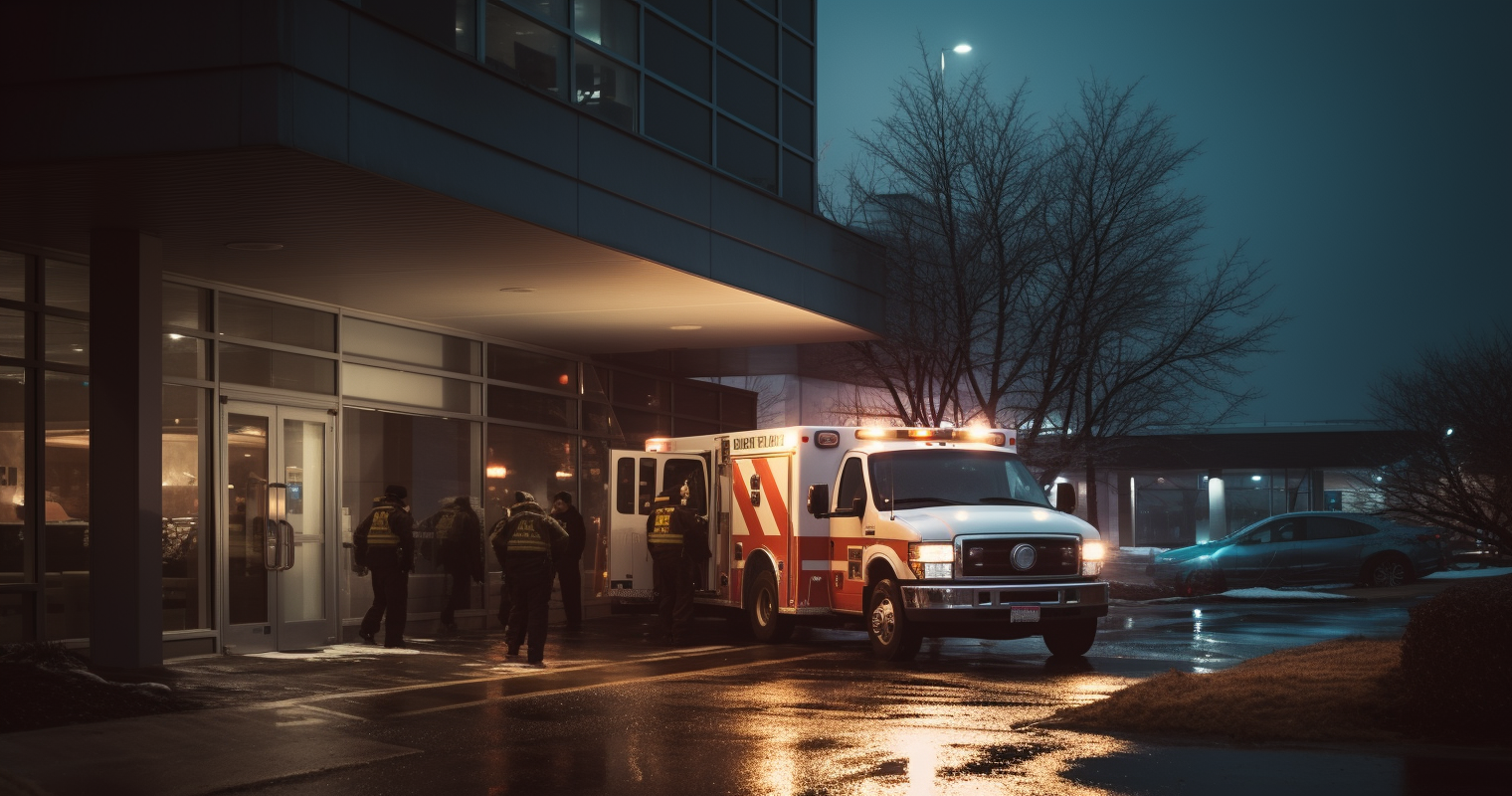
Turkey uses a single, unified emergency number — 112 — that connects callers to all services, including police, fire, ambulance, coast guard, and gendarmerie. It operates around the clock, every day of the year, and is free to dial from any phone. At public hospitals, initial emergency stabilisation is generally provided at no cost to anyone, regardless of their nationality. However, ongoing treatment, care at private facilities, and non-emergency medical services carry fees. All expats and visitors are strongly advised to hold comprehensive health insurance.
| Item | Details |
|---|---|
| Universal emergency number | 112 (police, fire, ambulance, coast guard, gendarmerie — as of 2024) |
| Fire brigade direct line | 110 |
| Police direct line | 155 |
| Emergency treatment cost (tourists) | Initial stabilisation generally free at public hospitals; follow-up care chargeable |
| EHIC/GHIC validity | Not accepted in Turkey |
| Disaster management authority | AFAD (afad.gov.tr) — 81 provincial branches nationwide |
| Foreigner helpline | YIMER 157 — available in 6 languages, 24/7 |
What is the single emergency number in Turkey, and does it cover all services?
Turkey operates 112 as its centralised, all-purpose emergency number, reachable at any hour, on any day, from anywhere in the country. Since 2023, the Turkish government has brought every major emergency service under this single number, making it functionally equivalent to 999 in the United Kingdom or 911 across North America — one call that ensures the right help reaches you.
Whether you need an ambulance, police assistance, fire crews, the coast guard, or the gendarmerie, 112 is the number to call. There is no need to determine in advance which service applies to your situation; operators will evaluate what you describe and dispatch the appropriate response.
Several legacy direct-dial numbers also remain active. You may call 110 for the fire brigade, 155 for the police, 156 for the gendarmerie, and 177 specifically for forest fires. The coast guard can be reached directly on 158 — particularly relevant if you encounter danger at sea. When uncertain, however, 112 is always the safest choice.
Operators at 112, especially in heavily visited areas, frequently speak languages other than Turkish. Every call to 112 is free of charge, including those made from mobile phones carrying no credit or no SIM card — a standard feature of the international GSM framework.
How do you call for emergency medical assistance, and what should you expect?
For any medical emergency — whether an accident, a sudden serious illness, or another urgent health concern — dialling 112 will connect you to ambulance services. Trained dispatchers can provide first aid guidance over the phone while simultaneously sending a crew to your location. Speak clearly, remain as composed as possible, describe the situation accurately, and give your location in as much detail as you can.
Once connected, the 112 team will evaluate your condition and whereabouts and arrange transport to the nearest suitable healthcare facility, whether public or private. Response times are generally faster in large urban centres such as Istanbul, Ankara, and Izmir than in rural or more isolated locations.
One practical advantage of calling 112 is that operators will attempt to communicate in the caller’s language wherever possible, routing you toward the appropriate help. In areas where multilingual capacity is limited, a translation application on your phone can help bridge communication gaps while you wait for assistance. For non-urgent medical appointments rather than emergencies, the Central Physician Appointment System can be reached on 182.
What should you do in a mental health crisis in Turkey?
Turkey does not currently maintain a widely promoted, dedicated national mental health crisis line comparable to services like the Samaritans in the United Kingdom or the 988 Lifeline in the United States. That said, support routes do exist and should be used without hesitation.
When someone faces an immediate threat to their life during a psychiatric emergency, calling 112 is the correct course of action. The emergency ambulance service is able to respond to mental health crises and can transport individuals to a hospital equipped to provide appropriate care. Public hospital emergency departments — known as acil — are capable of assessing and stabilising patients presenting with acute psychiatric conditions.
The number 183 offers a preventive and social support service intended to safeguard the wellbeing of women and individuals across society. People of all ages, genders, and those living with disabilities are welcome to call 183 for social assistance and tailored guidance. While it is not exclusively a mental health crisis line, it can serve as an initial point of contact for those in emotional distress.
Expats dealing with ongoing mental health challenges — rather than acute emergencies — will find that private hospitals and clinics in major cities frequently include psychiatry and psychology departments where English or other languages may be spoken. Identifying these services in advance, and ensuring your insurer is aware of any pre-existing conditions, is strongly advisable.
Where can you go for emergency medical treatment in Turkey?
Turkey’s healthcare landscape encompasses both public and private sectors, and is broadly regarded as strong. Public facilities offer affordable treatment, while private hospitals are noted for their quality of care, shorter waiting times, and multilingual personnel — factors that have helped Turkey build a significant medical tourism industry.
Public hospitals, known as devlet hastanesi, include emergency departments called acil servis that function around the clock and represent the primary resource for serious emergencies. While doctors with foreign language skills are not uncommon in Turkey’s hospitals, not every facility uses translated signage. Knowing in advance that “çocuk acil” means paediatric emergency, for instance, can save precious time in a stressful moment.
Urgent care centres operate across major cities and tourist destinations, offering faster processing for conditions that are pressing but do not constitute life-threatening emergencies. Typical examples include minor injuries or infections. These centres generally keep extended hours, covering evenings and weekends when regular clinics may be closed.
For minor ailments, Turkey’s dense network of pharmacies — called eczane, identifiable by a bright green cross sign — can provide treatment that is often faster and more affordable than a hospital visit. To locate the nearest on-duty pharmacy outside regular hours, dial 0800 300 001 to find the nöbetçi eczane serving your district.
To identify your nearest hospital before an emergency occurs, the Turkish Ministry of Health’s hospital directory at saglik.gov.tr is a useful resource. Your insurer, embassy, or accommodation can also suggest reliable local options.
Is emergency medical treatment free in Turkey, or is there a charge?
Circular No. 2010/16, issued by the Turkish Prime Minister’s office, establishes that emergency healthcare must be provided free of charge to all individuals, without distinction between public and private healthcare institutions. This forms the legal foundation for free emergency stabilisation in Turkey, irrespective of a patient’s nationality.
In practical terms, the picture carries some nuance. Emergency treatment at public hospitals is generally provided at no cost to tourists, but this guarantee applies specifically to initial stabilisation. Any care beyond that point — follow-up treatment, non-emergency procedures, or treatment at private facilities — falls outside this coverage and must be paid for privately or through adequate insurance.
Where private hospitals are involved, admission charges may apply even in emergencies, though these remain substantially lower than comparable costs in countries like the United States or United Kingdom. As of 2025, an uncomplicated emergency room visit in Turkey typically costs around $50–$150, compared with $500–$1,500 for equivalent treatment in the US. These are indicative figures subject to change — always confirm current costs directly with the hospital or your insurer.
For foreign nationals who are legal residents enrolled in Turkey’s national social security scheme (SGK), access to care is considerably more favourable. SGK covers treatment at public facilities and contributes toward costs at certain private clinics. Expats who have held legal residence in Turkey for more than one year may apply to join the public insurance scheme, subject to a monthly contribution of approximately ₺800, or around $30 depending on the prevailing exchange rate and selected plan (as of 2024). Current fees and eligibility thresholds should be confirmed directly with the Social Security Institution (SGK) at sgk.gov.tr.
Do expats need travel or health insurance to access emergency care?
Turkish regulations formally require visitors to carry travel insurance providing coverage of at least $30,000 for healthcare costs, valid within Turkey. While enforcement at border crossings is inconsistent, the requirement reflects the government’s expectation that all visitors arrive with adequate financial protection for medical situations.
Neither the Global Health Insurance Card (GHIC) nor the European Health Insurance Card (EHIC) is accepted in Turkey. This represents a meaningful difference from travel within the European Economic Area, where EHIC holders are entitled to state-provided healthcare on the same basis as local residents. In Turkey, foreign nationals cannot draw on these cards and must secure independent coverage.
Presenting without insurance at a hospital will not result in emergency stabilisation being withheld — Turkish law ensures that no one in genuine need can be turned away for financial reasons. However, once the immediate crisis has passed, you will be expected to demonstrate insurance cover or settle charges out of pocket. In such situations, contacting your insurer, your home country’s embassy or consulate, or your travel assistance provider as quickly as possible is essential. A policy that includes medical expenses, emergency evacuation, and repatriation represents the recommended minimum standard.
Those planning longer stays should explore private international health insurance products designed for residents abroad. Numerous global insurers offer policies valid in Turkey, and Turkish private insurers also provide competitive options for foreign nationals. Enrolling in SGK after one year of legal residence is an additional avenue worth investigating — check current eligibility criteria directly with SGK.
Are there bilateral health agreements entitling some foreigners to reduced-cost treatment?
Turkey has concluded international social security agreements with a range of partner nations. These treaties define the rules governing which country’s social security legislation applies to foreign workers in Turkey, promote equal treatment between Turkish nationals and nationals of partner countries, protect rights already acquired, and ensure continuity of insured service periods across borders.
Under such an agreement, a foreign national from a partner country who comes to Turkey to work for a Turkish-based employer can access social security and healthcare entitlements in Turkey, while their social security standing in their home country is simultaneously preserved on a reciprocal basis.
It is important to note that these agreements are fundamentally different from the broad reciprocal healthcare frameworks that operate within the EU — under which the EHIC functions — or from specific health access arrangements between certain Commonwealth nations. Turkey’s bilateral treaties focus principally on employed workers and social security contributions rather than providing general healthcare access to tourists. As previously noted, neither the EHIC nor the GHIC is recognised in Turkey.
Countries with which Turkey holds bilateral social security agreements include Germany, France, the Netherlands, Belgium, Austria, Switzerland, the United Kingdom, Sweden, Denmark, Norway, Libya, North Macedonia, Azerbaijan, Georgia, and others. The precise terms of each agreement vary considerably. For the most up-to-date list and the conditions relevant to your particular circumstances, consult SGK’s official website or the social security authority in your home country. Never assume healthcare coverage is included in a bilateral agreement without obtaining written confirmation.
How does Turkey’s emergency healthcare system compare to systems expats may know?
Turkey operates a mixed public-private system that occupies a middle ground between fully state-funded models — such as the NHS in the United Kingdom or Canada’s provincial health systems, which provide free care to all residents — and predominantly private or insurance-driven systems like that of the United States, where almost all treatment requires upfront payment or insurance.
Citizens and legal residents enrolled in Universal Health Insurance (SGK) can access free treatment to international standards through the public system. For those outside SGK — including tourists, newly arrived expats, and short-term visitors — the system functions more like a direct-payment model: emergency stabilisation is provided without charge, but all subsequent treatment must be covered privately.
The overall cost of medical care in Turkey is significantly lower than in most European countries or the United States, and health insurance premiums are correspondingly more affordable. Unlike systems such as those in France or Germany — where mandatory social health insurance becomes accessible to legal residents relatively quickly — Turkey’s SGK enrolment for foreign nationals only opens after one full year of legal residence.
Private hospitals across Turkey are widely utilised and generally maintain high standards. Many have achieved Joint Commission International (JCI) accreditation, a globally recognised benchmark for patient safety and care quality. This distinguishes Turkey from markets where private healthcare quality is less consistent, and is a significant contributor to the country’s status as a leading destination for international medical tourism.
What emergency services exist beyond medical — police and fire in Turkey?
Step-by-step: How to contact and interact with emergency services in Turkey
- Call 112 for any emergency — police, fire, medical, or coast guard. This is the unified number and the one to memorise above all others. All calls are free.
- For police-specific incidents such as theft, assault, or criminal activity, you may also dial 155 directly. Calling 155 allows you to report the incident and provide relevant details to the authorities.
- For fire emergencies, you may call 110 directly. The dispatcher will guide you through safe and appropriate steps. For forest fires specifically, use 177.
- For traffic incidents, dial 154 to reach the Traffic Police. This line handles road hazards, collisions, and requests for roadside assistance.
- If you need help as a foreigner regarding immigration, residence matters, or personal safety, YIMER 157 provides assistance in six languages to all foreign nationals in Turkey, every hour of every day.
- For domestic violence or child welfare concerns, call the Family, Women, Children, and Disabled Social Services Advice Line on 183.
- Carry identification at all times. Turkish law obliges foreign nationals to have their passport or residence permit on their person, and police may request to inspect it during an incident.
- Remain calm and cooperative in any interaction with security forces. The gendarmerie — jandarma, reachable on 156 — is responsible for rural areas beyond city boundaries, while the regular police — polis — cover urban zones. Understanding which force operates in your location can help you navigate an emergency more effectively.
Turkey maintains a dedicated tourism police unit in major tourist destinations; Istanbul’s tourism police, for example, can be reached on (0212) 527 4503. This unit specialises in supporting visitors and frequently has staff who speak foreign languages. If you are the victim of a crime, report it promptly to both the local police and your home country’s embassy or consulate.
Are there country-specific emergency risks in Turkey?
Earthquakes
Turkey sits third globally in terms of earthquake-related casualties, and the country records at least one magnitude-5 seismic event annually, making robust disaster preparedness an absolute necessity. The devastating sequence of earthquakes that struck southern Turkey in February 2023 illustrated the enormous scale of this risk. The country is also vulnerable to floods, wildfires, and landslides, driven by its varied terrain and geographic position.
Expats should be familiar with earthquake safety protocols: the drop, cover, and hold-on technique; identifying the safest points within your home; and maintaining a readily accessible emergency bag containing essentials. Turkey operates the second-largest earthquake monitoring network in Europe, with 1,143 observation stations running continuously under AFAD’s oversight.
Other natural risks
Wildfires pose a serious seasonal hazard, particularly along the Aegean and Mediterranean coastlines during summer months. The number 177 is the designated line for reporting forest fires — increasingly critical given the rising incidence of such events linked to climbing temperatures. Flooding and landslides are prevalent risks in the Black Sea region, and extreme heat affects large parts of the country throughout summer.
Civil unrest and security
Political demonstrations and public gatherings can materialise rapidly and with little advance warning in major urban centres, especially around significant national dates. Certain border regions — notably those adjacent to Syria and Iraq — carry heightened security concerns. Foreign governments broadly advise against non-essential travel to areas close to the Syrian and Iraqi borders. Consulting your home country’s official travel advisory for Turkey on a regular basis is essential practice.
Alert systems
AFAD serves as Turkey’s national authority for disaster prevention and emergency coordination, tasked with reducing harm, planning response operations, and aligning efforts across government bodies. It has implemented an Integrated Disaster Management System that steers Turkey away from reactive crisis management and toward proactive risk reduction. AFAD issues public alerts and guidance through its website at en.afad.gov.tr and through mobile notification systems. All residents are encouraged to register their Turkish mobile number with the emergency alert system and follow AFAD through official channels.
What should expats do to prepare for emergencies before they arise?
- Register with your home country’s embassy or consulate. Most governments provide a free registration service — such as the UK’s LOCATE programme, the US STEP scheme, or their equivalents — enabling your government to reach you during a crisis. Locate your nearest embassy through your government’s foreign affairs website.
- Store key numbers in your phone. At a minimum, save: 112 (all emergencies), 155 (police), 110 (fire), 177 (forest fires), 158 (coast guard), 157 (YIMER foreigner helpline), and the contact details for your nearest embassy or consulate.
- Arrange comprehensive health insurance before departing for Turkey. Verify that your policy covers emergency medical treatment, hospitalisation, evacuation, and repatriation. Confirm whether private Turkish hospital networks fall within your plan’s coverage.
- Learn basic earthquake safety. Practise the drop, cover, hold-on procedure. Identify load-bearing walls and sturdy furniture in your home. Keep a torch, drinking water, and a first aid kit in an easily accessible location.
- Locate your nearest hospital in advance. Identify both the nearest public hospital emergency department (acil servis) and a reputable private hospital before you need them. Save their addresses and offline directions.
- Carry identification at all times. Keep your passport, residence permit, and insurance documentation either on your person or stored securely in an offline-accessible digital format.
- Monitor official alerts. Bookmark AFAD’s website and your home government’s Turkey travel advisory page. Opt in to any available push notifications or alert services.
- Keep a written record of emergency contacts. Do not depend entirely on your phone. Store a card in your wallet or bag listing essential numbers and your insurance policy details.
Where can expats get official, up-to-date emergency information for Turkey?
The sources listed below are authoritative starting points for accurate, current guidance on emergencies in Turkey. Always consult these directly rather than relying on secondary sources, as procedures, costs, and contact details are subject to change.
- AFAD (Disaster and Emergency Management Authority): en.afad.gov.tr — official disaster alerts, seismic activity reports, and emergency preparedness resources.
- Turkish Ministry of Health: saglik.gov.tr — hospital locator, public health guidance, and information about the healthcare system.
- Social Security Institution (SGK): sgk.gov.tr — details on health insurance enrolment, bilateral social security agreements, and coverage options for foreign nationals.
- YIMER 157: The dedicated foreigner assistance line, operating in six languages around the clock — for enquiries on residence permits, immigration issues, and personal safety as a foreign national in Turkey.
- Your home country’s embassy or consulate in Turkey: Embassies typically publish current emergency contact details and country-specific safety guidance. Locate yours through your government’s foreign affairs website.
- Your home government’s travel advisory: For example, the UK’s FCDO Turkey travel advice, the US State Department’s travel.state.gov, or equivalent services — regularly updated to reflect security developments, health notices, and emergency contact information.
Frequently asked questions
What is the most important emergency number to remember in Turkey?
112 is Turkey’s principal emergency number, linking callers directly to police, fire, and medical services. This is the number to prioritise above all others. It is free to call, operates 24 hours a day throughout the year, and covers all emergency services including the coast guard and gendarmerie.
Will Turkish ambulance staff speak my language?
Calling 112 offers the advantage of being able to communicate in your own language, with operators working to direct you to the right assistance. Multilingual support tends to be strongest in cities with high tourist populations and along major coastal areas. In more remote locations, communication may be restricted to Turkish — keeping a translation app on your phone and having a few key Turkish phrases ready, such as your location and the nature of the emergency, is a sensible precaution.
Can I use my EHIC or GHIC card in Turkey?
Neither the European Health Insurance Card (EHIC) nor the Global Health Insurance Card (GHIC) is valid in Turkey. Both cards apply only within the European Economic Area and a small group of countries holding specific agreements with the EU. Visitors to Turkey must arrange separate travel or private health insurance before they travel.
What happens if I cannot pay for hospital treatment in Turkey?
Under Turkish law, emergency stabilisation cannot be withheld on financial grounds — emergency healthcare is provided free to everyone, regardless of nationality or means. Once you have been stabilised, however, any further treatment or non-emergency care will require proof of insurance or direct payment. If you find yourself in this situation, contact your insurer and your home country’s embassy or consulate as soon as possible.
Is Turkey at high risk of earthquakes, and how will I be warned?
Turkey ranks third in the world for earthquake-related casualties and records at least one magnitude-5 earthquake every year. The country runs the second-largest earthquake monitoring network in Europe, with AFAD overseeing more than 1,143 seismic observation stations operating continuously. Warnings and updates are distributed through AFAD’s website and mobile alert systems. All residents should learn earthquake safety procedures and keep a basic emergency kit at home.
Is there a dedicated mental health crisis line in Turkey?
Turkey currently lacks a single, nationally advertised mental health emergency hotline. For any acute crisis involving immediate risk to life, call 112. The number 183 provides social support services to individuals of all ages and genders and can act as a first point of contact for those in distress. Hospital emergency departments are equipped to assess and stabilise psychiatric emergencies. Expats are encouraged to identify private mental health practitioners in their area well before a crisis situation arises.
How do I contact the police if I am a victim of crime in Turkey?
Dial 112 — Turkey’s universal emergency number — for immediate police attendance in the event of theft, assault, or any other criminal matter. You may also call 155 to reach the police directly. In rural areas, 156 connects to the gendarmerie, Turkey’s security force with jurisdiction outside urban zones. Calls from mobile phones are automatically directed to the emergency coordination centre serving your location. Report any crime both to the local police and to your home country’s embassy or consulate, and always request a written police report — known as a tutanak — for insurance claim purposes.
What should I do if there is an earthquake while I am in Turkey?
As soon as shaking begins, drop to your hands and knees, take cover beneath a sturdy table or desk — or position yourself against an interior wall away from windows if no table is nearby — and hold on firmly until the ground stops moving. Do not attempt to flee the building while it is shaking. Once the quake has passed, check yourself and those around you for injuries, move away from any damaged structures, and avoid using lifts. Follow all guidance issued by AFAD and local authorities, and remain alert for aftershocks. Call 112 immediately if emergency assistance is required.