

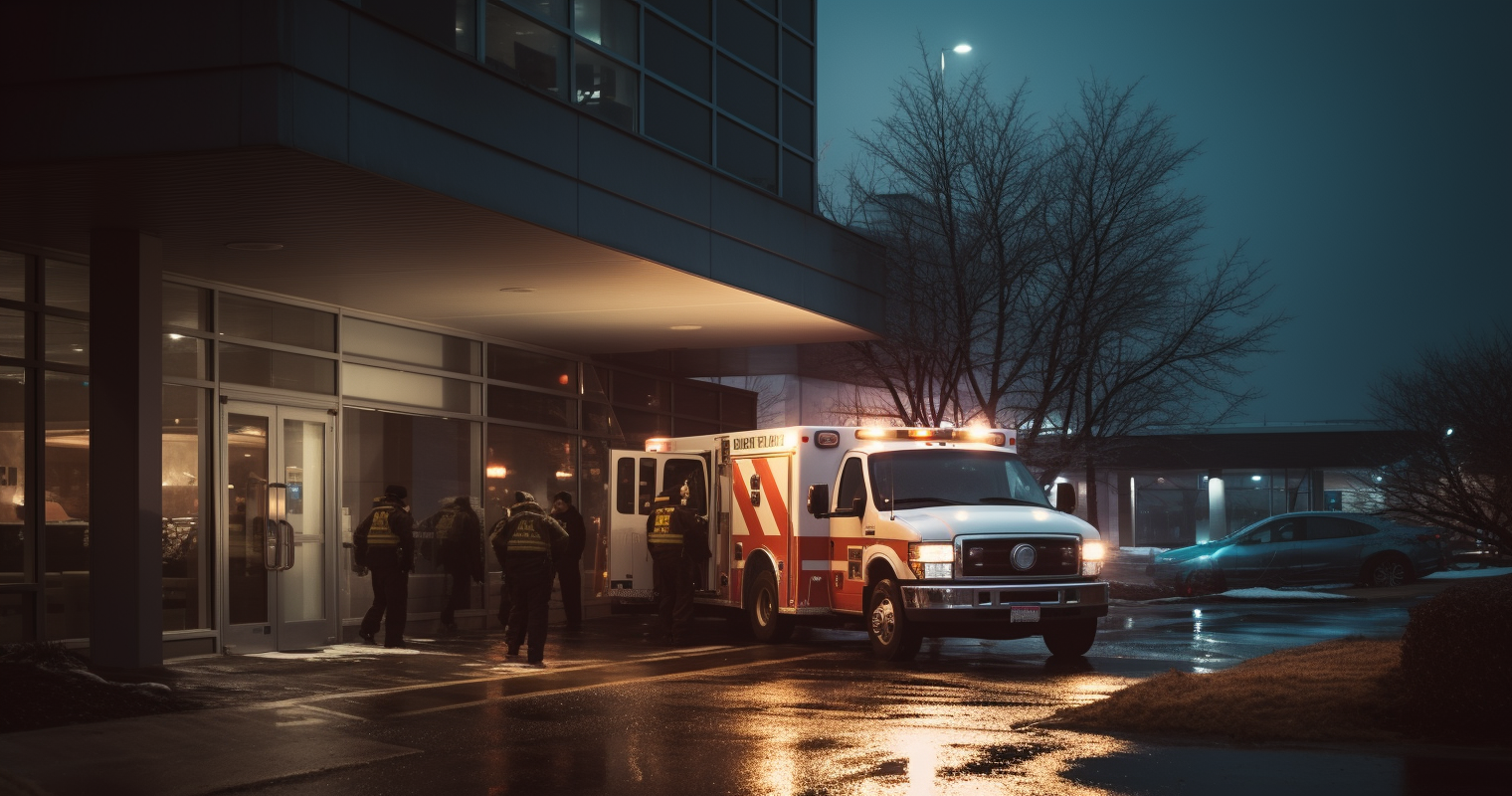
The United Kingdom uses a single emergency number — 999 (or 112) — which connects callers to police, fire, ambulance, and coastguard services at no charge. Initial emergency treatment at NHS Accident & Emergency (A&E) departments is provided free of charge to everyone, irrespective of nationality or insurance coverage. Beyond that first point of contact, however, overseas visitors and short-term travellers may face charges for further care, making travel insurance highly advisable.
| Item | Details |
|---|---|
| Main emergency number | 999 (or 112) — free, 24/7, covers police, fire, ambulance, coastguard (as of 2025) |
| Non-emergency medical advice | NHS 111 — free, 24/7 (as of 2025) |
| Non-emergency police | 101 — available across the UK (as of 2025) |
| A&E treatment cost for visitors | Free at point of care in A&E for all, regardless of immigration status (as of 2025) |
| Charges beyond A&E | Non-residents may be charged at 150% of the NHS national tariff for inpatient/outpatient care (as of 2025) |
| Mental health crisis line | Call 111 and select the mental health option; Samaritans: 116 123 (as of 2025) |
| EU visitors | Valid EHIC or PRC required to access free care under UK-EU reciprocal arrangement (as of 2025) |
What is the single emergency number in the UK, and does it cover all services?
In the UK, the two numbers that connect you to emergency services are 999 and 112. Dialling either one puts you through to the same network of emergency services — police, fire, ambulance, and coastguard — and both are completely free to call from any type of phone, including mobiles and payphones. You do not need separate numbers for different services; the operator who answers will route your call to whichever service is required.
999 is the UK’s long-established emergency number, comparable to 911 in the United States, and should be dialled whenever immediate assistance is required — whether that is a serious accident, an ongoing crime, a fire, or a medical emergency. 112 is the pan-European equivalent and is especially practical if you travel between countries, as it connects to local emergency services anywhere within the EU.
No credit or SIM card is needed to make either of these calls from a mobile phone. Since 2009, UK networks have operated “Emergency Call Roaming,” which means that even when your handset shows no signal, it will attempt to connect via an alternative network when you dial an emergency number.
If you are deaf, have a speech impairment, or are hard of hearing, you can use the Emergency SMS service after pre-registering — simply text the word “register” to 999 in advance. There is also a dedicated 999 BSL (British Sign Language) app through which deaf users can reach emergency services.
Language is not a barrier to accessing UK emergency services. Operators can connect you to an interpreter — just state your language when the call is answered.
For non-urgent police matters — such as reporting a crime that has already taken place or enquiring about lost property — the correct number is 101, which operates throughout the entire UK.
How do you call for emergency medical assistance in the UK?
Call 999 or 112 to request an ambulance whenever someone is seriously ill or injured — for example, if they are unconscious, struggling to breathe, bleeding severely, or have sustained major trauma. There is no need to hesitate; operators are professionally trained to assess the situation and will not judge whether a call was necessary.
Every incoming call is assessed by trained clinicians to determine the level of urgency and the most appropriate response, which could be a full ambulance crew, a solo rapid-response paramedic, or telephone guidance alone. The UK ambulance service classifies calls by priority: Category 1 covers immediately life-threatening situations such as cardiac arrest, with a target response time of seven to eight minutes, while Category 2 covers serious emergencies such as stroke, severe burns, or acute chest pain, with an 18-minute target. For the most current performance data, check NHS England, as response times vary by region and time of year.
When your call connects, the operator will ask “Emergency — which service?” Clearly state what you need, provide your location as precisely as possible using street names, nearby landmarks, or your phone’s GPS coordinates, describe the situation concisely, keep calm, and follow any instructions you are given by the operator.
For health concerns that are not life-threatening, the NHS provides the free NHS 111 line, available 24 hours a day, seven days a week. A trained adviser will ask questions about your symptoms, and interpreter assistance is available if needed. NHS 111 can book urgent appointments, direct you to the right facility, or escalate a call to 999 if it becomes clear that an emergency response is necessary.
What should you do in a mental health crisis in the UK?
Anyone experiencing a mental health crisis — including children — or concerned relatives can call 111, choose the mental health option, and be connected with a trained mental health professional. This England-wide service was fully launched in 2024 and marks a major step forward in crisis mental health provision.
Callers are directed to a specialist within a regional NHS mental health team, who can assess the situation and advise on next steps. This may include arranging face-to-face support from community teams or signposting to alternatives such as crisis cafes or safe havens — settings designed to provide a place of calm and support as an alternative to attending A&E or being admitted to hospital.
Every emergency department in England now has a liaison psychiatric team on hand to support patients who arrive at A&E in mental health crisis with a risk to their life. If someone’s life is in immediate danger, always call 999 first.
Around-the-clock listening and support services are also available: call 116 123 to speak confidentially with a Samaritans volunteer, text “SHOUT” to 85258 to reach the Shout Crisis Text Line, or text “YM” if you are under 19. Bear in mind that the 111 mental health option may not be available in exactly the same form across England, Scotland, Wales, and Northern Ireland — it is worth checking with local NHS services for current provision in your area.
Where can you go for emergency medical treatment in the UK?
NHS Accident & Emergency departments, located in major hospitals throughout the country, are the primary destination for emergency medical care in the UK. These are sometimes labelled Emergency Departments (EDs) or referred to informally as “casualty.” They operate around the clock, every day of the year.
For less serious problems — such as cuts, sprains, or minor infections — minor injuries units (MIUs), walk-in centres, and urgent care centres offer a practical alternative. These facilities are typically available outside standard GP surgery hours and usually have considerably shorter waiting times than a full A&E department.
Private hospitals and urgent care clinics operate in larger cities and may provide quicker access, but all treatment will be billed at private rates and typically requires you to demonstrate health or travel insurance coverage. In any situation that is not life-threatening, always confirm your insurance covers the facility before attending.
To locate your nearest NHS A&E, urgent treatment centre, or minor injuries unit, use the NHS Service Search tool at nhs.uk, which enables you to search by postcode. Alternatively, call NHS 111 for guidance on which type of facility best suits your needs.
Is emergency medical treatment free in the UK, or is there a charge?
All patients — regardless of their immigration status — receive treatment within NHS A&E departments and urgent treatment centres without any upfront charge. As of 2025, anyone can walk into an NHS emergency department and receive immediate care without being asked to pay first.
The situation changes once a patient moves beyond A&E. Emergency Department treatment is free only up to the point at which a patient is admitted as an inpatient or referred for outpatient follow-up. Care received following hospital admission as either an inpatient or outpatient is not automatically free for overseas visitors.
Anyone who does not qualify for an exemption may be billed at 150% of the NHS national tariff for inpatient or outpatient care provided beyond the emergency department — a potentially substantial sum. Always verify the current tariff rates with the Department of Health and Social Care.
Treatment is free for those who are “ordinarily resident” in the UK — generally meaning those living there on a lawful and settled basis. Migrants who have been granted a visa of six months or more and have paid the Immigration Health Surcharge (IHS), or are exempt from it, are treated as ordinarily resident for NHS purposes. It is essential to verify your own status rather than assuming entitlement to free care.
Do expats need travel or health insurance to access emergency care?
Emergency treatment will never be withheld, but someone who is not ordinarily resident in the UK has no automatic right to receive NHS care free of charge. This means that while urgent care will always be delivered, a bill may follow if the individual does not satisfy the residency criteria or benefit from an applicable exemption.
Anyone deemed to need immediately necessary care will always be treated, even where the patient states they are unable to pay at the time. However, being treated on this basis does not eliminate the financial liability — an invoice for the costs of care beyond A&E will still be generated and pursued if the patient is an overseas visitor.
People from outside the EU who have no current UK residency — including former UK residents who have since moved abroad — are not automatically entitled to free NHS treatment and should ensure they hold personal health or travel insurance to cover any treatment costs they incur.
Expats on longer-term visas of more than six months generally pay the Immigration Health Surcharge (IHS) at the point of visa application, which grants access to NHS services on comparable terms to a UK resident. Always check the specific entitlements attached to your visa category via the official UK government immigration health guidance, as the rules are nuanced and subject to revision.
Failure to settle NHS charges for which you are liable can negatively affect future applications to enter or remain in the UK — a serious consequence that underscores the importance of adequate insurance cover for anyone not protected by the IHS or a reciprocal healthcare agreement.
Are there bilateral health agreements entitling some visitors to reduced-cost or free emergency treatment?
Yes. The UK has reciprocal healthcare arrangements with a number of countries, which may entitle visiting nationals to some free or subsidised emergency care during their stay. The scope of these agreements differs considerably from one country to another.
EU nationals visiting the UK who fall ill or require emergency treatment during a temporary stay can present a valid European Health Insurance Card (EHIC) issued by their home country to access NHS treatment. The EHIC (or a Provisional Replacement Certificate, PRC) covers care that becomes medically necessary during a visit, including treatment related to pre-existing conditions and routine maternity care — provided the sole or primary reason for the visit is not to seek treatment or to give birth.
An EHIC is not a substitute for travel insurance, and carrying both is always recommended when visiting the UK. EU visitors should present a valid EHIC together with their passport or national identity card when registering at an emergency department or urgent treatment centre. If you do not have your EHIC with you, you can request a Provisional Replacement Certificate from your home country’s health authority. Either document must be presented before discharge; failing to do so will result in full liability for any NHS charges incurred.
A number of countries and territories outside the EEA also hold reciprocal healthcare agreements with the UK, entitling their nationals to exemption from charges for treatment needed during a visit. These arrangements do not extend to elective or planned treatment, or to care that could reasonably have been received in the patient’s home country.
Countries with reciprocal agreements include Australia, New Zealand, Bosnia and Herzegovina, Kosovo, Macedonia, Montenegro, Serbia, and several British Overseas Territories including Gibraltar, Anguilla, the Falkland Islands, and St Helena, among others. Always confirm the current list and the precise terms of your country’s agreement via the NHS website before travelling, as these arrangements can change.
How does UK emergency healthcare compare to systems expats may be familiar with?
The NHS is one of the most widely recognised fully publicly funded healthcare systems in the world. Rather than requiring upfront payment or insurance verification before treatment begins — as is common in many countries — the NHS treats patients first and addresses financial questions afterwards, particularly within A&E.
This approach differs starkly from models prevalent across parts of the Americas and Asia, where hospitals may demand proof of insurance or a financial deposit before treating non-emergency cases. In the UK, emergency care through A&E is provided regardless of ability to pay at the point of treatment.
Compared to fully private or insurance-dependent healthcare systems — where an uninsured patient might face a very large bill even for a single emergency room visit — the NHS provides a meaningful financial safety net. That said, it differs from fully universal systems such as those in some Nordic countries, where all residents are enrolled automatically irrespective of status. NHS entitlement in the UK is firmly residency-based, which means that UK nationals who permanently relocate abroad forfeit their right to free NHS healthcare.
Ambulance services are publicly funded and dispatched through the 999/112 system with no direct charge to the caller — a notable contrast to countries where ambulance call-outs attract fees or where users must contract private ambulance providers separately. However, once an overseas visitor is admitted as an inpatient, NHS tariff charges may apply, making the billing model at that stage more analogous to a mixed public-private system.
What emergency services exist beyond medical — how do police and fire work?
The fire service responds to fires, high-level rescues, water-related incidents, and hazardous material situations such as gas leaks. All fire emergencies are reached by calling 999. For non-urgent contact with the fire service, details for your local fire station are available on their website.
If a crime is actively taking place, if there is a threat of violence, or if someone is in immediate danger, call 999 or 112 and request the police. For situations that are serious but not time-critical — such as reporting vandalism, suspected drug activity, or a lost item — use the non-emergency number 101, which is available across the UK and suitable for matters that do not demand an immediate police response.
Policing across the UK is organised on a regional basis, with distinct forces operating in England, Wales, Scotland, and Northern Ireland. The Police Service of Northern Ireland (PSNI), Police Scotland, and the various territorial forces in England and Wales all operate under the same 999/101 framework, so the process remains consistent wherever you are in the country. Despite there being no single national police force for everyday matters, the system functions seamlessly for callers throughout the UK.
Specialist emergency responses are also available when circumstances require. The coastguard handles sea and coastal emergencies and is accessible through 999. In certain regions, mountain rescue and cave rescue teams can be deployed. All are co-ordinated via the 999/112 system through local emergency control rooms.
The UK currently operates at a substantial terrorism threat level (as of 2025). Suspicious activity can be reported to the counter-terrorism police hotline at 0800 789 321, which is free and available 24/7. If you witness an active attack or immediate threat, always dial 999 without delay.
Are there country-specific emergency risks in the UK?
The UK is not subject to the kinds of catastrophic natural disasters — large-scale earthquakes, active volcanic eruptions, or major hurricanes — that affect other parts of the world. Nevertheless, there are several hazards that expats should be aware of.
Flooding is the most significant natural hazard facing the UK, and affects low-lying areas across all four nations. The Environment Agency operates Floodline (0345 988 1188) alongside an online flood warning service. In Scotland, equivalent alerts are issued by the Scottish Environment Protection Agency (SEPA). If you live in an area prone to flooding, registering for free flood warnings is strongly recommended.
Severe weather events — including heavy snowfall, icy conditions, and violent storms — can cause significant disruption to transport and essential services, especially across northern and rural parts of the country. The Met Office issues weather warnings on a colour-coded scale of yellow, amber, and red, with red alerts indicating a serious threat to life. Setting up Met Office weather alerts for your local area is a sensible precaution.
The UK is generally considered a safe country to live in, though fraud and theft — particularly in England and Wales — are on the rise. The country also faces a relatively elevated risk of terrorism. The official UK terrorism threat level is published and updated by MI5 as the situation evolves.
The UK government’s Emergency Alerts system broadcasts warnings directly to compatible mobile phones in an affected area using cell broadcast technology. No app download or prior registration is needed, and alerts will sound even when a device is set to silent. The system is used for events such as severe flooding, extreme weather, and other life-threatening situations.
What should expats do to prepare for emergencies before they arise?
- Register with a GP (family doctor): Once you have settled, sign up with a local NHS GP practice as soon as possible. Doing so gives you access to out-of-hours medical advice, specialist referrals, and prescription services, reducing unnecessary visits to A&E. Registration is free, and you are not required to provide proof of immigration status in order to register.
- Register with your home country’s embassy or consulate: Many governments operate voluntary registration schemes — such as the UK’s LOCATE service, the US STEP programme, or Australia’s Smartraveller system — that enable your government to reach you in the event of a major incident or crisis. Check your home country’s foreign ministry website for the relevant scheme.
- Save key numbers: Add all critical emergency contacts — 999, 112, 101, 111, and any local contacts — to your phone and keep a written copy at home and in your wallet so that they are accessible at all times.
- Know your address and postcode: Emergency responders depend on accurate location information. Make sure you can clearly state your full address and postcode, and keep this information somewhere easy to find.
- Sign up for emergency alerts: The UK’s Emergency Alert system is activated by default on modern smartphones and requires no action on your part. Additionally, sign up for Met Office weather alerts and Floodline notifications if you live in an area at risk of flooding or severe weather.
- Understand your NHS entitlement: Establish clearly whether you are covered by the Immigration Health Surcharge, a bilateral healthcare agreement, or travel and health insurance — and carry the relevant documentation, such as an EHIC or proof of IHS payment, at all times.
- Register for Emergency SMS: If you have a hearing or speech impairment, pre-register for the UK’s emergency SMS service by texting “register” to 999, enabling you to request emergency assistance by text message.
- Take out comprehensive health insurance: Even where you have some NHS entitlement, a comprehensive health or travel insurance policy provides vital cover for charges beyond A&E, medical repatriation, and access to private care where needed.
Where can expats get official, up-to-date emergency information for the UK?
The sources listed below are the most authoritative starting points for emergency preparedness information in the UK. Always refer to these directly, as rules, charges, and procedures can change without notice:
- GOV.UK emergency guidance: 999 and 112 — the UK’s national emergency numbers (updated April 2025)
- NHS 111 online and by phone: 111.nhs.uk for medical advice and mental health crisis support
- NHS overseas visitor charging guidance: nhs.uk — search for “overseas visitor charging” to find the latest rules and reciprocal agreement information
- Department of Health and Social Care: gov.uk/dhsc for policy-level detail on NHS charging and treatment entitlements
- Met Office weather warnings: metoffice.gov.uk
- Environment Agency Floodline: gov.uk/check-flood-risk
- MI5 threat level: mi5.gov.uk/threat-levels
- UK Emergency Alerts system: gov.uk/alerts
- Samaritans (mental health): samaritans.org — 116 123
Your home country’s embassy or consulate based in the UK can also offer nationality-specific guidance, including information about bilateral health agreement entitlements and citizen registration schemes. A directory of foreign embassies in the UK is available through GOV.UK.
Frequently asked questions about emergencies in the UK
What happens if I call 999 but do not speak English?
UK emergency operators have access to interpreter services. Simply state the name of your language when the call connects and you will be put through to a professional interpreter. A language barrier should never prevent you from calling for help — the operator will manage the process and ensure you receive the assistance you need.
Can I text 999 in an emergency?
Yes, but you must register in advance by sending the word “register” as a text to 999. Because a text message requires considerably less signal and battery power than a voice call, it can be invaluable in areas with poor coverage. This service is especially important for people who are deaf, hard of hearing, or unable to speak clearly.
Will I be turned away from A&E if I cannot prove my immigration status?
No. Treatment within NHS A&E and urgent treatment centre departments is provided free of charge to all patients regardless of their immigration status in the UK. You will not be refused emergency care. You may, however, be asked about your status in connection with any charges that could apply to further inpatient treatment following admission beyond the emergency department.
I have paid the Immigration Health Surcharge (IHS) as part of my UK visa. Does that cover all my healthcare?
Having paid the Immigration Health Surcharge as part of a visa application for a stay of six months or more — or being exempt from paying it — entitles you to NHS services on broadly the same terms as someone ordinarily resident in the UK. You should nonetheless verify the precise entitlements for your specific visa category on the official UK government website, as certain treatments may still attract charges.
Is NHS 111 free to call?
Yes. NHS 111 is a completely free service, available 24 hours a day, seven days a week, providing medical advice over the phone. It is also accessible online at 111.nhs.uk. The service can point you to the most appropriate care for your situation and, where needed, book urgent GP appointments outside of normal surgery hours.
What is the difference between A&E and an Urgent Treatment Centre (UTC)?
NHS A&E departments deal with the full spectrum of emergencies, including conditions that are immediately life-threatening, and are staffed around the clock by specialist clinical teams. Urgent Treatment Centres handle conditions that are urgent but not life-threatening — such as minor injuries, infections, or illnesses too pressing to wait for a routine GP appointment. Walk-in centres, minor injuries units, and urgent care centres are best suited to minor ailments and injuries outside standard GP hours. If you are uncertain where to go, call NHS 111 for advice on the most appropriate facility.
Does the UK have a national emergency alert system I can sign up to?
Yes. The UK’s Emergency Alerts system uses cell broadcast technology to send warnings directly to compatible mobile phones in an affected area. No app or advance registration is required, and alerts will sound even on a device set to silent. The system covers threats such as severe flooding, dangerous weather, and other life-threatening events. Full details are available at gov.uk/alerts. For flood-specific warnings, register separately with the Environment Agency’s Floodline.
Do reciprocal healthcare agreements cover private hospital treatment in the UK?
No. An EHIC provides no cover for private medical treatment, the cost of being repatriated to your home country, or the replacement of lost or stolen property. Bilateral and reciprocal agreements apply exclusively to NHS treatment. If you receive private care, you are responsible for settling the hospital’s fees in full and then seeking reimbursement from your private health insurer.