

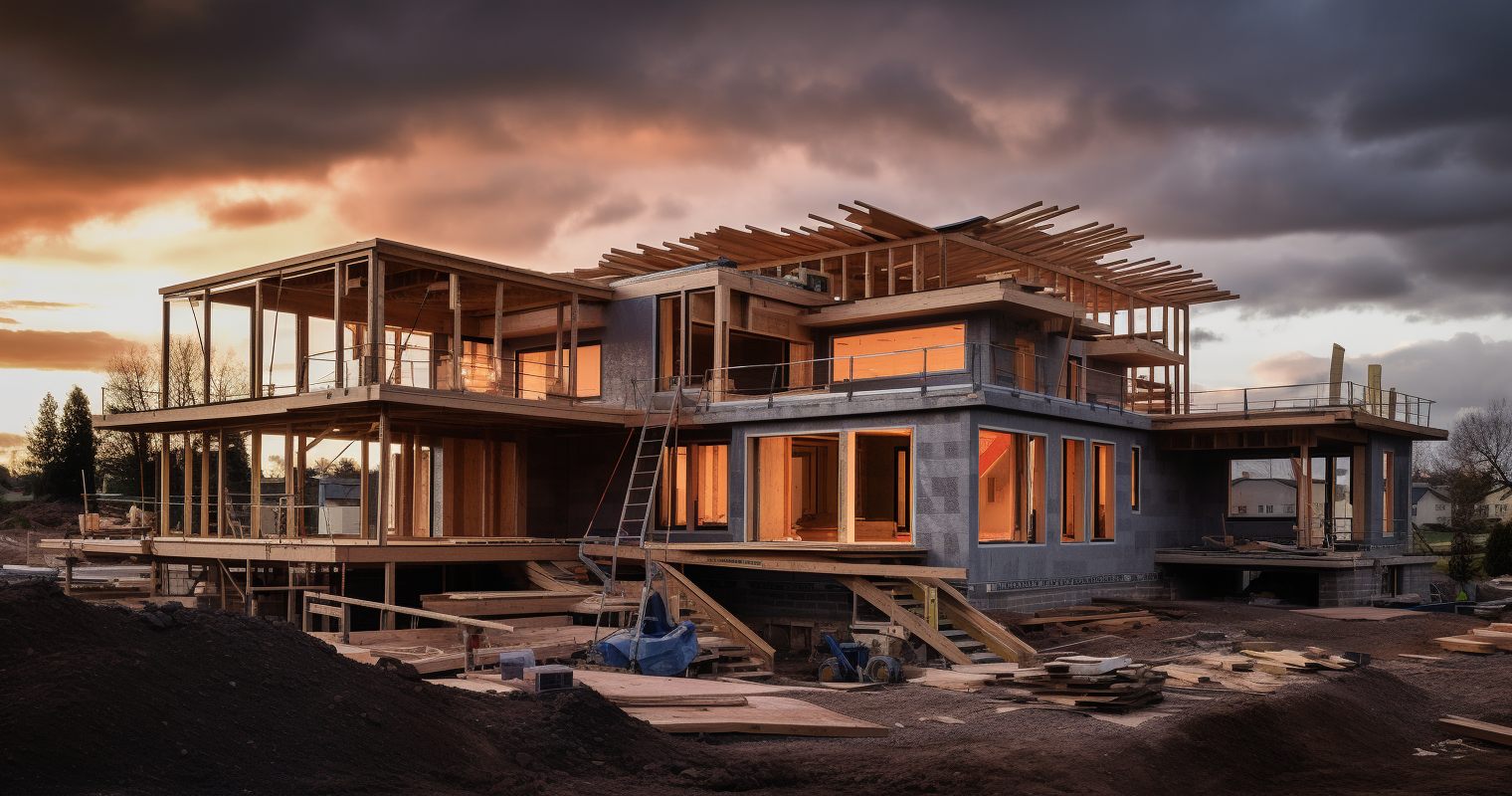
Foreign nationals can build or renovate property in Portugal, but doing so successfully demands a thorough understanding of planning legislation, municipal procedures, and professional regulations. The vast majority of significant construction and renovation projects require prior authorisation from the local câmara (town hall). The sector is closely regulated, and every project must be directed by an architect registered with the national professional body. The Urban Simplex reforms introduced in 2024 have made the process considerably less burdensome, yet local variation and heritage zone restrictions continue to play an important role in shaping what is and is not permissible.
| Item | Details |
|---|---|
| Planning reform (as of 2024) | Decree-Law 10/2024 (Urban Simplex) replaced traditional building licences with a payment-receipt model and introduced tacit approval |
| Tacit approval timescales (as of 2024) | 120 days for projects under 300 m²; 150 days for 300–2,200 m²; 200 days for over 2,200 m² |
| Construction costs (as of 2025) | Mid-range build: €1,700–€2,500/m²; Lisbon/Porto/Algarve: up to €3,500/m²; heavy renovation: €800–€1,500/m² |
| Architect fees (as of 2025) | Typically 6–12% of total project cost for full design and supervision service |
| Foreign ownership restrictions | None — foreign nationals may purchase land and obtain building permits freely |
| VAT on construction (as of 2025) | Standard rate 23%; reduced rate of 6% available for many new builds and renovations under Construir Portugal plan |
Do you need planning permission to build or renovate a property in Portugal?
Portugal’s approach to building approvals was fundamentally transformed in 2024 through Decree-Law 10/2024, which introduced the “Urban Simplex” package of reforms. These changes represent the most far-reaching simplification of the permitting framework in recent memory, and anyone with plans to build or renovate in Portugal today must familiarise themselves with this legislation. Nonetheless, the core principle — that significant construction work cannot proceed without formal authorisation — has not been removed.
Any major construction, structural modification, extension, or change of use will ordinarily require formal approval from the local câmara. For less substantial works — such as non-structural internal refurbishment, repainting, or replacing floor coverings — a Comunicação Prévia (prior communication) may be sufficient in place of a full licence. The expanded scope for carrying out internal alterations, including structural ones, without a full project submission is a welcome development that allows existing properties to be renovated within considerably shorter timeframes.
Projects such as building an extension, replacing a roof, or altering a façade will generally require full planning permission, involving the formal submission of architectural plans for approval by the local câmara. Planning rules in Portugal are applied at the level of individual municipalities, which means requirements can differ markedly from one area to the next. This is a meaningful distinction from countries such as Australia or Canada, where building codes are set at national or state level — in Portugal, your local town hall exercises considerable discretion over what is permitted.
Before committing to any land purchase, prospective buyers can request a Viabilidade de Construção (construction viability assessment) from the local câmara. This document, issued by the council, confirms whether construction is permitted on the plot in question. While it is not a legal prerequisite, obtaining it before purchase is strongly recommended to avoid acquiring land that cannot be built on.
The step-by-step planning application process under the reformed 2024 system works as follows:
- Optional Prior Information Request (Pedido de Informação Prévia / PIP): The process can begin with a voluntary Prior Information Request to establish what construction is viable on a given plot. Although optional, this step is highly advisable — it typically takes 20–30 days, costs relatively little, and offers invaluable early guidance. The response is valid for two years.
- Appoint a registered architect: Every building project in Portugal must be headed by an architect registered with the Ordem dos Arquitectos. Beyond design responsibilities, the architect brings expertise in zoning compliance, regulatory requirements, and permit management. Under the revised system, professional declarations by the architect now replace many of the review functions previously performed by the municipality, making their appointment more important than ever.
- Prepare and submit the full project: The architectural project (Projecto de Arquitectura) must encompass detailed drawings, technical specifications, and full compliance documentation. Specialised technical projects covering structural engineering, electrical installations, plumbing, HVAC, fire safety, and energy performance must be submitted at the same time. The full package — plans, technical report, and proof of fee payment — is then lodged with the municipality.
- Municipal review and tacit approval: Once a project has been submitted, the municipality is permitted to request further information on only one occasion. Decision timescales are fixed: 120 days for projects with a built area of up to 300 m², 150 days for those between 300 m² and 2,200 m², and 200 days for projects exceeding 2,200 m². If the municipality fails to issue a decision within these periods, tacit approval is granted automatically and the project is considered approved.
- Commence construction: The traditional building licence (licença de construção) has been entirely abolished under the new system, replaced by simple payment receipts for municipal fees. All construction must adhere strictly to the approved plans.
- Obtain a Usage Licence (Licença de Utilização): Once construction is finished and the property has been inspected, a Usage Licence must be obtained before the building can be legally occupied or sold.
Digital submission will become compulsory nationwide by January 2026 through the Electronic Platform for Urban Planning Procedures (PEPU). Fees differ by municipality and project scale — always verify the applicable schedules directly with your local câmara, as these are set at municipal level and may change. It is also worth noting that planning approval carries a time limit, typically one to two years within which works must begin and be completed. Failure to meet this window may require a fresh application.
What are the rules around listed buildings, conservation areas, and heritage protection in Portugal?
Portugal operates a well-established and formally structured system for the protection of its architectural and cultural heritage. It is broadly comparable to listed building and conservation area regimes in countries such as the UK or France, though it is administered through distinct Portuguese institutions and legal frameworks that buyers and developers must understand before beginning any project.
The body responsible for classifying and safeguarding built heritage is the Direção-Geral do Património Cultural (DGPC), a central service operating under Portuguese administrative law. Properties can be designated at varying levels of significance, with “National Monument” (Monumento Nacional) representing the highest tier of legal protection. Within World Heritage zones such as Sintra, numerous properties hold this status or that of Buildings of Public Interest, all governed by specific legislation introduced by the Ministry of Culture.
Portugal’s diverse landscape contains many areas protected under conservation legislation. If your property sits within a national park, cultural heritage zone, or rural development restriction area (REN/RAN), additional authorisations will be required even for minor works. These zones are generally identifiable on cadastral maps, which a local architect or planning consultant can review on your behalf. Within designated areas, approvals from environmental or heritage authorities may be needed over and above the standard municipal planning process.
Being located in a protected zone does not necessarily prevent renovation — but it introduces stricter limitations. You may be required to use original materials, preserve the existing roofline, or limit changes to the building’s external appearance. In certain historic city centres, there are supplementary controls governing materials, façade treatments, and the height of new structures.
Portugal also maintains extensive natural protected areas managed by a separate authority. Protected areas fall under Decree-Law 142/2008 and may be designated by national authorities, or by public or private institutions. Applications affecting such areas are assessed by the Instituto da Conservação da Natureza e das Florestas (ICNF — Nature and Forest Conservancy Institute). Classifications in Portugal include national parks, nature reserves, protected landscapes, and natural monuments.
Where a property has been classified as part of Portugal’s architectural or historical heritage, this should be recorded in the land registry. However, the relevant authorities do not always request registration, so this information may need to be obtained directly from the municipality or from the Direção-Geral do Património Cultural. Always consult the DGPC’s official database and your local câmara before acquiring or carrying out any work on a potentially protected property. Portugal has 17 UNESCO World Heritage Sites, with a further 11 on the tentative list — proximity to any of these zones may attract additional scrutiny and oversight.
Some contractors may suggest carrying out works informally without seeking authorisation. This approach carries real risk: unlicensed works can prevent or complicate future sales, rentals, and insurance, and rectifying them or settling penalties afterwards can be both difficult and expensive.
What permits and licences are required when building or renovating in Portugal?
Securing planning approval from the câmara is only one of several regulatory requirements involved in a building or renovation project. A variety of technical permits and licences must be obtained at different stages, with different authorities holding responsibility for different aspects of the work.
Specialist engineers contribute across multiple technical disciplines. Structural engineers are responsible for building safety and seismic resilience. Mechanical, electrical, and plumbing engineers design the essential building services. Acoustic and thermal engineers help meet comfort and energy efficiency requirements. Fire safety engineers address the often intricate requirements of fire protection systems. Each discipline requires relevant professional registration and appropriate insurance coverage.
The main permits and approvals required beyond planning consent include:
- Structural, electrical, and plumbing approvals: Technical plans for each engineering discipline must be prepared by registered engineers and submitted alongside the architectural project. These are reviewed as part of the broader municipal application process.
- Environmental permits: Projects affecting land near watercourses, wetlands, or designated natural areas may require authorisation from the Agência Portuguesa do Ambiente (APA). Groundwater boreholes also require a licence from APA.
- Energy performance certificate (Certificado Energético): Following significant renovation works, certain municipalities may require the property’s energy performance certificate and building licence records to be updated.
- Fire safety: For larger buildings, formal sign-off on fire protection systems and means of escape forms a required component of the technical project.
- Utility connections: Connecting to mains water, electricity, and sewerage each involves a separate process. In urban and semi-urban areas, mains water connection is usually available, though connection fees apply. On rural or isolated plots, boreholes and septic tanks are common alternatives, both of which require individual permits. Never assume that utilities are readily available — always verify their proximity and the likely cost of connection before agreeing a purchase price.
- Usage Licence (Licença de Utilização): This licence must be obtained following completion and inspection of the construction before the property may legally be occupied or transferred.
Portugal’s building regulation processes are increasingly managed through digital platforms, including the Balcão do Empreendedor, where renovation works must be formally recorded. This platform (balcaodoemprendedor.pt) is a useful central reference point for developers and self-builders alike. Always verify current fees and timescales directly with the relevant municipal or national authority, as these are subject to regular revision.
On tax, the standard VAT rate applicable to construction is 23%. However, the Construir Portugal initiative introduced in 2025 means that many new builds and renovation projects may qualify for a reduced rate of 6%. On a €400,000 project, this difference alone can represent a saving of close to €68,000. Seek advice from a qualified tax adviser to confirm whether your specific project qualifies, as of 2025.
How do you find a reliable, trustworthy builder in Portugal?
IMPIC — the Instituto dos Mercados Públicos, do Imobiliário e da Construção — is the Portuguese authority responsible for regulating public markets, real estate, and the construction industry. Every company undertaking construction activity in Portugal, including those operating temporarily, must formally notify their activity before work commences.
Any builder working lawfully in Portugal must be registered with IMPIC. When assessing a contractor, ask for their IMPIC licence number and verify it through the IMPIC website. It is equally important to confirm that the builder’s “Class” is appropriate for the scale of your project — for instance, a Class 1 licence only covers works up to a value of €200,000, while larger projects require a higher classification. The IMPIC register is freely searchable at impic.pt.
IMPIC’s contact details are as follows:
- Website: impic.pt
- Address: Av. Júlio Dinis, 11, 1069-008 Lisboa, Portugal
- Email and phone: Check the official website for current contact details, as these are updated periodically.
When evaluating a contractor, the following practical steps are advisable:
- Verify IMPIC registration: Confirm both the existence and the appropriate class of the builder’s IMPIC registration relative to your project value and type.
- Check insurance: Builders are required to hold civil liability insurance, issued by a licensed insurer and proportionate to the project value, as well as work accident insurance for their employees.
- Request references: Ask for contact details for at least two previous clients in Portugal, ideally on comparable projects, and take the time to follow these up directly.
- Insist on a written contract: Portuguese law recognises the concept of “abnormal change of circumstances” in contracts, so your agreement should address how variation claims will be handled. Always insist on a detailed written contract in both Portuguese and your preferred language, setting out the scope of works, timeline, payment schedule, and defects liability period.
- Use staged payments: Avoid paying large sums before work begins. Structure payments to milestone stages — such as completion of foundations, roof, internal fit-out, and practical completion — and retain a proportion until any snagging has been resolved.
- Appoint an architect to supervise: Having your registered architect independently oversee the build, separate from the contractor relationship, substantially reduces the risk of substandard workmanship or deviation from the approved plans.
Common warning signs include contractors who are unable to produce an IMPIC registration number, those requesting disproportionately large cash deposits before work begins, and any situation in which verbal arrangements are put forward in place of a formal written agreement. Some foreign buyers consider bringing in builders from their home country, but this can create complications if those contractors are not registered to work in Portugal. Foreign construction firms operating in Portugal must also register with or formally notify IMPIC before beginning any work.
How do you find a qualified local architect in Portugal?
Every building project in Portugal must be led by an architect registered with the Ordem dos Arquitectos. Since practising architecture without this registration is not permitted, verifying that a professional is genuinely qualified is straightforward.
The Ordem dos Arquitectos (OA) is the statutory body that regulates the architectural profession in Portugal. Its contact details are:
- Website: portal.ordemdosarquitectos.org
- Telephone: +351 21 324 11 00
- Email: [email protected] (check the official website for the most current departmental contacts)
- Address: Travessa do Engenho à Cotovia 7, 1250-111 Lisboa, Portugal (verify on official website)
Through the public area of the OA Portal, it is possible to access information on registration requirements and the various routes available for qualifying as an architect in Portugal. The Directory of Architects allows anyone to search and verify the details of all architects currently registered with the OA. A Companies Directory provides equivalent information for firms. The portal also enables users to validate documents and professional certificates issued by the OA.
For architects who qualified outside Portugal, a formal recognition process must be followed. To enrol with the Ordem dos Arquitectos, candidates must hold qualifications in architecture that are recognised under Portuguese law. This includes professionals from EU Member States or countries with a reciprocity agreement with Portugal who can demonstrate relevant professional experience, as well as professionals legally established in other states who hold qualifying training.
When choosing an architect as a foreign buyer or expat, prioritise candidates with experience working alongside international clients and a solid working knowledge of the local PDM (Plano Director Municipal — the municipal master plan governing land use). If your project requires planning permission, your architect will need to do more than design the building — they will formally open the application with the câmara and prepare all supporting documentation, including the technical description of works, impact assessments, and material specifications. Fees vary depending on the scope of service, but for a full package covering both design and construction supervision, budgeting 6–12% of the total project cost is a reasonable benchmark, as of 2025. Language is a practical consideration: architects working with foreign clients in Lisbon, Porto, and the Algarve often work across multiple languages, but in more rural settings you may need to engage a translator or bilingual legal adviser.
What are the common pitfalls when buying land to build on in Portugal?
Purchasing a plot of land in Portugal with the aim of building on it is one of the most exciting — and potentially most hazardous — steps a foreign buyer can take. Numerous projects have been disrupted or abandoned entirely due to problems that thorough pre-purchase due diligence could have identified.
Zoning and buildability: The most fundamental question to answer before any purchase is whether the land is actually capable of being developed. Urban land (Prédio Urbano) falls within defined urban boundaries and is zoned for construction. Rustic or agricultural land, by contrast, frequently cannot be built upon, or is restricted to very limited structures. Legislative changes in late 2024 and early 2025 introduced measures aimed at simplifying the reclassification of some rustic land for affordable housing purposes, but significant constraints remain in place. Confirm buildability with the local council and consult the PDM (Plano Director Municipal) for the relevant municipality, either online or in person at the planning department. An architect or solicitor is essential for interpreting the PDM accurately.
Title, boundaries, and ownership history: Before any purchase, verify property title, zoning status, building licence history, and confirm that there are no outstanding irregularities. The Portuguese land registry (Conservatória do Registo Predial) and the Cadastro (the land cadaster managed by the Direção-Geral do Território) are the two principal reference registers. Discrepancies between the two are far from uncommon in rural areas and must be fully resolved before construction can begin.
Environmental and flood-risk designations: Land use plans are a key factor in assessing development potential and are typically revised approximately every 15 years. The most restrictive designations include nature reserves (REN) and lake shore protected areas. Always establish whether the land in question falls within a Reserva Ecológica Nacional (REN) or Reserva Agrícola Nacional (RAN), both of which can place severe restrictions on — or entirely prohibit — construction.
Utilities availability: Access to water is a fundamental requirement for any habitable development. In urban and semi-urban settings, connection to the mains water supply is generally achievable, though connection fees apply. On isolated or rustic plots, boreholes for groundwater are the typical alternative and require a licence from APA, though neither the feasibility, the cost, nor the quality of the water can be assumed. Similarly, do not take for granted that electricity and sewerage infrastructure are nearby — always confirm availability and obtain cost estimates before finalising any purchase price.
Using the right professionals: If Portuguese is not your first language, engaging a bilingual Portuguese solicitor (advogado) with a strong track record in property transactions is highly advisable. They can verify local zoning rules, review planning histories, and ensure that buildings are correctly recorded in the relevant registers. A notary (notário) is required to execute the final deed of sale (escritura), but a notary acts impartially rather than in your specific interest — you should appoint your own solicitor separately to represent and advise you throughout the process.
Unlicensed properties: The ability to complete a property purchase does not mean that the building has been legalised. Where a property lacks a valid licence, or where unauthorised works have been carried out, considerably greater due diligence is required. Buying a building without proper licensing — or one with unlicensed extensions — can leave the new owner liable for substantial costs and fines. Always examine the full licensing history of any property you are considering.
What are the rules around foreign ownership and financing for construction projects in Portugal?
Portugal has a genuinely open approach to foreign property investment. Foreign nationals can obtain building permits without restriction, regardless of whether they are EU citizens, US citizens, UK citizens, or citizens of any other nationality. There is no requirement to establish a local company, enter into a joint venture, or use any special ownership structure purely on account of being a non-Portuguese national.
In the first half of 2024, non-resident buyers accounted for 6% of all residential real estate transactions and 10% of the total transaction value. The average purchase price paid by non-residents was €345,000, compared to €198,000 among residents. This pattern reflects the enduring appeal of Portugal to overseas investors and the corresponding maturity of the legal and financial infrastructure that supports foreign buyers.
To purchase land or property in Portugal, all buyers — whether resident or not — require a NIF (Número de Identificação Fiscal), Portugal’s tax identification number, obtainable from any local tax office (Finanças) or through an appointed fiscal representative. A Portuguese bank account is also necessary to complete the transaction.
Foreign nationals can access Portuguese mortgage products and construction loans, though lending conditions for non-residents are typically more conservative than those available to residents. Non-resident borrowers generally face lower loan-to-value ceilings — often capped at around 70%, compared with up to 90% for residents purchasing a primary residence — and must satisfy Portuguese lenders on income and creditworthiness. Construction loans (crédito à construção) are available, but require approved architectural plans and are commonly disbursed in tranches aligned with construction milestones. The Banco de Portugal (bportugal.pt) provides official guidance on consumer credit regulation and the obligations of lenders.
Acquisition costs should be factored into your overall budget from the outset. Property Transfer Tax (IMT) is payable upon purchase, with rates varying by land type — rustic land is commonly taxed at 5%, while urban land follows graduated scales. Stamp Duty (Imposto do Selo) is typically 0.8% of the purchase price. Verify current rates with a qualified tax adviser, as these figures apply as of 2025 and are subject to revision.
Regarding residency and immigration, owning or developing property in Portugal does not automatically confer the right to live there. Several visa and residency pathways may be relevant depending on your personal circumstances, including the D7 Passive Income Visa and the D2 Entrepreneur Visa. Contact AIMA (Agência para a Integração, Migrações e Asilo) at aima.gov.pt for current information on immigration options.
What official sources should you consult when planning to build or renovate in Portugal?
Regulations, fees, and procedures in Portugal can shift rapidly — the sweeping 2024 Urban Simplex reform is a prime illustration of how quickly the landscape can change. It is essential to check requirements directly with official sources before making any commitment to a project or purchase. The key bodies are:
| Body | Role | Website |
|---|---|---|
| Local Câmara Municipal (Town Hall) | Planning applications, permits, PDM zoning plans, municipal fees | Search your municipality at dgal.gov.pt |
| Direção-Geral do Património Cultural (DGPC) | Classification and protection of architectural and cultural heritage | patrimoniocultural.gov.pt |
| IMPIC – Instituto dos Mercados Públicos, do Imobiliário e da Construção | Regulates the construction sector; builder registration and licensing | impic.pt |
| Ordem dos Arquitectos (OA) | Registers and regulates architects; public directory of qualified architects | portal.ordemdosarquitectos.org |
| Conservatória do Registo Predial | Land registry — property ownership records | irn.mj.pt |
| Direção-Geral do Território (DGT) | Cadastral (land boundary) maps and spatial data | dgterritorio.gov.pt |
| Agência Portuguesa do Ambiente (APA) | Environmental permits, borehole licensing, protected nature areas | apambiente.pt |
| Instituto da Conservação da Natureza e das Florestas (ICNF) | Nature reserves and forest protected area designations | icnf.pt |
| Banco de Portugal | Financial regulation; mortgage and consumer credit guidance | bportugal.pt |
| AIMA – Agência para a Integração, Migrações e Asilo | Residency visas and immigration for foreign nationals | aima.gov.pt |
| Portal ePortugal / Balcão do Empreendedor | Central government services portal including building notifications | eportugal.gov.pt |
Despite the simplifications brought about by recent reforms, Portugal’s building permit system remains sufficiently intricate to challenge even seasoned developers. Completing a project successfully requires patience, expert professional guidance, and a willingness to adapt to local ways of working. The 2024 reforms have removed many administrative hurdles, but language differences, variations between municipalities, and demanding technical standards still require careful and thorough navigation. Always turn to official sources for the most up-to-date requirements before embarking on any project.
Frequently asked questions
How long does it typically take to build a house in Portugal from start to finish?
In 2025, constructing a house in Portugal typically requires between 18 and 36 months from start to finish. A pre-approved turnkey property may be completed in 12 to 18 months. This overall timeframe encompasses the planning, permitting, and construction phases. Even with the promise of faster approvals under the new system, complex projects should be planned over 18–24 months from initial concept through completion, and it is wise to factor in a time buffer of 30–50% to account for unforeseen delays.
What does it typically cost to build or renovate in Portugal?
As of 2025, the national average for a standard mid-range new build sits between €1,700 and €2,500 per square metre. Costs vary depending on location, chosen materials, and the type of property being built. In high-demand markets such as Lisbon, Porto, and the Algarve, strong competition for skilled labour pushes construction costs to between €2,700 and €3,500 per square metre. A heavy renovation of an older structure can range from €800 to €1,500 per m², although this depends considerably on the starting condition of the building. Regardless of project type, always maintain a contingency reserve of at least 10–15% of the total estimated cost.
Are building standards or qualifications from other countries recognised in Portugal?
Building standards from outside Portugal do not carry automatic recognition — all construction must comply with Portuguese regulations and relevant EU directives. To register with the Ordem dos Arquitectos, candidates must hold qualifications acknowledged under Portuguese law, which extends to professionals from EU Member States or countries with a reciprocity agreement, provided they can demonstrate professional experience, as well as professionals legally established in other states who hold qualifying training. For non-EU professionals, a formal recognition process must be completed. Construction companies from outside Portugal must likewise register with or formally notify IMPIC before undertaking any work in the country.
What happens if planning rules are breached or work is carried out without permission?
Proceeding with works without the required authorisation carries significant legal and financial risk. Unauthorised structures may become subject to demolition orders, and responsibility lies with the property owner — not merely the contractor — who may also face fines. Unlicensed works create serious complications when selling, renting, or insuring a property, as they will be uncovered during legal and financial due diligence. Putting things right retrospectively is rarely straightforward and can be extremely costly.
Can I manage a building project in Portugal remotely from abroad?
Remote project management is possible, though it carries challenges. Many expats engage a local architect or dedicated project manager to represent them on the ground. All formal planning submissions can be handled by your appointed architect, and municipal communications increasingly take place through digital platforms. That said, being physically present at key project milestones — including groundbreaking, structural completion, roof installation, and final handover — is strongly recommended. If you intend to spend extended periods in Portugal to oversee your project, consider which visa category suits your circumstances and consult AIMA for the current options available.
What should I do if I have a dispute with my builder in Portugal?
On completion of works, conduct a formal walkthrough with the contractor, architect, and client to draw up a comprehensive snagging list. The contractor should address minor defects within the defects liability period specified in the contract. For more serious disputes, Portugal operates a network of arbitration centres (Centros de Arbitragem) offering alternative dispute resolution — typically quicker and less expensive than pursuing litigation through the courts. The Direção-Geral do Consumidor (dgo.pt) can advise on consumer rights applicable to construction contracts. Where a builder holds IMPIC registration, formal complaints may also be submitted directly to IMPIC.
Is there a language barrier when dealing with planning authorities and contractors in Portugal?
All official planning and legal processes in Portugal are conducted in Portuguese. If you are not fluent in the language, engaging a bilingual Portuguese solicitor with relevant property transaction experience is strongly advisable. In popular expat areas — particularly the Algarve, Greater Lisbon, and Porto — many architects working with international clients are fluent in English and other languages, and can serve as a communication bridge with both the câmara and contractors. All official documents, contracts, licences, and permits will, however, be issued in Portuguese, making professional translation indispensable for any documentation that requires your signature.
Do I need to be a resident of Portugal to apply for a building permit or buy land?
No — foreign nationals may obtain building permits and acquire land in Portugal without any requirement to be resident. You will, however, need a Portuguese tax identification number (NIF) and a Portuguese bank account to complete a property purchase. Non-residents can access Portuguese construction financing, though lending terms are generally more conservative than those available to residents, particularly in relation to loan-to-value ratios. Owning property in Portugal does not in itself confer the right to live in the country — consult AIMA for information on the residency pathways that best suit your situation.