

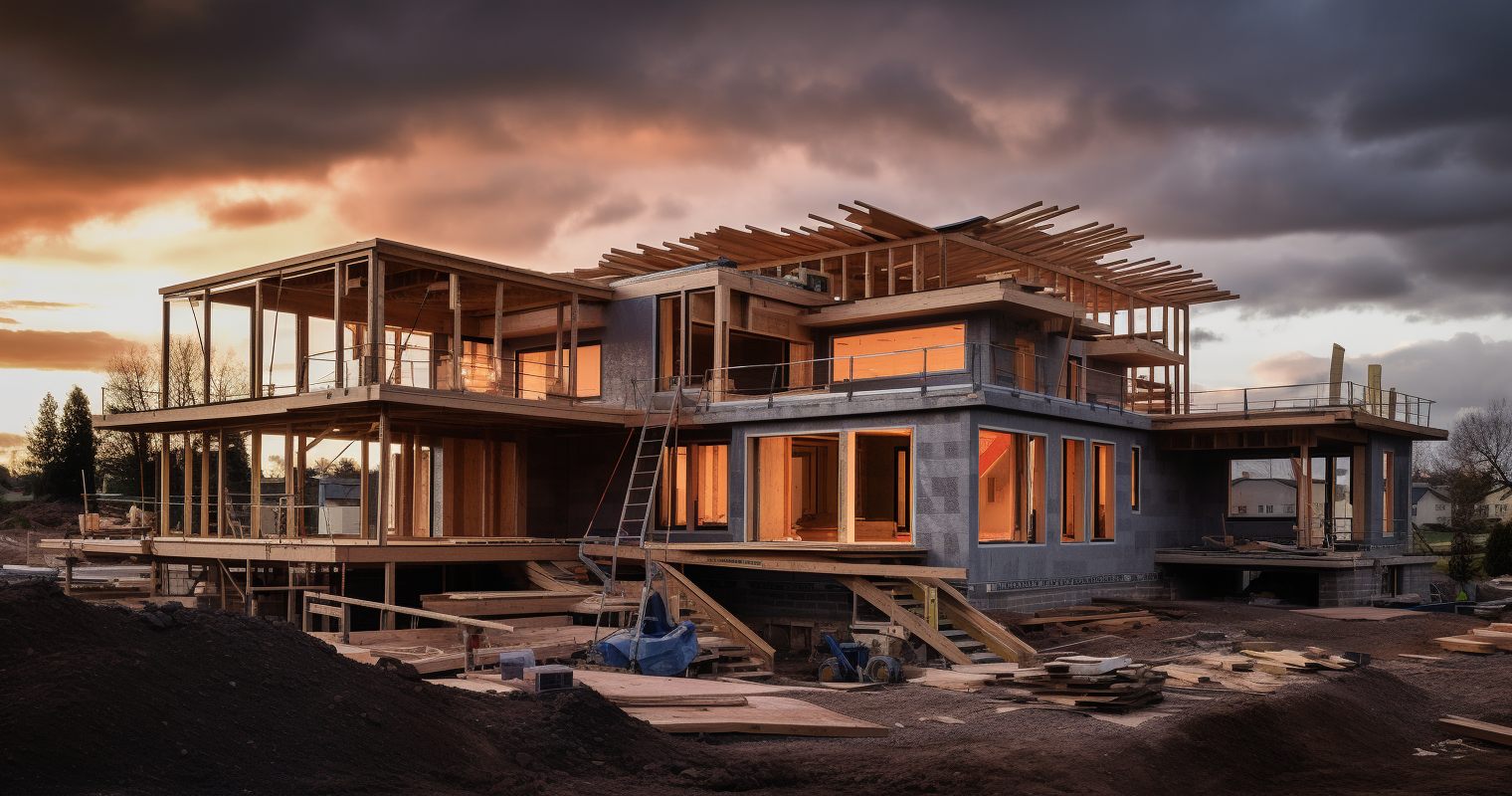
Any substantial building or renovation work in Romania requires a building permit (autorizație de construire), with the process governed chiefly by Law 50/1991. The construction sector is formally regulated, and only licensed architects may sign off on designs. While foreign nationals can generally commission and undertake construction in Romania, the rules around land ownership differ significantly between EU and non-EU citizens. Planning procedures are multi-staged and can be time-consuming, making it essential to engage qualified legal and architectural professionals right from the beginning.
| Item | Details |
|---|---|
| Primary legislation | Law 50/1991 on the Authorisation of Construction Works; Law 350/2001 on Urban Planning |
| Building permit fee (as of 2025) | 0.5% of the authorised construction value (excluding VAT); additional fees for the urban planning certificate apply |
| Standard permit processing time (as of 2025) | 30 days from submission of complete documentation; 7 working days on an emergency basis (with surcharge) |
| Number of listed historical monuments | Approximately 29,500 entries on the national register (monumenteromania.ro) |
| Land ownership for non-EU citizens (as of 2026) | Restricted — typically requires a Romanian-registered company (SRL) to hold land; EU/EEA citizens may own land directly |
| Land registry authority | ANCPI (National Agency for Cadastre and Real Estate Publicity) — ancpi.ro |
Do you need planning permission to build or renovate a property in Romania?
The framework for obtaining building permits in Romania is established by Law 50 of 1991 on the Authorisation of Construction Works. This legislation takes an expansive view: no construction works may legally begin until a building permit has been issued by the appropriate authority. This obligation extends well beyond new builds to cover a broad spectrum of renovation activities.
A building permit is required for the erection, reconstruction, consolidation, enlargement, extension, modification, change of use, or repair of buildings of any kind, along with their associated installations. It is equally required for temporary structures, site improvements, and related constructions. Works of construction, consolidation, alteration, modification, reconstruction, extension, repair, protection, restoration, or conservation of historical monuments are also subject to formal authorisation.
Unlike some other countries — such as the UK or Australia — where minor internal alterations or small outbuildings are routinely exempt from planning permission, Romania’s rules are interpreted strictly, with very few general exemptions available for residential projects. Before proceeding with any cosmetic or minor internal work, always confirm with your local city hall (primărie) whether a specific exemption applies.
It is important to understand that securing an urban planning certificate does not authorise you to start construction. In roughly half of EU countries, the urban planning certificate and the building permit are applied for simultaneously. In Romania, these are entirely separate stages, which adds both time and complexity to the overall process.
Step-by-step: How to apply for a building permit in Romania
- Obtain an Urban Planning Certificate (Certificat de Urbanism). The first requirement is to apply for an Urban Planning Certificate. This document sets out the legal, economic, and technical status of the land and any existing structures. It also defines the urbanistic conditions that must be satisfied and enumerates all approvals needed before a building permit can be issued. It should specify the applicant’s obligation to engage the authority responsible for environmental protection. The certificate is issued by the local city hall (Primărie), sometimes subject to verification by the County Hall (Consiliul Județean).
- Obtain all required pre-approvals and endorsements. The urban planning certificate specifies which approvals, permits, and authorisations must be secured by the client before a building permit can be granted. These may include approvals from the Ministry of Culture and National Patrimony concerning archaeological sites, historical monuments, or protected development areas; consent for a change from designated agricultural use; approval from the Romanian Civil Aeronautics Authority if construction is planned near an airport; and authorisations for connections to public infrastructure networks.
- Carry out an initial environmental evaluation. Before a building permit can be issued, the client must contact the relevant environmental authority to carry out an initial assessment of the proposed investment and determine whether a full environmental impact study is required. This step is mandatory.
- Prepare Technical Documentation (Documentație Tehnică – D.T.). The technical documentation package must be produced by authorised designers, whether individuals or corporate entities. Bear in mind that if construction plans are altered after the permit is granted, a new building permit must be applied for, accompanied by a revised set of technical documents.
- Submit the full application to the competent city hall. The complete documentation must be submitted to the relevant administrative authority — generally the competent city hall — together with proof of payment of all fees due for issuing the building permit.
- Await the decision. Under Law 50/1991, a building permit is issued within 30 days of the submission of complete documentation. An emergency procedure is also available, under which authorisation may be granted within 7 working days, though an additional fee is charged for this expedited service. (as of 2025)
- Notify the city hall before construction starts. Once the building permit has been issued, the investor is required to formally notify the city hall of the date on which construction will begin.
Fees: The cost of a building permit is not predetermined; it varies from project to project and is influenced by the location, scale, type of work, and applicable local regulations. The fee is calculated at 0.5% of the authorised construction value (C+M) excluding VAT. Additional costs arise from the urban planning certificate that must be obtained beforehand, as well as other charges associated with gathering the necessary documentation. Fee schedules should always be confirmed directly with the relevant local authority, as they are subject to change.
If the land you intend to build on lies outside an established built-up area, further steps will be required. Under Romanian construction law, only plots within built-up areas (intravilan) that have been designated as construction land may be developed. If the chosen plot sits outside a built-up area (extravilan), the boundary of that area must be extended to incorporate it. Where the land is classified as agricultural, it must additionally be reclassified as construction land. The approval process for a zonal urban plan typically takes between three and six months.
What are the rules around listed buildings, conservation areas, and heritage protection in Romania?
Romania operates an extensive and formally structured system of heritage protection, broadly comparable to listed building regimes in countries such as France or Germany, though with its own distinct administrative structure. Romania currently has approximately 29,500 listed historical monuments in total. Of these, around 6,800 buildings, archaeological sites, and historical locations are classified as being of national and universal significance (Grade A).
The national register, established in 2004, comprises sites designated by the Ministry of Culture and National Patrimony of Romania and is administered by the Romanian National Institute of Historical Monuments. Each entry carries a unique LMI code (List of Historical Monuments code) identifying the type, location, and level of protection assigned to it.
The Romanian Ministry of Culture is the primary government body with responsibility for cultural heritage. It operates through a network of 41 county culture directorates, including that of Bucharest. Three advisory bodies assist the Ministry: the National Commission for Historical Monuments, the National Archaeological Commission, and the National Commission for Museums and Collections.
If you are considering purchasing or renovating a property that is, or may be, on the National Register of Historic Monuments (Lista Monumentelor Istorice – LMI), Ministry of Culture approval must be obtained before any works can begin. Approvals from the Ministry of Culture and National Patrimony are required in connection with archaeological sites, historical monuments, and protected development areas. Carrying out unauthorised works on a listed monument can attract serious criminal and administrative penalties under Romanian law.
You can check whether a property appears on the national monument register at monumenteromania.ro, the official database maintained by the National Heritage Institute (Institutul Național al Patrimoniului). The National Heritage Institute, established in 2011 under the Ministry of Culture, is the principal central body responsible for maintaining and updating the Historical Monuments List, the UNESCO World Heritage List, the National Archaeological Record of Romania, the Inventory of the Movable National Cultural Heritage, and related registers.
As of 2024, Romania has 11 UNESCO World Heritage Sites, nine of which are cultural and two of which are natural. Properties located in or adjacent to these sites are subject to the most stringent protection requirements. Before purchasing any older property in a historic town, rural area, or village with significant architectural heritage, always consult the local county culture directorate (Direcția Județeană pentru Cultură).
Romania also designates protected urban zones and historic town centres. Within these areas, even works that might not ordinarily require a permit — such as replacing windows, repainting a façade, or modifying a roof — may require heritage approval. Always consult both the local urban planning office and the county culture directorate at the same time when considering any such works.
What permits and licences are required when building or renovating in Romania?
The building permit is the central authorisation needed for construction work in Romania, but it is rarely the only one required. The urban planning certificate issued at the outset of the process sets out a project-specific list of additional approvals relevant to your particular development and location. That certificate identifies every approval, permit, and authorisation that must be obtained before the building permit can be granted. On top of these, further consents may be required under Romanian law.
Common additional permits and approvals include:
- Environmental assessment: An initial evaluation by the environmental authority is a mandatory prerequisite for obtaining a building permit. It determines whether a comprehensive environmental impact study must be carried out.
- Utility connection approvals: Separate authorisations are needed to connect a new or renovated building to water, sewerage, electricity, and gas networks. These are granted by the relevant utility providers and municipal bodies and must be secured before or during the construction phase.
- Fire and civil protection: Authorisations relating to fire safety and civil protection are routinely required and will be listed in the urban planning certificate. These are issued by the General Inspectorate for Emergency Situations (IGSU).
- Heritage authority approval: Required for any works on or near listed monuments or within protected historic zones (see above).
- Civil aviation authority approval: Approval from the Romanian Civil Aeronautics Authority is necessary if construction is planned in the vicinity of an airport.
- Agricultural land reclassification: Where land is classified as agricultural, it must be reclassified as construction land before a building permit can be issued.
Once construction is finished, a formal reception procedure (receptie la terminarea lucrarilor) must be completed before the building may be legally occupied. This involves an inspection committee confirming that the works have been carried out in accordance with the approved plans and applicable technical standards under Government Decision 343/2017 (which amends Government Decision 273/1994). Registration of the completed building with ANCPI and the local tax authority must then follow without delay.
Fees and timescales for individual permits differ considerably between municipalities and project types. Always verify current figures directly with the issuing authority. For questions relating to construction law, the relevant government portal is mdlpa.ro (the Ministry of Development, Public Works and Administration).
How do you find a reliable, trustworthy builder in Romania?
Under Romanian law, construction works are executed by a contractor, while the design project is prepared by an architect and a civil engineer. Responsibility is shared between the contractor, the architect, and the engineer. The contractor bears liability for the quality of the completed work, including hidden defects or any faults resulting from improper execution of the project.
A general guarantee for hidden defects applies, under which the contractor is obliged to cover the client for any hidden defects for a period of three years from the date of handover, or from the date on which the defect became apparent — provided it is discovered within that initial three-year window. This is a legal minimum; always obtain written contractual guarantees that are at least as robust as this statutory baseline.
Construction quality in Romania is regulated by Law 10/1995 on Construction Quality. Reputable contractors should be registered with the Romanian Trade Register (Registrul Comerțului) and hold current professional indemnity and public liability insurance. You can verify a company’s registration status at onrc.ro (the National Trade Register Office). Always ask to see proof of insurance before entering into any contract.
The principal professional body representing construction companies in Romania is the Patronatul Societăților din Construcții (PSC). A wider federation, the Federația Patronatelor Societăților din Construcții (FPSC), also represents contractor interests. While there is no single mandatory licensing register for general contractors equivalent to, for example, the CHAS scheme in the UK or state contractor licence boards in the US, reputable builders should be able to demonstrate registrations, professional affiliations, and a portfolio of completed work. Ask for references from recent clients — particularly other expats or foreign property owners — and visit completed projects wherever possible.
Practical steps to vet a contractor in Romania:
- Verify the company’s registration and legal standing at onrc.ro.
- Request evidence of insurance covering professional indemnity and public liability.
- Ask for a minimum of three references from recent, comparable projects.
- Insist on a detailed written contract in both Romanian and your own language, covering the scope of works, material specifications, payment schedule, completion dates, penalty clauses, and warranties.
- Use staged payment arrangements tied to construction milestones rather than paying large sums in advance. Never pay the full project cost before work commences.
- Appoint a site supervisor (diriginte de șantier) — a licensed technical inspector who monitors quality and regulatory compliance on your behalf throughout the build.
- Confirm that the contractor employs or subcontracts authorised specialists for structural, MEP (mechanical, electrical, plumbing), and other regulated elements of the work.
Common pitfalls for foreign property owners: Fraud targeting foreign land buyers in Romania is not as prevalent as in some other markets, but it occurs with sufficient regularity that every buyer should take basic precautions. The most frequent schemes involve sellers who are not the registered Land Book owners, forged powers of attorney, undisclosed encumbrances such as mortgages or litigation notes, and boundary discrepancies where the physical fence line does not match the cadastral plan. In the construction context, be alert to contractors who disappear after receiving an upfront payment, who quote artificially low figures and subsequently inflate costs mid-project, or who present unverifiable credentials. Always have contracts reviewed by a Romanian lawyer before signing.
How do you find a qualified local architect in Romania?
Architects practising in Romania must hold a licence to do so. The regulatory and professional body is the Ordinul Arhitecților din România (OAR) — the Order of Architects of Romania. Membership of OAR is compulsory for any architect wishing to sign construction designs submitted to planning authorities in Romania.
Ordinul Arhitecților din România (OAR)
Website: oar.archi
Address: Str. Pictor Arthur Verona nr. 19, sector 1, 010312 București, Romania
Phone: +40 21 307 75 60
Email: [email protected]
OAR maintains a searchable national register of licensed architects on its website, allowing searches by name, location, or specialisation. When engaging an architect, always confirm their OAR registration number and check it against the official register before executing a design contract. OAR is organised with regional branches throughout Romania, so you may also contact the relevant regional chapter (filiala) for recommendations of architects active in your area of interest.
Expats should note that all technical documentation submitted to Romanian planning authorities must be written in Romanian. Your architect will handle this as part of their service, but if you wish to fully understand the documents you are approving, ask your architect to provide translated summaries or engage a bilingual legal adviser. Some architects — particularly those based in Bucharest, Cluj-Napoca, and Brașov — have experience working with international clients and may be comfortable communicating in English, French, German, or other languages. It is entirely reasonable to raise this during initial consultations.
Architects holding qualifications from other EU member states may have those qualifications recognised in Romania under EU mutual recognition directives, but must still register with OAR before practising. Architects qualified outside the EU will need to have their credentials assessed separately. For any construction project requiring Romanian planning approvals, you will need an OAR-registered architect regardless of the nationality of the design professional you choose to work with.
What are the common pitfalls when buying land to build on in Romania?
Purchasing land for development in Romania carries specific risks that differ from those involved in buying an existing property. The single most important preliminary step is to establish, before signing anything, whether the land can actually be built on and whether planning permission is realistically obtainable.
Check the land classification and zoning: Only plots within built-up areas (intravilan) that have been designated as construction land may be developed. If the plot you have in mind lies outside a built-up area (extravilan), the built-up area boundary must be extended to include it, and if the land is agricultural, it must additionally be reclassified as construction land. This reclassification process can be slow and its outcome is not guaranteed — never assume approval will be given automatically.
Verify title and the Land Book: Romania is a civil law jurisdiction with specific rules: ownership must be registered in the Land Book (Carte Funciară) maintained by the national cadastre authority (ANCPI); separate rules apply to buildings and land; agricultural land is subject to pre-emption rights and further restrictions; and Romania continues to deal with the restitution of properties nationalised during the communist period. Before any purchase, instruct a Romanian lawyer or notary to obtain and analyse a current Land Book extract (extras de carte funciară).
Check for restitution claims: Romania has a complex post-communist history of property restitution. Some properties were nationalised after the Second World War and have only been partially or incompletely returned to their former owners or heirs. Given the laws that applied to real estate during the communist regime, buyers can be exposed to certain residual risks, and some choose to protect themselves by taking out title insurance. Title insurance is available in Romania and is worth considering for higher-value acquisitions.
Check boundaries carefully: A common problem is boundary mismatches, where the physical fence line does not correspond to the cadastral plan. Always commission an independent survey from a licensed topographer (topograf autorizat) to verify that the physical boundaries match the cadastral documentation before exchanging contracts.
Confirm utility availability: In rural areas of Romania in particular, access to mains water, sewerage, electricity, and gas cannot be assumed. Where these networks do not already serve the property, connection costs can be very substantial. Confirm the availability and expected cost of connecting all utilities before committing to a purchase.
Flood risk and environmental issues: Romania has extensive flood-prone areas, particularly along river corridors and in low-lying plains. Check with the Romanian Waters National Administration (Apele Române — rowater.ro) whether the land falls within a flood hazard zone. Also investigate any environmental designations, such as Natura 2000 areas, that could constrain development.
Agricultural land pre-emption rights: Purchasing agricultural land is subject to the pre-emption procedures established by Law 17/2014, which can extend the transaction process to between two and four months. Neighbouring landowners and certain state bodies hold legal rights of first refusal that must be formally exhausted before a sale can proceed.
Use a notary and a lawyer: All property transactions in Romania must be completed before a public notary (notar public). The process for buying land in Romania involves identifying the cadastral ID and Land Book number, obtaining a Land Book extract to verify ownership and encumbrances, confirming the land category, checking boundaries and access rights, executing the notarised sale-purchase deed, registering with OCPI/ANCPI, and then registering for local property tax at the city hall. Engaging an independent Romanian property lawyer (avocat) alongside the notary is strongly advisable, especially for foreign buyers.
What are the rules around foreign ownership and financing for construction projects in Romania?
Romania’s rules governing land ownership by foreign nationals are set out primarily in Law 312/2005. The position varies considerably depending on whether the buyer is an EU/EEA citizen or a national of a country outside the EU.
EU and EEA citizens: Whether you can own land in your own name in Romania depends entirely on your citizenship. EU and EEA citizens are permitted to own land directly, without any requirement for a special holding structure or local company. This right applies equally whether the purchase is in Bucharest, Cluj-Napoca, or a small village in Transylvania.
Non-EU citizens: As of early 2026, freehold ownership of apartments and buildings is fully open to foreign nationals in Romania, while freehold ownership of land is available to EU/EEA citizens but restricted for non-EU nationals unless specific legal conditions are satisfied. Non-EU foreigners wishing to own land in Romania typically establish a Romanian limited liability company (SRL), which can then acquire land without any nationality-based restrictions. Americans, for example, commonly use this local company structure — the SRL is broadly similar to a US LLC — to hold property. An alternative arrangement available to non-EU buyers is the superficies right (drept de superficie), which grants ownership of a building together with a long-term registered right to use the underlying land.
All buyers: Regardless of whether you can own land directly, what matters above all else is that your ownership is registered in the Land Book (Carte Funciară). Without that registration, your ownership lacks legal security. Foreign buyers must complete registration with ANCPI following the purchase, and depending on individual circumstances, a Romanian tax identification number (NIF) may be required before the transaction can close.
Financing construction: As of early 2026, Romanian banks do provide mortgage finance to foreign nationals for property purchases, though the process involves more documentation and greater scrutiny than for Romanian residents. Foreign borrowers in Romania typically encounter loan-to-value (LTV) ratios of between 60% and 75%, which are more conservative than those available to residents, meaning a larger deposit is required. Banks strongly prefer borrowers who have Romanian residency or employment. Construction loans (credite pentru construcție) are offered by major Romanian banks, but terms and eligibility criteria differ between lenders. Consult the National Bank of Romania (bnr.ro) for information on licensed lenders, and take independent financial advice before committing to any financing structure.
There are no visa or residency requirements specifically linked to commissioning construction in Romania — the right to build flows from property ownership or a valid property right such as superficies. However, if you intend to oversee a project while residing in Romania for an extended period, ensure you hold the appropriate residency status. EU/EEA citizens enjoy the right of free residence; non-EU nationals should verify their visa or residency entitlements with the Romanian General Inspectorate for Immigration (igi.mai.gov.ro).
What official sources should you consult when planning to build or renovate in Romania?
Romania’s regulatory framework for construction involves numerous bodies operating at national, county, and local level. The following are the principal official sources to consult before and during any building or renovation project.
| Body | Role | Website |
|---|---|---|
| Ministry of Development, Public Works and Administration (MDLPA) | National policy on construction, urban planning, and building regulations | mdlpa.ro |
| Local City Hall (Primărie) / County Council (Consiliul Județean) | Issues urban planning certificates and building permits; administers local zoning rules | Varies by locality — search via your municipality’s official website |
| ANCPI (National Agency for Cadastre and Real Estate Publicity) | Land Book (Carte Funciară), cadastral records, title verification | ancpi.ro / epay.ancpi.ro (online portal) |
| National Heritage Institute (Institutul Național al Patrimoniului) | Maintains the national register of listed monuments (LMI) | monumenteromania.ro |
| Ministry of Culture / County Culture Directorates | Heritage approvals for listed monuments and protected areas | cultura.ro |
| Order of Architects of Romania (OAR) | Register of licensed architects | oar.archi |
| National Trade Register Office (ONRC) | Verify builder/contractor company registrations | onrc.ro |
| Romanian Waters National Administration (Apele Române) | Flood risk and water-related environmental matters | rowater.ro |
| General Inspectorate for Emergency Situations (IGSU) | Fire safety approvals | igsu.ro |
| National Bank of Romania (BNR) | Licensed lenders, mortgage and construction loan information | bnr.ro |
| Romanian General Inspectorate for Immigration (IGI) | Visa and residency rules for non-EU nationals | igi.mai.gov.ro |
Regulations, fees, and procedures in Romania are subject to regular change. Always consult official sources directly and obtain up-to-date advice from a qualified Romanian lawyer and a licensed architect before committing to any project. The legislatie.just.ro portal publishes the authoritative text of Romanian legislation and serves as a reliable reference for the current state of the law.
Frequently asked questions: building and renovating in Romania
How much does it typically cost to build a house in Romania?
Building costs vary considerably depending on location, specification, and construction method. As a broad indication, standard residential construction in Romania typically falls in the range of approximately €400–€800 per square metre for a basic finish, rising to €1,000–€1,500 or more per square metre for higher-specification projects. Costs remain generally lower than in Western Europe, though they have risen sharply in recent years due to inflation and labour shortages. Always obtain at least three independent quotations and budget a contingency of at least 15–20% to cover unforeseen expenditure. Confirm current market rates with a local quantity surveyor or architect before drawing up any budget.
How long does the entire building permit process take in Romania?
Under Law 50/1991, the building permit itself must be issued within 30 days of the submission of complete documentation. However, the end-to-end process — from obtaining the urban planning certificate through gathering all required approvals, preparing technical documentation, and lodging the permit application — can realistically span between 6 and 18 months for a standard residential project, and considerably longer for schemes requiring a zonal urban plan (PUZ) or heritage approvals. Do not commit to a construction start date until the permit is formally in your hands.
Are UK, US, or other foreign building standards recognised in Romania?
No. Romania applies its own national technical standards and Eurocodes for construction, as incorporated into Romanian law. Foreign building standards — whether from the UK, the US, Australia, or elsewhere — are not directly recognised or transferable. All technical documentation must comply with Romanian regulations and must be prepared and certified by professionals holding Romanian licences. If you are working with a foreign design team, they must collaborate with a locally licensed architect and engineers who can take responsibility for compliance with Romanian codes.
What happens if planning rules are breached or construction work is carried out without a permit?
Undertaking construction without a permit or in breach of planning conditions in Romania is treated as a serious offence. Penalties under Law 50/1991 range from substantial fines to, in the most serious cases, a compulsory demolition order for the unauthorised works. Retrospectively regularising an unauthorised structure is theoretically possible in limited circumstances but is a complex and uncertain process requiring full retrospective compliance with planning and building standards. Never start any works without first securing the necessary authorisations.
Can I manage a construction project in Romania remotely?
While some aspects of a project can be overseen from abroad, doing so carries considerable risk. Romanian law requires a licensed site supervisor (diriginte de șantier) to be physically present on site and to certify works at prescribed stages — this role cannot be fulfilled by the owner themselves unless they hold the relevant qualification. You may grant a power of attorney (procura notarială) to a trusted representative in Romania to execute documents on your behalf. Nevertheless, for the purposes of quality control and protecting your interests, regular in-person visits to the site or the appointment of a trusted, independent project manager are strongly advisable.
What should I do if I have a dispute with a contractor in Romania?
In the event of a dispute, the first step is to attempt resolution through the mechanisms provided in your written contract — many agreements include provisions for mediation. Should that prove unsuccessful, you may pursue the matter through the Romanian civil courts, which apply the Civil Code provisions on construction contracts, including the three-year statutory guarantee period for hidden defects. For disputes involving registered professionals, complaints may also be lodged with the relevant professional body, such as OAR in the case of architects. The most effective safeguard throughout remains a well-drafted, bilingual written contract agreed before works commence — verbal arrangements are extremely difficult to enforce in practice.
Is there a language barrier when dealing with Romanian planning authorities?
Yes, in practice this is a real consideration. All official documentation, planning applications, and formal communications with Romanian authorities must be in Romanian. While some officials in larger cities may have a working knowledge of other languages, this should never be relied upon. Your licensed architect will prepare and submit all technical documents in Romanian as part of their professional service. For legal documents, contracts, and correspondence, always use a qualified translator and consider retaining a Romanian-speaking lawyer to represent your interests throughout the project.
Can I renovate a rural farmhouse or village property in Romania without planning permission?
As a matter of law, construction works may only begin once a building permit has been issued by the relevant authority, and this obligation applies to renovations as well as new builds. Whether a full permit is required for a given scope of works, as opposed to routine maintenance, can depend on the nature and scale of the work and on how the local authority interprets the rules. For any works that alter the structure, external appearance, footprint, or designated use of a building, a permit is almost certainly needed. Always confirm this with your local city hall before commencing any renovation on a rural property. Bear in mind too that properties in villages with significant architectural heritage may require separate approval from the county culture directorate.
Do I need Romanian residency to commission or oversee a construction project in Romania?
There is no legal requirement to hold Romanian residency simply in order to own land or commission construction there. You can appoint a licensed architect, project manager, and lawyer to act on your behalf, and grant a power of attorney for specific transactions. However, Romanian banks providing construction finance strongly prefer borrowers who can demonstrate Romanian residency or employment. If you intend to spend extended periods in Romania in connection with the project, verify your visa or residency entitlements with the Romanian General Inspectorate for Immigration at igi.mai.gov.ro.