

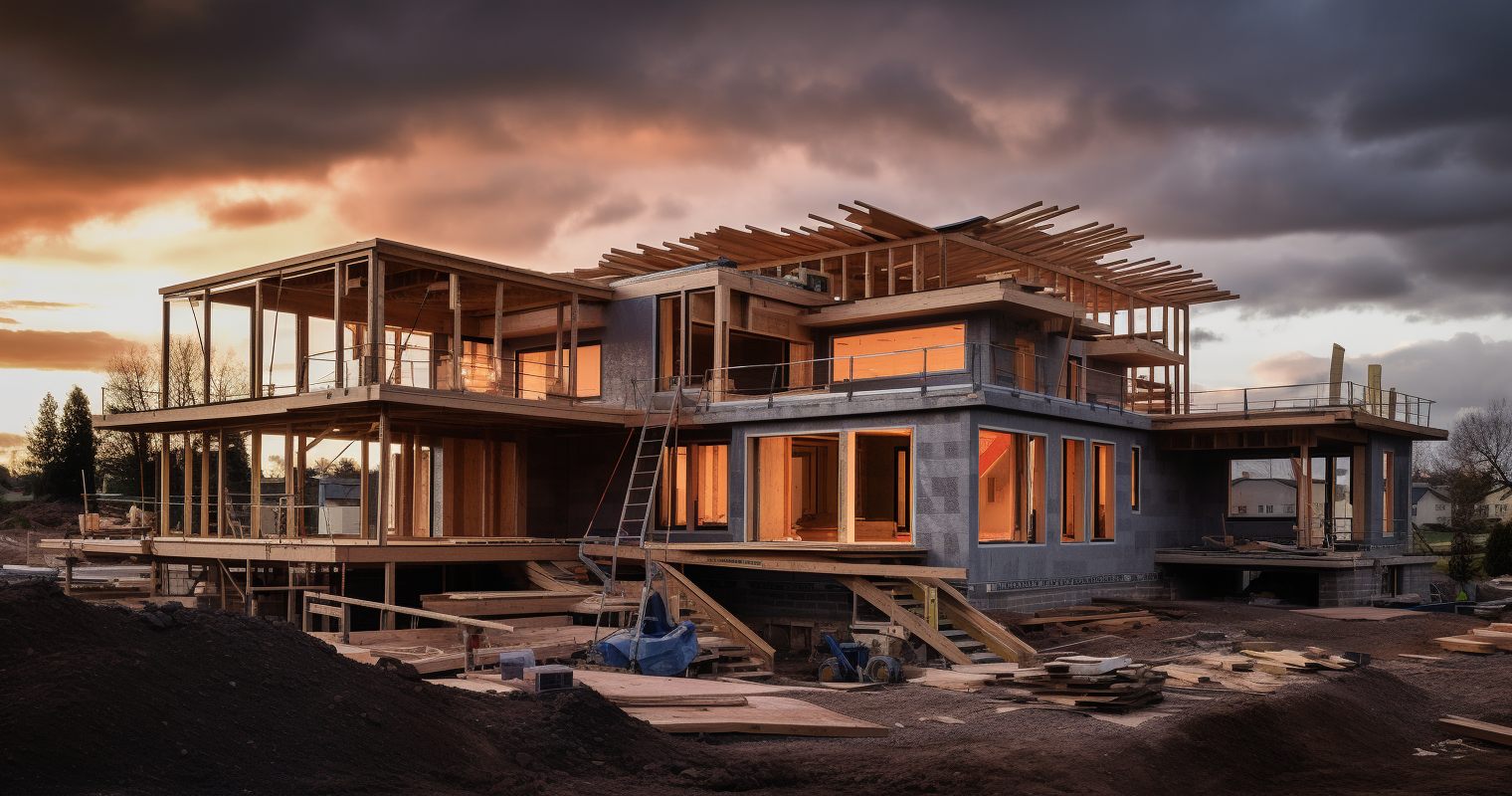
Anyone wishing to build or renovate property in Thailand must obtain a formal building permit — known officially as a construction permit or Aor. 1 — for virtually all new construction, extensions, and structural modifications. The sector is governed principally by the Building Control Act and the Town and City Planning Act. Foreign nationals face considerable legal constraints on land ownership, though they may own buildings, secure long-term leases, and commission construction work. Seeking professional guidance from a qualified Thai lawyer, a licensed architect, and an experienced contractor is indispensable before committing to any project.
| Item | Details |
|---|---|
| Building permit required? | Yes — for virtually all new construction, extensions, and structural alterations (as of 2025) |
| Permit application timescale | Typically 45 days for standard approval; full process often 1.5–4.5 months (as of 2025) |
| Who issues the permit? | Local District Office, Municipal Office, or Pattaya City Office for the area where the site is located |
| Foreign land ownership | Generally prohibited under the Land Code Act B.E. 2497 (1954); key alternatives include leasehold, usufruct, and superficies |
| Architect licensing | Architects must be licensed and registered with the Architect Council of Thailand (ACT) |
| Heritage authority | Fine Arts Department (กรมศิลปากร), Ministry of Culture |
| Key legislation | Building Control Act, Town and City Planning Act B.E. 2518 (1975), Land Code Act B.E. 2497 (1954) |
Do you need planning permission to build or renovate a property in Thailand?
A building permit is mandatory for anyone seeking to construct, demolish, or structurally alter a building in Thailand. The phrase “planning permission” does not feature prominently in Thai regulatory language; the document you need is called a construction permit or building permit, formally designated Aor. 1. While European countries commonly speak of planning permission, Thailand uses the term building permit throughout — different terminology, but the same essential purpose: receiving official authorisation from local authorities before work commences.
Thailand’s Building Control Act covers the full spectrum of construction activity. Every project — whether residential, commercial, or public — must comply with national safety, zoning, and sustainability standards and obtain the relevant permits before building can begin. The Act establishes the foundational rules binding all builders and developers, and substantial updates introduced for 2025 mean that newly enacted amendments can halt ongoing projects if height limits or environmental restrictions applicable to high-tourism or protected zones have been disregarded.
Even minor renovation work sits within this framework, and any exemptions for non-structural alterations vary between localities — always confirm with your local municipal office before proceeding. One noteworthy exemption that came into effect in 2025 relates to solar energy: under a Ministerial Regulation issued that year, rooftop solar panel installations that do not add more than 20 kg per square metre to the structure are generally not classified as a building modification. That said, plans and supporting documents prepared and certified by licensed architects or engineers must still be submitted, and all applicable laws and regulations continue to apply.
Unlike the planning frameworks common in countries such as the UK, France, or Australia — where there is often a formal separation between planning consent, permitted development rights, and building regulations approval — Thailand consolidates land-use authorisation and structural compliance into a single building permit procedure administered by local municipal bodies.
The step-by-step procedure for applying for a building permit is described below. Precise timescales and rules differ depending on your location in Thailand.
How to apply for a building permit in Thailand
- Prepare your plans. Begin with comprehensive architectural and structural drawings of your project. These must conform to Thai building codes and regulations, incorporating floor plans, elevations, and cross-sections in sufficient detail.
- Assemble your documents. You will need the construction layout plan, a copy of the title deed, and measurements of the proposed work. Foreign nationals must also provide land ownership documentation — such as a Chanote title — and valid identification such as a passport.
- Submit your application. Deliver your permit application to the local District Office or Municipal Office, together with all required forms, supporting documents, and application fees. Applications may alternatively be submitted to the Office of Public Works and Town & Country Planning.
- Await review and inspection. Your submission will be assessed by multiple departments, covering zoning, fire safety, and utilities. Each department must give its approval before the permit can be granted. Officials may also carry out a physical site inspection to confirm the accuracy of the information submitted.
- Receive your permit. The approving officer is required to sign the permit within 45 days of the application being lodged, provided that no modifications to the construction plans are necessary. The applicant then makes payment and collects the permit. The full application process typically spans 1.5 to 4.5 months (as of 2025).
- Notify the local authority of commencement. Once the construction permit has been granted, the permit holder must send written notification to the local competent official, stating the name of the construction supervisor together with the intended start and completion dates, and enclosing the supervisor’s written consent.
- Obtain an occupancy permit on completion. After construction is finished, you must secure an occupancy permit from the civil works division of the Bangkok District Office, Pattaya City, or the relevant Municipal Office before the building may be occupied or entered into the house registration book.
The building permit holder is required to keep the permit, the approved plans, and all supporting documentation on site throughout construction. Local authorities are entitled to conduct inspections at any point during the build to verify compliance with the approved plans.
Penalties for non-compliance are severe: proceeding without a permit or contravening the Act can result in daily fines, stop-work orders, compulsory demolition, and even criminal liability for serious or persistent offences.
What are the rules around listed buildings, conservation areas, and heritage protection in Thailand?
Thailand does not employ the precise terminology of “listed buildings” or “conservation areas” as understood in certain European legal systems, but it does maintain a structured heritage protection regime that can place material constraints on what you may build or renovate.
The principal authority for heritage protection in Thailand is the Fine Arts Department (กรมศิลปากร — Krom Sinlapakorn), which operates under the Ministry of Culture. The Fine Arts Department registers and safeguards ancient monuments, historic sites, and objects of national cultural importance under the Ancient Monuments, Antiques, Objects of Art and National Museums Act B.E. 2504 (1961) and its subsequent amendments. At the national level, this Department is the government body responsible for heritage registration and designation.
Where a property or area falls within the Fine Arts Department’s register, any alteration, renovation, or new construction within or adjacent to the protected zone requires the Department’s prior approval. Restrictions may cover building height, materials used, design character, and proximity to the registered structure. Failure to comply can attract criminal prosecution, financial penalties, and an obligation to restore the original condition of the site.
Construction and building work may also be curtailed by environmental legislation — including the Nature Reserve Act and the Forest Act — or where land is subject to a right of servitude. Coastal and elevated terrain carries its own protections: Koh Samui’s city plan, for example, prohibits property development above 150 metres above sea level, echoing Phuket, where the Ministry of Natural Resources and Environment has banned building and renovation in areas 80 metres or more above average sea level.
Before purchasing any property or committing to renovation plans, you should consult the Fine Arts Department to establish whether the property or its surroundings carry a heritage designation. Equally, you should check with the local municipal office and review relevant Ministerial Regulations issued under the Town and City Planning Act, which may impose conservation-type restrictions in particular zones. The Fine Arts Department can be reached at:
- Fine Arts Department (กรมศิลปากร)
Na Phra That Road, Phra Nakhon, Bangkok 10200, Thailand
Tel: +66 (0) 2 164 2501
Website: www.finearts.go.th
What permits and licences are required when building or renovating in Thailand?
Construction in Thailand is principally regulated by the Building Control Act and the Town and City Planning Act. The Building Control Act establishes a framework of government oversight covering essentially all construction types through a system of permit applications and sanctions for violations, while the Town and City Planning Act governs the permitted uses of land across different designated zones.
Beyond the primary building permit (Aor. 1), a range of additional approvals may be needed depending on the scale and nature of your project:
- Environmental Impact Assessment (EIA). Certain projects trigger a mandatory EIA requirement under the Promotion and Conservation of National Environmental Quality Act B.E. 2535 (1992), which requires that approval be obtained from relevant authorities before construction commences. The applicant must prepare and submit an EIA report, which is then reviewed by the Office of Natural Resources and Environmental Policy and Planning (ONEP), either granting approval or requesting further information. Overlooking EIA obligations can lead to substantial fines, significant project delays, or cancellation of the entire project.
- Utility connection approvals. Formal consents from local utility providers for water, electricity, and sewage connections are required. Electricity connections fall under the Provincial Electricity Authority (PEA) or Metropolitan Electricity Authority (MEA), while water supply connections are the responsibility of the Provincial Waterworks Authority (PWA) or Metropolitan Waterworks Authority (MWA), depending on the project’s location.
- Zoning compliance certificate. Zoning rules are a critical consideration for any construction in Thailand. Land use is determined by Ministerial Regulations issued under the Town Planning Act B.E. 2518 (1975), which divides land into zones each carrying specific permitted uses. Your intended project must fall within the permissible uses for the applicable zone before a building permit application can proceed.
- Occupancy permit. A formal occupancy permit must be obtained from the relevant local municipal office once construction is complete, before the building may be used or entered in the house registration book (tabien baan).
- Specialist permits for particular uses. Projects with a specific commercial purpose may require additional licences — for example, a school permit from the Ministry of Education, a factory operation notification to the Department of Industrial Works, or a hotel licence from the Ministry of Interior.
All builders must comply with approved fire protection and land-use requirements, as well as the 2025-specific environmental protections applicable in newly restricted or ecologically sensitive zones. Always verify current fees and timescales with the relevant local authority, as these differ between municipalities and are subject to revision.
How do you find a reliable, trustworthy builder in Thailand?
Thailand does not have a single national licensing body for general building contractors comparable to, say, the UK’s Construction Industry Training Board or the state-based contractor licence schemes operating in Australia. Nevertheless, there are meaningful steps you can take to protect yourself and your investment.
Working with licensed professionals, maintaining thorough records, and assembling a project-specific compliance checklist are all recommended measures for avoiding delays and ensuring that construction proceeds legally from start to finish. Any reputable contractor should be able to demonstrate the following:
- A valid company registration with the Department of Business Development (DBD), Ministry of Commerce (www.dbd.go.th)
- Engagement of a licensed engineer registered with the Council of Engineers Thailand (Wichachip Wisakorn Khong Thai) for structural work
- Engagement of a licensed architect registered with the Architect Council of Thailand for architectural plans — a legal requirement for plans submitted with permit applications
- Valid tax registration and a VAT certificate where applicable
- Evidence of completed previous projects, ideally supported by references from former clients
The Engineering Institute of Thailand (EIT) and the Council of Engineers Thailand maintain records of licensed professional engineers whose involvement is legally required on larger construction projects. The Council of Engineers can be contacted at:
- Council of Engineers Thailand (วิศวกรรมสถานแห่งประเทศไทย)
487 Ramkhamhaeng Road, Hua Mak, Bang Kapi, Bangkok 10240
Tel: +66 (0) 2 184 4600
Website: www.coe.or.th
Before engaging any builder, the following practical measures are strongly advisable:
- Insist on a written contract in both Thai and your preferred language, covering the full scope of works, a payment schedule tied to milestones, penalties for delays, materials specifications, and dispute resolution procedures.
- Use staged payments linked to clearly defined and verifiable milestones — such as completion of foundations or the roof — rather than releasing large lump sums in advance. For larger contracts, consider engaging a Thai lawyer to hold funds in an escrow arrangement.
- Check references from previous clients, ideally including foreign buyers who have completed comparable projects in the same region.
- Request evidence of insurance. Ask for proof of contractor’s liability coverage, though insurance arrangements in Thailand are less standardised than in some other markets.
- Be alert to common risks encountered by foreign property owners, including: contractors who vanish after receiving advance payment; builders who substitute lower-grade materials than those specified in the contract; unlicensed individuals claiming they can secure permits on your behalf; and quotes that exclude site preparation, utility connections, or permit fees. Ensure all documentation submitted with applications is complete, as missing information can cause delays and may indicate an inexperienced contractor.
How do you find a qualified local architect in Thailand?
Constructing a home in Thailand requires a licensed and registered Thai architect. Architecture is a regulated profession in Thailand. The licensing and oversight body is the Architect Council of Thailand (ACT), known in Thai as Sapha Sathapanik (สภาสถาปนิก). Established under the Architect Profession Act, the ACT holds authority to license, regulate, and discipline architects practising anywhere in the country.
Only architects holding a current licence issued by the ACT are legally permitted to sign and certify architectural plans for submission with building permit applications. Plans that do not bear the signature of a licensed architect will be rejected by local authorities for standard residential and commercial projects. This is a critical consideration: commissioning an unlicensed draughtsperson to draw up plans may result in a failed permit application and wasted expenditure.
The Architect Council of Thailand can be contacted at:
- Architect Council of Thailand (สภาสถาปนิก)
Architect Council of Thailand Building, 56/12 Soi Prasanmit (Sukhumvit 23), Klongtoei Nua, Wattana, Bangkok 10110
Tel: +66 (0) 2 260 0020
Website: www.act.or.th
The ACT’s official website allows you to search its register to confirm whether a given architect holds a current licence. The Association of Siamese Architects under Royal Patronage (ASA) functions as the professional membership organisation for architects — distinct from the regulatory ACT — and maintains a membership directory that can help you identify qualified practitioners:
- Association of Siamese Architects under Royal Patronage (ASA)
248/1 Soi Suan Phlu, South Sathorn Road, Bangkok 10120
Tel: +66 (0) 2 679 9353–6
Website: www.asa.or.th
There is no mandated fee schedule in Thailand; architect fees depend on the individual’s experience and licence level as well as the scope and complexity of the project, including relevant skills, market competition, and associated costs. Expats should be aware that foreign architects are generally not permitted to practise independently in Thailand without obtaining local accreditation. When selecting an architect, look for someone with demonstrated experience working with international clients, the ability to communicate in a shared language, and a proven track record of navigating permit applications with local municipal offices — familiarity with local bureaucratic processes is an invaluable asset.
What are the common pitfalls when buying land to build on in Thailand?
Purchasing land in Thailand for the purpose of construction involves a range of risks that are particularly pronounced for those unfamiliar with the Thai legal system. Many of the safeguards and processes common in property markets in Europe, North America, or Australia operate quite differently here, and the consequences of overlooking essential checks can be both severe and costly.
Title deeds and ownership history
Any transaction involving land — whether purchase, lease, usufruct, superficies, or securing a construction permit — is only possible where the land is held under a Chanote (Nor Sor 4 Jor), the certificate of land ownership. This is the sole document that conclusively confirms ownership rights over land in Thailand; it is issued by the local Land Department office and demarcates the land’s precise boundaries through accurate surveys and uniquely numbered markers. Lower-grade title documents also exist — including Nor Sor 3 Gor and other forms — but these confer weaker ownership rights and less certainty over boundaries. Always insist on a Chanote for any transaction involving a substantial construction investment.
Verify planning permission is achievable before purchase
Before purchasing or leasing a plot of land, it is strongly advisable to establish whether your intended project is actually permitted in that zone. To determine which zone a particular plot falls within, the land must be cross-referenced against the applicable Ministerial Regulation. Comprehensive Town Planning maps carry detailed zoning information, and you can check what construction is permissible on a given plot through the Land Department’s website by entering the relevant district, province, and title deed number. Never assume that the availability of land for sale automatically means your intended project is permissible.
Zoning, height, and environmental restrictions
Since the Building Control Act was introduced, zoning rules for urban and tourist areas have been progressively expanded, with increasingly stringent mandatory environmental requirements, particularly in coastal and ecologically sensitive locations. In high-demand areas such as Phuket, Koh Samui, and parts of Chiang Mai, building height restrictions, setback requirements, and environmental buffer zones apply and may significantly curtail what can lawfully be built on any given plot.
Utility availability
Before committing to a purchase, verify the practical availability and anticipated cost of connecting to electricity, water, and sewage networks. In rural or island locations, these connections may be costly, involve lengthy lead times, or may simply not be viable without significant infrastructure investment. Confirmation of utility connection approvals forms a required element of the building permit process.
Risks specific to foreign buyers
Thailand imposes significant restrictions on foreign land ownership, making it essential that overseas buyers fully understand the legal framework and the alternative ownership structures available to them. Foreign nationals who inherit land from a Thai spouse cannot register ownership and are required to dispose of the land within one year of acquisition under the Land Code Act. Informally structured arrangements — not properly registered at the Land Office — afford very limited legal protection should a dispute arise.
Before entering into any real estate transaction in Thailand, thorough due diligence is essential. This encompasses investigating the property’s title history, searching for any restrictions or encumbrances, identifying other potential complications, physically inspecting the property, and verifying compliance with land use, construction, and zoning regulations. This process should be carried out by experienced professionals who can identify issues at an early stage and enable informed decisions before any transaction is finalised.
Always retain a qualified Thai property lawyer and instruct them to conduct formal searches at the Department of Lands (www.dol.go.th) before exchanging any contracts or transferring funds.
What are the rules around foreign ownership and financing for construction projects in Thailand?
Thai law imposes strict controls on land ownership, rooted primarily in the Thailand Land Code Act of 1954, which expressly prohibits foreign individuals from directly owning land. This is a cornerstone principle of Thai property law and is applied consistently.
What foreigners can and cannot own
With the exception of an apartment in a licensed condominium, freehold ownership of real estate — land and house together — is not available to foreign nationals in Thailand. However, foreign individuals and entities may apply for building permits to construct or renovate buildings. Although foreign nationals are barred from owning land, they are permitted to own structures standing on that land. This is a fundamental distinction: you may hold title to the building while the underlying land remains in other hands.
Foreign nationals do have several lawful avenues through which to secure property interests in Thailand. Under the Condominium Act B.E. 2522 (1979), foreigners may own up to 49% of a building’s total condominium floor space.
Legal structures for building on land
For those intending to build a house or villa, the most widely used legal structures among foreign residents are:
- Long-term leasehold: A land lease may be registered for up to 30 years, and any lease exceeding three years must be in writing and registered at the Land Office to be legally enforceable. Pre-negotiated sequential arrangements along the lines of “30+30+30” do not confer automatic renewal rights — the Thai Supreme Court confirmed in 2025 that renewal provisions are contractual commitments, not guaranteed property entitlements.
- Usufruct: A registered right to use and derive benefit from property for a period of up to 30 years or for life; non-transferable, it terminates upon the holder’s death.
- Superficies: A registered right to own buildings or structures separately from the land on which they stand; may be granted for up to 30 years or for life, and is transferable. This is frequently the preferred structure when a foreign national wishes to own a building they have constructed on leased land.
Company structures and nominee arrangements
Some foreign investors establish a Thai Limited Company to acquire land, with Thai nationals holding the minimum 51% ownership required by law. However, using a nominee structure — where Thai shareholders serve merely as placeholders without genuine ownership interest — is illegal and can attract severe sanctions. As of 2025, authorities apply rigorous scrutiny protocols, including annual checks and active investigations into nominee usage. New FBA reforms now assess “Thai company” status on the basis of effective control rather than share percentages alone.
BOI investment pathway
From January 2025, the Board of Investment (BOI) introduced new rules concerning land ownership by BOI-promoted foreign companies. These rules, which took effect in November 2024, establish eligibility criteria including a requirement that companies maintain a paid-up registered capital of at least THB 50 million throughout the period of land ownership. This route is designed for business investors rather than residential developers.
Financing and mortgages for foreign buyers
Access to Thai bank mortgages and construction loans for foreign nationals is severely restricted. Most Thai commercial banks decline to lend to foreign individuals for land acquisition, since foreigners cannot hold title to land as collateral. Some banks offer limited mortgage products for condominium purchases by qualifying foreign nationals, subject to strict eligibility conditions. Developer financing is occasionally available for off-plan developments. In practice, foreign nationals most commonly fund construction projects through overseas remittances or personal savings. Consult the Bank of Thailand (www.bot.or.th) and the Board of Investment (www.boi.go.th) for current guidance.
Long-term visa categories — including the LTR (Long-Term Resident) visa and the Thailand Privilege visa — make residing and operating in Thailand more convenient but confer no land-ownership rights whatsoever. The rules on ownership are identical regardless of visa status.
What official sources should you consult when planning to build or renovate in Thailand?
Thai construction and property regulation spans multiple ministries and agencies. Identifying the correct official source for each aspect of your project is essential, as rules, fees, and procedures are regularly updated. The table below provides a reference guide to the key bodies you may need to consult:
| Authority | Responsibility | Contact / Website |
|---|---|---|
| Department of Lands (กรมที่ดิน) | Land registry, title deeds, land transactions, zoning checks | www.dol.go.th |
| Department of Public Works and Town & Country Planning (กรมโยธาธิการและผังเมือง) | Building permits, construction standards, town planning | www.dpt.go.th |
| Fine Arts Department (กรมศิลปากร) | Heritage designations, ancient monuments, protected sites | www.finearts.go.th |
| Office of Natural Resources and Environmental Policy and Planning (ONEP) | Environmental Impact Assessments (EIA) | www.onep.go.th |
| Board of Investment (BOI) | Investment promotion, land rights for BOI-promoted companies | www.boi.go.th |
| Architect Council of Thailand (ACT) | Architect licensing and registration | www.act.or.th |
| Council of Engineers Thailand | Engineer licensing and registration | www.coe.or.th |
| Local Municipal Office / District Office (อำเภอ / เทศบาล) | Building permit applications, local planning, occupancy permits | Contact the office in the area where your project is located |
| Bangkok Metropolitan Administration (BMA) — Building Control Division | Building permits in Bangkok | Tel: +66 (0) 2 246 0301–2; 111 Bangkok City Hall 2, Mitmaitee Road, Din Daeng, Bangkok 10400 |
| Bank of Thailand | Financial regulations, foreign currency remittance rules | www.bot.or.th |
Official changes and amendments to legislation can be reviewed directly through the Thai Government Gazette at ratchakitchanubeksa.soc.go.th. Always confirm current requirements directly with the relevant authority, as fees, procedures, and exemptions are subject to revision at any time.
Frequently asked questions: building and renovating property in Thailand
How much does it typically cost to build a house in Thailand?
Building costs differ considerably depending on the region, specification, and contractor selected. As a general indication (as of 2025), entry-level builds using Thai contractors and standard materials may start from approximately 10,000–15,000 THB per square metre, while mid-range to premium properties in popular locations such as Phuket, Koh Samui, or Bangkok can run from 25,000 to 50,000+ THB per square metre. These estimates do not include the cost of land, permit fees, architect and engineer charges, utility connections, or landscaping. Always obtain several detailed, itemised quotes and verify prevailing market rates with local professionals before finalising your budget.
How long does the building permit process take in Thailand?
The permit application process typically takes between 1.5 and 4.5 months (as of 2025). The approving officer is required to sign the permit within 45 days of submission, provided the submitted plans do not require modification. Projects of greater complexity, incomplete applications, or plans that need revision can extend this timeline substantially. Processing can also slow in areas experiencing high construction activity or during periods of peak administrative demand.
What happens if planning rules are breached or construction proceeds without a permit?
The Building Control Act prescribes serious penalties including substantial fines and imprisonment for violators. Where a breach is discovered, the competent authority may issue a stop-work order and require the offending structure or element to be rectified within a specified timeframe. Where rectification is not possible, the authority has the power to order demolition. Bypassing the permit process can therefore result in fines, project stoppages, and even the forced removal of completed work. An unpermitted structure will also give rise to serious complications when you seek to sell, transfer, or formally register the property.
Are building qualifications or standards from overseas recognised in Thailand?
Professional building qualifications obtained in other countries — whether in Europe, North America, Australia, or elsewhere — are not automatically recognised in Thailand. Architects and engineers wishing to practise in Thailand must hold a valid Thai licence issued respectively by the Architect Council of Thailand or the Council of Engineers Thailand. Foreign professionals may collaborate with or support a licensed Thai counterpart, but cannot independently sign or certify plans for building permit submissions. Thai building codes and standards govern all construction in the country, irrespective of the standards a client or overseas professional may be accustomed to.
Can I manage a construction project myself without hiring a Thai contractor?
Legally a property owner may act as their own project manager, but in practice this is exceptionally demanding without fluency in Thai, detailed knowledge of local regulations, and well-established connections with local suppliers and subcontractors. Crucially, a licensed Thai architect must certify the plans, and a licensed engineer must supervise structural elements of the work. Engaging local experts greatly simplifies the process and helps ensure all requirements are satisfied efficiently. Attempting to manage a project remotely from abroad introduces very considerable risk, particularly in relation to contractor accountability and payment disputes.
What should I do if I have a dispute with my builder in Thailand?
The Thai civil court system is available for resolving contract disputes, but litigation tends to be protracted and expensive. Your most effective protection is a carefully drafted written contract — ideally bilingual — that sets out clear milestone payment terms, dispute resolution mechanisms, and penalties for delay. For lower-value claims, the Consumer Protection Board (under the Office of the Consumer Protection Board, www.ocpb.go.th) may be able to provide assistance. For higher-value disputes, instruct a qualified Thai litigation lawyer as early as possible. Structuring payments in instalments and retaining a portion until all work is satisfactorily completed and formally signed off also gives you important practical leverage.
Do I need to speak Thai to successfully complete a building project in Thailand?
All official permit applications, title deeds, contracts, and government communications in Thailand are conducted in Thai. Although many architects, lawyers, and contractors working in popular expat hubs — Bangkok, Phuket, Pattaya, Chiang Mai, and Koh Samui — speak English or other languages, official documentation will be in Thai only. It is strongly advisable to have all contracts, permits, and legal documents formally translated and reviewed by a bilingual Thai lawyer prior to signing. Relying exclusively on verbal assurances — even in your own language — is a widespread and frequently costly error.
Is it safe to use a Thai company structure to hold land as a foreign buyer?
As of 2025, Thai authorities apply rigorous scrutiny to potential nominee arrangements, conducting annual checks and active investigations into their use. New FBA reforms now assess “Thai company” status according to effective control rather than share percentages alone, which renders nominee structures legally invalid. The broad consensus among legal practitioners is that a foreign-controlled Thai company does not constitute a sound or sustainable structure for long-term landholding in Thailand. Using Thai shareholders as nominees is illegal and can expose all parties to serious penalties. Independent legal advice from a qualified Thai property lawyer is essential before contemplating any company-based property ownership arrangement.