
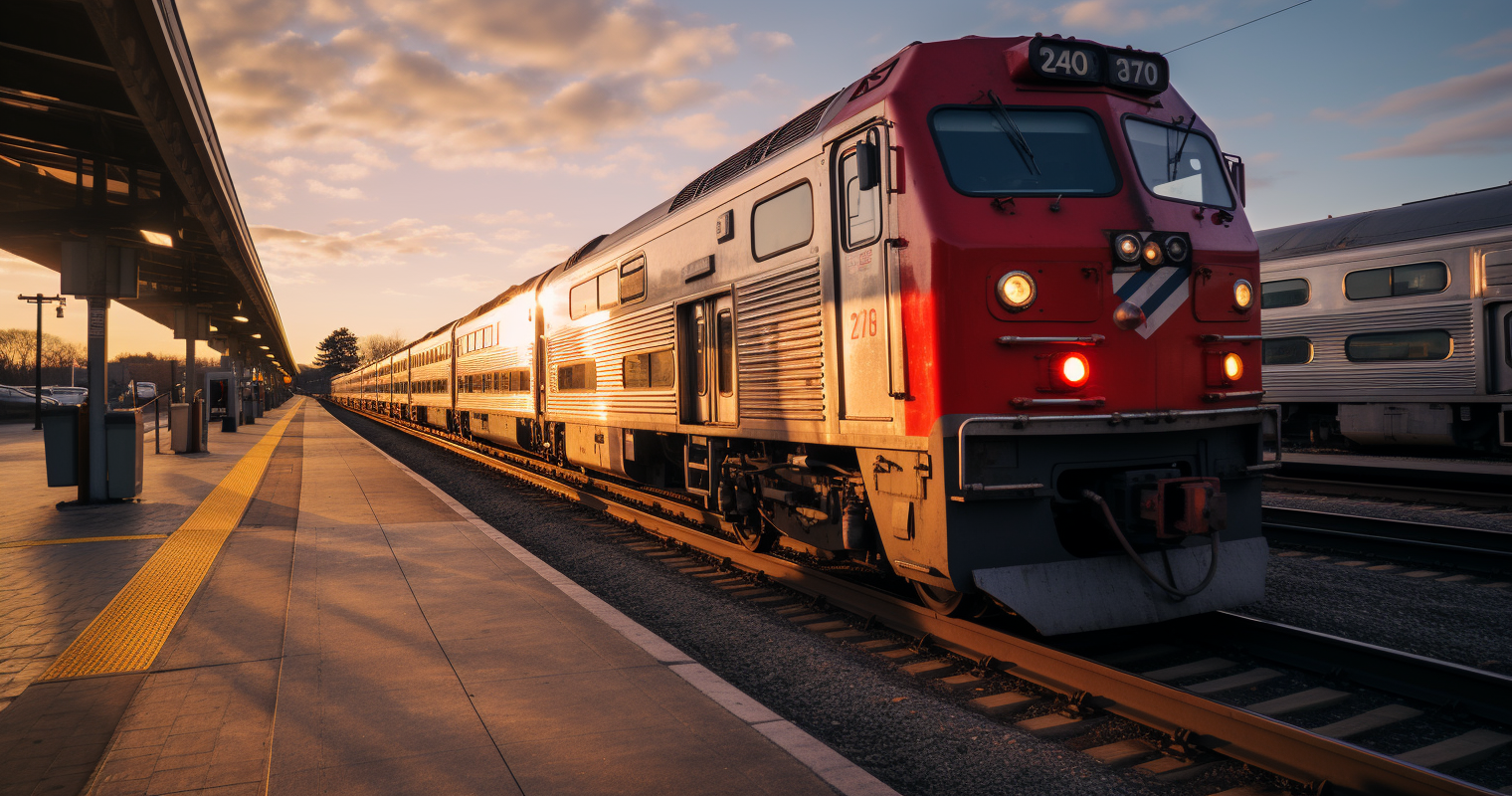
Austria’s rail network, run chiefly by ÖBB (Österreichische Bundesbahnen), ranks among Europe’s most dependable and well-used national railway systems. High-speed intercity connections, consistent regional services, and thorough urban coverage combine to make train travel a genuinely reliable choice for both commuting and longer journeys. For those newly arrived in the country, the train frequently becomes the natural — and most sensible — way to move around.
| Item | Details |
|---|---|
| Main operator | ÖBB (Österreichische Bundesbahnen) — oebb.at |
| Network length | Approx. 6,123 km total; ~75% electrified (as of 2024) |
| Punctuality | 93.6% of trains on time (as of 2024) |
| Cheapest advance fare | From €9.90 (2nd class Sparschiene, as of 2025) — verify at oebb.at |
| Vorteilscard (discount card) | 50% off standard fares; Comfort version €89/year (as of 2025) |
| Vienna metro (U-Bahn) | 5 lines, 83.3 km, 109 stations; operated by Wiener Linien |
| Regulatory body | Schienen-Control GmbH — schienencontrol.gv.at |
What is the overall standard of rail travel in Austria?
Rail services in Austria are delivered primarily by the Austrian Federal Railways (Österreichische Bundesbahnen, or ÖBB), which also oversees rail transport in Liechtenstein. The network is both expansive and thoroughly modern, making it one of the most practical foundations for living without a car. Whether you are travelling within a city region or between provincial capitals, the train nearly always presents itself as a workable solution.
Within the European Union, Austria sits near the top for distance travelled by rail per person per year — 1,510 km in 2022 — and was placed fifth among European national rail systems in the 2017 European Railway Performance Index. This positions it broadly alongside Germany’s Deutsche Bahn and Switzerland’s SBB in terms of overall performance, though the Austrian network is more modest in scale than those of its neighbours.
With 93.6% of trains arriving on time, ÖBB is consistently among the most punctual rail operators anywhere in Europe. Eurobarometer surveys indicate that Austrian rail passengers record some of the highest satisfaction scores in the EU for punctuality, reliability, and service frequency. For newcomers accustomed to less dependable rail systems, this consistency can represent a tangible improvement in day-to-day quality of life.
Passenger numbers have risen steadily — ÖBB carried 511.3 million people in 2024, a 3.6% increase on the previous year. As of 2024, roughly 75% of lines across all infrastructure operators were electrified, with continued capital investment targeting further electrification. Approximately €1.8 billion is earmarked for expanding and modernising regional railways in the coming years, with environmental improvement as a central objective.
Alongside ÖBB, WESTbahn is the other significant passenger operator on the Austrian network. Deutsche Bahn and Czech Railways (České dráhy) also run passenger trains into Austria. The network serves daily commuters through dense S-Bahn suburban systems, while high-speed Railjet and intercity services handle longer domestic and international journeys.
What classes of rail travel are available in Austria, and what are the differences between them?
The class structure varies considerably depending on the type of train. On regional and suburban services — including S-Bahn, REX, and local Regionalzüge — there is only a single standard class. Meaningful class distinctions emerge on long-distance and international trains, most notably aboard the flagship Railjet.
Railjet is ÖBB’s high-speed service, operating at up to 230 km/h on corridors such as Vienna–Munich, Vienna–Innsbruck, and Prague–Graz. Beyond connecting Austrian cities, Railjet extends into neighbouring countries including Germany, the Czech Republic, Hungary, Switzerland, and Italy.
Railjet tickets are offered across three classes. Economy Class delivers solid comfort including free Wi-Fi and power sockets at every seat. Business Class steps up with more generous seating arrangements, designated quiet zones, and complimentary food and drinks brought to your seat. First Class — sometimes labelled Premium on international routes — offers the premium experience: broad leather seats, greater privacy, and priority boarding. The price gap between Economy and Business is noticeable, though frequent long-distance travellers often find the additional comfort and workspace in Business Class justifies the extra cost.
ÖBB’s Nightjet overnight trains operate on an entirely different model. At the most affordable level, seated carriages feature six-seat compartments shared with fellow travellers. Couchette options come in 4-berth or 6-berth configurations, with seats folding into individual beds complete with bedding and a pillow — a practical choice for families or groups. Couchette passengers also receive a “Viennese Breakfast” and bottled water. At the top of the range sit sleeper cabins, available in standard or deluxe format and bookable as single, double, or triple occupancy.
Cityjet is ÖBB’s premium regional offering. Developed with passenger input, these trains feature ergonomically designed headrests, reading lights, power sockets, and fold-out tables suitable for laptops — though they operate as Standard Class only. The same single-class arrangement applies to Talent, Desiro, and bi-level DOSTO trains deployed on regional routes.
Where can you find rail timetables and ticket prices in Austria?
The most authoritative and comprehensive source for timetable and fare information within Austria is the official ÖBB website. oebb.at hosts a complete journey planner, live timetable data, and real-time fare information across all ticket categories — including advance-purchase Sparschiene deals. Since prices and schedules are subject to change, always consult the official site before making any booking decisions.
All trains in the ÖBB fleet offer complimentary Wi-Fi, and Sparschiene Austria tickets are exclusively sold online and through the ÖBB App. Available for both iOS and Android, the app mirrors the full functionality of the website — allowing journey planning, ticket purchase, digital ticket storage, and live travel updates — making it the most useful everyday tool for residents.
For those who prefer third-party platforms, Trainline and Omio both cover Austrian routes and can be helpful for comparing cross-border fares. That said, the widest selection of Austria-specific discount tickets — including Vorteilscard rates and Sparschiene fares — remains available exclusively through ÖBB’s own channels.
The Austrian rail regulatory body, Schienen-Control GmbH, publishes annual market assessments and passenger rights guidance. Austria’s rail sector performs strongly in areas such as staff training, timetable quality, and infrastructure, and Schienen-Control’s site is a valuable reference for understanding your entitlements as a passenger. For WESTbahn services specifically — which operate on the Vienna–Salzburg corridor — consult westbahn.at.
How do you buy rail tickets in Austria, and can you book in advance?
Austria provides a broad array of ticketing options, from fully digital purchases to in-person sales at station counters. Advance booking is both possible and strongly advisable — particularly for long-distance and international trips, where purchasing early opens up access to the most affordable Sparschiene fares.
- Online via oebb.at: The ÖBB ticketing portal at tickets.oebb.at provides complete journey planning and ticket purchase functionality. Tickets can be saved as PDFs or stored in your ÖBB account for mobile access. This channel covers the full range of available fare types.
- ÖBB App: Downloadable for iOS and Android, the app offers identical booking capabilities to the website and holds your tickets digitally. Since Sparschiene Austria tickets are sold exclusively online and through the app, downloading it is effectively essential for residents wanting the best deals.
- Station ticket machines: Self-service machines are installed at virtually all staffed stations and many smaller stops, and offer an English-language interface — making them accessible well before you are comfortable navigating German. Machines accept card and cash payments.
- Staffed ticket offices (Reisezentren): Any of the 90 travel centres located within Austrian stations can handle ticket purchases in person. These counters are particularly useful for complex journeys, group bookings, or applying discount card benefits.
- On-board purchase: On certain regional services, conductors can sell tickets during the journey — though this generally costs more and is not a reliable option for long-distance trains.
Sparschiene tickets can be booked as far as six months in advance, making early purchase genuinely advantageous. Because these fares are offered at a lower price than standard tickets, only a limited allocation is available per train — the sooner you book, the better your chances of securing them. Standard full-price tickets, by contrast, carry no advance-purchase requirement and remain valid for the specified date and service.
ÖBB operates a relatively clear two-tier model: full-price tickets are exchangeable and refundable, while cheaper tickets are neither exchangeable nor refundable. The exception is the Sparschiene Komfort upgrade, which adds cancellation flexibility. Always read the fare conditions before completing a purchase.
What types of rail tickets are available in Austria, and are there discount schemes?
Austria’s ticketing landscape spans everything from straightforward single-journey fares to annual network-wide passes. Residents who intend to travel by train on a regular basis will almost always find that a discount card or annual pass delivers substantial savings over time.
Standard single tickets cover any journey on the ÖBB network and are priced according to distance. Sparschiene tickets are the advance-purchase discounted alternative: travel within Austria starts from €9.90 in 2nd class (as of 2025). With a Sparschiene Austria ticket, up to four children under 15 travel free per accompanying adult. Always confirm current starting prices at oebb.at/sparschiene, as fares are periodically revised.
The Einfach-Raus-Ticket is a popular day-pass designed for small groups travelling on regional trains. It offers unlimited travel throughout Austria for a day on local regional services for groups of two to five people. As of 2025, the fare is €36 for two travellers, with €4 added for each additional person (reaching a maximum of €48 for five). This ticket is not valid on fast long-distance services.
The ÖBB Vorteilscard is the core discount card for residents using the network with any frequency. It delivers a 50% reduction on every standard ÖBB fare and works much like railcard schemes found in countries such as the UK or the Netherlands — pay an annual membership fee and unlock substantial savings on individual journeys. Several versions are available:
- Vorteilscard Comfort — priced at €89 per year (as of 2025), this card entitles holders to half-price standard fares across Austria, plus a 50% reduction on seat reservations on domestic and international long-distance trains. Check oebb.at for current pricing.
- Vorteilscard Senior — available to anyone aged 65 or over, priced at €31 per year (as of 2025).
- Vorteilscard Senior:in Frei — issued free of charge to seniors aged 65 or over who are entitled to a compensatory or supplementary allowance; the card must be collected in person at an ÖBB ticket counter upon presentation of the relevant documentation.
- Vorteilscard Jugend — aimed at those under 26, costing €19 per year (as of recent information). Verify current pricing at oebb.at, as fees are reviewed periodically.
- Vorteilscard Family — structured for families with children, providing discounts across multiple family members travelling together.
On most Austrian private railways, Vorteilscard holders are also entitled to up to half-price fares. Additionally, as a birthday benefit, the Vorteilscard paired with photo ID functions as a complimentary 2nd class ticket for travel anywhere in Austria on the cardholder’s birthday.
For those settling in or around Vienna for the long term, the KlimaTicket Österreich (Climate Ticket Austria) merits serious consideration — it grants unlimited travel across virtually all Austrian public transport for a single annual fee. Similarly, ÖBB’s Österreichcard is tailored for anyone anticipating extended stays in the country, providing unrestricted rail travel throughout Austria. Check oebb.at for the latest pricing on all annual passes, as fees are subject to annual revision.
How accessible is the rail network in Austria for disabled passengers?
Austria has directed considerable resources towards improving accessibility across the rail network. Accessibility standards on ÖBB’s national services are comparatively strong — particularly on newer rolling stock and recently modernised stations — though older regional lines and rural stops can still show some variation in provision.
ÖBB trains are designed with accessibility firmly in mind, incorporating low-floor entry points, wide doorways, colour-contrast markings, accessible toilets, and deployable boarding ramps. Dedicated wheelchair spaces are also available throughout the fleet, though these must be reserved well in advance.
Passengers with specific mobility requirements are advised to submit a request at least 18 hours before a domestic journey, or 48 hours before an international trip. In some cases, assistance can also be requested at shorter notice — up to three hours before departure — either by calling 05 1717 5 or by completing the online form. Full details are published at oebb.at/barrierefrei-reisen.
Passengers holding an official certificate of disability are entitled to travel across the ÖBB network at a 50% discount. No additional discount card is required — the reduction applies automatically on each journey, making rail travel meaningfully more affordable for disabled residents.
Vienna’s U-Bahn sets a high benchmark for accessible urban transit. The metro is almost entirely barrier-free, with lifts and escalators installed at every station to ensure straightforward access for wheelchair users and those travelling with pushchairs. Tactile guidance systems are fitted throughout stations and trains to assist visually impaired passengers.
In 2023, Wiener Linien introduced a barrier-free emergency call system, enabling passengers to raise an alarm not only verbally but also via a touch-sensitive screen — a significant enhancement for deaf passengers and those with speech impairments. For blind and visually impaired passengers, controls throughout the system are equipped with Braille and tactile symbols.
People accompanying individuals with disabilities — where the degree of disability is at least 70% — may use Vienna’s public transport free of charge, provided the relevant annotation is present in the disabled person’s official identification pass.
Are there metro or urban rail systems in Austria’s cities?
Austria’s most developed urban rail network is found in Vienna, though several other cities operate notable commuter and regional rail systems of their own. Integration between city transit and the national ÖBB network is generally strong, enabling smooth journeys that span both urban and intercity routes.
Vienna (Wien) — U-Bahn and S-Bahn
Vienna’s U-Bahn currently comprises five lines, covering 83.3 km with 109 stations. It is among the most efficient and well-maintained metro systems in Central Europe. The network operates every day from approximately 5:00am until around midnight, with all-night services running every 15 minutes on Fridays, Saturdays, and the nights before public holidays. During daytime hours, trains typically run at two- to five-minute intervals.
A sixth line — the U5 — is currently being built, taking over sections of the existing U2, with the initial opening to Frankhplatz scheduled for 2030. Simultaneously, the U2 line is being extended southward, with completion to Matzleinsdorfer Platz also anticipated in 2030. This active expansion makes Vienna’s metro one of the few in Europe genuinely growing its footprint.
Wiener Linien services connect with mainline ÖBB trains and the Vienna S-Bahn, delivering comprehensive coverage of the city and surrounding region. Within Vienna, WienMobil is the most widely used platform for local public transport, consolidating all of the city’s transit options in a single app and website. U-Bahn tickets are valid on trams and buses too, making the system fully integrated for passengers.
Tickets can be bought at the multilingual machines installed in subway stations, at any ticket office, through the Wiener Linien online store, from many newsagents, or digitally via the WienMobil app for iOS and Android. Visit wienerlinien.at for up-to-date fares, pass options, and timetable information.
Other cities
Graz, Linz, Salzburg, and Innsbruck each operate their own tram networks under local transport authorities, complemented by ÖBB regional S-Bahn services linking outlying suburbs and commuter towns. One of Austria’s most significant infrastructure projects — the Graz–Klagenfurt Koralmbahn high-speed line — will connect these two regional capitals in around 45 minutes, creating a combined urban area of approximately one million inhabitants and enabling ÖBB to expand passenger services by around 30% across long-distance and inter-regional routes. Each city’s transport authority manages its own ticketing and timetable systems, typically accessible through regional apps and websites.
What should expats know about using the rail network day-to-day in Austria?
For those newly arrived, the practical experience of travelling by train in Austria tends to be smooth and well-structured. The following points are worth bearing in mind as you find your feet.
Language: German is the primary language for all announcements, signage, and ticketing at Austrian stations. On major intercity trains and at stations in cities with heavy tourist traffic, English announcements are also provided. Station ticket machines include English as a selectable language, which means basic purchases are straightforward from the outset.
Seat reservations: On the majority of domestic Austrian trains, seat reservations are optional — a valid ticket entitles you to board and occupy any available seat. However, on busy long-distance corridors such as Vienna–Salzburg and Vienna–Innsbruck, trains can become very full — particularly on Friday afternoons and Sunday evenings. Reservations are available for a modest additional fee and are advisable during peak travel periods. On Nightjet services, a reservation or cabin booking is compulsory.
Ticket validation: On ÖBB mainline services, tickets are either checked by a conductor during the journey or verified against your booking reference and ÖBB account. Vienna’s U-Bahn and S-Bahn operate largely on an open-platform basis — there are no ticket barriers at most stations, and passengers board freely. However, a valid ticket is still required at all times, as roving inspectors conduct random checks. Some ticket types require stamping or validation before boarding; where this applies, it will be clearly stated on the ticket.
Luggage: ÖBB permits passengers to bring a reasonable quantity of hand luggage on all services. Oversized items, bicycles, and pets may incur a small supplementary charge. Nightjet cabins incorporate dedicated luggage storage into their design. Bicycles can be taken on many regional and intercity trains with a specific booking in advance.
Cultural norms: Even outside formally designated quiet zones, Austrians typically maintain a calm atmosphere in train carriages — keeping phone calls short, speaking quietly, and using headphones for audio. On Vienna’s U-Bahn, eating is not permitted inside the trains, and dogs must be kept on a lead and wear a muzzle. On escalators, the established convention is to stand on the right and walk on the left — observing this will help you integrate quickly.
Real-time information: The ÖBB App provides live departure boards, platform update alerts, and delay notifications — an invaluable resource for daily commuters. For Vienna specifically, the WienMobil app covers all modes of city transport in real time and is the go-to tool for navigating the capital.
Frequently asked questions about rail travel in Austria
Do I need to book train tickets in advance in Austria?
Advance booking is not a requirement on most domestic Austrian routes — standard-price tickets are typically available right up to the day of travel. That said, booking ahead unlocks the cheapest Sparschiene fares, which start from €9.90 in 2nd class (as of 2025) and can be reserved up to six months in advance. On busy corridors, early booking also helps guarantee a seat, especially around public holidays and at weekends.
Is the ÖBB Vorteilscard worth buying as a resident?
For the majority of residents who travel by train with any regularity, the answer is yes. The Vorteilscard cuts 50% off standard ÖBB fares and tends to pay for itself within just a handful of journeys. The Comfort version is priced at €89 per year (as of 2025) and also includes reduced-price seat reservations on domestic and international long-distance services. Those aged under 26 can opt for the Jugend card at €19 per year. Always confirm current pricing at oebb.at, as fees are revised annually.
Can I use the same ticket for the U-Bahn, tram, and bus in Vienna?
Yes. Wiener Linien operates a unified fare zone across Vienna, meaning a single validated ticket or pass covers the U-Bahn, trams, most buses, and the S-Bahn city zone. The annual Wiener Linien pass and WienMobil app make navigating all modes of city transport entirely straightforward. Visit wienerlinien.at for the latest fare information, which is updated periodically.
How do I get travel assistance as a disabled passenger on ÖBB?
ÖBB offers a dedicated assistance service for passengers with disabilities or reduced mobility. Requests should be made at least 18 hours before a domestic journey — or 48 hours ahead for international travel — either by calling 05 1717 5 or by submitting the online request form at oebb.at/barrierefrei-reisen. Passengers holding an official disability certificate also receive a 50% discount on ÖBB fares without requiring any additional card.
What is the fastest train service between Vienna and Salzburg?
The ÖBB Railjet covers the Vienna–Salzburg route in approximately 2 hours 20 minutes, reaching speeds of up to 230 km/h. Trains operate frequently throughout the day. Sparschiene advance fares can offer considerable savings over standard walk-up prices — visit oebb.at to find the best available fares.
Are there overnight train options from Austria to other European countries?
Yes. ÖBB runs Europe’s largest night train fleet under the Nightjet brand, with routes departing from Vienna and other Austrian cities to a wide range of European destinations including Germany, Switzerland, Italy, France, Belgium, the Netherlands, Poland, and Croatia. Passengers can choose from seated carriages through to private sleeper cabins. Tickets are bookable at nightjet.com or via the ÖBB app, and Sparschiene fares are available on these routes too.
What is the KlimaTicket and is it useful for residents?
The KlimaTicket Österreich (Climate Ticket Austria) is a flat-rate annual pass granting unlimited travel on virtually all public transport throughout Austria — including ÖBB trains, regional rail services, and urban transit networks. Conceived as an incentive to replace private car use with public transport, it offers outstanding value for anyone who travels frequently across the country. For current pricing and purchase details, consult the official KlimaTicket website or oebb.at, as the annual fee may be subject to revision.
Is train travel in Austria safe?
By international standards, Austria’s rail network is regarded as highly safe. Trains are well maintained, stations are typically well lit and staffed throughout operating hours, and the regulatory environment is robust. Schienen-Control, the independent rail regulatory authority, monitors passenger rights and publishes a detailed annual review of market conditions. In 2024, total rail ridership across Austria reached 348.7 million journeys, reflecting the broad public confidence that passengers place in the system.