
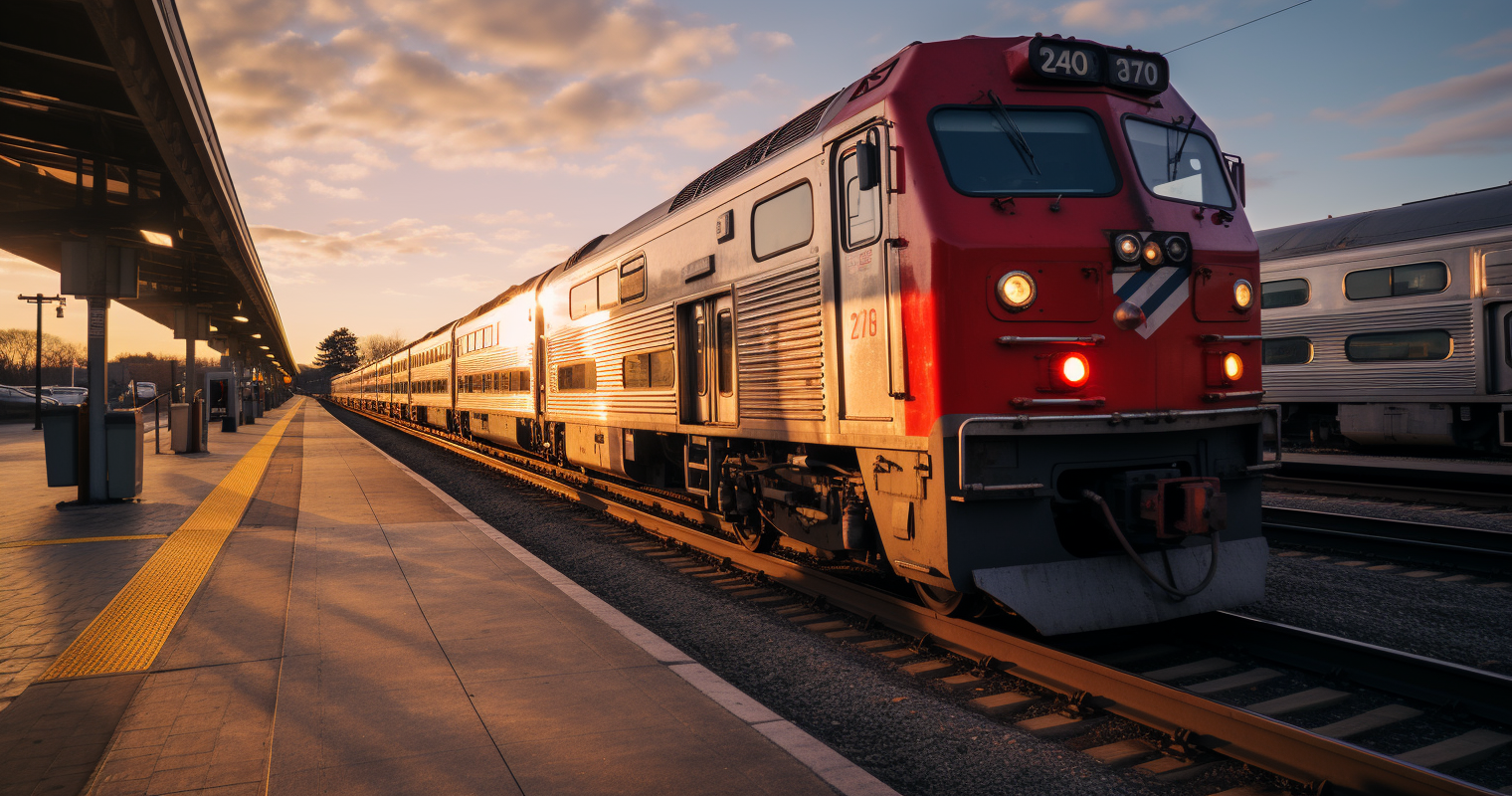
The Bahamas operates no national railway network and offers no passenger train services whatsoever. Spread across more than 700 islands, this archipelago nation has never incorporated rail travel into the fabric of daily life in any meaningful modern way. Expats relocating to the Bahamas should build their transport plans around road-based options, ferry services, and domestic flights, as trains play no role here.
| Item | Details |
|---|---|
| National rail network | None — no passenger trains operate in the Bahamas |
| Metro or urban rail | None in any Bahamian city |
| Main public transport | Jitneys (minibuses), taxis, ferries, domestic flights |
| Jitney adult fare (as of 2024) | Approx. BSD $1.50 per ride (verify with official sources) |
| Student jitney fare (as of 2024) | BSD $1.25 for school students in uniform during school hours |
| Key transport authority | Ministry of Energy and Transport / Road Traffic Authority |
What is the overall standard of rail travel in the Bahamas?
No functioning railways exist anywhere in the Bahamas today. The limited rail operations that once appeared in locations such as Inagua, Abaco, and Grand Bahama served purely industrial purposes — transporting salt and timber — and were never designed to carry passengers. All of these lines were shut down and dismantled long ago.
The country has never established a national rail network, and given that the Bahamas consists of more than 700 islands and cays scattered across a wide expanse of ocean, building one would be wholly impractical. The dense, geographically contiguous landmasses that make systems like Germany’s Deutsche Bahn or Japan’s Shinkansen viable simply do not exist here. The scattered nature of the island chain and the modest size of its population centres rule out any realistic rail infrastructure.
In practical terms, the Bahamas has no national rail system at all. What limited rail activity took place historically was confined to industrial and extractive operations — salt production and lumber transport in particular. At present, transport relies heavily on maritime connections and air travel to serve both the resident population and visitors, with rail contributing nothing to the country’s mobility picture beyond a minor footnote in tourism history.
For those moving to the Bahamas, this means that commuting, errands, and longer journeys across the archipelago all depend on alternative modes. On the main islands, road transport — especially jitneys (the local minibuses) and taxis — forms the backbone of everyday urban movement, while ferries and domestic flights link the broader island chain together.
A handful of small-scale railways did once exist without the use of locomotives, constructed to move salt, sisal, and farm produce in places including Abaco, Exuma, Inagua, and New Providence. These are purely historical artefacts today, with no traces remaining in active service.
What classes of rail travel are available in the Bahamas?
Because the Bahamas has no operational railway of any kind, there are no rail travel classes to speak of — no standard class, no first class, no business class. The tiered service structures familiar from networks such as Eurostar or Amtrak have no counterpart here.
The closest parallel in the Bahamian travel context can be found within road and water-based options, where some degree of service differentiation does exist. Taxis in cities such as Freeport offer a more personalised and direct mode of getting around: they are readily available outside airports, hotels, and major tourist areas, and while their fares exceed jitney prices, they deliver the convenience of door-to-door service. For travellers heading somewhere not covered by jitney routes, or needing to travel at off-peak hours, taxis are an obvious choice.
Visitors arriving in Nassau or Freeport can also arrange private or shared transfers in advance, including air-conditioned vans, limousines, private cars, or coaches with a professional driver ready on arrival. Certain premium services even include fast-tracked processing through the airport to a waiting vehicle.
For moving between islands, passenger ferries connect many of the inhabited cays and islands, with smaller communities relying on these services for access to shopping, schooling, and essential supplies. Services of this kind are found most commonly around the Abaco Islands, the Exuma Cays, Bimini, and Eleuthera. For longer inter-island journeys, domestic carriers such as Bahamasair provide a quicker alternative to ferry travel.
Where can you find rail timetables and ticket prices in the Bahamas?
Given that the Bahamas has no rail network whatsoever, there are no train timetables, rail fares, or rail ticketing resources of any description. No national train operator exists, no government rail portal is maintained, and no third-party rail booking platform covers travel within the country.
For road transport information, the relevant official body is the Ministry of Energy and Transport, which oversees road traffic and public bus services. Their official website can be found at energyandtransportbahamas.com. The Road Traffic Authority handles licensing and regulation of road-based transport.
For jitney route and fare information on New Providence, the key body overseeing reform and modernisation of the bus system is the Unified Public Transportation Company (UPTC). The UPTC and Bahamian digital identity and fintech provider Bluestone Labs have entered into a partnership to launch a unified public bus system in New Providence, with a “Jitney Pass” digital platform set to provide access to 220 buses across more than 40 routes.
Inter-island ferry timetables and prices vary according to operator and destination. Bahamas Ferries provides regular services between Nassau and several nearby islands including Harbour Island and Eleuthera, and the ferries are widely used both for day trips and extended island exploration, with fares depending on where you are travelling. Always check directly with individual ferry operators for up-to-date schedules, since services change with the seasons. The official Bahamas tourism portal at bahamas.com also provides broader transport guidance for visitors and residents alike.
How do you buy rail tickets in the Bahamas?
There are no rail tickets to purchase anywhere in the Bahamas. For the jitney bus system — the primary form of public transport — the following purchasing process applies on New Providence (Nassau):
- Board the jitney at a stop or roadside: Nassau is served by a substantial public bus network in which privately operated vehicles known as “jitneys” follow designated routes across the city. Buses run from around 6AM to 7PM daily, with fares starting from $1.25, and only exact change is accepted.
- Pay in cash on board: Payment is made directly to the driver when boarding. IDB documents from July and August 2024 note that the bus system reform project will seek to address “inconsistencies” whereby some drivers charge $3 — double, or 100 percent above, the approved average fare of $1.50 introduced earlier in 2024. It is worth confirming the fare with the driver before you sit down.
- Use the Bluestone B-ID app (pilot phase): A digital payment system is being phased in that will eventually replace cash fares with digital payments, QR codes, and value tap cards making use of the Bahamas’ CBDC Sand Dollar. The Jitney Pass will be integrated into a dedicated “Transit” feature within the Bluestone B-ID mobile app, accessible via web browser and downloadable on both Android and iOS devices.
- Check route numbers before travel: Riding the jitneys can be a lively experience, and clearly marked bus stops are scarce — buses pull over frequently along the roadside to collect and drop off passengers. Knowing your route number before setting out is strongly advised.
- Use the Bahamas Ride app for taxis: Uber does not operate in the Bahamas, but several app-based ride services are available in Nassau. The main one is Bahamas Ride, developed through a collaboration between the Bahamas Taxi Cab Union and the Ministry of Tourism.
For inter-island ferry travel, tickets are generally purchased at the ferry terminal or booked through the operator’s website or telephone line. Ride-hailing platforms such as Uber and Lyft have no presence in the Bahamas.
What types of rail tickets are available in the Bahamas, and are there discount schemes?
With no rail network in existence, the Bahamas has no rail ticket types, no season tickets, no railcards, and no rail-specific discount programmes. Concepts familiar from other countries — monthly rail passes, advance saver fares, or multi-journey railcards — have no relevance here.
On the jitney bus network, pricing is straightforward and flat-rate. As of 2024, the standard adult fare is $1.50, while junior and senior school students travelling in uniform during school hours pay $1.25, reverting to $1.50 during school holidays and weekends. Always verify current fares with the Ministry of Energy and Transport or the UPTC, as adjustments to the fare structure are under active consideration.
Ongoing discussions concern a second fare rise that would bring the regular passenger fare to $2.00, driven by higher operating costs and the rising price of parts for bus owners. The currently approved fare remains $1.50 as of 2024 — consult official sources to check for any subsequent changes.
There is no equivalent of a monthly travel pass or top-up smartcard — nothing comparable to London’s Oyster card or Singapore’s EZ-Link system. The forthcoming UPTC digital platform is intended to fill this gap: the app will incorporate intelligent routing tools for planning journeys in advance, real-time bus arrival tracking, a passenger rating feature, and an SOS reporting function, with parents able to monitor live bus locations and receive alerts when their children board or reach their stop.
For inter-island ferries, concession arrangements vary from one operator to the next. It is always worth asking individual ferry companies directly about any reduced fares for children, elderly passengers, or local residents, as there is no nationally standardised policy.
How accessible is the rail network for disabled passengers?
As there is no rail network in the Bahamas, there are no train stations, platforms, or rail-based passenger assistance services to speak of. The conversation about accessibility therefore revolves entirely around road-based public transport.
Accessibility on the current jitney network is limited. The IDB observed that stops along the 19-stop Route 16A provided poor accessibility for passengers with disabilities — a shortcoming that the planned $40m transport improvement programme is specifically aimed at remedying as part of a wider push to raise standards.
Around 67 percent — equivalent to $26.8m — of the proposed $40m in funding is earmarked for upgrading road corridor infrastructure along key jitney routes near schools and coastal zones. This work includes the pedestrianisation of downtown Nassau alongside the installation of drainage systems, sidewalks, cycling paths, bus lay-bys, bus stops, and traffic calming measures.
The anticipated outcomes of the programme include meaningful improvements to the quality, accessibility, resilience, and sustainability of the Bahamas’ public transport network. The initiative is also aligned with broader ambitions around sustainable urban development and climate resilience.
Unlike rail systems in countries with dedicated passenger assistance booking services — such as the UK’s Passenger Assist scheme or Germany’s Mobility Service Centre — the Bahamas currently has no equivalent formal support structure for transport accessibility. Residents with disabilities or reduced mobility are encouraged to contact private taxi operators or transfer companies directly for accessible vehicle options, and to monitor the Ministry of Energy and Transport website for updates as the transport modernisation programme continues to develop.
Are there metro or urban rail systems in the Bahamas’s cities?
No underground railways, metros, trams, light rail, or commuter rail services exist anywhere in the Bahamas. Neither Nassau — the capital, located on New Providence Island — nor Freeport, the principal city on Grand Bahama Island, has any form of urban rail infrastructure. This sets the Bahamas apart from many capital cities elsewhere in the region and around the world, where some form of urban rail is standard.
Cities such as Miami (with its Metrorail), Panama City (with the Metro de Panamá), and Santiago (with its extensive Metro network) all have established urban rail systems. The Bahamas has none of this — every element of urban transport in Nassau and Freeport operates on roads alone.
Jitneys are the dominant mode of public transport in Nassau, running across a web of routes that takes in most of the island, including well-known areas such as Cable Beach and Paradise Island. Freeport on Grand Bahama also has public transport options, but nothing resembling the infrastructure of a large metropolitan area — the city is served by jitneys, taxis, and rental scooters or bicycles.
On the Out Islands, formal bus services are absent entirely. Taxis are scarce, and most residents depend on private car or scooter rental to get around. Golf carts are also a popular option on several out islands, with rentals typically available near ferry docks.
For the most current information on Nassau’s public transport network, the UPTC can be reached through the Ministry of Energy and Transport website.
What should expats know about using public transport day-to-day in the Bahamas?
With no railway system in place, navigating daily life in the Bahamas means working with a combination of road, water, and air-based transport. The following practical points are important for anyone newly arrived in the country:
Jitneys form the backbone of urban transport. In Nassau, the jitney — a locally operated minibus — is the primary mode of public transport. These vehicles run fixed routes throughout the city and represent the most affordable way to get around. They are 20-seater buses covering organised routes across most of the island, concentrating on tourist hotspots and residential neighbourhoods alike.
Services have strict operating hours. Jitney buses begin running at approximately 6am and finish around 6pm, or when daylight fades. There is no public bus service after dark. Expats who keep irregular hours or want to travel in the evening will need to rely on taxis or the Bahamas Ride app instead.
Exact change is essential. Fares begin at $1.25 and only exact change is accepted — drivers do not give change. The approved adult fare as of 2024 is $1.50; confirm the amount when boarding and keep an eye on official sources for any fare revisions.
Bus stops are often informal. Few designated stops are marked along jitney routes, and buses will pull over at various points along the road to pick up and drop off passengers. Familiarising yourself with route numbers before travelling is far more useful than looking for fixed stops. Route information is available from the UPTC and through increasingly available digital tools.
English is the language of public transport. All route information, signage, and communication with drivers across the Bahamas takes place in English, the country’s official language. This applies uniformly across the public transport network.
Traffic moves on the left. The Bahamas follows left-hand traffic rules, as in the UK and Australia, though vehicles may be either right- or left-hand drive. Expats arriving from countries where traffic flows on the right will need time to adjust.
Personal transport is frequently a necessity. A privately owned vehicle or regular taxi access is the most convenient arrangement for getting around the Bahamas. With limited public transport options — particularly outside central Nassau and Freeport, and especially on the Out Islands — many residents find that personal mobility is not just helpful but essential.
The transport network is being upgraded. As the Bahamas grows as a global tourism hub, the inadequacy of its existing public transport infrastructure has become increasingly apparent, and both the UPTC and various digital initiatives are setting the stage for significant improvements to how people move around Nassau. Expats settling in now can expect to see gradual but meaningful improvements as UPTC reforms and IDB-funded infrastructure works gather momentum.
Frequently Asked Questions
Does the Bahamas have any trains?
No functioning railways exist anywhere in the Bahamas. The limited rail lines that once operated — in locations such as Inagua, Abaco, and Grand Bahama — were built exclusively for industrial purposes such as salt extraction and timber transport, and all have since been decommissioned. Today, there are no passenger trains, freight trains, tourist railways, or metro systems of any kind in operation across the country.
How do people get around Nassau without a train or metro?
Jitneys — the locally operated public minibuses — are the main form of public transport in Nassau, running across a broad network of routes that reaches most parts of the island, including popular areas such as Cable Beach and Paradise Island. Taxis, the Bahamas Ride app, private transfer services, and personal vehicles are also widely used, particularly in the evenings when jitney services have stopped for the day.
How much does a jitney bus cost in the Bahamas?
As of 2024, the adult jitney fare is $1.50, while junior and senior school students travelling in uniform during school hours pay $1.25, with fares returning to $1.50 during holidays and weekends. Fare increases are being discussed, so it is advisable to confirm current prices with the Ministry of Energy and Transport or directly with drivers.
Can I use a travel card or contactless payment on buses in the Bahamas?
At present, jitney buses are cash-only and require exact change. A digital payment system is, however, in development. The UPTC Jitney Pass will eventually replace cash payments with digital options, QR codes, and tap-to-pay value cards, all accessible through the Bluestone B-ID mobile app on Android and iOS. Check with the UPTC for the latest updates on the rollout timetable.
How do I travel between islands in the Bahamas?
Moving between islands relies on ferries, domestic flights, and in some cases mailboats. Many smaller communities depend on ferry connections to reach neighbouring islands for everyday needs such as shopping and schooling, with services concentrated around the Abaco Islands, the Exuma Cays, Bimini, and Eleuthera. Bahamasair and other domestic carriers serve islands that have airports. Always confirm schedules and prices directly with operators before travelling.
Is public transport accessible for disabled passengers in the Bahamas?
The IDB has identified limited accessibility at some jitney bus stops as a recognised issue, and improving accessibility is an explicit objective of the ongoing $40m transport reform programme. No formal passenger assistance booking service exists currently — nothing equivalent to those found on European or North American rail networks. Passengers with disabilities are advised to contact private taxi operators or transfer companies directly to arrange accessible vehicles.
Are ride-hailing apps like Uber available in the Bahamas?
Uber and Lyft do not operate in the Bahamas. However, app-based ride services are available in Nassau, with the principal option being Bahamas Ride — a collaboration between the Bahamas Taxi Cab Union and the Ministry of Tourism that functions in a similar way to mainstream ride-hailing platforms.
Is it possible to live in the Bahamas without a car?
Living without a car is feasible for expats based in central Nassau or Freeport, provided they are content to work within the reach of jitneys and taxis and are comfortable with shorter walking or cycling distances. For anyone wanting to explore further afield, or living on islands where bus services are sparse or non-existent, access to personal transport becomes a significant practical advantage. On the Out Islands in particular, having your own vehicle is effectively indispensable.