
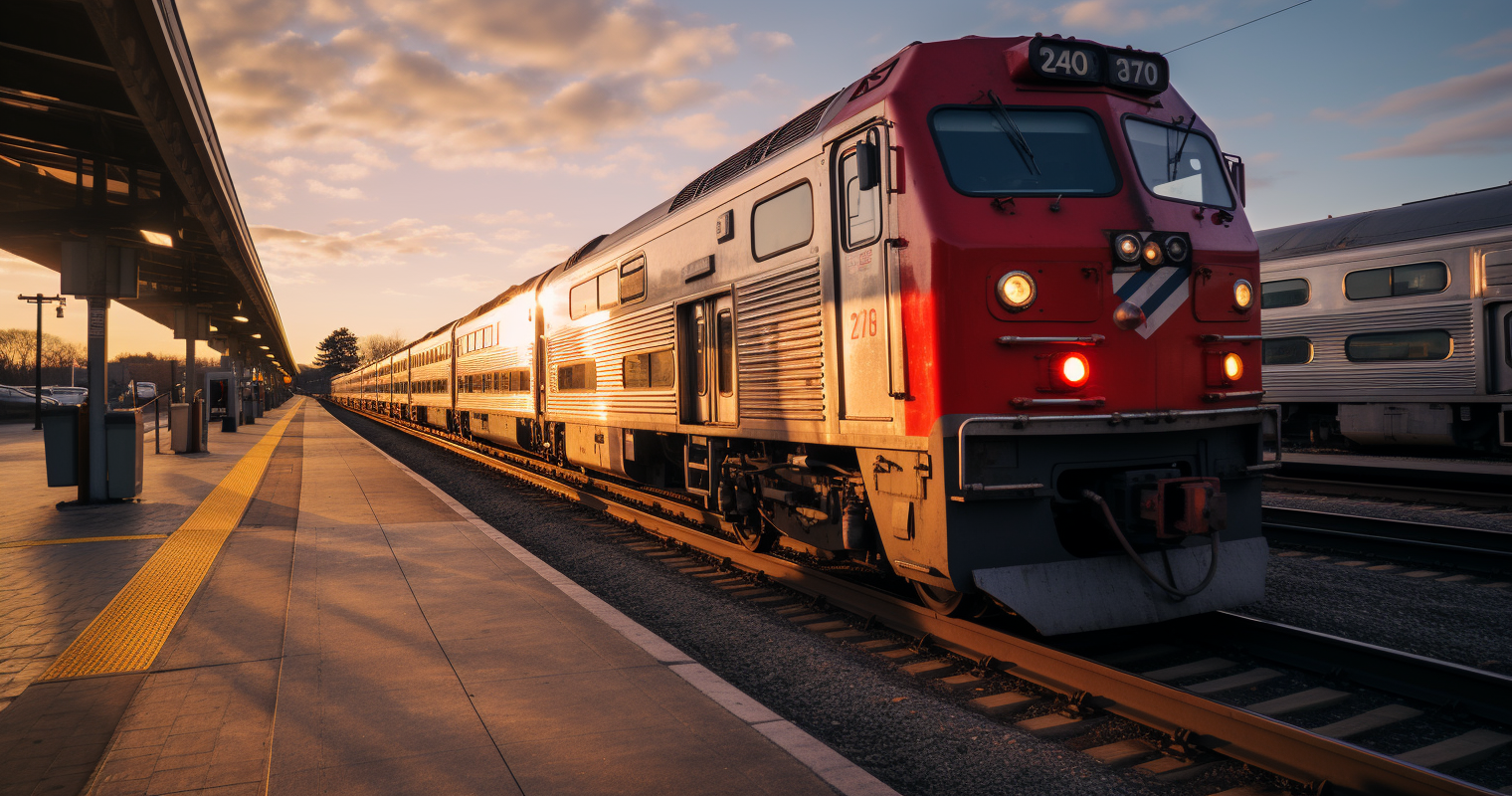
As of 2026, Bahrain has no passenger rail or metro service in operation. The Kingdom depends on road-based transport — chiefly private vehicles and a public bus network — to meet everyday mobility needs. That said, a significant light rail metro project is actively being developed, and a planned GCC regional railway will eventually link Bahrain with Saudi Arabia. Expats relocating to Bahrain should expect to depend on road transport for the foreseeable future.
| Item | Details |
|---|---|
| Operational passenger rail network | None as of 2026 |
| Bahrain Metro Phase 1 | Under development — 29 km, 20 stations, 2 lines; not yet open (as of 2026) |
| Metro estimated total network | 109 km across 4 lines (full buildout planned in phases) |
| Metro Phase 1 estimated cost | Approx. $2 billion / BD 453 million (as of 2023) |
| GCC Railway (Bahrain segment) | Planned 57 km link to Saudi Arabia via King Hamad Causeway — not yet operational |
| Current public transport alternative | Public bus network — 26 routes, 140 buses, 600+ stops |
What is the overall standard of rail travel in Bahrain?
Bahrain does not currently operate any form of passenger rail service. While nations such as Germany, Japan, and Switzerland have built expansive national rail networks that form the foundation of daily and long-distance travel, Bahrain offers no equivalent — there are simply no trains for residents to board for their everyday journeys. This is a fundamental consideration for anyone planning a move to the Kingdom and working out how they will get around.
A proposed public transit development known as the Bahrain Light Rail Network — or Bahrain Metro — is intended to serve Manama and its surrounding metropolitan area. Originally conceived in 2008 and being advanced by the Ministry of Transportation and Telecommunications, the project envisions a total network stretching 109 km. However, as of early 2026, the initiative remains in the pre-construction and procurement phase.
As of November 2025, work had not yet moved into active construction, though land acquisition for elevated sections in the Northern Governorate was completed in October 2024 to facilitate future integration with the Gulf Railway. In practical terms, residents must currently depend entirely on road-based travel options.
Bahrain’s bus network serves as the backbone of public transportation in the Kingdom, offering an accessible, dependable, and environmentally conscious way for residents and visitors to move around. It is run by the Bahrain Public Transport Company under the oversight of the Ministry of Transportation and Telecommunications, and represents the primary public transit option available to expats today. For current route details, visit Bahrain Bus or the Ministry of Transportation and Telecommunications bus page.
What classes of rail travel are available in Bahrain, and what are the differences between them?
Given that no passenger rail service exists in Bahrain, there are no travel classes, fare categories, or on-board service distinctions to speak of at this point. Concepts such as first class, standard class, or business class — well understood by anyone familiar with rail networks across Europe or Asia — simply have no equivalent in Bahrain as things currently stand.
IDOM has been collaborating with the Kingdom of Bahrain’s Ministry of Transportation and Telecommunications (MTT) on the design of Phase 1 of the Bahrain Metro, which is envisioned as a fully automated, driverless system connecting the Kingdom’s main residential, commercial, administrative, and leisure districts. Final design specifications covering passenger class arrangements, fare frameworks, and on-board facilities have not yet been publicly confirmed.
Preliminary design proposals for a light rail configuration include fully automated electric light rail vehicles (LRVs) capable of driverless operation at Grade of Automation 4 (GOA4), featuring climate-controlled interiors maintained at 24°C ± 2°C to keep passengers comfortable in Bahrain’s intense heat. Whether separate travel classes will feature in the metro when it eventually opens remains to be confirmed by the future operator. Expats are encouraged to follow official updates from the Ministry of Transportation and Telecommunications (MTT) as service details are finalised.
Where can you find rail timetables and ticket prices in Bahrain?
Since no rail service is operating in Bahrain as of 2026, there are no timetables to consult or ticket prices to compare. The definitive and most authoritative resource for any future developments in rail infrastructure is the Bahrain Ministry of Transportation and Telecommunications (MTT), the body responsible for overseeing all transport infrastructure including the metro project now in development.
The MTT hosts a dedicated project page for the Bahrain Metro at mtt.gov.bh/projects/bahrain-metro, along with a general railway overview at mtt.gov.bh/railway. These pages represent the most reliable sources to monitor for news on when rail services might start and what fares will look like.
For bus travel — currently the only public transport available — timetables, route maps, and service details can be found at bahrainbus.bh, the official website of the Bahrain Public Transport Company. The existing bus network encompasses more than 600 designated stops, 26 carefully designed routes covering major urban areas, towns, and residential neighbourhoods, and 140 modern air-conditioned buses operating daily with regular timetables and real-time information accessible via the official app and website.
How do you buy rail tickets in Bahrain, and can you book in advance?
Rail ticketing in Bahrain does not yet exist in any form. There are no ticket offices, no automated machines, no booking apps, and no advance reservation systems for trains — because no passenger rail service is running. This is a marked difference from countries with established national carriers such as Deutsche Bahn in Germany or JR Pass in Japan, where a range of booking options are available well in advance.
When the Bahrain Metro does eventually open, ticketing will fall under the remit of whichever consortium wins the operating concession through the project’s public-private partnership structure. The Ministry of Transportation and Telecommunications has outlined a comprehensive 35-year concession arrangement, with the appointed consortium responsible for managing the system’s full lifecycle — encompassing design, construction, financing, operation, and maintenance. The specific ticketing channels — whether app-based, smartcard-based, or machine-based — will be determined by that operator in due course.
Integrated multimodal connectivity is a central feature of the metro’s station design concept, with planned links to Bahrain’s bus network, dedicated taxi zones, bicycle-sharing schemes, and pedestrian routes to enable sustainable onward travel. This suggests the metro’s ticketing approach will be designed to work in concert with the wider public transport ecosystem. Expats should keep watch on the MTT website for relevant announcements.
For existing bus services, daily operations run to regular timetables with real-time updates accessible through the official app and website. Visit bahrainbus.bh for current ticketing and service information.
What types of rail tickets are available in Bahrain, and are there discount schemes?
No rail tickets, travel passes, or discount programmes of any kind exist in Bahrain, since the rail network itself has yet to be constructed. Fare structures familiar from other systems — such as weekly or monthly season tickets, student or senior railcards, concessionary fares for lower-income travellers, or group travel discounts — have not been announced in connection with the Bahrain Metro.
Passenger facilities are being planned with Bahrain’s subtropical environment in mind, incorporating air-conditioned waiting areas and platforms, retail outlets for everyday convenience, and digital information displays providing live arrival times and wayfinding assistance. Detailed rolling stock and operational specifications remained at a preliminary stage as of November 2025, with the final technology decision still pending. Fare structures and any associated concession schemes are expected to be revealed once an operator has been chosen and a confirmed opening schedule is in place.
Once the metro does launch, expats would be wise to look out for resident travel cards or multi-trip passes — features commonly found across regional metro networks, such as the Nol Card on Dubai’s Metro. The official MTT Bahrain Metro project page is the place to check for updates on fares and concessions as the project advances. All pricing information in this article should be verified through official sources, as figures are subject to change.
How accessible is the rail network in Bahrain for disabled passengers?
With no operational rail service in Bahrain at present, there are no accessibility provisions, passenger assistance arrangements, or adapted facilities to describe within a rail context. Wheelchair ramps, hearing loops, visual guidance systems, and dedicated assistance booking services do not exist in this setting — the stations themselves have not yet been built.
The Bahrain Metro is being planned as an elevated urban transit system built to international standards, using conventional steel rail infrastructure. It will incorporate a fully automated, driverless Grade 4 automation (GoA4) system with a capacity exceeding 43,000 passengers per hour. The commitment to international design standards implies that accessibility features typical of contemporary metro systems — such as level boarding, passenger lifts, tactile paving, and audio-visual announcements — are likely to be included, though detailed specifications on accessibility have not yet been made public.
Multimodal connectivity is embedded in the station planning concept, with provisions for integration with the existing bus network, dedicated taxi bays, bicycle-sharing facilities, and pedestrian access routes. Whether dedicated accessibility services — such as pre-booked assistance for wheelchair users, comparable to schemes offered by Network Rail in the UK or SNCF in France — will be available on the Bahrain Metro has not yet been confirmed. Expats with disabilities or mobility requirements are advised to track the MTT website for accessibility policy announcements as the project develops.
In the meantime, those with accessibility needs should reach out to the Bahrain Public Transport Company for information on adapted bus services: bahrainbus.bh.
Are there metro or urban rail systems in Bahrain’s cities?
No operational metro, underground railway, light rail, or urban commuter rail system exists anywhere in Bahrain. The Bahrain Metro — the country’s first urban rail network — is in development and has not yet welcomed passengers. As of 2026, residents of Manama and elsewhere in Bahrain have no rail-based transit option at their disposal.
According to earlier studies, the Bahrain Metro network is designed to cover a total distance of 109 km, built out across multiple phases. Phase 1 alone will span 29 km and include 20 stations across two lines: the first running from Bahrain International Airport to the Seef District, and the second connecting Juffair to the educational zone in Isa Town.
The Red Line will depart from Bahrain International Airport and terminate at the suburban Seef District, passing through the Bahrain Financial Harbour along the way. The Red Line will serve nine stations, while the Blue Line will serve 11. The two lines will intersect at Bab al Bahrain and al Farooq Junction stations.
The metro network will connect to the Gulf Cooperation Council (GCC) railway through the King Hamad International Terminal in the Al-Ramli region, establishing a vital link between urban transit and future inter-regional rail travel. The system will employ a Grade 4 automation (GoA4) framework — fully automated and driverless — the same level used in advanced systems such as certain fully automated lines in Singapore and sections of the Dubai Metro, indicating that Bahrain’s planned metro aspires to international best-practice benchmarks.
As of November 2025, feasibility studies for Phase II were continuing under the Ministry of Transport and Telecommunications. Phase 2 is intended to connect King Hamad International Railway Station in the Ramli area to Sports City and Exhibition World Bahrain in Sakhir, covering approximately 18 km with five stops.
The primary official reference for the Bahrain Metro project is the Ministry of Transportation and Telecommunications: mtt.gov.bh/projects/bahrain-metro.
What should expats know about using the rail network day-to-day in Bahrain?
The most essential practical point for expats arriving in Bahrain is straightforward: there is no rail network to use. Daily life in Bahrain revolves almost entirely around private vehicles and taxis. Roads are modern and well-maintained across the Kingdom, and car ownership rates are very high. Rideshare applications and metered taxis are plentiful, especially in Manama and other busy urban centres.
The bus network links key destinations including Manama, Muharraq, Isa Town, Riffa, Budaiya, Saar, and Bahrain International Airport. For those who prefer not to drive or do not own a vehicle, the bus service is the practical day-to-day alternative. Route details, timetables, and live service information are available at bahrainbus.bh.
When the Bahrain Metro eventually opens, passenger facilities are planned to reflect Bahrain’s subtropical climate conditions, featuring cooled waiting areas and platforms, in-station retail for everyday needs, and live digital displays showing arrival information and navigation guidance. The overall passenger experience appears to have been designed with the Kingdom’s extreme summer temperatures firmly in mind.
In terms of language, Arabic is Bahrain’s official language, but bilingual Arabic and English signage is standard across airports, major shopping venues, and government buildings throughout the country. It is reasonable to expect a modern international-standard metro to follow the same convention, though this has not been formally confirmed. Expats accustomed to bilingual metro systems in Dubai or Doha will find the format recognisable.
There are no seat reservations to consider, no luggage restrictions to bear in mind, and no established behavioural norms for train travel — because there are no trains. Once the metro opens, conventions similar to those in other Gulf metro systems are likely to apply: these typically include expectations of quiet and respectful conduct, rules restricting food and drink on board, and in some cases designated carriages for women and families. Expats should follow the guidance issued by the operator once services begin.
Looking at the broader regional picture, Bahrain will eventually be connected to the GCC network through the King Hamad Causeway project, which will link the Kingdom to Saudi Arabia. Running alongside the existing King Fahd Causeway, the new 57 km crossing will incorporate four road lanes and two rail tracks, connecting the proposed King Hamad International Station in the Ramli area to Dammam Railway Station in Saudi Arabia. This cross-border link could eventually open up rail travel between Bahrain and the wider Gulf network, though no confirmed operational date has been announced.
Step-by-step: How to stay informed about rail developments in Bahrain
- Bookmark the official MTT project page. The Ministry of Transportation and Telecommunications maintains the most current and authoritative information on the Bahrain Metro at mtt.gov.bh/projects/bahrain-metro. Return to it regularly for construction milestones, revised timelines, and official announcements.
- Follow the MTT’s GCC Railway page. For details on the planned cross-border rail connection to Saudi Arabia, visit mtt.gov.bh/projects/gcc-railway, which is updated as the international project moves forward.
- Register for transport news. Monitor Bahrain’s official national news agency and established Gulf transport news outlets for coverage of construction progress, contractor appointments, and projected launch dates for the metro.
- Plan around the bus network in the meantime. Download the Bahrain Bus app and explore bahrainbus.bh to get familiar with available routes, service schedules, and fares while the metro remains under development.
- Join expat communities. Local expat forums and social media groups can offer timely, ground-level insights on transport conditions in Bahrain — including how metro construction may affect road traffic and when pilot services might begin.
- Contact the MTT directly. For formal enquiries about transport policy or project schedules, the Ministry of Transportation and Telecommunications can be reached through its official portal at mtt.gov.bh.
Frequently Asked Questions
Does Bahrain have a train or metro system I can use right now?
No. As of 2026, Bahrain has no passenger rail or metro service in operation. The Bahrain Metro project is under development but has not yet opened to the public. Getting around on a daily basis means relying on private cars, taxis, rideshare apps, and the public bus network run by the Bahrain Public Transport Company.
When will the Bahrain Metro open?
No confirmed opening date has been publicly disclosed. The project remained in the pre-construction phase as of early 2026, with procurement and contractor selection processes still under way. The Ministry of Transportation and Telecommunications (MTT) is the official source for updates: mtt.gov.bh/projects/bahrain-metro.
How many metro lines are planned for Bahrain?
The complete Bahrain Metro network is planned to comprise four lines totalling 109 km. Phase 1 will launch two lines — the Red Line running from the airport to Seef District, and the Blue Line connecting Juffair to Isa Town — across 29 km and 20 stations. Later phases will extend the network to include areas such as Sports City and Exhibition World Bahrain.
Will the Bahrain Metro connect to trains in other Gulf countries?
Yes, eventually. The metro is designed to link up with the King Hamad International Railway Station, which will in turn connect to Saudi Arabia via a new causeway incorporating two rail tracks. This will form part of the broader GCC Railway network. The cross-border link is also still in the planning and development stage, with no confirmed operational date as of 2026.
What public transport can I use in Bahrain while I wait for the metro?
The main public transport option is the bus service operated by the Bahrain Public Transport Company, running 26 routes with 140 air-conditioned buses that connect Manama, Muharraq, Isa Town, Riffa, Saar, Budaiya, and Bahrain International Airport. Route maps and timetables are available at bahrainbus.bh. Taxis and rideshare apps are also popular and widely available.
Will the Bahrain Metro be accessible for wheelchair users and disabled passengers?
Detailed accessibility specifications have not yet been released, as the metro is still in development. The planned system is described as conforming to international standards, which typically encompass level boarding, passenger lifts, tactile floor surfaces, and audio-visual information systems. Expats with accessibility requirements should follow official MTT announcements and contact the ministry directly for the most up-to-date guidance.
Will metro announcements and signage be in languages other than Arabic?
No official language policy for the metro has been announced. However, given Bahrain’s substantial international resident population and its standing as a regional business hub, bilingual Arabic and English signage — consistent with the approach taken by metro systems in Dubai and Doha — is widely anticipated. Confirmation will come once an operator is selected and service specifications are published.
Is Bahrain planning any long-distance rail travel within the country?
Bahrain is a small island nation of approximately 760 km², which means domestic long-distance rail is not a relevant concept in the same sense as it would be for much larger countries. The planned metro and GCC Railway connection are focused on urban transit and cross-border regional connectivity rather than domestic long-distance routes.