

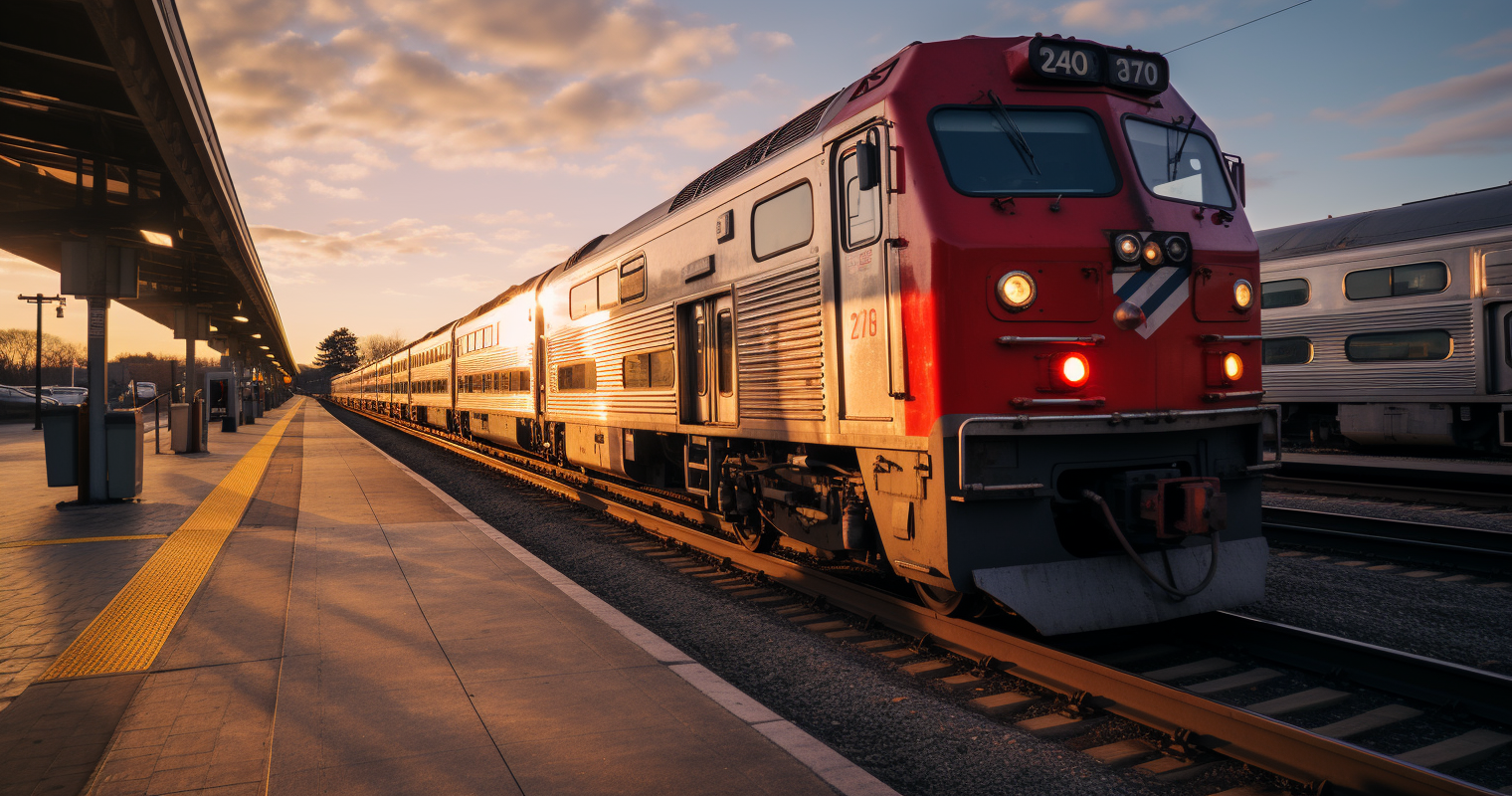
Finland’s passenger rail network, run predominantly by the state-owned VR, stretches across close to 6,000 kilometres, linking every major city and reaching deep into rural territory. The system serves both long-distance travellers and daily commuters in the greater Helsinki area, with modern rolling stock featuring generous seating, onboard Wi-Fi, restaurant facilities, and overnight sleeper services extending all the way to Lapland. Coverage becomes noticeably sparser beyond the main urban corridors.
| Item | Details |
|---|---|
| Network operator | VR (state-owned; as of 2025) |
| Passenger network length | Approx. 7,225 km of passenger routes; total track ~9,216 km (as of 2025) |
| Long-distance trains per day | ~250 long-distance services; ~800 commuter services (as of 2025) |
| Punctuality (long-distance) | 78% on time (within 5 min) in 2024 |
| Main ticketing platform | vr.fi and VR Matkalla app |
| Senior discount (VR long-distance) | ~20% for passengers aged 65+ (verify current figures at vr.fi) |
| HSL penalty fare | €80 for travel without a valid ticket (as of 2024) |
What is the overall standard of rail travel in Finland?
VR Group is Finland’s state-owned rail operator, running both passenger and freight services across the country. On any given day it manages roughly 250 long-distance and 800 commuter rail services. The network is broadly modern and dependable, though it has certain characteristics that newcomers should familiarise themselves with before making rail their default mode of travel.
Finland’s total rail infrastructure extends to 9,216 km, laid on a broad 1,524 mm gauge, of which 3,249 km is electrified. VR operates passenger services over 7,225 km of this track. The overall passenger network covers nearly 6,000 kilometres, with more than half electrified, and close to 90% of the entire network consisting of single-track lines used by trains travelling in both directions.
Finnish trains have earned a solid reputation for being roomy, well-maintained, and comfortable, and the landscapes visible from the windows — particularly in the lake-rich eastern regions — are considered among the most scenic in Europe. That said, Finland’s network differs considerably from the dense, multi-operator rail systems found in Germany or Japan: it is more linear in nature, with fewer high-frequency corridors.
Because most of Finland is sparsely populated, the country does not naturally lend itself to an extensive rail infrastructure. Regular commuter services exist almost exclusively in the Helsinki region, while inter-city connections link the main urban centres across the country. In a pattern reminiscent of France, the majority of long-distance passenger routes converge on the capital, Helsinki, from various corners of the country.
In 2024, 78% of domestic long-distance trains arrived within five minutes of their scheduled time. Of those that ran late, 46% of delays were attributable to factors under the control of the Finnish Transport Infrastructure Agency — such as planned track maintenance or enforced speed restrictions. This is a meaningful caveat: scheduled engineering works frequently trigger temporary bus replacement services on certain routes, making it prudent to check for disruptions before any journey.
A total of 15.3 million journeys were taken on VR’s long-distance services in 2024, representing a 1.3% increase on the previous year, indicating growing passenger confidence. However, the maximum speed achievable by the rolling stock — 220 km/h on Pendolino trains and 200 km/h on IC trains — is only attainable on a limited portion of the network, meaning that journey times between cities can feel lengthy compared with equivalent distances elsewhere in Europe.
What classes of rail travel are available in Finland, and what are the differences between them?
VR’s fleet encompasses a variety of train types: the high-speed Pendolino (Sm3), double-deck InterCity coaches, and electric multiple units serving commuter routes. Alongside different ticket formats — single, multi-journey, and season — passengers can choose from distinct travel classes including Eko and Ekstra, plus specialised options such as overnight sleeper trains and car-carrier services.
InterCity (IC) trains form the backbone of VR’s long-distance operations, connecting Helsinki with popular destinations throughout Finland. They are fitted with power sockets, Wi-Fi, and air conditioning, and most carry a dining car serving hot food, snacks, and drinks. Dedicated space for ski equipment and family compartments are also standard. Long-distance IC services offer two main classes:
- Eko Class (2nd class): Seats are arranged in rows of four in a 2+2 layout. Drinking water is available free of charge; all other food and beverages can be purchased in the dining car.
- Extra Class (1st class): Also arranged 2+2, but with noticeably more legroom than Eko; complimentary newspaper, coffee, tea, and water are included.
Pendolino trains are VR’s flagship high-speed option. They use active tilting technology, allowing them to hold higher speeds through bends than conventional trains. Single-deck and formed as fixed sets, they place first and business class accommodation at the front, alongside restaurant and service carriages, with two categories of economy class further back. The Business Class upgrade on Pendolino includes a hot meal as part of the fare — a distinction that matters to regular business travellers.
From November 2025, former Allegro rolling stock has been reintroduced into service as Pendolino Plus trains, operating between Helsinki and Turku, and Helsinki and Oulu. These services are aimed primarily at business travellers and commuters. The four Pendolino Plus trains currently in operation have partially replaced some IC and standard Pendolino workings on these routes.
Night trains provide a quintessentially Finnish travel experience. Passengers are accommodated in private cabins with beds and can order food from an onboard restaurant car. Premium cabins offer access to en-suite showers and toilets, while standard cabins come with a bed, individual climate control, and power sockets; shared toilets and a shower are available per carriage, and hygiene kits as well as meals are included in the ticket price. Night trains are especially popular for reaching Lapland — destinations such as Rovaniemi and Kolari that would consume a full day by IC train can be covered comfortably while sleeping.
Finland’s wide loading gauge means passenger coaches can be built substantially broader than the majority of their European counterparts, lending all VR classes a noticeably spacious atmosphere. Across the entire long-distance fleet, standard amenities include generously sized seating, ample luggage storage, conveniently placed restrooms, and reserved areas for wheelchairs, pets, and family use.
Where can you find rail timetables and ticket prices in Finland?
The official VR website is always the most reliable starting point for timetable information and fares. Long-distance ticket prices on VR are dynamically set — fares climb as seats are taken — so consulting the site early is worthwhile. Schedules and prices shift with the seasons, so always rely on official sources for the most up-to-date figures.
- VR official website: vr.fi/en — the definitive source for timetables, current disruption information, and ticket purchasing for all VR long-distance and commuter services.
- VR Matkalla app: VR’s official mobile application for iOS and Android, supporting timetable searches, ticket purchases, and live journey tracking. Up to 95% of domestic long-distance ticket sales now occur through digital channels such as vr.fi and the VR Matkalla app.
- Finnish Transport Infrastructure Agency (FTIA / Väylävirasto): vayla.fi/en — the government authority responsible for railway infrastructure management and investment. A valuable resource for understanding planned engineering works and longer-term network changes.
- HSL (Helsinki Region Transport): hsl.fi/en — timetables and fare information covering the full range of urban public transport in the Helsinki metropolitan area, including commuter trains, metro lines, trams, and bus services.
- Reittiopas (Journey Planner): Accessible through the HSL website and app, this tool enables multi-modal route planning that combines trains, buses, the metro, and trams in a single search.
Third-party comparison platforms such as Omio can be handy for getting a broad sense of routes and approximate price ranges, but for accurate real-time fares and secure ticket purchasing, booking directly through VR’s own channels is the recommended approach.
How do you buy rail tickets in Finland, and can you book in advance?
With the exception of the Tampere region where platform validators are in use, tickets for all Finnish passenger trains must be secured before travel. Finnish rail operates on a proof-of-payment basis — unlike some other countries where boarding first and paying later is an option, in Finland a valid ticket must be in hand before you step on board.
The following steps explain how to purchase tickets:
- Visit vr.fi or open the VR Matkalla app. Enter your departure point, destination, and travel date. Results will display available services and fare options across all classes. Because of dynamic pricing, the lowest fares are generally on offer earliest.
- Select your train and class. For long-distance journeys, choose from Eko, Extra, or Business class, or the relevant night train cabin category. Commuter train fares are fixed rather than dynamic.
- Add any extras. Bicycle spaces, pet-friendly compartments, and specific seat preferences can be added at this stage. Bicycle reservations must be made in advance and carry an additional charge.
- Choose your payment method and finalise the transaction. Card payment is the standard method.
- Receive your digital ticket. Tickets are saved within the VR Matkalla app or delivered by email as a QR code. Printing is unnecessary — conductors accept digital tickets without question.
- Board the train. Show your ticket on your phone if a conductor requests it. Travelling without a valid ticket is treated as fare evasion and carries a penalty fare of €80 across the network.
Tickets can still be bought at staffed ticket counters and self-service kiosks at larger stations, though the overwhelming majority — 95% — of sales now take place digitally. Customers who prefer personal assistance can contact VR via live chat on the vr.fi website or VR Matkalla app, or by telephone at 0100 3232 (€0.06/min plus any applicable mobile or local network charge).
For popular routes, advance booking is strongly advised — particularly for night train services to Lapland during the winter season and around public holidays. VR releases long-distance day train tickets for upcoming travel periods in batches; for instance, tickets covering a period from mid-September have previously gone on sale in early July. Night train tickets for future seasons are similarly released several months ahead, so planning early pays dividends.
What types of rail tickets are available in Finland, and are there discount schemes?
VR provides a variety of ticket formats to suit travel needs ranging from a single one-off trip to a long-term season pass for regular commuters. While long-distance fares are subject to dynamic pricing, commuter rail tickets carry fixed prices regardless of when they are bought.
Ticket types for long-distance travel:
- Single tickets: The default choice for a one-way journey. The price varies according to class, route, and how far ahead of travel the ticket is purchased.
- Return tickets: Available through VR’s booking platform; fares operate on the same dynamic basis as single tickets.
- Holiday tickets: Offered by VR for flexible travel over a defined period — a useful option for exploring the country during peak holiday times.
Ticket types for commuter and urban travel:
- Single tickets: Valid for one journey, always at a consistent price regardless of whether it is peak or off-peak travel.
- Multi-journey tickets: Permit a set number of trips to be taken, offering modest savings over buying individual fares each time.
- Season tickets: Available for periods from two weeks up to a full year, making them the obvious choice for residents who travel the same route regularly and can represent considerable long-term savings.
Discount schemes (as of 2024–2025 — verify current figures at vr.fi):
- Senior discount: Passengers aged 65 and over receive approximately 20% off most train tickets — no special card is required.
- Child discount: Children aged 4 to 17 typically travel at 40% off the adult fare, though it is worth checking the VR website for the current terms, as conditions can vary.
- HSL student discount: Within the Helsinki metropolitan area, qualifying students can purchase HSL season tickets at a 40% discount through the HSL app or using an HSL card. Eligibility requirements apply.
- HSL pensioner discount: Pensioners in receipt of a Kela (Finland’s Social Insurance Institution) pension can buy season tickets, single tickets, and zone extension tickets at a 50% discount using the HSL card.
- HSL reduced mobility discount: People with reduced mobility may, subject to certain criteria, purchase season tickets, single tickets, and zone extension tickets at a 50% discount using the HSL card.
- Advance purchase discounts: Booking long-distance tickets early can yield substantial savings, though the cheapest fares typically come with restrictions on refundability and changes.
- Eurail/Interrail passes: Finland is included in both Eurail and Interrail pass coverage, which may represent good value for extensive travel. Bear in mind that most high-speed and overnight services require an additional reservation fee even when a pass is held, so the full cost should be weighed against point-to-point ticket prices.
Always consult the official VR website and the HSL tickets and fares page for the latest pricing and eligibility conditions, as these are subject to periodic revision.
How accessible is the rail network in Finland for disabled passengers?
Finland has invested significantly in making its rail network inclusive, particularly across urban infrastructure, though the level of accessibility varies between modern city facilities and older stations in more remote areas.
Almost all commuter trains serving destinations outside the HSL zone are low-floor. When searching for journeys on VR’s platform, travellers can filter results to display only accessible services by selecting “Filter search results” and ticking the “Only show accessible trains” option.
Within the HSL area, nearly all station platforms are level with the commuter train floor, enabling smooth, step-free boarding for passengers using mobility aids. Kauniainen and Kera are the only two stations within the HSL zone that fall short of this standard — a minor exception within an otherwise well-adapted urban network.
All metro stations are fully accessible, with trains sitting flush with the platform edge to allow easy entry and exit for wheelchair users and others with mobility requirements. Every metro station is equipped with lifts, tactile guidance surfaces, real-time digital passenger information screens, and spoken announcements. Helsinki’s metro was designed from inception to meet Finland’s rigorous accessibility standards — well ahead of the EU’s subsequent accessibility directives.
Many stations feature audio beacons at entrances and at doors leading to lifts, assisting visually impaired passengers in navigating the building independently. Refurbished stations have also been fitted with tactile guidance strips and high-contrast visual markings.
On VR’s long-distance services, wheelchair spaces can be reserved in advance, and some overnight trains include accessible cabins. Guide and assistance dogs travel at no charge.
In the HSL zone, passengers using a wheelchair or mobility scooter are entitled to free travel throughout the network, including a free place for a companion if the European Disability Card carries the ‘A’ symbol. Blind passengers meeting specified criteria can obtain a dedicated HSL card granting free travel.
Passengers who require staff assistance at VR stations should contact VR ahead of their journey via vr.fi or the VR Matkalla app to arrange boarding support. The HSL accessibility page offers comprehensive guidance on accessible travel options across the entire Helsinki metropolitan transport network.
Are there metro or urban rail systems in Finland’s cities?
Urban rail provision in Finland is concentrated predominantly in the Helsinki metropolitan area, with other cities in the process of developing or expanding their light rail and tram networks.
Helsinki Metro: Helsinki is the only Finnish city with a full metro system. Unusually for Northern Europe, it operates around the clock on Fridays and Saturdays — a feature that supports nightlife, shift workers, and late-running cultural events alike. All metro trains run on electricity sourced entirely from renewable generation, primarily wind and hydroelectric power.
Across Helsinki and its neighbouring municipalities of Espoo, Vantaa, and Kauniainen, Helsinki Region Transport (HSL) coordinates the complete public transport offering: buses, trams, metro lines, commuter trains, light rail, and even the public ferry serving Suomenlinna fortress. The system is designed as a unified whole — a single ticket permits seamless connections between the metro, trams, buses, and commuter trains throughout its validity period and applicable zones, with key interchange hubs at Helsinki Central Station and the subterranean Kamppi bus terminal.
Tickets valid for zones ABCD are accepted on buses, commuter trains, trams, the metro, and the Suomenlinna ferry across the HSL area. They can be purchased through the HSL app or loaded onto an HSL card. The HSL card itself can be obtained from an HSL service point or a municipal service point for €5. The HSL website and app handle complete journey planning, live departure information, and ticketing for the whole metropolitan network.
The HSL area covers the member municipalities of Helsinki, Espoo, Vantaa, Kauniainen, Siuntio, Kirkkonummi, Sipoo, Kerava, and Tuusula, divided into four fare zones designated A, B, C, and D, radiating outward from central Helsinki.
Helsinki commuter rail: The vast majority of VR passenger services either originate or terminate at Helsinki Central Station, and a large share of the national rail network fans out from the capital. VR’s commuter rail operation connects suburbs and satellite towns throughout the wider capital region to the city centre, running on multiple lettered lines.
Tampere light rail: Tampere’s light rail and Turku’s planned tram system are classed as street-level rather than metro operations. Tampere’s light rail, which opened in 2021, is run by Nysse, the Tampere regional transport authority, providing frequent services across the city. Timetables and ticketing information are available at nysse.fi/en.
Other cities: Outside the capital region, urban transport is managed by regional authorities — HSL (Helsinki region), Föli (Turku region), Nysse (Tampere region), and OSL (Oulu region) — which rely primarily on bus networks rather than rail infrastructure.
What should expats know about using the rail network day-to-day in Finland?
For most day-to-day journeys, Finnish trains are straightforward to use, but a handful of practical details are worth knowing before you begin commuting or travelling regularly.
Language and signage: At major stations and aboard intercity trains, signage is typically displayed in Finnish, Swedish (Finland’s second official language), and English. Onboard announcements on VR long-distance services are usually delivered in Finnish and Swedish, with English included on busier routes. The VR Matkalla app and the vr.fi website are fully available in English. Throughout the Helsinki metro and HSL network, all services feature spoken announcements and digital screens showing upcoming stop names.
Seat reservations: A seat reservation is bundled with your ticket when you book a long-distance journey through VR. On InterCity trains, reservations are not strictly obligatory, but are strongly recommended; during busy periods — Friday evenings and the days surrounding public holidays in particular — trains can fill rapidly. Night trains should always be booked well ahead.
Wi-Fi: Research by Omnitele found that VR’s onboard Wi-Fi delivered a connection exceeding 5 Mbit/s on 95% of railway sections, outperforming mobile operator coverage across the network. This makes the train a genuinely productive environment for remote working.
Luggage: Finland’s broad loading gauge enables passenger coaches to be appreciably wider than their typical European counterparts, with wider aisles and more comfortable seating. Commuter trains use a 3+2 seat arrangement to accommodate more passengers within the same carriage length. Overhead racks and dedicated luggage bays at carriage ends are standard. VR does not enforce strict weight limits on luggage, but oversized items should be placed in the designated storage areas. Bicycles must be reserved in advance and require a separate bike ticket.
Cultural norms: Finnish train travel tends toward the quiet and reserved end of the spectrum — audible phone conversations and music played without headphones are generally unwelcome. Quiet carriages are available on certain long-distance services and are clearly signed. Passengers typically form orderly queues at platforms and wait for alighting passengers to leave the train before boarding.
Track works and service disruptions: The Finnish Transport Infrastructure Agency commissions substantial engineering works across the network each year, and these regularly result in sections of track being served by rail replacement buses. Always check the VR app or website for current disruption notices before travelling, especially in the summer months when the bulk of major works tend to be carried out.
Connecting to local transport: The VR Matkalla app allows passengers to buy public transport tickets for the Helsinki capital region, Tampere, Hämeenlinna, Jyväskylä, Lahti, Oulu, Kuopio, Joensuu, Salo, Vaasa, and Rovaniemi within a single booking session. Being able to purchase an onward bus or tram ticket alongside your main train ticket is a genuinely practical feature for newcomers still finding their way around an unfamiliar city.
Frequently asked questions about rail travel in Finland
Is it possible to travel by train from Helsinki to Lapland?
Yes. VR runs overnight sleeper trains from Helsinki to several Lapland destinations, including Rovaniemi, Kemijärvi, and Kolari. Night trains operate on the busiest corridors between Helsinki or Turku via Oulu to Lapland, covering a minimum distance of 676 km. Booking as far in advance as possible is essential — particularly during the peak winter season — as cabin berths sell out quickly.
Do I need to validate my ticket when boarding a train in Finland?
All tickets for Finnish passenger trains must be acquired before boarding, and the system operates on a proof-of-payment basis. There is no separate validation step — simply keep your ticket, whether digital or printed, ready to present to a conductor if requested. On the Helsinki metro, your ticket must be active on your device before you enter the paid zone, which at most stations begins at the card readers at the top of the escalators leading to the platforms.
Can I use one ticket for a journey combining a VR train and the Helsinki metro?
Generally, no — VR tickets and HSL tickets are distinct. HSL holds responsibility for issuing and checking tickets on all commuter trains passing through its operating territory. VR tickets apply to journeys travelling to and from the HSL region, while only HSL tickets are sold for travel within it. That said, the VR Matkalla app does allow you to add a connecting local transport ticket to your VR purchase within the same transaction.
Are there any rail passes that offer good value for residents who travel frequently around Finland?
For regular commuters, VR season tickets covering a fixed route for periods ranging from two weeks to one year deliver the best value. For wider travel across Finland, Interrail and Eurail Finland passes are available, although most high-speed and overnight services still require a reservation at an extra cost even when a pass is held. For everyday urban travel in Helsinki, the HSL season ticket — purchasable via the HSL app — is the most economical choice. Always calculate the total cost including mandatory reservation fees before assuming a pass is cheaper than buying individual tickets.
Are trains in Finland reliable during winter?
Finland’s rail network is engineered for severe winter conditions, with operations adapted to handle extreme cold and heavy snowfall. Some delays can still arise during autumn and winter from weather events such as strong winds. More than half of all train delays in Finland are attributed to the condition or malfunction of track infrastructure, and temporary speed restrictions imposed due to deteriorating track condition can add to journey times. Consulting the VR traffic bulletin page before setting out in harsh weather is a sensible precaution.
What happens if I miss my train or need to cancel a ticket?
VR’s cancellation and exchange policies differ depending on the fare type purchased. Budget advance fares may be entirely non-refundable or subject to a cancellation charge, whereas more flexible fares permit amendments up to closer to the departure time. Always review the specific conditions shown at the time of booking on vr.fi. VR’s customer service team can be reached via the live chat on vr.fi, through the VR Matkalla app, or by telephone at 0100 3232.
Is Wi-Fi available on Finnish trains?
Yes. Research established that VR’s onboard Wi-Fi achieved a satisfactory connection speed on 95% of railway sections. The service is provided free of charge on all VR long-distance trains. Reception can be inconsistent on remote or northern stretches of the network, so downloading offline content before a long journey through sparsely populated areas is a useful precaution.
Are there trains between Finland and other Scandinavian countries?
The electrification of the cross-border rail link between Finland and Sweden, including the Torne River Railway Bridge, was completed during the winter of 2024–2025. However, VR’s proposal to reintroduce passenger services to Haparanda in Sweden was not funded in Finland’s 2026 budget, meaning that direct passenger rail services to Sweden are not currently available. Separately, all passenger rail traffic between Finland and Russia has been suspended since March 2022 in connection with sanctions. Check the VR website for the most recent information on international services.