
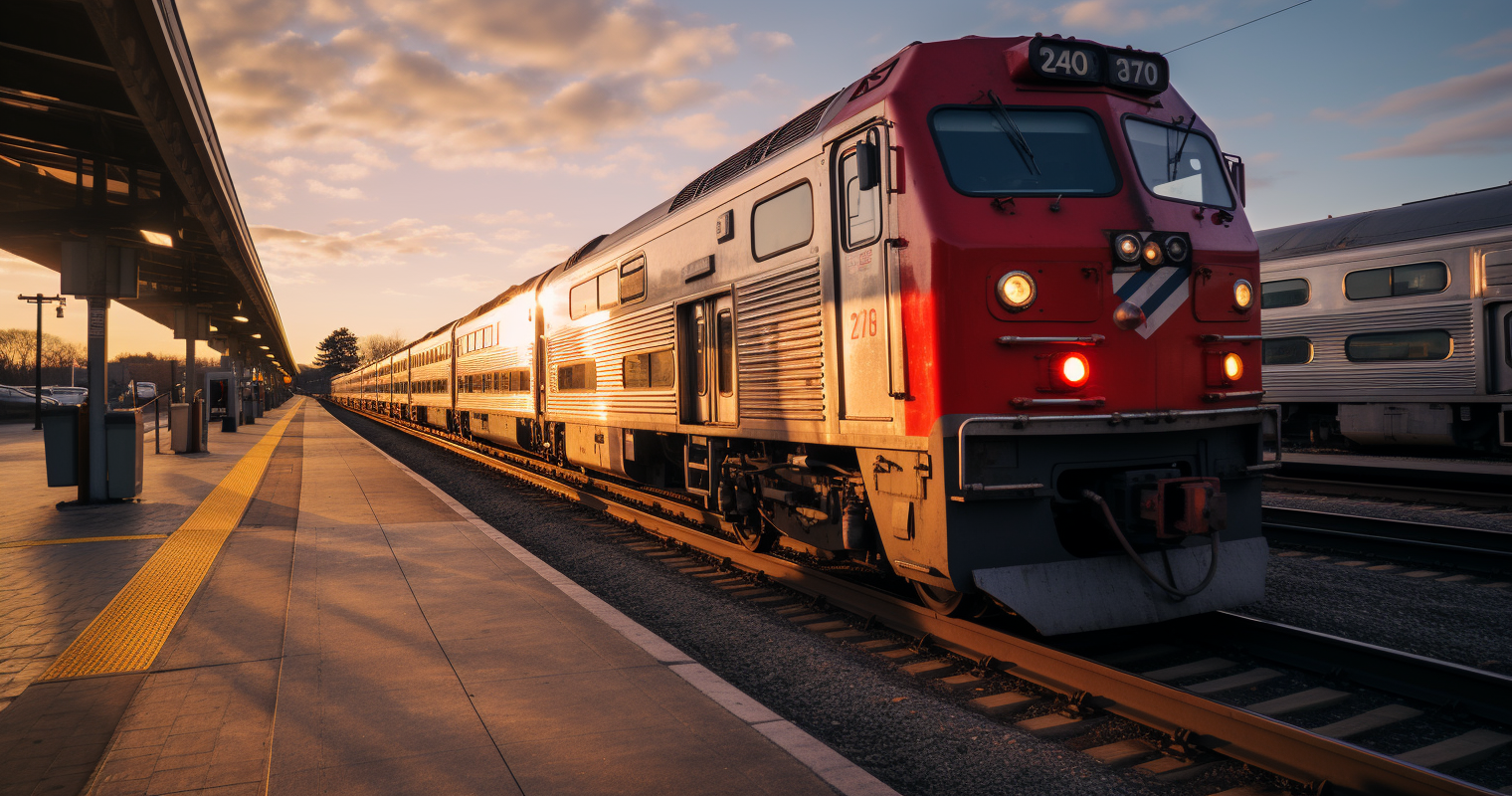
PT Kereta Api Indonesia (KAI) runs Indonesia’s national rail network across Java and Sumatra, transporting more than 505 million passengers in 2024 alone. The system provides dependable, air-conditioned intercity connections at reasonable fares, making it an attractive option for commuters and travellers covering longer distances. In Jakarta, residents benefit from additional reach through the city’s metro and commuter rail lines.
| Item | Details |
|---|---|
| Main operator | PT Kereta Api Indonesia (KAI) — kai.id |
| Network coverage | Java, Sumatra, and Sulawesi; approximately 6,945 km of track (as of 2024) |
| Annual passengers | 505 million passengers carried in 2024 |
| Ticket booking | Online via Access by KAI app/website, tiket.com, Traveloka, or at station ticket offices |
| Main ticket classes | Economy, Economy Premium, Executive, Luxury/Imperial (as of 2025) |
| High-speed rail | Jakarta–Bandung Whoosh service; journey time approx. 46 minutes at up to 350 km/h (opened October 2023) |
What is the overall standard of rail travel in Indonesia?
Indonesia’s national passenger rail system is run by PT Kereta Api Indonesia, widely referred to as KAI. The operator manages services across Sumatra, Java, and Sulawesi, covering a combined track length of roughly 6,945 kilometres. During 2024, KAI transported 505 million passengers and 73.5 million tonnes of freight, generating Rp 36.1 trillion in revenue — figures that underline the network’s central importance to millions of people across the country.
Java boasts a particularly strong rail spine linking its major urban centres, among them Jakarta, Bandung, Yogyakarta, Solo, Surabaya, Probolinggo, and Ketapang. Services are affordable, comfortable, and fitted with air conditioning. Punctuality on Javanese routes is notably good, and delays are rare — a fact that makes the train a genuinely appealing alternative to road travel for both commuters and longer-distance passengers.
Set against rail systems in other countries, Indonesia’s network is neither as fast nor as geographically comprehensive as Germany’s Deutsche Bahn or Japan’s shinkansen. That said, the Java corridor is modern and increasingly well served, and for those living along the main Jakarta–Bandung–Yogyakarta–Surabaya axis, the train competes meaningfully with road-based options. On Sumatra, the network is more patchy, with services concentrated around North Sumatra and Lampung rather than spanning the whole island.
A landmark development came on 17 October 2023, when the Jakarta–Bandung high-speed line began operations under the Whoosh brand — a service distinct from KAI. Trains cover the route in approximately 46 minutes at speeds of up to 350 km/h, making Indonesia the first nation in Southeast Asia to operate high-speed rail and representing a substantial step forward for the country’s transport ambitions.
What classes of rail travel are available in Indonesia, and what are the differences between them?
KAI offers six coach categories across its named intercity services on Java and Sumatra: Luxury/Imperial (first class), Executive (first class), Business (second class), Priority (tourist/first to second class), Economy Premium (second class), and Economy (third class). In day-to-day practice, most intercity trains run a combination of Executive and Economy carriages, with higher-tier options reserved for flagship routes.
Economy (Ekonomi): Economy carriages are laid out with five seats per row — two on one side and three on the other — arranged so that alternating rows face each other. Legroom and privacy are limited, but fares often come in at roughly half the cost of an Executive seat. Modern Economy coaches include air conditioning, bringing comfort levels closer to those found in higher classes. This tier is well suited for trips of up to three hours.
Economy Premium: This class accommodates up to 80 passengers in seats that more closely resemble Executive-class seating, with padded headrests and armrests. Introduced largely to replace the older Business class tier, Economy Premium serves as a practical halfway point for passengers on longer journeys who want improved comfort without paying Executive fares.
Executive (Eksekutif): Executive seats recline by up to 30 degrees and come with individual cushions, footrests, and dedicated armrests. Carriages are arranged with four seats per row — two abreast on each side — all oriented toward the front. Power outlets and air conditioning are standard. This class is the preferred choice for the majority of passengers making longer intercity trips.
Luxury / Imperial: Comparable to business class on an aircraft, this tier features generously padded solo seats that can recline substantially — in some configurations all the way to a flatbed position. Each carriage holds up to 22 passengers and complimentary snacks, meals, and beverages are included in the fare. Availability is limited to a handful of premium routes.
Business class is being phased out. PT KAI began gradually withdrawing Business class service in 2016, and where it still exists it occupies the space between Economy and Executive in terms of both comfort and price. Like Economy, Business class does not include complimentary pillows or blankets.
A practical pricing note: KAI applies airline-style fare buckets within each class, so buying a ticket earlier typically secures a lower price for the same seat and level of service. The closer to departure you book, the more likely you are to pay the highest available fare within your chosen class.
Where can you find rail timetables and ticket prices in Indonesia?
KAI’s own digital channels are the primary starting point for timetables and fare information. The official booking website is found at booking.kai.id, while the Access by KAI app — downloadable for both iOS and Android — delivers the same functionality on a mobile device. Both tools display real-time schedules, remaining seat availability, and live pricing.
The Access by KAI application is the official platform from PT Kereta Api Indonesia (Persero) and brings together ticket ordering for intercity trains, local trains, LRT Jabodebek, KCI commuter services, airport rail links, and the high-speed Whoosh service, all within a single interface. For anyone seeking a comprehensive picture of the entire KAI family of services, it is the most convenient single resource available.
Authorised third-party platforms including tiket.com and Traveloka also display KAI timetables and sell tickets as official partners. For international travellers and newly arrived residents, the independent guide at seat61.com offers a useful English-language overview of Indonesian rail travel, including route maps and general fare guidance.
Fares across the KAI network are dynamic rather than fixed, adjusting in response to booking lead time and remaining seat availability. Rather than showing only the single cheapest fare, KAI simultaneously displays all available price buckets for a given service — always select the lowest fare shown for your chosen train and class. Because fares and schedules can shift frequently, readers should always consult official sources for the most up-to-date figures.
Timetables and tickets for the Whoosh high-speed service between Jakarta and Bandung are handled separately by KCIC. Bookings can be made at ticket.kcic.co.id.
How do you buy rail tickets in Indonesia, and can you book in advance?
KAI intercity tickets can be purchased through several channels. Booking in advance is strongly advisable for busy routes and peak travel periods, since lower-priced fare buckets tend to disappear quickly. The step-by-step process for purchasing tickets through the Access by KAI app or website is outlined below:
- Download the Access by KAI app (iOS or Android) or visit booking.kai.id. Create an account if you do not already have one.
- Enter your origin station, destination, travel date, and number of passengers. Foreign nationals will need to enter their passport number at the passenger details stage. Indonesian citizens are required to fill in data using their NIK (national identity number), while foreign nationals fill in their passport number.
- Select your preferred train service and class. Remember to choose the lowest available price bucket for the best fare.
- Choose your seat from the seat map (available for Executive and Economy class).
- Complete payment. Payment can be made using a Visa, Mastercard, or debit card included in the bank’s online list or through the bank’s ATM facility. E-wallet options are also available through the app.
- Passengers can check in by downloading the electronic boarding pass (e-boarding pass) through the Access by KAI app starting 2 hours before the scheduled departure time of the train.
- At the station, proceed to the boarding gate and present your e-boarding pass or have it scanned. Passengers registered for face recognition can board at stations with face recognition gates starting 3 hours before departure.
Travellers who prefer not to book digitally can purchase tickets in person at station ticket offices, which operate daily. KAI has broadened its offline reach through partnerships with agents such as Indomaret outlets and BRI Link banking agents, both of which are widely found across Indonesian towns and cities, allowing passengers to buy tickets without visiting a station.
Booking well ahead of your intended departure is especially important around major public holidays — Lebaran (Eid al-Fitr) and Christmas in particular — when trains can sell out weeks in advance. For more flexible travellers, KAI also offers Go Show tickets on selected services, providing discounted last-minute options when seats remain available close to departure.
New residents who encounter difficulties with international card payments on the official KAI platform will generally find tiket.com (tiket.com) a reliable fallback, as it has established procedures for handling payments from overseas cardholders.
What types of rail tickets are available in Indonesia, and are there discount schemes?
KAI tickets are sold on a point-to-point, single-journey basis. There is no national rail pass comparable to the Eurail Pass or Japan Rail Pass for ordinary KAI intercity travel. Every ticket is tied to a specific train, date, departure time, and — for intercity Executive and Economy services — an assigned seat included in the ticket price.
Within each travel class, KAI applies a layered pricing structure using subclasses denoted by letter codes such as CA, CB, AA, and AB. According to KAI, this subclass system exists to offer passengers more choice through price variation: earlier purchasers access cheaper tiers while enjoying the same physical seat and on-board facilities as those who pay more at a later stage. The subclass distinction is purely one of price and availability, not of comfort or service.
KAI operates a loyalty rewards scheme called Railpoin through the Access by KAI platform. Points accumulate with each ticket purchased and can subsequently be redeemed against future train tickets or at participating merchants. The programme is open to all registered users — including foreign residents — and offers a practical ongoing saving for people who use the network frequently.
KAI provides reduced fares to elderly passengers, veterans, TNI/POLRI (military and police) passengers, and other parties determined by KAI. As discount criteria and amounts are subject to periodic revision, readers should verify what is currently on offer directly via kai.id or the Access by KAI app. No formal student rail card or general-purpose season ticket has been confirmed as publicly available as of 2025.
For travel on Jakarta’s suburban KRL Commuterline, a rechargeable KMT card (Kartu Multi Trip) is available. It works on a tap-on, tap-off basis much like London’s Oyster card or Melbourne’s Myki, removing the need to purchase a separate ticket for each journey. KMT card top-ups can be made directly within the Access by KAI app.
How accessible is the rail network in Indonesia for disabled passengers?
Accessibility across Indonesia’s rail network is gradually improving, especially at key urban stations and on newer rolling stock, though the level of provision varies widely between large city stations and smaller stops along regional routes. The network is not yet as uniformly accessible as, for instance, the UK’s National Rail system or Germany’s Deutsche Bahn, where statutory minimum standards apply consistently across the network.
Major Jakarta stations — including Gambir, Pasar Senen, and Manggarai — have undergone upgrades that include ramps, designated waiting areas, and accessible toilet facilities. Newer KAI intercity trains manufactured by state producer INKA incorporate wider aisles and dedicated spaces for wheelchair users. At smaller or less-travelled stations, however, older infrastructure and platform gaps can present real challenges, and the same standard of access cannot be assumed.
KAI’s terms and conditions confirm that oversized baggage limits have specific exemptions: oversized baggage over standard limits is not allowed, except for wheelchair, stroller, or walking aid, which means passengers relying on wheelchairs or other mobility aids may carry them on board without incurring additional charges — an important practical point for those with mobility needs.
Passengers who require station assistance are advised to contact KAI ahead of travel through the official customer service channels. KAI can be reached via their contact centre (telephone 121) or through the Help Center feature within the Access by KAI app. The Access by KAI Help Center provides free calls and assistance for passengers who need support. Specific procedures for booking disability-related assistance may vary by station, so direct confirmation with KAI is advisable. Up-to-date accessibility information can be found at kai.id.
Jakarta’s MRT and LRT systems have been designed and built to more contemporary accessibility benchmarks, incorporating step-free access, tactile paving, audio announcements, and dedicated priority seating throughout. Passengers with disabilities will generally find the capital’s urban rail systems more consistent in their accessibility provisions than the intercity network.
Are there metro or urban rail systems in Indonesia’s cities?
Jakarta has the most extensive urban rail network in Indonesia, made up of several interconnected systems that together provide coverage across much of the Greater Jakarta metropolitan region, known as Jabodetabek.
KRL Commuterline (KCI): This suburban commuter rail network operates electric multiple units across a wide web of routes connecting Jakarta to surrounding cities including Bogor, Bekasi, Tangerang, and Serpong. It ranks among the busiest urban rail systems in Southeast Asia and is the backbone of daily commuting for enormous numbers of residents. Journeys are paid for using the rechargeable KMT card or single-use tokens. The network is managed by PT Kereta Commuter Indonesia; further information is available at krl.co.id.
MRT Jakarta: Jakarta’s metro currently runs a north–south corridor from Lebak Bulus in the south to Kota in the north, with further extensions in progress. Services are modern, frequent, and air-conditioned, providing a reliable alternative for residents whose homes or workplaces fall along the line. Ticketing and service details are available at jakartamrt.co.id.
LRT Jakarta and LRT Jabodebek: Two separate light rail systems serve the capital. LRT Jakarta operates in the eastern part of the city, while LRT Jabodebek is a longer automated line connecting central Jakarta with Bekasi and Bogor. Ticket bookings for LRT Jabodebek are handled within the Access by KAI app alongside intercity and commuter rail purchases.
Whoosh High-Speed Rail: A new high-speed line linking Jakarta with Bandung at up to 350 km/h opened on 17 October 2023 and is operated by Whoosh, a separate company from KAI. Jakarta’s Halim station is located 14 km from Gambir station, meaning passengers need to connect via the LRT Jabodebek light rail line or taxi. Tickets are bookable via ticket.kcic.co.id or through the Access by KAI app.
Urban rail options are considerably thinner outside Jakarta. Surabaya and Yogyakarta are connected to KAI-operated commuter services, though frequencies are lower than those found in the capital. Palembang has a light rail system — LRT Palembang — constructed for the 2018 Asian Games. The majority of other Indonesian cities depend on road-based public transport for urban movement.
Coordination between Jakarta’s various urban rail systems has strengthened in recent years, and the Access by KAI app serves as the most practical single interface for planning and managing journeys across commuter, LRT, MRT, and intercity services.
What should expats know about using the rail network day-to-day in Indonesia?
Most newcomers find the Indonesian rail system relatively straightforward to navigate, particularly those with experience of rail networks elsewhere in Asia. Several practical considerations are worth bearing in mind from the outset.
Identity documents: Unlike in many countries where passengers can board anonymously, KAI ties every ticket to a specific traveller’s identity. Foreign nationals enter their passport number during the booking process. You are required to carry the same passport used at the time of booking, since it may be verified at the boarding gate.
Station signage and language: The main KAI stations on Java display signage in both Bahasa Indonesia and English. Departure boards, platform indicators, and destination screens at larger hubs such as Gambir, Pasar Senen, and Yogyakarta are generally navigable for non-Indonesian speakers. Train staff on KAI services typically have some English ability, though this varies. At smaller regional stations, Indonesian-only signage is the norm, so knowing how your destination is written in Indonesian will prove useful.
Food and drink on board: Most Indonesia trains have a bistro or restaurant car where travellers can buy food and drinks during the trip, plus trolleys with snacks for purchase. Complimentary meals are included on higher-class services. The Access by KAI app also offers a Railfood feature through which passengers can order food to be delivered to their seat on selected trains.
Luggage: Each passenger is permitted to bring up to 20 kg across a maximum of four items at no extra charge. Excess baggage of up to 40 kg is permitted but attracts additional fees or may require purchase of a supplementary seat. Storage racks are located above the seats and at the ends of each carriage.
Smoking and conduct: All train journeys are entirely smoke-free, including tobacco cigarettes and e-cigarettes. Smoking or vaping is not allowed throughout the train. Long-distance services tend to be quiet and orderly. On Jakarta’s peak-hour commuter trains, crowding comparable to that found on busy urban rail networks worldwide is a common feature of the morning and evening rush.
Temperature: Air conditioning on Indonesian trains and in stations can be very cold, particularly in Executive class. Carrying a light jacket or additional layer is advisable regardless of the weather outside.
Booking windows and holiday travel: KAI typically opens bookings 45 days in advance. Seats on trains during major Indonesian public holidays — Lebaran and Christmas above all, along with school holiday periods — can disappear within hours of going on sale. Residents who need to travel at these times should plan and book as early as possible.
Frequently Asked Questions
Do I need to book Indonesian train tickets in advance, or can I just turn up at the station?
On popular intercity routes such as Jakarta–Yogyakarta or Jakarta–Surabaya, booking ahead is strongly recommended, particularly at weekends and during national holiday periods when capacity is snapped up fast. KAI’s Go Show option makes discounted last-minute tickets available on certain services, though seats cannot be guaranteed. For Jakarta’s daily commuter rail, the rechargeable KMT card means no advance booking is needed at all.
Can I use international credit or debit cards to buy KAI tickets online?
Payment can be made using a Visa, Mastercard, or debit card. However, some international cards are not always accepted on every platform. If you encounter payment problems on the official KAI site, tiket.com is a solid alternative with established processes for international card transactions. For residents who have set up a local Indonesian bank account, linking an e-wallet to that account is typically the most reliable payment method.
Is the Whoosh high-speed train the same as KAI?
The Whoosh high-speed service linking Jakarta and Bandung is operated by a separate company from KAI. It uses standard-gauge track at speeds up to 350 km/h, whereas KAI’s conventional network uses narrow-gauge track. Tickets for Whoosh can be booked via ticket.kcic.co.id or through the Access by KAI app.
What is the best app for managing train travel in Indonesia?
The Access by KAI application is the official app from PT Kereta Api Indonesia and provides menus for ordering intercity train tickets, local train tickets, LRT Jabodebek tickets, KCI commuter tickets, airport train tickets, and fast train tickets — all accessible within a single application. Available on iOS and Android, it is the most comprehensive tool available to residents who regularly use the rail network.
Are there senior or student discounts on Indonesian trains?
KAI provides reduced fares to elderly passengers, veterans, and TNI/POLRI passengers, among other qualifying groups. Because discount structures and eligibility conditions are updated periodically, readers should confirm what is currently available via kai.id or the Access by KAI app. The Railpoin loyalty programme provides an additional way for frequent travellers to accumulate savings that can be redeemed against future journeys.
Can I travel by train from Java to Bali?
A combined train-and-ferry journey between Java and Bali is possible. The rail line extends to Ketapang at the eastern end of Java, from where passengers take a short ferry crossing to Gilimanuk on the Balinese coast. The ferry is not a KAI service and must be arranged separately. Travelling the full distance from Jakarta to Bali via this route takes close to a full day.
How does the KMT card work for Jakarta commuter rail?
The KMT (Kartu Multi Trip) is a rechargeable smart card for use on KRL Commuterline journeys across Greater Jakarta, operating on a tap-on, tap-off basis similar to transit cards used in other major cities around the world. Cards can be purchased at KRL station counters and topped up at stations, convenience stores, or through the Access by KAI app. For regular commuters, the card removes the need to buy a new ticket for every trip.
Are there trains in Indonesia outside Java and Sumatra?
KAI operates on the islands of Sumatra, Java, and Sulawesi. Services on Sulawesi are limited compared to Java. The vast majority of Indonesia’s archipelago — including Bali, Kalimantan, Papua, and most of the eastern islands — does not have a rail network, and transport there relies on road, ferry, and air services. For residents based outside Java, the national rail network will in most cases play little or no role in daily travel.