
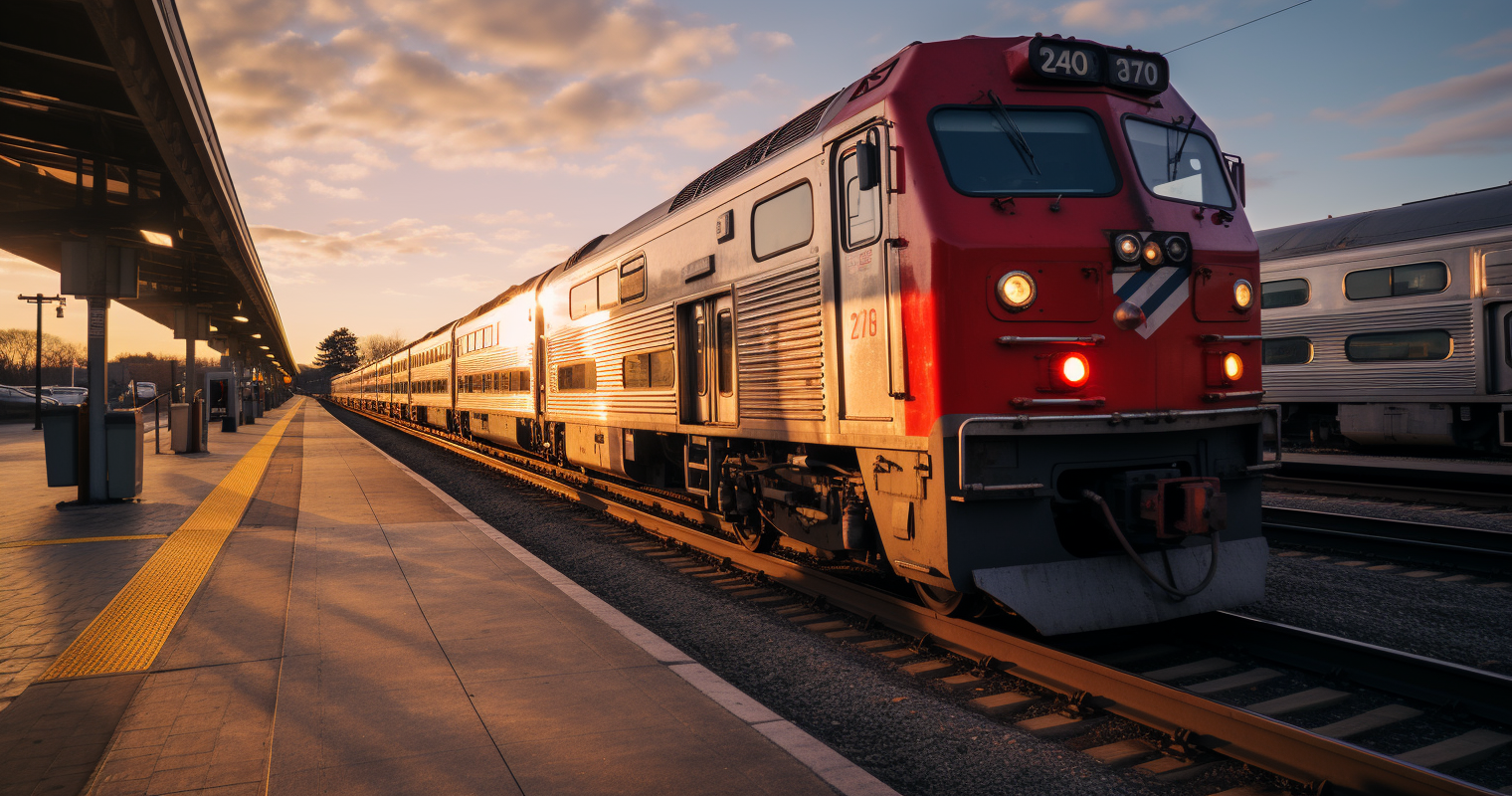
Morocco’s national railway network, run by ONCF, offers dependable, budget-friendly, and reasonably comfortable train services linking the country’s principal cities, among them Casablanca, Rabat, Tangier, Fès, Marrakech, and Oujda. The network serves both everyday commuters and long-distance travellers well, and a large-scale programme of expansion and modernisation is underway ahead of 2030, including planned extensions to the Al Boraq high-speed line.
| Item | Details |
|---|---|
| National rail operator | ONCF (Office National des Chemins de Fer) — oncf.ma |
| Network size | Approximately 3,600 km, of which around 1,300 km is electrified (as of 2025) |
| Annual passengers | Over 55 million passengers carried in 2024 (as of 2025) |
| High-speed service | Al Boraq: Tangier–Casablanca, Africa’s first high-speed rail line, launched 2018 |
| Major expansion | MAD 96 billion (~$9.6 billion) investment programme 2024–2030; 430 km of new high-speed lines planned (as of 2025) |
| Urban rail (Casablanca) | Tramway operated by Casa Tramway; further RER-style network under development |
What is the overall standard of rail travel in Morocco?
Morocco possesses one of the most advanced rail networks on the African continent, making it a genuinely practical day-to-day transport choice for new arrivals. ONCF (Office National des Chemins de Fer) is the state-owned national railway operator, reporting to the Ministry of Equipment, Transport and Logistics, and overseeing all passenger and freight movements across the national network. While the network cannot match the density of interconnected systems in countries such as Germany, Switzerland, or Japan, it is well ahead of most other African rail systems and holds its own against a number of Southern and Eastern European networks when it comes to comfort and reliability on the principal routes.
The passenger backbone consists of a North–South axis running from Tangier through Rabat and Casablanca to Marrakech, and an East–West axis connecting Oujda via Fès to Rabat, with the two axes meeting at Sidi-Kacem. Together, these corridors cover the country’s most heavily populated urban strip effectively, making rail a credible commuting solution for residents travelling between these cities.
On 26 November 2018, ONCF launched Al Boraq — Africa’s inaugural high-speed rail service — connecting Casablanca and Tangier across a 323-kilometre route. The service attracted more than 5.5 million passengers in 2024 alone, a figure representing a 5% increase year on year.
Over the past decade and a half, ONCF has delivered a succession of major infrastructure projects, and the benefits extend well beyond the headline high-speed service. With backing from the African Development Bank, the entire network has been upgraded and extended. That said, coverage beyond the main corridors remains patchy, and a number of significant cities — Agadir and Essaouira among them — have yet to be connected by rail. Where no train service exists, ONCF’s own bus subsidiary, Supratours, provides onward connections from the closest station.
By 2030, the Moroccan government intends to channel $9.5 billion into railway infrastructure, growing the network to serve 43 cities — compared to 23 at present — and extending rail access to 87% of the population, up from 51% today. For expats settling in Morocco now, the network already functions well across the main urban centres, and its reach and usefulness will expand considerably over the years ahead.
What classes of rail travel are available in Morocco, and what are the differences between them?
On mainline (Grandes Lignes) routes, ONCF trains offer two principal classes: first class and second class. The gap between them is noticeable in terms of space and comfort, though both are adequate for the vast majority of travellers. The Al Boraq high-speed service operates with a single premium seating standard maintained throughout the train.
On Grandes Lignes services, all first-class seats are reserved, meaning passengers travel in an allocated place. First-class compartments typically provide more legroom, broader seating, and air conditioning — features that make them particularly attractive for longer journeys or regular travellers who appreciate the extra room. Second class costs less and remains comfortable on newer trains, though it can become busy on popular corridors and at peak times.
On three selected routes, ONCF runs overnight trains with either private room beds or couchette berths. Second-class sleeping compartments seat four passengers, with two couches facing each other, while first-class cars arrange berths in a two-by-three layout with fold-down armrests separating individual spaces. Night trains provide an efficient way to cover long distances while avoiding hotel costs — a concept familiar to anyone who has used overnight services across continental Europe.
On the Al Boraq high-speed service between Tangier and Casablanca, the quality of the seating is a clear step above that of standard intercity trains, with comfortable allocated seats throughout. Visit the official ONCF website at oncf.ma for current class configurations and fares on individual routes, as these can differ by service.
Where can you find rail timetables and ticket prices in Morocco?
The most authoritative and current source for timetables, route details, and fare information is the official ONCF website: oncf.ma. The site operates in French and Arabic and includes an English-language section, enabling you to search connections, view departure and arrival times, and compare fares across standard and high-speed services. Given that schedules and prices are updated on a rolling basis, this should be your first reference point.
For travellers who prefer booking through a third-party interface, platforms such as Trainline and Omio list ONCF routes alongside European rail services and allow ticket purchasing. However, it is always sensible to verify fares and availability against the official ONCF site directly, as third-party providers do not always reflect the latest pricing or seat availability in real time.
At major terminals including Casablanca-Voyageurs, Rabat-Agdal, Gare de Marrakech, and Gare de Tanger-Ville, notice boards and staffed information desks display printed timetables and can assist with journey planning. Official sources should take precedence over any other channel — this is especially true for Al Boraq high-speed services, where fares and seat availability may shift as the departure date approaches.
How do you buy rail tickets in Morocco, and can you book in advance?
Tickets are available through several different channels, giving passengers reasonable flexibility whether they are planning ahead or travelling at short notice. Advance purchase is both possible and advisable on busier routes — especially Al Boraq services and journeys around public holidays or major events — as seats can sell out. The main purchasing options are outlined below:
- Online via oncf.ma: The official ONCF website at oncf.ma supports advance booking on most routes, including Al Boraq. Payments are made by card, and an e-ticket is issued for presentation on board or printing at home. This is the most convenient option for residents who need to organise travel from home or plan trips in advance.
- At station ticket offices (guichets): Every major station has staffed counters where tickets can be bought in person. Staff generally work in French and Arabic; some windows at larger stations may include staff with some English. Cash in dirhams and card payments are both accepted at most main stations.
- At self-service ticket machines: Automated machines are installed at larger stations including Casablanca-Voyageurs, Rabat-Agdal, and Gare de Marrakech. These take card payments and allow you to buy new tickets or collect pre-booked ones.
- Via the ONCF mobile app: ONCF provides a mobile app for both Android and iOS devices, supporting journey planning, booking, and e-ticket management. The app is widely used among regular commuters and is a practical companion for everyday rail travel.
- Through travel agents: Authorised travel agents operating in Morocco can purchase ONCF tickets on your behalf, which may suit complex multi-leg itineraries or group travel. ONCF’s Supratours bus connections can frequently be booked alongside rail legs in a single transaction.
E-tickets are valid on all ONCF services when shown on a smartphone screen or presented as a printout. For Al Boraq journeys, booking ahead is especially recommended at weekends and over school holiday periods. For enquiries, ONCF customer service can be reached through the contact details listed on oncf.ma.
What types of rail tickets are available in Morocco, and are there discount schemes?
ONCF provides a variety of ticket formats to accommodate different travel needs, from one-off single journeys to multi-journey commuter passes. The fare structure is significantly more affordable than comparable rail travel in Western Europe, making train travel a cost-effective everyday option for most residents.
Standard single (aller simple) and return (aller-retour) tickets are on offer for all routes. Returns generally represent a small saving over two separate singles. For those travelling regularly, ONCF provides abonnements (subscription or season passes) covering frequent use on particular corridors — most notably the Casablanca–Rabat route, which ranks among the most heavily commuted rail links in the country. Pass pricing and thresholds are subject to change, so always check the latest rates at oncf.ma for current figures (as of 2025).
ONCF maintains a variety of concessionary fare categories, broadly comparable in structure to reduced-fare programmes run by national operators such as Spain’s Renfe or France’s SNCF. Established discount categories typically include:
- Children: Children below a specified age travel at a reduced fare or free of charge when accompanying a paying adult. Consult the ONCF website to confirm current age thresholds, as these may be revised.
- Students: Holders of recognised student cards may qualify for discounted fares on certain routes. Proof of enrolment at a Moroccan educational institution is generally required.
- Seniors: Reduced fares are available for older passengers. The qualifying age and applicable discount rate should be confirmed at oncf.ma for current details (as of 2025).
- Groups: Discounts apply to parties meeting a minimum size threshold when booking together. Current group fare conditions are available from the ONCF website or station booking offices.
- Loyalty and frequent traveller: ONCF has at various times offered loyalty schemes for regular users. Check the website for any currently active programmes.
It is worth noting that eligibility criteria and required documentation can vary between discount types, and certain concessions may only be accessible when booking at station offices rather than online. Always carry appropriate identification or supporting paperwork when using a concessionary fare.
How accessible is the rail network in Morocco for disabled passengers?
Accessibility across Morocco’s rail network has improved substantially as part of the ongoing modernisation drive, though the quality of provision varies considerably between modern large stations and smaller or older facilities. Stations built or comprehensively refurbished in recent years — including Casablanca-Voyageurs and Rabat-Agdal — feature ramps, lifts, and dedicated spaces for wheelchair users at a standard broadly in line with accessibility provisions found in Southern European networks. Older station buildings in smaller towns may offer more limited facilities.
On newer rolling stock, including Al Boraq high-speed trains, designated wheelchair spaces and accessible onboard toilet facilities are provided. The accessibility of standard intercity trains varies: more recently acquired carriages incorporate improved features, while older stock may present difficulties for passengers with reduced mobility. Staff assistance is available at major stations and can be arranged in advance — passengers are encouraged to contact ONCF directly through the customer service section of oncf.ma to organise help with boarding and alighting.
Digital departure boards and platform announcements providing visual and auditory information are in place at major stations, though coverage at smaller stops is less consistent. By comparison with networks such as those in the Netherlands or Sweden — which have comprehensive, mandated accessibility provisions across their entire systems — Morocco’s offering is more uneven. However, the current investment programme specifically targets accessibility upgrades at stations throughout the network, and conditions are steadily improving. Passengers with particular accessibility requirements are strongly advised to plan ahead and reach out to ONCF before travelling.
Are there metro or urban rail systems in Morocco’s cities?
Morocco does not currently have a conventional underground metro, but several cities operate modern tramway (light rail) systems, and a substantial new urban rapid transit network is being developed to serve the Greater Casablanca region.
Casablanca is served by a tram network run by Casa Tramway, operating two lines (T1 and T2) through the city centre and surrounding inner suburbs. The service is frequent and affordable, linking key destinations including Mohammed V International Airport (via the T1 line), the central Casa-Port railway station, and various residential areas. Tickets can be purchased at tram stops and are available as single rides or multi-journey cards. For routes, timetables, and current fares, visit the Casa Tramway website at casatramway.ma.
ONCF is securing €202 million in financing from German development bank KfW to upgrade Greater Casablanca’s railway network, building on a $350 million loan previously approved by the World Bank — both in support of the “Service Intra-métropolitain Rapproché” (SIR) programme. ONCF has awarded contracts totalling MAD 29 billion ($2.9 billion) for 168 new-generation trains, including 110 RER (rapid transit) trains from Hyundai Rotem. This will substantially expand urban rail capacity in Casablanca, bringing it closer in character to the RER suburban rail systems of Paris or Madrid.
Rabat–Salé is served by a tramway operated by STRS (Société du Tramway de Rabat-Salé), with two lines connecting Rabat and the adjacent city of Salé. The tram integrates smoothly with mainline ONCF services at Rabat-Agdal station, offering a convenient option for residents commuting within or around the capital. Visit tram-way.ma for timetables and fare details.
Both tram systems accept contactless card payments and offer multi-ride passes, lowering the cost of daily travel. Neither is currently integrated into a unified ticketing platform with ONCF’s mainline network, though this is expected to develop as part of the wider urban mobility strategy taking shape across the country.
What should expats know about using the rail network day-to-day in Morocco?
Getting to grips with Morocco’s rail system as a new resident is generally uncomplicated, particularly for those with prior experience of train travel in continental Europe or elsewhere. Major stations are clearly signed, and staff at larger terminals are well used to helping passengers who may not yet be confident in French or Arabic. The following practical points are worth keeping in mind:
Language of signage and announcements: Signage in stations and announcements on trains are given primarily in Arabic and French. At larger stations such as Casablanca-Voyageurs and Gare de Marrakech, some boards also feature transliterations or additional languages. On Al Boraq services, onboard announcements are typically delivered in Arabic, French, and occasionally Spanish or English. If you are still finding your feet in French or Arabic, the French-language interface of the ONCF app and website can be a useful preparation tool before you set out.
Seat reservations: Al Boraq high-speed tickets come with a mandatory seat reservation included. On standard Grandes Lignes services, first-class tickets carry an assigned seat; second-class passengers without a reservation may occupy any free seat in the relevant coach, though reserving in advance is wise on busy routes. Commuter navette services between Casablanca and Rabat operate on an unreserved basis.
Punctuality: ONCF’s mainline services are broadly reliable, especially on the Al Boraq corridor and the Casablanca–Rabat commuter line. Minor delays can arise on longer routes, particularly around public holidays. As with any national rail network, it is good practice to check live departure information on the app or station boards before travelling.
Luggage: ONCF does not impose strict weight or size limits on personal baggage brought on board, though passengers are expected to handle and stow their own items. Overhead racks and the space beside seats accommodate standard luggage. On overnight or long-distance journeys, bulkier items can be placed in the vestibule areas at the ends of carriages.
Cultural norms: Train travel in Morocco tends to be a relaxed and sociable affair. On overnight and long-distance services, compartments are shared spaces, and brief exchanges with fellow travellers are common. Mobile phone use is widespread throughout the train. During Ramadan, eating and drinking on board may draw quiet disapproval in more conservative settings; it is worth using your own judgement and acting with consideration.
Ticket inspection: Conductors carry out ticket checks on board every service. Whether your ticket is physical or digital, have it ready for inspection as soon as you board. Passengers without a valid ticket are subject to an on-the-spot fine.
Frequently Asked Questions
Is the ONCF rail network reliable enough for a daily commute in Morocco?
Yes, especially on the Casablanca–Rabat corridor, which is the busiest and most dependably served route in the country. ONCF runs frequent navette (shuttle) trains between these two cities throughout the day, and the line is a staple of daily commuter life for residents in both cities. On other mainline routes, services are generally on time, though checking the ONCF app or departure boards before setting off is always a sensible habit.
How do I get from Casablanca airport to the city centre by train?
Mohammed V International Airport is connected to central Casablanca by the Casa Tramway T1 line, which runs directly to Casa-Port and Casa-Voyageurs railway stations. This is among the most convenient and affordable ways to travel between the airport and the city, with the journey taking around 35–45 minutes. Current timetables and fares are available at casatramway.ma.
What is the Al Boraq, and is it worth using?
Al Boraq is Morocco’s high-speed rail service, inaugurated in November 2018, running between Casablanca and Tangier over a 323-kilometre route — the first high-speed rail line anywhere on the African continent. The service reduces the Tangier–Casablanca trip to just over two hours and delivers a modern, comfortable travel experience. It costs more than a standard train ticket, but the time saving makes it well worth it, whether travelling for business or leisure.
Can I travel the whole of Morocco by train?
ONCF’s network spans the main corridor from Tangier to Marrakech and eastward to Oujda, but a number of prominent destinations — including Agadir, Essaouira, and Tetouan — remain outside the rail network for now. Where no rail service is available, ONCF’s bus subsidiary Supratours operates connecting services from the nearest station. Supratours tickets can often be purchased alongside your train ticket for a through journey.
Is the train cheaper than taking a bus or taxi in Morocco?
For medium to long distances, train fares are broadly competitive with intercity bus prices and considerably less expensive than covering the same ground by private taxi. Second-class tickets are affordable for most budgets, and the combination of speed and comfort — particularly on Al Boraq or the main intercity routes — represents strong value for money. Check the latest fares at oncf.ma for the most current pricing (as of 2025).
Are there plans to extend the rail network to more cities?
The Moroccan government has committed to investing $9.5 billion in railway infrastructure by 2030, with the aim of extending the network to 43 cities — up from 23 currently — and making rail accessible to 87% of the population. Priority projects include extending the high-speed line to Marrakech, rolling out regional express rail services, procuring new trains, and building modern stations. The network is set to grow substantially over the coming years.
Do trains in Morocco have Wi-Fi?
Wi-Fi is provided on board Al Boraq high-speed services. On standard intercity and commuter trains, onboard Wi-Fi is not available across the board, though mobile data coverage along the main corridors tends to be strong thanks to Morocco’s well-developed 4G infrastructure. For the latest information on onboard amenities, consult ONCF directly, as fleet upgrades are continuing.
How do I find out about reduced fares and discount cards?
ONCF offers concessionary fares for children, students, seniors, and groups, along with subscription commuter passes (abonnements) for regular travellers on specific routes. The terms and availability of these discounts are updated periodically, so the most reliable source of current information is the official ONCF website at oncf.ma. Station ticket offices can also walk you through which concession applies to your circumstances (as of 2025).