
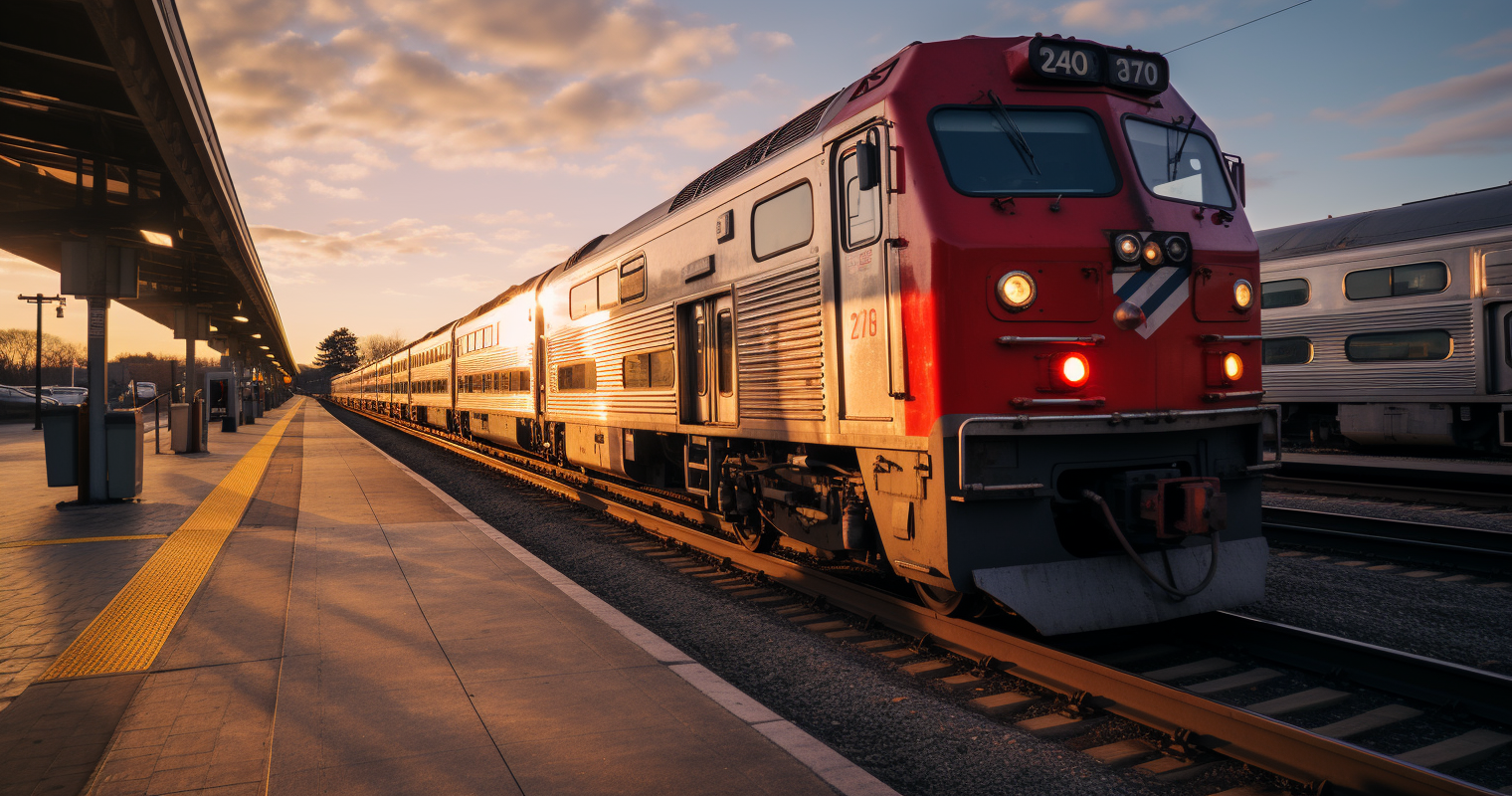
Vietnam’s state-owned rail operator, Vietnam Railways (DSVN), runs a national network stretching more than 3,000 kilometres that links 23 provinces across the country. The system is oriented towards long-distance and intercity travel rather than urban commuting. The celebrated North–South Reunification Express offers a memorable way to journey the length of the country, though the network is considerably more modest in both reach and speed than the rail systems of Western Europe or East Asia. Urban metro lines are beginning to take shape in both Hanoi and Ho Chi Minh City.
| Item | Details |
|---|---|
| Network length | Approx. 3,000–3,222 km; 7 main lines; 277–300+ stations (as of 2024–2025) |
| Principal operator | Vietnam Railways (DSVN) — official site: dsvn.vn |
| Main route | North–South Reunification Express: Hanoi to Ho Chi Minh City, 1,726 km, 30–34 hours |
| Advance booking window | Up to 60–90 days in advance; Tet-period tickets open from November |
| Children’s discounts (as of 2024) | Under 6: free (no own berth); under 10: 25% off berths, 50% off seats |
| Luggage allowance (as of 2024) | Up to 20 kg per person free; max dimensions 0.8 × 0.5 × 0.4 m |
What is the overall standard of rail travel in Vietnam?
Vietnam’s railway network consists of 7 main lines totalling approximately 3,222 km in length, serving 23 provinces and cities through more than 300 stations. The entire system is operated by the state-owned Vietnam Railways (VNR). While perfectly serviceable, the network is far more modest in scale than the dense, high-speed rail systems of Germany, Japan, or France, where trains serve as a practical everyday commuting option across long distances.
The backbone of the system is the 1,727 km single-track North–South Railway connecting Hanoi with Ho Chi Minh City, a line originally constructed to metre gauge during French colonial rule in the 1880s. Trains on this corridor average around 80 km/h, with the full journey taking between 30 and 34 hours. To put this in perspective, Japan’s Shinkansen would cover a comparable distance in under three hours — which underscores that Vietnam’s railway is best appreciated as a scenic long-distance experience rather than a fast-transit solution.
The infrastructure is more than a century old and is increasingly showing the strains of age, falling short in certain respects when measured against contemporary transport demands. Because the principal line is single-track, trains heading in opposite directions must use the same rails and are timed to pass one another at designated points. When one service runs late, the oncoming train is obliged to wait, meaning delays can compound and on-time performance is less predictable than on networks with double-track or high-speed infrastructure.
In 2024, Vietnam’s railway industry carried more than 7 million passengers — roughly 1 million more than in 2023 — reaching a historic high. This upturn has been driven by improved service quality, a broader range of train routes, and the introduction of upgraded tourist-class trains. The network performs best for intercity journeys linking major centres such as Hanoi, Hue, Da Nang, Nha Trang, and Ho Chi Minh City; for day-to-day suburban travel, buses and motorbikes continue to dominate.
Lonely Planet travel magazine named Vietnam’s North–South (Thong Nhat) railway line “the best in the world” for two successive years — 2024 and 2025 — a recognition of its spectacular coastal scenery rather than its speed. For expats settling in Vietnam, the train provides a practical and visually rewarding means of travelling between cities during weekends or holidays.
What classes of rail travel are available in Vietnam, and what are the differences between them?
Vietnamese trains offer five distinct classes of travel: hard seat, soft seat, hard sleeper, soft sleeper, and VIP berth. Unlike systems in Switzerland or the Netherlands — where class differences largely come down to seat width and legroom — Vietnam’s classifications represent fundamentally different levels of accommodation, privacy, and suitability for overnight trips.
The hard seat is the most basic and least expensive choice, consisting of wooden benches sized for two or three people. Hard seats are not recommended for journeys exceeding two hours. They remain available on Reunification Express services but are becoming less common as newer trains enter service.
Soft seats are padded and slightly reclining, without the tray tables or generous legroom associated with aircraft seating. They fall short of hard seats in terms of comfort but are housed in air-conditioned coaches, making them a reasonable and affordable choice for daytime trips of short to medium length.
Hard sleeper carriages are divided into 7 cabins, each containing 6 berths arranged in tiers of three on either side of the compartment. Each cabin has a door, window, curtain, reading lamp, and small table. Hard sleeper fares range from approximately VND 245,000 (~USD 9.80) on shorter routes up to around VND 642,000 (~USD 25.70) for longer journeys such as Hanoi to Hue (as of 2024). Always confirm current prices at the official DSVN website before booking.
The soft sleeper is the equivalent of a standard first-class overnight option on Vietnam Railways, with 4 berths per compartment arranged in upper and lower pairs. Advantages include thicker mattresses, lockable doors, individual reading lights, and dedicated power sockets, although lower berths tend to be snapped up quickly. Soft sleepers represent the most sensible choice for overnight travel and are popular with both domestic passengers and foreign visitors alike.
At the top of the range, the VIP 2-berth sleeper cabin offers the greatest privacy and comfort on the Vietnamese rail network, housing only two berths alongside quality bedding, contemporary fittings, and air conditioning. VIP cabins are restricted to a handful of tourist-class train services. Fares range from around VND 1,000,000 (~USD 40) for shorter journeys to approximately VND 2,077,000 (~USD 83.10) for the Hanoi–Hue leg (as of 2024). Verify current pricing at dsvn.vn.
Private operators are also authorised to attach their own refurbished carriages to Vietnam Railways-operated trains. These privately run sleeper cars are more modern and more lavishly appointed than DSVN’s own rolling stock, typically costing roughly twice the price of a standard soft sleeper. Companies such as Livitrans, Violette, and Lotus Train target tourists and expats who want a noticeably higher standard of comfort and finish.
Where can you find rail timetables and ticket prices in Vietnam?
The authoritative source for official timetables and fares is dsvn.vn, the corporate website of Vietnam Railways Corporation (DSVN). An English-language version can be activated through the toggle in the top-right corner, though certain sections of the site remain in Vietnamese. Seat availability, departure schedules, and fare information are all accessible here. Since both prices and timetables are subject to revision, this should be your primary reference point whenever you are planning a journey.
From March 2026, Vietnam Railways officially rolled out a revised nationwide timetable, with changes intended to improve service coverage ahead of upcoming travel seasons. This is a good illustration of how schedules shift over time — the official website is therefore essential for obtaining up-to-date departure and arrival information.
For those who find the official portal cumbersome to use, several reputable third-party platforms publish the same official pricing alongside a more intuitive booking experience:
- Vexere — an official strategic partner of Vietnam Railways (DSVN); while dsvn.vn is the government platform, international travellers sometimes encounter payment processing difficulties there.
- Baolau — the official booking site is dsvn.vn, but the independent local platform Baolau is widely regarded as offering a more straightforward booking experience.
- 12Go Asia — an internationally oriented booking service that covers Vietnam Railways alongside a broad range of Southeast Asian rail and bus operators.
Vietnam’s Ministry of Transport, accessible at mt.gov.vn, oversees national transport policy and can be consulted for regulatory matters. Bear in mind that fares fluctuate — particularly during high-demand periods like Tet — so it is essential to verify all figures through official sources before finalising any travel arrangements.
How do you buy rail tickets in Vietnam, and can you book in advance?
There are four main channels through which train tickets can be purchased in Vietnam. Online booking has emerged as the most convenient method, especially for residents who plan trips ahead of time.
- Official DSVN website (dsvn.vn): You can search for seat availability, review departure schedules, and check fares directly on this site. No service fee is levied through the official portal, though only bank cards are accepted as payment.
- Third-party booking platforms: Vexere, as a designated official partner of Vietnam Railways, provides live seat maps, reliable international payment processing, and instant e-ticket delivery. Baolau and 12Go Asia are further alternatives that accept internationally issued payment cards.
- Station ticket offices: Ticket sales were computerised in 2002. You can buy tickets for most routes at the booking offices in Saigon and Hanoi, including tickets for journeys beginning at other stations along the line. At smaller stations such as Hue, Da Nang, or Nha Trang, however, you may only be able to purchase tickets for journeys departing from that specific station. Station ticket windows accept cash only.
- Travel agents: Local travel agencies can handle ticket purchases on your behalf and are particularly helpful during public holidays or when arranging complex multi-leg itineraries.
Tickets on Vietnam Railways generally go on sale up to 60 days before departure; for some long-distance services, the booking window extends to 90 days. If you are travelling over the Tet holiday period — typically spanning the final week of January and first week of February — tickets may become available as early as the first week of November, and purchasing as soon as bookings open is strongly advised.
Printing your ticket is not necessary — Vietnam Railways accepts a QR code displayed on your smartphone. Raise your screen brightness when conductors pass through the carriage to check tickets. Both digital and printed tickets are valid for boarding. If you book through an agency, you will receive a confirmation containing a QR code that can be stored on your phone or printed out. Cancellations made through DSVN directly or at a station require a visit to the ticket counter in person with your passport; if you booked via Vexere, cancellations can be submitted through the app or by email.
What types of rail tickets are available in Vietnam, and are there discount schemes?
Vietnam Railways does not offer a season ticket, rail card, or weekly pass system comparable to the UK’s Railcard schemes or Germany’s Bahncard. All tickets are sold on a point-to-point, journey-specific basis. There are no open-jaw or flexible return tickets in the European tradition — each leg of a trip must be booked as a separate one-way journey.
Every ticket carries an allocated seat or berth number, meaning passengers are guaranteed their reserved space on any booked service. If you wish to travel in both directions between two cities, you simply purchase two individual one-way tickets.
The following groups are entitled to reduced fares (as of 2024 — confirm current figures at dsvn.vn):
- Children under 6 travel at no charge and require no ticket, unless a dedicated berth is desired. Children under 10 receive a 25% reduction on berth prices or a 50% reduction on seat prices. Children aged 10 and above are charged the full adult fare.
- War invalids and people with disabilities: Vietnam Railways formally extends fare reductions to war invalids (thuong binh) and certain categories of passengers with disabilities. Contact DSVN or station staff to confirm current eligibility criteria and the documentation required.
- Frequent traveller points: Booking through Vexere accrues loyalty points — every VND 10,000 spent earns 1 point, which can be redeemed against the cost of future journeys.
There is currently no senior citizen railcard, student discount scheme, or monthly commuter pass at the national level equivalent to those offered by many European or East Asian operators. Given that the network is not widely used for daily commuting, this is less of a practical drawback than it might initially seem. Residents who travel frequently between the same cities — for instance, between Hanoi and Hai Phong — are advised to monitor DSVN announcements for any new loyalty or residency-based programmes. The official website should also be checked regularly for promotional fares, particularly in quieter travel periods.
How accessible is the rail network in Vietnam for disabled passengers?
In terms of accessibility, Vietnam’s rail network lags noticeably behind systems in countries such as Japan, Germany, or Australia, where step-free access, tactile guidance paths, and structured passenger assistance are legally required and uniformly implemented. Within Vietnam, the experience varies considerably from one station to the next and from one train type to another.
The fundamental challenge is the age of the infrastructure: much of the railway system has been in continuous use for over a century and was not built with the needs of wheelchair users or passengers with reduced mobility in mind. Platform-to-carriage step heights can be considerable, and many stations lack ramps, lifts, or level-access routes between the street entrance and the platform itself.
The principal stations in Hanoi and Ho Chi Minh City have introduced some improvements in recent years, including designated waiting areas and station staff available to assist passengers with mobility difficulties. However, the quality and consistency of this support is uneven and is unlikely to match the standard of assistance that disabled passengers may have experienced in countries with robust accessibility legislation.
Passengers who require specific support are advised to:
- Contact Vietnam Railways ahead of travel via the official website at dsvn.vn or through the national hotline listed on the DSVN site, in order to request assistance at both departure and arrival stations.
- Reserve lower berths in soft sleeper compartments, which involve considerably less climbing than middle or upper berths.
- Travel with a companion wherever possible, since on-train staff — while generally accommodating — may not have received formal disability assistance training.
- Allow generous time at stations, as accessible routes and lifts are not always clearly signed.
Auditory and visual aids such as audio announcements or Braille signage are not standard features across the national network, though major stations are increasingly fitted with electronic departure boards. Free Wi-Fi has been deployed at most major stations, and QR-coded e-tickets can be scanned directly from smartphones, reflecting a gradual modernisation of the passenger experience. Passengers who depend on hearing loops or screen-reader-compatible booking interfaces are advised to use third-party platforms with stronger accessibility design, such as Vexere.
Are there metro or urban rail systems in Vietnam’s cities?
Vietnam has been investing heavily in urban metro infrastructure, and 2024 represented a landmark moment with the country’s first fully operational metro line opening to the public.
Ho Chi Minh City — Metro Line 1 (Ben Thanh – Suoi Tien): Constructed with Official Development Assistance from Japan, Metro Line 1 in Ho Chi Minh City entered commercial service at the close of December 2024, marking a pivotal milestone in the development of urban public transport in Vietnam. The line extends approximately 19.7 km from Ben Thanh in the city centre eastward to Suoi Tien, served by 14 stations. It operates on a stored-value travel card and runs at high frequency during peak periods. Route maps and further details are available from the Ho Chi Minh City Metro Management Board.
Hanoi — Urban Rail Lines: Hanoi’s urban rail network has been taking shape over a number of years. The Cat Linh–Ha Dong elevated light rail line (Line 2A) has been running since late 2021, covering 13 km across 12 stations. A second corridor, the Nhon–Hanoi Station metro (Line 3), has been advancing through a series of phases. Hanoi’s urban rail services use rechargeable travel cards and fall under the management of the Hanoi Metropolitan Railway Management Board (MRB Hanoi). Current route and ticketing information can be found at hanoimetro.net.vn.
The national intercity rail network remains separate from urban bus and metro systems. The intercity train stations in most cities are centrally situated, meaning the most practical onward option after arriving by long-distance train is generally a taxi, rideshare service such as Grab, or local bus to your final destination. As urban rail networks continue to grow, improved connections to intercity terminals are anticipated.
Neither Hanoi nor Ho Chi Minh City’s metro systems currently operate a unified travel card compatible across both bus and metro services, though integration is a stated long-term objective. Expats based in either city should check directly with the relevant metro authority for the most current information on ticketing applications and travel cards, as these arrangements are subject to frequent updates.
What should expats know about using the rail network day-to-day in Vietnam?
Residents who use the train on a regular basis will find the experience far more manageable once they are familiar with a few important practical realities.
Signage and station navigation: The major terminals at Hanoi and Saigon (Ho Chi Minh City) feature bilingual Vietnamese and English signage, with electronic departure boards showing train numbers, scheduled departure times, and platform allocations. At smaller stations, signage is typically Vietnamese only. As the majority of station staff speak little or no English, having your train number, intended destination, and travel date written down in Vietnamese is a sensible precaution.
An important practical note about Hanoi Station: Trains bound for Sapa (Lao Cai) do not leave from the main Hanoi Station entrance on Le Duan Street — they depart from Station B on Tran Quy Cap Street, located at the rear of the main building. This distinction has caught out many new arrivals; factor in extra time to get your bearings before your departure.
Arrival times: Because the main line is single-track, trains do not run at regular intervals. The considerable journey lengths also mean that a convenient departure time can translate into an awkward arrival — reaching an unfamiliar city at 3 or 4am, for example. Check arrival times carefully at the point of booking.
Luggage: Each passenger is entitled to carry up to 20 kg of luggage free of charge, with maximum dimensions of 0.8 × 0.5 × 0.4 m. Heavier or bulkier items of up to 75 kg per piece can be checked in for an additional fee. Store your belongings beneath your berth or seat and keep watch over them throughout the journey.
Food and drink: Vietnam Railways trains do not have dedicated dining carriages. Instead, a trolley service circulates through the coaches — a refreshments cart comes through at intervals during the day, and a hot meal trolley appears at main mealtimes. Every carriage has a free supply of hot water, making it easy to prepare instant noodles or a cup of tea.
Power and connectivity: Power sockets are present in the carriages but tend to charge devices slowly — bringing a fully charged power bank is highly recommended. Wi-Fi availability and quality vary depending on the train; do not count on a reliable enough connection for video calls or remote working during longer journeys.
Cultural norms: The atmosphere on Vietnamese trains is generally sociable and relaxed. Passengers sharing sleeper compartments often offer each other snacks, and spontaneous conversation — almost invariably in Vietnamese — is common. Staff on the Reunification Line prepare a good deal of fresh food during the journey, earning Vietnamese trains a reputation as a kind of moving kitchen with a varied menu throughout the day. Noise levels tend to be higher than in countries with an established quiet-carriage culture, so bringing earplugs and a sleep mask for overnight travel is wise.
Paying at the station: Ticket office purchases must be made in Vietnamese Dong; US dollars and non-Vietnamese credit cards are not accepted at the counter. Plan your cash accordingly if you intend to buy tickets in person.
Frequently Asked Questions
Is the train a practical option for daily commuting in Vietnam?
For the vast majority of residents, the national rail network is not designed for everyday commuting. Road transport accounts for 90–93% of passenger journeys in Vietnam, and the country’s metre-gauge, single-track network was built for intercity rather than suburban travel. Urban metro lines in Hanoi and Ho Chi Minh City are better suited to daily city commuting, though both networks are still being expanded.
How far in advance should I book train tickets for the Hanoi–Ho Chi Minh City route?
Most Vietnam Railways routes open for booking between 30 and 60 days before departure. Long-distance services such as Hanoi to Ho Chi Minh City typically become available closer to 60 days out, while shorter routes such as Hue to Da Nang may open around 30 days in advance. For travel during the Tet (Vietnamese Lunar New Year) period, book at the earliest possible opportunity — seats are taken very rapidly.
Can I use international credit or debit cards to buy train tickets?
Vietnam Railways introduced online booking in 2014 at dsvn.vn, but the platform only accepted Vietnamese-issued cards until 2022. The situation has since improved, and international cards are now processed on certain platforms. Third-party services such as Vexere, Baolau, and 12Go Asia are the most dependable options for international cardholders. At station ticket windows, only cash in Vietnamese Dong is accepted.
What is the best class to choose for an overnight journey?
For overnight travel, the soft sleeper is the most widely recommended choice and is popular with both Vietnamese passengers and foreign visitors. A soft sleeper cabin (4 berths) provides a lockable door, an individual reading light, and a power socket. For travellers who prioritise maximum privacy and are willing to pay more, the VIP 2-berth cabin is the premium option, though it is not offered on all routes or train services.
Is it safe to travel by train in Vietnam?
Rail travel is broadly considered a safer and more predictable alternative to road transport, which can be subject to hazardous traffic conditions on Vietnamese highways. Serious incidents on the rail network are uncommon. As with any form of travel, keep valuables secure, lock your compartment door overnight, and remain attentive to your belongings throughout the journey.
Are there trains from Vietnam to other countries?
Standard-gauge rail lines connect Hanoi with China, with onward services eventually reaching Beijing. Following a five-year suspension caused by the Covid-19 pandemic, the Vietnam–China international passenger train service officially resumed operations in 2024. Tickets for international services can be purchased at Hanoi or Gia Lam Railway Stations. Services to other neighbouring countries remain under long-term development. Consult dsvn.vn for the latest information on international routes and timetables.
How do I know if my ticket is valid to board?
Keep your ticket with you throughout the journey and until you leave the station at your destination, as Vietnam Railways staff will inspect tickets on board to confirm that each passenger is in the correct seat, berth, or cabin. E-tickets displaying a QR code on a smartphone are accepted as a substitute for a printed ticket. Ensure your phone is sufficiently charged before you board.
What is the high-speed rail project, and how will it affect travel in Vietnam?
Vietnam Railways has approved plans for a 1,630 km high-speed standard-gauge corridor linking Hanoi and Ho Chi Minh City, designed to operate at speeds of 250 to 300 km/h. If completed, this would slash the current journey time of around 38 hours to approximately 5.5 hours. While the project has received in-principle approval, construction is anticipated to unfold over many years. Priority sections include the stretches between Hanoi and Vinh, and between Ho Chi Minh City and Nha Trang. The existing Reunification Express will continue to operate throughout the construction period.