
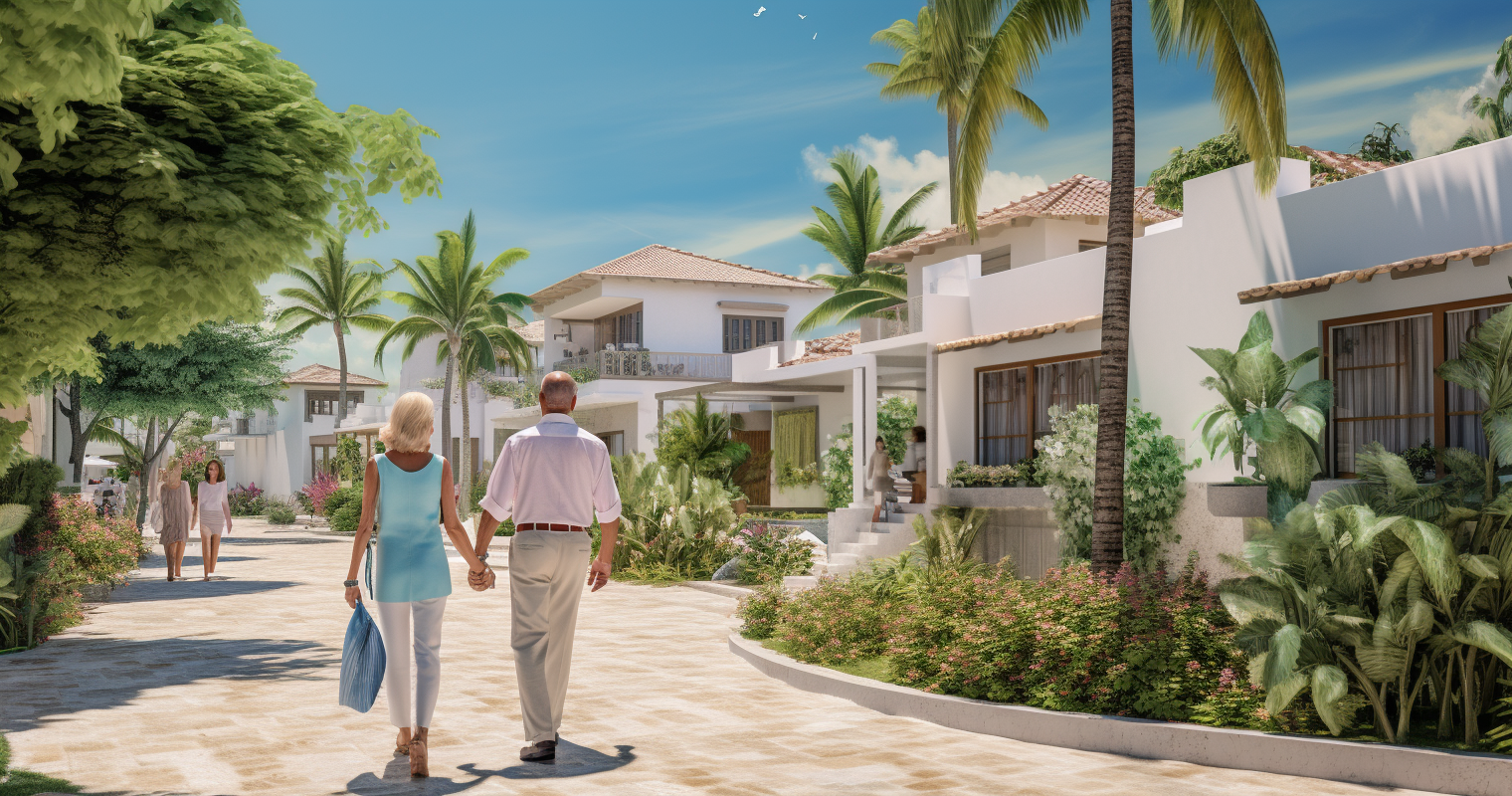
When compared to cities across Western Europe, Morocco’s rental market stands out for its relative affordability, though prices differ considerably between major urban centres, coastal tourist destinations, and quieter rural regions. Monthly rents for a furnished apartment in a city centre can fall anywhere between approximately MAD 3,000 and upwards of MAD 12,000, with location and property quality being the primary determining factors. While lease arrangements are broadly flexible and open to negotiation, residential tenants benefit from important statutory protections under Law No. 67-12.
| Item | Details |
|---|---|
| Average 1-bed city-centre rent (national) | ~MAD 3,257/month (as of September 2024, Numbeo via Statista) |
| Furnished apartment average (national) | ~MAD 9,700/month (as of 2025, Mubawab IPM index) |
| Typical deposit | 1–2 months’ rent (no statutory government-protected scheme) |
| Minimum period before rent increase | 3 years from lease start (Law No. 67-12 / Law 07-03) |
| Residential rent increase cap | 8% per 3-year review period (as of 2024) |
| Key rental law | Law No. 67-12 (2014) — residential and professional leases |
What expats typically pay in rent across Morocco’s most popular areas
Rental costs across Morocco differ substantially depending on the city, the neighbourhood chosen, the type of property, and whether it comes furnished. As of September 2024, the national average for a one-bedroom city-centre apartment stood at around MAD 3,257 per month (roughly USD 323), but this figure conceals considerable variation from one city to the next.
Rabat consistently records the country’s highest average rents. Two-bedroom apartments in the capital fetch approximately USD 1,361 per month, a reflection of sustained demand from civil servants, diplomatic missions, and government-affiliated organisations. As the seat of national government, Rabat hosts the bulk of public institutions and international schools, with Agdal, Hay Riad, and the central districts being especially sought after.
Casablanca, Morocco’s commercial powerhouse, is also among the more expensive rental markets, particularly in established neighbourhoods such as Maarif, Anfa, and Gauthier. Monthly rents for apartments there typically fall in the USD 500–1,500 range depending on size, while two-bedroom units generate around USD 1,088 on average — driven by reliable demand from corporate tenants and professionals drawn to the country’s economic capital.
Marrakech presents a wider spread of prices. A two-bedroom apartment in an upscale area like Gueliz typically costs between MAD 8,000 and 10,000 monthly (roughly €720–900), while luxury villas in the Palmeraie can command anywhere from MAD 20,000 to 50,000 (€1,800–4,500). Among the top choices for long-term tenants are Gueliz and Hivernage, both of which sustain high occupancy through consistent interest from expats and professionals.
Tangier has emerged as an unexpectedly compelling option for value-conscious renters. In the Tanja Balia district, an unfurnished two-bedroom apartment can be found for around MAD 4,000 per month, with furnished equivalents at approximately MAD 5,600 — positioning it among the most accessible major cities for renters. At the opposite end of the spectrum, Fez tends to offer the lowest rents of any significant Moroccan city, appealing to those in search of a more relaxed pace of life.
Beyond city limits, the cost of housing drops dramatically. Rural properties across Morocco can start as low as MAD 700 per month, with homes in villages near the Ourika Valley south of Marrakech typically ranging from MAD 800 to 3,000. As prices shift with demand and exchange rate movements, it is always wise to consult current listings on local portals or speak with a licensed agent before drawing any firm conclusions.
How rental costs compare internationally, and what else belongs in a rental budget
By global standards, Morocco is broadly considered an affordable place to rent. Compared with popular expat hubs such as Dubai, Lisbon, or Barcelona — where a furnished city-centre one-bedroom can routinely cost €1,500–2,000 or more per month — Morocco offers considerably better value, especially away from the headline tourist zones.
According to Mubawab’s 2025 real estate report, furnished apartments now average close to MAD 9,700 per month nationally, while villas command well above MAD 30,000. Looking ahead to early 2026, typical urban rents are projected to grow by between 3% and 6% over the coming year, with furnished properties expected to outpace the broader market.
Rent is only one component of the housing budget. Monthly utility costs for electricity, water, and gas typically come to somewhere between USD 30 and USD 80, with internet and mobile services adding roughly USD 20–50 on top of that. Electricity and hot water bills are the tenant’s responsibility and can be settled monthly either online or in person at the utility provider’s offices or through fast-payment service points.
It is worth noting that landlords renting out unfurnished properties are under no obligation to supply hot water tanks, cooking appliances, or refrigerators, so comparing several properties and confirming what is included before committing is strongly advisable. Agency fees, where charged, are typically equivalent to one month’s rent and are usually a one-off payment at the start of the tenancy. In larger apartment complexes, syndic fees — building-wide maintenance charges — may also apply; always ask about these before signing any agreement.
Rent control laws and rental caps in Morocco
Morocco’s rental market operates with a degree of openness that allows landlords and tenants to negotiate terms relatively freely across a broad range of price points. This flexibility, however, does not mean that rent increases can be applied without limit or constraint.
The revision of rents is regulated by Law No. 07-03, which establishes that a landlord cannot raise the rent before three years have elapsed since the lease began or since the last increase was applied. For residential properties, the increase is generally capped at 8%, while commercial leases carry a ceiling of 10%, unless the contract specifies otherwise. Current thresholds should be confirmed through the Ministry of Justice or another authoritative Moroccan legal source, as legislation is subject to amendment.
No rent increase may be applied during the first three years of a tenancy. Where no agreement has been reached on the matter, the law’s ceiling of 8% for residential properties and 10% for professional premises applies per review cycle. Should a landlord wish to trigger a rent review, a formal written notice must be delivered to the tenant; the tenant then has three months from the date of receipt to contest the proposed increase through the courts.
In practice, these provisions apply principally to formally registered long-term leases. Holiday rentals booked over short periods and newly negotiated market-rate agreements tend to be determined freely. Tenants in informal arrangements — which remain widespread across Morocco — may find their ability to challenge disputes limited, underscoring the importance of entering into a properly drafted written lease from the outset.
Rental deposits in Morocco and tenants’ rights when seeking a refund
In Morocco, landlords commonly request a security deposit equivalent to one or two months’ rent, alongside advance payment of the first month. Some landlords will require two months upfront, while others may request only one. Once a suitable property has been identified, it is standard practice to sign the lease with the landlord and have it notarised.
Morocco does not operate a statutory deposit protection scheme comparable to those found in the UK — where deposits must be lodged with a government-approved scheme within 30 days — or Australia, where bond lodgement with a state authority is mandatory. There are no legal requirements prescribing the form or duration of a rental guarantee in Morocco. Because the deposit is held directly by the landlord throughout the tenancy, tenants would be well advised to meticulously document the property’s condition before moving in.
A check-in inventory — known in French as an état des lieux — should always be carried out prior to taking possession of a property. Under Moroccan law, if no such inventory is completed, the tenant is presumed to have received the premises in an acceptable condition. To minimise the risk of disputes over deposit deductions at the end of the tenancy, every pre-existing defect should be recorded in writing and signed by both landlord and tenant.
While tenants bear responsibility for any damage they cause to the property, they cannot be held liable for deterioration resulting from ordinary wear and tear associated with everyday use, or from force majeure and accidental events. Where a disagreement over deposit deductions cannot be resolved through direct negotiation, the matter falls to the courts. Throughout any tenancy, maintaining copies of all payment receipts, the signed inventory, and all written exchanges with the landlord is essential. Always check the current position with official sources, as relevant regulations may change over time.
Standard lease terms available to renters in Morocco
Law No. 67-12 applies to leases of residential or professional premises, whether furnished or unfurnished, where the rental period exceeds thirty days, along with any associated outbuildings such as basements, garages, terraces, courtyards, and gardens.
Annual leases with monthly payments represent the most common arrangement. In general, the specific provisions of a lease are not prescribed by law and may be freely agreed between the parties. Moroccan law does not require a rental agreement to be written — a verbal agreement is technically valid. Nevertheless, a written and notarised lease is strongly recommended, since it constitutes the primary evidence available to either party in the event of a dispute.
Furnished apartments command higher rents than unfurnished equivalents, and short-term platforms such as Airbnb typically price above long-term lease rates. Tourists and newly arrived expats frequently seek shorter stays, while many local residents prefer to rent on a longer-term basis. Furnished short-term rentals are plentiful in the main cities and tourist destinations, making them a useful interim solution for expats who need time to explore their options before committing to a long-term arrangement. It is worth noting that rentals of fewer than 30 days fall under tourist accommodation legislation rather than residential tenancy law.
Short-term rentals are governed by Law No. 80-14 on tourist accommodation, enacted in August 2015, and do not constitute land income for tax purposes. For renters who prefer not to be locked into a year-long commitment, month-to-month agreements can sometimes be arranged directly with a landlord, though these often carry a premium over standard annual rates.
Seasonal patterns in Morocco’s rental market
Properties can be rented at any point during the year, and the search for suitable housing is typically quick enough that spending a week or two in temporary accommodation while viewing options is entirely practical. That said, specific times of year and certain types of location can see supply tighten and prices rise.
In university cities, the start of each academic term tends to generate a surge in demand for housing, which can affect availability and pricing in the student accommodation segment. Cities such as Rabat, Casablanca, and Fez, each home to substantial student populations, are particularly susceptible to this dynamic.
Tourism represents the other principal seasonal influence. Morocco welcomed 17.4 million visitors in 2024 — a 20% rise on 2023 — and despite the impact of the 2023 earthquake, high-profile destinations such as Marrakech and Agadir continued to perform strongly, particularly in the luxury and short-term rental categories. In Marrakech and coastal resort towns such as Agadir and Essaouira, the peak visitor seasons in spring and autumn can push short-term rental prices sharply upward while simultaneously reducing the volume of stock available for longer-term lettings.
Demand in Agadir reportedly surged by 32% in 2025, making quality rentals increasingly difficult to secure. Major sporting events, including preparations for the 2025 Africa Cup of Nations and the 2030 FIFA World Cup, are driving significant investment in sports and hospitality infrastructure, exerting sustained upward pressure on rental prices in host cities including Casablanca, Rabat, and Marrakech.
Practical steps an expat must take to rent a property in Morocco
Renting a home in Morocco as a foreign national is a manageable process, though it differs from many other countries in that no centralised credit-referencing system exists, and outcomes often depend on personal relationships and locally recognised documentation. The typical sequence of steps is as follows:
- Search for properties. Online platforms such as Avito, Maroc Annonces, Mubawab, and Askoon, along with dedicated Facebook groups, rank among the most effective tools for locating rental housing in Morocco. Local estate agents are equally valuable, particularly for properties that are never advertised online.
- Arrange viewings. Visiting properties in person is strongly advisable wherever possible. A local real estate agent will identify available options that match your requirements, accompany you on viewings, and handle communication with the landlord. A personal recommendation from existing residents is a reliable way to identify a trustworthy agent.
- Negotiate the rent and terms. Negotiation is a standard part of the rental process in Morocco. Before anything is signed, agree on the monthly rent, what the property includes in terms of furniture and appliances, the deposit amount, and the required notice period.
- Prepare your documents. Although no standardised credit-check process exists, landlords generally ask to see a copy of your passport, evidence of income or employment — such as a contract, recent bank statements, or payslips — and occasionally a reference from a former landlord. Expats who lack a local financial track record may need to demonstrate their financial position more comprehensively.
- Conduct an inventory (état des lieux). Carry out a thorough inspection of the property before moving in, recording and photographing every existing defect. Both parties should sign the completed inventory document.
- Sign the lease and have it notarised. A notaire (public notary) will typically prepare the formal rental agreement, usually drafted in Moroccan Darija or French. You may request a version in another language. Both parties must then attend the local municipal office together to sign and have the agreement officially legalised.
- Pay the deposit and first month’s rent. Upfront costs are generally limited to the security deposit and first month’s rent. Obtain a written receipt for every payment made.
- Register with local authorities if required. Foreign nationals intending to remain in Morocco long-term are required to apply for a residence permit (carte de séjour) through the local police authority. Your lease agreement serves as a key supporting document for this application.
Morocco has no formal guarantor system equivalent to those found in France or Germany, but a landlord may ask for a locally based guarantor if they have reservations about a particular tenant’s financial position. As an alternative, some landlords request a larger advance payment covering several months’ rent as a substitute form of security.
Tenant protections under Moroccan rental law
The principal legal framework governing rental relationships in Morocco is Law No. 67-12, which regulates the rights and obligations of landlords and tenants in respect of residential and professional premises, and establishes the mechanisms available for resolving disputes between them.
Law No. 67-12 requires that residential premises meet basic standards in relation to structural components, ventilation, kitchen and sanitary facilities, and access to water and electricity — in theory preventing the rental of accommodation that is unfit for habitation. The law does not, however, define these “necessary characteristics” in precise terms.
As a general principle, responsibility for major structural repairs — including maintaining the fabric of the building and keeping it insured — rests with the landlord, while the tenant is expected to carry out minor day-to-day maintenance and to keep the property in a reasonable state of repair.
A landlord is not entitled to evict a tenant without a recognised legal justification. Acceptable grounds include non-payment of rent, use of the property for illegal purposes or for purposes not permitted under the lease, the landlord’s genuine need to occupy the property personally (subject to specific procedural conditions and notice periods), or the requirement to demolish and reconstruct the building. In most circumstances, a formal notice must be served through a judicial bailiff, and the tenant is granted a specified period either to remedy the breach or to vacate.
Moroccan tenancy law also affords long-term tenants protection against displacement in favour of short-term holiday lets. Landlords are prohibited from terminating a long-term lease purely in order to convert the property into a short-term rental, a provision designed to maintain stability in the residential housing market.
Where ownership of a rented property changes hands, the existing lease contract continues in full force for the tenant’s benefit under the same terms as the original agreement. A sale of the property by the landlord therefore cannot be used as grounds to end the tenancy. The current status of all protective provisions should always be verified through the Moroccan Ministry of Justice or a locally licensed property lawyer.
Best sources of rental listings and tenancy information in Morocco
Morocco’s property market is well served by online platforms, with several major portals offering extensive listings across all cities and regions throughout the country.
- Mubawab: One of Morocco’s most comprehensive property portals, Mubawab carries a broad range of rental listings covering apartments, villas, and commercial premises across the country. The platform also publishes an annual rental price index, which provides a useful reference point for gauging market trends.
- Avito.ma: Morocco’s largest general classifieds website, Avito.ma allows users to search for rental properties in major cities alongside other categories such as vehicles and household goods.
- Sarouty: A dedicated real estate platform enabling searchers to browse rental properties across a wide range of Moroccan cities.
- Maroc Annonces and Askoon: Both Maroc Annonces and Askoon are regularly consulted by those seeking rental accommodation in Morocco.
- Facebook Marketplace and Groups: Facebook Marketplace can be filtered by location and property category to surface rental listings. Many postings relate to short-term lets, though it is worth contacting sellers directly to enquire about monthly arrangements. Local agents also use the platform for self-promotion.
- Local estate agents: Letting agencies play a significant role in helping foreign nationals navigate the Moroccan rental market, bringing local knowledge, access to off-market listings, and a personalised level of service.
- Expat community networks: WhatsApp groups serving expat communities in specific towns and cities are a valuable source of word-of-mouth recommendations and off-market rentals that rarely appear on formal listing platforms.
For authoritative legal and regulatory information on tenancy rights in Morocco, the Moroccan Ministry of Justice publishes legislation in both Arabic and French. The full text of Law No. 67-12 is accessible through the Official Bulletin (Bulletin Officiel). Residential tenancy disputes are handled by the Moroccan courts, and seeking advice from a locally licensed lawyer with experience in property matters before entering into any formal agreement is always recommended.
Frequently Asked Questions
Can foreigners rent property in Morocco without any restrictions?
Yes. There are no nationality-based legal restrictions preventing foreign nationals from renting property in Morocco. Holding a residence permit is not a precondition for signing a lease, though you will generally need to present a valid passport and evidence of income. Once established in a long-term rental, you will be required to apply for a carte de séjour (residence permit) through the local police authority.
Is a written lease legally required in Morocco?
Moroccan law does not mandate that a rental agreement be in written form — a verbal arrangement is technically valid. That said, a written and notarised contract is strongly advisable, since it provides both parties with clear documentation of their rights and obligations, particularly in relation to deposit refunds, rent review procedures, and the grounds for eviction.
How long does it take to find and secure a rental property in Morocco?
The search process is typically quick enough that spending a week or two in temporary accommodation while viewing properties is perfectly workable. In busy markets such as Casablanca and Rabat, desirable properties can be snapped up quickly, so moving decisively once you have identified a suitable home is advisable.
Are furnished apartments easy to find in Morocco?
Yes. Furnished apartments are readily available throughout Morocco’s major cities and tourist areas, reflecting the significant expat and visitor population. Furnished rentals do command higher prices than unfurnished equivalents, and short-term furnished lets through platforms such as Airbnb are typically more expensive than long-term leases. For newly arrived expats, a furnished monthly rental provides a practical stopgap while the search for a longer-term unfurnished property continues.
Can a landlord increase the rent at any time in Morocco?
No. Rent increases are not permitted during the first three years of a tenancy. After that initial period, any increase must follow the procedures established under Law No. 07-03, and residential rents are generally capped at 8% per three-year review cycle (as of 2024). Current thresholds should be verified through official sources, as these rules are subject to amendment.
What happens to my lease if the landlord sells the property?
When ownership of rented premises transfers to a new party, the existing lease remains fully in effect for the tenant on the same terms as the original agreement. The incoming owner has no legal basis to terminate the tenancy simply by virtue of having purchased the property.
Is there a government deposit protection scheme in Morocco?
No. Morocco has no statutory deposit protection scheme comparable to the UK’s Tenancy Deposit Protection system or similar arrangements in other countries. There are no legal requirements governing the form or duration of a rental guarantee, and deposits are held directly by the landlord throughout the tenancy. A thorough written inventory completed at both check-in and check-out is therefore essential for protecting the tenant’s financial interests.
What documents will I typically need to rent in Morocco as a foreign national?
Most landlords and agents request a copy of your passport, recent bank statements or proof of income (such as an employment contract or payslips), and potentially a reference from a previous landlord. There is no standardised national credit-referencing process. Expats who cannot demonstrate a local financial history may be asked for additional evidence of their means, or to pay a larger deposit upfront. Specific requirements vary between individual landlords, so it is worth asking in advance what documentation will be expected.