
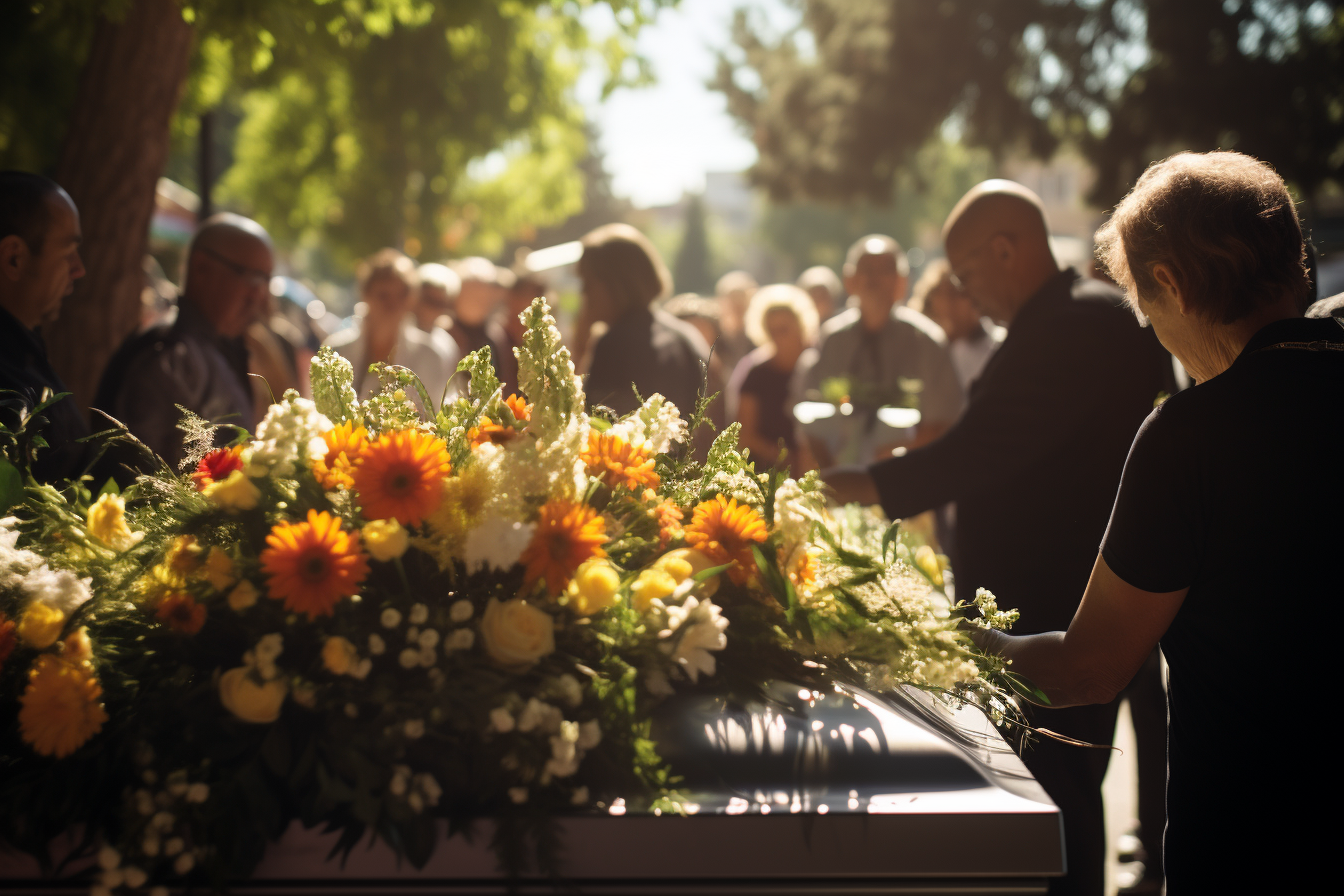
End of life care in Saudi Arabia is an evolving area, shaped profoundly by Islamic principles, an expanding national palliative care programme, and the sweeping healthcare reforms that form part of the country’s Vision 2030 agenda. For those living in the Kingdom as expatriates, knowing how to navigate palliative and hospice services, understanding which legal documents hold relevance, and being prepared for the administrative steps that follow a death — from registering it officially to repatriating remains and distributing an estate under Sharia law — is genuinely important groundwork.
| Item | Details |
|---|---|
| Palliative care units (MOH, as of 2024) | Over 78 palliative care services across the public health system |
| Hospice care established | First introduced in 1992 at King Faisal Specialist Hospital, Riyadh |
| Advance directives / living wills | Wishes are not legally binding in Saudi Arabia; no formal statutory framework |
| Euthanasia / assisted dying | Strictly prohibited under Islamic law and Saudi criminal law |
| Burial timeline | Islamic tradition calls for burial within 24 hours; no law mandates this but it is widely observed |
| Embalming cost for repatriation (as of January 2026) | Approximately SAR 6,000 (~USD 1,600), usually including a coffin suitable for international shipment |
| Inheritance tax | None in Saudi Arabia; estates distributed under Sharia law |
| Cremation | Not practised or permitted for Muslims in Saudi Arabia; extremely limited options for non-Muslims |
What end of life care options are available in Saudi Arabia, and how does the system work?
In Saudi Arabia, end of life care is delivered through a combination of hospital-based wards, outpatient clinics, and an emerging — though still limited — model of community and home-based support. End of life care refers to the support given to people approaching the final stage of life who have chosen to stop curative or disease-controlling treatment. Its central aim is to manage pain and other distressing symptoms as effectively as possible, while also addressing the emotional, social, and spiritual needs of both patients and those close to them.
As part of the broader transformation of healthcare under Vision 2030, a team of specialist clinicians was commissioned to design a care model suited to patients living with life-limiting conditions in the Kingdom. In 2016, the Ministry of Health (MOH) launched the Palliative Care/Last Phase Initiative under its Transformation of Healthcare programme, marking a meaningful structural shift in how Saudi Arabia approaches terminal and serious illness.
Despite this progress, considerable gaps persist. Home-based and community palliative care has not expanded at the same pace; outside of hospital settings, seriously ill patients are largely cared for by relatives without access to professional clinical support. Other ongoing challenges include a cultural emphasis on pursuing curative treatment even when it is no longer realistic, a shortage of physicians with dedicated palliative care training, and a tendency for patients not to be informed of their cancer diagnosis or prognosis. Expats would do well to factor these systemic realities into their planning, and may wish to explore supplementary private medical provision wherever this is possible.
What is palliative care in Saudi Arabia, and who is eligible for it?
The MOH now operates more than 78 palliative care services within the public health system — a substantial improvement from roughly 15 units a decade ago in 2014. The understanding of who palliative care is for has also broadened considerably; it is no longer reserved for specific illnesses but is now available to anyone with advanced need, including those living with end-stage conditions such as heart failure, dementia, chronic obstructive pulmonary disease (COPD), and autoimmune disorders.
Beyond cancer patients, those living with serious non-malignant conditions have an equal entitlement to holistic end of life support. In principle, this eligibility applies to any patient receiving care within the Saudi MOH system, irrespective of their nationality. Expats covered by the mandatory national health insurance framework under the Council of Cooperative Health Insurance (CCHI) can access MOH facilities; those holding employer-sponsored private insurance should review their policy documents to understand the extent of their palliative care cover.
The availability of these services is uneven across the country, with more comprehensive provision concentrated in the central, eastern, and western regions. Certain areas — particularly in the south, such as Najran — still lack both specialist staff and dedicated beds. If you are based outside one of the major urban centres, it is advisable to identify the nearest palliative care facility in advance. The Saudi Ministry of Health website allows users to locate health facilities by region.
Are there hospices in Saudi Arabia, and how do you access them?
Hospice care in Saudi Arabia dates to 1992, when it was first established at King Faisal Specialist Hospital. The sector has grown meaningfully since then, though it remains largely concentrated in the country’s major cities. Institutions currently providing palliative and hospice-level care include King Fahad Medical City in Riyadh and the King Faisal Specialist Hospital and Research Centre, also in the capital.
Care is delivered through a multidisciplinary team (MDT) model, bringing together a treating physician, clinical pharmacist, social worker, spiritual or religious advisor, psychologist, case manager, dietitian, physiotherapist, occupational therapist, and nursing staff. This integrated approach mirrors the philosophy seen in palliative care teams in countries such as France and Germany, though the scale of provision in Saudi Arabia is still developing.
Access to hospice services generally begins with a referral from a treating physician. If you or a family member is living with a life-limiting condition, speak to your primary care doctor or oncologist and request a referral to the palliative or last-phase care unit at your hospital. Low awareness of what palliative care involves — among both patients and clinicians — combined with limited community resources can create barriers, so being proactive in requesting referrals is important. Private hospitals in Riyadh, Jeddah, and Dammam may also offer palliative services; confirm with your insurance provider which facilities are approved under your plan.
Is palliative or hospice care covered by public health insurance or the national health system, or does it need to be funded privately?
Saudi Arabia runs a dual healthcare system with distinct public and private streams. Saudi nationals and, in many circumstances, public-sector expat workers receive treatment through MOH facilities. Most private-sector expats are covered by compulsory private health insurance under the Council of Cooperative Health Insurance (CCHI). Palliative care delivered through MOH hospitals is generally included within the public system for those who are eligible.
For expats relying on private insurance, coverage of palliative and hospice care varies considerably from one policy to the next. Many standard international health insurance plans include treatment for serious illness, but may place restrictions or exclusions on long-term palliative support, care delivered in the home, or services categorised as “comfort care” rather than curative treatment. Reading your policy carefully and obtaining written clarification from your insurer before a care need presents itself is essential.
Demand for palliative care in Saudi Arabia currently outstrips what the system can supply, making the development of a more fully integrated national palliative care infrastructure an increasingly urgent priority. In response to these gaps, some families arrange private home nursing care or private hospital accommodation to complement what the MOH provides. These arrangements can be costly, and holding comprehensive international health insurance that explicitly covers serious illness is strongly advisable for all expats in the Kingdom.
What legal documents should expats have in place before the end of life in Saudi Arabia?
The legal environment surrounding advance care planning in Saudi Arabia differs considerably from jurisdictions that have established statutory frameworks for documents such as advance directives, living wills, or healthcare proxies. Although the “Preferred Place of Care Plan” is recommended as a tool for high-quality terminal care, such wishes do not carry legal force in Saudi Arabia. Unlike countries such as Australia, where advance care directives are underpinned by state legislation, a written statement of your preferences here functions as a moral guide for those involved in your care rather than as a legally binding instruction.
Even so, recording your wishes in writing remains strongly advisable. A clearly expressed document — even without formal legal status — can meaningfully inform the medical team’s approach and give family members a clearer sense of direction. You should also consider putting the following in place:
- A will (wasiyya): The concept of wasiyya — a bequest under Islamic law — plays a limited role in estate planning in Saudi Arabia. A person may use a wasiyya to direct up to one-third of their estate according to their own wishes, but the remaining two-thirds are governed by the rules of forced heirship under Sharia law.
- Power of attorney: A power of attorney (POA) authorising a trusted individual to manage your financial affairs and liaise with your employer and Saudi authorities is an important safeguard. This should be drawn up with the help of a Saudi-licensed lawyer and, wherever possible, attested by your home country’s embassy as well as the Saudi Ministry of Foreign Affairs.
- Notarised family documentation: Documents formally confirming your relationship to your immediate family members can be critical when next-of-kin decisions need to be made in a medical setting.
- Do-Not-Resuscitate (DNR) orders: DNR orders exist within clinical practice in Saudi hospitals and can be discussed with your treating physician. They operate within the hospital’s own clinical governance framework rather than under any statutory advance directive system.
To create a valid will, the testator must declare their wishes before two trustworthy adult witnesses of sound mind, who must observe the declaration and sign the document. Individuals who stand to benefit from the will cannot serve as witnesses, as this creates a conflict of interest. Seek guidance from a Saudi-qualified lawyer to ensure any documents you put in place are appropriate to your specific circumstances.
Are documents such as advance directives or powers of attorney made in another country legally recognised in Saudi Arabia?
The recognition of foreign legal documents within Saudi Arabia is conditional and frequently complicated. Saudi Arabia’s legal system may in certain circumstances acknowledge wills originating in other countries, but the process of enforcement is rarely straightforward, and the principles of Sharia law are likely to be taken into account. Where the provisions of a foreign will conflict with the mandatory inheritance rules established under Sharia, full enforcement is unlikely to be possible.
For powers of attorney executed abroad, the document will ordinarily need to be translated into Arabic, notarised in the country where it was made, authenticated (through apostille or legalisation), and then attested by the Saudi Ministry of Foreign Affairs before Saudi courts or government bodies will accept it. Both the English and Arabic versions of legal documents must be attested by the appropriate authorities prior to submission to Saudi courts — this is a firm legal requirement in the Kingdom.
Advance directives or living wills from abroad carry even less formal weight, given that Saudi Arabia has no domestic statutory framework for such documents to begin with. Medical professionals may take a clearly expressed documented preference into consideration, but there is no guarantee that it will be acted upon. Seeking legal advice from qualified practitioners in both Saudi Arabia and your home country is the best way to understand the limits of what your documents can achieve.
What are the laws around euthanasia or assisted dying in Saudi Arabia?
Euthanasia and assisted dying are completely prohibited in Saudi Arabia. The Kingdom’s entire legal framework is grounded in Islamic law (Sharia), which holds that human life is a divine gift that no person has the right to deliberately terminate. The Holy Qur’an forms the basis of governance in Saudi Arabia, and this directly shapes every dimension of how end of life care is approached.
The Saudi Permanent Committee for Scholarly Research and Religious Rulings (Ifta’) has issued formal religious edicts (fatwas) explicitly forbidding euthanasia as a means of relieving suffering. Any deliberate act that hastens death — whether carried out by the patient, a family member, or a healthcare professional — is treated as a serious criminal matter and may result in prosecution under both criminal and Islamic law. No legislation permitting any form of assisted dying exists in Saudi Arabia, and there is no discernible legal or political momentum toward introducing it.
The question of withholding or withdrawing futile treatment — where continued medical intervention serves only to prolong the dying process without conferring any benefit — is treated differently. In clinical settings, Do-Not-Resuscitate (DNR) decisions are reached collaboratively by the medical team and the patient’s family, and this approach is broadly considered ethically acceptable within Islamic principles, which do not require unnecessary suffering to be prolonged. This is, however, fundamentally distinct from any act intended to cause death, which remains unconditionally prohibited.
What are the local customs, traditions, and religious practices around death and dying in Saudi Arabia?
Islamic teachings, deeply embedded traditions of family-centred care, and broader social norms all profoundly influence how decisions are made at the end of life in Saudi Arabia, often weaving together the spiritual preparation for death with the practical demands of patient care. In Saudi culture, death is understood as a divinely ordained transition, and the dying process is marked by prayer, the recitation of the Quran, and the presence of family members gathered around the dying person.
As death approaches, it is customary for those present to recite the Shahada — “There is no god but Allah, and Muhammad is His messenger” — near the person who is dying. Relatives are expected to be present and actively involved; in Muslim societies, caring for a dying family member is understood as a duty of kinship rather than a task to be delegated. This strong sense of familial obligation can mean that the idea of placing a loved one in a hospice facility feels unfamiliar or even uncomfortable for Saudi families, and expat families may encounter this cultural dynamic when engaging with the care system.
Once death has occurred, Islamic funeral rites are carried out without delay. The body is ritually washed (ghusl) by washers of the same sex as the deceased, wrapped in a plain white shroud (kafan), and a funeral prayer (Salat al-Janazah) is held. Muslim tradition holds that burial should take place as quickly as possible — ideally before the next sundown following death. While no Saudi law formally mandates this timeframe, burial within 24 hours is the prevailing custom. The body is placed directly in the earth without a coffin, oriented toward Mecca, and graves are typically left without elaboration or with only a simple stone marker.
These rites do not apply in the same way to non-Muslim expats, though the speed at which proceedings unfold means that families and employers must act swiftly regardless of religious background. Expats should be aware that the overall legal and cultural environment in Saudi Arabia strongly reflects Islamic norms, and this will be felt even by non-Muslims as they work through the administrative steps that follow a death.
What must you do when someone dies in Saudi Arabia? Who do you notify, how quickly, and in what order?
The steps required following a death in Saudi Arabia are numerous and must be set in motion immediately. The urgency is real: Islamic burial traditions, legal administrative requirements, and the responsibilities of the sponsor all converge to make the first hours after a death extremely demanding. The following outlines the sequence of actions that must be taken.
- Notify emergency services and the police: If a death occurs at a residence or hotel, contact the local police and summon a doctor or ambulance without delay. Provided there are no suspicious circumstances, the police or ambulance crew will arrange for the body to be transferred to the hospital mortuary. If the death takes place in a hospital, the process of issuing a death report and moving the body to the morgue will be initiated automatically by hospital staff.
- Notify the deceased’s employer or sponsor: In Saudi Arabia, the employer or sponsor carries legal responsibility for managing the administrative process on behalf of the next of kin following a death. They must be informed as soon as possible, as their obligations under Saudi labour law are activated immediately.
- Obtain a medical death report: A hospital or clinic doctor will confirm the death and produce a medical cause-of-death report. This provisional death certificate (إشعار وفاة) can usually be obtained fairly quickly through the hospital mortuary office.
- Obtain police clearance (if required): In some cases, a visit to the central police station — accompanied by a Saudi national where possible — is needed to obtain clearance for burial. Where the death is unnatural — whether through accident, suspected criminal act, or suicide — a police investigation and potentially a post-mortem examination must be completed before the body can be released.
- Notify the deceased’s home country’s embassy or consulate: Family members should reach out to their country’s embassy or consulate as early as possible. The embassy will advise on the specific steps to follow and provide guidance on how to register the death in the home country.
- Register the death with the Civil Affairs Office (Ministry of Interior): The official death certificate for a non-Saudi national is produced in the form of a “Death Certificate for Non-Saudis” by the Civil Affairs Office. This document is foundational to all subsequent administrative procedures.
- Obtain consular documentation: The embassy or consulate will issue a Consular Report of Death Abroad, or an equivalent national document, which functions as the death certificate for legal purposes back in the home country. Multiple certified copies of this report and a mortuary certificate are typically provided.
- Arrange for burial or repatriation: A decision should be made as quickly as possible regarding whether the deceased will be buried locally in Saudi Arabia or repatriated to their home country. Whichever course is chosen, the relevant process — local burial arrangements, or embalming and preparation for international transport — should begin without further delay.
How is a death officially registered in Saudi Arabia, and what documents are needed?
Official death registration in Saudi Arabia falls under the joint purview of the Ministry of Health and the Ministry of Interior (Civil Affairs). A death registrar completes all fields of the death notification form by consulting the deceased’s medical file alongside the death report prepared by the attending physician. The system connects electronically to both ministries.
For foreign nationals, the official death certificate takes the form of a “Death Certificate for Non-Saudis,” issued by the Civil Affairs Office under the Ministry of Interior. The documents typically required to obtain this certificate include:
- The medical cause-of-death report produced by the treating hospital or doctor
- The deceased’s passport (all relevant pages) and Iqama (residency permit)
- A police report, where the death was unnatural or the circumstances are under investigation
- Documentation confirming the identity of the next of kin or authorised representative
Once issued, the Saudi death certificate will require attestation by the Saudi Ministry of Foreign Affairs if it is to be used for legal purposes in another country. It is advisable to retain a copy of the medical report and arrange for it to be translated into English — or into whichever language is relevant for your home country’s authorities. All Arabic-language documents submitted for use internationally must be accompanied by a certified translation, including for the purposes of airline repatriation documentation.
What happens if a foreign national dies in Saudi Arabia — what are the specific steps for notifying their home country’s embassy or consulate, and what role does the consulate play?
When a foreign national passes away in Saudi Arabia, the home country’s embassy or consulate plays a central but predominantly advisory role rather than a legally directive one. The employer or sponsor bears primary legal responsibility for ensuring that the deceased’s affairs are handled in accordance with Saudi law and custom. While the embassy or consulate does provide meaningful assistance — particularly with documentation and guidance on shipping or local burial — it is ordinarily the sponsor or a designated representative who must carry out the practical requirements and meet the associated costs.
Contact the embassy or consulate as early as possible — ideally on the same day the death is confirmed. The embassy will typically:
- Confirm the death and update any existing consular registration records
- Issue a Consular Report of Death Abroad (or the equivalent document for that country), which serves as the legally recognised death certificate for purposes back in the home country
- Supply a list of local funeral directors and approved international shipping agents
- Liaise with Saudi authorities and the employer or sponsor as required
- Advise the family on what repatriation involves, what it costs, and how long it typically takes
- Offer consular welfare support to bereaved relatives present in Saudi Arabia
In countries such as the UK, for example, the Saudi death certificate is accepted for legal purposes domestically without a consular death certificate being required — though one can be obtained if desired. Requirements differ by country, so contact your embassy directly to clarify what applies in your case. A death certificate issued by Saudi authorities is a prerequisite for transporting a body out of the Kingdom, and permission must also be granted by the relevant embassy of the deceased’s home nation.
How are funerals typically arranged in Saudi Arabia, and what are the usual options for burial or cremation?
For Muslims who die in Saudi Arabia, funeral proceedings follow Islamic rites and are typically coordinated through the hospital, the local mosque, and the municipality responsible for administering cemeteries. The body is washed, shrouded, and a funeral prayer is conducted — generally at a mosque — before burial takes place in a municipal Islamic cemetery. Muslim tradition holds that burial should occur as soon as possible after death, ideally before the following sundown. No Saudi law formally prescribes this timeframe, but burial within 24 hours is the deeply embedded convention.
For non-Muslim foreign nationals, the situation is considerably more complex. Cremation is neither practised nor permitted for Muslims in Saudi Arabia, and no cremation facilities exist anywhere in the country. Non-Muslim expats who die in the Kingdom cannot be cremated locally; their remains must either be interred in a designated non-Muslim section of a cemetery — available in some, though not all, cities — or repatriated to their home country so that a funeral can be held in accordance with their own traditions and wishes.
The sponsor of the deceased bears normal responsibility for ensuring that the necessary administrative processes are correctly followed, and is also expected to cover the associated costs. In practice, this means the employer takes an active coordinating role between Saudi authorities, the embassy, and funeral logistics providers. Families should nonetheless remain closely involved in all decisions, and where possible should identify a trusted local contact — such as a colleague or friend of the deceased — who can assist with practical arrangements on the ground.
What are the approximate costs of a funeral in Saudi Arabia, and is there financial assistance available?
The costs involved in death and funeral arrangements in Saudi Arabia depend significantly on whether the deceased will be buried locally or whether their remains are to be transported to another country. For a local Islamic burial within Saudi Arabia, expenses are typically modest: municipal cemeteries do not levy burial fees, the ceremony is kept simple in keeping with Islamic custom, and mosque and body-washing services are often provided without charge or at minimal cost through community or hospital support networks.
Where repatriation of remains is required, costs rise substantially. As of January 2026, the fee for embalming is approximately SAR 6,000 (around USD 1,600), a figure that usually encompasses a wooden, metal-lined coffin suitable for international air transport. Further expenses to anticipate include:
- International air freight charges for the coffin (which vary considerably depending on the destination)
- Document translation and attestation fees
- Airport handling and clearance charges at both the Saudi and destination ends
- Funeral director fees payable in the home country
Saudi Arabia does not offer a state-funded funeral benefit for expatriates equivalent to schemes such as the Funeral Support Payment in Scotland or similar provisions in other countries. The principal source of financial assistance is the employer or sponsor, who is legally required under Saudi labour law to cover the cost of repatriating the remains. Beyond this obligation, it is important to check at the earliest opportunity whether the deceased held insurance — if so, the insurer should be contacted immediately, as they may have preferred shipping agents and may cover some or all of the repatriation expenses. Some employers also provide death-in-service or repatriation benefits; the employment contract should be checked carefully for any such entitlements.
What is the process for repatriating the remains of a foreign national from Saudi Arabia to another country?
Repatriating remains from Saudi Arabia is a multi-stage process that involves Saudi authorities, the home country’s embassy or consulate, the employer or sponsor, and an airline carrier. The remains of foreign nationals who have died in the Kingdom must be embalmed at the nearest mortuary facility before any international shipment can take place — embalming is a legal requirement for all bodies being transported out of Saudi Arabia. This procedure typically takes place at the mortuary at King Saud Medical Complex in Shumaisi Hospital in Riyadh, or at the Central Mortuary at King Fahad Hospital in Jeddah.
Saudi Arabian law requires the following documentation in order for a body to be cleared for transport to the deceased’s home country: a copy of the deceased’s passport including entry visa; copies of the Iqama (Residence Permit); a copy of the death certificate or death report together with an English translation; the deceased’s family home address written in Arabic; formal approval from the deceased’s embassy in Saudi Arabia; and a copy of the notification of power of attorney from the legal heir, duly attested and accompanied by an Arabic translation.
Airlines require five certified copies of all documentation relating to the death before they will accept a body for international transport. The overall timeline for repatriation can range from a few days to several weeks, depending on the cause of death, how quickly the relevant authorities respond, and the speed at which documentation can be gathered from family members abroad. Deaths that are not straightforwardly natural — where a police investigation is required — invariably take longer to resolve. It is strongly recommended to engage an international funeral director with specialist experience in repatriation from the Gulf region to coordinate and manage the process.
What happens to the estate of someone who dies in Saudi Arabia — how does probate work, and are there inheritance taxes?
The administration of estates in Saudi Arabia is governed by Sharia (Islamic law), specifically as interpreted through the Hanbali school of Sunni jurisprudence. Sharia law plays a central and defining role in how assets are distributed after death, ensuring that the process reflects Islamic teachings on the rights and obligations of family members. This stands in sharp contrast to the probate process seen in countries such as Canada or Ireland, where a court validates the will and supervises its execution; in Saudi Arabia, inheritance matters are handled through the Sharia court system.
The Sharia court examines any application relating to the estate, reviews the relevant documents presented, and determines the legal heirs based on the rules of Islamic inheritance. The court may appoint an executor or administrator to oversee the estate, whose responsibilities include managing the assets, settling the deceased’s debts, and distributing what remains to the rightful heirs in accordance with the court’s determinations.
Saudi Arabia does not levy any inheritance tax on assets transferred to heirs, meaning that beneficiaries receive their entitlement without a tax deduction at the point of inheritance. The estate may, however, be subject to other forms of taxation depending on the nature of the assets involved — property transfer taxes, for instance, may apply in certain circumstances. Expats holding assets in both Saudi Arabia and their home country should be aware that their home jurisdiction may impose its own estate or inheritance taxes on overseas-held assets — specialist international tax advice is recommended to navigate this.
Non-Muslim individuals residing in Saudi Arabia may face particular complexity when it comes to estate planning, as the Sharia-based inheritance rules that govern the Kingdom may not align with the distribution outcomes they had intended or anticipated. Consulting a lawyer who holds qualifications in both Saudi law and the law of your home country is essential to protect your interests and those of your family as effectively as possible.
If an expat dies without a will in Saudi Arabia, what happens to their assets under local intestacy laws?
Where a person dies without a legally valid will, the distribution of their estate is governed entirely by the inheritance rules set out in the Quran. Understanding how intestacy operates in this context is important, since it directly determines how assets will be shared among heirs — and disputes can readily arise where the deceased’s actual intentions are not known.
Under Islamic law, certain heirs are entitled to defined, fixed portions of the estate; these shares cannot generally be altered by any testamentary wish, except within the limited scope of a wasiyya. The standard intestacy shares under Islamic law are as follows:
| Heir | Share of estate |
|---|---|
| Surviving spouse (husband) | One-quarter if deceased has children; one-half if no children |
| Surviving spouse (wife) | One-eighth if deceased has children; one-quarter if no children |
| Children | Sons receive twice the share of daughters |
| Each parent (if deceased has children) | One-sixth each |
| Mother (if no children) | One-third of the estate |
An important additional rule is that a Muslim and a non-Muslim may not inherit from one another under these provisions, whereas Muslims may inherit from other Muslims, and non-Muslims of different faiths may inherit from one another. The religious identity of both the deceased and the potential heirs can therefore have a material effect on how the estate is divided. Non-Muslim expats in particular should obtain specialist legal advice and put in place valid, Saudi-compliant estate planning documents to protect their family’s position as far as is legally achievable.
Crucially, even where a will does exist, only up to one-third of the estate can be directed in accordance with the deceased’s own wishes through a wasiyya (bequest). The remaining two-thirds are subject to the forced heirship rules of Sharia law, meaning that regardless of what a will specifies, a significant share of a person’s wealth will be distributed according to Islamic inheritance principles.
Frequently asked questions
Will my private international health insurance be accepted for palliative care treatment in Saudi Arabia?
This depends on your insurer and the terms of your specific policy. Most comprehensive international health insurance plans provide cover for hospitalisation relating to serious illness, and this will often extend to inpatient palliative care. However, coverage for home-based palliative care, long-term hospice admission, or treatment classified as “comfort care” rather than curative may be excluded. Contact your insurer before any care need arises, obtain written confirmation of exactly what your policy covers, and check that it includes treatment at private hospitals in Saudi Arabia, where access to palliative care units tends to be better.
Are documents written in English legally valid in Saudi Arabia?
Arabic is the official language of Saudi Arabia, and courts and government bodies require documentation to be in Arabic or accompanied by a certified Arabic translation. Both the English and Arabic versions of legal documents must be attested by the relevant authorities prior to submission to Saudi courts — this is a mandatory legal requirement in the Kingdom. Ensure that all key documents, including wills, powers of attorney, and family status certificates, are professionally translated and notarised well in advance of any need to use them.
How long does the process of repatriating remains from Saudi Arabia typically take?
In uncomplicated cases of natural death where all documentation is in order and both the embassy and employer act promptly, repatriation can usually be completed within one to two weeks. Where the death was unnatural — involving an accident or suspected criminal circumstances — the process can take significantly longer, potentially running to several weeks or even months, as police investigations and, if warranted, an autopsy must be concluded first. Autopsies are carried out only in cases of suspected foul play or at the request of the relevant police authority. Engaging a specialist repatriation funeral director at the earliest possible stage will help to manage the process effectively.
What support is available to bereaved family members in Saudi Arabia?
Bereaved family members in Saudi Arabia can look for support from several sources: the deceased’s employer, who carries legal obligations under Saudi labour law; their home country’s embassy or consulate, which provides consular welfare support; and local community groups or religious organisations. Most major embassies have welfare officers on hand or can direct families to appropriate counselling services. The UK’s Foreign, Commonwealth and Development Office, for instance, operates a 24-hour, year-round telephone line. Consult your own government’s travel and consular services website to identify the equivalent support available to you.
Can a non-Muslim expat be buried locally in Saudi Arabia?
Non-Muslim foreign nationals who die in Saudi Arabia may in some cases be buried locally in designated non-Muslim sections of cemeteries, though the availability of such provision varies by city and is far from universal. Repatriation is frequently the preferred option for families in this situation. Cremation is not available anywhere in Saudi Arabia. Your embassy can advise on what local burial options may exist for non-Muslims in your area and what permissions would need to be obtained.
Does my employer have legal obligations if I die while working in Saudi Arabia?
Yes. Under Saudi labour law, the sponsor bears responsibility for assisting with the management of the deceased’s affairs, including the handling and international shipment of personal effects and the associated expenses. The sponsor is legally responsible for administering the process of repatriating the body and for meeting the costs involved. Review your employment contract carefully for any death-in-service or repatriation benefit clauses, and make sure a trusted family member knows who to contact within your organisation in an emergency.
Is a Saudi death certificate recognised in other countries for inheritance or legal purposes?
In many countries — including the UK, for example — a Saudi death certificate is accepted for domestic legal purposes without the need for an additional consular death certificate, though one can be obtained if preferred or required. Most jurisdictions will accept an officially issued Saudi death certificate provided it has been attested by the Saudi Ministry of Foreign Affairs and is accompanied by a certified translation. Requirements differ from one country to another, so contact the relevant authority in your home country — such as the civil registration body or probate court — to confirm exactly what documentation they need.
What happens to my bank accounts and salary if I die in Saudi Arabia?
Saudi bank accounts will ordinarily be frozen upon the account holder’s death, pending a Sharia court order authorising their release to legal heirs. The deceased’s employer is required to settle any outstanding salary, end-of-service gratuity, and other financial entitlements owed under the employment contract. The sponsor also carries responsibility for assisting with the management of the deceased’s personal effects and related expenses. Heirs will need to present a court order from the Sharia court confirming their entitlement before financial institutions will release any funds. Engaging a Saudi-licensed lawyer to guide the family through this process is strongly recommended.