
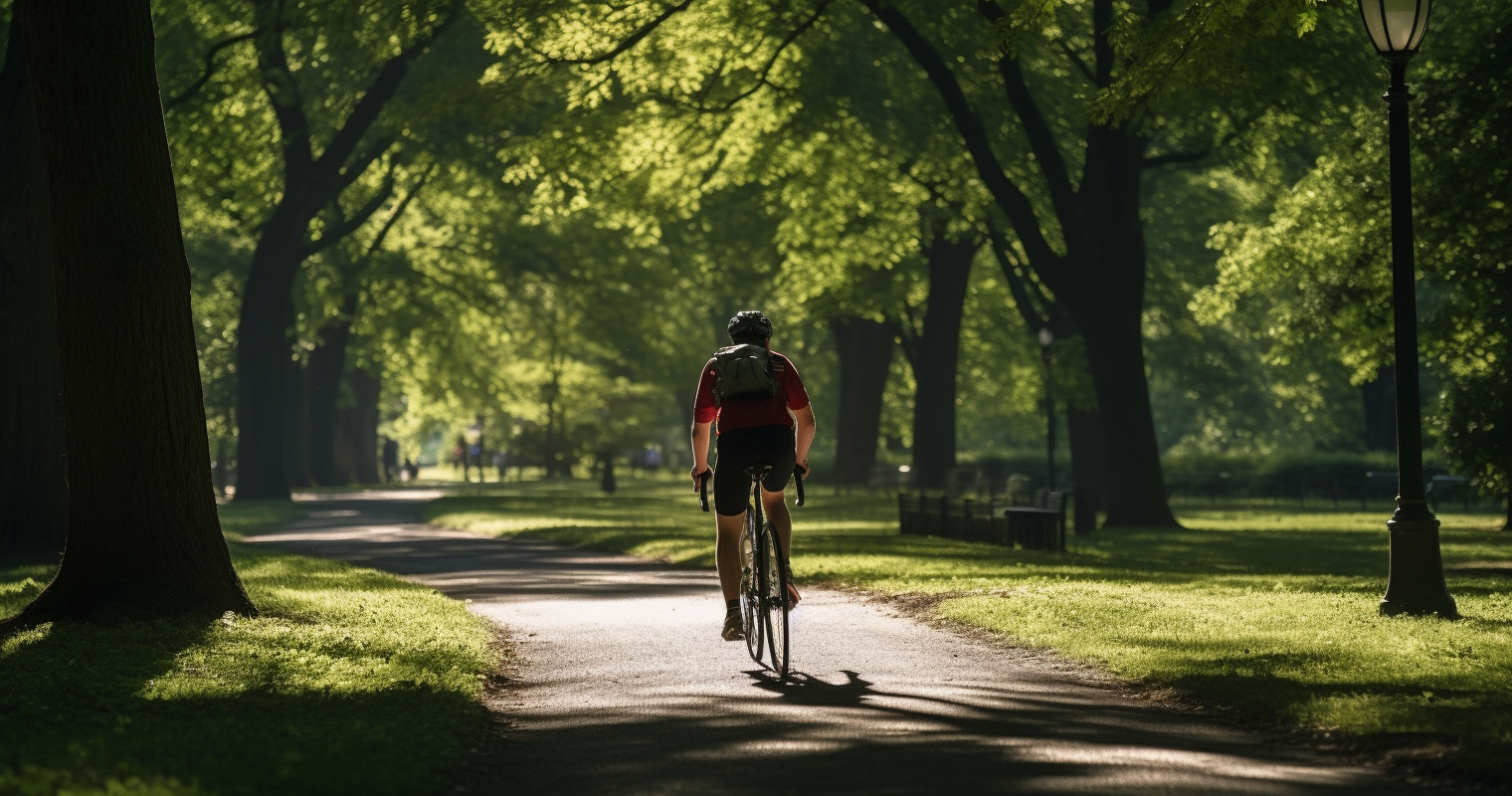
Australia occupies an interesting position when it comes to cycling — it is a activity embraced for recreation, sport, and a growing number of daily commutes, yet it has not achieved the deep integration into everyday transport seen in parts of northern Europe. Infrastructure is progressing in the larger cities, but the experience of cycling differs considerably depending on which city, neighbourhood, or state you find yourself in.
| Item | Details |
|---|---|
| Cycling participation (as of 2023) | Around 15% of Australians rode a bicycle in the previous week; 36.7% in the previous year |
| Helmet law | Mandatory for all cyclists in all states and territories |
| Cyclist fatalities (as of 2023) | 35 fatalities — 3% of all road fatalities |
| Bike registration | Not required in any state or territory |
| Major bike-share cities | Sydney, Brisbane, Perth, Adelaide (dockless e-bike schemes); Melbourne (dockless e-bikes via Lime/Neuron) |
| Key transport authority | Bureau of Infrastructure, Transport and Research Economics (BITRE) — bitre.gov.au |
How popular is cycling in Australia — is it a common way to get around?
Cycling occupies a broad and genuine place in Australian life, serving as a form of transport, a recreational pursuit, and a competitive sport. Many people ride regularly for health reasons and because it offers a quick, convenient way to cover shorter distances. That said, cycling remains more strongly associated with leisure than with daily travel.
As of 2023, roughly 15% of Australians had ridden a bicycle — including e-bicycles — at least once in the previous week, while 36.7% had done so at some point in the previous year. Those numbers indicate widespread engagement, but translating that participation into routine commuting is a different challenge altogether. Only 0.7% of Australians cycle to work, and by some measures, rates of bicycle commuting have been declining rather than growing.
For context, around 27% of all trips in the Netherlands are made by bicycle, with the figure in cities like Amsterdam approaching 40%. Australia bears far more resemblance to the United States or Canada in commuting terms — cycling is on an upward trajectory but the car remains the undisputed default for most journeys. That said, bicycle commuting has recorded growth in every Australian state where counts have been conducted, signalling a gradual but genuine shift in travel behaviour.
Transport cycling has increased from 22% to 27% since 2023, while recreational cycling has dipped from 88% to 84% — though leisure riding still accounts for the overwhelming majority of trips. The distance between the two purposes is narrowing slowly. Expats arriving from cities with entrenched cycling cultures — Amsterdam, Copenhagen, Utrecht — would do well to temper their expectations while recognising the positive direction of travel.
Bicycle Network’s 2024 count results showed growth in every state where counts took place, with an average increase of 6% nationwide. That count also collected e-bike data for the first time, finding that e-bikes accounted for 11% of all recorded bike trips. This is reshaping the cycling landscape considerably, drawing in riders who might previously have found longer distances or hilly terrain off-putting.
Across Australia, 19% of people identify as cautious or confident cyclists. A further 42% describe themselves as interested — people who do not currently ride but would like to. This substantial pool of latent demand suggests that cycling could expand considerably if infrastructure development keeps pace with public appetite.
What is the cycling infrastructure like in Australia?
Significant funding has flowed into dedicated cycleways and bike paths across Australia’s major cities over recent decades. Yet there remains a substantial gap between current provision and the kind of connected, comprehensive network that would make cycling a genuinely viable option not just for CBD commuters from inner suburbs, but for ordinary local trips in residential neighbourhoods.
Many of the paths that exist are shared rather than exclusively reserved for cyclists — walkers, joggers, and other active transport users share the same space. While some central locations have dedicated bicycle lanes, the bulk of roads across Australian cities lack any cycling-specific facilities. Where on-road cycling infrastructure does exist, it often consists of painted markings or signage rather than physically separated lanes.
Melbourne’s City Council has delivered more than 27km of new bike lanes since 2020, producing a 22% uplift in bicycle activity across the city. In April 2024, Council endorsed a four-year delivery programme prioritising key routes into the city using more robust kerb materials. Sydney has also committed heavily to its cycling network: since 2007, the City of Sydney council has delivered 25km of separated cycleways alongside 60km of shared paths.
Canberra is widely regarded as the gold standard for Australian cycling infrastructure — the national capital has an extensive network of off-road cycle lanes that effectively allows riders to cross the entire city without sharing a road with motor vehicles. It is frequently named the most bicycle-friendly city in Australia for precisely this reason.
Brisbane has seen considerable investment in making cycling navigable across the city, with a thoughtfully designed network of paths and lanes through central areas including South Bank and along the river, with good connectivity to green spaces and ample bike parking. Adelaide is similarly well regarded — its broad network of bike paths and lanes makes cycling a practical transport choice across much of the city, and attitudes towards cyclists are generally accommodating.
Outside inner-city zones, the picture deteriorates. Many Australian suburbs offer only unprotected bike lanes in gutters, shared footpaths that prioritise pedestrians, or simply no dedicated provision at all, leaving cyclists to negotiate busy roads alongside cars and trucks. Rural and regional areas are even less well served, and expats relocating to smaller towns or outer suburban locations may find that dedicated cycling infrastructure is effectively non-existent.
For current route maps and information on planned network improvements, your state or territory transport department’s website is the best starting point. At the national level, Bicycle Network provides advocacy and information relevant to cyclists nationwide, while the Department of Infrastructure, Transport, Regional Development, Communication and the Arts publishes broader transport policy resources.
Is cycling safe in Australia?
There were 35 cyclist fatalities on Australian roads in 2023, accounting for 3% of all road deaths — a reduction from 45 fatalities (4% of total) recorded in 2014. That long-term downward trend is welcome, but the overall safety picture is not straightforward. Following a low of 29 deaths in 2016, cyclist fatalities gradually climbed back to 38 in 2024, representing an 11.8% rise on the 2023 figure.
Hospitalisation data presents another dimension worth considering. In 2021 — the most recent year for which figures are available — 8,163 cyclists were admitted to hospital, representing 20.7% of all road hospitalisations. By comparison, in 2014, 6,636 cyclists were hospitalised, making up 18.7% of the total. The simultaneous rise in hospitalisations and fall in fatalities may partly reflect increased cycling activity overall, combined with improvements in emergency medical treatment.
Motor vehicles are implicated in approximately 80% of fatal cyclist crashes, with driver inattention and cyclists simply not being seen frequently cited as contributing factors. Fear of sharing the road with motorists consistently ranks among the most significant barriers discouraging potential cyclists, and more physically separated infrastructure is identified as the single most important change that would encourage greater participation.
Analysis of 1,294 cyclist fatalities recorded in Australia over three decades shows an overall slight decrease of approximately 1.1% annually. However, this aggregate improvement masks a worrying rise among older riders — fatalities in those aged 60 and over increased by 3.3% annually over the same period, and deaths involving single riders also trended upward.
Wearing a helmet is a legal requirement across all states and territories (covered in more detail in the rules section below), and this represents an important baseline safety measure. High-visibility clothing, front and rear lights after dark, and selecting protected or dedicated routes wherever practicable are all strongly advisable. The National Road Safety Data Hub, maintained by the Department of Infrastructure, provides current cyclist fatality and hospitalisation statistics. Road fatality data is reported by police to state and territory road safety authorities and subsequently compiled by the Bureau of Infrastructure, Transport and Research Economics (BITRE) in the Australian Road Deaths Database (ARDD).
What are the rules of the road for cyclists in Australia?
Cycling regulation operates at the state and territory level rather than under a single national framework. While the rules are broadly aligned across jurisdictions, meaningful differences exist — particularly regarding footpath riding, helmet exemptions, and local-specific provisions. You should consult the official road rules published by your state or territory upon arrival.
Helmets
An approved bicycle helmet must be worn by all cyclists in every Australian state and territory — no exceptions apply to adults as a general rule. Victoria was the first jurisdiction to introduce mandatory helmet legislation, in July 1990, and every other state and territory followed. Helmets must be correctly fastened and comply with Australian safety standards. Some jurisdictions have limited processes for religious or medical exemptions — contact your local state road authority for specifics.
Lights and visibility
Riding after dark or in low-visibility conditions requires a white light at the front and either a red light or a red reflector at the rear. These are statutory requirements in all states, not optional precautions. Riding without lights in the dark constitutes an offence and may attract a fine.
Footpath and shared path rules
Whether you can ride on a footpath depends heavily on the state you are in. In most jurisdictions, footpath riding is permitted for children under 12 and for adults accompanying them, but is otherwise prohibited for adults unless signage specifically allows it. Tasmania permits adults to ride on footpaths provided they travel at a safe speed and yield to pedestrians. South Australia extended the same right to adults in 2015. Victoria does not permit footpath riding for adults. Always verify the rules applicable in your specific state before cycling on a footpath.
Road positioning and passing distances
Cyclists are required to ride as close to the left side of the road as is reasonably practicable, except when overtaking, turning right, or avoiding hazards. Motor vehicle drivers are required to give cyclists a minimum passing clearance of 1 metre in speed zones of 60 km/h or below, and at least 1.5 metres in higher-speed zones. These minimum passing distance rules now apply in all states and territories.
Alcohol limits
No specific blood alcohol limit is universally prescribed for cyclists across all jurisdictions in the same way as for drivers, but riding under the influence of alcohol or drugs is nonetheless unlawful. In certain states, cyclists may be charged with riding dangerously or while impaired. Treating the 0.05 BAC limit that applies to drivers as your personal benchmark is the safest course of action.
Other key rules
- Cyclists must comply with traffic lights and stop signs.
- Riding with headphones in both ears is prohibited in most states.
- Using a mobile phone while cycling is illegal across all states.
- Riding more than two abreast is generally not permitted, except when overtaking.
- Cyclists may use designated bicycle lanes and must not unnecessarily obstruct traffic flow.
For the complete and current road rules in your jurisdiction, visit the appropriate authority’s website: for example, Transport for NSW, VicRoads, TMR Queensland, or the equivalent body in your territory.
Do I need to register my bike or have insurance to cycle in Australia?
No registration of any kind is required to ride a bicycle in Australia. Unlike motor vehicles, bicycles do not need to be licensed or enrolled with a government authority — there is no registration plate, no roadworthiness inspection, and no annual fee. This sets Australia apart from the handful of countries that have trialled voluntary or compulsory bicycle registration systems.
Third-party liability insurance is equally not a legal requirement for cyclists. If you are involved in an incident that injures someone else or causes property damage, you carry personal financial responsibility for the consequences — and unlike motorists, cyclists have no mandatory third-party insurance scheme to draw on. This is a significant distinction: motor vehicles in Australia are covered by Compulsory Third Party (CTP) insurance, but no comparable scheme exists for bicycles.
Taking out personal liability insurance is therefore strongly advisable for anyone cycling regularly. Several cycling organisations include this as a benefit of membership. Bicycle Network is a member-owned health promotion charity that campaigns for improved cycling infrastructure and runs programmes including Ride2Work. Membership — visit bicyclenetwork.com.au for current pricing — comes with personal liability cover and crash support, a structure not unlike the third-party protections bundled into cycling club membership in countries such as Germany or the Netherlands.
It is also worth considering insurance covering bicycle theft, accidental damage, and personal injury. Dedicated bicycle insurance policies are available from several Australian insurers, and coverage may alternatively be included within your home and contents insurance. Confirm the details and current pricing with your insurer directly.
Are there public bike-sharing or rental schemes in Australia?
Australia has developed a network of dockless bike-share schemes across its major cities, though the quality and coverage of these varies considerably from place to place. Unlike the deeply municipally integrated systems found in some European cities — Paris’s Vélib’ or Amsterdam’s OV-fiets, for instance — Australian bike-share is predominantly operated by private companies rather than city authorities.
Between 2019 and April 2024, more than 2.9 million share bike trips were recorded in the City of Sydney alone. In 2024, that figure exceeded 1.94 million trips within the City of Sydney area. The major operators currently present in Australian cities include Lime and Neuron, offering e-bikes and e-scooters, as well as HelloRide and other dockless providers. All are accessed via smartphone apps.
Melbourne no longer has a docked bike-share programme, but dockless electric bikes and electric scooters are available throughout the inner city through private operators Lime and Neuron. Brisbane, Sydney, Perth, and Adelaide each have functional dockless e-bike hire, with schemes typically using a combination of an unlock fee and a per-minute or per-kilometre rate. Since pricing is subject to frequent change, consult the operators’ official apps or websites — Lime and HelloRide — for current costs.
Melbourne’s original docked bike-share scheme was discontinued by the Victorian State Government in 2019 following persistently low usage. The mandatory helmet law is frequently cited as a contributing factor — spontaneous hire becomes considerably less convenient when you are required to have a helmet and may not be carrying one. This remains a practical consideration for anyone planning to use hire bikes in Victoria.
For short-term or tourist-focused bike hire, independent rental outlets operate near popular cycling routes, coastal areas, and major tourist precincts in most cities. These typically offer a broader selection of bike types — road, hybrid, cargo — and can be hired by the hour or the day. Local tourism boards and Tourism Australia can help with regional rental listings.
Where can I buy or service a bike in Australia?
Australia has a well-established and mature bicycle retail market — in 2020 alone, 1.7 million bicycles were sold nationwide. Finding a new or second-hand bike is generally an uncomplicated process in major cities and regional centres, with a wide range of options spanning specialist stores and general sporting goods retailers. Whatever your preferred riding style — commuting, road cycling, mountain biking, or e-biking — you will find dedicated outlets and broader chains catering to your needs.
Among the prominent national and international brands with dealer networks across Australia are Trek, Giant, Specialized, and Scott. Larger multi-sport chains such as Anaconda and Rebel Sport carry entry-level models. For higher-specification or discipline-specific purchases, independent local bike shops remain the preferred choice, offering professional fitting, workshop assembly, and ongoing after-sales service.
The second-hand market is lively and accessible, with Facebook Marketplace, Gumtree, and BikeExchange — Australia’s largest dedicated cycling classifieds platform — all offering substantial listings. As a rough guide for 2025 pricing, a solid second-hand commuter bike in a major city might cost anywhere from AUD $300 to $600, while a new equivalent typically ranges from AUD $600 to $1,500. E-bikes attract a considerable premium above these figures. Always inspect a second-hand bicycle carefully, or have a workshop assess it, before completing a purchase.
Servicing and repair workshops are well distributed across the suburban areas of major cities, though provision thins out considerably in rural and remote locations. Under Australian Consumer Law, new bicycles purchased from a retailer carry statutory guarantees of acceptable quality and fitness for purpose — broadly similar to consumer protection arrangements in many European countries. A fault arising within a reasonable period entitles the buyer to a repair, replacement, or refund, depending on the nature and severity of the problem.
Even smaller capital cities such as Hobart are reasonably well served by bike shops, repair centres, and secure parking facilities. Basic maintenance and repair access is available across most areas where people are likely to ride regularly.
Can I bring my bike when I move to Australia, and are there any import rules?
Importing a personally owned bicycle when relocating to Australia is generally permitted, but you must satisfy the requirements of both Australian Border Force (ABF) customs regulations and the country’s exceptionally stringent biosecurity controls. Australia maintains some of the world’s most rigorous biosecurity measures, and these apply to bicycles just as they do to a wide range of other goods.
Biosecurity and cleaning requirements
Any bicycle that has been ridden outdoors — particularly mountain bikes, touring bikes, or any bike exposed to soil or grass — must be completely clean before it can be brought into the country. Mud, seeds, plant material, and organic residue clinging to tyres, frames, pedals, or derailleurs all constitute biosecurity risks. Bicycles arriving with such material may be seized, subjected to treatment, or destroyed, with the cost borne by the owner. The Australian Department of Agriculture, Fisheries and Forestry publishes current biosecurity requirements for sporting equipment and bicycles.
Customs duty and taxes
A bicycle imported as part of a household relocation may qualify for duty-free treatment under the personal and household effects concession, provided the item was owned and actively used overseas for at least 12 months prior to importation. This concession must be applied for through Australian Border Force. Where the exemption does not apply, customs duty and Goods and Services Tax (GST) will be assessed. As of 2025, bicycles are subject to a 5% customs duty rate, and GST of 10% applies to most imported goods. Review the Australian Border Force website and the Australian Taxation Office for current rates, thresholds, and exemption procedures before arranging your shipment.
Practical tips
- Clean your bike meticulously — disassemble key components and remove every trace of soil and organic matter before packing.
- Retain receipts or proof of purchase to substantiate the bicycle’s age and your prior ownership.
- Declare your bicycle on your incoming passenger card — failure to declare carries the risk of significant financial penalties.
- Use an international removals specialist with experience in Australian biosecurity requirements to minimise the risk of delays or problems at the border.
What are the best cycling routes or destinations in Australia?
In 2024, trips involving cycling activity in Australia generated 4.6 million trips, 42 million nights, and $6.0 billion in visitor spending. Cycling tourism is a substantial and expanding segment of Australia’s travel economy, underpinned by a genuinely impressive variety of terrain, scenery, and dedicated trail networks.
Long-distance and iconic routes
- Munda Biddi Trail (Western Australia): Spanning approximately 1,000km from Mundaring, near Perth, south to Albany, this is one of the longest dedicated off-road cycling trails anywhere in the world. Best suited to experienced mountain bikers and seasoned cycle tourists.
- Tasman Trail (Tasmania): Tasmania’s landscape — ranging from gently undulating hills to rugged coastline — makes it a compelling destination for touring cyclists. Hobart functions as the entry point to an island that offers extraordinary riding opportunities for experienced road cyclists.
- Murray to Mountains Rail Trail (Victoria): A 116km sealed trail winding through the foothills of the Victorian Alps along a former railway corridor, well suited to families and those new to multi-day riding.
- Riesling Trail (South Australia): A 35km route through the Clare Valley wine region, laid along a disused railway line and combining easy cycling with food and wine experiences.
- Great Ocean Road (Victoria): Beyond Melbourne’s city limits lies some of Australia’s most celebrated road riding, including the Yarra and Dandenong Ranges, the High Country, and the iconic Great Ocean Road itself.
Urban cycling highlights
One of Adelaide’s most accessible and enjoyable rides follows the River Torrens through Linear Park, with approximately 30km of largely uninterrupted sealed path available. In Brisbane, the riverwalk network links South Bank, the CBD, and outer suburbs through dedicated off-road corridors. Sydney’s Bondi to Coogee Coastal Walk and Centennial Parklands attract recreational riders, while Melbourne’s Capital City Trail forms a 29km loop encircling the inner city.
Racing and events
Adelaide is the home of the Tour Down Under, a prestigious international professional cycling race that forms a cornerstone of the UCI WorldTour calendar and doubles as a city-wide celebration of cycling culture. In Victoria, the Around the Bay in a Day ride around Port Phillip Bay has been held since 1993 and drew more than 14,000 participants in 2006 — it continues to take place every October.
For route planning at a national level, Bicycle Network and Tourism Australia’s cycling pages are excellent starting points. Cycling Australia, the national governing body, maintains a calendar of competitive events at cycling.org.au.
How do I get set up with cycling after moving to Australia? — Step by step
- Research cycling conditions in your specific city or suburb. Infrastructure quality varies enormously. Before you arrive, check your local council’s transport website for current cycling maps, protected lanes, and planned upgrades.
- Decide whether to bring your bike or buy locally. If bringing your bike, clean it thoroughly and check the Australian Border Force’s biosecurity requirements and personal effects concession rules before shipping.
- Purchase or assemble essential safety equipment. An approved helmet is legally required before your first ride. Lights (white front, red rear) and a bell are also needed for road and path riding.
- Obtain a copy of your state’s road rules for cyclists. Visit your state or territory’s transport authority website (e.g., Transport for NSW, VicRoads) to understand local rules on footpath riding, passing distances, and any city-specific regulations.
- Consider joining a cycling organisation for insurance and community. Bicycle Network membership provides personal liability cover and crash support, and connects you with local rides, advocacy, and events.
- Plan your regular routes using dedicated cycling apps or maps. Apps such as Komoot, Strava, and Google Maps (cycling layer) include Australian off-road and on-road routes. Your local council may also publish a PDF or interactive cycling map.
- Take a trial commute before relying on it daily. Test your proposed route at the weekend first to identify road conditions, parking, and any gaps in infrastructure before committing to cycling to work.
Frequently asked questions about cycling in Australia
Do I legally have to wear a helmet when cycling in Australia?
Yes. An approved bicycle helmet must be worn by every cyclist in every Australian state and territory. The requirement applies to all ages and all cycling contexts — roads, shared paths, and bike lanes alike. Helmets must be properly secured and conform to Australian safety standards. Riding without one is a fineable offence, with the specific penalty varying between states.
Is cycling a realistic option for commuting to work in Australian cities?
In locations where safe cycling infrastructure has received sustained investment, cycling is steadily moving towards being a mainstream commute option. In inner-city areas of Sydney, Melbourne, Brisbane, and Adelaide, riding to work is a practical choice for many people — particularly for journeys of under 10km. More distant suburbs and car-oriented regional towns are considerably less accommodating, and it is worth carefully assessing your specific route and your workplace’s facilities — showers, secure bike storage — before making cycling your primary way of getting to work.
Can I ride my bike on the footpath in Australia?
The answer depends on which state or territory you live in. In Victoria and the majority of New South Wales, adults are generally prohibited from riding on footpaths unless a sign specifically permits it. In South Australia and Tasmania, adults are allowed on footpaths but must yield to pedestrians and maintain a safe speed. Rules differ — always look up the road rules for your particular state or territory before riding on any footpath.
Are e-bikes treated the same as regular bicycles under Australian law?
Electrically power-assisted bicycles (EPACs) that satisfy the national standard — a maximum continuous power output of 250W with speed assistance cutting off at 25 km/h — are generally treated as ordinary bicycles under Australian road law. The same rules apply to them as to conventional bikes, including the mandatory helmet requirement, and neither a licence nor registration is needed. E-bikes with higher power outputs may be classed as motor vehicles and subject to different rules. Check the specific road rules in your state, as there are some variations between jurisdictions.
Do I need insurance to cycle in Australia?
Third-party liability insurance is not a legal requirement for cyclists, but it is very strongly recommended. If you cause injury or damage to another person or their property while riding, the financial liability is yours to bear personally. Membership with organisations such as Bicycle Network includes personal liability cover and crash support. Standalone bicycle insurance covering theft and accidental damage is also available from several insurers, and may be incorporated into home and contents policies.
How do I find cycling routes in a new Australian city?
Most state and territory transport departments publish free cycling maps in PDF or interactive online formats. Local councils also maintain their own cycling network maps. Komoot, Strava, and Google Maps with the cycling layer activated are all widely used tools that cover Australian on-road and off-road routes. The Bicycle Network website and local cycling advocacy groups are particularly useful for identifying routes that avoid heavy traffic or roads with no cycling provision.
Is cycling safe in Australian cities compared to other countries?
In 2023, 35 cyclists were killed on Australian roads — 3% of all road fatalities. While those absolute numbers are relatively modest, fear of sharing the road with motor vehicles remains one of the most frequently cited reasons people choose not to cycle. Opting for protected routes, wearing bright or reflective clothing, and always using lights after dark can meaningfully reduce your risk. Australia’s cyclist safety record is broadly in line with similarly car-centric countries, but compares unfavourably with nations like the Netherlands and Denmark, where extensive separated infrastructure has driven fatality rates far lower.
What should I do if my bike is stolen in Australia?
Lodge a report with your local police as soon as possible — you will be issued a report number, which you will need to support any insurance claim. Before theft occurs, register your bike’s serial number with a free service such as the National Bike Register, and photograph the bicycle from multiple angles. The serial number is typically stamped on the underside of the bottom bracket shell. Secure your bike with a quality D-lock or heavy chain lock, and always fasten it to an immovable fixed object — even for brief stops.