
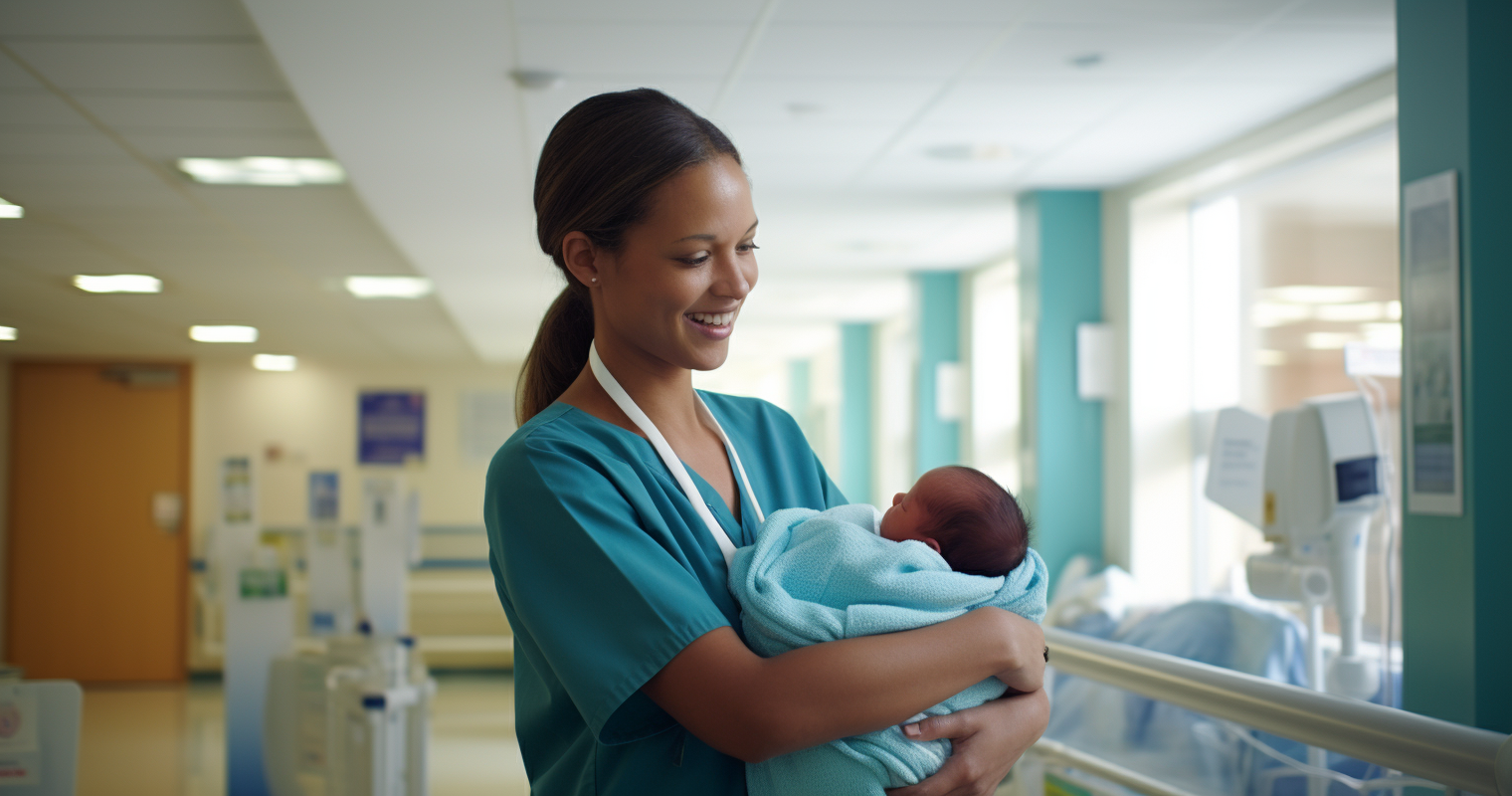
Barbados provides a well-rounded maternity care system that blends public and private healthcare options. The Queen Elizabeth Hospital, the island’s principal public facility, manages the majority of deliveries including those involving complications, while private options like Bayview Hospital draw many expatriates. Foreign nationals employed legally in Barbados may access public services through the National Insurance Scheme, though private care remains a popular alternative. Taking out comprehensive international health insurance before pregnancy is strongly advised.
| Item | Details |
|---|---|
| Main public maternity hospital | Queen Elizabeth Hospital (QEH), Bridgetown |
| Skilled birth attendance rate (as of 2022) | 98.2% of births attended by skilled personnel |
| Maternity leave entitlement (as of 2025) | 14 weeks paid leave (17 weeks for multiple births) after 12 months’ employment |
| Paternity leave entitlement (as of 2025) | Minimum 3 weeks for male employees under the new Family Leave Act |
| NIS Maternity Grant (as of current NIS rates) | BDS $1,280 lump sum for qualifying insured persons |
| Birth registration authority | Registration Department, Supreme Court Complex, Whitepark Road, St. Michael |
What maternity care options are available in Barbados?
The public health system, administered by the Ministry of Health and Wellness, extends coverage to citizens and lawful residents through a network of polyclinics, the Queen Elizabeth Hospital (QEH), and dedicated specialist facilities. For expectant mothers, this creates a clear care pathway that begins with routine antenatal appointments at a neighbourhood polyclinic and leads through to hospital delivery, with referral to specialists available whenever clinically necessary.
Among the services provided at polyclinics are maternal and child health programmes as well as family planning. These public health centres act as the initial point of contact for routine pregnancy check-ups, functioning similarly to a GP practice or community health centre familiar to many Europeans. Over 90% of Barbados’s population lives within a 15-minute drive of a public polyclinic or health clinic, which means that essential healthcare is within comfortable reach across virtually the entire island.
Pregnancy care in Barbados is thorough and widely accessible. Expectant women receive scheduled consultations with a doctor or midwife, alongside ultrasound scans and clinical assessments, with standards broadly in line with those found in Western nations. Antenatal attendance figures reflect this well: between 2011 and 2020, the proportion of pregnant individuals receiving antenatal care rose from 89% to 90%.
The majority of births take place in hospital or at a birthing clinic, though home births are gaining a degree of traction. The Queen Elizabeth Hospital and Bayview Hospital are both favoured venues for delivery. Unlike countries such as the Netherlands, where home births are a well-established mainstream option backed by robust midwifery infrastructure, home births in Barbados remain relatively uncommon and expats contemplating this route should discuss it in depth with a registered local midwife or obstetrician before committing.
While emergency treatment is available to everyone regardless of immigration status, full entitlement to public healthcare generally requires registration with the Barbados National Insurance Scheme. Expatriates in formal employment become eligible for public healthcare benefits once they have registered with the NIS and accumulated the necessary contributions. Those who are self-employed must arrange and manage their own NIS contributions independently.
Despite the good standard of care within the public system, many expats opt for private healthcare, drawn by shorter waiting times, more personalised attention, and access to the latest clinical innovations. Private maternity services are available at Bayview Hospital in St. Michael, situated just outside Bridgetown. IVF treatment is also offered within Barbados for those requiring assisted conception.
How much does it cost to give birth in Barbados?
Healthcare in Barbados is free at the point of use, financed through the government’s consolidated fund. This publicly funded model has contributed significantly to the development of the country’s human capital and strong health outcomes. In practical terms, eligible residents — including foreign nationals who are active NIS contributors — can attend antenatal appointments at polyclinics and deliver at the Queen Elizabeth Hospital without incurring direct charges.
Foreign residents can generally access the public healthcare system, though fees may apply to certain services. Expats who are not NIS contributors — for instance, those on short-stay visas or who have not yet satisfied the required contribution period — should anticipate charges for public services or rely on private insurance to cover costs. Before assuming entitlement to free care, it is advisable to confirm your eligibility directly with the National Insurance Office.
Private maternity care in Barbados carries a considerable price tag. Costs at private facilities are frequently comparable to those at private hospitals in North America. Expenses associated with a private delivery — covering obstetrician fees, hospital accommodation, and newborn assessments — can amount to several thousand Barbados dollars (BDS), with one BDS dollar equivalent to approximately US$0.50. For precise and current figures, contact Bayview Hospital or another private provider directly, as costs vary substantially depending on the nature of the birth, the length of stay, and whether any complications arise.
Expats should prioritise securing an insurance plan offering thorough coverage, encompassing hospitalisation, outpatient consultations, emergency treatment, maternity benefits, preventive care, and specialist access. Most international health insurance products that include maternity cover impose a waiting period — typically between 10 and 12 months — before maternity-related claims are accepted. It is essential to arrange suitable cover well ahead of becoming pregnant rather than seeking it after settling in Barbados. Policy terms differ considerably between providers, so reviewing the maternity provisions of any plan carefully is important.
NIS-registered employees may also be entitled to a financial benefit from the scheme. The Maternity Grant currently stands at BDS $1,280 (as per the current NIS schedule) and is claimable only by the woman who has given birth. The National Insurance Scheme pays ongoing maternity benefits to eligible insured employees, with the daily benefit rate calculated at 100% of the insured person’s average insurable weekly earnings divided by six. Consult the NIS website for current qualifying contribution thresholds.
What is the standard of maternity and neonatal care in Barbados?
Barbados maintains one of the strongest healthcare systems in the Caribbean region. Life expectancy is approximately 79 years, a figure consistent with many high-income countries and a clear indicator of the health system’s overall quality. In the specific context of maternity care, 98.2% of all births in 2022 were attended by skilled birth personnel — a rate that places Barbados on equal footing with well-resourced European health systems.
Both the Queen Elizabeth Hospital and Bayview Hospital are established delivery venues. The QEH is the island’s central public hospital and houses a dedicated maternity unit alongside neonatal intensive care facilities designed to support premature infants or newborns with complex medical needs, making it the most appropriate setting for higher-risk pregnancies.
Since 2024, Bayview Hospital has expanded its service portfolio to include enhanced diagnostics, maternity care, and minor surgical procedures. As the island’s largest private hospital, Bayview offers specialist services, though its clinical scope does not match the breadth of the Queen Elizabeth Hospital. In cases involving genuinely complex neonatal emergencies or highly specialised surgical interventions, transfer to a medical centre in the United States may sometimes be necessary, and patients should be prepared for this possibility in acute situations.
Healthcare services are reasonably spread across Barbados, though the greatest concentration of facilities is found in and around Bridgetown. Most residents live within 5–10 kilometres of a polyclinic, making primary care accessible for the majority. That said, specialist services remain centralised at the QEH and urban private facilities, which can create access difficulties for those residing in more remote areas of the island.
English is Barbados’s official language, which means communication with healthcare professionals is uncomplicated for English speakers. Non-English speakers may wish to arrange interpreter support in advance, as dedicated professional medical interpreter services could be limited. Planning for language needs ahead of time is sensible if English is not your first language.
The maternal mortality ratio in 2020 was estimated at 39.1 deaths per 100,000 live births, representing a 19.3% reduction from the estimated figure in 2000. While this rate remains higher than in certain high-income European or North American countries, the clear downward trajectory is encouraging, and the absolute numbers on this small island are comparatively low.
What should expats know about maternity rights and leave in Barbados?
Barbados has recently overhauled its family leave legislation, resulting in improved protections for both mothers and fathers. From 1 June 2025, female employees with a minimum of one year of continuous service are entitled to 14 weeks of paid maternity leave following a single birth, and 17 weeks in the case of multiple births. This represents a meaningful advance on the previous rules and compares favourably with maternity provisions across the wider Caribbean region.
Pregnant employees are now entitled to 14 weeks of maternity leave, which may be extended where fewer than six weeks are taken prior to confinement. Male employees receive a minimum of three weeks of paternity leave, which can be taken as a single continuous period or divided into two separate blocks. At least two of those weeks must be taken within the first three months following the child’s arrival.
Under the Act, all employees who can become pregnant are entitled to a minimum of 12 weeks of maternity leave, provided they have been in continuous employment with the same employer for at least 12 months. This period may be extended by up to six additional weeks where leave does not commence on the anticipated date or where the employee experiences illness connected to the pregnancy or birth. An employer is prohibited from dismissing or serving notice of dismissal on an employee between the date of delivery of the medical certificate and the end of the maternity leave period, and cannot require an employee to resign.
These entitlements extend to all legally employed workers in Barbados, including foreign nationals holding valid work permits. The 12-month continuous employment threshold must be met for eligibility. Employees on fixed-term contracts should note that the leave will not apply where the contract has expired, where the business has ceased to operate, or where the employee has been dismissed for serious default or gross negligence.
Self-employed foreign nationals face different conditions. To qualify for the maternity benefit as a self-employed individual, the person must have no fewer than 39 contributions paid or credited to their account across the four consecutive quarters ending with the quarter before the one in which the benefit would become payable. This means that newly arrived self-employed expats may not qualify immediately; registering with the NIS and beginning contributions at the earliest opportunity is therefore strongly advisable.
For full and current details on entitlements, reach out to the Barbados Ministry of Labour and Social Partnership Relations or the National Insurance Scheme (NIS) directly.
How do you register a birth in Barbados?
Every birth in Barbados must be formally recorded with the Registration Department of the Supreme Court, situated at the New Supreme Court Complex, Whitepark Road, St. Michael. The Registration Department can be reached by telephone at (246) 535-9700. Registration should be completed as promptly as possible after the birth.
- Obtain the hospital documentation. The Personal Child Health Record issued by the hospital, which contains details of the baby’s birth, must be presented to the Records Branch. This document is provided directly by the hospital or birthing clinic at the time of delivery.
- Gather your supporting documents. You will also need to bring a Marriage Certificate if the parents are married, together with the applicant’s Barbados Identification Card or another valid form of photographic identification. Unmarried parents should carry identification for both parties and be ready to supply details for the birth registration form.
- Visit the Registration Department in person. Attend the Registration Department at the New Supreme Court Complex, Whitepark Road, St. Michael. Applications submitted in person before 11:30am are typically processed and ready by 3pm on the same day.
- Complete and submit the application form. Application forms for birth certificates are available at the Registration Department. Alternatively, the application may be submitted by post to the Registration Department, accompanied by a Money Order covering the relevant processing fee.
- Pay the registration fee. The registration fee is BDS $1.00 for persons aged 60 years and over, and BDS $5.00 for all others (as per the most recently published schedule — confirm current fees directly with the Registration Department before your visit).
- Receive the birth certificate. Once registration is complete, a Barbados birth certificate will be issued. This document serves as the principal legal record of the child’s birth and identity in Barbados and will be needed for applying for a passport, enrolling at school, and numerous other official purposes.
- Register with your home country’s embassy or consulate. As an expat parent, you should additionally register your child’s birth with the appropriate embassy or consulate in Barbados, or the nearest one with relevant jurisdiction. This step is ordinarily required in order to obtain a passport for the child in your country of origin, to establish their citizenship, and to ensure their birth enters your home country’s civil registry. Requirements differ by nationality — contact your embassy promptly for precise documentation needs and any applicable fees.
The postal address for correspondence with the Registration Department is: Registrar of the Supreme Court, Registration Department, New Supreme Court Complex, Whitepark Road, St. Michael, Barbados, W.I. For the most current requirements and any relevant deadlines, consult the official Barbados government website or telephone the Registration Department directly.
What nationality will my child have if born in Barbados?
Birth on Barbadian soil does not automatically confer citizenship upon every child born there. Barbados operates principally on the principle of jus sanguinis — citizenship derived from parentage — rather than unconditional jus soli, which would grant citizenship purely on the basis of birthplace. A child born in Barbados to two non-Barbadian parents will therefore not automatically acquire Barbadian citizenship as a result of being born on the island.
Barbadian citizenship is generally available where at least one parent holds Barbadian citizenship at the time of the child’s birth, or where the child is born in Barbados and at least one parent is a Barbadian citizen or permanent resident. A parent’s birth certificate and evidence of that parent’s Barbadian citizenship are ordinarily required when applying for citizenship by descent. Children of foreign nationals with no Barbadian citizenship connection do not obtain Barbadian nationality at birth.
For expat parents, the most pressing practical step is to secure the child’s citizenship in your country of origin without delay. This typically involves registering the birth at your home country’s embassy or consulate in Barbados — or the nearest one with jurisdiction — and applying for the child’s passport. The process varies considerably depending on nationality: some countries permit birth registration at any embassy globally, while others specify particular documentary requirements or registration within a defined timeframe. Contact your relevant embassy or consulate as soon as possible after the birth.
Where one parent holds Barbadian citizenship, the child may have an entitlement to Barbadian citizenship by descent. This should be verified with the Barbados Immigration Department, which handles citizenship matters and can advise on the documentation needed. Nationality law can be intricate and may interact unexpectedly with the laws of your home country — for example, some countries prohibit dual nationality. Seeking guidance from a qualified legal professional and from both the Barbados Immigration Department and your home country’s embassy before drawing any conclusions about your child’s entitlements is strongly recommended.
What are the laws and attitudes around abortion in Barbados?
The legal position on abortion in Barbados has historically been highly restrictive. Abortion is unlawful in Barbados except where the mother’s life is in serious jeopardy. This places Barbados among the more restrictive jurisdictions worldwide — a significant departure from the approach taken in many countries where abortion is accessible on request or on broad social or health grounds up to a specified gestational threshold.
Expats accustomed to relatively open access to abortion services — as is the case across much of Europe, Canada, or parts of Latin America — should be aware that access in Barbados is very limited under the current legal framework (as of 2025). Procedures that fall outside the narrow grounds permitted by law are not available through the public or private health system in Barbados.
Given the sensitivity of this subject and the possibility that the legal position or its practical application may evolve, anyone seeking accurate and authoritative information should contact the Barbados Ministry of Health and Wellness directly, or seek advice from a qualified Barbadian legal professional. Individuals in need of reproductive health support may also find that their home country’s embassy or consulate can offer guidance on accessing services in another jurisdiction.
Frequently asked questions: having a baby in Barbados as an expat
Can I give birth at the Queen Elizabeth Hospital as a foreign national?
Foreign residents can generally access public healthcare, though certain services may attract charges. Working expats who are registered with the National Insurance Scheme and making regular contributions are ordinarily eligible for public maternity care. Those who are not NIS contributors should expect to pay for services or rely on private insurance. Confirm your eligibility with the QEH or the Ministry of Health well ahead of your due date.
How much does a private birth cost in Barbados?
Private healthcare in Barbados can be expensive, with costs frequently comparable to those at private facilities in North America. The total expense of a private delivery will depend on the type of birth, length of stay, obstetrician charges, and whether complications occur. Reach out to Bayview Hospital or your preferred private provider directly for current pricing. Ensure that your international health insurance policy includes maternity cover before you require it — most plans impose waiting periods of up to 12 months before maternity benefits become active.
What documents do I need to register my baby’s birth in Barbados?
The Personal Child Health Record issued by the hospital, which documents the particulars of the birth, must be presented to the Records Branch, along with a Marriage Certificate where the parents are married, and the applicant’s Barbados Identification Card or another valid form of identification. Attend in person at the Registration Department, New Supreme Court Complex, Whitepark Road, St. Michael. Consult the official Barbados government website for the most current requirements before your visit.
Will my child be a Barbadian citizen if born there?
Not automatically. Barbados applies jus sanguinis (citizenship by parentage) as its primary principle. A child born in Barbados to two foreign parents does not automatically acquire Barbadian citizenship simply by virtue of birth on the island. Citizenship is generally available where at least one parent holds Barbadian citizenship. Seek advice from the Barbados Immigration Department and a qualified legal professional for guidance tailored to your individual circumstances.
How long is maternity leave in Barbados?
From 1 June 2025, female employees with at least one year of continuous service are entitled to 14 weeks of paid maternity leave following a single birth, and 17 weeks in the case of multiple births. These rights apply to all legally employed workers, including foreign nationals holding valid work permits. Self-employed individuals access maternity benefits through the National Insurance Scheme, subject to satisfying contribution thresholds. Contact the NIS or the Ministry of Labour for current eligibility criteria.
Is there a paternity leave entitlement in Barbados?
Male employees are entitled to a minimum of three weeks of paternity leave, which may be taken as one continuous block or divided into two parts. At least two of those weeks must be used within the first three months of the child’s birth. This entitlement was established under Barbados’s new Family Leave Act. For current details, contact the Ministry of Labour and Social Partnership Relations.
Do I need to register my baby’s birth with my home country’s embassy?
Yes. Alongside registering the birth with the Barbados Registration Department, expat parents must also register with their home country’s embassy or consulate. This is the mechanism by which your child’s birth enters your home country’s civil registry and is generally required in order to obtain a passport for the newborn. Requirements, timelines, and fees differ by nationality — contact your embassy as promptly as possible following the birth.
What NIS maternity grant can I claim?
The Maternity Grant is currently set at BDS $1,280 and may only be claimed by the woman who has given birth. The National Insurance Scheme provides ongoing maternity benefit payments to eligible insured employees, with the daily rate calculated at 100% of average insurable weekly earnings. Visit the NIS website for current qualifying contribution requirements and claim procedures.
Latest: Expat Focus International Healthcare Update August 2026 →