

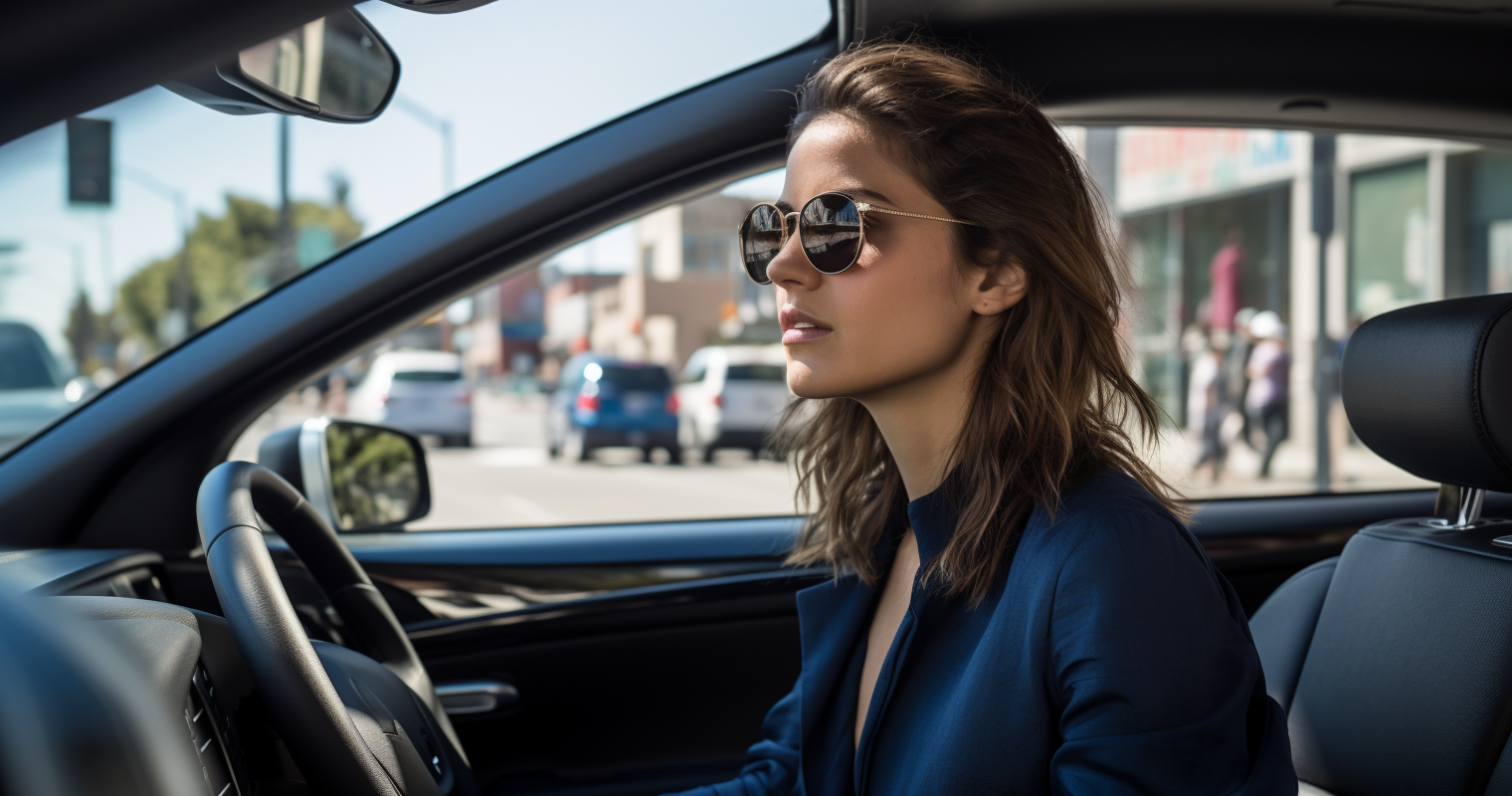
Getting behind the wheel in Brazil means crossing a vast and varied country where traffic flows on the right, an effectively zero-tolerance alcohol policy governs drink-driving, and road quality ranges from smooth toll motorways to rutted dirt tracks. Visitors may drive on a foreign licence for up to 180 days from the date of arrival; after that, residents are required to exchange it for a Brazilian CNH through their state DETRAN office.
| Item | Details |
|---|---|
| Side of the road | Right-hand traffic |
| Speed limits (as of 2025) | 40–60 km/h urban; 80–100 km/h rural; up to 120 km/h on motorways |
| Drink-driving limit | Effectively zero (0.2 g/l tolerance only for residual substances) |
| Foreign licence validity | Up to 180 days from entry date |
| Licence conversion process | Apply via state DETRAN; typically takes a few weeks to several months |
| Emergency numbers | 190 (police), 192 (medical), 193 (fire) |
Is Brazil safe to drive in?
Road safety remains a serious issue throughout Brazil. Traffic collisions rank among the top three causes of death for people aged between 5 and 39, and are the single leading cause of fatality among children aged 5 to 14. Several bodies are actively working to address this — among them the National Traffic Secretariat (SENATRAN), the Federal Highway Police (PRF), and international organisations such as PAHO/WHO. A collaborative initiative to strengthen road data systems and reduce traffic injuries and deaths was launched in 2024, uniting PAHO, the PRF, the National Department of Transport Infrastructure (DNIT), SENATRAN, and the University of Brasília.
The standard of road infrastructure differs dramatically from one part of the country to another. Major highways and toll roads are generally well-maintained, regularly patrolled, and served by roadside assistance. Popular routes such as those connecting Rio de Janeiro and São Paulo, or running along Brazil’s northeastern coastline, are driven by tourists and residents alike without major difficulties. By contrast, many rural and coastal routes are unsealed. The Maraú Peninsula in Bahia is a well-known example: its principal access road is unpaved, pot-holed, and turns to mud during the wet season. Similar challenges arise in parts of the Amazon basin and the interior of Minas Gerais, where slower speeds, careful planning, and sometimes a 4×4 vehicle are necessary.
Compared with driving in Western Europe, where surfaces and driver behaviour tend to be more uniform and predictable, Brazil demands a more defensive mindset. City traffic can be chaotic and unpredictable; it pays to plan your route to sidestep rush-hour congestion, stay alert for speed bumps, busy intersections, and motorcyclists weaving through traffic, keep valuables hidden from view, and remain composed — reacting aggressively to other drivers can quickly escalate tensions.
While the majority of main state roads are in reasonable condition, potholes and stray animals are significant accident hazards away from the principal routes, making night driving inadvisable where it can be avoided. Travelling during or in the aftermath of the rainy season also increases risk. Before setting out on any long journey, consult the latest safety guidance from the National Traffic Secretariat (SENATRAN) and the Federal Highway Police (PRF).
What side of the road do you drive on in Brazil?
Traffic in Brazil moves on the right-hand side of the road, as it does throughout most of continental Europe, the Americas, and China. Drivers arriving from countries where vehicles keep to the left — such as the United Kingdom, Australia, Japan, or South Africa — will need a conscious adjustment period before they can drive confidently in Brazilian conditions.
The greatest risk for drivers making this switch tends to arise at junctions, roundabouts, and when pulling out from side streets or car parks — situations where the instinct to revert to familiar habits is strongest. Exercise particular caution at quiet intersections, especially during the initial days of driving. It is well worth spending time in a low-traffic area to acclimatise before attempting busy city streets or high-speed motorways.
Drivers holding licences issued in left-hand traffic countries may also be required to pass a practical test for right-hand traffic as part of the process of converting their foreign licence to a Brazilian CNH. It is advisable to confirm the current requirements directly with your local state DETRAN office before applying.
What are the main driving rules in Brazil?
Traffic law in Brazil is set out in the Código de Trânsito Brasileiro (CTB), the national traffic code, which is overseen by the National Traffic Council (CONTRAN) and enforced by SENATRAN, the PRF, and state and municipal police forces. While many of the underlying principles will be familiar to drivers from other countries, several rules deserve particular attention from new arrivals.
Speed limits
Within towns and cities, speed limits generally fall between 40 and 60 km/h. On rural roads, limits typically range from 80 to 100 km/h, while motorways may permit speeds of up to 120 km/h. Specific limits vary by state. All speed signs use kilometres per hour. Speed cameras are widespread across Brazil — deployed along highways outside urban areas as well as within cities, where they frequently work in conjunction with road humps (lombadas) that physically compel drivers to reduce speed. Posted limits can change frequently, particularly in tunnels and built-up areas, so always observe the signs.
Drink-driving (Lei Seca)
Brazil operates what is commonly called the “Lei Seca” — a dry law that sets an almost zero alcohol tolerance for drivers. A blood alcohol level of 0.2 g/l is permitted purely to account for residual traces from alcoholic mouthwashes or certain medications. In practical terms, any alcohol consumed before driving constitutes a criminal offence. This stands in sharp contrast to countries that apply a limit of 0.05% or 0.08% BAC. Penalties are scaled according to the measured blood alcohol level: higher readings attract larger fines, and in some circumstances a driver may face licence suspension. Where an accident, injury, or death results, a prison sentence is possible.
Mobile phones
Using a handheld mobile phone while driving is prohibited in Brazil. This applies even when stationary in traffic — simply holding the phone is sufficient grounds for a fine. Hands-free systems operating via Bluetooth are permitted.
Seatbelts and child safety
Wearing a seatbelt is a legal requirement for both the driver and all passengers whenever the vehicle is in motion. Children under ten years of age may not travel in the front seat. Infants under one year must be secured in a rear-facing child seat; children aged one to four must use a forward-facing seat; and those aged four to seven must travel in an appropriate booster cushion.
Headlights on highways
Headlights must be switched on during daylight hours when driving on highways. This requirement catches out some new arrivals, particularly those accustomed to countries where daytime running lights are only compulsory during winter months.
Red lights at night
Given the elevated risk of crime at traffic lights in large cities, it is generally tolerated for drivers to treat red lights as give-way signals after dark rather than coming to a full stop. This informal custom is widely observed in São Paulo, Rio de Janeiro, and other major urban centres. Drivers should still slow down and check carefully before proceeding, rather than accelerating through the junction. Always seek local advice before adopting this practice in an unfamiliar area.
Right-of-way and overtaking signals
When entering a roundabout, give way to vehicles already circulating within it. In Brazil, a driver wishing to indicate to vehicles behind that overtaking is unsafe will flash their left indicator — a signal that it is not clear to pass. Oncoming vehicles flashing their headlights are typically warning of a hazard ahead, such as an animal on the road or a police presence.
For the full and current text of traffic regulations and penalty schedules, consult the SENATRAN website or your state’s DETRAN office.
What equipment are you legally required to carry in your car in Brazil?
Brazilian traffic legislation requires drivers to keep a specified set of safety items in their vehicle at all times. Fire extinguishers and first aid kits are among the mandatory items. The full list of required equipment typically includes:
- A fire extinguisher (extinguidor de incêndio) — must be within its inspection date
- A first aid kit (kit de primeiros socorros)
- A warning triangle (triângulo de segurança) for use in the event of a breakdown or accident
- A spare tyre (estepe) in serviceable condition
- Vehicle registration documents (CRLV — Certificado de Registro e Licenciamento de Veículo)
- Valid vehicle insurance documentation
Unlike France, where drivers are legally obliged to carry a breathalyser (even though penalties for non-compliance have been suspended), Brazil imposes no such requirement. That said, police are entitled to administer breathalyser tests when a driver’s behaviour gives cause for concern, and they may request documents, conduct breathalyser tests, and search a vehicle without a warrant.
Visitors and foreign-registered vehicles are subject to the same equipment requirements as locally registered cars. Always keep your passport, International Driving Permit, home licence, vehicle registration, and insurance documents with you when driving. Requirements and enforcement can change; verify the current list with SENATRAN or your state DETRAN before travelling.
What are the most important road signs in Brazil?
Brazilian road signs conform to international standards, broadly following the framework of the 1968 Vienna Convention on Road Traffic, to which Brazil became a contracting party having ratified it in 1980. The shapes, colours, and general meanings — triangles for hazard warnings, circles for obligations and prohibitions, rectangles for informational signs — will be broadly recognisable to anyone familiar with European or South American road systems.
There are, however, several local features worth knowing:
- Stop signs read “PARE” — stop signs in Brazil display the Portuguese word “Pare” rather than “Stop”. Be sure to recognise this word on sight.
- Speed bumps (lombadas / quebra-moles) — speed bumps are ubiquitous in Brazilian towns and villages and may appear with little or no advance warning signage. Stay alert, particularly in built-up areas.
- Pedágio signs — these indicate that a toll booth is approaching. Toll roads operate in several states including São Paulo, Bahia, Paraná, Rio de Janeiro, Rio Grande do Sul, Minas Gerais, and Santa Catarina.
- Rodízio restriction signs — São Paulo operates a vehicle rotation restriction scheme (rodízio) that bars certain number plates from the city centre at peak times on weekdays. Signs and road markings identify these restricted zones.
Traffic lights follow the standard international sequence: red (stop), amber (prepare to stop or prepare to move), and green (go). Signals are broadly standard in design, though as described above, the informal practice of treating red lights as give-way junctions at night is widely observed in major cities for safety reasons.
All road signs are written in Portuguese. Familiarising yourself with key terms before driving is strongly recommended. A useful starting vocabulary: Pare (Stop), Devagar (Slow), Desvio (Diversion), Pedágio (Toll), Lombada / Quebra-mole (Speed bump), Semáforo (Traffic light), Cruzamento (Crossroads).
What must you do if you have a road accident in Brazil?
If you are involved in an accident, you are required to stay at the scene, make the area safe, and contact the emergency services. The main emergency numbers are 190 for the police and 192 for medical assistance. Any accident in which someone is injured must be reported to the police. Where no injuries occur and the damage is minor, drivers may sometimes resolve matters directly between themselves.
Save the following emergency numbers in your phone before driving in Brazil:
| Service | Number |
|---|---|
| Police (Polícia Militar) | 190 |
| Medical emergency (SAMU) | 192 |
| Fire brigade (Bombeiros) | 193 |
| Federal Highway Police (PRF) — motorways | 191 |
The Polícia Rodoviária Federal (PRF) has jurisdiction over federal highways. State and municipal police cover local roads. If your accident happens on a federal highway, call 191 to reach the PRF directly.
The recommended procedure following an accident in Brazil (as of 2025) is:
- Stop your vehicle immediately and remain at the scene. Leaving the scene of an accident involving injury is a criminal offence.
- Activate your hazard lights and, where it is safe to do so, position your warning triangle behind the vehicle to alert approaching traffic.
- Call 192 (SAMU) if anyone has been injured. Contact the police on 190, or 191 if the accident is on a federal highway.
- Do not move the vehicles if injuries have occurred, unless doing so is necessary to allow emergency services access.
- Swap details with the other driver: full name, CPF (taxpayer ID) or passport number, address, vehicle registration plate, and insurance information.
- Photograph the scene thoroughly — vehicle positions, damage sustained, and any relevant road markings or signs.
- Obtain a police report (boletim de ocorrência, or BO) — this is required for insurance purposes and for any accident involving injury. In some states a BO can be submitted online via the state police portal when no injuries are involved.
- Notify your insurer as promptly as possible and provide the BO reference number.
Roadside assistance is available through motor insurance policies and from vehicle rental companies. Familiarise yourself with your policy terms before setting out and always have your insurer’s contact number to hand.
Where can you find up-to-date road traffic information for Brazil?
Keeping track of traffic conditions in Brazil — especially in large conurbations such as São Paulo and Rio de Janeiro — can make a meaningful difference both to journey times and personal safety. Several platforms and tools are widely relied upon.
- Waze — exceptionally popular in Brazil and widely regarded as the primary tool for real-time traffic updates, speed camera alerts, roadworks notifications, and accident reports. Brazil’s driver community is highly engaged on Waze, making its live data particularly reliable in urban areas.
- Google Maps — also extensively used and draws on live traffic data across Brazilian cities and highways.
- CET (Companhia de Engenharia de Tráfego) — São Paulo’s municipal traffic management authority operates a real-time information portal at cetsp.com.br, including live camera feeds, incident reports, and a traffic conditions map for the greater São Paulo area.
- Rádio Trânsito / CBN and Rádio Globo — local FM radio stations in major cities broadcast regular traffic updates, especially during morning and evening peak hours.
- PRF (Polícia Rodoviária Federal) — the Federal Highway Police publishes road condition updates and incident bulletins on its website at prf.gov.br and via its social media channels, covering federal highways (BR routes).
- DNIT (Departamento Nacional de Infraestrutura de Transportes) — provides information on infrastructure and roadworks on federal roads at gov.br/dnit.
São Paulo is notorious for its severe congestion, with peak-hour delays capable of stretching from early morning through to late evening. Checking live traffic conditions before any urban journey in a major city is strongly advisable. Always confirm that websites and apps are still current, as URLs and services are subject to change.
How does parking work in Brazil?
Parking in Brazil is regulated at the municipal level, so rules and systems differ considerably between cities. Understanding how paid parking and residential permit schemes operate in your area is important, as arrangements vary significantly from one municipality to the next.
Paid on-street parking (Zona Azul / Rotativo) — Many Brazilian cities operate regulated on-street parking, known as Zona Azul in São Paulo or Estacionamento Rotativo elsewhere. In São Paulo the scheme is run by CET-SP. Drivers purchase paper parking vouchers (talões) or pay through an official app such as the CET-SP app for their allotted time. Arrangements in other cities work differently; in Rio de Janeiro, for example, the system is managed by the municipal transport authority. Look carefully for kerb markings and signs indicating whether a space is regulated and for how long parking is permitted. As of 2025, check your local municipal transport authority’s website for current rates, as these are revised regularly.
Private car parks (estacionamentos) — Attended private car parks are found throughout Brazilian cities and shopping centres and generally offer a safer and more convenient option than leaving a vehicle on the street. They are typically staffed and provide a greater degree of security. Charges vary widely depending on location and duration; check the entry signage for current rates.
Residential parking permits — Some municipalities provide resident parking permits for particular streets or zones, administered by the local transport authority (secretaria de transportes). Contact your local municipal transport authority to find out whether a scheme exists in your neighbourhood and how to apply.
Disabled parking (vaga para deficientes) — Designated disabled parking bays are marked with the international accessibility symbol. To use these spaces lawfully, foreign nationals resident in Brazil must hold a Brazilian disabled parking permit issued by their municipality. Foreign disabled parking permits are not formally recognised in Brazil; residents should apply to their local municipal authority (prefeitura) or DETRAN for the appropriate documentation. Procedures and the medical evidence required vary by state, so contact your local authority for current requirements. Parking in a disabled bay without a valid permit carries significant fines and demerit points under the CTB (as of 2025).
Can you drive in Brazil on a foreign or international licence?
A driver holding a licence issued in another country may drive in Brazil provided that country is a member of the Vienna Convention on Road Traffic or a signatory to an equivalent bilateral agreement with Brazil. Foreign nationals who have reached the age of 18 are permitted to drive — as long as their licence remains valid — for up to 180 days from the date they enter Brazilian territory. A passport must be carried alongside the foreign licence at all times.
Carrying an International Driving Permit (IDP) together with your national licence is strongly recommended — an IDP may remove the need for an official Portuguese translation at the local DETRAN office. If your home licence is not written in the Roman alphabet (for instance, licences in Arabic, Chinese, or Cyrillic script), an IDP or a sworn Portuguese translation is essential.
Once 180 days have elapsed since entry into Brazil, a foreign driver must apply for a Brazilian driving licence. Applications will not be accepted if the applicant’s foreign licence has already expired.
The process for converting a foreign licence to a Brazilian CNH (Carteira Nacional de Habilitação) is handled by the state DETRAN office. The general procedure is as follows:
- Confirm eligibility — establish whether you qualify for a direct conversion or must complete the full Brazilian licensing process from the start. If your licence was issued by a country that has signed the Vienna Convention or holds a reciprocity agreement with Brazil, a direct conversion may be possible. If your country has no such agreement with Brazil, you will need to go through the complete licensing process.
- Gather documents — you will need a valid passport, proof of legal residence in Brazil, a CPF (taxpayer identification number), and a valid foreign licence. If the licence is not written in Portuguese, an official sworn translation by a certified translator is required. You will also need your CRNM (residency card) and proof of address.
- Visit your state DETRAN — contact the DETRAN office in your state of residence. They will supply the exact list of required documents and instructions applicable to your situation.
- Complete medical and psychological examinations — applicants must undergo both a medical examination and a psychological evaluation at clinics authorised by DETRAN.
- Sit written and practical tests if required — applicants whose licence was issued in a country with a reciprocity agreement with Brazil may be exempt from practical testing. Otherwise, a written examination on traffic rules and a driving test will be required.
- Receive your CNH — once all requirements have been satisfied, DETRAN will issue the Carteira Nacional de Habilitação (CNH), which is valid throughout Brazil and must be renewed every five years.
Processing times range from a few weeks to several months depending on your state, the DETRAN workload, and whether you are converting an existing licence or starting the process from scratch. Always confirm the specific requirements, costs, and expected timelines directly with your state traffic office, as procedures differ across Brazil. If starting from scratch, budget approximately R$3,000 for the full process (as of 2025), with some regional variation. A conversion typically costs less — approximately R$397.87 (as of 2025), though this figure should be verified locally before proceeding.
The national licensing authority is SENATRAN, and the state DETRAN websites (accessible via the SENATRAN portal) provide state-specific guidance. The entire process is conducted in Portuguese, so arranging the support of a Portuguese speaker or an immigration legal specialist is advisable if you are not yet fluent in the language.
Frequently Asked Questions About Driving in Brazil
Do I need insurance to drive in Brazil?
Third-party insurance is compulsory for all drivers in Brazil. Every vehicle registered in the country is also covered by the DPVAT (Danos Pessoais Causados por Veículos Automotores de Via Terrestre), a mandatory personal injury insurance scheme funded through annual vehicle licensing fees. If you are renting a vehicle, basic third-party cover is usually included in the rental agreement, but it is worth clarifying what additional options are available. If you acquire a vehicle as a resident, take out comprehensive insurance (seguro total) through a licensed Brazilian insurer and ensure your policy is current before each journey.
How do toll roads work in Brazil?
Brazil has toll roads particularly in the states of São Paulo, Bahia, Paraná, Rio de Janeiro, Rio Grande do Sul, Minas Gerais, and Santa Catarina. The toll charge for a given route is usually displayed on signs approaching the toll plaza. Payment is frequently cash-only, so it is advisable to keep small change in the car at all times. Many modern toll plazas also accept card payments, and some operate an electronic tag system (ConectCar or Sem Parar). Drivers who regularly use toll roads will find that registering for an electronic tag account saves considerable time and is widely adopted by residents.
What are the penalties for drink-driving in Brazil?
Drivers found to exceed the permitted blood alcohol level face fines that increase in proportion to the level recorded. In more serious cases, licence suspension may follow, and where an accident, injury, or death has been caused, imprisonment is possible. Breaches of the “Lei Seca” carry severe consequences including immediate licence revocation and substantial financial penalties. The safest course of action is simply to avoid any alcohol before driving. Refer to the SENATRAN website for current penalty scales, as fines are periodically revised.
Are there rules about driving with children in Brazil?
Children under ten years of age are not permitted to travel in the front seat of a car. Infants under one year must be secured in a rear-facing child safety seat; children aged one to four must use a forward-facing seat; and children aged four to seven must travel in a suitable booster cushion. Brazilian law requires all children up to the age of 7½ to use an appropriate child restraint. These rules are actively enforced, and fines along with demerit points apply to violations. Child car seats can be purchased or hired from car rental companies in Brazil.
What is the Rodízio system in São Paulo, and does it apply to me?
The Rodízio Municipal is a vehicle circulation restriction scheme covering São Paulo’s expanded central area on weekdays. It prevents vehicles with specified licence plate digits from entering or moving through designated zones during peak hours — typically 07:00–10:00 and 17:00–20:00. The restricted digit rotates from day to day. Visitors driving rental cars and foreign-plated vehicles are generally subject to the same rules as locally registered vehicles. Check the current rotation schedule and zone boundaries on the CET-SP website before driving in central São Paulo on a weekday.
Is it safe to drive at night in Brazil?
Night driving over long distances or on overland routes is best avoided, and driving into favelas or informal settlements should never be attempted. Keep your doors locked after dark to reduce the risk of carjacking and stay alert for vehicles that may attempt to box you in at traffic lights. As noted in the driving rules section, it is widely practised in major cities to treat red lights as give-way junctions at night for personal safety reasons — always slow down and check thoroughly before proceeding, however. Where possible, plan long-distance journeys so that you reach your destination before nightfall.
Can I use a sat-nav or GPS app while driving?
Yes — GPS navigation devices and smartphone apps mounted in a secure dashboard or windscreen holder are lawful and in common use throughout Brazil. However, holding a phone in your hand to view a map while driving is subject to the same prohibition as using it for calls. Fit your device in its mount and programme your destination before you move off. Waze and Google Maps are the navigation tools of choice for most drivers in Brazil and offer reliable real-time traffic information.
What is the minimum driving age in Brazil?
The minimum age to hold a driving licence in Brazil is 18. Brazil does not recognise foreign driving permits held by anyone under the age of 18, nor does it recognise foreign permits for commercial vehicle categories C, D, and E for drivers under 21. If you plan to hire a car, be aware that rental companies routinely set their own minimum age threshold of 21 or sometimes 23, regardless of the statutory minimum.