
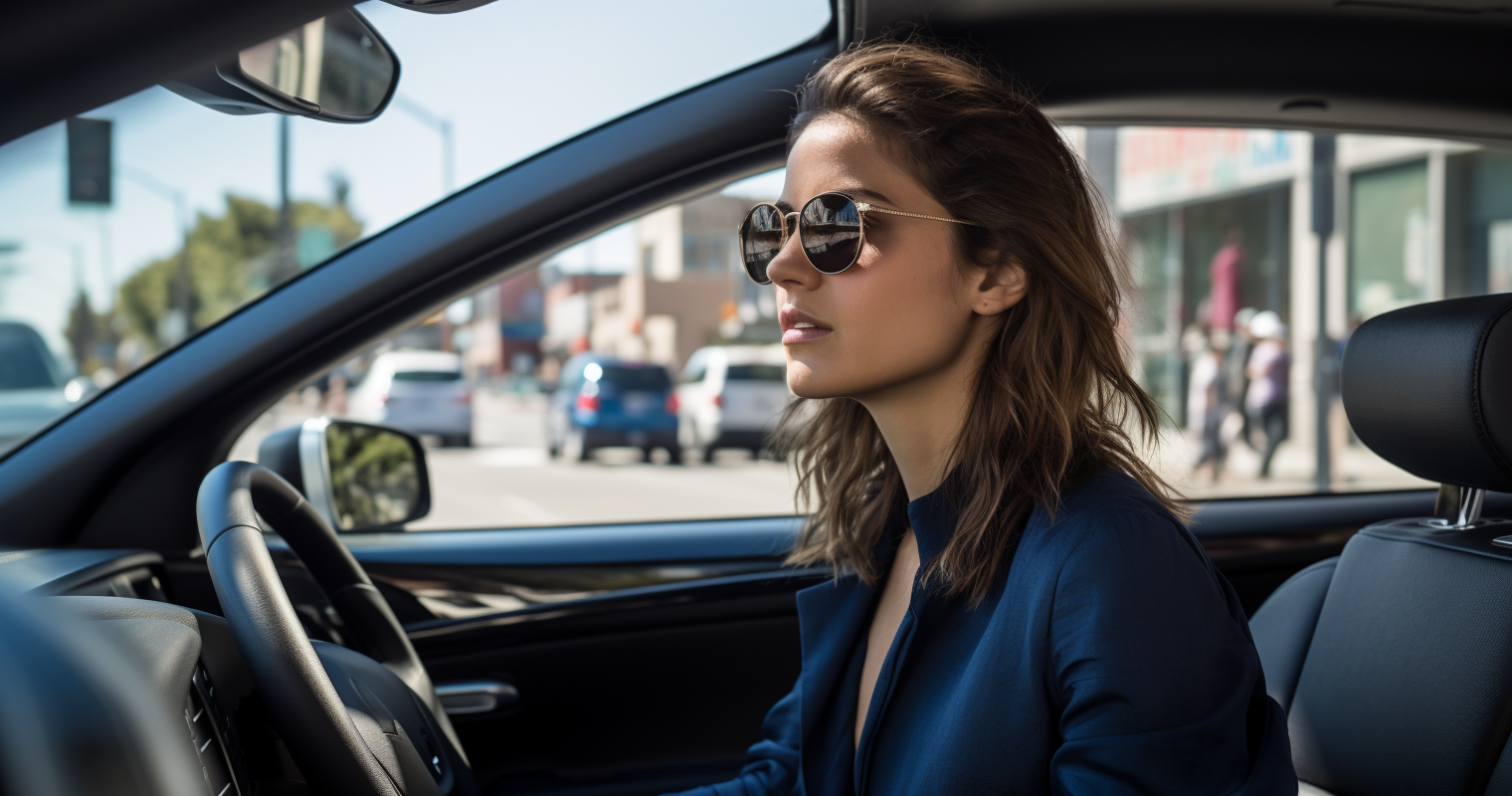
Navigating Brunei’s roads is a largely pleasant experience, characterised by well-kept road surfaces, left-side traffic, and drivers who tend to be considerate toward others. A foreign licence remains valid for up to 90 days; after that point, you are required to convert it to a locally issued Brunei licence through the Land Transport Department. Speed cameras, routine police checkpoints, and rigorous enforcement of traffic legislation mean that compliance with the rules is non-negotiable from the moment you set off.
| Item | Details |
|---|---|
| Side of the road | Left-hand traffic; overtake on the right |
| Speed limits (as of 2024) | 50 km/h urban; 65 km/h main roads; 100 km/h motorway |
| Foreign licence validity | Up to 90 days; thereafter a Brunei licence is required |
| Blood alcohol limit (as of 2024) | 80 mg per 100 ml of blood |
| Mobile phone penalty (as of 2024) | BND 1,000 fine and/or 6 months’ imprisonment (first offence) |
| Road fatality rate (as of 2021) | 9.2 per 100,000 population |
Is Brunei safe to drive in?
On the whole, driving in Brunei is a safe and uncomplicated experience, though it is important to acquaint yourself with local road rules and safety standards before taking the wheel. The government body with overall responsibility for road safety is the Ministry of Transport and Infocommunications.
Road safety nonetheless represents a meaningful public health concern. In 2021, road crash fatalities stood at an estimated 9.2 deaths per 100,000 population, placing it among the tenth leading causes of death in the country. Brunei has articulated clear targets in its Road Safety Strategic Plan 2025 (2020), including an ultimate aspiration of zero fatalities alongside measurable reductions in the most dangerous categories of crash.
Brunei’s road network is extensive and well maintained, broadly comparable to standards found in many Western nations. That said, rural roads can develop potholes and surface damage — a problem that worsens during the rainy season. In contrast to continental Europe, where long motorway corridors dominate, Brunei’s road layout is more compact, with a short motorway section around Bandar Seri Begawan supplemented by a broader network of main and secondary roads.
Safety ratings data indicates that at least 46% of Brunei’s road infrastructure meets a 3-star or higher standard for vehicle occupants, yet only around 3% reaches that threshold for motorcyclists — a disparity that underscores the particular vulnerability of two-wheeled road users. Motorcyclists are strongly advised to exercise heightened vigilance at all times.
Local drivers in Brunei generally have a reputation for being patient and respectful on the road. Unnecessary horn use is uncommon, and many drivers will voluntarily yield to others. Nevertheless, full stops at red lights and pedestrian crossings are not always observed, and seatbelt use or the fitting of child restraints is not universal. Speeding also occurs with some regularity.
Driver fatigue is widely recognised as one of the most significant contributors to road incidents in Brunei, particularly over long distances during festive periods. All road users are strongly encouraged to take regular rest breaks and to remain alert throughout any journey.
The Royal Brunei Police Force conducts regular checkpoints and traffic stops, with particular frequency after dark. These operations typically involve checks on licences, vehicle registration, and sobriety, as well as searches for contraband. It is essential to keep your full documentation accessible whenever you drive.
What side of the road do you drive on in Brunei?
In Brunei, all drivers must keep to the left side of the road and overtake on the right. This convention is shared with countries such as the United Kingdom, Malaysia, Australia, Japan, and Singapore, so drivers arriving from those nations will feel immediately at home with the basic orientation.
Drivers from countries where traffic flows on the right will need to recalibrate their instincts, particularly at roundabouts and junctions. It is worth ensuring you feel genuinely confident driving on the left before venturing onto Brunei’s roads. The adjustment can be especially confusing in low-traffic environments — quiet rural roads in the early morning, for instance — where there are fewer vehicles to provide a visual reference for the correct lane.
Common challenges for those switching sides include exiting driveways and car parks, tackling multi-lane roundabouts correctly, and the tendency to look the wrong way before turning. Exercise additional care at intersections and when entering roundabouts — even if you believe you have priority, confirm that other vehicles are yielding before proceeding.
Parking must always be on the left side of the road, aligned with the direction of traffic. Parking facing against the flow of traffic is a specific traffic offence in Brunei and is subject to a fine.
What are the main driving rules in Brunei?
Road traffic in Brunei is governed by the Road Traffic Act (Chapter 68), enforced by the Royal Brunei Police Force and administered through the Land Transport Department (JPD), which falls under the Ministry of Transport and Infocommunications. It is always advisable to consult official sources directly, as penalties and regulations can be amended by legislation.
Speed limits (as of 2024)
All speed limits are expressed in kilometres per hour. Within built-up areas, the limit is 50 km/h; on main roads it rises to 65 km/h; and on the motorway, the maximum is 100 km/h. Speed cameras are deployed throughout the country, making it essential to observe posted limits at all times to avoid penalties. First-time speeding offences may attract fines of up to BND 2,000, while repeat violations can lead to imprisonment. Always heed posted signs, as local limits may differ from the general thresholds.
Right of way
Drivers are obliged to yield to pedestrians at zebra crossings, and must give way to emergency vehicles displaying active sirens and flashing lights. Left turns at a red traffic light are generally permitted unless a sign at the junction explicitly prohibits this — a rule that may catch drivers accustomed to systems where any turn on red is forbidden. Indicators are required whenever turning or changing lanes.
Mobile phone use
Using a mobile phone while driving is prohibited in Brunei. A first offence attracts a fine of BND 1,000 and possible imprisonment of up to six months. A second offence escalates to a BND 2,000 fine and up to twelve months’ imprisonment. Crucially, even hands-free use is illegal under Brunei law — a stricter position than that taken in many other jurisdictions.
Drink-driving
Brunei sets the blood alcohol limit at 80 milligrams per 100 millilitres of blood (as of 2024). This matches the thresholds applied in the United Kingdom and Australia, though it is notably more permissive than the 50 mg/100 ml standard common across continental Europe. A first conviction for drink-driving carries a penalty of BND 10,000 and two years’ imprisonment; a second or subsequent conviction can result in a BND 20,000 fine and up to four years’ imprisonment. Bear in mind that alcohol sales are heavily restricted in Brunei; always verify current regulations with the relevant authorities.
Seatbelts and children
Brunei operates a mandatory seatbelt law that applies to all vehicle occupants at all times. Children must be secured in an appropriately rated child restraint. Before travelling with young children, confirm current age and weight thresholds for child seats with the Land Transport Department, as specific requirements may be subject to change.
Other notable rules
- Do not leave your engine running while the vehicle is stationary and unattended.
- Tinted windows are not permitted on private vehicles. This privilege is reserved exclusively for the Royal Family; drivers found to have illegally tinted glass face fines and a mandatory requirement to remove the tinting.
- Headlights must be used during the day to ensure adequate visibility for all road users.
- Overtaking is only lawful on the right-hand side.
- When driving in Bandar Seri Begawan or elsewhere in Brunei, police officers on motorcycles may direct you to pull fully off the road to allow the Sultan or members of the Royal Family’s official convoy to pass unimpeded.
What equipment are you legally required to carry in your car in Brunei?
Brunei law requires all cars to be equipped with a fire extinguisher, a first aid kit, and a warning triangle. Failure to carry any of these items can lead to fines. These requirements are more comprehensive than those in numerous other countries — the United States, for instance, imposes no federal mandate for any in-car safety equipment — making Brunei’s standard a notably thorough one.
You are additionally required to carry an emergency stop sign and a reflective jacket. Should your vehicle break down, you may only exit it after putting on the reflective jacket. A first aid kit must be available in the event of a road incident. Unlike France, where drivers must carry a breathalyser as a legal requirement, Brunei imposes no such obligation — though given the country’s strict drink-driving penalties, carrying one voluntarily may be a wise precaution.
While not a legal requirement, it is strongly advisable to keep a spare tyre, a jack, and a tyre iron in your vehicle, particularly if you intend to drive in more remote or rural areas where roadside assistance could be some distance away.
At all times while driving, you must have your identification documents (driving licence, International Driving Permit, and passport), vehicle registration papers, and proof of insurance within the vehicle. Third-party insurance is a legal requirement for all vehicles on Brunei’s public roads. Always verify the current requirements with the Land Transport Department, as regulations can be updated.
What are the most important road signs in Brunei?
Brunei’s road sign system draws heavily on the conventions used in Singapore and, to a degree, the United Kingdom. A number of adaptations have been introduced over the years to reflect local road conditions. Drivers familiar with Southeast Asian or Commonwealth signage will find most shapes and colour conventions recognisable, although some text appears in Malay.
The majority of road signs in Brunei are written in Malay, the country’s official and national language, using both Jawi (Arabic script) and Latin script. English does appear on signage in prominent public locations such as tourist sites, airports, and immigration crossings. Drivers unfamiliar with the Malay language should take time to study sign meanings thoroughly before getting behind the wheel.
Brunei’s sign colour system follows a logical international framework: red denotes warning and prohibitory signs; white is used for regulatory and guidance purposes; blue conveys mandatory road information; green indicates direction and distance; orange marks construction zones; and brown identifies off-road amenities.
Sign shapes are equally consistent: mandatory signs are typically circular with a white border and a white symbol set against a blue background, indicating actions drivers must take — such as keeping left — or roads restricted to particular vehicle types. Warning signs alert drivers to potential hazards or unusual conditions ahead and are generally triangular with a red border. Informational signs describe road conditions or features ahead and are usually rectangular, displayed in white or blue.
Traffic lights operate on the standard red, yellow, and green sequence. One rule worth emphasising is that left turns at a red light are generally allowed unless a sign explicitly prohibits them at a given junction — this differs from many European systems where such a manoeuvre is never permitted without a dedicated filter arrow. Always check supplementary signs at individual junctions carefully.
For a comprehensive and authoritative reference on Brunei’s road sign system, consult the Land Transport Department (JPD) website, and ensure any online resources you use are current.
What must you do if you have a road accident in Brunei?
If you are involved in a road accident in Brunei, you are legally required to stop your vehicle and report the incident to the police. Leaving the scene without making a report is a criminal offence. The duty to stop is embedded in Brunei’s Road Traffic Act (Chapter 68), which also obliges drivers to provide their name, address, and vehicle details to any other party involved in the collision.
The steps below outline what you should do following a road accident in Brunei:
- Stop immediately and secure the scene. Activate your hazard lights and position your warning triangle behind your vehicle to alert approaching traffic. Put on your reflective jacket before stepping out of the car.
- Assess for injuries. If anyone has been hurt, call an ambulance or make arrangements for injured parties to receive medical attention without delay. The emergency ambulance number in Brunei is 991. To contact the police, dial 993. The general emergency number is 999.
- Notify the police. Every accident must be reported to the Royal Brunei Police Force. Avoid moving vehicles before officers arrive unless it is necessary for safety reasons or to clear a serious obstruction.
- Exchange particulars. Share and record the full name, address, contact number, vehicle registration, and insurance details of all parties involved. Take photographs of the scene and any damage at this stage.
- Record the scene thoroughly. Photograph all vehicles, the surrounding road environment, any relevant signs or markings, and visible damage. Note the precise time, location, prevailing weather conditions, and the contact details of any witnesses.
- Notify your insurer. Inform your insurance provider as promptly as possible. Since third-party cover is mandatory for all vehicles in Brunei, your insurer will be able to direct you through the claims procedure.
- Complete any required follow-up with the authorities. Depending on the severity of the accident, you may be asked to attend a police station to give a formal statement. Keep copies of all paperwork related to the incident.
The Royal Brunei Police Force (www.police.gov.bn) holds responsibility for managing road incidents. Always verify current emergency contact numbers on the official police website, as these details may be subject to change.
Where can you find up-to-date road traffic information for Brunei?
Keeping abreast of current road conditions in Brunei is straightforward, given the range of official and community-based resources on offer. Planning your route in advance and monitoring conditions before departure is always a sensible habit.
- Land Transport Department (JPD): The JPD website (under the Ministry of Transport and Infocommunications) is the primary official source for road regulations, licensing matters, and transport-related announcements in Brunei. Check here for official notices about roadworks, regulatory changes, or updates to traffic rules.
- Radio Television Brunei (RTB): The national broadcaster regularly provides traffic and road condition updates, particularly during periods of adverse weather or major public events. RTB Radio transmits on frequencies including 96.8 FM (Nasional) and is available for online streaming at www.rtb.gov.bn.
- Google Maps and Waze: Both applications are widely relied upon in Brunei for real-time navigation and traffic updates. Waze is especially popular thanks to community-sourced reports of incidents, road closures, and police checkpoints, making it a favoured tool among drivers in and around Bandar Seri Begawan. Confirm that map data is current, as certain rural areas may not yet be fully charted.
- Social media and local expat communities: Facebook groups catering to Brunei’s expat population are active and frequently carry real-time information about road conditions, flooding, and diversions — particularly valuable during the wet season, which broadly spans October to March.
- Ministry of Transport and Infocommunications: The ministry’s official portal at www.mot.gov.bn publishes news and announcements relevant to road users. Always cross-reference this source when seeking official guidance.
Note that Brunei does not operate a national toll road system, so there are no toll-specific applications or payment devices required. Always confirm that any website or application link remains active before using it for journey planning.
How does parking work in Brunei?
Parking in Brunei is generally accessible and inexpensive, with designated car parks and metered on-street spaces available throughout the country’s main towns and cities. Compared with major urban centres in Europe or East Asia, where parking can be both scarce and costly, Brunei offers a considerably more relaxed environment — though this does not diminish the importance of adhering to the rules.
Parking tickets can be purchased from small booth structures known locally as “Pondoks”. Fees are typically modest, but payment must be made wherever it is required in order to avoid fines. Check the official signage at each location for current rates, as charges can vary between areas. As of the time of writing, parking costs in Brunei are among the lowest in the region, though you should confirm current charges with the relevant municipal authority, as rates may be updated.
No-parking zones must be respected at all times, as illegal parking can attract fines or result in your vehicle being towed. Take particular care near government buildings and mosques, and always read local signs carefully before leaving your vehicle.
Vehicles may only be parked on the side of the road that corresponds to the direction of travel. Parking against traffic is a specific offence in Brunei — unlike certain other countries where kerbside parking facing either direction is tolerated on quieter streets.
Residents requiring a regular parking permit for a specific locality should approach the relevant municipal or district authority. Brunei is divided into four administrative districts — Brunei-Muara, Tutong, Belait, and Temburong — each of which has its own local authority managing parking administration within its area.
Disabled parking bays exist throughout Brunei, and drivers with disabilities must display a valid disabled parking permit at all times. Foreign disabled parking permits are not automatically accepted in Brunei; if your permit was issued overseas, contact the Land Transport Department or your local district authority before driving to clarify whether it will be honoured or whether you need to obtain a locally issued permit. Always verify the current application procedure and any applicable fees directly with the authority, as requirements may change.
Can you drive in Brunei on a foreign or international licence?
A foreign driving licence entitles its holder to drive in Brunei Darussalam for a maximum of 90 days. Beyond that period, the foreign licence must be converted into a Brunei driving licence, which can be done at any Land Transport Department office.
If your licence is written in a language other than English or Malay, carrying an International Driving Permit (IDP) is not merely advisable — it is essential. The IDP functions as an internationally recognised translation of your licence, facilitating communication with traffic authorities and vehicle rental providers.
Brunei acceded to the 1949 Geneva Convention on Road Traffic on 12 March 2020. Under this convention, Brunei recognises International Driving Permits with a validity period of one year.
Visitors driving in Brunei are generally expected to carry both their valid domestic licence and an International Driving Permit, particularly where the licence is not in English or Malay. Some car hire companies may accept licences from specific countries without an IDP, but having one removes any potential complications at police checkpoints and streamlines dealings with rental providers.
Only the physical IDP is accepted by road authorities in Brunei — a digital copy or photograph is not a valid substitute. Your IDP must be obtained in your country of residence prior to travel, as it cannot be issued abroad.
To convert a foreign licence to a Brunei one, you must visit the Land Transport Department (Jabatan Pengangkutan Darat, JPD) in person. In some cases, holders of an international driving permit who wish to obtain a Brunei licence may be required to pass an oral examination on local road rules. You will need to bring your passport, your existing foreign licence, your IDP, proof of residency, and passport-sized photographs. Consult the JPD website for a current list of required documents and any applicable fees, as these are subject to change.
The licence conversion process in Brunei broadly resembles the systems used in Malaysia and Singapore, reflecting the shared regulatory heritage of the region. However, unlike some countries where a foreign licence is simply exchanged for a local one, Brunei may require applicants to demonstrate familiarity with local road rules before a licence is issued.
For the latest official information on licence requirements, fees, and conversion procedures, contact the Land Transport Department directly or visit a JPD office in Bandar Seri Begawan.
Frequently Asked Questions About Driving in Brunei
Are there toll roads in Brunei?
No, Brunei does not have a toll road system of any kind. All roads — including the motorway corridors around Bandar Seri Begawan — are available to drivers at no charge. This stands in clear contrast to neighbouring Malaysia, which operates an extensive network of tolled expressways. No toll card or electronic payment device is needed to drive anywhere in Brunei.
What are the penalties for drink-driving in Brunei?
The permitted blood alcohol level in Brunei is 80 milligrams per 100 millilitres of blood. A driver convicted of drink-driving for the first time faces a penalty of BND 10,000 and up to two years in prison. A further conviction carries a fine of BND 20,000 and a potential prison sentence of up to four years. Given that alcohol is heavily restricted in Brunei, adopting a zero-tolerance personal policy — avoiding alcohol entirely before driving — is the most prudent approach.
Is car insurance mandatory in Brunei?
Yes. Every vehicle on Brunei’s public roads must be covered by at minimum third-party insurance. Brunei’s insurance framework is broadly similar to that of many other countries. Most car rentals already include basic third-party cover, though additional coverage can be purchased for greater protection. If you are importing or purchasing a vehicle, ensure it is fully insured before use on public roads. Speak to a local insurer or your employer’s HR team for advice on comprehensive cover options.
Can I drive with children in the car in Brunei?
Yes, but all children must be secured in an appropriate child restraint. The national seatbelt law applies to every occupant without exception. Precise requirements concerning age, height, and weight thresholds for child seats should be confirmed with the Land Transport Department before you travel with young passengers, as specifications may be updated. When renting a vehicle, child seats can typically be requested as an optional extra — though it is wise to confirm availability ahead of time.
Do I need insurance specifically for driving between Brunei and Malaysia?
Brunei shares land borders with the Malaysian states of Sarawak and Sabah, and cross-border travel is commonplace for many residents. You should confirm with your insurer whether your existing policy extends to driving in Malaysia, as a standard Brunei third-party policy may not automatically cover cross-border use. Certain insurers offer regional coverage — verify this before crossing. Additionally, ensure your vehicle’s registration documents and road tax are valid and up to date prior to any border crossing.
Are there any rules about driving at night in Brunei?
Night-time driving in Brunei is generally safe provided you stay attentive and cautious. The Royal Brunei Police Force conducts regular checkpoints after dark, so always keep your licence, IDP, vehicle registration, and insurance documents within easy reach. Headlights must be activated whenever conditions require it. Take particular care on rural roads at night, where street lighting is sparse and the likelihood of encountering pedestrians, livestock, or road surface defects is considerably higher.
Is there winter driving in Brunei?
Brunei lies just a few degrees north of the equator and experiences a tropical climate year-round, so there is no winter season, snowfall, frost, or ice to contend with. No winter tyres, snow chains, or cold-weather equipment are necessary at any time. However, the country’s wet season — broadly spanning October to March — brings heavy rainfall that can trigger localised flooding and reduce road surface grip significantly. Reduce your speed in heavy rain, maintain a greater following distance, and keep track of weather conditions through the Brunei Meteorological Department.
What is the minimum age to drive or rent a car in Brunei?
The minimum age for driving in Brunei is 18 years old, which is also the age at which a driving licence can first be obtained. Most major car hire companies set the minimum rental age at 25, though some operators will rent to drivers between the ages of 21 and 24 subject to the payment of a young driver surcharge. Always confirm age requirements and the documentation needed with your chosen rental company before making a booking.