
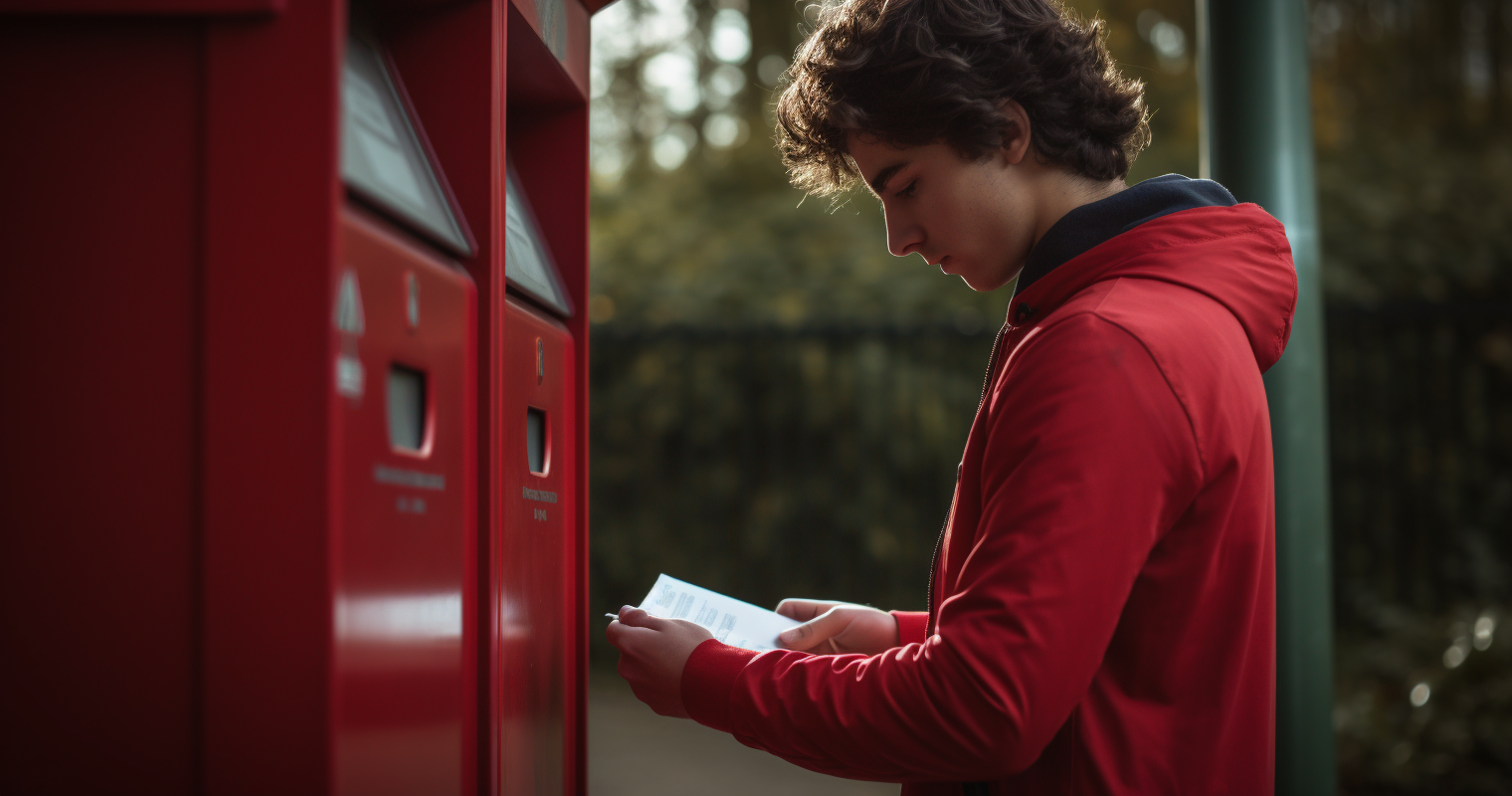
Chile’s postal infrastructure revolves around CorreosChile (Correos de Chile), a state-owned autonomous enterprise that functions as the country’s universal postal operator, providing coverage across the entire national territory. The sector is partially open to competition, with major private courier companies operating in parallel with the public service. For expats settling in Chile, familiarising yourself with how the system operates — from delivery timeframes and address conventions to customs requirements and practical constraints — will go a long way towards making everyday life easier.
| Item | Details |
|---|---|
| National postal operator | CorreosChile (Correos de Chile) — state-owned, autonomous enterprise |
| Domestic delivery time (as of 2025) | Typically 1–3 business days for standard mail; 1–2 days for express parcels |
| International delivery time (as of 2025) | Approximately 8–20 days depending on destination and service level |
| Postcode format | 7-digit numeric code (e.g. 7500000) — no letters or separators |
| Network coverage | Over 246 agencies, 210+ branches, 92 postal distribution centres |
| Customs threshold (as of 2025) | Import duties apply on parcels valued above USD $30 — check aduana.cl for current rates |
What is the postal service in Chile and who are the main providers?
CorreosChile (Correos de Chile) is a Chilean state-owned autonomous enterprise dedicated to postal deliveries, money transfers, and both domestic and international courier services, carrying out the obligations of the Universal Postal Service. Its origins date back to 1747, when the first postal service was established in the Captaincy General of Chile, placing it among the longest-standing postal institutions anywhere in the Americas.
CorreosChile fulfils the role of Universal Postal Service operator, reaching every corner of the national territory, and falls administratively under the Chilean Ministry of Transport and Telecommunications. This arrangement mirrors approaches taken in countries such as France, where La Poste holds a universal service mandate, or Ireland, where An Post plays an equivalent role — a state-run enterprise bearing universal obligations while the wider market remains open to private competition.
The network maintained by CorreosChile is considerable, encompassing over 246 agencies, more than 210 branches, 92 postal distribution centres, and 25 sorting facilities. Customers can interact with the service through more than 400 physical points of contact nationwide, or via a virtual branch accessible online.
Chile’s postal market is partially liberalised, and several private operators compete with CorreosChile for courier and parcel business. Chilexpress stands out as one of the foremost private courier and delivery companies in the country, offering services to both private customers and businesses on a domestic and international basis. Established in 1982, Chilexpress has a presence in all 16 of Chile’s regions — where 98% of the population lives — operating more than 1,100 branches and 75 distribution centres.
FedEx runs domestic services across Chile, including next-day delivery to the main cities. UPS covers both urban and rural areas throughout the country, and DHL maintains a strong footprint in Santiago as well as other significant Chilean business hubs. For shipments that are time-critical or involve high-value goods, businesses and expats typically turn to these private operators as a matter of preference.
How fast and reliable is postal delivery in Chile?
CorreosChile’s domestic delivery performance is generally strong, with most nationwide shipments arriving within one or two working days. For international shipments, transit times range from eight to twelve days, varying according to the destination country and the service tier chosen.
Within Chile, letters are typically delivered within one to seven days. Correspondence sent abroad arrives within four to twenty days. Domestic parcels usually reach recipients within one or two days, while international parcel delivery spans four to thirty days depending on the weight, dimensions, and the length of the postal route involved. These ranges reflect the breadth of available service levels, spanning from economy mail through to express options.
In broader terms, domestic letter delivery in Chile is roughly on a par with services offered by state postal operators in countries such as Spain or Portugal, where two-to-three-day timeframes are similarly quoted for ordinary mail. That said, reliability is not uniform across the country. Remote and rural areas — especially in Chile’s far north and deep south — may see noticeably longer waits compared with urban centres such as Santiago, Valparaíso, or Concepción.
CorreosChile offers tracking for international parcels, covering both outbound items sent from Chile and inbound packages arriving from abroad. There is currently no dedicated mobile application or SMS-based tracking service available to the general public; parcel status is checked primarily through the CorreosChile website or via third-party tracking platforms. Private couriers such as DHL, FedEx, and Chilexpress typically provide more advanced tracking tools, and premium service tiers often include money-back guarantees, though conditions apply.
What additional services are available at post offices in Chile?
CorreosChile branches offer far more than a place to drop off letters and parcels. The enterprise encompasses money transfers and a full range of national and international courier services, making it a genuine multi-service hub for many communities — a function similar to that performed by Poste Italiane in Italy or Japan Post in Japan.
Money transfer services are a significant part of what CorreosChile provides. Customers can send funds to recipients using bank Giro transfers or through the MoneyGram network. This makes post offices a practical resource for expats who need to send or receive money, particularly in areas where conventional bank branches are thin on the ground.
Core postal offerings include the handling of letters, postcards, and documents for delivery both within Chile and internationally, along with parcel services and Express Mail Service (EMS) — the latter providing expedited domestic and international shipping for packages of varying sizes.
For those who prefer not to receive mail at a home address, CorreosChile makes it possible to direct deliveries to a private mailbox rented from one of its agencies. These mailboxes are available at agencies across the country and can be arranged either through the CorreosChile website or in person at a local branch.
The Lista de Correos service (also referred to as Poste Restante, or General Delivery) is available at any CorreosChile office throughout the country, allowing anyone to receive mail without a fixed address. Collecting held items requires a valid passport as proof of identity. A small fee is typically charged per item, and mail is kept for a period of one month. This service is particularly valuable for expats who have not yet established a permanent residence.
Post offices across Chile also stock philatelic products. The Central Post Office in Santiago is home to the Museo Postal y Telegráfico, a museum holding a significant collection documenting Chile’s postal and telegraphic history, situated at the heart of the capital’s historic district.
Does the postal service deliver to every address in Chile?
CorreosChile is mandated to serve 100% of the national territory. It plays a vital role in connecting even the most distant parts of the country, reaching locations where commercial logistics operators may not venture. Its wide network of branches, agencies, and postal routes spans the full length and breadth of Chile.
In practice, CorreosChile delivers to the vast majority of addresses throughout the country, including many remote locations. There are, however, certain addresses that fall outside the scope of regular home delivery, typically owing to access difficulties or other logistical constraints. Where home delivery is not feasible, recipients may instead collect their mail from the nearest post office or agency.
Chile’s exceptional geography — extending more than 4,000 kilometres from the Atacama Desert in the north down to Patagonia and its Antarctic territories in the south — poses real logistical challenges. Expats living in isolated communities in regions such as Aysén or Magallanes should anticipate that home delivery may not always be practicable, and that collecting mail from a local office or agency is likely to be the more dependable arrangement.
Private courier networks are generally focused on major population centres and commercial districts. FedEx, UPS, and DHL each maintain collection points and pickup options, but their reach in rural areas can be limited. For expats based outside the larger cities, CorreosChile is typically the most accessible option for domestic post, and a PO box (casilla postal) at the nearest post office provides a reliable, fixed address for receiving deliveries.
International courier services are readily accessible in Santiago but become progressively harder to access outside the capital. Expats living in smaller towns or rural communities should plan accordingly when anticipating international parcels.
How do you write a postal address in Chile?
Writing addresses correctly is essential for dependable delivery. Chile operates a seven-digit postal code system, and addresses are structured around the country’s administrative regions (Regiones) and communes (Comunas). The order of address elements may differ from conventions that readers in many other countries are familiar with.
The standard format for a Chilean postal address is as follows:
- Recipient’s full name (first line)
- Street type, street name, and house number — e.g. Calle Los Abedules 123
- Apartment or floor number (if applicable) — e.g. Depto. 3B
- Neighbourhood or district (if applicable)
- Postal code followed by the city or commune
- Region (optional but useful, especially outside Santiago)
- CHILE (in capitals, for international mail only)
In practice, the addressee line carries the recipient’s full name; the street name appears first, followed directly by the building number with no separating punctuation; and the postal code precedes the city or area name, also without any separating punctuation.
The following is a realistic example of a correctly formatted Chilean address:
| Line | Example |
|---|---|
| Recipient | Ana González Rivas |
| Street address | Calle Los Abedules 456 |
| Apartment | Depto. 2A |
| Postcode + commune | 7550000 Las Condes |
| Region (optional) | Región Metropolitana |
| Country (international only) | CHILE |
In rural areas where formal street names may not exist, include the name of the settlement or village, the nearest larger town, the region, the postal code, and the country. Spanish is Chile’s official language, and addresses intended for delivery within Chile should be written in Spanish for the sake of clarity.
Postal codes are considered mandatory and are essential for sorting purposes — omitting them risks significant delays or the return of mail. For international correspondence, always write “CHILE” in capital letters on the final line.
How do you find or look up a postcode in Chile?
Postal codes in Chile take the form of seven-digit numeric strings, formatted as NNNNNNN. The first digit broadly corresponds to a region or province, the following two digits identify the commune, and the remaining four digits pinpoint a city block. The system is administered by Correos de Chile.
Chile uses a “Código Postal” system consisting entirely of numbers — seven digits long, with no letters and no separators of any kind. This differs from the approach taken in some other countries: US ZIP codes, for instance, are five digits long, while the UK uses alphanumeric codes such as SW1A 1AA. Expats moving from countries with letter-based or mixed postcode systems will find Chile’s all-numeric format quite different in feel.
The official way to look up a postcode is through the ‘Busca tu Código Postal’ feature on the CorreosChile website at www.correos.cl, where searches can be performed by entering a street name or city. The website is entirely in Spanish, so keeping a translation tool to hand is advisable if your reading ability in the language is still developing.
Outside Santiago, postcodes are less frequently used in everyday practice. For addresses beyond the capital, it is also acceptable to reference the region number — for example, indicating “V Región” when writing a Valparaíso address. Even so, including the postcode wherever possible is recommended to facilitate accurate sorting and timely delivery, especially for parcels.
Chile’s customs authority, the Servicio Nacional de Aduanas (aduana.cl), also incorporates postcodes into its import management procedures, so having the correct code available when completing customs declarations for incoming parcels is a practical advantage.
What should expats know about sending and receiving international mail and parcels in Chile?
Airmail to both Europe and the United States generally takes around a week to arrive. Sending parcels is a straightforward process, although a customs official may need to inspect your package before postal staff will accept it for dispatch. Vendors located in or near post offices will wrap parcels on request, which is a useful service if you lack suitable packaging materials of your own.
CorreosChile participates in the EMS international express delivery network, which handles both documents and merchandise. A dedicated service called Casilla Miami facilitates faster delivery of goods purchased from US retail and online shops to Chilean addresses. This virtual mailbox arrangement lets you shop from American stores using a Miami address, with purchases then forwarded on to Chile — an arrangement that is particularly popular with expats.
CorreosChile also operates joint projects with the national postal operators of China, Spain, Thailand, Germany, Brazil, and other countries, meaning that inbound international parcels from many parts of the world are handed over to CorreosChile for the final leg of delivery within Chile.
Customs requirements are a critical consideration when receiving parcels from abroad. Recipients are required to declare goods and settle any applicable duties through Chile’s customs authority website at www.aduana.cl. Taxes are levied on items with a declared value above USD $30. This threshold is considerably lower than in many comparable countries — the EU’s customs duty de minimis threshold, for example, stands at €150 — meaning that even modest online purchases from overseas can attract charges in Chile.
All international parcels must be accompanied by a commercial invoice written in English or Spanish, clearly stating the contents, quantities, and declared value. Inaccurate or missing customs documentation is among the most frequent causes of delays and holds at the border. It is always worth consulting both the Servicio Nacional de Aduanas website and the CorreosChile website for up-to-date information on applicable rates and prohibited items, as the relevant rules are subject to change.
CorreosChile is regarded as one of the more affordable postal services in Latin America, though users are required to pay an international shipping tax when packages pass through customs, with the applicable amount calculated through the operator’s official website. For international shipments where speed and tracking are priorities, private couriers such as DHL, FedEx, or UPS offer considerably faster and more transparent alternatives, though at substantially greater cost.
Are there any known issues or practical tips for using the postal service in Chile?
As with postal systems in many parts of the world, CorreosChile has a few widely acknowledged quirks that expats should be aware of before they need to rely on the service. Knowing about these in advance can prevent a great deal of unnecessary frustration.
Language barrier: The official CorreosChile website has no English-language version, meaning that navigating its services, tracking parcels, or searching for postcodes requires at least a working knowledge of Spanish. Running the site through a browser-based translation tool will bridge the gap until your language skills develop further.
Customs holds and delays: Inbound international parcels — especially those ordered through overseas online retailers — are frequently held at customs for inspection. Recipients must declare goods and pay any applicable duties through the Chilean customs website, with charges applying to items valued above USD $30. The clearance process can add days or even weeks to delivery times, so it is wise to factor this in whenever you are expecting something from abroad.
Proof of identity for collection: Collecting mail held under the Lista de Correos (Poste Restante) arrangement at any CorreosChile office requires presentation of a valid passport. More broadly, collecting certain registered parcels or paying customs duties may require your RUT (Rol Único Tributario — Chile’s tax identification number) or your RUN (Rut Único Nacional), which is issued together with a Chilean identity card. Expats who have not yet completed their residency paperwork may encounter difficulties when trying to collect larger parcels.
PO boxes (Casillas): CorreosChile offers rentable private mailboxes at its agencies throughout the country. These can be arranged directly on the CorreosChile website or by visiting a branch in person. Once you have a mailbox, you receive notifications by SMS or email each time mail or a parcel arrives. A PO box is strongly recommended for expats who do not yet have a stable home address, or for those living in areas where home delivery is unreliable.
Regional coverage gaps: International courier services are readily available in Santiago but become much harder to access outside the capital. Expats based in smaller towns or rural communities should rely on CorreosChile for domestic deliveries and plan carefully for international shipments — potentially using a Santiago address or a freight forwarding service as an intermediary.
Tracking limitations: CorreosChile does not currently provide a dedicated mobile app or public SMS tracking service; parcel status checks are handled primarily through the operator’s website or third-party platforms. Sites such as parcelsapp.com can serve as a useful fallback for monitoring incoming packages in real time when the official site is unavailable or slow to update.
Parcel wrapping services: Vendors based in or near post offices are generally willing to wrap parcels for a fee on request. This is a handy option if you are sending gifts or fragile items and do not have your own packaging materials to hand.
Frequently asked questions
What is the official name of Chile’s national postal service?
Chile’s national postal operator is officially known as Correos de Chile, trading under the brand name CorreosChile. It is a state-owned autonomous enterprise operating under the authority of the Ministry of Transport and Telecommunications, and carries responsibility for the Universal Postal Service across the whole country. The operator’s website can be found at www.correos.cl (Spanish only).
How long does domestic mail take to arrive in Chile?
Standard domestic letters and documents typically arrive within one to seven business days, depending on the origin, destination, and service tier. Express parcel delivery within Chile is generally completed within one to two business days. Deliveries to remote areas in the far north or south of the country may require additional time.
How long does international mail take to reach Chile?
International mail destined for Chile generally takes between eight and twenty days via standard postal channels, depending on the country of origin and the chosen service level. Express international services such as EMS can deliver more quickly, while economy options may take up to thirty days. Customs processing can extend these timeframes further, particularly for parcels.
What is the postcode format in Chile?
Chilean postal codes (códigos postales) consist of seven digits and contain only numbers — for example, 7500000. There are no letters or separating characters of any kind. The first digit broadly identifies the region, the next two indicate the commune, and the final four correspond to a specific city block. Postcodes can be searched using the official lookup tool on the CorreosChile website.
Do I need to pay customs duties on parcels sent to me in Chile?
In most circumstances, yes. The Servicio Nacional de Aduanas (Chilean customs) levies import duties and taxes on incoming parcels with a declared value exceeding USD $30, as of 2025. Recipients are required to declare goods and pay the applicable charges through the customs authority’s website at www.aduana.cl. It is worth checking the current threshold and applicable rates before expecting any parcel from abroad, as the rules may change.
Can I receive mail in Chile without a permanent address?
Yes. CorreosChile operates a Poste Restante service called Lista de Correos at post offices throughout the country, where mail can be held for up to one month. A valid passport is required to collect items. Renting a PO box (casilla postal) at a local CorreosChile agency is another dependable alternative, with the added convenience of SMS or email notifications each time mail arrives.
Are there private couriers I can use instead of CorreosChile?
Yes. A number of major private operators work alongside the state postal service in Chile. Chilexpress is the largest domestic private courier, with branches spanning all 16 regions of the country. International operators including DHL, FedEx, and UPS also maintain a presence in Chile. Private couriers tend to offer faster delivery and more sophisticated tracking than CorreosChile, but their services come at a significantly higher price for standard mail and parcels.
Is the CorreosChile website available in English?
No. The official CorreosChile website at www.correos.cl is published in Spanish only. Expats who are not yet confident reading Spanish can use a browser-based translation tool — such as the built-in page translation feature in Google Chrome — to navigate the site more easily. The most useful sections to locate are “Seguimiento” (tracking) and “Busca tu Código Postal” (postcode lookup).