
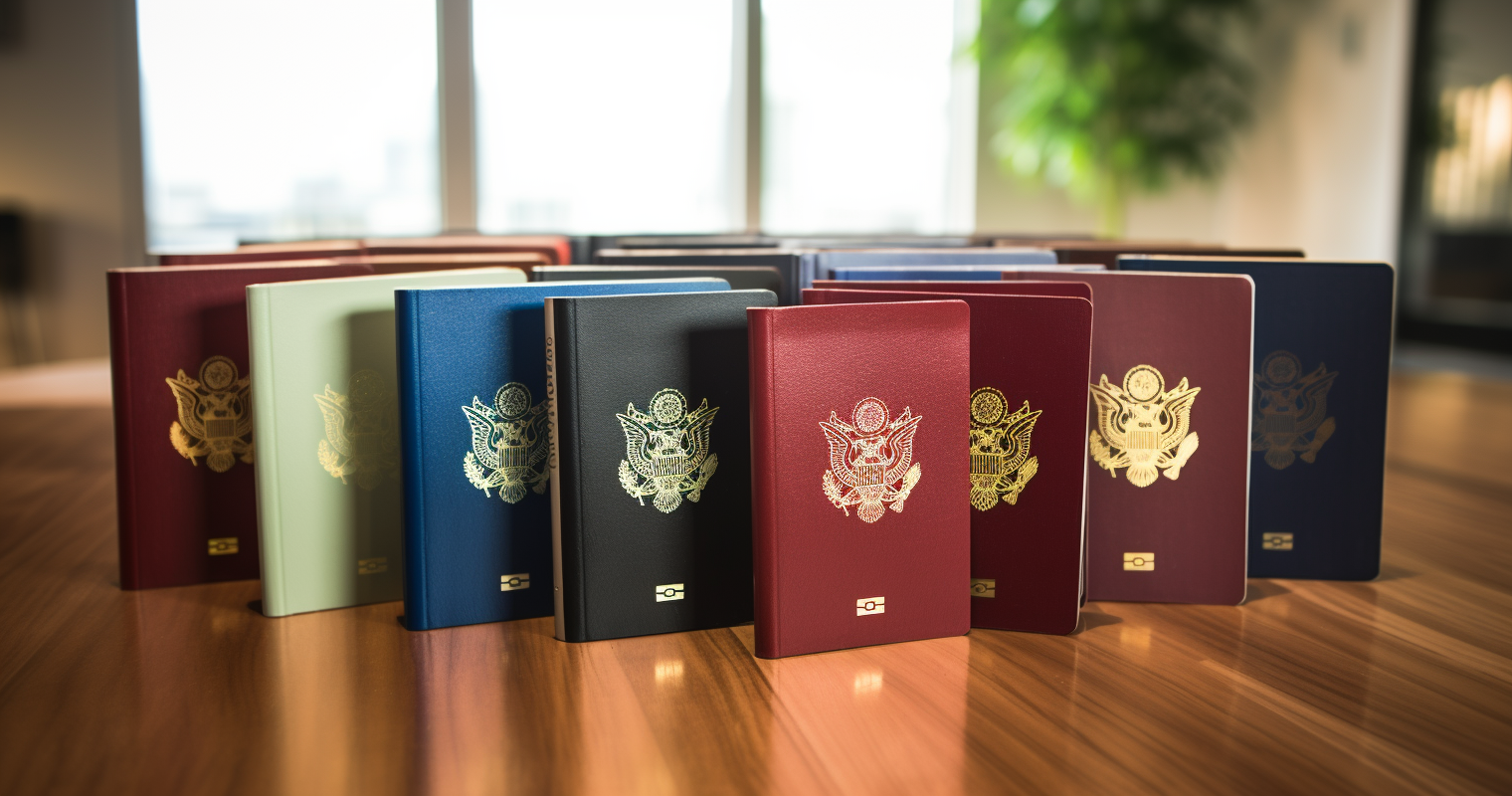
Cuban citizenship may be acquired through birth on Cuban territory, through descent from a Cuban parent or grandparent, or via naturalisation following a minimum of five years of uninterrupted permanent residency — a period reduced to two years for spouses and parents of Cuban nationals. Cuba’s 2019 Constitution introduced formal provisions permitting dual nationality, although how this functions in practice remains complicated. A new citizenship law was approved in 2024 but had not yet appeared in the Official Gazette as of early 2025.
| Item | Details |
|---|---|
| Standard naturalisation residency | 5 years of continuous permanent residency (as of 2025) |
| Reduced residency (marriage/family) | 2 years for spouses and parents of Cuban citizens (as of 2025) |
| Application processing time | Approximately 6 months after submission (as of 2025) |
| Application fee | No fee for the citizenship application itself; administrative costs approx. USD 235–390 in total (as of 2024 — check official sources for current figures) |
| Cuban passport validity | 10 years from date of issue (as of 2023) |
| Passport visa-free access | Approximately 59–64 destinations (as of 2024–2025, per Henley Passport Index) |
| Governing legislation | 2019 Constitution of Cuba; Decree 358 of 1944 (Citizenship Regulation) |
| Responsible authority | Ministry of the Interior (MININT); Ministry of Justice; Registro Civil |
Who is eligible to apply for citizenship in Cuba?
Cuban nationality law is governed primarily by the 2019 Constitution of Cuba and, to a lesser extent, by Decree 358 of 1944. Together, these legal instruments define who holds, or may acquire, Cuban citizenship. There are two principal pathways: citizenship acquired through birth (including by descent), and citizenship obtained through the naturalisation process.
Citizenship by birth (jus soli)
Any child born on Cuban territory acquires Cuban nationality automatically, irrespective of the nationality of either parent. The sole exception covers children of foreign nationals present in Cuba in an official capacity on behalf of their own government or an international body. This approach is common throughout Latin America, though it differs from systems like Germany’s, where birth on the territory alone does not automatically establish citizenship unless a parent holds a qualifying residency status.
Citizenship by descent (jus sanguinis)
Children born outside Cuba may acquire Cuban nationality if at least one parent is a Cuban citizen. Individuals born abroad to parents who were themselves born in Cuba — even if those parents later lost their citizenship — or who serve the Cuban state from abroad, may also be eligible for Cuban nationality.
Origin-based Cuban citizenship is available to a child born abroad within a Cuban family. For this to apply, at least one parent or one grandparent must have been born in Cuba. If the child is not formally registered with a Cuban civil registry, citizenship will not take effect. Registration is therefore a mandatory step that must not be neglected.
Naturalisation after residency
Under Decree 358 of 1944, naturalisation requires at least five years of continuous residence in Cuba along with a demonstrable command of Spanish. This five-year minimum is broadly comparable to standard naturalisation thresholds in countries such as France or Australia, though Cuba’s process involves considerably greater administrative discretion and is subject to political considerations not typically found elsewhere.
Throughout the qualifying period, applicants must show that they have abided by Cuban immigration law, maintained a clean criminal record, can demonstrate financial self-sufficiency, and have actively integrated into Cuban society.
Simplified naturalisation (marriage and family)
The required residency period is cut to two years for foreign nationals who are married to a Cuban citizen or who have children born in Cuba. It is important to note, however, that marriage to a Cuban citizen does not by itself confer citizenship — it merely reduces the time before naturalisation may be sought. The marriage must be genuine and formally recorded in the Cuban civil registry.
Evidence of the authenticity of the union — such as documentation of shared accommodation, joint financial arrangements, or statements from neighbours and local officials — will be required during the process.
Individual or exceptional naturalisation
Foreign nationals residing in Cuba who are deemed to be of special political, economic, or social value to the state may have citizenship conferred upon them by presidential decree. Ernesto Che Guevara famously received Cuban nationality through this mechanism in recognition of his services. This pathway is exceedingly rare and rests entirely at the discretion of Cuba’s head of state; it cannot be sought or applied for in the ordinary sense.
Language requirement
A working knowledge of Spanish is a prerequisite for obtaining Cuban citizenship, given that Spanish is the country’s sole official language. This requirement serves to ensure that those entering Cuban society as citizens can communicate meaningfully and participate fully in daily life. Unlike countries such as the Netherlands or Germany — where applicants must pass formally accredited language examinations — Cuba evaluates Spanish proficiency through the naturalisation interview itself rather than through a separate standardised test.
Disqualifying conditions
All applications undergo background screening, and political factors may also be taken into account. Refusals are possible and authorities are under no obligation to explain their reasoning publicly. A criminal history, incomplete paperwork, failure to satisfy the residency requirement, or an inability to show genuine integration into Cuban life may each result in an application being turned down.
What are the steps involved in applying for citizenship in Cuba?
The overall procedure is lengthy and administratively demanding. Applicants must assemble a substantial body of documentation, arrange for translations and notarisation, and navigate layers of bureaucracy. It is advisable to begin gathering materials well before the point at which eligibility is reached. The sequence below reflects the process as understood under the rules in force as of 2025 — always verify current requirements directly with Cuban authorities before taking action.
- Determine your eligibility pathway: Identify the basis on which you intend to apply — descent from a Cuban parent, marriage to a Cuban citizen, or the build-up of long-term residency towards naturalisation. This determines how long you must reside in Cuba before applying and which documents will be needed.
- Secure legal residency in Cuba: Obtain the appropriate visa or residence permit through a Cuban consulate or from a migration office within Cuba. Registration with local migration authorities upon arrival is obligatory. Legal residency status is a prerequisite for any naturalisation application.
- Maintain uninterrupted permanent residence: You must hold permanent residence status and demonstrate continuous lawful presence in Cuba throughout the qualifying period. The minimum is five years for most applicants, or two years for spouses and parents of Cuban citizens (as of 2025).
- Compile the required documents: The core documentation includes a birth certificate, proof of residence, a certificate of good conduct, evidence of financial means, two passport photographs, and certified Spanish translations of any documents originally issued in another language. Additionally, two letters of recommendation are required from Cuban citizens who hold citizenship by birth or origin, have resided in Cuba for at least five years, and have known the applicant for at least three years.
- Pass the citizenship test: Prior to lodging the application, every applicant must successfully complete a citizenship test assessing their understanding of the rights and duties that accompany Cuban citizenship.
- Lodge the application: Submit the application to the Provincial Directorate of the Interior (MININT) or another designated authority. The submission package typically includes identity documents, residence permits, police clearance certificates, proof of income or employment, and a personal statement. Applications may also be filed at the Registro Civil, and a dossier number will be assigned to allow progress to be monitored.
- Attend the interview: Local authorities will conduct a face-to-face interview to assess the depth of the applicant’s integration, family circumstances, and ties to the community.
- Wait for review and the official decision: The Ministry of Justice and provincial review committees examine the file and produce a recommendation. Naturalisation is formally concluded through a decree published in the Official Gazette. Applicants should expect to wait approximately six months for an outcome.
- Take the oath of allegiance and collect citizenship documents: Before the Certificate of Citizenship is issued and a Cuban passport can be applied for, the applicant must take a formal oath of allegiance to the Cuban Republic.
Fees and costs
No charge is levied for submitting the citizenship application itself. However, the various administrative steps throughout the naturalisation process are expected to cost a combined total of approximately USD 235–390 (as of 2024). Fees are subject to change, so always confirm current amounts with the relevant Cuban authority or consulate before proceeding.
Cuban passports are valid for ten years from the date of issuance. The cost of a passport is 2,500 Cuban pesos, which was approximately equivalent to USD 20 at the most recently available rate. Verify current passport costs with the appropriate Cuban authority.
What tests, interviews, or ceremonies are required as part of the citizenship process in Cuba?
Before citizenship is granted, Cuba requires applicants to satisfy a series of requirements designed to demonstrate both knowledge and genuine integration into Cuban society. These are assessed through a formal written test, a personal interview, and a public ceremony in which the oath of allegiance is taken.
Citizenship knowledge test
Every applicant must pass a written citizenship test before the application can be submitted. This examination covers the rights and responsibilities attached to Cuban citizenship, Cuban civic life, history, and constitutional principles. Spouses of Cuban citizens are not granted an exemption from this requirement — a stricter approach than that taken in some other countries, where family connections may reduce testing requirements.
Spanish language assessment
Applicants must show a functional command of Spanish and a familiarity with Cuban civic affairs during the interview stage. Unlike formal language qualification frameworks such as Spain’s DELE or France’s TCF, Cuba does not require a separately awarded language certificate — the interviewing official makes a direct assessment of the applicant’s spoken proficiency during the course of the interview.
Personal interview
An in-person interview is conducted by local authorities to examine the applicant’s level of integration, family situation, and community connections. This stage carries considerable weight in the overall assessment. Applicants should be ready to speak in detail about their employment history, residential circumstances, personal relationships, and motivations for seeking Cuban citizenship.
Background and political vetting
In addition to standard criminal record checks, applications in Cuba are subject to a broader vetting process that may include political and security screening carried out by the Ministry of the Interior. Refusals on these grounds are possible, and the authorities are not required to give reasons publicly.
Oath of allegiance
A public oath of allegiance to the Cuban Republic is a compulsory step in the process, administered by representatives of the Registro Civil. The oath must be completed before citizenship documents are handed over. In this respect the ceremony is comparable to similar rites in countries such as Canada or Australia, where the formal public affirmation of loyalty marks the final step in becoming a citizen.
What are the benefits of citizenship in Cuba?
Cuban citizenship brings with it a specific set of rights and entitlements that go beyond what is available to permanent residents or visa holders. The main practical advantages are outlined below.
Full civic and political rights
Only Cuban citizens may vote in elections and stand as candidates for public office. Full participation in Cuba’s political institutions is reserved exclusively for citizens and is not accessible to foreign residents, regardless of how many years they have lived on the island.
Equal civil rights
Naturalised citizens enjoy the same civil rights as those born Cuban, including the right to vote and to own property. The one exception is the presidency, which is restricted to citizens by birth — a rule similar to that in the United States, where only natural-born citizens may hold the highest office.
Access to public services and education
Many long-term residents choose not to pursue full citizenship because holding permanent residency (Residente Permanente) already grants access to many of the same entitlements as citizenship, including free healthcare and education for children, and the ability to purchase property and vehicles and to operate a business. That said, citizenship provides the most secure and permanent form of status, eliminating the possibility of residency being withdrawn.
Cuban passport
Citizens are entitled to hold a Cuban passport, which serves as formal documentation of nationality for international travel. As of 2025, Cuban passport holders had visa-free or visa-on-arrival access to 59 countries and territories, placing the passport 83rd globally according to the Henley Passport Index. While this is more limited than the travel documents of most Western European countries, it enables entry to much of Latin America, parts of Africa, and some destinations in Asia.
Job eligibility
Access to certain public sector positions, government roles, and regulated professions in Cuba is restricted to citizens. Acquiring citizenship removes the barriers that prevent foreign nationals from working across the full spectrum of employment in the country, including within public institutions, the military, and senior government functions.
Security of status
Unlike permanent residency, citizenship cannot be revoked simply on account of prolonged absence from Cuba, subject to certain exceptions for naturalised citizens (discussed in the dual citizenship section below). Under Article 38 of the 2019 Constitution, Cuban citizens may not be stripped of their nationality except in circumstances defined by legislation.
Does Cuba allow dual citizenship, or will you have to renounce your existing nationality?
Cuba’s stance on dual nationality has shifted notably in recent years and remains a nuanced subject that prospective applicants should examine carefully before committing to the naturalisation process.
The 2019 Constitutional change
Earlier Cuban constitutions did not permit multiple citizenship, even though the government tacitly acknowledged that some individuals did in practice hold more than one nationality. The 2019 Constitution brought a significant shift: Article 36 now expressly provides for dual nationality, while stipulating that within Cuban territory, only Cuban law shall apply to those who hold it.
The new citizenship law (2024)
A new citizenship law was passed by the Cuban government in 2024. It is due to come into force six months after its publication in the Official Gazette of the Ministry of Justice (Gaceta Oficial). As of early 2025, the law had not yet been made public. Notably, the new law does not oblige foreign nationals who naturalise as Cuban citizens to surrender their original nationality — Cuban citizenship will be available as a second nationality without requiring renunciation of the first.
Practical position for naturalised citizens
Dual nationality is permitted in a limited set of circumstances. Cubans by birth never lose their nationality automatically, while naturalised citizens may hold dual nationality where reciprocity agreements with the other country in question exist. Cuban law upholds the principle of a single recognised nationality within Cuban territory, but a dual status can subsist where the other state acknowledges it on a reciprocal basis.
Applicants are required to declare all nationalities they hold; concealing this information may result in the naturalisation being annulled. Full transparency with Cuban authorities is therefore essential.
Risk of losing Cuban citizenship when living abroad
Naturalised Cuban citizens who reside in their country of birth risk losing their Cuban citizenship unless they formally declare, every three years before the appropriate Cuban consular authority, their intention to retain it. This means that naturalised Cubans living outside the country must take active steps to preserve their status through regular contact with their nearest Cuban consulate.
Your home country’s rules
Quite apart from what Cuban law provides, your country of origin may have its own rules governing what happens to your existing nationality when you acquire citizenship of another state. Some countries revoke nationality automatically upon naturalisation abroad; others permit it without restriction. You should verify your home country’s position with its official immigration or foreign affairs authority before proceeding, as this question is entirely separate from Cuban law and varies considerably between states.
How long does it typically take to become a citizen of Cuba?
The journey from arriving in Cuba to holding citizenship involves multiple stages and takes a considerable amount of time overall. It requires first establishing legal residency, then accumulating the required continuous residence, and finally working through the application process itself.
Establishing residency
Before the naturalisation qualifying period can begin, you must enter Cuba legally and obtain either a temporary or permanent residence permit. The duration of the permit depends on the grounds for the move — for example, someone arriving under a work-related arrangement may obtain a residence card valid for five years, provided their employment contract covers an equivalent period. Time spent in Cuba on a temporary visa generally does not count toward the naturalisation residency threshold.
Minimum residency period
As a general rule, a minimum of five years of residence in Cuba is required before naturalisation can be sought. However, those who are parents or spouses of Cuban citizens may apply after just two years. (As of 2025 — confirm current requirements with Cuban authorities.)
Application processing time
Once lodged with the Ministry of the Interior, the application typically takes around six months to be reviewed and decided upon (as of 2024–2025). Cuba’s administrative processes can move slowly, and requirements are liable to change; applicants should anticipate multiple visits to consular offices or migration authorities, as well as time spent on translations, notarisations, and document legalisation.
Realistic total timeline
For a standard applicant, the realistic minimum is around five to six years from first entering Cuba — five years of qualifying residency followed by approximately six months for the application to be processed and the naturalisation decree to be issued. For those qualifying through marriage or a family connection, the qualifying period shortens to roughly two to two-and-a-half years. Always consult the Cuban Ministry of Justice website and the Ministry of the Interior (MININT) for the most current figures.
What are the main reasons an application for citizenship in Cuba might be refused?
Cuba’s naturalisation system involves a significant degree of administrative and political discretion, and applications may be rejected on a wider range of grounds than is typical in many other countries. The most common reasons include the following:
- Criminal record: Applicants must have an unblemished criminal record. Certificates of good conduct are required from both Cuba and the applicant’s country of origin.
- Insufficient or interrupted residency: Failure to reach the minimum qualifying residency period, or any break in continuous lawful residence, will disqualify an application. Periods spent outside Cuba that sever the continuity of residence are particularly problematic.
- Failure to pass the citizenship test: All applicants must successfully complete the citizenship knowledge test before their application can be submitted. Failing it will bring the process to a halt.
- Inadequate Spanish language ability: Applicants who cannot demonstrate a functional level of Spanish during the interview may be refused on this basis.
- Incomplete or inaccurate documentation: Missing documents, errors, forgeries, or incorrectly translated materials are a frequent cause of rejection. Any documents issued abroad in a language other than Spanish must be translated and notarised.
- Political or security concerns: Applications are subject to background screening and may be assessed against political criteria. Refusals on these grounds are possible and are typically issued without public explanation.
- Failure to disclose existing citizenships: All nationalities held by the applicant must be declared; concealing this information may lead to the naturalisation being annulled.
- Failure to demonstrate integration: Applicants must be able to show stable income, a clean record, and genuine engagement with Cuban society. The Ministry of Justice conducts a character assessment while local councils confirm participation in community life.
Is there an appeals process?
Cuba does not have a transparent or formally documented appeals mechanism for citizenship refusals, and rejected applicants are generally not given reasons for the decision. In practice, those refused may seek professional legal advice and submit a fresh application, but there is no guaranteed right of appeal equivalent to what exists in countries with codified administrative law, such as France or Germany. If your application is turned down, consulting a lawyer with specialist knowledge of Cuban migration law is strongly recommended.
Where can you find reliable, up-to-date information about citizenship in Cuba?
Given that Cuba’s citizenship framework is currently in transition — with a new law passed in 2024 but not yet in effect as of early 2025 — it is especially important to rely only on official sources when checking current requirements, fees, and processing times.
- Ministry of the Interior (MININT) — Dirección de Identificación, Inmigración y Extranjería (DIIE): The primary authority overseeing immigration and naturalisation matters in Cuba. Official guidance is available at www.minint.gob.cu.
- Ministry of Justice (Ministerio de Justicia): Responsible for the Registro Civil and for supervising the naturalisation recommendation process. Visit www.minjus.gob.cu for further information.
- Registro Civil: The civil registry records births, marriages, and naturalisation acts under the authority of the Ministry of Justice. Applications can be filed here, and the Certificate of Citizenship is issued through this body.
- Cuban embassies and consulates abroad: For those applying from outside Cuba, or for individuals of Cuban origin seeking to confirm or restore their nationality, the nearest Cuban diplomatic mission is the appropriate first point of contact. Details of Cuban embassies worldwide can be found through the Cuban Ministry of Foreign Affairs (MINREX).
- Official Gazette (Gaceta Oficial): New legislation and official decrees — including the forthcoming citizenship law — are published at www.gacetaoficial.gob.cu. This source should be monitored closely once the new law is enacted.
Personal blogs, online forums, and commercial visa agencies are not reliable sources for specific legal requirements or official fee schedules. Always cross-reference any information with the official government sources listed above, and consider retaining a qualified Cuban immigration lawyer when dealing with complex situations.
Frequently asked questions about citizenship in Cuba
Do children born in Cuba automatically become Cuban citizens?
Any child born on Cuban soil acquires Cuban nationality automatically, regardless of the nationality of the parents. The only exception applies to children of foreign nationals present in Cuba in an official diplomatic or governmental capacity representing their own state or an international organisation. In every other circumstance, birth on Cuban territory confers citizenship without any additional formality.
Can citizenship by descent be claimed if only a grandparent was Cuban?
Origin-based Cuban citizenship is available to children born abroad within a Cuban family. The requirement is that at least one parent or one grandparent was born in Cuba. However, citizenship will not take effect unless the child is formally registered with a Cuban civil registry. This registration step is indispensable and must not be overlooked if the claim is to be formalised.
Does marrying a Cuban citizen automatically grant me Cuban citizenship?
Marriage to a Cuban citizen does not by itself confer citizenship on the foreign spouse. It does, however, reduce the residency period required before naturalisation may be sought — from five years to two years. The foreign national must still reside in Cuba for that qualifying period, apply for residency, and satisfy the other requirements set by Cuban immigration authorities. Only after the reduced residency period has been completed may the spouse apply for naturalisation.
Can Cuban citizenship be lost or revoked?
Cuban citizenship may be revoked by a unilateral decision of the government, or where a Cuban citizen undertakes military service on behalf of another state or carries out duties that carry the authority or jurisdiction of a foreign power — in such cases by decree of the Council of State. Citizenship may also be forfeited as a consequence of criminal conduct constituting sufficient grounds for its loss, following a final court judgment.
What happens to my citizenship application if I move abroad during the process?
Departing Cuba during the qualifying residency period or following submission of an application may interrupt or invalidate it. Unbroken continuous residence is a fundamental requirement, and any significant absence from the country is likely to break the qualifying period. If you have already submitted an application and need to travel, contact MININT or the Registro Civil immediately to understand the consequences before leaving. Additionally, naturalised Cubans living abroad must reaffirm their wish to retain citizenship every three years at a Cuban consulate.
Is there an investment route to Cuban citizenship?
Cuba does not operate a formal citizenship-by-investment programme of the kind offered by some Caribbean nations such as St Kitts and Nevis or Antigua and Barbuda. The only comparable route involves the presidential discretion to confer citizenship on foreigners of exceptional political, economic, or social value to the Cuban state — a mechanism used in notable cases such as that of Ernesto Che Guevara. This is an extraordinary and entirely non-transparent route that cannot be applied for through any conventional process.
How strong is the Cuban passport for international travel?
As of 2025, Cuban passport holders had visa-free or visa-on-arrival access to 59 countries and territories, placing the Cuban passport 83rd in the world according to the Henley Passport Index. While this allows relatively straightforward travel across much of Latin America and parts of Africa and Asia, visas are required for most of Europe, North America, and much of Asia-Pacific.
Can I restore Cuban citizenship if I or my family previously lost it?
Individuals who were born Cuban but lost their status or never formally registered it may often recover or confirm their nationality through administrative procedures conducted at Cuban consulates or civil registries. Documentary evidence of Cuban parentage, birth records, and identity documents will be required. The draft new citizenship law also envisages a one-off opportunity to reclaim citizenship, subject to requirements and formalities to be set out in the law once published.
Is there an age requirement for naturalisation?
No publicly stated minimum age for naturalisation applies in a distinct way to adults applying in their own right. Children born to Cuban parents or on Cuban soil acquire citizenship automatically. Foreign minors residing in Cuba whose parent undergoes naturalisation may be included in that process, but the applicable requirements should be confirmed directly with MININT or the Registro Civil, as administrative practice in this area can vary.
What is the new 2024 citizenship law and how will it affect applicants?
In 2024, the Cuban legislature approved a new citizenship law. The legislation is scheduled to enter into force six months after its publication in the Official Gazette of the Ministry of Justice. As of early 2025, no publication had taken place. Among the principal anticipated changes are formal statutory recognition of dual nationality and an extension of eligibility for citizenship by descent to include grandchildren of Cuban nationals. Keep an eye on the Gaceta Oficial for the law’s publication date.
Do I need a lawyer to apply for Cuban citizenship?
There is no legal obligation to instruct a lawyer, but the process is administratively complex, bureaucratic, and subject to change. Multiple visits to consular offices or migration authorities, along with extensive translation, notarisation, and document legalisation, should be anticipated. Given the degree of discretion exercised by Cuban authorities and the complications that can arise in cases involving descent, restoration, or dual nationality, engaging a qualified immigration lawyer with expertise in Cuban law is strongly advisable, particularly where the circumstances are not straightforward.