

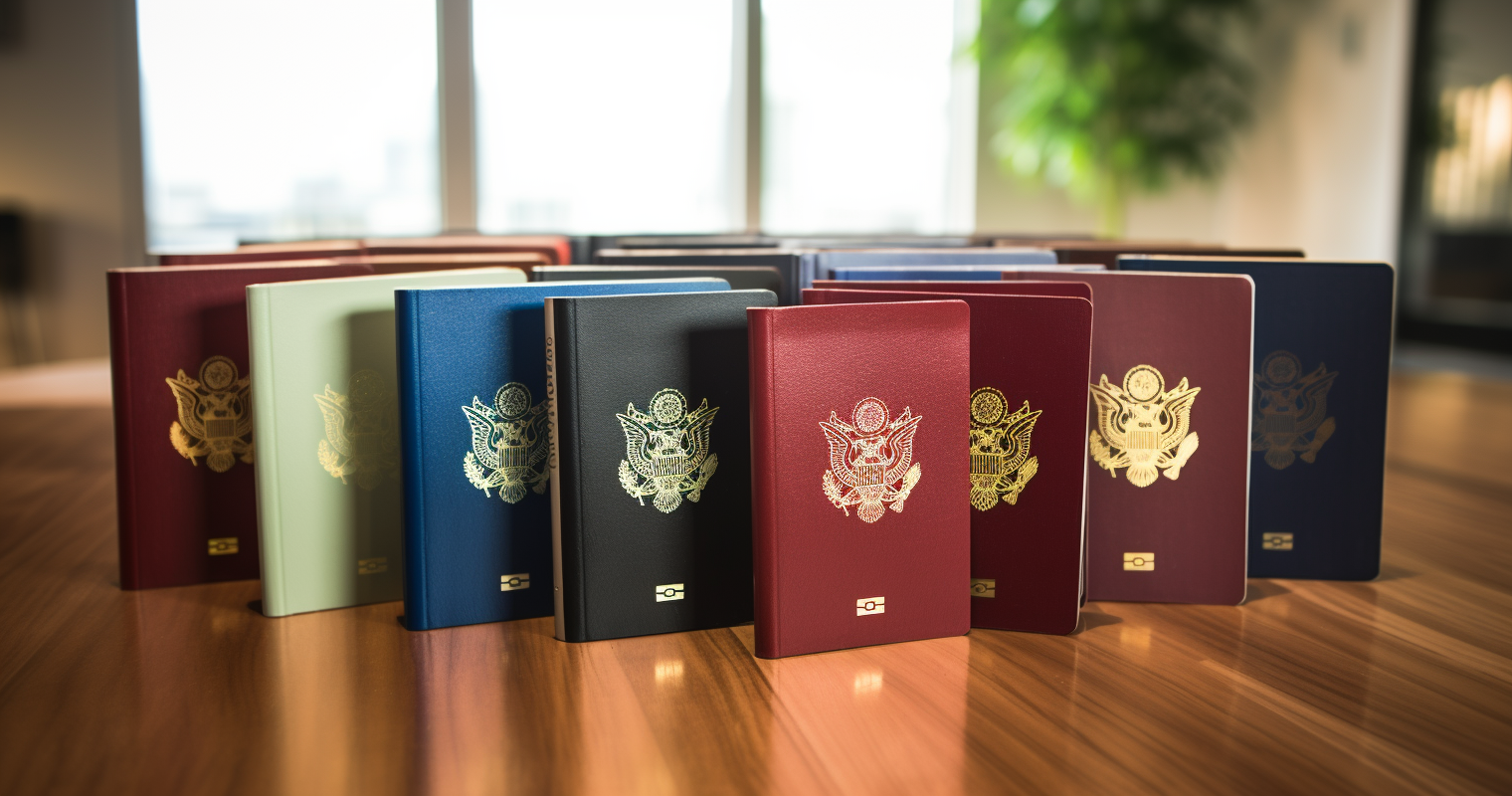
French citizenship is accessible to long-term residents, spouses of French nationals, individuals with French ancestry, and others who satisfy the country’s integration criteria. The principal pathway is naturalisation by decree following five consecutive years of lawful residence. France fully embraces dual nationality, which means most successful applicants can keep their original citizenship alongside their newly acquired French one.
| Item | Details |
|---|---|
| Minimum residency (naturalisation) | 5 years of continuous legal residence (as of 2025) |
| Residency (marriage route) | 4 years of marriage to a French citizen (as of 2025) |
| Language requirement | B2 level of French (raised from B1, effective January 2026) |
| Civic exam | Mandatory for non-EU nationals from January 2026 — 40 multiple-choice questions, 80% pass mark |
| Application fee | €55 (fiscal stamp / timbre fiscal), as of 2025 |
| Typical processing time | 18 months to 3+ years from submission (as of 2025) |
| Dual nationality | Permitted by France — no renunciation required |
| Passport ranking | 4th globally (Henley Passport Index, as of 2026); visa-free/on-arrival access to 185 countries |
Who is eligible to apply for citizenship in France?
The two principal routes to French citizenship require either a period of more than five years living in France, or a qualifying relationship with a French national — through marriage or parenthood. These pathways are referred to as naturalisation by decree or declaration of nationality, and identifying which one fits your personal circumstances is the critical first step.
Naturalisation by decree (residency route)
After completing an uninterrupted five-year period of lawful residence in France, foreign nationals become eligible to apply for French citizenship through naturalisation (or par décret). Applicants must have reached the age of 18 at the time of submission. This five-year threshold is broadly comparable to requirements in countries such as Australia and Germany, although France’s specific integration criteria — encompassing language competency and financial stability — have grown considerably more stringent in recent years.
Exceptions to the standard five-year rule exist in particular circumstances, such as having obtained a French academic qualification or having completed higher education in France. These cases are assessed individually. Nationals of Francophone countries who spent five years attending a French-language school may also benefit from adjusted requirements.
Applicants are required to demonstrate adequate and consistent income appropriate to their family situation and professional standing. Financial records are carefully examined to confirm the applicant is capable of sustaining themselves without recourse to public assistance. Stable, French-source income — typically at least the SMIC (France’s statutory minimum wage, €1,802 per month in 2025) — is expected. Income derived from foreign sources or overseas pensions is increasingly treated as insufficient evidence of professional integration.
Citizenship by marriage or civil partnership
Individuals who have been married to a French citizen for more than four years, or who are married to and have a child with a French national, may apply for French nationality through a declaration procedure. The marriage must still be legally valid, the couple must cohabit, and the French spouse must have retained their French nationality. Where the couple has not been residing together in France, the required duration extends to five years.
Citizenship by descent
Under the principle of jus sanguinis, anyone born to at least one French parent may acquire French citizenship by descent automatically, regardless of their country of birth. To successfully claim citizenship this way, previous generations in the family line must be registered as French nationals — the link must be continuous and verifiable. This differs from certain other countries, such as Ireland, where ancestry claims can reach further back in history; France requires an unbroken and documented chain.
Citizenship by birth in France (jus soli)
As a result of more recent immigration legislation, automatic French citizenship is no longer conferred upon children born in France to foreign parents. Instead, such individuals may submit an application for French nationality between the ages of 16 and 18. Children born in France to stateless parents are an exception and receive citizenship automatically. An early application is available at age 16, or even at 13 provided a parent gives consent.
Military service and other routes
Additional pathways exist for individuals serving in the French Foreign Legion or the armed forces, or those employed by the French state in an overseas capacity. In such circumstances, French citizenship can generally be applied for after five years of service. Men aged between 18 and 40 are eligible to obtain citizenship following three years of service in the French Foreign Legion.
Older applicants
Applicants aged 65 or over who have French children or grandchildren and have lived continuously in France for more than 25 years may also pursue naturalisation by declaration. Those meeting these conditions are exempt from the language requirement and from questions on French culture; however, the procedure does still include an interview intended to assess the applicant’s degree of integration into French society.
What are the steps involved in applying for citizenship in France?
Once you have established your eligibility for French citizenship, your initial application is submitted through an online platform and will require a substantial set of supporting documents, including officially certified translations and proof of your French language proficiency. As is common with French administrative procedures, all documents must fall within prescribed validity windows, so you should allow time to obtain records from your country of origin and arrange any necessary translations well in advance.
- Check your eligibility. Determine which route is applicable to you — naturalisation by decree, declaration by marriage, by descent, or an alternative pathway. Use the eligibility checker on the official Service-Public.fr portal and familiarise yourself fully with the requirements before beginning to gather any documentation.
- Pass your language exam. The majority of applicants must complete an approved French language examination — such as the TCF (Test de Connaissance du Français) — before lodging their nationality application. Exam centres can book up rapidly, so check available dates at the earliest opportunity. You may need to reserve a place at least a month ahead, or up to six months at busier venues. Once obtained, your certificate remains valid for two years; if your application is not submitted within this window, you will be required to retake the exam.
- Pass the civic exam. The Examen Civique is now a mandatory prerequisite for any non-EU national seeking French citizenship. It is a digital multiple-choice assessment conducted at approved centres.
- Gather your documents. Documents typically required include a valid passport or national identity document, a birth certificate (translated and certified if not originally in French), evidence of residence in France or a marriage certificate to a French national, proof of French language proficiency, a criminal record check from France and from any other country where you have previously lived, and tax returns along with documents demonstrating financial independence. Any document in a foreign language must be accompanied by a translation produced by a sworn translator.
- Submit your application online. Visit the ANEF (Administration Numérique des Étrangers en France) website and select “I am applying for French nationality.” You can monitor the progress of your application through your personal online account and respond to any supplementary requests from the authorities. Note: the marriage-based route (naturalisation by declaration) is handled directly at your local préfecture rather than through the online portal.
- Pay the application fee. The standard charge for a French citizenship application is €55 (as of 2025). This is paid by way of a fiscal stamp (timbre fiscal), which may be purchased online or from authorised outlets in France. Payment must accompany the submission of your application dossier. Always verify the current fee on the Service-Public.fr website, as amounts are subject to change.
- Attend the assimilation interview. This is arguably the most consequential stage in the entire process: you will finalise your dossier with an official, answer questions covering French history, geography, politics, and current affairs, and be given the opportunity to demonstrate your genuine integration into French society and adherence to its values. There is no fixed schedule for receiving your interview invitation, though most applicants appear to be summoned within approximately one to 18 months of submitting their application.
- Await the ministerial decision. The ministry responsible for naturalisation has up to one year from the interview to approve or decline your application. If the outcome is favourable, your name is published in the Journal Officiel — France’s official government gazette — which is the moment your French citizenship formally takes effect.
- Attend the reception ceremony (optional but encouraged). After publication in the Journal Officiel, newly recognised citizens are invited to a civic welcome ceremony (cérémonie d’accueil dans la citoyenneté française) organised by their local préfecture. Participation is not compulsory but represents a meaningful milestone in the journey.
Although the official government fee is comparatively modest, applicants are likely to face additional indirect expenditure. This can include costs for document translation, certification or legalisation of foreign records, language examinations, and in some cases professional administrative or legal support. The overall cost can therefore vary considerably depending on individual circumstances. Always consult the official Service-Public naturalisation page for the most current fee schedule.
What tests, interviews, or ceremonies are required as part of the citizenship process in France?
French language proficiency
Anyone seeking French citizenship — including through a declaration of nationality by marriage or reintegration — must demonstrate proficiency in French at the B2 level. This represents an increase from the previous B1 threshold and took effect on 1 January 2026 pursuant to Decree no. 2025-648 of 15 July 2025. B2 is classified as upper-intermediate on the Common European Framework of Reference (CEFR), meaning you should be able to comprehend complex written texts, hold fluent conversations with native speakers, and articulate your views clearly across a broad range of topics. This standard is higher than that required in some comparable countries: the UK’s Life in the UK process, for instance, does not demand a standalone language test at an equivalent level.
For French citizenship purposes, the DELF B2, TCF, and TEF are all officially recognised. The DELF B2 carries indefinite validity, making it a worthwhile long-term investment. The cost of a DELF B2 examination is currently around €150 (as of 2025). The TCF IRN and TEF IRN options are valid for two years only and have been designed specifically for citizenship applications, evaluating all four language skills. Consult exam centre websites for up-to-date pricing and booking information.
The civic exam (Examen Civique)
The Examen Civique is now a compulsory step for any non-EU national applying for French citizenship. Conducted as a digital multiple-choice test at accredited centres, it is designed to verify that applicants have a thorough understanding of French society and its republican principles.
The exam runs for 45 minutes and comprises 40 multiple-choice questions. Candidates must achieve a minimum score of 80% — that is, 32 correct answers out of 40 — to pass. Subject areas include the fundamental principles and values of the Republic (such as laïcité, liberty, equality, and fraternity), French political institutions and governance, the rights and responsibilities of residents, French history, geography and culture, and practical aspects of everyday life in France including healthcare, education, and employment.
This civic knowledge component is conceptually comparable to the Life in the UK Test or Australia’s citizenship test, though France’s version is more demanding in both scope and required pass mark — Australia’s equivalent test, for reference, requires only a 75% pass rate.
The assimilation interview
At the interview, you must convincingly demonstrate that you have genuinely integrated into French life. This involves affirming your commitment to French republican values — including freedom of expression and belief, freedom of political opinion, and the principle of laïcité — as well as acknowledging the equality of all citizens regardless of gender, race, background, or sexual orientation.
As of 2025, interviews have become considerably more thorough, and language assessments now present challenges even for highly proficient speakers. Preparation is therefore essential. Applicants are strongly encouraged to study French history, geography, and contemporary affairs carefully before attending.
Naturalisation decree and the Journal Officiel
France does not require a formal oath of allegiance in the manner of countries such as the United States, where a ceremony and oath form part of the legal process. Instead, citizenship is officially established upon publication of your name in the Journal Officiel. A civic welcome ceremony is typically offered by your local préfecture following this publication, though attendance remains optional.
What are the benefits of citizenship in France?
Acquiring French citizenship brings a comprehensive set of practical rights and entitlements that extend well beyond those available to long-term residents or visa holders.
The right to vote and participate in civic life
French citizens are entitled to live, work, and vote in France on a permanent basis. This includes participation in local, national, and European Parliament elections — rights that are not available to non-citizen residents. Citizens may also stand as candidates for public office and access positions in certain public sector roles that are reserved exclusively for nationals.
Freedom of movement across the EU
French citizenship confers the right to travel freely throughout the European Union and to reside and work in any EU member state of your choosing. No advance residence or work permit is required to take up employment within the EU. This is an especially significant advantage for those who previously held a non-EU nationality and were subject to restrictions on free movement within Europe.
A powerful passport
As of 2026, holders of a French passport enjoy visa-free or visa-on-arrival entry to 185 countries and territories, placing France 4th in the world for travel freedom according to the Henley Passport Index. The French passport grants seamless access to Schengen Area countries, the United Kingdom, the United States, Japan, Hong Kong, and numerous other destinations.
Access to public services and social benefits
French citizens are entitled to the full range of public benefits provided by the state. Beyond France itself, citizenship enables you to live and work across other EU member states. French nationals also benefit from healthcare provision both domestically and throughout the EU. France’s healthcare system — the Assurance Maladie — is widely regarded as one of the most comprehensive in the world, and citizens have unrestricted access to public coverage, free from the residency-status limitations that can affect long-term visa holders.
Passing citizenship to children
By becoming a French citizen rather than a permanent resident, you secure voting rights, access to social benefits, and the ability to pass your status on by inheritance. Children you have after acquiring French citizenship will automatically inherit French nationality by descent, irrespective of the country in which they are born.
Education and business
French citizenship allows you to establish and operate businesses anywhere within the EU, and to pursue education at schools or universities across any EU member state. A child holding a French passport also faces fewer barriers when enrolling at an EU university, and tuition costs will typically be lower than those faced by nationals of non-EU countries.
Does France allow dual citizenship, or will you have to renounce your existing nationality?
French law places no obligation on foreign nationals to surrender their original citizenship when acquiring French nationality. Dual nationality is fully permitted under France’s civil code, and a foreign citizen who becomes French may retain their prior nationality alongside their new one.
A French citizen may choose to renounce their nationality voluntarily, or may lose it if they acquire a foreign citizenship and explicitly request to relinquish their French status in doing so. Dual nationals are generally well protected under French law, and France does not strip citizenship from individuals solely on the grounds that they have obtained another passport.
There is no need to apply specifically for dual nationality; you simply apply for French nationality and retain your existing passport. While on French territory, you will be treated as a French citizen and may not invoke the rights that your second nationality might otherwise afford you in that context.
It is important to note that not every country shares France’s permissive stance on dual citizenship. While many states allow the holding of two passports, others require you to relinquish your original nationality upon acquiring a foreign one. Before proceeding, it is essential to verify the rules of your home country with its relevant immigration or foreign affairs authority — some countries treat the voluntary acquisition of another citizenship as an automatic or triggerable ground for losing the original.
Dual nationals may also encounter complex tax obligations, particularly where the second citizenship belongs to a country that levies tax on worldwide income. French tax regulations warrant equally careful consideration to avoid unanticipated liabilities. In addition, dual citizens are subject to the laws of both countries, which can occasionally conflict and give rise to complications further down the line. Consulting a cross-border tax specialist is strongly advised.
How long does it typically take to become a citizen of France?
The honest reality is that the road to French citizenship is a lengthy one. The minimum qualifying residency period is merely the starting point; the application procedure itself adds substantially to the overall timeline.
| Stage | Approximate time |
|---|---|
| Build qualifying residency (standard route) | 5 years minimum |
| Prepare documents, pass language and civic exams | 3–12 months before applying |
| Online application submission to interview invitation | 12–18 months (as of 2025) |
| Interview to ministerial decision | Several months |
| Total (from application submission) | 18 months to 3+ years |
The average duration between submitting an initial online application and having one’s name officially published in the Journal Officiel appears to be roughly two years. That said, some applicants have reported the entire process taking as long as four years, while others have received confirmation of their citizenship within 18 months.
Owing to heightened verification procedures and increased administrative workload, processing times may extend to 24 months, compared with the previous typical range of 12–14 months (as of 2025). The marriage-based declaration route tends to move somewhat more quickly, though it can still take up to two years to reach a conclusion.
For the most current estimates of processing times, refer to the official Service-Public naturalisation page and the Ministry of the Interior. These figures are regularly updated and official sources remain the only dependable reference point.
What are the main reasons an application for citizenship in France might be refused?
Naturalisation by decree now demands a more thorough demonstration of social, linguistic, and financial integration. A 28% reduction in naturalisations granted was recorded in 2024 as prefectures began applying more rigorous criteria. Understanding the most common grounds for refusal is essential to constructing a strong application.
- Insufficient language proficiency. Failure to attain the required B2 level is among the most frequently cited grounds for refusal following the 2026 rule change. Refusals may also stem from incomplete documentation, criminal history, or inadequate evidence of integration. In 2025, the proportion of refused applications rose as enforcement of language and documentation standards became more stringent.
- Failure to pass the civic exam. Non-EU nationals who do not achieve the 80% pass mark on the Examen Civique will not satisfy the basic eligibility threshold.
- Criminal record. Applicants must present a clean criminal record. Any serious convictions — particularly those involving public order offences, terrorism, or fraud — will ordinarily lead to refusal.
- Insufficient or irregular residency. Failing to meet residency requirements — for example, having spent more than six months outside France during the qualifying period — is one of the leading causes of applications being turned down.
- Inadequate financial integration. Applicants must demonstrate stable income from French sources. Income originating abroad or overseas pension payments are increasingly regarded as insufficient evidence of professional integration.
- Incomplete or inaccurate documentation. Applications that contain incorrect or incomplete information, or that are submitted outside the required timeframes, can result in a negative decision.
- Failure to demonstrate integration. If the interviewing official is not satisfied that an applicant is genuinely embedded in French society and committed to the country’s republican values, the resulting report may lead to a refusal.
Is there an appeals process?
If your application is refused, you have two months from the date of the decision to lodge an administrative appeal with the Minister responsible for naturalisation. This step is mandatory before any contentious legal challenge can be mounted. If no response is received from the Minister within four months, this silence is treated as a rejection. You may then bring a contentious appeal before the Administrative Court of Nantes.
Should the circumstances that led to the refusal change over time — for example, through improvements in language proficiency or financial situation — a fresh application can be submitted. Where a file is deemed “inappropriate,” citizenship cannot be granted at that stage, even if the formal legal conditions appear to have been met.
Where can you find reliable, up-to-date information about citizenship in France?
The requirements, fees, processing times, and procedural rules governing French citizenship are subject to frequent revision — as the 2024 immigration law and the subsequent decrees of 2025 and 2026 have clearly illustrated. The only sources you should rely upon are official French government websites.
- Service-Public.fr — The official portal for French public services and the primary reference point for citizenship and naturalisation information: service-public.gouv.fr (naturalisation by decree, English version)
- ANEF (Administration Numérique des Étrangers en France) — The online platform through which naturalisation applications are submitted: administration-etrangers-en-france.interieur.gouv.fr
- Ministry of the Interior (Ministère de l’Intérieur) — The body responsible for naturalisation policy and the processing of applications: immigration.interieur.gouv.fr
- French consulates and embassies — For applicants residing outside France, the local consulate handles citizenship applications and can offer guidance tailored to the applicant’s country of residence.
- OFPRA (Office Français de Protection des Réfugiés et Apatrides) — The relevant authority for refugees and stateless persons navigating the citizenship pathway: ofpra.gouv.fr
Exercise caution with information found on forums, social media, or third-party websites, as requirements change frequently and outdated guidance can cause an otherwise valid application to fail. Always cross-reference any specific detail — particularly fees, residency thresholds, language requirements, and required document lists — directly against the official sources listed above before taking any action.
Frequently asked questions about citizenship in France
Do children born in France automatically get French citizenship?
As a result of more recent immigration legislation, citizenship by birth in France is no longer automatically conferred on children born to foreign parents. These individuals may instead apply for French citizenship between the ages of 16 and 18. Children born to at least one French parent do acquire citizenship through the right of blood (jus sanguinis), and the country of birth is irrelevant in such cases.
Can French citizenship be lost or revoked?
A French citizen may choose to renounce their nationality voluntarily, or may lose it by acquiring another citizenship and explicitly requesting to give up their French status in the process. Dual nationals are generally protected under French law, and France does not withdraw nationality solely because a person has acquired another passport. In exceptional circumstances, citizenship obtained through naturalisation may be revoked if it was secured through fraud or deliberate misrepresentation.
What happens if I move abroad during my citizenship application?
Any change in your personal or professional circumstances — including a change of address, a new employment contract, or marriage — must be reported to the administration via your personal online account. Relocating abroad during the application is likely to prompt questions about whether France genuinely remains your primary place of residence, which is a fundamental requirement for naturalisation by decree, and could result in your application being declined or deferred.
Can I apply for French citizenship if I am retired and living on a foreign pension?
Applicants are ordinarily expected to demonstrate stable, French-source income. Under the reforms introduced by the 2024 immigration law, income from foreign sources and overseas pensions is increasingly treated as insufficient evidence of professional integration. Retirees who depend entirely on a foreign pension are strongly advised to seek specialist legal counsel before submitting an application, as approval is not guaranteed under current guidelines.
Does France have a citizenship by investment programme?
No, France does not operate a Golden Visa scheme offering citizenship in exchange for investment. France does provide a route to citizenship through the Talent Passport, which includes a Business Investor category granting residency for periods of up to four years — renewable once — thereby allowing the holder to qualify for naturalisation after five years of residence. Investment alone, however, does not confer citizenship.
Can a minor child be included in a parent’s naturalisation application?
A foreign minor child acquires dual nationality when one of their parents becomes French, subject to two cumulative conditions: the child ordinarily resides with that parent (or, in the event of separation or divorce, alternates residence with that parent), and the child’s name appears explicitly in the parent’s naturalisation decree or declaration of nationality. Parents should confirm that their child’s name is clearly included in the application dossier.
Is it possible to speed up the naturalisation process?
There is no official expedited pathway available for standard naturalisation applications. While there is little you can do to accelerate the administrative process itself, thorough and methodical preparation at every stage can prevent unnecessary delays. Ensuring all documents are complete, correcting errors before submission, and obtaining overseas paperwork and translations well in advance can save considerable time overall.
Will my home country’s rules affect whether I can hold dual nationality?
France permits dual or multiple citizenships, so you are not required to surrender your original nationality in most cases. However, the laws of your home country may impose their own restrictions on dual citizenship. It is essential to consult the relevant authorities in your country of origin before proceeding, as some countries treat the voluntary acquisition of a foreign nationality as an automatic or triggerable basis for the loss of the original citizenship.
What is the Examen Civique and when was it introduced?
The Examen Civique became a compulsory requirement with effect from 1 January 2026, as part of the full implementation of language and civic testing requirements arising from the 2024 comprehensive immigration law. The test runs for 45 minutes and consists of 40 multiple-choice questions, requiring a minimum score of 80% — that is, 32 correct answers out of 40 — in order to pass.
Are there any exemptions from the B2 language requirement?
Applicants aged 65 or over who are applying on the basis of having French children or grandchildren and who have resided continuously in France for more than 25 years are exempt from the language requirement. Additionally, applicants who completed substantial schooling in France, or who hold a French qualification at a recognised level, may be permitted to use that credential in lieu of a formal language examination. Consult the Service-Public.fr naturalisation page for the current list of accepted qualifications.
What is the Journal Officiel and why does it matter?
The Journal Officiel de la République Française is France’s official government gazette, equivalent to the UK’s London Gazette or Australia’s Commonwealth Gazette. In the context of citizenship, the publication of your name in the Journal Officiel is the moment at which you are legally recognised as a French citizen. It is only after this publication that you are entitled to apply for a French identity card or passport. The average time from submitting an initial online application to having one’s name formally inscribed in the Journal Officiel is approximately two years (as of 2025).