
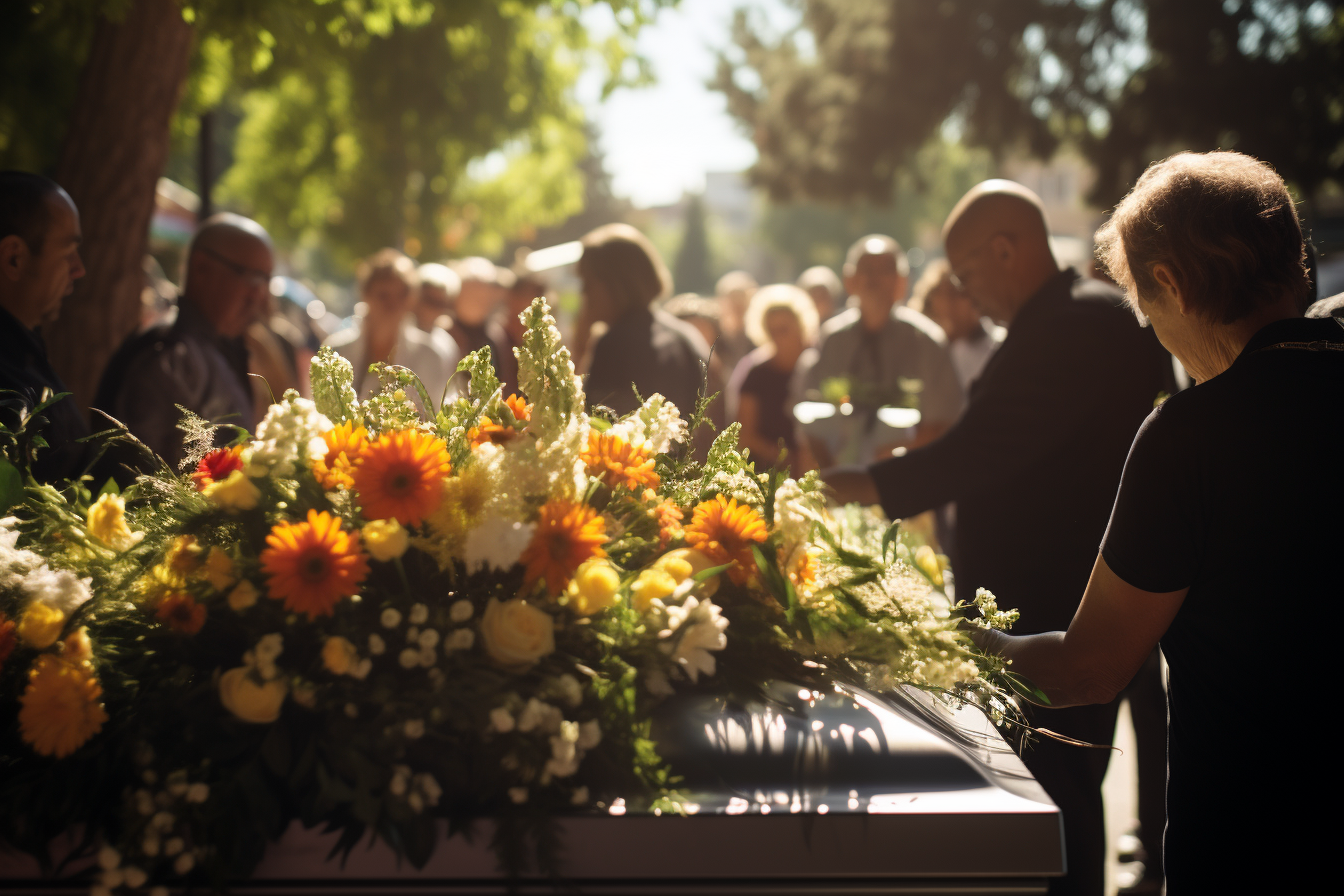
End of life care in Malaysia is provided through a network of government hospital services under the Ministry of Health, NGO-operated hospices, and private healthcare facilities. While palliative care exists within this framework, it remains severely under-resourced — only around 10% of those who require it are actually able to receive it. Following a death in Malaysia, the matter must be reported to the police and formally registered with the National Registration Department. Where the deceased is a foreign citizen, their embassy or consulate must also be informed and involved in the process.
| Item | Details |
|---|---|
| Death registration authority | National Registration Department (Jabatan Pendaftaran Negara — JPN) |
| Death registration fee | Free for natural causes (as of 2025); RM50 for late registration |
| Death registration timeframe | Death certificate typically issued within approximately one week by the NRD |
| Inheritance tax | None — Malaysia abolished estate duty in 1991 |
| Small estate threshold | Estates with immovable property not exceeding RM2,000,000 may use the simplified Small Estates Distribution process (as of 2025) |
| Palliative care access | Approximately 10% of those who need palliative care can access it (as of 2024, per MOH National Palliative Care Policy & Strategic Plan 2019–2030) |
What end of life care options are available in Malaysia, and how does the system work?
Malaysia’s approach to end of life care draws on three main pillars: government-run hospital services, hospices operated by non-governmental organisations (NGOs), and private healthcare providers. Hospital-based palliative care was first introduced in 1995 and has since become an established feature of the healthcare landscape, particularly in more recent years. As a result, most large public hospitals — especially those in urban areas — now maintain dedicated palliative care units or specialist teams.
Community-based palliative services, delivered primarily through hospice organisations as home care programmes, trace their origins to 1991, when they were pioneered by voluntary groups. These NGO-led services work in parallel with the public health system and are particularly valuable for patients who wish to spend their final months in familiar surroundings at home. Private hospitals similarly offer palliative support, generally with quicker access but at considerably greater expense.
Geographic disparities in access are significant. In the highly developed central region of Peninsular Malaysia, specialist palliative care may be available within 4 km of a patient’s home. On the less-developed East Coast, that distance increases to roughly 46 km, while in the largely rural regions of East Malaysia, the nearest basic palliative services may be as far as 82 km away — and in areas with poor road connectivity, reaching care by boat can take up to 2.5 hours. Expats living away from major city centres should plan well in advance and speak with their treating physician about what options are realistically available to them.
What is palliative care in Malaysia, and who is eligible for it?
Palliative care is not restricted to any particular age group, illness stage, or treatment status. Unlike hospice or end-of-life care, which generally begins once curative treatment has been discontinued, palliative care can run alongside active treatment and is focused on improving quality of life for anyone living with a life-threatening condition.
Palliative care takes a holistic approach, addressing the physical, emotional, psychological, and spiritual needs of the patient. Delivery typically involves a multi-disciplinary team that may include physicians, nurses, physiotherapists, social workers, and counsellors working in close collaboration. In terms of scope, this mirrors the palliative care model found in countries such as Australia, Canada, or Germany, though the consistency and availability of services throughout Malaysia varies widely depending on location.
Currently, more than 100,000 people in Malaysia require palliative care annually, a figure projected to reach 200,000 by 2030. Of those who need it today, only around 10% are able to access it. There are no formal nationality-based restrictions — eligibility is determined by clinical need — but expats depending on the public healthcare system should be aware that without private insurance, access to services may be constrained.
Are there hospices in Malaysia, and how do you access them?
Because community-based palliative services can be established more flexibly and with fewer bureaucratic barriers through non-governmental organisations, a number of NGO hospices currently operate across the country. Their reach, however, is largely confined to urban centres, owing to the practical limitations of available funding, staffing, and the infrastructure needed to serve more distant communities.
Among the best-known is Hospis Malaysia, headquartered in Kuala Lumpur. Hospis Malaysia focuses on alleviating the suffering of patients with life-limiting illnesses, with an emphasis on pain control and symptom management. All of its services are offered to patients free of charge, sustained almost entirely through donations. It represents a particularly important resource for expats residing in the Klang Valley area. Their website can be found at hospismalaysia.org.
Additional hospice organisations serve communities in Penang, Johor Bahru, Ipoh, Kuching, and other towns, many of them affiliated with the Malaysian Hospice and Palliative Care Council (MHPCC). The Hospice at Home Programme — a free community-based initiative — was first launched in the early 1990s by the National Cancer Society of Malaysia in Penang and subsequently adopted by other organisations and the Ministry of Health as part of formal palliative care services in major hospitals. Access to a hospice is most commonly obtained through a referral from a treating doctor or specialist, though organisations like Hospis Malaysia can also be approached directly.
Is palliative or hospice care covered by public health insurance or the national health system in Malaysia, or does it need to be funded privately?
Malaysia does not operate a universal national health insurance system comparable to, for instance, France’s Sécurité Sociale or Australia’s Medicare. The country runs a dual-tier arrangement: a heavily subsidised government hospital network that serves citizens and permanent residents, operating alongside a fully private healthcare sector. Expats on visitor or employment passes are generally not entitled to access government hospital services at the subsidised rates available to Malaysian nationals.
Palliative care within government hospitals is available to those who qualify to use the public system, though the capacity to meet demand is limited. For most expats, palliative care through private hospitals or private providers will need to be financed out of pocket or via private health insurance. It is critical to scrutinise your international health insurance policy to confirm whether palliative or hospice care is specifically covered, as many plans either exclude it entirely or impose tight benefit caps.
NGO hospices such as Hospis Malaysia, which funds its operations almost entirely through charitable donations, extend their free services to patients regardless of nationality. This makes them a potentially valuable resource for expats who fall within their service area and meet their clinical eligibility criteria. Demand, however, is high, and services are primarily provided within the home care setting.
What legal documents should expats have in place before the end of life in Malaysia — such as a living will, advance directive, power of attorney, or healthcare proxy — and how do these work?
Malaysia does not have a dedicated statutory framework for advance directives (living wills) in the way that other jurisdictions do — there is no direct counterpart to the UK’s Lasting Power of Attorney for health and welfare, or the healthcare proxy arrangements that exist in parts of the United States. Nevertheless, a number of legal instruments are relevant and worth putting in place well ahead of time.
A Will (governed by the Wills Act 1959) determines how your assets are distributed following death and is essential for any expat with property, savings, or financial interests in Malaysia. In the absence of a valid will, intestacy rules will govern the distribution of your estate, which may not align with your intentions. A will must be prepared in writing, signed in the presence of two witnesses, neither of whom may be a beneficiary under the will.
A Power of Attorney (PA) under the Power of Attorney Act 1949 enables you to designate another individual to handle your financial and legal affairs on your behalf. Expats should consider an enduring or irrevocable PA that continues to be operative should you lose mental capacity. A standard PA may cease to be valid upon incapacity, so careful drafting is essential — take advice from a lawyer qualified in Malaysian law.
Although Malaysia lacks a specific statutory mechanism for advance directives, it is possible to prepare a written personal statement setting out your wishes regarding medical treatment — sometimes referred to as a Living Will or Personal Statement of Wishes — and share this with your treating medical team and family. While such a document does not carry the force of statute, Malaysian medical ethics guidelines and clinical practice recognise and take into account documented patient preferences. Making your wishes clearly known to your doctors and loved ones well in advance remains an important and worthwhile step.
Are documents such as advance directives or powers of attorney made in another country legally recognised in Malaysia?
Whether a foreign legal document is recognised in Malaysia depends on its nature and the country in which it was executed. For powers of attorney drawn up overseas, Malaysia will generally recognise these provided they have been properly notarised and, where applicable, apostilled or formally legalised through the appropriate consular channels. Even so, any such document should be reviewed by a Malaysian-qualified lawyer to confirm that it is enforceable within the local legal context.
For wills and probate matters, Section 52 of the Probate and Administration Act 1959 allows for the resealing of foreign probate grants from Commonwealth countries, but estates originating from non-Commonwealth jurisdictions must make a fresh application for a grant in Malaysia. In practical terms, this means that a grant of probate obtained in the UK, Australia, or Canada, for example, can be resealed in Malaysia in a relatively straightforward manner, whereas executors representing estates from non-Commonwealth countries must apply from scratch through the Malaysian courts.
Malaysian courts do recognise the validity of foreign wills, and such wills can be enforced through resealing the grant of probate where the original grant of representation was issued in a Commonwealth country. Where the grant of representation comes from a non-Commonwealth country, it carries no direct recognition in Malaysia, and a fresh application for letters of representation must be lodged locally. Expats from non-Commonwealth countries who hold assets in Malaysia are strongly encouraged to draw up a separate Malaysian will in order to avoid complications.
What are the laws around euthanasia or assisted dying in Malaysia?
Both euthanasia and assisted dying are unlawful in Malaysia. Active euthanasia — where a third party directly brings about the death of a patient — and assisted suicide — where a person receives help in ending their own life — are both criminalised under Malaysian law. No legislative framework for physician-assisted dying exists, and as of 2025, there is no movement towards introducing one.
The ethical guidelines of the Malaysian Medical Council require doctors to uphold patient comfort and dignity at all times, but explicitly prohibit any deliberate act intended to hasten death. Decisions to withhold or withdraw treatment in situations where continued treatment no longer serves the patient’s interests — sometimes described as “allowing natural death” — are ethically and legally distinct from euthanasia, and are accepted in clinical practice where they are consistent with the patient’s wishes and best interests.
For expats, it is essential to understand that even if assisted dying is lawfully permitted in your home country, that fact has no bearing whatsoever on how Malaysian law applies. Any individual who participates in ending a patient’s life in Malaysia — regardless of their nationality or the circumstances involved — will be subject to Malaysian criminal law.
What are the local customs, traditions, and religious practices around death and dying in Malaysia?
Malaysia is a richly diverse, multi-religious society, and approaches to death and dying differ markedly across its various communities. The three principal groups — Muslim Malays, Chinese Malaysians (who may be Buddhist, Taoist, Christian, or follow a combination of traditions), and Indian Malaysians (who are predominantly Hindu or Sikh) — each observe their own distinct rituals. Expats living in Malaysia will frequently encounter these practices, particularly in the context of the broader community.
Muslim traditions: Muslims account for approximately 60% of Malaysia’s population, and Islamic rites are followed closely when a death occurs. The body should ideally be interred within 24 hours. The rituals include washing of the body (ghusl) and wrapping it in a white shroud (kafan), carried out by family or community members of the same sex as the deceased, followed by funeral prayers (Solat Jenazah) and burial with the body oriented towards Mecca. Cremation is forbidden for Muslims. A period of mourning typically follows, during which it is customary to offer condolences and join in prayer.
Chinese traditions: Funeral customs among Chinese Malaysians vary considerably depending on religious affiliation and dialect group, but commonly include an extended wake period, the burning of incense and paper offerings, and elaborate ceremonial rites. Both burial and cremation are practised. White and black are the conventional colours of mourning, and family members may wear designated mourning attire. Monetary gifts enclosed in white envelopes are a common gesture at Chinese funerals.
Hindu and Sikh traditions: Hindu funerals typically involve cremation, ideally carried out within 24 hours of death. The body is washed, specific prayers and rituals are performed, and the ashes are subsequently scattered — often in a river. Sikh funerals likewise generally involve cremation and are conducted in accordance with the Guru Granth Sahib. A period of prayers and scripture readings at the family home or at the Gurdwara typically follows the cremation.
Expats of any background are generally welcome to attend and pay their respects at funerals in Malaysia. These occasions are treated with considerable seriousness, and if you attend, the appropriate approach is to follow the family’s lead, dress modestly, and graciously accept any refreshments offered as a mark of respect.
What must you do when someone dies in Malaysia? Who do you notify, how quickly, and in what order?
When a death occurs, there are several critical steps that must be taken promptly to manage both the practical arrangements and the official requirements. The precise sequence differs slightly depending on whether the death happened in a hospital or elsewhere. The steps below outline the recommended course of action following a death outside of hospital, which is typically the more complex scenario to navigate.
- Do not move the body. According to Malaysian law, the body of the deceased who did not pass away in a hospital should not be moved from the scene. This can only be done by official personnel such as the police or ambulance staff.
- Call emergency services. Call 999 to confirm the death if the person has died at home or outside a hospital or clinic. Request both an ambulance and police attendance.
- Contact the police. Report to the police to obtain a burial permit. If the death is suspicious, the case will be referred to the police for investigation and may involve a post-mortem.
- Have the death confirmed by a medical officer. The death must be officially pronounced by someone with authority, such as a doctor. Upon examining the deceased, the cause of death will be verified and a Certificate of Cause of Death (CCOD) will be issued.
- Transfer the body to a hospital or mortuary. After the death has been recorded by the police, the body of the deceased is then taken to a hospital. If taken by the police this will be a government hospital, although the family can choose to take the body to a private hospital by ambulance if they prefer.
- Collect the Letter of Release and Burial. Family members may collect the body from the hospital after the deceased has been examined by a doctor and a Letter of Release and Burial (Surat Kebenaran Pengkebumian) has been issued.
- Notify the deceased’s embassy or consulate. If the deceased is a foreign national, contact their home country’s embassy or consulate as soon as possible. The copy of the police statement and original police report should be taken to the deceased’s embassy to officially declare the death.
- Register the death with the National Registration Department (JPN). Any death in Malaysia must be reported to the National Registration Department (NRD/JPN), which issues the death certificate (sijil kematian).
- Arrange the funeral. For Muslims, contact the mosque funeral management team. For non-Muslims, funeral arrangements will follow their respective religious rites. Engage a licensed funeral director to assist with the logistics.
How is a death officially registered in Malaysia, and what documents are needed?
Formal death registration is a responsibility that falls to the next of kin and is required in order to obtain an official death certificate. This document serves as the legal basis for managing the deceased’s estate and for all other official matters arising from the death. Every death in Malaysia must be registered with the National Registration Department (Jabatan Pendaftaran Negara — JPN).
In Peninsular Malaysia, there are two main pathways for registering a death: through the hospital, the Royal Malaysia Police (PDRM), or Kuala Lumpur City Hall; or directly by the next of kin. Registration can be completed at any NRD branch in Peninsular Malaysia.
The principal documents required when registering the death of a foreign national include:
- The deceased’s passport (original)
- The next-of-kin’s or appointed person’s passport
- Certification by a medical practitioner of the cause of death (form JPN.LM09 or JPN.LM10 for post-mortem cases) if the death occurred in hospital
- A copy of the police report (if applicable)
- The completed NRD form JPN.LM02, available at NRD offices
Registration of a death from natural causes carries no fee, and the death certificate is typically issued by the NRD within approximately one week. A late registration fee of RM50 applies where registration is delayed. The official JPN portal is available at jpn.gov.my.
What happens if a foreign national dies in Malaysia — what are the specific steps for notifying their home country’s embassy or consulate, and what role does the consulate play?
When a foreign citizen dies in Malaysia, the embassy or high commission representing their home country assumes a central role: supporting the family through an extremely difficult situation, facilitating communications with official bodies, and assisting in the process of repatriation. The relevant embassy or consulate should be contacted at the earliest possible opportunity — ideally on the same day the death occurs.
In Malaysia, the deceased’s visa status is a key factor in determining whether the body is cremated or buried. The cause of death must also be established, as different legal procedures apply depending on the circumstances. Where the deceased held a work permit, the body is typically cremated and repatriated; cremation may be bypassed only in exceptional circumstances. Where the deceased held a Malaysia My Second Home (MM2H) visa, burial within Malaysia may be permitted.
The consulate will typically assist with:
- Issuing an emergency travel document for the deceased if their passport has been retained
- Providing a list of local funeral directors experienced in international repatriation
- Advising on the official documentation required by both Malaysia and the receiving country
- Notifying next of kin in the home country if they cannot be reached directly
- Liaising with Malaysian authorities, including the police and NRD, on the family’s behalf
- Providing consular death registration (note: this is separate from the Malaysian NRD registration)
You will generally need to furnish the consulate with a copy of the Malaysian death certificate, the police report, and the deceased’s passport. Always consult your specific country’s embassy website for their precise procedures, as requirements can differ. A directory of foreign embassies in Malaysia is maintained by the Ministry of Foreign Affairs at kln.gov.my.
How are funerals typically arranged in Malaysia, and what are the usual options for burial or cremation?
Funeral arrangements in Malaysia are typically managed by the immediate family, usually with the assistance of a licensed funeral director or undertaker. The available options and the customs followed differ considerably depending on the deceased’s religion and community background. Both burial and cremation are widely practised in Malaysia, with the choice largely determined by religious tradition.
For Muslims, Islamic requirements mandate burial — cremation is not permissible. Interment takes place in a Muslim cemetery, customarily within 24 hours of death, with the local mosque and its community typically coordinating the religious rites. For non-Muslims, the choice between burial and cremation is generally open. Chinese Malaysian families may opt for either; Hindus traditionally cremate; Christians may prefer burial, although cremation is increasingly accepted within many Christian communities.
Funeral directors manage the practical logistics: embalming (which is generally required for international repatriation), obtaining the necessary official permits, coordinating with mortuaries, arranging transport, and booking cemetery or crematorium facilities. Many funeral homes in Malaysia’s larger cities have considerable experience in handling the additional complexities that arise when a foreign national dies, including familiarity with the documentation required for repatriation. Choosing a reputable, licensed funeral director is advisable — your embassy is usually able to provide a list of recommended providers.
In the immediate aftermath of a death, whether of a family member, a friend, or a colleague, the first priority is to call an ambulance and notify the nearest police station. If the death has taken place at home, it is important that the body remains undisturbed, as Malaysian law requires that the body of a person who did not die in hospital may only be moved by authorised official personnel.
What are the approximate costs of a funeral in Malaysia, and are there any state or insurance-based funds that can help cover them?
Memorial services can range from RM1,300 to RM10,000, while caskets vary in price from approximately RM700 to RM10,000 depending on the type and materials chosen. In broad terms, a straightforward local funeral in Malaysia — whether burial or cremation — for a non-Muslim without an elaborate ceremony might amount to between RM3,000 and RM15,000 in total. A more elaborate service, or one that incorporates international repatriation, will cost substantially more. These figures are indicative; actual costs should be verified directly with funeral service providers at the time.
There is no state-funded funeral benefit available to foreign nationals in Malaysia. The government does not operate a death grant or funeral payment scheme akin to the UK’s Funeral Expenses Payment or comparable social security provisions available in various European countries. All costs must be met by the family or drawn from the deceased’s estate.
Some private life insurance and international health insurance policies include a funeral or repatriation benefit — it is worth reviewing your policy carefully for such provisions. If the deceased was employed in Malaysia, their employer may have held a group life insurance policy providing a death-in-service payment. Employees who contributed to Malaysia’s Employees Provident Fund (EPF / KWSP) may have a balance that can be claimed by registered nominees or next of kin — current procedures are available through the EPF portal at kwsp.gov.my.
What is the process for repatriating the remains of a foreign national from Malaysia to another country?
Repatriating a body from Malaysia is a multi-agency undertaking that can take anywhere from several days to several weeks, depending on the circumstances surrounding the death and the documentation requirements of the receiving country. Engaging a funeral director with experience in international cases as early as possible is strongly advisable.
The general process involves the following steps:
- Obtain the Malaysian death certificate from the National Registration Department (JPN).
- Obtain a police report if the death was sudden, unnatural, or occurred outside a hospital.
- Arrange embalming of the body — this is typically required for international repatriation and must be performed by a licensed mortician.
- Obtain an embalming certificate and a sealing certificate (confirming the casket is properly sealed) from the funeral director.
- Apply for a permit to export human remains from the Malaysian Ministry of Health (specifically through the Disease Control Division — Unit Kawalan Penyakit Berjangkit). This export permit is required before the body can leave Malaysia.
- Obtain approval from the receiving country — the consulate of the destination country will advise on the import permit or documentation required at their end.
- Coordinate with an international freight forwarder or airline — specialist repatriation services and cargo airlines handle the logistics of transporting human remains.
- Notify the home country’s embassy and obtain any consular death certificate or confirmation letter they require for the receiving country’s authorities.
Where the death was sudden or has prompted a post-mortem examination, repatriation cannot proceed until the coroner or investigating authority formally releases the body — a process that may add several additional days or weeks to the timeline. International repatriation insurance, which is frequently included within travel insurance or expat health policies, can significantly reduce both the financial strain and logistical pressure on the family during this time.
What happens to the estate of someone who dies in Malaysia — how does probate or estate administration work, and are there inheritance taxes?
Malaysia levies no inheritance tax. The transfer of assets upon death is not subject to taxation, even though the estate administration process — including probate — still applies. Taxes on estates were in force historically but were repealed in 1991. While the topic of reintroduction has been raised in subsequent years, no such tax had been enacted under Malaysian law as of 2025.
It should be noted, however, that other taxes may come into play depending on the circumstances of asset disposal. Real Property Gains Tax (RPGT), for example, may be relevant where Malaysian property is sold during the administration of the estate. Executors should seek professional tax advice regarding any income generated by the estate during the administration period, as well as any capital gains arising from the sale of Malaysian assets.
Estate administration in Malaysia falls under the Probate and Administration Act 1959. The appropriate jurisdiction for obtaining a grant of representation depends on the value of the estate and the nature of the assets involved. Where the deceased left a valid will, the application for a grant of probate is made to the High Court of Malaya.
The majority of cases require either probate (where a will exists) or letters of administration (where there is no will). These court-sanctioned processes confer the legal authority to manage and distribute the estate. An application for a grant of probate or letters of administration may be filed at any point following death, but it is advisable to do so promptly — and at the latest within three months of the date of death.
A “small estate” is defined as the estate of a deceased person consisting wholly or partly of immovable property with a total value not exceeding RM2,000,000 at the time of the application for summary administration. Such estates may be administered through the Small Estates Distribution Unit, which offers a simpler and more cost-effective route than applying to the High Court.
If an expat dies without a will in Malaysia, what happens to their assets under local intestacy laws?
Dying without a valid will — referred to legally as dying intestate — triggers a set of statutory rules that determine how the deceased’s assets are allocated. These rules differ substantially depending on whether the deceased was Muslim or non-Muslim.
For non-Muslim foreign nationals, once a grant of letters of administration has been obtained, the administrator is required to distribute the estate in accordance with the Distribution Act 1958. This legislation prescribes defined shares for surviving spouses and children and also addresses particular situations such as the rights of adopted children.
For Muslim foreign nationals, if the deceased did not leave a wasiat (an Islamic will), the entire estate will be distributed according to faraid — the system of inheritance prescribed under Islamic law. The order of priority during distribution is as follows: funeral expenses are met first, followed by the settlement of any outstanding debts owed by the deceased. Only once these obligations have been discharged can the remaining estate be divided among the rightful beneficiaries in accordance with Syariah law.
It is important to bear in mind that Malaysian intestacy law governs only those assets that are physically located within Malaysia. Assets held in other countries will be subject to the intestacy rules of those respective jurisdictions. Expats holding assets across multiple countries are strongly encouraged to draw up wills that address each relevant jurisdiction separately, and to seek guidance from a legal practitioner experienced in cross-border estate planning.
Frequently asked questions
Will my international health insurance cover palliative or hospice care in Malaysia?
The answer depends entirely on the specifics of your policy. A significant number of international health insurance plans either exclude palliative and hospice care altogether or apply stringent benefit limits. Read your policy documents thoroughly and speak with your insurer before you find yourself in need of such care. NGO hospices such as Hospis Malaysia offer services free of charge, funded through charitable donations, and may be an option irrespective of your insurance position.
Are documents in English — such as a will or power of attorney — valid in Malaysia?
NRD forms are available in both English and Malay, and staff can help with filling them out. A will drafted in English is generally acceptable under Malaysian law, provided it satisfies the formal requirements of the Wills Act 1959 — that is, it must be in writing, signed by the testator, and witnessed by two individuals who are not beneficiaries under the will. Powers of attorney and other legal documents prepared in English are similarly accepted in most contexts. Where a document is intended for use before a Malaysian court or government body, having an official Malay translation prepared is considered good practice.
How long does the process of repatriating a body from Malaysia typically take?
Where the death was anticipated and all required documentation is readily available, repatriation can typically be arranged within five to ten working days. However, where a post-mortem is required, where the cause of death remains under investigation, or where administrative complications arise with permit applications, the process may extend to two to four weeks or beyond. Appointing an experienced funeral director without delay and notifying the home country’s embassy immediately are the most effective ways of keeping the timeline as short as possible.
Does Malaysia recognise advance directives or living wills made in another country?
Malaysia has no dedicated statutory framework for advance directives, whether prepared domestically or abroad. A foreign advance directive does not carry automatic legal binding force on Malaysian healthcare professionals. That said, bringing a written record of your treatment preferences to your medical team and ensuring that family members are able to articulate your wishes remains worthwhile, since Malaysian medical ethics guidelines do give weight to documented patient preferences when making clinical decisions.
What support is available to bereaved family members in Malaysia?
Compared with countries where palliative care infrastructure is more established, formal bereavement support in Malaysia is relatively limited. Hospis Malaysia extends some support to the families of patients it has cared for. Religious communities — including mosques, churches, temples, and community organisations — often step in to provide informal care and companionship during bereavement. Expat networks and embassy welfare officers may also be able to offer signposting to relevant services or practical assistance. Private counselling is available in the major urban centres.
Can a foreign national be buried in Malaysia rather than repatriated?
Where the deceased held a work permit, the body is generally cremated and repatriated, with burial in Malaysia occurring only in exceptional circumstances. Where the deceased held a Malaysia My Second Home (MM2H) visa, burial within Malaysia may be an option. Muslim foreign nationals may be interred in Muslim cemeteries in Malaysia regardless of visa category, subject to local arrangements. Families should discuss the available options with the funeral director and with the deceased’s embassy.
Does an executor based outside Malaysia need to come to Malaysia to administer the estate?
Not necessarily for every step, but core elements of the process — including obtaining a grant of probate from the Malaysian High Court and overseeing the transfer of Malaysian assets — typically require local legal representation. Retaining a Malaysian lawyer with expertise in probate matters is strongly recommended for overseas-based executors looking to navigate this process efficiently. Many Malaysian law firms are accustomed to representing executors who are resident abroad.
What happens to an EPF (Employees Provident Fund) balance when an expat employee dies in Malaysia?
Where the deceased was an EPF contributor, the balance held in their account can be claimed by the beneficiary they nominated when registering with the EPF. If no nominee was ever designated, the funds are released to the administrator of the estate upon production of the relevant legal authority — either a grant of probate or letters of administration. EPF nominations are entirely separate from testamentary dispositions under a will and should be reviewed and updated whenever there are changes in family circumstances. Up-to-date guidance on the death claims process is available at kwsp.gov.my.