
Malta operates a mature palliative care system centred on Hospice Malta, a voluntary organisation that delivers all its services at no cost, alongside hospital-based care at Mater Dei. Following a death in Malta, the event must be reported promptly to the Malta Public Registry (Identità), and a doctor is obliged to issue a formal death certificate. Expats are strongly encouraged to put their legal affairs in order well in advance and to note that euthanasia is unlawful in Malta — a nation where Catholic faith shapes both social policy and the customs surrounding death.
| Item | Details |
|---|---|
| Main palliative care provider | Hospice Malta (St Michael Hospice, Santa Venera) — all services free of charge (as of 2025) |
| Inpatient hospice beds | 16-bed inpatient unit at St Michael Hospice (as of 2025) |
| Death registration authority | Malta Public Registry (Identità) — no fee charged for notification (as of 2024) |
| Cremation | Legal in Malta since 2019 (Act 17 of 2019) |
| Euthanasia / assisted dying | Illegal in Malta |
| Inheritance tax | No inheritance tax in Malta; 5% stamp duty applies to property transfers (as of 2024) |
What end of life care options are available in Malta, and how does the system work?
People approaching the end of life in Malta can draw on both the public health system and the services of a prominent voluntary organisation. Mater Dei Hospital, the country’s principal acute public hospital, provides hospital-based care for seriously ill patients, including dedicated oncology services delivered through the Sir Anthony Mamo Oncology Centre (SAMOC). Community and palliative support is then largely coordinated through Hospice Malta, which operates alongside the hospital network rather than within it.
Hospice Malta’s overarching philosophy is to keep patients within their own homes and communities for as long as possible. The majority of those receiving palliative care in Malta are therefore supported in familiar surroundings, with regular input from a multidisciplinary team. Where more intensive assistance is needed, day therapy services and inpatient facilities are available at the St Michael Hospice site.
Pain management and symptom control are delivered by teams that include doctors, nurses, psychologists, and social workers. The model is deliberately holistic — physical, emotional, psychological, and spiritual dimensions of care are all addressed, extending that support to the patient’s family as well.
What is palliative care in Malta, and who is eligible for it?
Palliative care in Malta aligns with the World Health Organisation’s definition: its goal is to improve the quality of life and ease suffering for individuals living with life-limiting conditions. Hospice Malta’s philosophy reflects a careful equilibrium between honouring life and accepting mortality’s natural course — the intention is neither to accelerate nor to delay death, but to accompany the patient and their loved ones through the journey in the fullest sense.
Hospice Malta extends its services to patients with cancer, Motor Neuron Disease (also referred to as ALS), Creutzfeldt-Jakob disease, multiple sclerosis, and a range of other life-limiting illnesses affecting the heart, lungs, liver, and kidneys. Eligibility is determined by clinical need and diagnosis, with no restriction based on nationality.
The national palliative care strategy identifies an ongoing challenge in delivering specialist services equitably to Gozo, Malta’s sister island. Residents of Gozo are advised to contact Hospice Malta directly to establish what is currently available to them. The Ministry for Health and Active Ageing has published a National Palliative Care Strategy for Malta 2025–2035 that maps out long-term objectives for broadening access across both islands.
Are there hospices in Malta, and how do you access them?
Hospice Malta is a non-governmental organisation that provides comprehensive palliative care without charge. In January 2025, the organisation relocated to a purpose-built complex — a 15,000-square-metre facility in Santa Venera, constructed on the site of the former Adelaide Cini Institute. The setting is intentionally peaceful, with 60% of the grounds dedicated to gardens and open spaces.
The new facility allows Hospice Malta to extend its community-based services, including day therapy and outpatient clinics, while adding a 16-bed inpatient palliative care unit — the first dedicated facility of its kind in Malta — offering a genuinely comprehensive continuum of care.
Access typically begins with a referral from Mater Dei Hospital or the Sir Anthony Mamo Oncology Centre. The referral form may be submitted to Hospice Malta by post or email, and the organisation aims to respond within 24 hours of receiving a request for help, making sure the patient has all necessary equipment from the outset — at no cost, like every other element of its service. Hospice Malta can be reached through their website at hospicemalta.org.
The Day Therapy Unit provides a supportive environment offering respite and a range of therapeutic activities, but services extend well beyond this hub. Hydrotherapy, home care assistance, patient transport, equipment lending, and hospital liaison collectively underpin a truly holistic model of care.
Is palliative or hospice care covered by public health insurance or the national health system in Malta, or does it need to be funded privately?
All of Hospice Malta’s palliative care services are provided free of charge. Funding comes from a combination of government support, EU grants, donations, and corporate sponsorship. The St Michael Hospice complex in Santa Venera was developed with government backing through an €8 million contribution from the National Development and Social Fund (NDSF).
Malta’s public healthcare system is accessible to residents who meet the qualifying criteria — including EU citizens exercising treaty rights and long-term residents with the appropriate entitlements — who can use hospital-based services at no direct cost. Unlike systems such as the UK’s NHS, where palliative care is delivered as an integrated component of the public hospital service, Malta places significant reliance on Hospice Malta as its primary community palliative care provider, operating as an independent voluntary body that complements rather than duplicates the public hospital system.
Expats holding private health insurance should review their policy to determine whether palliative or hospice-level care is included. Given that Hospice Malta’s services carry no charge, private insurance is not a prerequisite for accessing its support; however, it may become relevant for those who wish to use private hospital facilities or seek specialist consultations outside the public system. It is always worth clarifying the scope of your policy with your insurer before any need arises.
What legal documents should expats have in place before the end of life in Malta — such as a living will, advance directive, power of attorney, or healthcare proxy — and how do these work?
Having the right legal documents in place well ahead of any medical crisis is something all expats living in Malta should prioritise. Malta operates under civil law, and notarisation is generally required for documents to carry legal force. This applies to key instruments such as wills and powers of attorney.
An advance care directive (sometimes called a living will) allows you to record your preferences regarding medical treatment in scenarios where you are no longer able to communicate those wishes yourself. Such a document can specify your position on life-sustaining interventions, resuscitation, artificial nutrition, and whether you wish care to be focused purely on comfort and dignity.
A power of attorney authorises a person you trust to handle financial and legal matters on your behalf if you lose capacity. In Malta, a power of attorney must be executed before a Maltese notary to be enforceable. A separate healthcare proxy or medical power of attorney designates an individual to make medical decisions on your behalf. Ensure that your treating physician and any hospital you are admitted to hold copies of these documents.
A will (testament) is indispensable for any expat who holds assets in Malta. Registering your will with the Public Registry provides an important layer of security. Wills in Malta are generally required to be executed before a notary and two witnesses. A Maltese notary or lawyer should be consulted to ensure all documents satisfy local legal requirements. The Identità website offers further information on public registry services.
Are documents such as advance directives or powers of attorney made in another country legally recognised in Malta?
Malta is an EU member state and a party to international conventions relating to the recognition of foreign documents, but whether a document prepared abroad will be upheld in Malta depends on the circumstances of its preparation and whether it satisfies Maltese legal requirements.
Public documents that are not in the English language must be translated into Maltese or English. Where one or more fields are in a language other than English or Maltese, a translation of those specific fields is required for processing purposes. This rule applies to documents submitted to Identità and other Maltese public authorities.
For powers of attorney and advance directives originating in another country, Malta generally requires that the document be properly apostilled under the Hague Apostille Convention — to which Malta is a signatory — and in some cases notarised or legalised in accordance with the laws of the country where it was created. Foreign documents are accepted when they meet Maltese legal requirements. Given the complexity of cross-border legal recognition, expats are strongly advised to have their key documents assessed and, where necessary, redrawn by a Maltese notary. The Malta Public Registry (Identità) should be consulted for its current position on recognising foreign public documents.
What are the laws around euthanasia or assisted dying in Malta?
Both euthanasia and assisted dying are unlawful in Malta. The country maintains one of the most restrictive legal positions on this matter within the European Union, a stance that reflects Malta’s deeply rooted Catholic heritage and the enduring influence of the Church on public policy. No legislative proposals that would alter this position are currently in force.
Healthcare professionals in Malta are required to provide care that prioritises the relief of suffering and the preservation of dignity, but taking deliberate steps to end a patient’s life is prohibited under any circumstances. The palliative care framework — emphasising comfort, pain management, and quality of life — is the recognised and accepted approach. Expats arriving from countries where assisted dying is permitted (such as the Netherlands, Belgium, Canada, or certain Australian states) must be aware that no such arrangement can be made in Malta, and that Maltese law makes no provision for advance requests for assisted dying to be honoured within its territory.
What are the local customs, traditions, and religious practices around death and dying in Malta?
Roman Catholicism is the dominant faith in Malta, and it permeates the customs and rituals surrounding death and mourning. Religion sits at the very heart of how Maltese people approach the end of life, mark its arrival, and grieve its passing. The seriously ill are typically administered the Anointing of the Sick (last rites), and religious ceremonies form an integral part of funeral practice.
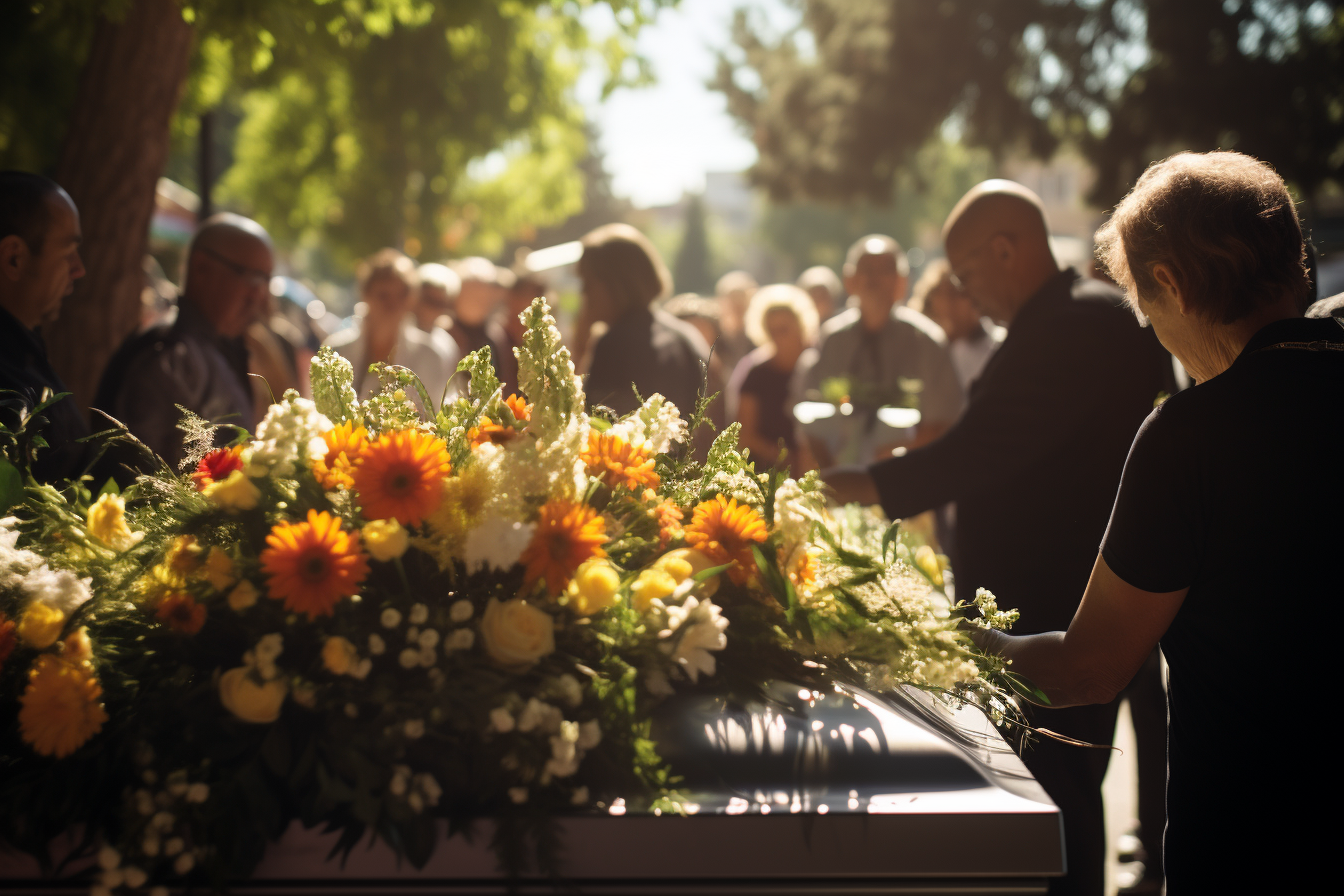
It is customary to hold a wake in which the body is laid out — either at the family home or at a funeral parlour — for one or two days, allowing relatives and friends to pay their respects before the funeral Mass. Funerals are usually conducted in a Catholic church and conclude with burial in a local cemetery. Mourners conventionally wear black, and the period of bereavement is treated with deep solemnity in Maltese culture; family members may wear black for weeks or even months following a death.
Expats of different faiths or of no religious affiliation generally find Malta respectful of varying beliefs and practices. Non-Catholic religious ceremonies can be facilitated through international congregations or faith communities with a presence on the islands. Civil funerals — without any religious element — are entirely permissible and can be arranged through a funeral director. It is also worth noting that cremation became a legal option in Malta under Act 17 of 2019, representing a significant shift for a country where burial had historically been the only available choice, partly on religious grounds.
Bereavement support is provided by Hospice Malta. These services create a safe space for those left behind, encompassing memorial events, individual sessions, and structured group support.
What must you do when someone dies in Malta? Who do you notify, how quickly, and in what order?
Under Article 296 of the Civil Code (Chapter 16 of the Laws of Malta), notice of a death must be given without delay by the physician or surgeon who becomes aware of the death of any person in Malta or Gozo. The steps below set out the process in sequence:
- Call a doctor immediately. When a person dies at home, a medical doctor must issue a certificate recording the name, address, cause, and time of death. Where the death takes place in hospital, the attending medical team assumes responsibility for this step.
- Obtain the DH35 Certificate. The DH35 Certificate of Death and Cause Thereof is issued by the certifying doctor and forms a mandatory part of the death notification process.
- Notify the Malta Public Registry (Identità) without delay. Notification may be made in person at the Malta Public Registry Offices at Mater Dei Hospital, Msida, or at Onda Building, Aldo Moro Road, Marsa (for deaths occurring in Malta), or at the Gozo Public Registry, George Borg Olivier Street, Victoria (for deaths in Gozo) — or online via the Identità website, or by post.
- Complete the Declaration for Notification of Death Form. This form is available from the Malta Public Registry offices in Marsa, at Mater Dei Hospital in Msida, and at the Gozo Public Registry in Victoria.
- Provide identification documents. The notifier must present their identity card along with any other documentation required based on the civil status of the deceased.
- Notify the deceased’s embassy or consulate if the deceased was a foreign national (see the dedicated section below for full details).
- Contact a funeral director. Following the death, the practical arrangements for the funeral — whether burial or cremation — are typically managed by a licensed funeral director.
- Obtain the Act of Death. Once the death has been notified and processed by the Public Registry, it is formally registered and an Act of Death is produced, subject to receipt of documentation from health and other relevant authorities. The notifier is informed of registration by SMS or email.
- Obtain a burial permit from the Department of Environmental Health. A permit for the interment of human remains is required for every death.
- Order certified copies of the death certificate for legal and administrative purposes — including estate matters, insurance claims, and pension notifications. Certified copies can be ordered via the Public Registry website at www.certifikati.gov.mt.
How is a death officially registered in Malta, and what documents are needed?
Maltese law requires every death to be registered with the Malta Public Registry, which then issues a document known as the “Act of Death.” This certificate is the definitive proof that an individual has died. Most authorities will insist on seeing an Act of Death issued by the Public Registrar and will not treat any other declaration as sufficient.
No fee is charged for submitting a death notification. The documents required are the completed Declaration for Notification of Death Form, the DH35 medical certificate, and the notifier’s proof of identity. Public documents not already in English or Maltese must be accompanied by a certified translation before being submitted to the relevant authority.
A post-mortem examination is routinely carried out in all deaths and is always performed when the cause of death is not natural. A hospital doctor may also request a post-mortem for a natural death when the cause remains unclear. Families should be aware that this can extend the timeline for releasing the body and completing registration, and should factor in potential delays where such circumstances apply.
The registration process can be completed in person at any of the Public Registry offices, online via the Identità notifications portal, or by post. Death notification officers are on hand at the offices in Marsa, Mater Dei Hospital, and the Gozo Public Registry in Victoria to guide notifiers through the process.
What happens if a foreign national dies in Malta — what are the specific steps for notifying their home country’s embassy or consulate, and what role does the consulate play?
When a foreign national dies in Malta, the death must be registered with the Maltese authorities — Identità and the Public Registry — in exactly the same manner as for any death occurring on Maltese soil. Simultaneously, the embassy or consulate of the deceased’s home country should be informed as promptly as possible; most consular services recommend contact within 24 to 48 hours of the death.
The consulate’s role generally encompasses: formally confirming the death to the authorities in the deceased’s home country; assisting with travel documentation required for repatriation; acting as a liaison between local authorities and the family; supplying a list of local funeral directors and legal professionals; and, where necessary, notifying next of kin who may be overseas. The consulate does not bear the cost of funeral or repatriation arrangements but can provide meaningful practical guidance and referrals.
Consular services differ in their procedures from country to country. Families of deceased EU passport holders should contact that nation’s embassy in Malta. The Maltese police will conduct a full investigation into any death, and there are no separate procedures applicable to deaths involving children. When a death is under investigation, the consulate should be notified immediately so that it can follow proceedings and provide support to the family.
Expats are advised to keep a record of their home country’s consular contact details in Malta. A comprehensive list of foreign embassies and high commissions accredited to Malta is available through the Maltese Ministry for Foreign Affairs.
How are funerals typically arranged in Malta, and what are the usual options for burial or cremation?
Funerals in Malta are most commonly organised through a licensed funeral director — known locally as an imprenditur tal-fwinar. The funeral director takes charge of the logistical aspects: collection and transportation of the body, preparation, the wake, the funeral ceremony itself, and either burial or cremation. Most funeral homes in Malta offer packages that encompass all of these elements.
Burial remains the prevailing choice and is deeply woven into Maltese Catholic culture. Interments take place in government-owned or church-administered cemeteries across Malta and Gozo. In government-owned cemeteries, burial may be carried out either in a privately owned grave or in a communal grave. Privately owned plots must be formally registered and maintained by the plot owner.
Cremation was legalised in Malta under Act 17 of 2019. Although it remains less prevalent than burial, it is an increasingly accessible option. Expats who wish to be cremated should confirm the current availability and location of cremation facilities with their chosen funeral director, as the supporting infrastructure was still being developed at the time of writing. Ashes may be retained by the family, interred, or scattered, subject to any applicable permits.
In addition to the standard burial permit, a separate permit is required specifically for the repatriation of human remains to another country. In most cases, the funeral director will manage the permit application process on behalf of the family.
What are the approximate costs of a funeral in Malta, and are there any state or insurance-based funds that can help cover them?
Funeral costs in Malta depend on a range of factors including the type of ceremony, whether burial or cremation is chosen, and the funeral home selected. As a general indication (as of 2024–2025), a basic funeral in Malta may start at approximately €1,500, while a full traditional Catholic funeral with burial can reach €4,000 or more. Cremation costs may vary from these figures. Always request a detailed written quote from a funeral director before committing, as prices differ considerably between providers.
Expenses relating to funeral services are exempt from VAT; however, the reimbursement is only received after presenting relevant receipts to the Commissioner for Revenue. This means the full VAT-inclusive amount is typically paid upfront and reclaimed later. All funeral expenses are settled from the estate of the deceased, and such expenses rank as privileged debts — this means that whoever funds the funeral is entitled to reimbursement from the estate as a priority creditor.
Malta’s social security system does not currently offer a dedicated funeral payment grant comparable to those available in some other countries, such as the UK’s Funeral Expenses Payment or New Zealand’s Funeral Grant. Expats should review their private health or life insurance policy to determine whether a death benefit or contribution towards funeral costs is included, as many international health insurance plans incorporate some element of repatriation or funeral assistance. Always verify current benefit levels and eligibility criteria directly with your insurer.
What is the process for repatriating the remains of a foreign national from Malta to another country?
Repatriating human remains from Malta is a formal undertaking that requires close coordination between the funeral director, Maltese authorities, and the receiving country. In uncomplicated cases the process generally takes at least five to ten working days; where a post-mortem or police investigation is involved, it can take considerably longer.
The principal steps include: obtaining the Act of Death from the Public Registry; securing a burial permit from the Department of Environmental Health — which is specifically required for the repatriation of human remains, in addition to those required for standard burial. The body must be embalmed to satisfy international transport standards, and a zinc-lined coffin is typically required for transportation by air.
The home country’s embassy or consulate will usually need to issue a laissez-passer (a travel document for human remains) or an equivalent authorisation. The airline transporting the remains will impose its own specific requirements — your funeral director will be able to advise on these. An original signed death certificate from the treating or certifying doctor is a prerequisite for the burial permit to be issued. All documentation must be in order before the body can leave Maltese territory.
The costs of repatriation are substantial and are not covered by the Maltese state. International travel insurance and certain life insurance policies include repatriation benefits — reviewing your policy before travelling to or settling in a foreign country is one of the most important protective steps an expat can take.
What happens to the estate of someone who dies in Malta — how does probate or estate administration work, and are there inheritance taxes?
Malta does not operate a formal probate process in the manner familiar to people from common law jurisdictions such as the UK, Ireland, or Australia — there is no court-issued grant of probate as such. Estate administration in Malta falls under the Civil Code (Chapter 16, Laws of Malta) and follows a civil law approach. An heir typically accepts or formally renounces an inheritance through a declaration, usually made before a notary.
Where a valid will exists, the executor named in it — frequently a notary in Malta — administers the estate. If no executor has been appointed, the heirs must manage the estate collectively or designate a representative. Engaging a Maltese lawyer or notary is strongly recommended, particularly where property or significant assets are concerned.
Estate planning in Malta is complicated by forced heirship provisions, which constrain the freedom to distribute assets as one chooses. Under Maltese forced heirship law — known as the reserved portion or legitim — a defined share of the estate must pass to certain close relatives, typically children and in some circumstances a surviving spouse, regardless of the contents of the will. Expats should take this into account when planning their affairs.
Malta levies no inheritance tax. A 5% stamp duty applies to property transfers (as of 2024). Further taxes may be applicable depending on the nature of the assets and the residence status of the heirs. A qualified Maltese notary or tax adviser should be consulted for current guidance, particularly where an estate has cross-border dimensions.
If an expat dies without a will in Malta, what happens to their assets under local intestacy laws?
Where a person dies intestate (without a valid will) in Malta, their estate is distributed in accordance with the Maltese intestacy provisions set out in the Civil Code. The estate is allocated according to a defined hierarchy, with the surviving spouse and children accorded priority as primary heirs. More distant relatives inherit only in the absence of a surviving spouse or children.
For expats, the position is further shaped by EU Succession Regulation 650/2012, which applies across all EU member states including Malta. This regulation generally provides that the law of the country where the deceased was habitually resident at the time of death governs the succession. Consequently, if you were habitually resident in Malta, Maltese law is likely to apply to your entire estate — encompassing assets held in other countries — unless you made a valid election in your will for the law of your nationality to apply instead.
Forced heirship rules continue to apply under intestacy, meaning the estate cannot simply pass to a surviving partner or close friend if children or other qualifying relatives are alive. Unmarried partners have no automatic entitlement under Maltese intestacy law — a fact that makes it especially important for couples who are not legally married or in a registered civil union to have a valid will in place. Expats with assets spread across multiple jurisdictions should seek specialist cross-border legal advice. The Maltese Ministry for Justice and the Chamber of Advocates can provide referrals to suitably qualified Maltese lawyers.
Frequently asked questions
Is foreign travel or health insurance accepted for end of life care in Malta?
Malta’s public healthcare system is available without charge to those entitled to use it — primarily EU citizens exercising treaty rights and qualifying long-term residents. Hospice Malta’s palliative care services are free of charge and require no insurance coverage whatsoever. For private hospital accommodation or specialist consultations outside the public system, private health insurance is accepted by many private clinics. You should always confirm with both your insurer and the healthcare provider that your specific policy will be honoured, and obtain prior authorisation where your policy requires it.
Are documents in English legally valid in Malta?
Malta has two official languages — Maltese and English — and documents already drafted in English are generally accepted by public bodies without the need for translation. Public documents not in English or Maltese must be accompanied by a certified translation before they can be submitted to the Public Registry or any other Maltese authority. Documents in third languages will therefore require a certified translation prior to submission.
How long does the process of repatriating remains typically take from Malta?
In straightforward cases, repatriating remains from Malta takes a minimum of five to ten working days; the timeline extends considerably when a post-mortem examination or police investigation is required. The process involves obtaining the Act of Death, securing a burial permit, obtaining consular authorisation, arranging embalming, and ensuring compliance with all import requirements of the receiving country. Appointing an experienced funeral director in Malta at the earliest opportunity is the most effective way to keep delays to a minimum.
What support is available to bereaved family members in Malta?
Hospice Malta’s commitment does not end with the patient — it extends to the family members who share in the journey. Bereavement services include memorial events, individual counselling sessions, and structured group support programmes, providing a safe environment for those who are grieving. Counselling and psychological support may also be accessed through private practitioners, and a number of religious communities extend pastoral care and grief support to individuals of all backgrounds and beliefs.
Can a non-Catholic expat have a non-religious funeral in Malta?
Yes. Although the large majority of funerals in Malta are conducted according to Catholic rites, civil — that is, non-religious — funerals are entirely lawful and can be arranged through a funeral director. Expats of other faiths may also arrange ceremonies in keeping with their own tradition, frequently with support from their religious community or chaplaincy. Funeral directors in Malta are generally well-practised at accommodating diverse cultural and religious requirements — it is important to communicate your preferences clearly at the outset when making arrangements.
Does Malta recognise a will made in another country?
Foreign wills are accepted in Malta provided they satisfy Maltese legal requirements. EU Succession Regulation 650/2012 provides an overarching framework for the cross-border recognition of succession decisions within the EU. That said, it is strongly advisable to have any foreign will reviewed by a Maltese notary to confirm that it meets local formal requirements — particularly where Maltese property or other registered assets are involved. A will prepared by a Maltese notary in Malta offers the most straightforward route to administering a Maltese estate.
What happens if there is a dispute about a Maltese estate?
Inheritance disputes in Malta are resolved through the civil courts, with the Civil Court (First Hall) holding jurisdiction over such matters. Given the forced heirship rules that operate in Malta, conflicts frequently arise where a will appears to disinherit a qualifying heir. Mediation is increasingly encouraged as a preliminary step before litigation is commenced. Retaining a Maltese lawyer who specialises in inheritance law at an early stage is the most effective means of protecting your interests or reaching a resolution efficiently.
Are there any special rules for expats regarding EU succession laws and Malta?
Yes. Under EU Succession Regulation 650/2012, if Malta was your habitual place of residence at the time of your death, Maltese law will apply by default to your entire estate — including assets situated in other EU countries. It is, however, possible to make an express election in your will for the law of your nationality to govern the succession instead. This option can be particularly advantageous for expats whose home country law is more favourable — for instance, where it does not impose forced heirship requirements. Any such election must be clearly recorded in a valid will and should be prepared with the assistance of a lawyer who has expertise in both Maltese law and the laws of your country of nationality.