

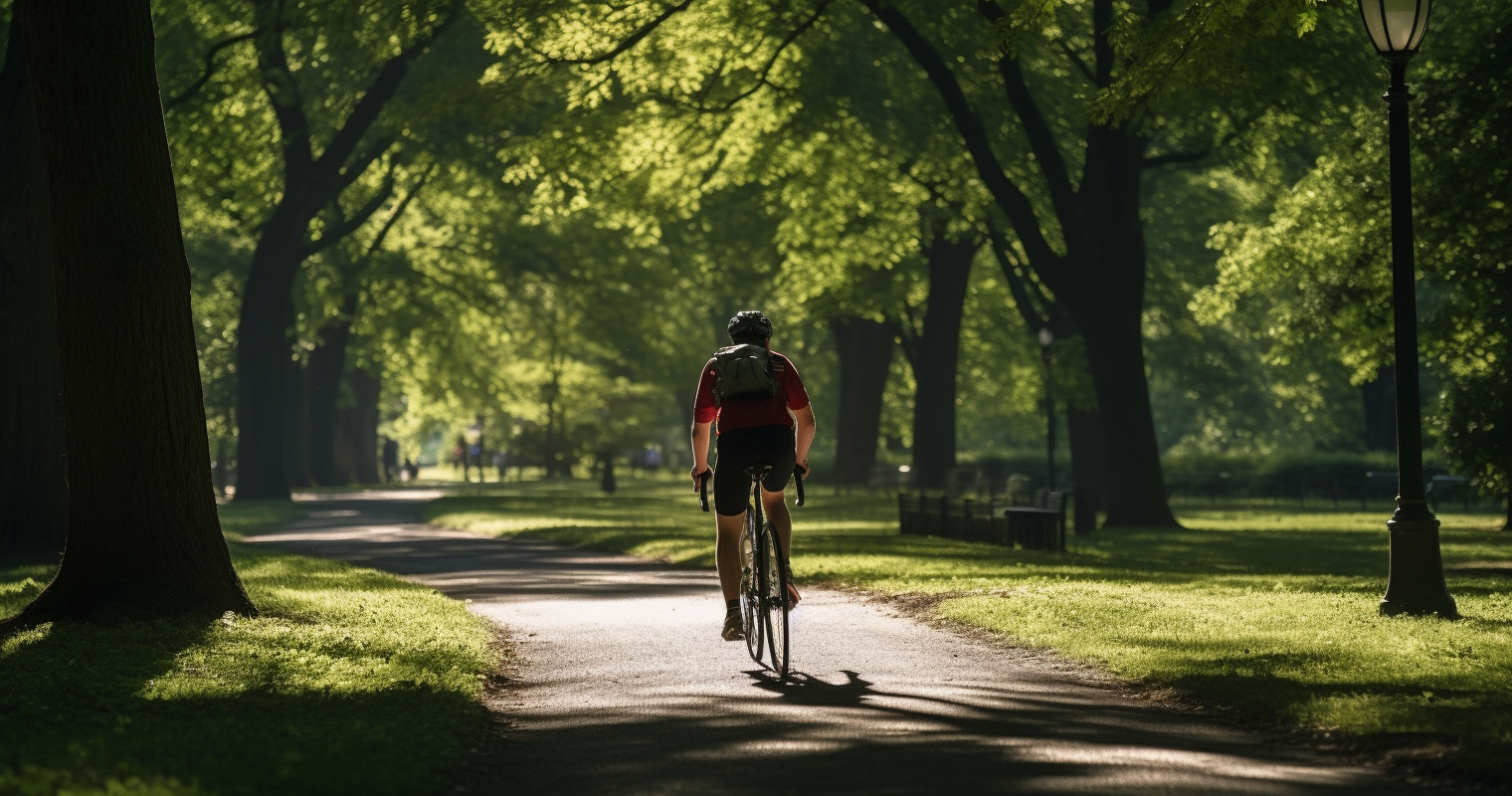
Cycling in Hong Kong functions primarily as a recreational and leisure activity rather than an everyday means of getting around. The city’s congested, undulating urban landscape and sparse dedicated infrastructure render regular cycle commuting impractical across most built-up districts, yet the New Territories offer an extensive system of purpose-built cycle tracks, and several outlying islands are entirely free of motor vehicles. Those relocating to Hong Kong will find it far better suited to weekend rides than to daily commuting by bike.
| Item | Details |
|---|---|
| Helmet law | No mandatory helmet requirement for cyclists (as of 2024) — strongly recommended |
| Dedicated cycle track network | Over 225 km, concentrated in the New Territories new towns (as of 2022) |
| Cycling accidents | 2,994 cases recorded in 2021; overall trend was downward until a COVID-era spike (as of 2022) |
| Bike registration | Not required |
| Cycle insurance | Not legally mandatory; personal liability cover strongly advised |
| Key rule | Cyclists must use a designated cycle track wherever one exists; riding on pavements is prohibited |
| Official route map | Available via the HKeMobility portal |
How popular is cycling in Hong Kong — is it a common way to get around?
Cycling occupies a very different role in Hong Kong life compared with cities such as the Netherlands or Denmark, where millions rely on bicycles as a core form of urban transport. The Transport Department has a longstanding official position discouraging the use of bicycles as a transport mode in urban areas. This reflects the realities on the ground: streets are crowded, the terrain is steep, and Hong Kong’s world-class public transport network — spanning the MTR, buses, and minibuses — makes cycling to work largely redundant across most of the city.
The steady expansion of cycle tracks in new towns — growing from 170 km in 2004 to more than 225 km — combined with a bicycle-friendly policy introduced in the mid-2000s has encouraged more people to ride for leisure and for short local trips. This mirrors the position cycling holds in many Australian or North American suburban communities: gaining popularity, but still fundamentally a recreational pursuit rather than a transport staple.
According to the Travel Characteristics Survey, the proportion of the local population with cycling ability rose by 13% to over 4 million between 2002 and 2011. Cycling at weekends is genuinely popular and the rider base continues to expand — but if you are moving to Hong Kong with hopes of replicating the cycling culture of Amsterdam or Copenhagen, it is worth adjusting your expectations before you arrive.
What is the cycling infrastructure like in Hong Kong?
Hong Kong’s cycle tracks are found almost exclusively in the New Territories, woven through the region’s planned new towns. This represents a marked departure from the pattern seen in European cycling cities, where infrastructure typically extends outward from dense urban centres. In Hong Kong, the dynamic is essentially reversed: the further you move away from the Kowloon and Hong Kong Island urban core, the more cycling-friendly the environment becomes.
While urban Hong Kong offers little to cyclists, the New Territories were designed with cycling in mind, and tracks run alongside the roads of the new towns throughout much of the area. The New Territories Cycle Track Network — documented at ntctn.hk — connects the region’s major new towns along a largely flat corridor that suits families, recreational riders, and those completing short local journeys alike.
Several of the outlying islands permit no private cars, making bicycles the principal mode of getting around. Islands such as Cheung Chau and Lamma are particularly beloved by cyclists for exactly this reason. Dedicated urban cycling infrastructure elsewhere is scarce, and Hong Kong Island’s busy northern waterfront has very little provision of this kind. The Transport Department provides a searchable map of major cycle tracks and parking facilities through the HKeMobility portal, which should be your first stop when planning any ride.
Is cycling safe in Hong Kong?
Traffic accidents involving bicycles showed a generally declining trend, falling from 1,917 cases in 2017 to 1,738 in 2019, before reversing sharply in 2020 and reaching 2,994 cases in 2021. Authorities linked a significant part of this increase to the surge in casual cycling that accompanied the COVID-19 period, with large numbers of inexperienced riders taking to the roads. Riders are encouraged to consult the Transport Department’s road safety pages for the latest accident data.
Globally, around three-fifths of serious cyclist casualties involve head injuries, and locally approximately seven-tenths of severely injured cyclists were not wearing helmets at the time of their accidents. Despite this, Hong Kong imposes no legal obligation on cyclists to wear helmets — a contrast with countries such as Australia and New Zealand, where helmet laws apply to all riders. The Road Safety Council nonetheless actively promotes helmet use through public awareness campaigns, and wearing one is strongly advisable.
The main safety concerns are rooted in urban road conditions. Hong Kong’s streets are narrow and heavily congested, which can be intimidating for riders used to wider suburban roads. On Hong Kong Island, tram lines present a genuine hazard to bicycle tyres, and autumnal rainfall leaves roads slick and unpredictable. Cyclists should also note that riding is prohibited in road tunnels and on many elevated roads. The Hong Kong Police Road Safety Council publishes regular safety guidance tailored to cyclists.
What are the rules of the road for cyclists in Hong Kong?
Under Hong Kong law, a bicycle is classified as a vehicle. This means you are legally required to stop when instructed to do so by a uniformed police officer or traffic warden, or face a fine of HK$2,000. You must obey traffic signs and carry your HK ID card whenever you ride on public roads. As Hong Kong traffic travels on the left, cyclists ride on the left side of the road.
Key provisions from the Transport Department’s Road Users’ Code include:
- You must not ride on the pavement.
- Cyclists must use a cycle track wherever one is available.
- You must ride in single file except when overtaking or riding on a cycleway.
- You must not cycle against the direction of traffic flow.
- Every bicycle must be fitted with a bell, and no other audible warning device is permitted.
- When riding at night or in poor visibility, a bicycle must carry a white light at the front and a red light at the rear.
- You must not carry a passenger.
- You must not ride while under the influence of alcohol or drugs.
- Any child under the age of 11 must be accompanied by an adult when riding a bicycle on any road, including cycle tracks.
Cyclists have the same rights and responsibilities as other road users, subject to restrictions that bar them from expressways and certain designated locations, including all tunnel areas, the Tsing Ma and Tsing Sha control areas, many elevated roads, and various underpasses. Offences under the Road Traffic Ordinance include reckless and careless cycling: a first conviction for reckless cycling carries a maximum fine of HK$500, rising to a HK$1,000 fine and three months’ imprisonment for any subsequent conviction. The full text of all relevant legislation is accessible through the Hong Kong BLIS legal database, while the Transport Department’s Road Users’ Code chapter covering cyclists is published at td.gov.hk.
Do I need to register my bike or have insurance to cycle in Hong Kong?
Bicycles in Hong Kong, unlike motor vehicles, require no registration with any authority, and there is no legal obligation to hold third-party insurance as a cyclist. This places Hong Kong in step with the majority of jurisdictions worldwide, where mandatory bike registration and compulsory cycling insurance remain the exception rather than the rule.
That said, given the fixed penalties — including fines and potential imprisonment — that apply to careless or reckless cycling, and the civil liability a cyclist may face if they injure a pedestrian or cause damage to property, many riders choose to take out personal liability insurance. This coverage can often be added to an existing home contents or personal accident policy. For current options and indicative pricing, consult licensed insurers regulated by the Insurance Authority of Hong Kong, as premiums differ considerably depending on the level of cover selected.
Are there public bike-sharing or rental schemes in Hong Kong?
Hong Kong’s bike-sharing landscape is considerably more limited than that of comparable Asian cities such as Singapore or Tokyo, both of which have well-developed city-wide systems. The dockless bike-sharing sector had a turbulent early history in the city: the first dockless operator, Gobee.bike, launched in April 2017 but shut down in July 2018. Several rivals emerged and similarly exited, leaving the market fragmented and patchy.
The most established formal scheme is SmartBike, a bike-sharing programme designed to complement the cycle path network in the West Kowloon Cultural District and to promote sustainable travel around the Art Park. Operated by TWGHs BiciLine Cycling Eco-Tourism Social Enterprise (BiciLine), the service caters primarily to leisure visitors in the park area rather than to everyday commuters. Visit the BiciLine SmartBike website for current pricing and availability details, as these are subject to change.
Traditional rental shops remain the backbone of cycling access in the New Territories and on the outlying islands, and those wishing to explore popular scenic routes will find them easy to locate. Riders arriving at Cheung Chau can rent bikes from shops along the promenade, while Tai Mei Tuk and Tai Po both have well-established rental clusters conveniently positioned near the popular Shing Mun River route. Rates vary by location, operator, and bike type — check directly with individual rental shops for current daily or hourly charges as of 2025.
Where can I buy or service a bike in Hong Kong?
Hong Kong supports a healthy bicycle market across all price brackets. Specialist shops are concentrated in areas adjacent to major cycling corridors — particularly in New Territories new towns including Sha Tin, Tai Po, and Yuen Long — as well as in parts of Kowloon. Leading international brands such as Trek, Giant, Specialized, and Merida are all represented through authorised dealers, and Hong Kong’s proximity to mainland Chinese manufacturing means mid-range bikes are often more competitively priced than in Europe or North America.
Used bikes can be found through online classified platforms such as Carousell and through various cycling-focused Facebook groups. Servicing and repairs are generally easy to arrange near popular cycling areas, as rental shops at most well-known scenic routes typically offer basic mechanical assistance alongside their hire services. For more specialised work — such as wheel building, suspension servicing, or custom component fitting — dedicated road and mountain bike shops in urban areas are the better option.
Consumer protections in Hong Kong are overseen by the Consumer Council and the Trade Descriptions Ordinance. There is no sector-specific regulation governing bicycle warranties, but retailers selling new bikes are expected to honour manufacturer warranty commitments. Retain your receipt and warranty documentation, just as you would when purchasing a bike in any other market.
Can I bring my bike when I move to Hong Kong, and are there any import rules?
Hong Kong operates one of the most open customs regimes anywhere in the world. As a free port, the great majority of goods entering the territory — bicycles included — are subject to zero import duty. This is a meaningful difference compared with, for example, the European Union, where bicycles brought in from outside the bloc may attract customs tariffs.
When moving to Hong Kong, personal belongings — including your bicycle — can ordinarily be brought in duty-free as part of a household relocation, provided they are genuinely used personal possessions rather than items destined for resale or commercial purposes. No specific import restrictions apply to bicycles as a product category. You should verify current procedures and any documentation requirements with the Hong Kong Customs and Excise Department before shipping, since requirements and exemption conditions can change over time. If you are moving with a professional relocation company, they will typically manage customs paperwork on your behalf.
Electric bicycles (e-bikes) are treated differently under Hong Kong law. Electric mobility devices, including e-bikes, are classified as motor vehicles, and riding them on public roads is currently illegal without type approval — a process that remains inaccessible for most consumer-grade e-bikes. This is an important point to note if you plan to bring an e-bike with you: check the current regulatory position with the Transport Department before importing one, as the law in this area has been subject to active review and may evolve.
What are the best cycling routes or destinations in Hong Kong?
Hong Kong’s three main regions for road cycling are Hong Kong Island, Lantau Island, and the New Territories. Each has its own distinct character, and collectively they offer something for riders at every level — from flat, family-friendly loops to serious mountain climbs demanding considerable fitness.
Sha Tin to Tai Mei Tuk (New Territories) — The 22 km cycle track connecting Sha Tin (Tai Wai MTR) to Tai Mei Tuk is widely considered Hong Kong’s most scenic cycling route. It follows the Shing Mun River before reaching Tai Po Waterfront Park, and more ambitious riders can extend the journey by an additional 8 km along a path that arcs across the tranquil waters of Plover Cove Reservoir. The terrain is largely flat and accessible to riders of all abilities.
Lantau Island Loop — Lantau Island boasts a flat 60 km loop taking in Tung Chung, Disneyland, and the Airport, alongside hillier routes heading towards Tai O and Ngong Ping. Families and beginners tend to enjoy riding around Inspiration Lake near Disneyland. The island is conveniently reached by MTR or ferry.
Cheung Chau Island — This car-free outlying island makes for a delightful escape from city life and is easily reached by ferry. Bikes can be hired from waterfront shops, and a popular southern circuit leads past local street food stalls, temples, and seafood restaurants.
Nam Sang Wai (Yuen Long) — Starting from a rental shop near Yuen Long MTR station, riders follow signs towards Nam Sang Wai for a peaceful journey through farms, fishponds, and wetlands rich in birdlife. An 8 km circular route winds through Nam Sang Wai, where mangrove trees line the banks of the Kam Tin River.
Hong Kong Island Road Riding — Hong Kong Island provides a range of cycling options, including a popular 60 km ride to Shek O beach with striking coastal scenery. More experienced riders often take on the climb to Victoria Peak, earning panoramic views as their reward. Urban riding on the island is best tackled very early in the morning, before traffic builds up. The Hong Kong Tourism Board offers route inspiration, while the HKeMobility cycle track search tool serves as the official resource for detailed route planning.
How do I apply the rules as a new arrival — step by step?
If you have just arrived in Hong Kong and want to get set up as a cyclist, here is the process from start to finish:
- Learn where you are permitted to ride. Read the Transport Department’s Road Users’ Code chapter for cyclists at td.gov.hk. Pay particular attention to the prohibition on pavement riding and the requirement to use designated cycle tracks wherever they exist.
- Obtain your HK ID card. You are required to carry your HK ID card at all times when riding on public roads. Apply for it as soon as possible after arriving.
- Select your bike. Visit a reputable shop in your area or in one of the New Territories cycling hubs to buy or hire. Make sure your bike is equipped with a bell, a white front light, a red rear light, and reflectors as the law requires.
- Wear a helmet. Although helmets are not legally compulsory, approximately seven-tenths of seriously injured cyclists in Hong Kong were not helmeted at the time of their accidents. Wearing one is strongly advisable. Select a helmet that meets recognised international safety standards.
- Consider personal liability insurance. Contact a licensed insurer registered with the Insurance Authority to explore adding cycling liability coverage to a personal accident or home contents policy.
- Plan your route using official resources. Use the HKeMobility cycle route search to identify dedicated tracks and cycle parking close to you before setting off.
- Begin in the New Territories or on an outlying island. Develop your skills and confidence on purpose-built cycle tracks before attempting urban roads, which present far greater challenges for those still finding their feet.
Frequently asked questions about cycling in Hong Kong
Can I cycle to work in Hong Kong?
The Transport Department has a longstanding policy discouraging bicycle use as a commuting mode in urban areas, and the practical realities of Hong Kong’s dense, hilly city environment reinforce that position. Commuting by bike is more realistic in New Territories new towns such as Sha Tin, Tai Po, or Tuen Mun, where flat cycle tracks link residential neighbourhoods to MTR stations and town centres. For the majority of people living in Kowloon or on Hong Kong Island, public transport will remain the practical choice for getting to work.
Do I have to wear a helmet when cycling in Hong Kong?
No mandatory helmet law applies to cyclists in Hong Kong. However, the case for wearing one is compelling: 77% of cyclist casualties during 2020–2021 were unhelmeted at the time of their accidents. A properly fitted helmet that meets international safety standards is strongly recommended, whatever type of riding you do.
Are electric bikes (e-bikes) legal in Hong Kong?
At present, electric bicycles are classified as motor vehicles under Hong Kong law and cannot be used on public roads without formal type approval and registration — a route that is effectively unavailable for most commercially available e-bikes. The regulatory framework governing e-bikes and other electric mobility devices has been under active government review. Consult the Transport Department website for the most up-to-date position before buying or importing one.
Can I take my bicycle on the MTR?
Folding bicycles that are completely folded and enclosed in a bag or cover may be taken on the MTR at any time. Full-size unfolded bicycles are generally not permitted except at certain boundary crossing stations and under defined conditions. Check the MTR Corporation’s official website for the current policy, which has been updated periodically. Ferries serving outlying islands such as Cheung Chau and Lantau generally accept bicycles, making them a practical way to reach more expansive cycling territory.
Is there a cycle-to-work scheme or tax benefit for cycling in Hong Kong?
Hong Kong has no equivalent of the UK’s Cycle to Work scheme, which enables employees to acquire a bike tax-efficiently through salary sacrifice. Employers are free to offer cycling-related benefits at their own discretion, but no government-backed incentive programme exists. Given Hong Kong’s relatively low and straightforward income tax structure, the financial impact of such a scheme would in any case be more modest than in higher-tax countries.
What is the best time of year to cycle in Hong Kong?
The winter months from November through February bring dry conditions and mild temperatures, making this the most comfortable period for cycling. Summer is considerably less pleasant for riding, with intense heat and high humidity taking their toll. Autumn rainfall creates slippery road surfaces, adding an extra hazard. Typhoon season runs roughly from June to October, bringing the risk of sudden severe weather — always check forecasts before embarking on a long ride during these months.
Do I need to register my bicycle in Hong Kong?
No registration is required. Unlike motor vehicles, bicycles in Hong Kong need no formal registration with any authority, and no licence or permit is needed to ride on public roads or designated cycle tracks. There are no fees associated with owning a bicycle from a registration standpoint, and this applies equally to residents and visitors.
Where can I find official information about cycling routes in Hong Kong?
The government maintains a comprehensive map of cycling tracks across the territory through the HKeMobility Cycle Track and Route Search tool, which is operated by the Transport Department and is the primary official resource for route planning. The NT Cycle Track Network website offers in-depth information specifically about the New Territories network, including points of interest along each route.
Is cycling on Lantau Island suitable for beginners?
Lantau Island offers both beginner-friendly and more challenging terrain. The flat 60 km loop around Tung Chung, Disneyland, and the Airport, along with circuits near Inspiration Lake, suit families and newer riders well. Routes heading inland towards Ngong Ping or out to Tai O involve significant elevation gain and are more appropriate for experienced cyclists. Bike hire is available at Mui Wo, conveniently situated close to the ferry pier serving Central.