
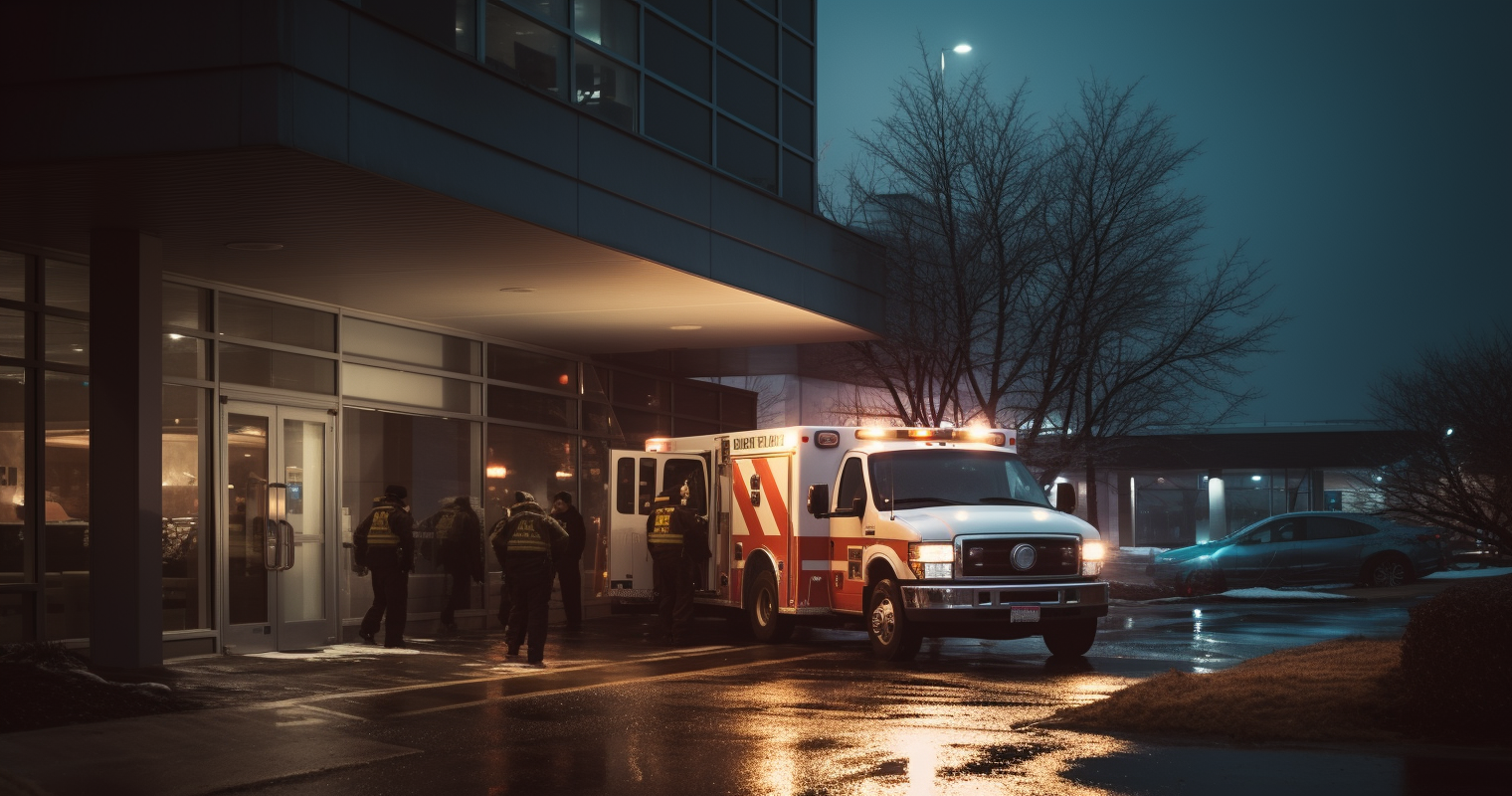
Jamaica’s primary emergency contact numbers are 119 (direct police line), 110 (fire and ambulance), and the internationally recognised 112 or 911. Anyone requiring urgent medical attention at a public hospital will not be billed for that care, though private hospitals typically demand payment before or at the time of treatment. All expats and visitors are strongly encouraged to arrange travel or international health coverage before arriving on the island.
| Item | Details |
|---|---|
| Police emergency number | 119 (direct); also 112 or 911 (as of 2025) |
| Fire and ambulance number | 110; also 112 or 911 (as of 2025) |
| Public hospital emergency treatment cost | Free at the point of use (no-user-fee policy since 2008) |
| Private hospital emergency treatment | Upfront payment typically required; costs vary significantly |
| Medical evacuation cost (estimate) | USD $50,000+ for air ambulance; USD $15,000–$20,000+ for hospitalisation/evacuation to the US (as of 2025 — verify with insurer) |
| Number of public hospitals | 24 (as of 2025) |
| Hurricane season | June to November annually |
| National disaster management agency | ODPEM — odpem.org.jm |
What is the single emergency number in Jamaica, and are there separate numbers for each service?
Rather than relying on a single universal number, Jamaica maintains a combination of dedicated and general emergency lines. The numbers 112 and 911 are used to reach emergency services across the island and superseded the older 110 number that was previously used for fire, police, and ambulance calls; the dedicated police emergency line, 119, was unaffected by this transition. All of these numbers continue to function in practice as of 2025, and your mobile network provider can confirm exactly how calls are routed.
The essential numbers to have on hand are: Police — 119; Fire — 110; Ambulance — 110. The introduction of both 112 and 911 means that people arriving from countries already using one of those numbers can contact Jamaican emergency services without having to learn an unfamiliar code. This is especially useful for visitors from EU member states, where 112 is the standard, or from North American countries where 911 is the default.
Calls to these emergency lines are free and unlimited through local telecommunications providers, so a lack of credit on a prepaid SIM will not prevent you from getting help. If you are in Kingston and require police assistance, a 24-hour police hotline is also reachable on 1876-927-9910 or 1876-927-7681. Programme all of these numbers into your phone well before any situation arises that requires them.
How do you call for emergency medical assistance in Jamaica, and what should you expect when you call?
Calling 110 connects you to the fire department’s central dispatch in Kingston, where operators will confirm your location and coordinate a response from the nearest fire station or ambulance unit. The same services can also be reached by dialling 112 or 911. It is important to understand, however, that Jamaica’s emergency medical services infrastructure is not consistent across the whole island.
Pre-hospital emergency care in Jamaica is shared between the fire department and St. John’s Ambulance, while private EMS companies handle paid inter-facility transfers and call-outs. This fragmented arrangement means that response times can differ substantially depending on where you are and when the call is made. The quality and availability of services varies considerably between urban centres and more remote locations.
Several private ambulance operators also work across the island, covering accident scenes and facilitating hospital-to-hospital transfers. Companies including Ambucare Ambulance Service and Accident & Emergency Services Ltd are active in Kingston and the surrounding area — look up their current contact details through the Ministry of Health website and save them before any emergency occurs. In cases where air transport is required, helicopter evacuation can be arranged via the Jamaica Defence Force.
What should you do in a mental health crisis in Jamaica?
Jamaica does not yet have a prominently publicised, dedicated 24-hour mental health crisis line comparable to the Samaritans in Ireland and the UK or the 988 Suicide and Crisis Lifeline in the United States. If someone is in immediate danger of harming themselves or others, using the standard emergency numbers — 119, 110, 112, or 911 — is the most direct route to getting urgent help.
In situations where someone is experiencing a psychiatric crisis but is not in immediate physical danger, presenting directly to the emergency department of a public hospital is an appropriate course of action. Public hospital emergency departments will assess all patients irrespective of their ability to pay. Bellevue Hospital in Kingston serves as Jamaica’s primary public psychiatric facility and handles acute mental health cases; confirm its current contact details via the Ministry of Health before a crisis arises rather than during one.
Expats should also enquire whether their home country’s embassy provides any welfare support or can signpost mental health resources. International crisis lines reachable by phone or internet from Jamaica may also offer a useful bridge. The landscape of mental health crisis support in Jamaica continues to develop — the Ministry of Health and local NGOs are the best sources for up-to-date information on what is available in your part of the island.
Where can you go for emergency medical treatment in Jamaica?
As of 2025, the public health network in Jamaica includes 318 clinics and health centres alongside 24 public hospitals; the private sector adds approximately 10 private hospitals and a large number of independent practices. Every parish has at least one hospital, though the standard and capacity of those facilities differs substantially between cities and rural communities.
More advanced medical options are concentrated in larger population centres such as Kingston, Montego Bay, Ocho Rios, and Negril, while services in rural parishes tend to be more limited in scope. For complex emergency care, travel to Kingston or Montego Bay may be necessary even if a smaller facility is nearby. Kingston Public Hospital is the largest public institution on the island and offers a broad range of emergency services.
Among the private options, Medical Associates Hospital, Andrews Memorial, Heart Institute of the Caribbean, and Stony Hill Medical Center each offer higher standards of care, though patients should be prepared for immediate billing and should note that some private facilities do not accept international insurance directly. The Ministry of Health website maintains a map of hospital locations with accompanying contact information. When you relocate to a new area, make it an early priority to identify both the nearest public hospital and the nearest private facility.
Is emergency medical treatment free in Jamaica, or is there a charge?
Since its introduction in April 2008, Jamaica’s no-user-fee policy has meant that patients attending public health facilities are not charged for any services — including emergency room visits, hospital admissions, diagnostic tests, surgeries, prescribed medicines, physiotherapy, ambulance transport, and maternity care. This applies universally to all patients presenting at public facilities, regardless of their nationality or residency status.
The critical distinction to understand is that this policy covers public facilities only. Anyone treated at a private hospital or clinic should expect to be charged, and in many cases payment will be sought upfront, even in an emergency. This is meaningfully different from systems where initial stabilisation is always guaranteed before billing is considered, and it underscores the importance of knowing which type of facility you are entering.
Although emergency care at public hospitals is free in principle, overcrowding, limited resources, and capacity pressures can affect both the timeliness and range of treatment available. In practice, many expats living on the island favour private healthcare and, for conditions requiring specialist intervention beyond what is available locally, travel to the United States — particularly Florida — for treatment. Always confirm the current fee arrangements directly with the hospital or the Ministry of Health, since policies may be subject to revision.
Do expats need health or travel insurance to access emergency care, and what happens without it?
Obtaining health insurance before arriving in Jamaica is strongly recommended for all visitors and expats, since medical costs — particularly at private facilities — can be substantial. Although emergency care at public hospitals carries no charge at the point of use, the public system has real limitations, and many serious or complicated cases will ultimately require private treatment or medical evacuation off the island.
Figures from the US Embassy in Jamaica indicate that hospitalisation and medical evacuation to the United States can cost USD $15,000–$20,000 or more — verify current estimates with your insurer. Air ambulance evacuation costs are generally upwards of USD $50,000, making international health insurance that explicitly covers Jamaica an essential consideration for anyone planning an extended stay.
Arriving at a private facility without insurance or funds may result in care being withheld or deferred until a payment arrangement is in place. Public hospitals will not refuse emergency treatment because of an inability to pay, but the scope of what they can offer has practical constraints. Ensure that your insurance policy includes emergency medical evacuation cover, since some serious cases will require onward transport to the USA or Canada for specialist care that is not available on the island.
Are there bilateral health agreements entitling some foreign nationals to free or reduced-cost treatment?
Jamaica does not participate in any network of formal bilateral reciprocal healthcare agreements of the kind that exist among European Economic Area countries — where EU citizens can access emergency treatment in other member states on terms broadly equivalent to local residents, using a European Health Insurance Card (EHIC). No such arrangement applies to Jamaica.
In practical terms, the absence of bilateral agreements matters less for emergency care in Jamaica than it might elsewhere, because the 2008 no-user-fee policy already extends free public hospital treatment to all patients regardless of their nationality. Any visitor — whatever passport they hold — can walk into a public emergency department without needing a bilateral agreement to underpin their access.
However, this access to free public care does not extend to private hospital treatment, medical repatriation, or evacuation costs, all of which remain the responsibility of the individual. There are no known CARICOM-wide reciprocal healthcare frameworks comparable to, for instance, NHS reciprocal arrangements between certain Commonwealth countries. It is worth checking the current position with your own home country’s embassy in Jamaica, as healthcare arrangements can evolve. A directory of embassies accredited to Jamaica is available through the Ministry of Foreign Affairs and Foreign Trade of Jamaica.
How does Jamaica’s emergency healthcare system compare to systems expats may be familiar with?
Jamaica’s health system divides into public facilities where care is free at the point of use and private facilities that charge patients directly. This broad principle bears a structural resemblance to the NHS model in the United Kingdom, where emergency treatment is similarly free at the point of need — but the practical experience can diverge sharply because Jamaica’s public system operates under far greater resource constraints than the NHS.
Unlike well-funded universal systems such as the NHS or Australia’s Medicare, which deliver relatively consistent national standards underpinned by substantial central budgets, Jamaica’s public health sector contends with shortages of staff and equipment, funding pressures, and an uneven spread of services across the island. Expats accustomed to a reliably resourced public emergency department may find the waiting times and availability of resources in Jamaican public hospitals challenging by comparison.
The system also differs considerably from countries — most notably the United States — where emergency care is almost entirely fee-based at the point of delivery, with insurance or upfront payment expected regardless of the urgency of the situation. Jamaica’s public hospital does function as a genuine safety net for emergency cases. That said, facilities capable of handling advanced emergencies are concentrated in Kingston and Montego Bay, and the majority of expats on the island carry private health insurance, use private clinics for day-to-day care, and look to the United States — frequently Florida — for specialist treatment that cannot be provided locally.
What emergency services exist beyond medical — how do police and fire services work in Jamaica?
Beyond medical response, Jamaica’s emergency services include the Jamaica Constabulary Force (JCF), the Jamaica Fire Brigade (JFB), and — in the context of natural disasters and major incidents — the Office of Disaster Preparedness and Emergency Management (ODPEM). Each operates as a separate agency but can be reached through the shared emergency numbers 112 or 911, as well as through their own dedicated lines.
For police emergencies, 119 is the direct number to dial. According to the Jamaica Fire Brigade, every fire, police, and ambulance station has its own contact number, and the JFB actively encourages people to call fire stations directly rather than routing through the police line, since doing so can delay the time before the fire brigade is actually notified. Direct JFB lines in Kingston are (876) 922-2121 and (876) 922-2122 — check these are still current via the Jamaica Fire Brigade website.
Expats should be aware that policing in Jamaica operates in conditions that may differ substantially from those they are used to. Crime rates in certain areas — particularly parts of Kingston — are elevated, and the JCF has dedicated community liaison and tourist assistance structures in place. Parish-level contact numbers for the JCF are listed on the Jamaica Constabulary Force website. Anyone who falls victim to crime should report it to the JCF promptly and contact their home country’s embassy if consular support is needed. Reports of stolen motor vehicles can be made by dialling 119 or 1876-922-3771 or 1876-927-7681-2.
Are there country-specific emergency risks in Jamaica, and what official warning systems exist?
Jamaica faces an unusually wide range of natural hazards. Flooding is a recurring problem across much of the island; the annual hurricane season, running from June through November, presents a persistent and serious threat to life and infrastructure; Jamaica’s geographical location and geological history make it highly vulnerable to earthquakes; and man-made hazards — including chemical incidents and road, sea, and air accidents — also form part of the risk landscape.
The 2025 hurricane season provided a stark illustration of these dangers. Hurricane Melissa made landfall near New Hope, Jamaica in October 2025 as a Category 5 storm, bringing sustained winds of 185 mph, torrential rainfall, and storm surge reaching 13 feet along sections of coastline, leaving more than 240,000 people without electricity. The recovery period was complicated by damage to critical infrastructure, widespread displacement, significant mental health impacts, and an outbreak of leptospirosis — a serious bacterial infection that commonly spreads through flood waters — which prompted the Pan American Health Organization to describe the situation as one of the most severe crises Jamaica had experienced in recent memory.
ODPEM is the national body responsible for disaster preparedness and emergency management, tasked with reducing the impact of disasters on Jamaica’s people and economy and coordinating emergency response and relief operations. Regularly check the ODPEM website and its official social media channels for storm warnings, evacuation instructions, and post-disaster relief updates. In the wake of Hurricane Melissa, the government indicated it would review and restructure Jamaica’s disaster preparedness framework — consult official sources frequently, as procedures and systems may be updated as a result.
What should expats do to prepare for emergencies before they arise?
- Register with your home country’s embassy or consulate. Most countries run a registration scheme — such as the UK’s FCDO registration service, the US State Department’s STEP programme, or equivalent systems — enabling your government to reach you during a crisis, offer consular support, and factor you into evacuation planning. Complete this registration before you need it, not while a crisis is already unfolding.
- Save all emergency numbers in your phone. Store 119 (police), 110 (fire/ambulance), 112 and 911 (general emergency), the direct number of your nearest hospital, a local private ambulance provider, your insurer’s round-the-clock emergency line, and your embassy’s out-of-hours contact. Always keep local emergency contacts and your insurer’s helpline on your phone.
- Arrange comprehensive international health insurance. Given the limited availability of specialist services within Jamaica and the high cost of air ambulance evacuation, international health insurance that covers Jamaica is essential for expats dealing with a serious medical emergency. Confirm that your policy includes emergency evacuation to the US or another country where specialist care is available.
- Familiarise yourself with local disaster risks. Hurricane season spans June to November each year — know the evacuation routes for your parish, locate your nearest officially designated shelter, and find out whether your home sits in a flood or landslide risk zone. Your parish council and ODPEM are the appropriate sources for this information.
- Put together an emergency kit. Assemble enough water, non-perishable food, prescription medications, and key documents — passports, insurance paperwork, copies of prescriptions — to sustain you for at least 72 hours. Keep documents in a waterproof container.
- Identify your nearest public and private hospital. The Ministry of Health website provides a searchable map of hospital locations along with contact details. Make a note of both options for your area before any emergency arises.
- Use official channels during a disaster. Follow ODPEM’s website and official broadcasts from the Jamaica Information Service (jis.gov.jm) to receive timely updates on warnings, shelter availability, and post-disaster relief operations.
Where can expats get official and up-to-date emergency information for Jamaica?
The sources listed below are the most authoritative for emergency preparedness and response information in Jamaica. Save these links and check them regularly, especially during hurricane season:
- ODPEM (Office of Disaster Preparedness and Emergency Management): odpem.org.jm — national disaster warnings, evacuation orders, and preparedness guidance.
- Ministry of Health and Wellness Jamaica: moh.gov.jm — hospital locations, public health advisories, and healthcare policy updates.
- Jamaica Constabulary Force: jcf.gov.jm — police contacts organised by parish.
- Jamaica Fire Brigade: jfb.gov.jm — fire station contact numbers and fire safety information.
- Jamaica Information Service: jis.gov.jm — official government news and emergency announcements.
- Office of the Prime Minister — Disaster Preparedness: opm.gov.jm/disaster-preparedness — parish disaster coordinator contacts.
- Your home country’s embassy in Jamaica: Contact details vary by nationality — consult your foreign ministry’s website before you travel or relocate. The US Embassy emergency line is 1 (876) 702-6000.
- US Centers for Disease Control and Prevention (CDC) — Jamaica travel health page: wwwnc.cdc.gov — health risks, vaccination recommendations, and current advisories.
Frequently asked questions
What number do I call in a life-threatening emergency in Jamaica?
Dial 112 or 911 for general emergencies involving fire, ambulance, or police, 119 to reach police directly, or 110 for fire and ambulance directly. Calls to all of these numbers are free from local networks. Store all of them in your phone in advance, since the most appropriate number to dial will depend on the nature of the emergency and where you are located.
Will I be charged for going to a public hospital emergency department in Jamaica?
No. Jamaica’s no-user-fee policy, in force since April 2008, means that patients at public health facilities are not billed for emergency room visits, hospital admissions, diagnostic tests, or medications. This applies to all patients, including tourists and foreign nationals. Private hospitals operate differently — they will typically require payment upfront, even in an emergency.
How quickly will an ambulance arrive if I call in Jamaica?
Response times are highly variable and depend on your location, the time of day, and what resources are available at that moment. Emergency medical services in Jamaica are widely acknowledged to be uneven in both coverage and quality, particularly away from major urban areas. In rural locations, contacting a private ambulance service or making your own way to the nearest hospital may be a faster option than waiting for a public ambulance. Identify the relevant private ambulance contacts for your area before any emergency occurs.
Do I need travel insurance to visit Jamaica, or health insurance to live there as an expat?
Neither is a legal requirement for entry, but both are strongly advised. Although emergency care at public hospitals is free at the point of use, serious medical situations — including those requiring private hospital treatment, specialist care, or evacuation off the island — can generate costs running into tens of thousands of US dollars. Air ambulance evacuation to the US alone can cost in excess of USD $50,000. Comprehensive international health insurance with evacuation cover is widely considered essential for anyone living in Jamaica as an expat.
What happens during hurricane season, and how will I be warned?
Hurricane season runs from June to November each year. ODPEM issues warnings, watches, and evacuation orders through its website (odpem.org.jm), national radio and television, and official social media accounts. Registering with your home country’s embassy ensures your government can contact you directly when a major event occurs. Assemble your emergency kit and establish your evacuation route well before the season gets underway each year.
Is there a mental health crisis line in Jamaica?
Jamaica does not currently operate a prominently publicised, dedicated 24-hour mental health crisis line equivalent to those available in some other countries. In a mental health emergency, call 119, 110, 112, or 911, or go directly to the emergency department of your nearest public hospital. Bellevue Hospital in Kingston is the island’s principal public psychiatric facility. Contact the Ministry of Health or local NGOs for the most current information about support options available in your specific area.
Does Jamaica have any reciprocal healthcare agreements with other countries?
No formal bilateral reciprocal healthcare agreements — of the kind found among EU and EEA nations — exist between Jamaica and other countries. Because Jamaica’s public hospitals provide free emergency care to all patients regardless of nationality, access to emergency treatment does not depend on any bilateral framework being in place. This does not, however, cover private hospital charges, medical evacuation costs, or repatriation expenses, which remain the responsibility of the individual.
Are there disease risks in Jamaica that expats should be aware of?
Yes. Mosquito-borne illnesses including dengue fever, chikungunya, and Zika virus are all present in Jamaica. After flooding and major storms, waterborne diseases such as leptospirosis become an additional concern — a risk made very apparent following Hurricane Melissa in 2025. Consult the CDC’s Jamaica travel health page and the Jamaican Ministry of Health for current health advisories, vaccination recommendations, and practical precautions relevant to your stay.