

Japan operates a comprehensive end-of-life care framework backed by universal public health insurance, which extends coverage to hospice and palliative services delivered in hospitals, residential facilities, and private homes. Following a death, a formal notification must be submitted within seven days, with the local municipal office responsible for registration and embassies serving an essential function for overseas nationals. For expats and their loved ones, thinking ahead — in both legal and practical terms — can make a profound difference.
| Item | Details |
|---|---|
| Death notification deadline | Within 7 days of death; filed at the local municipal office |
| Public insurance coverage | Japan’s Statutory Health Insurance System (SHIS) covers hospice and palliative care in hospitals and facilities, and at home (as of 2024) |
| Hospice eligibility | Primarily cancer and AIDS patients under the national insurance-approved system; expanding for other conditions |
| Inheritance tax basic exemption | ¥30 million + ¥6 million per statutory heir (as of 2018; verify current figures with the National Tax Agency) |
| Inheritance tax rates | Progressive, ranging from 10% to 55% (as of 2024) |
| Cremation cost estimate (Japan, with overseas shipment) | Approx. USD $6,200 for cremation and air shipment of ashes abroad (as of 2024; subject to exchange rate fluctuation) |
What end of life care options are available in Japan, and how does the system work?
End of life care in Japan is centred on ensuring that patients approaching death are treated with comfort, dignity, and compassionate support. Care is delivered across multiple settings: inpatient palliative care units (PCUs) within hospitals, hospital-based palliative care teams, community palliative care teams, and home-based services. The most appropriate setting is determined by the patient’s medical requirements, personal wishes, and the availability of family support — with care possible at home, in a care facility, a dedicated hospice, or a hospital ward.
The provision of palliative care continues to evolve, with a noticeable shift away from standalone palliative care units in favour of integrated palliative care teams and home-based support. Once regarded as synonymous with terminal care alone, palliative care is now being woven into broader treatment pathways at an earlier stage. Japan’s dramatically ageing population has been the primary force driving substantial investment in this sector over recent decades.
One notable difference from many European healthcare models is that Japan does not operate a general practitioner (GP) system — patients can access any medical service directly under the national insurance framework, meaning many people do not have a single regular home physician. As a consequence, when patients receive palliative care at home, a regional multidisciplinary team drawn from professionals across different institutions is typically assembled to coordinate their care.
Enrolment in the Long-term Care Insurance (LTCI) plan is compulsory for all residents aged 40 and above. Those aged 65 or over who need long-term support can draw on this scheme, as can individuals between 40 and 65 whose care needs arise from age-related illness. This system works alongside the health insurance framework and plays a meaningful role in supporting patients at the end of life.
What is palliative care in Japan, and who is eligible for it?
In Japan, care provided to patients in the final stages of life is referred to by several overlapping terms: terminal care, hospice care, end-of-life care, and palliative care. Among Japanese healthcare professionals, these expressions are largely treated as interchangeable, though some practitioners draw a distinction between “terminal care” — for those facing imminent death — and “palliative care” in the broader sense, which may begin while the patient is still at an advanced but not immediately terminal stage of illness.
Palliative care is fundamentally concerned with alleviating pain and managing distressing symptoms in order to improve the day-to-day quality of life for those living with serious conditions such as cancer or heart disease. In Japan, this care is delivered through a variety of channels, including hospital-based palliative care units, community palliative care teams, and home-based services, staffed by interdisciplinary teams of doctors, nurses, social workers, and chaplains.
The number of PCUs across Japan grew considerably after medical insurance began reimbursing 70–90 per cent of costs in 1990, reaching 394 PCUs and 8,068 beds by 2017. The overwhelming majority — 97.8 per cent — of PCUs are housed within hospitals. A typical unit contains around 20 beds, with patients staying an average of 33.4 days. PCUs serve not only as a setting for end-of-life care but also for managing difficult symptoms, allowing some patients to subsequently return home.
Access to the insurance-approved PCU system has historically been concentrated on those with cancer or AIDS, though the Ministry of Health, Labour and Welfare (MHLW) is actively pursuing broader eligibility. Future ambitions include creating a coordinated community palliative care network, developing specialist expertise in the field, and extending high-quality care to patients with a wider range of life-limiting conditions beyond cancer.
Are there hospices in Japan, and how do you access them?
Japan’s first government-recognised hospice and palliative care unit opened its doors in 1990, the same year hospice medical care became eligible for health insurance reimbursement. Since then, the network has expanded substantially, with hundreds of designated PCUs now operating throughout the country.
At present, access to the formal insurance-recognised hospice programme is largely restricted to patients with a diagnosis of cancer or AIDS. Those living with other terminal conditions may still receive palliative support through hospital-based teams or home care services, but admission to an official insurance-covered hospice bed requires meeting the clinical eligibility criteria established by the MHLW. Anyone seeking a referral to a palliative care unit should speak with their treating physician, and may also find guidance through the Japan Hospice and Palliative Care Association (HPCJ), which provides information on accredited facilities.
Among government-approved hospice institutions, 62% also provide home care services, and 91% deliver hospice care through dedicated hospice-assigned doctors. Furthermore, 72% operate in partnership with nurses based at Home Care Agencies. This means that for a significant proportion of patients, hospice-level support can be brought into the home — a setting that is increasingly preferred. The best first point of contact for referrals remains the hospital’s palliative care team or medical social worker.
Is palliative or hospice care covered by public health insurance, or does it need to be funded privately?
End-of-life care in Japan is funded through a combination of the Statutory Health Insurance System (SHIS) and the Long-Term Care Insurance (LTCI). The SHIS covers hospice care in both home and facility settings, palliative care delivered in hospitals, and home medical services for patients nearing the end of life. Home nursing services are covered by either the SHIS or the LTCI, depending on the individual patient’s assessed needs.
Reimbursement guidelines for palliative care services are set by the Ministry of Health, Labour and Welfare (MHLW), in collaboration with the Japan Medical Association (JMA) and the Japan Hospice and Palliative Care Association (JHPCA). These insurance arrangements cover the cost of medical treatments — including prescription medications — as well as ancillary support such as nursing care and counselling services.
The funding model broadly resembles that of statutory systems in countries such as France or Germany, where public insurance absorbs the bulk of costs and patients contribute a defined co-payment. In Japan, the standard co-payment for most services is 30 per cent, though young children and lower-income older adults benefit from reduced rates. An annual household ceiling on out-of-pocket expenditure for healthcare and long-term services is set according to age and income level.
Healthcare enrolment in Japan is mandatory for all expats holding either a resident’s visa or a work permit. There are two public insurance schemes — one for employees and one covering the rest of the population — alongside a private insurance market. Any expat on a visa lasting more than three months is required to register with one of the two public schemes, which means the majority of resident expats already have access to a system that includes palliative and hospice care.
Beyond national health insurance, supplementary financial support mechanisms also exist. The Long-Term Care Insurance (LTCI) programme, for example, provides financial assistance to individuals who need sustained care, including those receiving palliative treatment.
What legal documents should expats have in place before the end of life in Japan — such as a living will, advance directive, power of attorney, or healthcare proxy — and how do these work?
Japan does not yet have a single, codified legal framework governing living wills or advance directives comparable to those established in countries such as Australia, Canada, or the United States. Nevertheless, several important documents and mechanisms exist, and ensuring they are clearly written, securely stored, and known to both your doctor and your family can significantly improve outcomes in difficult circumstances.
An advance directive — sometimes referred to as a “living will” or jizen shiji — is a written declaration of your preferences regarding future medical treatment in the event you lose the capacity to communicate those wishes yourself. While Japanese law does not impose formal legal obligations on healthcare providers to comply with such documents in the way some other jurisdictions do, both the Japan Medical Association and the Japan Geriatric Society encourage clinicians to honour clearly recorded patient preferences. In practice, these documents carry genuine moral and clinical influence.
A power of attorney (inin jō) enables you to authorise another individual to manage financial decisions on your behalf. This is established through a legally binding document that specifies who may oversee and administer your assets and financial affairs if you lose mental capacity due to severe dementia or a comparable condition. It is also possible in the same document to designate a guardian — whether a close relative, friend, or legal representative. Where no power of attorney has been arranged in advance, Japan’s adult guardianship system (seinen kōken seido) provides a court-supervised alternative.
A healthcare proxy — a nominated individual with authority to make medical decisions on your behalf — is not formally enshrined in Japanese legislation in the way it is in certain other countries. However, identifying a trusted person in writing and communicating that designation to your medical team considerably improves the likelihood that your preferences will be observed. In Japan, family members or treating physicians tend to assume a more central role in decision-making when a patient lacks capacity, making it especially important for expats without local family to document their wishes explicitly.
For all such documents, engaging a Japanese-registered attorney (bengoshi) or notary is strongly advisable. Any documents written in English should be accompanied by certified Japanese translations. Copies should be lodged with your treating physician, your local municipal office, and a trusted contact within Japan.
Are documents such as advance directives or powers of attorney made in another country legally recognised in Japan?
Japan does not operate a formal system of automatic cross-border recognition for advance directives or powers of attorney executed abroad — in contrast, for instance, to EU member states, which have mechanisms for mutual recognition of certain legal instruments. A document drafted in a foreign language and prepared under foreign law is not legally binding in Japan and cannot be guaranteed to be acted upon in a medical emergency unless it has been communicated to clinical staff in advance.
That said, foreign-prepared documents are far from worthless. Medical professionals in Japan are guided by principles that encourage respect for patient wishes, and a clearly drafted document — particularly one accompanied by a certified Japanese translation and already known to your treating doctor — can still meaningfully shape care decisions. The most important step is prior communication: share copies with your GP or specialist in Japan and discuss your wishes openly before any crisis arises.
For powers of attorney, a document issued in another country may carry legal weight in Japan if it has been properly authenticated — specifically, apostilled in accordance with the Hague Apostille Convention, to which Japan is a signatory. Even so, applying such a document within Japan — particularly in connection with financial affairs — may require additional steps, including certified translation and engagement with a Japanese notary or court. The rules in this area are complex and highly case-specific; always consult a qualified Japanese legal professional before relying on any foreign legal instrument.
What are the laws around euthanasia or assisted dying in Japan?
Euthanasia and assisted dying are unlawful in Japan. No legislation permits physician-assisted death in any form, and Japanese courts have consistently confirmed the illegality of active euthanasia. Any deliberate act by a medical professional that brings about a patient’s death ahead of its natural course could result in criminal prosecution for homicide or assisted suicide under the Japanese Penal Code.
A small number of landmark cases have produced court rulings setting out extremely narrow conditions under which the withdrawal or withholding of life-sustaining treatment might be considered legally permissible — broadly requiring that the patient is terminally ill, has clearly expressed a wish to refuse treatment, and that the decision has been reached through consultation with both the patient’s family and the medical team. These rulings have not, however, been translated into formal legislation, and the legal position in this area remains unsettled.
End-of-life policy in Japan remains firmly focused on advancing palliative and hospice care — on managing pain, preserving dignity, and enabling patients to spend their final period as comfortably as possible — rather than on any form of assisted dying. Expats wishing to explore end-of-life options should have a candid conversation with their treating physician about what palliative care is available, and ensure that their advance directive or living will is clearly recorded and accessible.
What are the local customs, traditions, and religious practices around death and dying in Japan?
Death rituals in Japan are deeply rooted in Buddhist and Shinto traditions, though secular ceremonies and those following Christian rites are also practised. The majority of funerals are Buddhist in character, though other forms of religious observance are available. The interweaving of Buddhist and Shinto customs gives Japanese funeral culture a distinctive character — elaborate, community-centred, and deeply respectful of both the person who has died and those they leave behind.
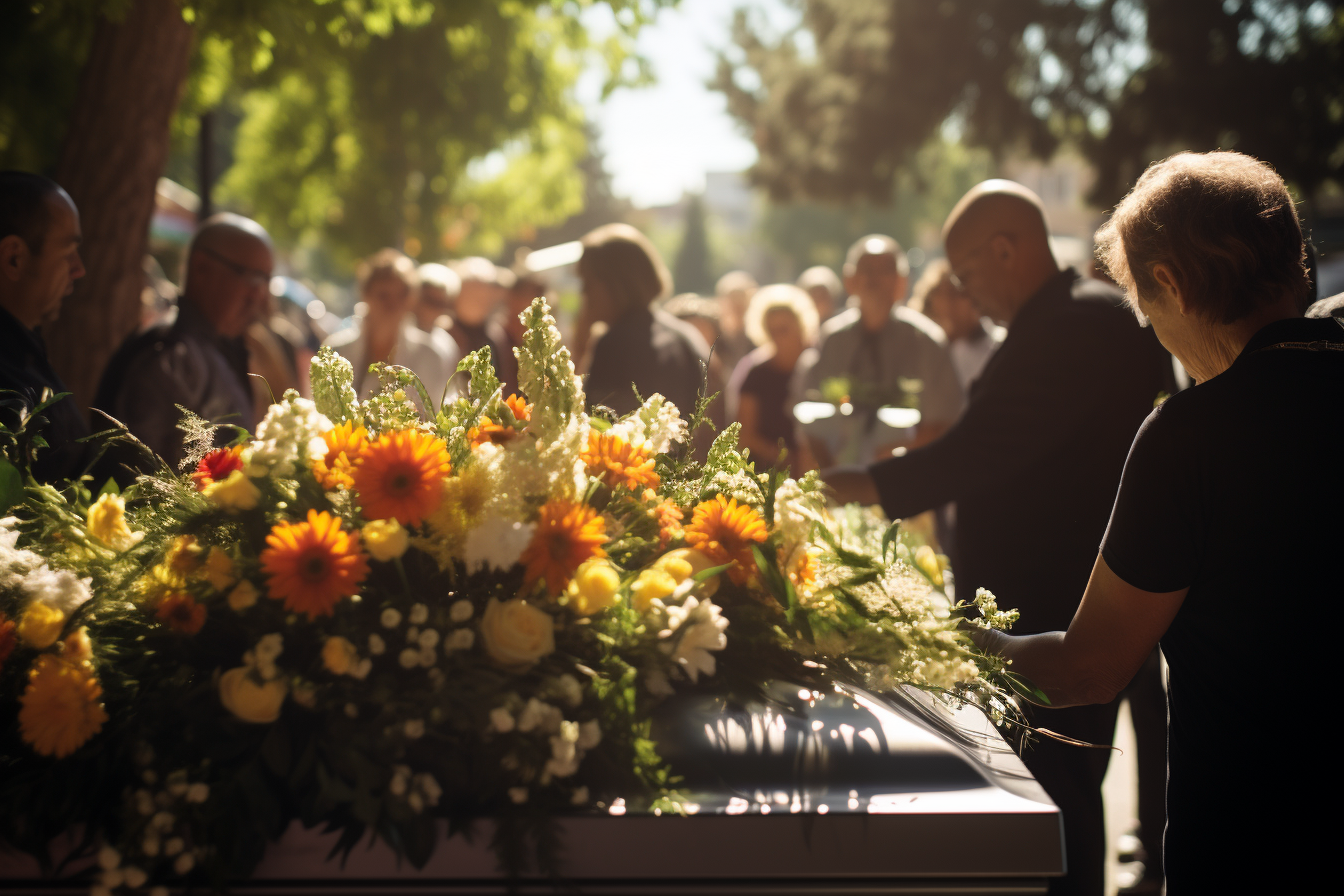
Following death, the body is traditionally bathed and dressed in white — a colour associated with purity — before a wake (otsuya) is held, typically on the evening before the funeral. The body lies in a casket surrounded by flowers, burning incense, and candles, while close family members maintain a vigil through the night. The following day brings the funeral ceremony (sōshiki), often held at a dedicated funeral hall or a Buddhist temple, where a priest chants sutras and mourners pay their respects by offering incense.
Cremation is the overwhelming norm in Japan, with rates approaching 100% in most areas — a reflection in part of the country’s limited land availability. Following cremation, a ceremony known as kotsuage takes place, in which family members use chopsticks to transfer the bones of the deceased into a burial urn — a ritual that holds deep significance in Japanese Buddhist tradition. The ashes of Japanese nationals are typically interred in family graves.
Japanese culture tends toward reticence around the subject of death. Research has shown that many Japanese people prefer not to dwell on their own mortality or to articulate their personal wishes, and that social and familial opinion tends to carry considerable weight in end-of-life decisions. Expats in Japan may therefore find that conversations with medical staff about death and dying are more indirect than they would expect at home, and may need to take deliberate steps to ensure their own wishes are recorded clearly and in writing.
Black attire is conventional at Japanese funerals. Guests typically bring a condolence offering in a special envelope (kōden) containing money, customarily given in odd amounts. Expats are welcome to observe and participate in Japanese funeral customs, and doing so thoughtfully is generally received with genuine appreciation by bereaved families.
What must you do when someone dies in Japan? Who do you notify, how quickly, and in what order?
The steps to be taken after a death in Japan must be followed carefully and within strict legal timeframes. The process, in order, is as follows:
- Obtain a death certificate (shibō shindansho) from a doctor. When a death takes place in a hospital or under ongoing medical supervision, the attending physician will issue this document. If the death occurs at home or in unexpected circumstances, emergency services (119) should be called immediately, and the police may also need to attend in cases of unattended or unexplained death. The body must not be moved before a physician has formally certified the cause of death.
- Contact a funeral company (sōgisha). Once death has been medically confirmed, arrange for a licensed funeral home to collect and store the body. Japanese funeral directors are well-versed in guiding families through all the steps that follow and can assist with much of the associated paperwork. If the deceased was a foreign national, it is advisable to engage a funeral home with prior experience of international cases.
- File a death notification (shibōtodoke) at the local municipal office. A formal notification of death must be submitted to the relevant municipal office within seven days. At the same time, you must apply for a Certificate of Permission for Burial or Cremation (maiso kasō kyokasho), without which no cremation or burial can proceed. In many cases, the funeral home can assist with completing and submitting this paperwork.
- Notify the deceased’s employer, pension authority, and relevant financial institutions. Where the deceased was enrolled in a public pension or social insurance scheme, the relevant bodies must be informed promptly to halt payments and initiate any survivor benefit entitlements. The local ward or city office can provide guidance on the appropriate notifications.
- Notify the home country’s embassy or consulate (for foreign nationals). The embassy or consulate of the deceased’s home country should be contacted as soon as possible — ideally within a day or two of the death. The embassy can issue a Consular Report of Death and advise on documentation requirements and the repatriation process. Full details are provided in the section below.
- Cancel or transfer resident registration. The deceased’s residence registration (jūmin hyōdai) must be cancelled at their local ward office, a step usually completed simultaneously with the death notification. Where the deceased owned property, their immigration status must also be formally closed.
- Arrange the funeral and cremation. Cremation or embalming may not legally take place until at least 24 hours after death, unless exceptional circumstances apply — in which case a longer waiting period may be required. If repatriation of the remains is planned, do not finalise cremation arrangements until the consulate and relevant authorities have confirmed all requirements.
How is a death officially registered in Japan, and what documents are needed?
Official death registration in Japan is administered by the local municipal authority — the ward office (kuyakusho) or city or town hall (shiyakusho) — in the area where the death occurred or where the deceased was registered as a resident. The process is governed by the Family Registration Law (Koseki Hō).
The central document required is the death notification form (shibōtodoke), which must be completed and submitted within seven days of the death. This form must be lodged together with the death certificate (shibō shindansho) issued by the certifying physician. The person responsible for submitting the notification is ordinarily a close family member, a relative, or a cohabitant, though the funeral director can frequently assist in delivering the paperwork.
The municipal office will issue a Certificate of Permission for Burial or Cremation upon receipt of the death notification — no cremation or burial can lawfully proceed without this certificate. Additional documentation may be required in particular circumstances: if the death was unnatural or is the subject of a police inquiry, for example, an autopsy report may be necessary before the death certificate can be finalised. For foreign nationals, a copy of the deceased’s passport and residence card (zairyū kādo) is also typically required.
Once registered, the death is formally recorded within Japan’s family register system. Certified extracts of the death record can be obtained from the municipal office by family members — these are commonly needed for probate proceedings, insurance claims, pension notifications, and other administrative purposes, both within Japan and overseas.
What happens if a foreign national dies in Japan — what are the specific steps for notifying their home country’s embassy or consulate, and what role does the consulate play?
In most circumstances, if local authorities become aware of the deceased’s nationality, they will inform the relevant embassy or consulate, which will then make contact with the nearest next of kin. However, family members or friends who already know of the death should contact the embassy or consulate directly and without delay, rather than waiting for local authorities to initiate that contact.
The consulate’s role in these circumstances typically includes: confirming the identity of the deceased; issuing a Consular Report of Death or its equivalent under the laws of the deceased’s home country; facilitating contact with next of kin; providing lists of local funeral homes and legal professionals with international experience; and advising on the documentation required for the repatriation of remains or ashes.
It is important to note that many countries — including the United States — do not provide funds through their embassies to assist with the return of remains or ashes of nationals who die abroad. All funeral home charges, shipping costs for the remains and personal effects, and funeral arrangements must be met by the family or legal representative. Expats are strongly advised to hold adequate insurance or maintain accessible savings to cover such costs (see the repatriation section below for further detail).
If no family members can be reached, the municipality will follow procedures prescribed by laws including the Cemetery and Burial Law and the Traveller Death Law. Where consular efforts to locate relatives prove unsuccessful, the municipality may proceed with cremation in coordination with a funeral service.
Repatriation of a body to the deceased’s home country requires the active involvement of the relevant embassy or consulate. Consular officials are able to assist in coordinating the repatriation and in obtaining the necessary documentation. Embassies can often provide information on international funeral directors experienced in cross-border arrangements.
How are funerals typically arranged in Japan, and what are the usual options for burial or cremation?
Funerals in Japan are generally organised through a licensed funeral company (sōgisha), which manages all logistics from the collection of the body through to the cremation ceremony itself. The funeral company will guide the family through decisions about the type of service, the venue — whether a funeral hall, a Buddhist temple, or the family home — and the ceremonial details involved. Funeral directors can also take on much of the administrative paperwork.
The standard Japanese funeral follows a set sequence: a wake (otsuya) is held on the first evening, followed by the funeral ceremony (sōshiki) the next day. Buddhist ceremonies are the most common, and the local temple should be contacted for this purpose. Shinto ceremonies are equally available, as are Christian services and non-religious alternatives. Expats wishing to hold a service that reflects their own cultural or religious background can request this; many funeral homes in major urban centres have experience accommodating international preferences.
Cremation is the standard practice across Japan, with rates approaching 100% in most areas, largely due to the scarcity of burial land. In Tokyo and many other densely populated areas, the burial of ashes in a conventional cemetery plot is virtually impossible given the extreme shortage of space. Some regions do have public cemeteries with plots available, but demand is intense and waiting lists can be substantial. A foreign national who dies in Japan may be cremated locally or have their remains transported abroad for burial.
Non-religious and secular funeral options are gaining ground in Japan. Direct cremation (chokusō) — in which the body is cremated shortly after death with little or no accompanying ceremony — is an increasingly popular choice, particularly for those seeking simplicity or wishing to minimise costs. For expats without strong affiliations to any local religious tradition, this can be an entirely practical and appropriate option.
What are the approximate costs of a funeral in Japan, and are there any state or insurance-based funds that can help cover them?
Funeral costs in Japan are notably high, and it is wise to request detailed quotes before committing to any arrangements. A full traditional funeral — encompassing the wake, ceremony, cremation, and urn — can range from ¥1 million to ¥3 million or more, depending on the prefecture, the funeral company, the religious elements selected, and choices relating to coffin quality, floral arrangements, and venue hire. More straightforward direct cremation services are considerably cheaper.
According to figures quoted by the US Embassy in Tokyo (as of 2024), the total cost for cremation and full local arrangements in Japan is approximately USD $31,650. The cost of cremation in Japan followed by burial or disposition of ashes in the United States — including preparation, cremation, and air shipment — is approximately USD $6,200. Costs to other destinations will vary; contact the funeral home directly for specific quotations.
Some financial assistance is available to help offset these costs. Members of Japan’s public health insurance system may be entitled to claim a burial allowance (sōsōhi or maisohi) from their insurer — typically in the region of ¥50,000 (as of 2024; verify the current amount with your insurer or local ward office). This represents a modest contribution toward the overall expenditure. Those covered by employment-based insurance should also check whether their policy includes a lump-sum death benefit.
Private life insurance policies held either in Japan or abroad may provide cover for funeral expenses — check your policy documentation carefully and inform your insurer promptly following the death. Many expats also hold travel or international health insurance that includes repatriation cover; these benefits can substantially reduce the cost of returning remains to another country.
What is the process for repatriating the remains of a foreign national from Japan to another country?
Returning the remains of a deceased foreign national from Japan involves coordinating between the funeral home, the local municipal authority, the home country’s embassy or consulate, and the receiving country’s border and customs authorities. The process is complex and will require at least a week to organise in the most straightforward of cases — often considerably longer when legal complications, logistical challenges, or family circumstances arise.
There are two principal options: the return of the full body (whether embalmed or unembalmed), or the repatriation of cremated remains (ashes). Returning a body in full is substantially more expensive, owing to the costs of embalming, specialist casket preparation, and air freight. The total cost for preparation and air shipment of a body to the United States is approximately USD $14,000 (as of 2024). Costs to other destinations will differ — contact the funeral home for precise figures.
Repatriation of cremated remains is both simpler to arrange and considerably less expensive. The cost for preparation, cremation, and air shipment of ashes to the United States is approximately USD $6,200 (as of 2024). In some cases, a family member may carry ashes on a commercial flight as carry-on luggage, subject to specific documentation requirements. You will need a certified copy of the Japanese death certificate, the cremation certificate, and typically a letter from the receiving country’s embassy or consulate confirming that import of the remains is permitted.
The key steps for repatriation include: obtaining the Japanese death certificate and arranging its translation into the required language; obtaining a Consular Report of Death or equivalent from the relevant embassy; instructing a licensed funeral home to carry out the cremation or embalming; securing the necessary export documentation from the municipal authority; and confirming that all import requirements of the destination country have been fulfilled. The customs and border agency of the receiving country may have specific requirements — your embassy or consulate is best placed to advise on these.
What happens to the estate of someone who dies in Japan — how does probate or estate administration work, and are there inheritance taxes?
Japan does not operate a probate system equivalent to that found in common-law countries such as Australia, Canada, or the United Kingdom, where a court formally authorises someone to administer an estate. Instead, assets pass to heirs in accordance with the terms of a will or, where no will exists, under the statutory rules set out in the Civil Code. Assets do not transfer automatically and the process is not considered complete until a formal written division agreement (isan bunkatsu kyōgi), signed by all heirs, has been reached.
In Japan, inheritance tax is levied on the individuals who receive the inheritance, rather than on the estate as a whole. A progressive tax rate structure applies, meaning the proportion of tax payable rises with the total value of the inherited assets. Current rates range from 10% to 55%, placing Japan among those countries with the highest inheritance tax burdens in the world (as of 2024).
Tax liability is calculated on the fair market value of inherited assets at the date of death, with deductions permitted for funeral expenses, outstanding debts (including mortgages), and certain statutory exemptions. The basic exclusion amount for inheritance tax purposes stands, as of 2018, at ¥30 million plus ¥6 million per statutory heir. This figure is deducted from the total taxable estate to establish the aggregate tax base. Always verify the current thresholds with the National Tax Agency (NTA), as these figures may be subject to revision.
Expats who have lived in Japan for more than 10 years — regardless of visa type or permanent residency status — may find that Japanese inheritance tax applies to their worldwide assets, not only those held within Japan. Recent amendments to Japan’s inheritance tax laws carry significant implications for foreign residents, even those on relatively short-term assignments. Expats are strongly advised to consult a qualified Japanese tax accountant (zeirishi) or estate lawyer, particularly where assets are spread across more than one country.
Reasonable funeral expenses may be deducted from the value of the estate, acknowledging the unavoidable costs of making final arrangements. Inheritance tax returns must be filed within ten months of the date of death.
If an expat dies without a will in Japan, what happens to their assets under local intestacy laws?
Where a person dies intestate — that is, without a valid will — in Japan, their estate is distributed according to the statutory inheritance rules contained in the Civil Code. These rules govern assets located within Japan; assets held in other countries may be subject to the laws of those jurisdictions, creating significant complexity in cross-border estates.
Under the Japanese Civil Code, a surviving spouse is entitled to 50% of the total estate, with the remaining half divided equally among the deceased’s children. Where there are no children, the spouse shares the estate with surviving parents (with the spouse receiving two-thirds), or — if neither parents nor children survive — with siblings (the spouse receiving three-quarters). In the absence of a surviving spouse, the estate passes to children, parents, or siblings in order of statutory priority.
The calculation of inheritance tax liability depends on the number of statutory heirs entitled to benefit from the estate, with the basic calculation grounded in the provisions of the Japanese Civil Code. All heirs must reach a formal agreement on the distribution of assets, documented in writing. If agreement cannot be achieved, the matter may be referred to a family court for mediation or a binding ruling — a process that can prove slow and costly, particularly when heirs are dispersed across different countries.
For expats with assets in Japan, dying without a will creates a particularly heavy administrative burden for surviving family members — especially those based overseas who have little familiarity with Japanese legal and bureaucratic processes. Preparing a valid will — ideally one that is effective under both Japanese law and the law of your home country — is strongly recommended. Engage a Japanese-registered attorney with expertise in international succession to advise on the best approach.
Frequently Asked Questions
Will my international or foreign health insurance be accepted for end-of-life care in Japan?
Foreign health insurance is not generally accepted directly by Japanese hospitals and clinics under the standard payment system — providers bill the public insurance scheme directly and patients pay their share as a co-payment (ordinarily 30%). If you hold international health insurance, however, it may be possible to claim reimbursement for costs following treatment. Some larger hospitals in Tokyo and Osaka operate international patient departments that can facilitate direct billing arrangements with major international insurers. Check your coverage and the applicable reimbursement procedure with your insurer before seeking treatment, and ensure you carry your insurance documents at all times.
Are advance directives or living wills written in a language other than Japanese valid in Japan?
Japan has no formal mechanism for recognising advance directives drafted in a foreign language. A document written in another language will not automatically be followed in an emergency situation. To give your wishes the greatest possible chance of being honoured, have your directive translated into Japanese by a certified translator, discuss it explicitly with your treating physician, and ask for it to be placed in your medical records. A bilingual version of the document will be more effective in practice than one written in a single foreign language.
How long does it take to repatriate remains from Japan to another country?
The timeframe for repatriating remains varies depending on the circumstances of the death and the requirements of the receiving country. For cremated ashes, the process can typically be completed in approximately one to two weeks from the date of death, provided there are no legal complications. Repatriation of an intact body — whether embalmed or unembalmed — takes longer, commonly two to four weeks or more, owing to the additional documentation, preparation, and air freight logistics required. Deaths that are unnatural or unexplained and require an autopsy will extend these timelines further. Contact a funeral home and the relevant embassy as early as possible to set the process in motion.
What support is available to bereaved family members remaining in Japan after a death?
Grieving families in Japan can access support through a range of channels. Hospitals and hospices frequently have dedicated social workers and bereavement counsellors on staff. The Japan Hospice and Palliative Care Association (HPCJ) maintains resources on bereavement support services. Municipal health centres (hokenjo) are able to refer families to professional counselling. For expats, the home country’s embassy may be able to supply a list of counsellors who offer sessions in your language. International community groups and places of worship in major cities also provide informal support networks that many bereaved expats have found invaluable.
Do Japanese inheritance laws apply to foreign assets owned by an expat who dies in Japan?
The answer depends primarily on how long the expat had been resident in Japan at the time of death. Those who have lived in Japan for more than 10 years may be subject to Japanese inheritance tax on their worldwide assets — including those held in other countries — irrespective of their nationality or visa category. Expats who have been resident for shorter periods may only be liable on assets located within Japan. Japan has concluded tax treaties with a number of countries that may mitigate the risk of double taxation. This is a nuanced area of international tax law; professional advice from a qualified Japanese tax accountant (zeirishi) and a specialist in the laws of your home country is essential.
Can a foreign national be buried (rather than cremated) in Japan?
Burial in Japan is legally permitted but severely constrained in practice by the scarcity of available land, particularly in and around major cities. In Tokyo, conventional burial plots are so rare as to be effectively inaccessible for new interments. Some municipal cemeteries in less densely populated areas may have plots available, and certain religious cemeteries — including Christian and Muslim burial grounds in some cities — may also offer limited space. Foreign nationals who wish to be buried in Japan should investigate availability well in advance of need. In the majority of cases, families of foreign nationals opt for cremation in Japan, with ashes either interred locally or returned to the deceased’s home country.
What happens to a foreign national’s visa and residence registration after death?
Upon the death of a foreign national in Japan, their residence registration (jūmin hyōdai) must be formally cancelled at the local ward or city office — a step ordinarily carried out at the same time as the death notification (shibōtodoke) is filed. The deceased’s residence card (zairyū kādo) is automatically invalidated by the death, and the card should be surrendered to the ward office. Any dependent visas linked to the deceased’s immigration status — such as those held by a spouse or children — may be directly affected, and dependants should seek immigration advice promptly from the Immigration Services Agency of Japan or a registered immigration lawyer.
Is there a deadline for filing an inheritance tax return in Japan, and what happens if it is missed?
Yes. Inheritance tax returns must be filed with the National Tax Agency (NTA) within ten months of the date of death. Failure to file within this period, or failure to pay the tax owed, will result in late filing penalties and the accrual of interest charges. Where heirs are based overseas or the estate involves complex international holdings, it is essential to engage a Japanese tax accountant (zeirishi) as early as possible after the death so that the ten-month deadline can be met. Current guidance is available on the NTA’s English-language website.