
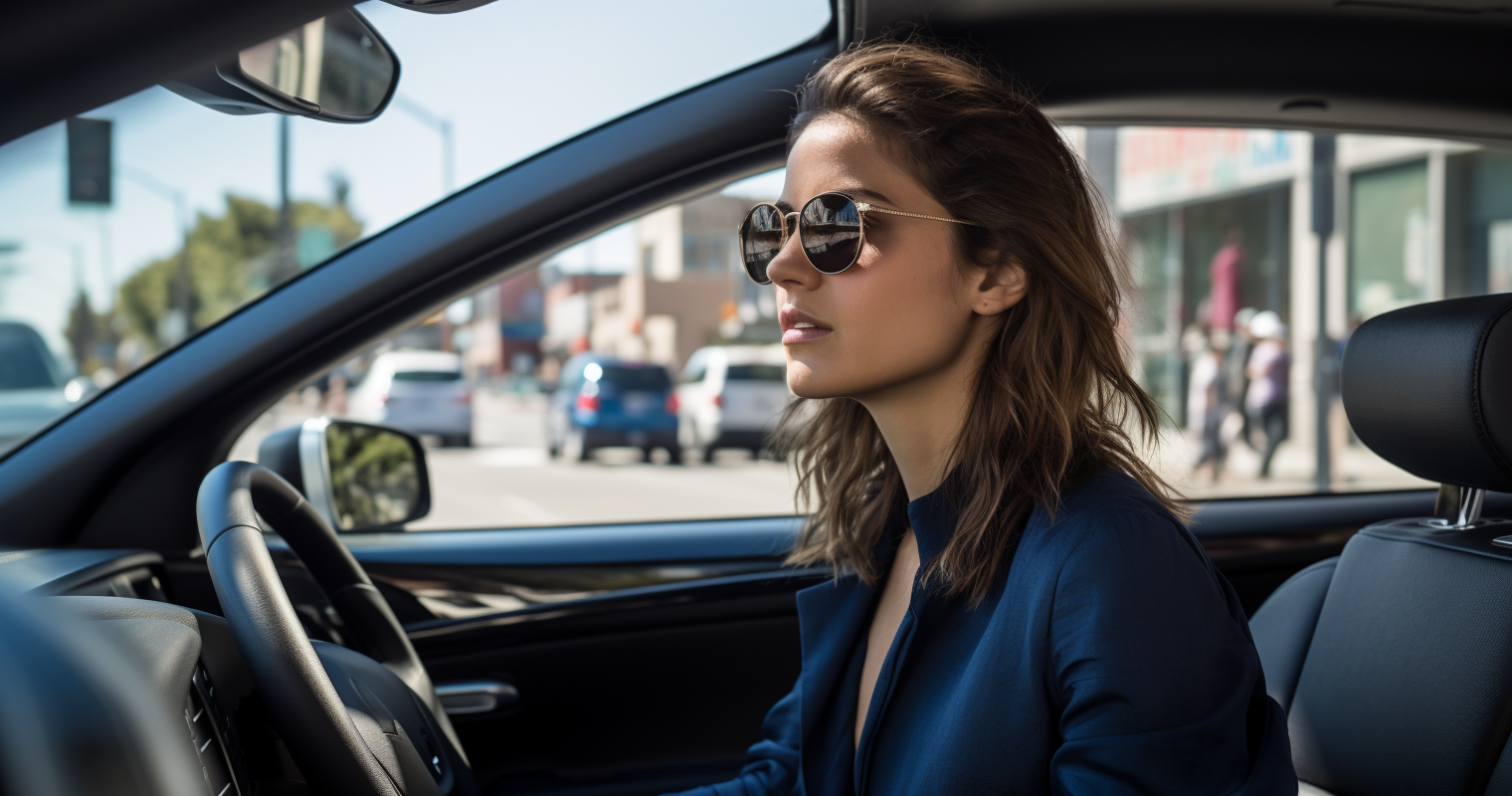
Getting behind the wheel in Malaysia means joining left-hand traffic on a well-connected expressway system, sharing the road with a high density of motorcycles, and adapting to distinctly local driving habits. Speed limits run from 30–50 km/h in residential streets to 110 km/h on major highways. Visitors on short stays can rely on a valid foreign licence paired with an International Driving Permit (IDP), while those residing in the country long-term are now required to obtain a Malaysian licence through the Road Transport Department (JPJ).
| Item | Details |
|---|---|
| Side of road | Left (same as the UK, Australia, and Japan) |
| Speed limits (as of 2024) | Residential: 30–40 km/h | Urban: 50–60 km/h | Highway: up to 110 km/h |
| Drink-drive limit (as of 2020) | 50 mg alcohol per 100 ml blood (0.05% BAC); 22 mcg per 100 ml breath |
| Foreign licence validity | Up to 90 days for visitors with a valid IDP; long-term residents must obtain a Malaysian licence |
| Emergency number | 999 (police, ambulance, fire) |
| Road authority | Road Transport Department — JPJ (jpj.gov.my) |
Is Malaysia safe to drive in?
Road safety is a genuine and serious concern for anyone planning to drive in Malaysia, and new drivers should treat the country’s roads with considerable care. Between January and October 2024 alone, official figures recorded 532,125 road accidents, of which 5,364 proved fatal — a rate that translates to one road death roughly every two hours.
The picture has nonetheless been improving over time. From 2010 to 2021, road fatalities fell by around 43% per 100,000 population — dropping from 24.7 to 13.9 — a decline that outpaced both the Asia-Pacific and South East Asia regional averages over the same period. That said, when measured against the roads of Western Europe or neighbouring countries such as Japan and Singapore, where fatality rates are substantially lower, Malaysian roads still carry a meaningfully higher level of risk.
Motorcycles lie at the centre of the road safety problem. Of the 5,939 deaths recorded from 585,729 accidents reported by November 2024, a striking 67% — some 4,014 fatalities — involved motorcyclists and their pillion passengers, the majority of whom were young people between 16 and 35 years old. Car drivers must remain acutely alert to motorcycles, which routinely weave between lanes, filter through queued traffic, and appear without warning at junctions.
Road quality itself is far from uniform. Malaysia’s intercity expressways — including the North-South Expressway and the broader PLUS highway network — are modern, well-maintained, and clearly signed. Urban streets in cities such as Kuala Lumpur, Penang, and Johor Bahru can be heavily congested, with intricate lane arrangements and assertive merging. At least 49% of Malaysian road infrastructure meets a 3-star or better safety rating for vehicle occupants, yet for motorcyclists — who account for 47% of all vehicles — only roughly 3% of road infrastructure reaches that standard.
Speeding and distracted driving — particularly mobile phone use at the wheel — remain among the most frequently cited causes of crashes. Accident numbers also spike sharply in the days before major public holidays such as Hari Raya Aidilfitri and Chinese New Year, when mass migration between cities swells traffic volumes, and again once the celebrations conclude and travellers return home. Adjust your travel plans accordingly and build in additional time during these periods. The most current national road safety data can be found at the Ministry of Transport Malaysia and the Malaysian Institute of Road Safety Research (MIROS).
What side of the road do you drive on in Malaysia?
Traffic in Malaysia travels on the left, with overtaking carried out on the right. This is the same arrangement found in the UK, Australia, India, Japan, Singapore, and a number of other countries. If you have come from a right-hand-traffic country — such as most of continental Europe, the United States, or mainland China — you should expect to need an adjustment period before left-hand driving feels second nature.
The moments of greatest risk for drivers making the switch tend to occur at junctions, roundabouts, and whenever restarting from a stationary position — for instance, pulling out of a petrol station or car park. The instinct to default to the familiar side of the road can be powerful, especially on quiet stretches. A practical tip is to have a passenger prompt you when pulling away, and to attach a small reminder sticker to the dashboard during your initial weeks of driving. Roundabouts in Malaysia are navigated clockwise — the same as in the UK and Australia — which is the reverse of what drivers from right-hand-traffic nations will be accustomed to.
The vast majority of cars sold and hired out in Malaysia are right-hand drive, placing the steering wheel on the right side of the vehicle in keeping with left-hand traffic. If you intend to bring a left-hand-drive vehicle from another country, be aware that visibility — particularly when overtaking on undivided roads — can be significantly reduced. Consult the Road Transport Department (JPJ) regarding any restrictions that may apply to operating left-hand-drive vehicles on Malaysian roads.
What are the main driving rules in Malaysia?
The primary legislation governing road use in Malaysia is the Road Transport Act 1987, administered by JPJ (Jabatan Pengangkutan Jalan — the Road Transport Department) and enforced on the ground by the Royal Malaysian Police (PDRM). A solid understanding of the key rules before you start driving is essential, given that on-the-spot fines and serious penalties are readily applied.
Speed limits (as of 2024) are as follows: highways carry a limit of 110 km/h (reduced to 90 km/h on certain sections); urban roads are capped at 50–60 km/h; and residential zones are limited to 30–40 km/h. Enforcement through speed cameras is vigorous, particularly on highways. On-the-spot fines can be issued for exceeding posted limits. Unlike in some countries where speed camera positions are publicly advertised, cameras are widespread throughout Malaysia and are especially concentrated in built-up areas and tourist zones.
Mobile phones: Holding and using a mobile phone while driving is illegal unless a hands-free system is in use. This prohibition is actively enforced through police roadblocks and patrols — do not assume that handling a phone while stationary at traffic lights will pass unnoticed.
Drink-driving thresholds were substantially tightened under the Road Transport Act (Amendment) 2020, which took effect in October 2020. The prescribed limits are now 22 micrograms of alcohol per 100 millilitres of breath and 50 mg per 100 ml of blood — broadly aligned with WHO guidelines and stricter than the threshold in many other countries. Commercial drivers face a zero-tolerance limit of 0.00%. The consequences of breaching these limits are severe: driving while over the legal limit can result in up to two years’ imprisonment and fines of between RM10,000 and RM30,000. Causing a death while driving under the influence carries a prison sentence of 10 to 15 years, fines of RM50,000 to RM100,000, and a driving ban of at least 10 years. Always consult the JPJ website for the current prescribed limits.
Seatbelts: Every passenger in a vehicle must be buckled up. Placing a child under 4 years of age in the front seat is a criminal offence, and all children must be restrained with a seatbelt at all times. Child car seat legislation in Malaysia has been subject to ongoing revision — consult JPJ or the Road Safety Department for the most up-to-date requirements before travelling with young children.
Right of way and general conduct: At uncontrolled junctions, vehicles already travelling on the main road generally take priority. Indicating is a legal requirement, though local compliance is inconsistent. Be alert to drivers accelerating to beat a changing amber light before it turns red. Turning left at a red signal is not permitted unless a dedicated filter arrow or explicit signage allows it — this differs from countries such as the United States where right-on-red is routinely permitted. Always carry your driving licence and valid insurance documentation whenever you are behind the wheel.
What equipment are you legally required to carry in your car in Malaysia?
Compared to several other countries, Malaysia’s mandatory in-vehicle equipment requirements are fairly straightforward, but the rules that do exist must be followed, and a number of additional items are strongly advisable for safety.
- Valid driving licence: Your licence must be carried whenever you drive and must be produced on demand at any police check or JPJ roadblock.
- Insurance documents: A current and valid insurance certificate must be kept in the vehicle at all times.
- Road tax disc: The vehicle’s road tax tag must be displayed prominently on the windscreen and must be current at the time the vehicle is in use.
- Valid registration plates: Number plates must be fitted to the vehicle and kept in legible condition.
Malaysia does not currently require private vehicle owners to carry a breathalyser (as France does), nor does it mandate a warning triangle, high-visibility vest, or first aid kit as compulsory items for private cars — unlike a number of European countries. Nevertheless, carrying a warning triangle and a basic first aid kit is highly recommended as good practice, particularly on long-distance or overnight journeys through rural areas. A fire extinguisher is not a legal requirement for private cars, though it is mandatory for certain categories of commercial and public service vehicles.
There are no additional equipment requirements specific to foreign-registered vehicles beyond those applied to locally registered ones, but it is advisable to check with JPJ and your insurer before driving a foreign-registered car into Malaysia, as rules are subject to change. Motorcyclists — both riders and pillion passengers — are required by law to wear helmets at all times. Always verify any updated requirements with JPJ, as vehicle equipment regulations may be revised.
What are the most important road signs in Malaysia?
Malaysia’s road signage broadly adheres to the framework of the 1968 Vienna Convention on Road Signs and Signals, so drivers from most countries will recognise the fundamental shapes and colour coding. Warning signs are typically triangular with a red border, prohibitory signs are circular with a red border, and informational or directional signs are rectangular or square, generally rendered in blue or green.
Drivers new to Malaysia should take note of the following particular features:
- Language: Signs in Malaysia appear in Bahasa Malaysia (Malay) and, on major highways, in English as well. Useful Malay terms to learn before driving include: Berhenti (Stop), Beri Laluan (Give Way), Jalan Sehala (One Way), Dilarang Masuk (No Entry), Kurangkan Laju (Reduce Speed), and Kawasan Sekolah (School Zone). A little preparation here goes a long way.
- Speed camera signs: Blue rectangular boards bearing a camera icon indicate upcoming speed camera zones. These appear regularly on federal roads and major expressways.
- Toll plaza signs: Green overhead gantries signal approaching toll plazas and indicate available payment lanes — Touch ‘n Go, SmartTAG, and cash. On major expressways, electronic and cash lanes are physically separated and clearly labelled.
- Motorcycle lane signs: Certain roads feature dedicated lanes for motorcycles, identified by a motorcycle symbol. These lanes are off-limits to cars — keep an eye out for them when navigating city roads.
Traffic lights follow the standard international sequence: red (stop), amber (prepare to stop or proceed), and green (go). A green filter arrow may appear alongside the main signal to authorise specific turning movements. There is no equivalent of the US “right-turn on red” rule in Malaysia — turning left at a red light is only permitted when a dedicated left-turn filter arrow or a “Left Turn Permitted” sign is clearly displayed. At many busy intersections in Kuala Lumpur, countdown timers are fitted to traffic lights, giving drivers advance notice of an impending signal change.
What must you do if you have a road accident in Malaysia?
Malaysian law imposes clear duties on all drivers involved in a road accident. Ignoring these obligations can result in criminal charges, financial penalties, and complications when making insurance claims. The steps below reflect the position as of 2024 — always verify the current procedure with the Royal Malaysian Police (PDRM) at rmp.gov.my.
- Remain at the scene. Leaving the site of an accident without stopping is a criminal offence, regardless of how minor the incident appears. Where possible, move your vehicle to a safe position away from the flow of traffic and activate your hazard lights.
- Contact emergency services if there are any injuries. Malaysia’s unified emergency number is 999, which covers police, ambulance, and fire services. For non-urgent police enquiries, the PDRM hotline is 03-2266 2222.
- Call the police where the accident involves injury, substantial vehicle damage, or a dispute between parties. For minor incidents where both drivers are in agreement about what happened, a police call may not be strictly required — but always photograph the scene, damage, and number plates before moving any vehicle.
- Swap details with all other drivers involved. The information to be exchanged includes: full name, identity card or passport number, driving licence number, vehicle registration number, and insurance provider. Avoid making any admission of fault at the scene.
- Record the scene thoroughly. Photograph vehicle positions, all visible damage, road markings, and any relevant signage. If there are bystander witnesses, take their contact details.
- Notify your insurer promptly — most Malaysian insurance providers require notification within 24 hours of an accident, even if no claim is being made. Late notification can void your policy. Use only your insurer’s approved panel workshops for vehicle repairs.
- File a police report where necessary. If the accident involved personal injury, a hit-and-run driver, or significant property damage, you must submit a police report at any police station within 24 hours. Your insurer will need a copy of this report to process any claim.
Be alert to the possibility of staged accidents in Malaysia — there are known instances of individuals deliberately engineering collisions and then appearing with a tow truck offering roadside assistance, sometimes demanding exorbitant fees. If you have any doubts, do not agree to any towing arrangement on the spot; instead, call your insurer’s roadside assistance line directly, or request police assistance.
Where can you find up-to-date road traffic information for Malaysia?
A range of official and third-party platforms provide real-time traffic data for Malaysian roads. The most dependable options are listed below:
- PLUS Expressways: plus.com.my offers live traffic updates, camera feeds, and incident notifications for the North-South Expressway and other PLUS-managed highways. The PLUS app is a go-to tool for long-distance travellers.
- Waze: Exceptionally popular in Malaysia and widely considered the most accurate real-time navigation tool for urban journeys, especially across the congested Klang Valley. It incorporates live alerts for police roadblocks, accidents, and user-reported hazards — all highly relevant to the Malaysian driving environment.
- Google Maps: Delivers reliable traffic overlays, toll route options, and turn-by-turn directions throughout Malaysia. Both Google Maps and Waze perform dependably across Peninsular Malaysia and in the main cities of East Malaysia — Sabah and Sarawak.
- MyJPJ App: This official JPJ application allows both Malaysians and foreigners to upload and verify licence documents digitally. It also carries road transport news and service updates straight from the department.
- Radio: Traffic bulletins are broadcast at regular intervals on major Malaysian stations including Traxx FM, MY FM, and BFM 89.9, with particular emphasis during rush hours and public holidays.
- ITIS (Integrated Transport Information System): The Ministry of Transport maintains mot.gov.my, which provides transport policy information and links to road safety resources across the country.
During peak festive travel periods — chiefly Hari Raya Aidilfitri, Chinese New Year, and Deepavali — traffic on the North-South Expressway can reach extraordinary volumes. Consult PLUS or Waze before setting off and consider travelling outside peak hours wherever possible. Always check that any app or web link is still active before depending on it for navigation purposes.
How does parking work in Malaysia?
Parking arrangements in Malaysia differ between cities and districts, but the systems you are most likely to encounter are metered or app-based on-street parking, coupon zones, and commercial multi-storey car parks — known locally as “car parks” or tempat letak kereta.
On-street parking: Many urban areas operate either a coupon-based or app-based parking system. In Kuala Lumpur, on-street parking falls under the administration of Dewan Bandaraya Kuala Lumpur (DBKL). Scratch-card coupons — available at convenience stores like 7-Eleven and KK Mart — were the traditional method, but most major cities have now shifted to digital payment. The primary tool in Kuala Lumpur is the DBKL e-Parking app; other municipalities may operate their own platforms. Always read the signs at the parking bay carefully to confirm the correct payment method and the hours during which charges apply, as these vary by zone and local authority. For current rates, contact your local city council — for example, DBKL for Kuala Lumpur, MBPP for Penang, or MBJB for Johor Bahru — as fees are periodically revised.
Commercial car parks: Covered multi-storey and basement car parks are abundant in shopping centres, office buildings, and residential developments. Payment is typically made at a ticketing machine or barrier system, with most accepting cash, Touch ‘n Go e-wallet, or credit card. Rates vary by location and duration — as of 2024, hourly charges in central Kuala Lumpur typically range from around RM2 to RM6; confirm the current rate at each facility before leaving your vehicle. In popular expat residential areas such as Mont Kiara and Bangsar, allocated parking spaces are often included within tenancy agreements.
Parking fines and enforcement: Unlawful parking is monitored and penalised by municipal enforcement officers (penguatkuasa), who may issue fines or arrange for vehicles to be clamped or towed. A notice with a contact number will be attached to any clamped vehicle. Releasing a clamp typically requires an immediate on-site fine payment. Fine amounts vary between municipalities and are subject to change — check with your local city authority for up-to-date figures.
Disabled parking: Designated bays for drivers with disabilities (bearing the international wheelchair symbol) are provided in public car parks and shopping complexes. In Malaysia, the official term for people with disabilities is OKU (Orang Kurang Upaya). Disabled parking permits are issued by the Jabatan Kebajikan Masyarakat (JKM) — the Social Welfare Department — to registered OKU cardholders. Overseas disabled parking permits are not officially recognised for on-street disabled bays in Malaysia; if you have a disability and will be driving long-term in the country, pursue OKU registration through JKM. Short-term visitors should contact the relevant municipal authority for advice. Misuse of disabled bays constitutes an enforceable offence.
Can you drive in Malaysia on a foreign or international licence?
The rules surrounding foreign driving licences in Malaysia underwent a significant change in 2025. With effect from 19 May 2025, JPJ discontinued the conversion of foreign driving licences to Malaysian Driving Licences for expatriates and the legal spouses of Malaysian citizens. This is a fundamental shift that every long-term resident must understand.
For short-term visitors (up to 90 days): If you are visiting on a short stay, you may drive using your valid foreign driving licence provided it is accompanied by an International Driving Permit (IDP). Under Section 28 of the Road Transport Act 1987, the holder of a foreign driving licence may legally drive in Malaysia so long as the licence is valid and supported by an English-language translation. As Malaysia does not issue or renew IDPs within its borders, you must obtain one in your home country before travelling if you intend to drive during your visit.
Licence translation: If your driving licence is issued in a language other than English or Malay, a certified translation is a compulsory requirement before you can use it legally in Malaysia. This obligation applies whether you are a visitor driving temporarily or a resident applying for a local licence.
For long-term residents (over 90 days): Foreigners wishing to drive in Malaysia on a long-term basis must now go through the same licensing process as Malaysian citizens, including attending a registered driving school and passing both the theory and practical examinations — unless they fall within one of the specific exemption categories.
The groups still eligible for direct licence conversion are diplomats, participants in the Malaysia My Second Home (MM2H) programme, and Malaysian citizens who held a foreign licence prior to obtaining their Malaysian one.
The complete Malaysian licensing process for those required to complete it comprises the following steps:
- Register with a driving school holding a valid JPJ licence.
- Complete a five-hour course covering Malaysian road rules, traffic signs, and fundamental vehicle safety.
- Sit the JPJ law test — a computer-based multiple-choice examination comprising 50 questions drawn from the highway code handbook, available in several languages including English.
- Obtain a Learner’s Driving Licence (LDL) and accumulate the required on-road practical training hours.
- Pass the JPJ practical driving test.
- Receive a Probationary Driving Licence (PDL), which must be held for two years before it can be upgraded to a Competent Driving Licence (CDL).
For all enquiries about the validity of foreign licences, conversion eligibility, or the licensing process, contact the Road Transport Department (JPJ) directly or reach the Malaysian Government Call Centre at +603 8000 8000. This is a rapidly evolving area of regulation, so always confirm the current rules before getting behind the wheel.
Frequently Asked Questions About Driving in Malaysia
Do I need car insurance to drive in Malaysia, and what does it cover?
Yes — third-party liability insurance is the legal minimum for all vehicles operating on Malaysian roads, and it is typically bundled with the annual road tax (cukai jalan). Most drivers choose comprehensive cover, which extends to own-vehicle damage, theft, and third-party liability. Visitors hiring a car will ordinarily find insurance included as part of the rental package — always verify what is covered and what the excess amounts are before driving away. For guidance on motor insurance requirements, consult Bank Negara Malaysia, the central bank and insurance regulator.
How do toll roads work in Malaysia, and how do I pay?
Toll roads are widespread in Malaysia, most heavily concentrated on the expressways serving the Klang Valley, Penang, and Johor Bahru. The dominant electronic payment method is the Touch ‘n Go card or Touch ‘n Go e-wallet (accessible via smartphone app). Some toll plazas still accept cash, while others operate on a fully cashless basis using RFID or SmartTAG technology. If you are renting a vehicle, ask the rental company whether a Touch ‘n Go card is supplied. Cards can be purchased and topped up at petrol stations and convenience stores across the country. Using an electronic payment lane is strongly advisable — cash queues can be considerably longer.
What are the penalties for using a mobile phone while driving in Malaysia?
Operating a mobile phone while driving is prohibited unless you are using a hands-free system. Offenders face fines and demerit points under Malaysia’s KEJARA demerit system, and persistent offenders risk having their licence suspended. Enforcement is robust, particularly at police roadblocks and through traffic camera networks. Always use a properly mounted hands-free device, or pull over safely before making or receiving any call.
Are there any restrictions on driving with children in Malaysia?
All child passengers must be secured with a seatbelt in Malaysia, and it is a legal offence to seat a child under 4 years of age in the front of a vehicle. Child car seat requirements have been subject to ongoing legislative review in Malaysia — the use of age- and size-appropriate child restraint systems is strongly recommended for all children, and the law may have been updated since this article was written. Always confirm the latest requirements with JPJ and the Road Safety Department before travelling with children.
Is it safe to drive at night in Malaysia?
Night driving in Malaysia comes with heightened risks, especially on rural and secondary roads where street lighting may be sparse or absent, road surfaces can be uneven, and stray animals or wildlife may stray onto the carriageway. Motorcycles with inadequate lighting are an additional hazard after dark. On major expressways, conditions are generally safer, though fatigue on long highway drives is a real risk. Rest stops (R&R) are plentiful and well-serviced along the North-South Expressway. For lengthy journeys, plan regular rest breaks into your itinerary.
How does the KEJARA demerit point system work for drivers?
The KEJARA (Kenderaan dan Jalan Raya) system penalises traffic offences by deducting points from a driver’s licence. Holders of a Probationary Driving Licence operate under a 10-point threshold — once 10 points are accumulated within the two-year probationary window, the licence is revoked. After the probationary period, the full Competent Driving Licence carries a 15-point threshold; exceeding this through traffic violations can result in suspension or cancellation of the licence. Foreign nationals holding a Malaysian licence are subject to exactly the same demerit rules.
Is there a minimum age for driving in Malaysia?
The minimum age requirements for obtaining a driving licence in Malaysia are: 16 years for a motorcycle licence; 17 years for a light vehicle (car) licence; and 21 years for heavy vehicles including buses, lorries, and taxis. These ages apply to all applicants going through the Malaysian licensing process, including expatriates. There is no maximum age ceiling for holding a licence, although medical fitness may be assessed for older drivers.
Are there any special rules during festive seasons or public holidays?
Accident rates surge in the days immediately before major festivals and again once the celebrations end and people return home. During these peak periods, enhanced police enforcement is deployed on principal routes, including random roadblocks and breathalyser checks, and speed limit enforcement is intensified. PLUS Expressways may also adjust toll operations to ease congestion. Plan your journeys carefully around Hari Raya Aidilfitri, Chinese New Year, and school holiday periods, and use real-time platforms such as Waze or the PLUS app to monitor road conditions before and during travel.