

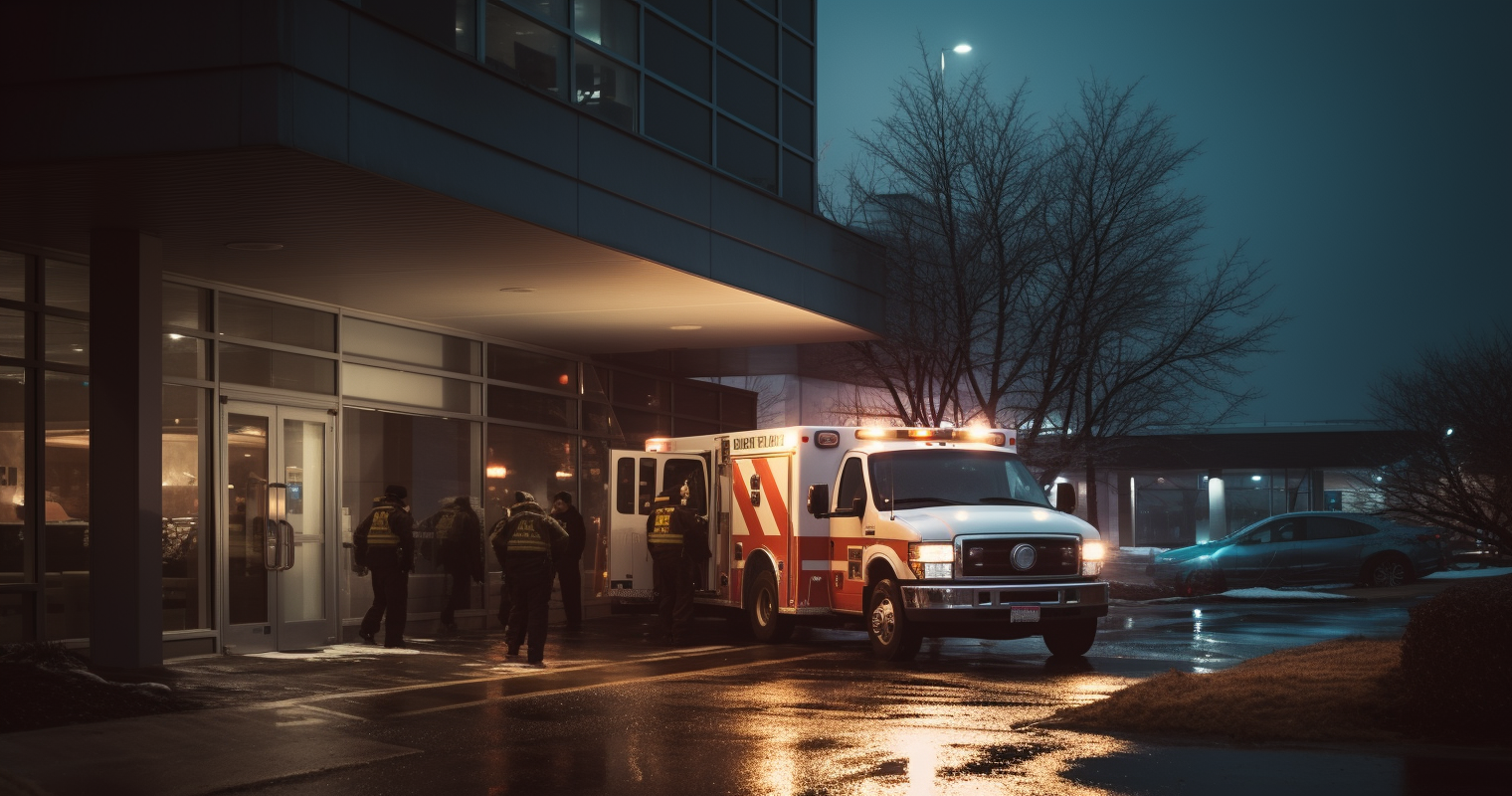
Mexico’s universal emergency number is 911, providing access to police, fire, and medical services across the entire country. Emergency care is not automatically free for everyone: residents registered with public health programmes like IMSS receive subsidised or no-cost treatment, while uninsured travellers and short-term visitors are typically billed — frequently before treatment begins. Securing health coverage prior to arrival is essential.
| Item | Details |
|---|---|
| Main emergency number | 911 (police, fire, ambulance) — as of 2025 |
| Tourist assistance line | 078 (Green Angels / Ángeles Verdes) — roadside and general tourist help |
| Emergency treatment cost (uninsured tourists) | Charged at point of use; upfront deposit often required — as of 2025 |
| Public health scheme for residents | IMSS (voluntary enrolment); annual fee approx. 8,000–12,000 MXN depending on age — as of 2025; verify current rates at imss.gob.mx |
| Private hospital ICU stay | Can run into tens of thousands of USD without insurance — as of 2025 |
| Bilateral health agreements with other countries | No broad reciprocal emergency healthcare agreements confirmed; verify with your home country’s embassy |
What is the single emergency number in Mexico, and does it cover all services?
Since October 2016, Mexico has been transitioning to 911 as the sole official emergency number for all public emergency services across the country — encompassing police, fire, the Red Cross, and civil defence — replacing 066, 089, and more than 240 other local numbers. By 2025, 911 is the number to dial for any life-threatening situation anywhere in Mexico, though you should confirm whether your particular location is fully covered, as the rollout has been phased.
Mexico’s primary emergency number, 911, can be used to reach police, medical, and fire services — operating on a model similar to that used in the United States and Canada. The government designates 911 as the preferred contact, though older numbers such as 066 may remain functional in certain areas. Always attempt 911 first.
Older secondary numbers — 065 for ambulance, 068 for fire, and 060 for police — were used before the 911 rollout and may still connect in some regions, but these should not be treated as primary options. Programme 911 into your phone before you have any reason to need it.
An additional resource is the Green Angels (Ángeles Verdes), reachable on 078, a network funded by Mexico’s Secretary of Tourism to support visitors. Their staff include multilingual operators and their services cover telephone guidance, towing, mechanical support, and emergency medical aid. This line is primarily intended for roadside assistance and general visitor support — it is not a substitute for 911 in genuinely life-threatening situations.
How do you call for emergency medical assistance in Mexico, and what should you expect?
For any medical emergency, call 911. This connects you to the national emergency response network, where an operator will ask for your location and the nature of your emergency before sending assistance. Do not assume the operator will speak anything other than Spanish — if your Spanish is limited, it helps to learn a handful of key phrases in advance, such as “necesito una ambulancia” (I need an ambulance), and to be prepared to give your address clearly and concisely.
Once a medical emergency is reported, paramedics will be despatched and will transport you by ambulance to the nearest appropriate hospital. In major urban centres, response times are generally reasonable, though in more remote parts of the country delays are common. Paramedics in Mexico are generally well trained, and many private hospitals run their own ambulance fleets — a genuine advantage if you are in a city or a popular tourist destination. That said, response times differ considerably by region, and services beyond major urban areas may be considerably slower than you are accustomed to.
Beyond 911, the Cruz Roja Mexicana (Mexican Red Cross) is the most prominent pre-hospital care provider in the country, with a wide presence nationwide. The Red Cross can often be contacted directly on 065. It is worth noting that not all ambulance operators are equal — certain private services function outside industry standards, charging inflated fees while operating with inadequate equipment. When requiring emergency services, use providers affiliated with reputable hospitals or well-established healthcare networks wherever possible.
Medical care is accessible around the clock in any town or city of meaningful size throughout Mexico. Most hospitals operate 24 hours a day with functioning emergency departments and ambulance access. In cities and tourist areas in particular, ambulances are typically well-equipped to manage emergencies during transit.
What should you do in a mental health crisis in Mexico?
Mexico does not have a single, nationally standardised dedicated mental health emergency line comparable to crisis services found in some other countries. If someone is in acute mental health distress — for instance, presenting an immediate risk of harm to themselves or others — dialling 911 remains the appropriate first action, as dispatchers can send civil protection personnel and medical responders.
SAPTEL, a crisis intervention service based in Mexico City, operates around the clock and provides support to people in emotional distress. Their number is (55) 5259-8121. Although originally created for Mexico City residents, callers from other parts of the country can also use the line. Confirm current operational status directly, as availability may change over time.
Mexico’s Federal General Health Law (La Ley General de Salud) governs the obligations of hospitals and the rights of patients. A central provision obliges the nearest medical facility to attend to patients with emergency medical conditions. This means that a person arriving at a hospital emergency department in acute mental health crisis must be assessed and stabilised by staff regardless of their insurance status. Ongoing inpatient psychiatric treatment is a separate matter and will generally involve costs, particularly at private facilities.
For non-acute mental health challenges, private clinics in larger cities frequently offer psychiatric and psychological services, and expat communities often maintain referral lists of practitioners who work in multiple languages. Your embassy or local expat networks can be useful starting points for finding appropriate support.
Where can you go for emergency medical treatment in Mexico?
Every city and most mid-sized towns in Mexico have at least one full-service hospital, and even small communities usually have a clinic. In a serious emergency, call 911 and follow the dispatcher’s guidance. If you are mobile and close to a facility, you may also go directly to the nearest hospital emergency department (urgencias).
Mexico’s healthcare landscape combines public and private providers. Major cities and tourist destinations are served by modern hospitals and well-equipped clinics. The public sector operates through three principal institutions: IMSS, which serves private-sector workers and enrolled residents; ISSSTE, which covers government employees; and INSABI facilities, which act as a safety net for those outside the other two systems.
Public hospitals, including those within the IMSS network, primarily treat registered beneficiaries, but are required to provide emergency services to all patients regardless of enrolment. Routine and ongoing treatment is generally reserved for those holding membership in IMSS or another public scheme.
High-quality hospitals are found throughout Mexico’s medium to large cities. Private facilities typically have short waiting times, modern diagnostic technology, access to specialists, and a strong overall standard of infrastructure. Prominent private hospital groups include ABC Medical Center in Mexico City, Galenia Hospital in Cancún, Hospiten, and CostaMed, among others. For less critical situations, urgent care centres handle conditions that need prompt attention but do not constitute full emergencies — minor burns, lacerations requiring stitches, and fractures, for example.
To locate the nearest facility, the official IMSS website (imss.gob.mx) includes a hospital locator for its network. Private hospitals in major cities generally have their own websites and direct emergency contact numbers — research the options in your area before you have any need for them.
Is emergency medical treatment free in Mexico, or is there a charge?
Emergency room services at public hospitals are free for residents enrolled in IMSS. For tourists or those without IMSS enrolment, charges apply. At private hospitals, you will pay out of pocket unless your travel insurance covers costs directly.
Visitors to Mexico are not entitled to free healthcare. This benefit is generally limited to residents and citizens enrolled in IMSS. While foreigners can be seen at public hospitals, payment for services will typically be required unless travel insurance arrangements provide coverage.
Serious medical events carry significant costs. A stay in a private hospital’s intensive care unit can reach tens of thousands of dollars. Hospitals generally require a deposit before admission for non-life-threatening conditions, and full payment is usually expected before discharge. Importantly, hospitals may not legally detain a patient, or retain their passport, as a means of securing payment for services already provided.
For IMSS members — including eligible expat residents — nearly all treatments and medications are provided at no additional charge once the annual premium is paid. Premium amounts vary by age; for those aged 50 to 59, IMSS currently costs approximately USD $63 per month per person; for those aged 60 to 69, around $89 per month; and for those aged 70 to 79, approximately $93 per month. Always confirm current rates directly at imss.gob.mx, as fees are subject to change.
Do expats need insurance, and what happens without it?
Health or travel insurance is not a legal entry requirement for Mexico, but it is strongly advisable for any expat or visitor. Many people prefer private healthcare for its speed and broader range of provider options. Since healthcare is not universally free, and even public health support involves some out-of-pocket exposure for foreign residents, a comprehensive medical plan suited to your residency or travel circumstances is important to avoid unexpected financial burdens.
Many Mexican hospitals require an upfront deposit from patients without insurance. This can be as modest as 5,000 pesos, but may reach 100,000 pesos or more (approximately USD $5,000 as of 2025). Those with insurance should check whether their insurer has arrangements with in-network hospitals that waive deposit requirements.
Mexican facilities often demand payment before performing a procedure, and most hospitals in Mexico do not accept foreign health insurance policies directly. Even if you hold valid cover from your home country, you may be required to settle the bill at the hospital and seek reimbursement from your insurer afterwards. Before travelling, confirm whether your insurer offers direct billing with Mexican hospitals.
Private health insurance in Mexico can be considerably more affordable than equivalent policies in other countries, though pricing depends on age, deductible levels, pre-existing conditions, and the tier of hospitals included. Long-term expats should weigh international expat health plans against locally issued Mexican private plans. In an emergency, a consular officer can help facilitate a transfer of funds from your home country, though responsibility for settling hospital bills remains with the individual.
Where overseas health coverage is available through a home-country scheme, it typically extends only to emergency treatment, not to ongoing or routine care abroad. US Medicare, for example, generally does not cover services rendered outside the United States. Review your home-country policy terms carefully before departing.
Are there bilateral health agreements entitling some foreign nationals to reduced-cost care?
Unlike arrangements within the European Union — where the European Health Insurance Card (EHIC) grants access to state healthcare on equivalent terms to local residents — Mexico does not maintain a broad network of reciprocal healthcare agreements that automatically entitle foreign nationals to free or subsidised emergency treatment.
Mexico has not signed any widely recognised multilateral reciprocal health agreement comparable to the EHIC framework or Commonwealth health arrangements. Bilateral social security agreements between Mexico and certain countries, including Canada, Spain, and the United States, do exist, but these relate primarily to pension and social security portability and do not generally extend to free emergency healthcare access for visiting nationals.
Visitors can receive emergency treatment at public hospitals, but where a home-country health scheme offers coverage abroad, it typically applies only to emergency situations, not routine or ongoing treatment. For the vast majority of people arriving in Mexico, no automatic government-to-government healthcare entitlement exists at the point of emergency care: you will receive treatment, but you will receive a bill.
For the most precise and current information about whether any arrangement exists between Mexico and your home country, contact your national embassy or consulate in Mexico, or consult your country’s social security or health authority directly. Embassy contact details are available through the Mexican Ministry of Foreign Affairs (SRE) at gob.mx/sre.
How does Mexico’s emergency healthcare system compare to systems expats may be familiar with?
Mexico’s healthcare system delivers care through a combination of public and private providers. This places it closer in character to the mixed public-private models found in parts of continental Europe and Latin America than to a fully integrated single-payer system like the NHS in the United Kingdom, where emergency treatment is available free to all at the point of need, regardless of residency or insurance status.
Unlike the NHS model, access to subsidised emergency care in Mexico’s public hospitals is effectively conditional on enrolment in a scheme such as IMSS. Public healthcare operates primarily through government hospitals, which can involve longer waits, overcrowding, and more basic facilities. Private hospitals, by contrast, generally have minimal waiting times, up-to-date technology, access to specialists, and a higher overall standard of care.
Mexico’s hospital network comprises both private and government-operated facilities, and nearly all will provide a treatment cost estimate in advance. Payment is typically required before a patient is discharged. This model of upfront payment parallels arrangements in the United States and parts of Southeast Asia, rather than the post-treatment billing or tax-funded models common across much of Western Europe and Australasia.
Expats accustomed to universal public healthcare need to understand that membership of a public scheme — or possession of private insurance — is the key that unlocks subsidised care, not simply physical presence in the country. Many expats make use of more than one type of healthcare, drawing on the public system for everyday health matters and prescriptions while turning to private facilities for serious conditions, surgical procedures, and emergencies.
What emergency services exist beyond medical — how do police and fire services work?
911 Emergencias is the official government body overseeing public emergency response, including both police (Policía) and fire (Bomberos) services. Dialling 911 will connect you to the unified national dispatch system and is the recommended approach for police and fire emergencies throughout Mexico as of 2025.
Police handle a wide range of incidents, from theft to road traffic collisions. Calling 911 will route you to the relevant local department. For non-urgent matters such as reporting a theft after the event, contacting the Municipal Police directly may be more appropriate. In areas with heavy tourist traffic, Tourist Police units are trained specifically to help international visitors — they can assist with directions, minor incidents, or lost property and can be reached through 911 or approached directly in tourist zones.
Interactions with police in Mexico can feel unfamiliar to expats from other countries. Officers may ask to see identification; always carry a copy of your passport or residency card. If you are involved in a road traffic accident, be aware that Mexican law requires you to cover any damages caused to another vehicle or person before leaving the scene, which makes liability insurance indispensable.
If you have been the victim of a crime, you should file a formal complaint (denuncia) at the local Ministerio Público (public prosecutor’s office) or, in some states, at a dedicated tourist assistance unit. Your embassy or consulate can help you navigate this process if needed. Fire services (Bomberos) are despatched through 911 and are organised at municipal level; response times in rural or isolated areas will often be considerably longer than in cities.
Are there country-specific emergency risks in Mexico — natural disasters, extreme weather, civil unrest, or endemic diseases?
Mexico is exposed to a range of natural hazards that expats should understand before relocating. The country occupies one of the most seismically active zones on Earth and experiences regular earthquakes, particularly across central and southern states including Mexico City, Oaxaca, Guerrero, and Chiapas. Mexico also falls within both Atlantic and Pacific hurricane corridors: the Pacific coast (including Jalisco, Colima, and Guerrero) and the Gulf and Caribbean coasts (including Quintana Roo and Veracruz) are periodically struck by tropical storms and hurricanes, most commonly between June and November.
The country’s civil protection agency, the Centro Nacional de Prevención de Desastres (CENAPRED), monitors seismic, volcanic, meteorological, and hydrological hazards and publishes alerts on its official website. Mexico operates a seismic early warning system — the Sistema de Alerta Sísmica Mexicano (SASMEX) — which broadcasts loud siren warnings in covered cities including Mexico City. Familiarise yourself with the alarm as soon as you arrive and identify your nearest open outdoor assembly area for earthquake drills.
The Mexican government’s Secretaría de Gobernación (SEGOB) coordinates national civil protection through the Sistema Nacional de Protección Civil (SINAPROC), which publishes emergency protocols and evacuation procedures. The Servicio Meteorológico Nacional (SMN) issues official weather forecasts and hurricane warnings.
On the health side, the Secretaría de Salud (Ministry of Health) tracks endemic diseases. Dengue fever is present in many coastal and lowland regions; Zika and chikungunya have also been recorded. Expats and travellers should take mosquito precautions seriously and consult a travel health clinic about vaccinations before arrival. Review the US Centers for Disease Control and Prevention (CDC) Mexico travel health notice or your own country’s travel health advisory for the latest disease alerts.
Security conditions differ substantially by region. A number of governments maintain travel advisories covering parts of Mexico owing to organised crime and cartel activity in certain states. Consult your home country’s official travel advisory — for example, the UK’s Foreign, Commonwealth and Development Office (FCDO) or the US State Department — before travelling, and continue to check for updates throughout your stay.
What should expats do to prepare for emergencies before they arise?
- Register with your embassy or consulate. Most countries run a voluntary registration scheme — for example, the US STEP programme at step.state.gov or the UK’s FCDO registration service. Being registered enables your government to contact you in the event of a natural disaster or civil emergency, and assists consular staff in locating you if something goes wrong.
- Save emergency numbers before you need them. Store 911, the local Red Cross number (065 where operational), the Green Angels (078), and your nearest private hospital’s emergency line in your phone. If you are living in Mexico or visiting for an extended period, research emergency contacts and reputable ambulance services specific to your location — so that if urgent medical care is ever needed, you know exactly who to call.
- Arrange appropriate health insurance. Compare IMSS voluntary enrolment (available to legal residents), Mexican domestic private insurance, and international expat health plans. Understand whether your chosen policy provides direct billing to hospitals or requires you to pay upfront and claim reimbursement afterwards.
- Locate your nearest hospital. As soon as you arrive, identify the closest hospital or clinic to your home or accommodation. Pinpoint both the nearest IMSS public hospital and the nearest reputable private facility.
- Learn basic emergency Spanish. While some operators may be able to assist in other languages, having even basic Spanish can accelerate communication and prevent misunderstandings during an emergency.
- Understand earthquake and hurricane procedures. Learn to recognise the SASMEX siren in your city, know your building’s designated assembly point, and follow CENAPRED guidance during hurricane season if you live on or near the coast.
- Keep copies of key documents. Leave a copy of your travel itinerary, insurance details, and passport with someone you trust outside Mexico. If your originals are lost or stolen, having accessible copies will simplify recovery considerably.
- Have accessible funds. Keep some cash available, as certain clinics and hospitals may not participate in a direct billing network. You may be required to pay before leaving the hospital or to provide a deposit before treatment begins.
Where can expats get official and up-to-date emergency information for Mexico?
Always turn to official Mexican government sources and your home country’s travel advisory service for current emergency information. Key resources include:
- 911 Emergencias (official emergency system): gob.mx/911 — the official portal for Mexico’s national emergency number system.
- Secretaría de Salud (Ministry of Health): gob.mx/salud — health alerts, disease monitoring, and hospital information.
- IMSS (Instituto Mexicano del Seguro Social): imss.gob.mx — public health insurance enrolment, hospital network directories, and premium rates.
- CENAPRED (Centro Nacional de Prevención de Desastres): gob.mx/cenapred — natural disaster alerts, risk maps, and civil protection guidance.
- Servicio Meteorológico Nacional: smn.conagua.gob.mx — weather forecasts and hurricane warnings.
- Secretaría de Gobernación / SINAPROC: gob.mx/segob — national civil protection coordination and emergency protocols.
- US Embassy Mexico (Medical Information): mx.usembassy.gov/medical-practitioners — hospital directories, medical evacuation guidance, and citizen emergency contacts.
- Your home country’s travel advisory: Check the FCDO (UK), DFAT (Australia), Global Affairs Canada, or your country’s equivalent for current health and safety guidance on Mexico.
Bookmark these pages and review them periodically — particularly during hurricane season (June–November) or if you reside in or near a seismically active region. Emergency procedures and contact details can change, so always verify numbers and fees through official channels rather than relying solely on third-party sources.
Frequently asked questions: emergencies in Mexico
What is the emergency number in Mexico?
Mexico’s national emergency number is 911, giving access to police, fire, and medical services. The number has been operational nationwide since 2016 and is the single contact for any life-threatening situation. As of 2025, it functions throughout most of the country, though coverage in very remote rural areas may not be complete.
Will someone answer in English if I call 911 in Mexico?
Although the system resembles emergency services in the US and Canada, operators may speak only Spanish. You can request an English-speaking operator or seek assistance through specialised lines. In heavily visited tourist areas the likelihood of reaching a bilingual operator is greater, but this should not be assumed — learning essential Spanish emergency phrases before you need them is strongly recommended.
Can I go to a public hospital emergency room in Mexico if I am not enrolled in IMSS?
Mexico’s Federal General Health Law obliges the nearest medical facility to attend to patients presenting with emergency conditions. Public hospitals, including those in the IMSS network, primarily serve registered members, but are required to provide emergency care to anyone in need. If you are not enrolled in a public scheme, you will most likely be charged for treatment — keep your insurance documents and a form of payment accessible at all times.
Do private hospitals in Mexico require payment upfront?
Upfront deposits are standard practice at private hospitals. Facilities may request proof of funds before admitting patients for non-life-threatening procedures, and full payment is generally expected before discharge. If you hold private health insurance, check whether your insurer has direct billing arrangements with your chosen hospital — this can significantly reduce the need for large upfront payments.
Can expats join the IMSS public health system in Mexico?
Expats living and working in Mexico can access healthcare through IMSS, Mexico’s national social security system. Employees are typically enrolled automatically through their employer, while those not working for an IMSS-registered company may apply independently by paying a premium. Voluntary enrolment requires legal residency status (Residente Temporal or Residente Permanente) — holders of tourist visas are not eligible. Confirm current eligibility requirements and fees at imss.gob.mx.
What should I do if I am in a road traffic accident in Mexico?
Call 911 immediately for both medical and police assistance. Under Mexican law, you are required to pay for any damage caused to another vehicle or person before leaving the scene of the accident, which makes carrying valid liability insurance essential. Do not leave before police arrive and a formal report (reporte) has been completed. Keep your insurance documents with you whenever you drive.
Is there a risk of earthquakes in Mexico, and how are warnings issued?
Mexico is among the most seismically active nations in the world. Mexico City and several other major urban centres are covered by the SASMEX seismic early warning system, which activates loud sirens when a significant earthquake is detected. CENAPRED is the official body for natural disaster monitoring and issues real-time alerts. Learn your building’s evacuation procedures and identify your nearest safe open space as soon as you arrive.
Does my home country’s national health insurance cover me in Mexico?
Where a home-country health scheme includes overseas coverage, it is generally restricted to emergency treatment and does not extend to ongoing or routine care abroad. US Medicare, for instance, typically does not cover services provided outside the United States, and European EHIC cards are not valid in Mexico. Review your home-country policy terms in detail and consider taking out dedicated travel or expat health insurance before you depart.