
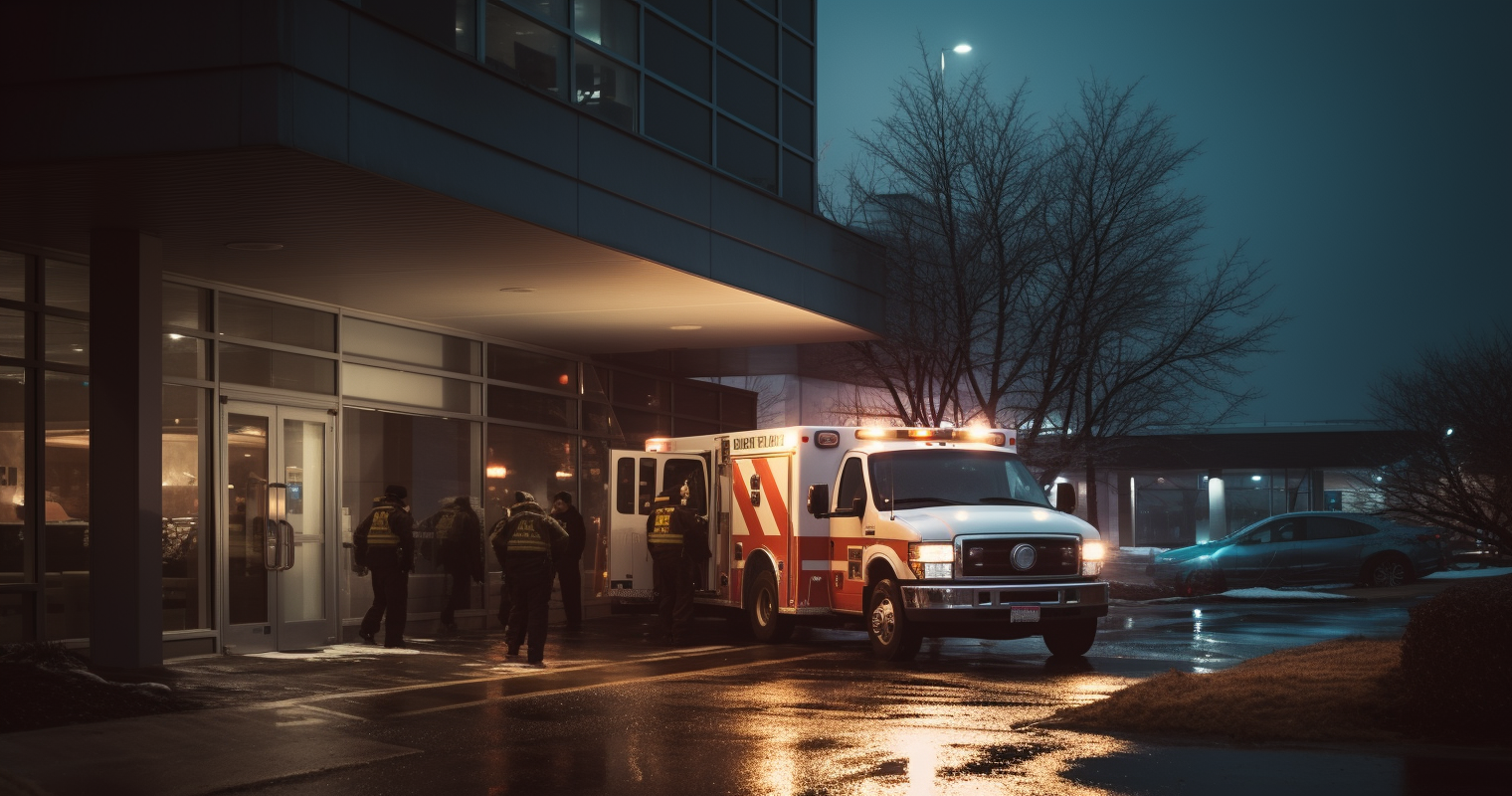
Monaco’s emergency services network is small in scale but exceptionally well-organised. The pan-European emergency number 112 gives callers immediate access to police, fire, and ambulance services alike, while dedicated shortcodes — 17 for police and 18 for fire and ambulance — remain fully operational. Although Princess Grace Hospital’s emergency department accepts all patients around the clock, treatment costs are not automatically absorbed on behalf of tourists or those without insurance coverage; securing comprehensive health insurance before arrival is therefore non-negotiable.
| Item | Details |
|---|---|
| Universal emergency number | 112 (police, fire, ambulance — as of 2025) |
| Police shortcode | 17 (or +377 93 15 30 15 from abroad) |
| Fire & ambulance shortcode | 18 |
| Princess Grace Hospital A&E | +377 97 98 97 69 (direct emergency line) |
| Rescue at sea | 196 |
| Hospitalisation cost (uninsured) | Approx. €1,000–€2,500 per day — verify current rates with provider (as of 2024) |
| EHIC/GHIC validity | Not valid in Monaco — Monaco is not an EU member state |
| Key civil protection plan | Or.Mo.Se Plan — national major-crisis response framework |
What is the single emergency number to call in Monaco, and does it cover police, fire, and ambulance — or are there separate numbers for each service?
Monaco’s universal emergency number is 112, which can be dialled from any mobile handset — even without a SIM card or available credit — and routes the caller to whichever emergency service is needed. The number functions in the same way as 999 in the United Kingdom or 911 in North America, and it follows the standard European emergency numbering convention used across the continent.
Alongside 112, dedicated shortcodes remain in active use: 17 reaches the police, and 18 connects to the fire brigade and ambulance service. These codes have been established in the Principality for many years and are well known to residents. When dialling from outside Monaco, the country code is +377. It is always advisable to verify current contact numbers through the official Monaco government portal at monservicepublic.gouv.mc before placing any reliance on them.
For those in distress at sea, the maritime rescue number is 196. The poison control centre serving the region is based in Marseille, France, and is reachable on +33 4 91 75 25 25. Given that Monaco occupies only around two square kilometres, its emergency services work in close coordination with the French authorities in the adjoining Alpes-Maritimes département.
How do you call for emergency medical assistance in Monaco, and what should you expect when you call?
To summon emergency medical help, dial 18 or 112. Monaco’s fire and emergency service operates ambulances crewed by trained medical personnel equipped to deliver care during transit to hospital. Because the Principality is so compact — covering roughly two square kilometres — emergency response times are notably fast, with ambulances typically reaching their destination in under 20 minutes.
When making the call, remain as calm as possible and provide your precise location — including street name and building number if known — along with a clear description of what has happened and how many people are affected. Operators primarily work in French; if you do not speak the language, announce yours immediately and they will make every effort to assist or find a colleague who can communicate with you. Remain on the line until the operator tells you it is safe to hang up.
For medical concerns that do not require an ambulance, SOS Médecins provides a home-visit service, sending qualified doctors directly to a residence seven days a week, around the clock, in close cooperation with the public emergency system. SOS Médecins can be reached by dialling 3624. A call-out fee applies, and any medication prescribed is billed separately. Before travelling, confirm whether your insurance policy covers SOS Médecins visits.
What should you do in a mental health crisis in Monaco — is there a dedicated mental health emergency line, and can you go to a hospital emergency department?
Anyone experiencing a mental health emergency in Monaco can turn to the Centre Hospitalier Princesse Grace (CHPG), which maintains a psychiatric emergency unit accepting patients at all hours of the day and night, every day of the year. Individuals may attend the accident and emergency department in person, or call 112 if there is an immediate threat to life and emergency responders need to be dispatched.
For outpatient psychiatric support during regular working hours, the Psychiatry and Medical Psychology Unit (UPPM) is situated at La Roseraie, 7 bis avenue des Ligures, and can be reached on +377 98 98 44 20. The unit operates Monday to Friday, 9 am to 5 pm. A second resource, the Medical Psychology Centre (CMP), is located at 9 bis rue Plati and can be contacted on +377 98 98 46 64; its hours are Monday to Thursday 9 am to 6:30 pm and Friday 9 am to 4:30 pm.
Where there is an immediate threat to someone’s life or safety, calling 112 should always be the first step. Monaco does not currently operate a standalone national mental health crisis line comparable to Samaritans in the United Kingdom or the 988 Lifeline in the United States; the CHPG emergency department and the police (17) remain the principal first-response options. Check MonacoSanté, Monaco’s official public health portal, for the most current information on available support services.
Where can you go for emergency medical treatment in Monaco — are there public hospitals, private hospitals, urgent care clinics, or other facilities, and how do you find the nearest one?
The Centre Hospitalier Princesse Grace (CHPG) — commonly known as Princess Grace Hospital — is the sole public hospital in Monaco and serves as the Principality’s principal general medical facility. It is equipped with modern infrastructure and runs a 24-hour emergency department. The hospital is located at 1 Avenue Pasteur, Monaco. Its direct emergency line is +377 97 98 97 69, and the main switchboard can be reached on +377 97 98 99 00.
The CHPG provides a comprehensive range of services spanning general medicine, surgery, emergency care, and specialist disciplines including oncology, cardiology, and neurology. Patients presenting with cardiac emergencies benefit from the Monaco Cardio-Thoracic Centre, which operates around the clock and brings together interventional cardiologists, diagnostic specialists, anaesthesiologists, and cardiovascular surgeons under one roof.
For sports-related injuries and trauma cases, the Monegasque Institute of Sports Medicine and Surgery (IM2S) is an additional option, reachable on +377 99 99 10 23 between 8 am and 8 pm, seven days a week. For minor ailments and injuries that fall short of requiring hospital care, local pharmacists can offer guidance and recommend suitable over-the-counter remedies. Current on-call doctor, pharmacy, and osteopath rosters are published and regularly updated on the official MonacoSanté website.
Is emergency medical treatment free in Monaco or is there a charge — and does this differ for residents versus tourists or short-term visitors?
Emergency treatment is available to all at Princess Grace Hospital, which functions as Monaco’s primary state general hospital. However, receiving emergency care does not mean the resulting bill is automatically waived — the financial reality varies considerably depending on an individual’s residency status and insurance arrangements.
Emergency medical treatment in Monaco carries a cost, which can be particularly burdensome for non-residents. Monaco residents who contribute to the Caisses Sociales de Monaco (CSM) social security scheme do benefit from substantial reimbursement, with between 80% and 100% of eligible medical expenses recovered through the scheme.
Overseas visitors are entitled to present at all public hospitals and clinics and will not be turned away. However, those who have not made contributions to the CSM will be responsible for settling the full cost of any care received. As a general indication, hospitalisation costs (as of 2024) may run from approximately €1,000 to €2,500 per day, inclusive of treatment and care. These figures are subject to change, and individuals should confirm current rates directly with the hospital or their insurer prior to travel.
Do expats in Monaco need travel or health insurance to access emergency care, and what happens if they turn up without insurance or without the ability to pay?
Holding insurance is not a condition of receiving emergency treatment at the CHPG — the hospital will assess and treat anyone who arrives at its emergency department. Nevertheless, an uninsured patient will face the full cost of that treatment, even within the public hospital system. Given the scale of potential charges, travelling to Monaco without adequate cover represents a considerable financial exposure.
Healthcare costs in Monaco can be very high, and all foreign nationals are strongly advised to hold comprehensive health insurance. It is equally advisable to include medical repatriation — sometimes called medical evacuation cover — within that policy, in the event that a patient needs to be transferred to their home country for ongoing treatment. This element of coverage is particularly important for those with existing health conditions or older travellers.
Expats who settle in Monaco and enter full-time employment will be enrolled in the CSM scheme by their employer at the outset of their contract, which provides comprehensive coverage thereafter. Those who have not yet been registered, or who are visiting on a short-term basis, must verify that their private travel or international health insurance policy explicitly names Monaco as a covered jurisdiction and that it encompasses emergency inpatient care, ambulance transport, and medical evacuation.
Are there any bilateral health agreements between Monaco and other countries that entitle some foreign nationals to reduced-cost or free emergency treatment?
Monaco’s status outside the European Union has a direct and important bearing on healthcare entitlements within the Principality. Because Monaco is not an EU member, neither the European Health Insurance Card (EHIC) nor its British equivalent, the Global Health Insurance Card (GHIC), carries any validity here. This distinction catches many visitors off guard, particularly those accustomed to using these cards across continental Europe to access state healthcare on the same terms as local residents. Anyone presenting an EHIC or GHIC in Monaco will be responsible for paying the full cost of treatment.
A notable exception applies to French and Italian nationals. Citizens of these two countries may access Monaco’s public healthcare facilities on more favourable terms, provided they can demonstrate that they are active contributors to their home country’s state health insurance system. This bilateral arrangement does not extend to all EU citizens, and it is contingent on verified contribution status rather than simply holding a French or Italian passport. Anyone intending to rely on this entitlement should confirm their eligibility before travelling.
No other formally documented reciprocal healthcare agreements — of the kind that exist, for example, between certain Pacific nations under Commonwealth frameworks — are publicly on record for Monaco. Visitors from all other countries should approach Monaco as a destination that requires comprehensive private medical cover as a matter of course. Bilateral arrangements can be revised, so consulting your own government’s current foreign travel advisory before departure is strongly recommended.
How does Monaco’s emergency healthcare system compare to systems expats may be familiar with?
Monaco operates a hybrid healthcare model that blends public provision with private services across the spectrum from routine consultations to highly specialised treatments. This approach differs meaningfully from a wholly public system such as the NHS in the United Kingdom, where anyone presenting at an emergency department — regardless of nationality — typically receives treatment without an immediate charge. In Monaco, the absence of CSM contributions or a qualifying bilateral agreement means that emergency care generates a bill that must be settled in full.
The foundation of Monaco’s public healthcare system is the Caisses Sociales de Monaco (CSM). All citizens and long-term residents in employment are required to contribute to this scheme, and doing so unlocks access to publicly funded healthcare facilities. This model has more in common with contribution-linked systems found in France, Germany, or Australia, where access to state-subsidised care is tied to a track record of social security payments rather than simple residence or citizenship.
Although Monaco’s medical services are of the highest standard, they come at a price that reflects the Principality’s broader cost of living. A standard GP appointment, for example, can cost in the region of €50 to €100 depending on the practitioner and the complexity of the consultation (as of 2024). Those arriving from fully funded public healthcare systems may find the upfront billing model unfamiliar and potentially surprising. Conversely, expats accustomed to private insurance-based healthcare — as in the United States or Singapore — will recognise the framework, even if the specific costs differ from what they are used to. Always verify current fee levels directly with providers before making assumptions.
What emergency services exist beyond medical — how do police and fire services work in Monaco, and are any differences worth knowing about?
Although French is Monaco’s official language — which can ease communication — the Principality maintains its own distinct emergency services, each with its own contact numbers. The Sûreté Publique is Monaco’s national police force, responsible for all law enforcement within the territory. In an emergency requiring police intervention, dial 17 or 112; for non-urgent matters, the police can be contacted on +377 93 15 30 15 (as of 2025 — verify with official sources before use). Given Monaco’s extraordinary population density and considerable wealth, the police presence across the Principality is notably high.
The Corps des Sapeurs-Pompiers de Monaco — Monaco’s fire brigade — simultaneously manages ambulance operations and is reached on 18 or 112. Unlike jurisdictions where fire suppression and medical emergency response are entirely separate organisations with separate dispatch systems, Monaco integrates both functions within a single service. A single call to 18 can therefore result in fire-fighting crews and paramedics being deployed together. This integrated approach closely resembles the model used in parts of neighbouring France.
At the national level, a coordination body known as the Centre National de Gestion de Crise (CNGC) oversees the response to major incidents. Foreign nationals who are detained or questioned by police should be aware of their right to consular notification, and should request contact with their home country’s diplomatic representative at the earliest opportunity. Many countries — including the United States — do not maintain an embassy directly in Monaco; the US Ambassador to France holds accreditation for Monaco, with consular affairs handled by the US Consul General in Marseille. This arrangement is common to numerous nations, most of which manage Monaco through their Paris embassy.
Are there any country-specific emergency risks in Monaco — such as natural disasters, extreme weather, civil unrest, or endemic diseases — and what official alert or warning systems exist?
Monaco is widely regarded as one of the world’s safest and most politically stable jurisdictions. There are no documented endemic diseases posing a significant risk to visitors, no vaccination requirements for entry (as of 2025 — consult your home country’s health authorities for the most current guidance), and the ratio of police officers to residents is among the highest globally, contributing to an exceptionally low crime rate. Incidents of civil unrest are essentially unknown.
The main environmental hazards stem from Monaco’s position on the Mediterranean coast. Heavy rainfall events and associated localised flooding can occur, primarily during autumn and winter months. The wider region experiences elevated wildfire risk during summer, though Monaco’s almost entirely built-up urban environment means the Principality itself is far less exposed to this hazard than rural areas of nearby France. Sea conditions in the Mediterranean can deteriorate with little warning, and anyone using the sea for leisure should take maritime safety seriously.
Monaco maintains dedicated civil protection structures capable of scaling up to meet exceptional threats. The Or.Mo.Se Plan — activated by the Minister of State — provides a framework for mobilising special measures when a natural or technological emergency threatens to exceed the capacity of routine emergency services. A complementary “Plan Rouge” addresses mass-casualty scenarios, establishing a graduated response that can be triggered by the duty officer of the fire and emergency service, the first responding control officer, or the initial attending physician at the scene.
The Principality hosts internationally prominent events throughout the year, most notably the Formula 1 Grand Prix and the Monte-Carlo Rally. During these periods, crowd control measures, physical barriers, and altered road configurations can affect how emergency vehicles access certain areas of the territory. Monitoring official communications from the Prince’s Government at en.gouv.mc during such events is strongly advised.
What should expats do to prepare for emergencies before they arise in Monaco?
- Store all key emergency numbers before you arrive. Programme 112 (universal), 17 (police), 18 (fire and ambulance), and +377 97 98 97 69 (Princess Grace Hospital A&E) into your phone in advance. These services operate around the clock, and having the numbers immediately to hand could save vital time.
- Register with your home country’s embassy or consulate. Enrolling in your government’s traveller or expatriate registration scheme means that diplomatic staff can reach you swiftly in the event of an unforeseen crisis — whether a natural disaster, civil emergency, or personal family situation. Canadians can use the government’s official registration portal; equivalent services exist for most other nationalities — check your government’s travel advice website.
- Arrange comprehensive insurance before departure. Your policy must cover emergency hospitalisation, ambulance transport, and medical repatriation. Read the policy carefully to confirm that Monaco is explicitly listed as a covered territory.
- Do not rely on EHIC or GHIC cards. Monaco sits outside the European Union, which means neither of these cards is recognised. Treating them as a substitute for private insurance in Monaco will leave you financially liable for the full cost of any treatment received.
- Familiarise yourself with the nearest medical facilities. Know that Princess Grace Hospital is located at 1 Avenue Pasteur and save its emergency contact number. If you have a chronic or complex health condition, identify the relevant specialist centre — such as the Cardio-Thoracic Centre or the IM2S — before you need it.
- Keep important documents accessible at all times. Maintain both digital and physical copies of your passport, residency documentation, insurance policy, and prescription details. Carry a concise medical summary — noting allergies and current medications — and, where possible, have it translated into French.
- Stay informed during major public events. When large-scale events such as the Grand Prix are taking place, check road access and emergency routing information through the Prince’s Government portal at en.gouv.mc, since physical barriers and diversions can significantly affect the movement of emergency vehicles.
Where can expats get official and up-to-date emergency information for Monaco?
The authoritative source for emergency contact numbers and healthcare information in Monaco is the Prince’s Government portal, monservicepublic.gouv.mc, which publishes all current emergency numbers. For on-call medical practitioners, duty pharmacies, and public health alerts, the dedicated portal MonacoSanté (monacosante.mc) is the most reliable resource and is regularly maintained.
Information about Monaco’s civil protection framework and coordinated emergency response arrangements is available through the security section of the government’s main website at en.gouv.mc. For details about the CSM social security scheme and healthcare coverage for residents, consult the Caisses Sociales de Monaco directly at caisses-sociales.mc.
Your own government’s travel advisory for Monaco is equally essential. As an illustration of the diplomatic landscape, Ireland has no embassy or consulate resident in Monaco and directs its citizens to the Irish Embassy in Paris — a situation that applies to many countries, most of which manage Monaco through their Paris embassy or Marseille consulate. Review your government’s official travel advisory before departure, register through the appropriate scheme, and note that the official Monaco tourism authority, VisitMonaco, also maintains a regularly updated list of emergency numbers for visitors.
Frequently asked questions about emergencies in Monaco
What number do I call for an ambulance in Monaco?
To request ambulance assistance in Monaco, dial 18 or the pan-European emergency number 112. Both numbers connect to the fire brigade, which also runs the ambulance service. As of 2025 both numbers are active. If you are calling from a foreign mobile, 112 is the most universally accessible option. Always verify current numbers through the official Monaco government portal before relying on them.
Is the European Health Insurance Card (EHIC) accepted in Monaco?
No. Because Monaco is not a member of the European Union, neither the EHIC nor the British GHIC is valid within the Principality. Visitors who present these cards expecting reduced-cost treatment will find themselves responsible for the full cost of any care they receive. Taking out comprehensive private medical insurance before travelling is essential.
Will I be turned away from the emergency department if I cannot pay?
No patient is refused emergency treatment at the CHPG. The hospital’s emergency department is open to all, 24 hours a day. However, those who are uninsured will be billed for the full cost of their care, even though the hospital is a public institution. Bills can be substantial, making travel insurance a strong financial safeguard rather than an optional extra.
Do French citizens get free healthcare in Monaco?
French and Italian citizens may access Monaco’s public healthcare facilities under a bilateral arrangement, but only if they can provide evidence of active contributions to their home country’s national health insurance scheme. This entitlement is not available to all EU citizens, and it hinges on verified contribution status rather than nationality alone. Individuals intending to use this provision should confirm their eligibility before travel.
What happens if I need emergency psychiatric help in Monaco?
Psychiatric emergency care is available at the Centre Hospitalier Princesse Grace (CHPG), which operates a specialist unit around the clock, every day of the year. Individuals may attend the emergency department directly, or call 112 if there is an immediate life-threatening situation requiring emergency services to be dispatched. For non-urgent mental health support during office hours, both the UPPM clinic and the Medical Psychology Centre are available for contact.
Is Monaco safe from natural disasters?
Monaco does not have a significant history of destructive natural events such as major earthquakes, floods, or wildfires occurring within its own territory. Civil protection infrastructure, including the Or.Mo.Se Plan, is in place to respond to both natural and technological emergencies should they arise. The most likely weather-related hazards are autumn and winter rainfall events and the heat of the Mediterranean summer. The Principality is well-prepared for exceptional circumstances.
How do I find a doctor on call in Monaco at night or on weekends?
Current on-call doctor, osteopath, and pharmacy details are published around the clock on the official MonacoSanté website, which is updated regularly and represents the most dependable source of information. Alternatively, SOS Médecins can be called on 3624 to arrange a home visit from a qualified doctor; note that a fee is charged for this service.
Which embassy should I contact in an emergency as a foreign national in Monaco?
Monaco hosts relatively few resident foreign embassies. The United States, for instance, does not maintain an embassy within Monaco; the US Ambassador to France holds accreditation for Monaco, with consular matters handled by the US Consul General in Marseille. Most countries operate through their Paris embassy in relation to Monaco. Before you travel, identify your country’s designated diplomatic contact for Monaco through your government’s official travel advice portal, and register your presence through any available registration scheme.