

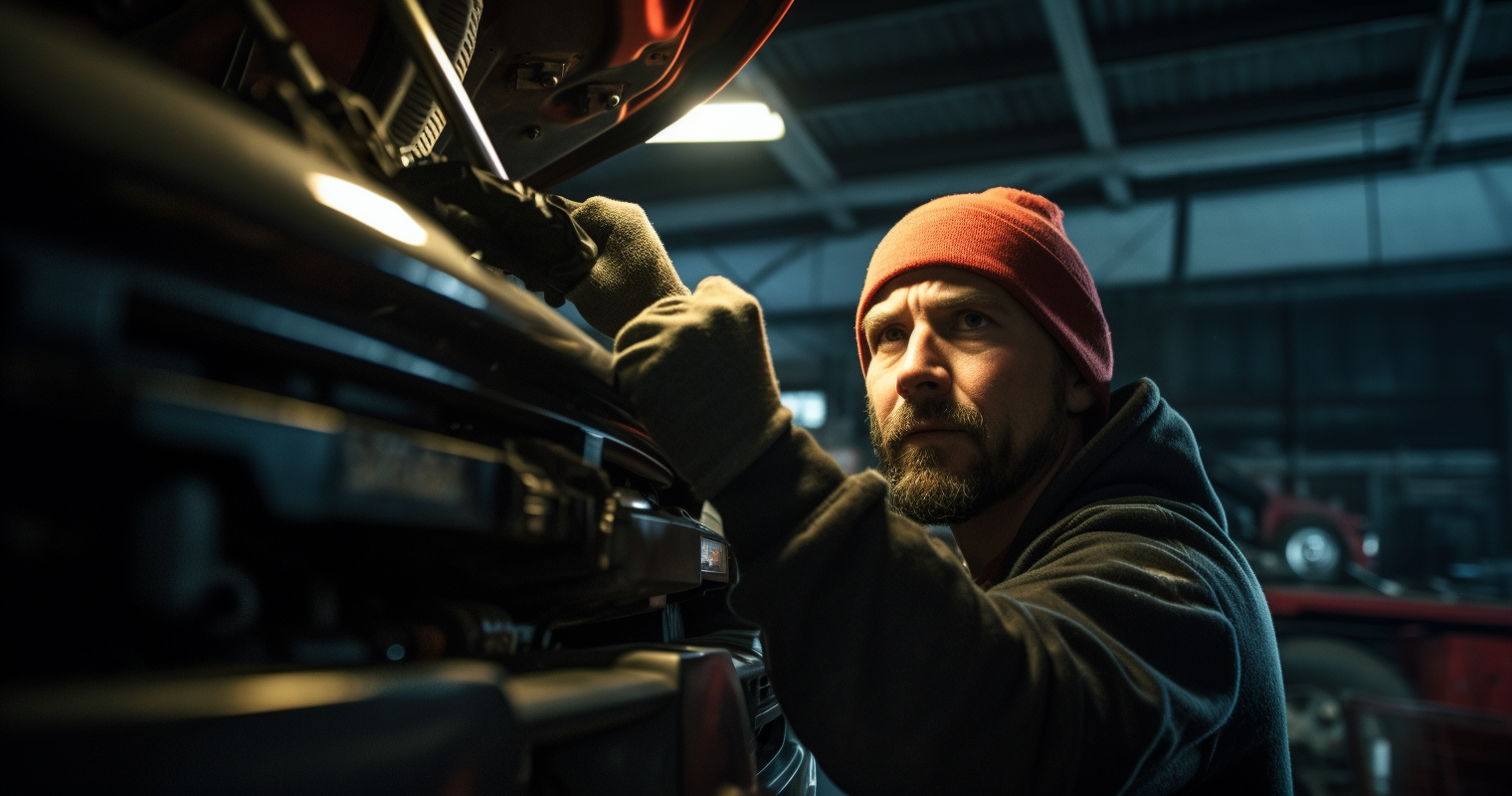
The Netherlands operates a tightly regulated vehicle inspection framework known as the APK (Algemene Periodieke Keuring), administered by the national vehicle authority RDW. Only RDW-approved garages may conduct these inspections, repair and servicing quality is consistently high, and the ANWB dominates the breakdown recovery landscape. Expats who bring foreign-registered vehicles into the country need to be aware of specific time restrictions and re-registration requirements from day one.
| Item | Details |
|---|---|
| Inspection scheme name | APK (Algemene Periodieke Keuring / Periodic Technical Inspection) |
| Governing authority | RDW (Netherlands Vehicle Authority) — rdw.nl |
| First APK for new cars (as of 2025) | 4 years after initial registration, then every 2 years until year 7, then annually |
| APK cost | Varies by garage; check with RDW-approved stations for current pricing |
| Main breakdown provider | ANWB Wegenwacht — anwb.nl |
| Foreign vehicle time limit (non-BRP residents) | Up to 6 months on Dutch roads without re-registration |
| Registered residents: re-registration deadline | Within 6 months of registering in the Dutch BRP |
What is the APK vehicle inspection scheme, and how does it work?
The APK (Algemene Periodieke Keuring), referred to in English as the Periodic Technical Inspection (PTI), is a legally mandated roadworthiness check that applies to every car owner in the Netherlands — driving without a current APK certificate is simply not permitted. The system is broadly analogous to the UK’s annual MOT test or Germany’s TÜV scheme, though the Netherlands uses a tiered frequency structure based on how old a vehicle is.
For a brand-new passenger car, the first APK is due four years after the date of initial registration, followed by a further inspection two years after that. From the seventh year onwards, the test must be carried out every year. This differs from the UK’s MOT, which becomes compulsory at three years of age and thereafter runs on an annual cycle — the Dutch system gives newer vehicles a considerably longer window before annual testing begins.
During the inspection itself, the testing station assesses the vehicle for road safety, environmental compliance, and registration accuracy. Any garage conducting APK tests must hold formal approval from the Netherlands Vehicle Authority (RDW), indicated by a prominently displayed “RDW erkend” sign and an accreditation sticker specifying whether the station handles light vehicles, heavy vehicles, or agricultural machinery.
Mopeds, motorcycles, and vehicles aged over 50 years are generally not subject to APK requirements. The one exception for older vehicles is where they are used for public transport purposes or for the carriage of hazardous materials, in which case the exemption does not apply.
Once an inspection is completed, the garage issues an APK inspection report to the vehicle owner regardless of the outcome. This document records the APK expiry date and details any faults requiring repair, grounds for rejection, and advisory notes from the inspector.
Should the vehicle fail its inspection, the owner has the right to contest the result immediately — the objection must be raised on the spot with the inspector before leaving the premises. The inspector will then contact the RDW, which will dispatch a representative to conduct a second assessment. The vehicle must remain stationary and unrepaired while this process is under way. If the vehicle is rejected again on the same grounds, the owner bears the cost of the re-examination.
APK inspection fees differ between providers, and it pays to compare prices across approved garages before booking. Large national chains — with KwikFit and Profile being the two most prominent in the Netherlands — typically offer competitive rates. Always confirm current charges directly with your chosen RDW-approved station.
A foreign vehicle that has been re-registered in the Netherlands is subject to Dutch law and must therefore undergo its first APK three years after the date of its original first registration. If the vehicle is already more than three years old when it is presented to the RDW for registration, the APK check can be carried out as part of that registration process.
The RDW monitors all registered vehicles in the Netherlands through a centralised database that tracks APK validity, road tax status, and insurance coverage. Should any of these lapse, the RDW issues a formal warning along with a fixed penalty notice. It is possible to avoid the penalty if renewal is completed promptly following notification and mitigating circumstances can be demonstrated.
For official guidance on APK requirements, testing schedules, and lists of RDW-approved inspection centres, refer to the RDW’s Periodic Technical Inspection page or the Dutch Government’s APK overview.
What is the standard of vehicle maintenance and repair in the Netherlands?
The Dutch automotive servicing sector is well-established and operates within a robust regulatory framework. Whether visiting a franchised dealership or an independent workshop, vehicle owners can generally expect competent service focused on road safety, emissions standards, and mechanical reliability. Routine work — from oil changes and brake servicing to tyre replacements — is readily available across both types of provider.
To qualify as an APK inspector, a technician must pass a formal examination administered by IBKI, the national training and examination body, and must then renew this qualification every two years via a further assessment. This ongoing re-certification process ensures that those carrying out mandatory inspections consistently meet a defined national competence standard.
Beyond the APK-qualified workforce, the wider garage industry operates under European consumer protection legislation. Many reputable workshops hold membership of BOVAG, the Dutch trade association for automotive businesses, which establishes codes of practice and quality expectations for its affiliated members. BOVAG membership guarantees consumers a formal complaints process and a warranty on repair work — it is advisable to verify whether a garage holds this accreditation before authorising substantial work.
Given that vehicle repair costs can vary considerably, requesting a written estimate before approving any repairs is a sensible precaution. For expats driving vehicles imported from outside the EU, parts for less common models may need to be ordered from abroad, resulting in longer lead times than would apply to brands with a strong presence on the Dutch market.
Language barriers are relatively uncommon in the larger cities, where many Dutch mechanics and service advisers speak proficient English. In more rural regions, however, communication is more likely to be conducted in Dutch alone, making it useful to have basic automotive terminology available — either memorised or via a translation application. Workshops in expat-heavy urban centres such as Amsterdam, Rotterdam, The Hague, and Eindhoven often have experience dealing with international clientele.
The majority of independent garages are able to handle both APK testing and general servicing. New vehicle warranties from manufacturers including Toyota, Volkswagen, and BMW frequently cover roadside assistance and specify servicing requirements during the initial ownership period, so reviewing the vehicle documentation carefully is worthwhile.
Who are the main breakdown recovery and roadside assistance providers?
Roadside assistance in the Netherlands is referred to locally as pechhulp (literally “misfortune help”), with the principal service operating under the Wegenwacht banner. The sector is largely led by a single large membership organisation, supplemented by insurer-provided options and independent commercial players.
ANWB Wegenwacht
The Royal Dutch Touring Club ANWB is the largest membership organisation in the Netherlands, representing approximately five million members across a broad range of activities covering mobility, tourism, and travel. It combines advocacy on behalf of its members with practical services including test reports, travel support, and vehicle recovery — a model broadly comparable to Germany’s ADAC or the UK’s Automobile Association (AA).
The ANWB Wegenwacht is the country’s largest breakdown and recovery service, operating around the clock every day of the year. Its patrol fleet carries sophisticated diagnostic equipment, allowing technicians to resolve many common problems at the roadside without the need for a tow — whether that means changing a flat tyre, jump-starting a flat battery, addressing minor engine faults, or dealing with misfuelling incidents.
ANWB membership covers the entire country and offers fast response times, with various membership tiers available to suit different needs, ranging from standard Dutch roadside cover to packages that include Europe-wide assistance, travel insurance, and other bundled benefits. Towing services and temporary replacement transport are among the typical inclusions.
Membership details, pricing, and tier comparisons are available at anwb.nl. The emergency contact number for Wegenwacht callouts is provided within membership documentation and through the ANWB app.
Other providers
Some Dutch motor insurance policies incorporate pechhulp either as a bundled component or as an optional add-on, covering breakdowns both domestically and in other countries. As an example, ABN AMRO’s insurance division provides 24/7 breakdown assistance — their callout number is 026 400 23 45 (or +31 26 400 23 45 from abroad, as of 2024).
In addition to ANWB’s Wegenwacht, local garages can provide vehicle recovery on Dutch roads, and independent commercial operators are also active in this space. AA-team (aa-team.nl) is one such provider, offering prepaid and subscription-based breakdown cover that can be arranged via employers, insurance intermediaries, or petrol station networks.
A note on the ANWB app
Members can report a breakdown directly to the Wegenwacht through the ANWB Onderweg app. The app uses the device’s GPS to transmit the member’s exact location automatically; once the call has been logged, the member receives a text message containing a tracking link to follow their assistance request in real time. The app is compatible with both Android and iOS platforms.
Can I use international breakdown cover or bring existing membership to the Netherlands?
Numerous motoring organisations worldwide are connected through international networks such as AIT/FIA (Alliance Internationale de Tourisme / Fédération Internationale de l’Automobile), which facilitates reciprocal assistance arrangements between affiliated clubs across participating nations. If your current motoring club is an AIT or FIA member, you may be entitled to a degree of breakdown assistance when visiting or initially living in the Netherlands, typically at the standard level provided to host-country members. It is essential to verify the exact terms with your home club before depending on this reciprocal coverage.
The ANWB itself extends breakdown assistance to its own members travelling within Europe and maintains long-established reciprocal agreements with counterpart organisations in neighbouring countries, including the ADAC in Germany, the AA and RAC in the UK, and the ÖAMTC in Austria. If you are relocating from a country whose motoring organisation has such an arrangement with the ANWB, you may be able to access Wegenwacht services for a transitional period. These agreements, however, are generally designed for short-stay visitors and touring motorists rather than people who have taken up permanent residence.
For newly arrived expats, the most straightforward course of action is to join the ANWB promptly after settling in. Registration is simple and can be completed entirely online at any point, with roadside cover typically taking effect without a waiting period in most membership categories.
If your existing motor insurance policy — from your previous country of residence — includes European-wide breakdown cover, it is worth checking whether this extends to the Netherlands during an initial adjustment period while you put local arrangements in place. Many pan-European car insurance products offer between 30 and 90 days of European coverage as a standard feature.
What should I know about driving a foreign-registered vehicle in the Netherlands?
The rules governing how long a foreign-registered vehicle may be driven in the Netherlands hinge primarily on whether the driver is recorded in the Dutch Personal Records Database (Basisregistratie Personen, or BRP). The Dutch government and the RDW have published clear guidance on this subject.
Time limits for foreign-plated vehicles
Drivers who are not yet registered in the Dutch BRP may use a foreign-registered vehicle on Dutch roads for a maximum of six months under an exemption derived from international law. No application or permit is required to take advantage of this exemption.
Once a person has registered as a Dutch resident, their vehicle must be re-registered within six months of that registration date. Residents who wish to keep driving their foreign-plated vehicle beyond this point must fulfil Dutch tax obligations, including submitting a car and motorcycle tax (BPM) declaration.
Enforcement is carried out through Automatic Number Plate Recognition (ANPR) technology deployed in police vehicles, at fuel stations, in car parks, and at fixed roadside points, meaning non-compliance is readily detected.
Re-registering a foreign vehicle
Every vehicle used on Dutch roads must be registered with the RDW and assigned a Dutch licence plate to satisfy both administrative and taxation requirements. The registration process involves applying to the RDW and, unless an exemption applies, paying registration tax (BPM) along with any relevant import duties. The procedure varies depending on whether the vehicle originates from an EU or EEA country versus a country outside those blocs, with non-EU vehicles typically requiring additional paperwork and potentially full customs clearance.
Where a foreign vehicle arrives with a still-valid technical inspection certificate from its country of origin, it may be possible to have the remaining validity of that certificate recognised in the Netherlands, deferring the need for a Dutch APK until the foreign inspection expires. This is particularly relevant for vehicles recently tested in other EU countries, in line with the principle of mutual recognition of roadworthiness certificates across member states.
Insurance requirements
Third-party liability insurance — known in Dutch as WA-verzekering — is compulsory for all vehicles operated on Dutch public roads, irrespective of where the vehicle is registered. The RDW cross-checks the insurance and inspection registers daily and audits each registered vehicle at least once per year for both coverage and APK compliance. Driving without valid insurance results in a fine issued by the Central Judicial Collection Agency (CJIB).
For comprehensive guidance on importing a vehicle, visit the RDW’s relocation and vehicle import page, and for information on foreign-plate rules, refer to netherlandsworldwide.nl.
How do local road conditions and environmental factors affect vehicle maintenance?
The Netherlands has a number of distinctive characteristics — geographic, climatic, and infrastructural — that influence vehicle wear patterns and shape maintenance priorities. Awareness of these factors enables expats to adopt more effective servicing routines and avoid unnecessary problems.
Climate and weather
The Dutch climate is temperate and maritime in character, defined by mild temperatures, persistent rainfall, and elevated humidity throughout the year. The country seldom endures the prolonged hard frosts experienced in Scandinavia or alpine regions, nor does it see the intense summer heat that challenges vehicles in southern Europe. The ever-present moisture does, however, promote rust and corrosion — particularly on older vehicles. Making a habit of checking the underbody regularly, maintaining door seals, and keeping drainage points free of debris is a sound approach. Temperatures can drop below freezing on occasion in winter, so confirming that coolant antifreeze protection is adequate before the colder months arrive is advisable.
Road surfaces and infrastructure
By European standards, Dutch road infrastructure is generally in very good condition, with the motorway (snelweg) network standing out for its quality. City streets and the extensive cycling infrastructure, however, introduce more varied surface conditions: speed humps (drempels), raised junctions, and complex road transitions increase the load on tyres, suspension components, and wheel alignment compared to sustained motorway driving. In older town centres, brick and cobblestone paving is still common, which over time can stress both tyres and steering geometry.
Cycling infrastructure and urban driving
Dutch drivers are known for being purposeful and generally rule-compliant, though assertive in traffic. Cyclists enjoy extensive legal rights and a dominant presence on the roads, and motorists are required to yield to them in a wide range of situations. The resulting stop-start rhythm of urban driving — especially in cities such as Amsterdam, Utrecht, and Rotterdam — places above-average demands on brakes, clutch systems, and tyres designed for city use.
Low-emission and environmental zones
An increasing number of Dutch municipalities have established environmental zones (milieuzones) that prohibit entry by older, higher-emission vehicles. Amsterdam in particular has been rolling out a phased exclusion of older diesel and petrol vehicles from the city centre. Expats with older cars should verify whether their vehicle meets the entry criteria for any city they intend to drive in. While this is not a maintenance concern as such, it has direct practical consequences for daily use and may necessitate spending on either vehicle upgrades or alternative transport arrangements for city-centre journeys.
Flooding and water damage
As one of Europe’s lowest-lying countries, the Netherlands relies on an elaborate network of dykes and pumping stations to manage water levels. While catastrophic flooding is rare thanks to this infrastructure, localised surface flooding after intense rainfall remains a recurring occurrence — particularly in urban areas during autumn and winter. Driving through standing water carries real risks to engine air intakes, electrical components, and brake discs. Keeping an eye on weather forecasts and exercising caution during and after heavy rain is worthwhile practice.
How do I re-register a foreign vehicle in the Netherlands? Step-by-step
- Check your eligibility and timeline. If you are not yet recorded in the Dutch BRP, you may drive on foreign plates for up to six months under an international law exemption — no application is needed. Once you register as a resident, the six-month re-registration window opens.
- Obtain temporary registration if needed. If the vehicle lacks a valid foreign registration, you may need to apply for a free temporary single-day registration number in order to drive it to an RDW inspection location.
- Book an RDW inspection appointment. Arrange an appointment at an RDW inspection station to have your vehicle evaluated for Dutch registration. Ensure you bring all necessary documentation, including the original foreign registration certificate.
- Present your documents. You will need to submit the car’s original foreign registration certificate — note that this document will not be returned, so take a copy beforehand — together with an import document confirming that the vehicle qualifies as personal removal goods and is not subject to import duties.
- Pay BPM and any applicable taxes. Registration tax (BPM) is payable unless you qualify for an exemption. Consult the Tax and Customs Administration (Belastingdienst) regarding your eligibility for any available exemptions before the appointment.
- Receive your registration card. If the vehicle passes its inspection, a new Dutch registration card will be issued within five working days.
- Get Dutch number plates made. Once the registration card is in hand, take it to an approved licence plate producer to have Dutch plates manufactured — this step applies specifically to vehicles being transferred from foreign registration.
- Arrange Dutch insurance. Make sure that at least a Dutch third-party liability (WA) insurance policy is in force from the moment Dutch plates are fitted to the vehicle.
Frequently asked questions
Do I need an APK if my foreign car already has a valid roadworthiness certificate from another EU country?
If your vehicle arrives with a still-valid technical inspection certificate issued abroad, it may be possible for the remaining validity of that certificate to be recognised in the Netherlands, allowing you to postpone a Dutch APK until the foreign inspection lapses. Verify this with the RDW at the time of registration, as specific conditions may apply.
What happens if I get caught driving without a valid APK in the Netherlands?
Operating a vehicle that has not passed its mandatory PTI inspection will result in a fine from the Central Judicial Collection Agency (CJIB). Driving without a valid APK is prohibited, and deferring the inspection — even if the vehicle is temporarily off the road — is not an option under Dutch law.
How long does an APK inspection typically take?
A standard APK inspection for a passenger car generally takes between 30 and 60 minutes, though this can vary according to the vehicle’s condition and how busy the garage is at the time. Fees differ between RDW-approved stations, so comparing quotes beforehand is sensible. Contact your preferred garage directly for the most up-to-date timing and pricing information.
Is ANWB membership worthwhile for a newly arrived expat?
For anyone living in or spending significant time in the Netherlands, joining the ANWB is a sound investment. The organisation provides nationwide coverage, competitive response times, and a range of membership options — from basic domestic assistance to comprehensive packages covering all of Europe — with standard inclusions such as towing, on-site repairs, and temporary replacement transport. Membership can be activated online straight away, and cover typically begins immediately in most tiers.
Can I use an ANWB membership even if my car is still on foreign plates?
ANWB membership is attached to the individual member rather than to the vehicle’s country of registration, so you can generally call on Wegenwacht assistance regardless of whether your car displays Dutch or foreign plates. That said, it is advisable to confirm the precise terms of your chosen membership tier directly with ANWB at anwb.nl.
Are there garages that specialise in servicing foreign or unusual car brands in the Netherlands?
Authorised dealerships representing all major international manufacturers are present throughout the Netherlands, with a particularly strong concentration in and around Amsterdam, Rotterdam, The Hague, Utrecht, and Eindhoven. For less widely sold makes — especially vehicles originating from markets outside Europe — independent specialists do exist, though obtaining parts may involve a longer wait than for more common models. Both franchised service centres and independent garages are viable options for routine maintenance, and expat forums and online communities are often a good source of mechanic recommendations.
What is a BOVAG-certified garage, and why does it matter?
BOVAG is the Dutch trade association representing businesses in the automotive sector. Garages that carry BOVAG membership commit to a professional code of conduct encompassing clear pricing, warranties on completed work, and access to an independent dispute resolution process. Opting for a BOVAG-affiliated workshop therefore offers greater consumer protection than using a non-member garage. The BOVAG logo should be displayed on the premises, or you can search for certified garages via bovag.nl.
Do environmental zones in Dutch cities affect which cars can be driven there?
Yes. A number of Dutch cities, Amsterdam among them, have introduced environmental zones (milieuzones) that phase out access for vehicles that do not meet current emission standards. Before importing an older vehicle to the Netherlands, it is worth checking its emission classification against the applicable zone requirements on the relevant city authority’s website, as these restrictions are being progressively tightened through the mid-2020s. Failure to comply may mean incurring costs related to vehicle upgrades or finding alternative means of getting around urban areas.