
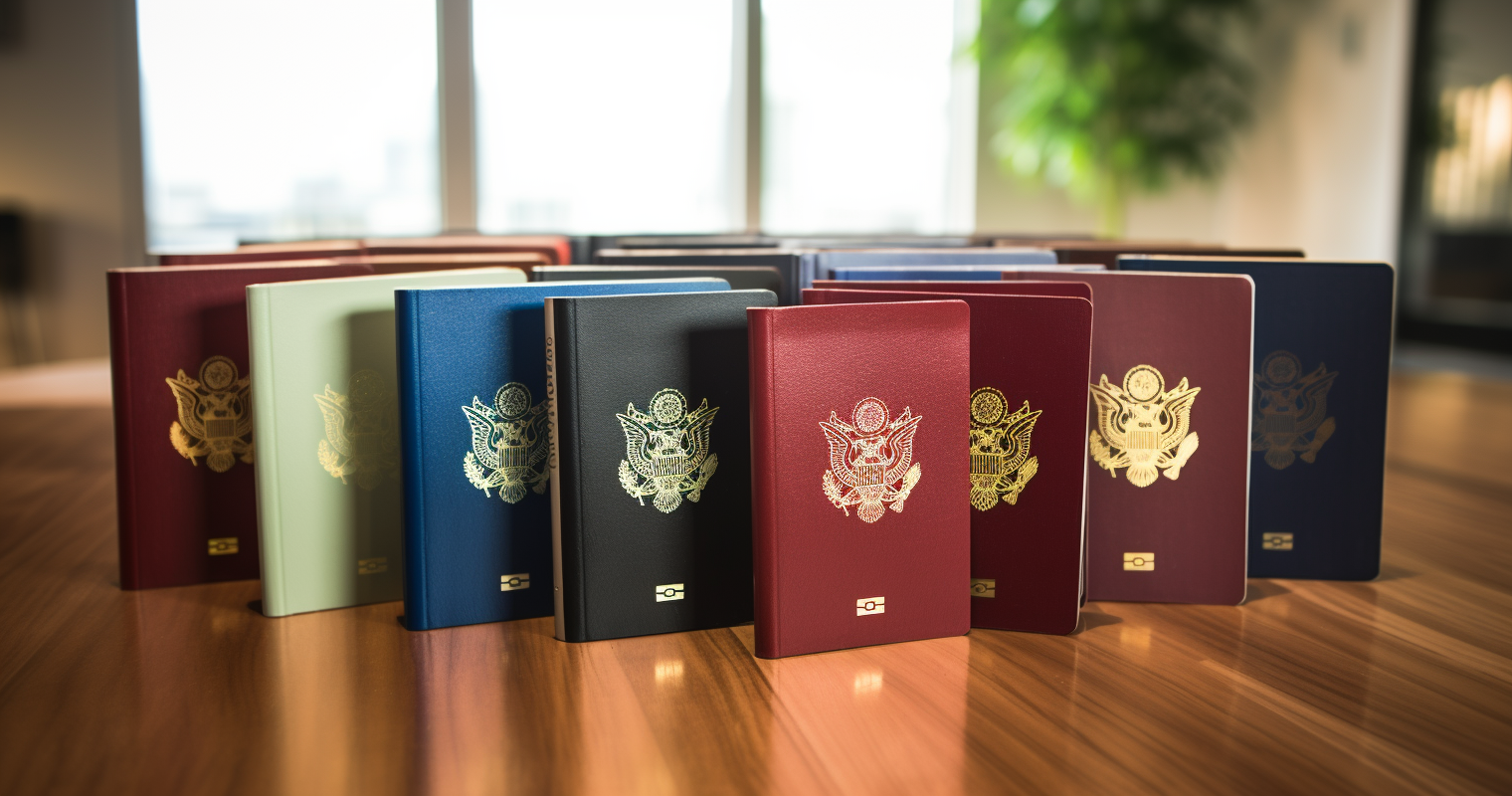
New Zealand citizenship is accessible to most people who have held a resident visa and spent at least five years living in the country, subject to strict rules about physical presence. The main pathway is citizenship by grant (naturalisation), although citizenship by birth and by descent also exist. New Zealand fully recognises dual citizenship, meaning you will generally not need to give up your existing nationality — though your home country may have different requirements.
| Item | Details |
|---|---|
| Minimum residency period (naturalisation) | 5 years on a resident visa, as of 2025 |
| Physical presence required | At least 240 days per year and 1,350 days total across 5 years, as of 2025 |
| Application fee (adult, by grant) | NZD $470.20 (fees increased November 2025 — check govt.nz for current figures) |
| Typical processing time | 4–19 months, as of 2025 |
| Responsible authority | Department of Internal Affairs (DIA) |
| Dual citizenship permitted? | Yes — New Zealand allows dual/multiple citizenship |
Who is eligible to apply for citizenship in New Zealand?
New Zealand citizenship can be obtained through three distinct pathways: by birth, by descent, or by grant (naturalisation). Anyone born on New Zealand soil before 1 January 2006 is automatically a citizen. For people born on or after that date, citizenship at birth requires that at least one parent was a New Zealand citizen or permanent resident at the time. The same applies if at least one parent is an Australian citizen or permanent resident, or a citizen or permanent resident of the Cook Islands, Tokelau, or Niue.
Citizenship by descent is available to individuals born overseas who have at least one parent who was a New Zealand citizen by birth or by grant at the time of their birth. If you acquired your own citizenship through descent, you cannot automatically pass it on to children born outside New Zealand — such children must go through the citizenship by grant process instead.
Those who do not qualify through birth or descent can pursue citizenship by grant, which involves satisfying a set of formal criteria and completing a structured application. This is the route most migrants will take and is broadly comparable to naturalisation processes in other countries — such as Australia or the United States — where a qualifying period of lawful residence forms the cornerstone of eligibility.
To qualify for citizenship by grant, you must have been physically present in New Zealand while holding a resident-class visa for a minimum of 240 days in each of the five years immediately preceding your application, with a total of at least 1,350 days across those five years. If you have spent more than 15 months overseas during that five-year window, you are unlikely to meet the requirement.
Applicants must also be capable of holding a basic conversation in English and be considered to be of good character. A stated intention to continue residing in New Zealand is required, along with awareness of the rights and obligations that come with citizenship.
Samoans who hold a New Zealand resident visa benefit from a special arrangement rooted in the historical ties between the two nations — they are not required to satisfy the time-in-New Zealand requirement and may apply for citizenship as soon as they hold New Zealand residence.
New Zealand does not operate a formal Citizenship by Investment programme. The country’s approach to citizenship is anchored in family ties, skilled migration, long-term residence, and business or investor pathways. That said, the Active Investor Plus Visa is available to those making substantial financial commitments, and after completing the required period of residence, such investors may pursue citizenship through the standard naturalisation process.
People adopted by a New Zealand citizen may also be eligible for citizenship. Additionally, individuals in exceptional circumstances — such as stateless persons or those who have a deep connection to New Zealand — may qualify under discretionary provisions in the law.
What are the steps involved in applying for citizenship in New Zealand?
All citizenship applications in New Zealand are handled by the Department of Internal Affairs (DIA), which operates entirely separately from Immigration New Zealand (INZ). This distinction matters: INZ is responsible for visa and residency decisions, while the DIA alone has the power to grant citizenship. Applications can be started at govt.nz.
- Verify your eligibility. Before doing anything else, use the government’s self-check tool at govt.nz to confirm that you satisfy the presence, language, and character criteria. If your resident visa carries any conditions — for example, conditions attached to parent-category visas that run for five or ten years — these must be fulfilled or formally removed before you can apply.
- Assemble your supporting documents. You will need a certified copy of your birth certificate and a valid passport or travel document, along with any additional materials relevant to your circumstances, such as marriage certificates, residency evidence, or police clearance certificates.
- Fill in the application form. Applications can be submitted online, by post, or in person. Online applicants will need a RealMe account for identity verification. If applying by post or in person, one of your photos must be countersigned by a witness who holds a valid New Zealand passport, is over the age of 16, and has no family connection to you.
- Pay the application fee. Fees across all categories of New Zealand citizenship rose on 21 November 2025. The current adult fee stands at NZD $470.20, though this may change over time. Always refer to the official fees page at govt.nz immediately before submitting your application to confirm the figure in force at that time.
- Lodge your application. Submit your completed form, all required documents, and your payment to the DIA through your chosen channel — online, by post, or in person at a DIA office. Common causes of delay include character-related concerns, issues with visa history, inconsistencies in identity records, or submitting the application before the full eligibility period has elapsed.
- Wait for a decision. After submission, the DIA may take anywhere between 4 and 19 months to reach a decision, depending on how readily your details can be verified through automated systems. You can monitor the progress of your application via the RealMe portal.
- Attend a citizenship ceremony. If your application is approved, the DIA will invite you to an official ceremony. Attendance is mandatory, and if you are unable to make the scheduled event you must inform the DIA — however, you are required to attend a ceremony within one year of the decision being issued. At the ceremony you will take an oath or affirmation of allegiance and be presented with your certificate of citizenship.
- Apply for a New Zealand passport. Once you hold your citizenship certificate, you are free to apply for a New Zealand passport. This is a separate application process managed by the DIA’s Passport Office.
What tests, interviews, or ceremonies are required as part of the citizenship process in New Zealand?
Compared with many other countries, New Zealand’s citizenship process is relatively straightforward — there are no elaborate examinations or lengthy formal interviews to navigate. This stands in clear contrast to countries like the UK and the US, where applicants must successfully complete structured civics assessments (the “Life in the UK” test and the US naturalisation test, respectively) before their applications can advance. New Zealand’s approach is instead based on declarations and straightforward assessment.
Applicants must demonstrate the ability to hold a basic conversation in English. This is a statutory requirement, but it is not assessed through a formal written examination. Instead, the DIA evaluates language ability through the application process itself and, if required, at the ceremony. This is considerably less demanding than Australia’s citizenship process, for instance, which involves a written test covering both English and civic knowledge.
The good character requirement is assessed primarily through declarations made on the application form. The DIA cross-references these declarations with external agencies, including New Zealand Police. In most cases, applicants are not required to attend a formal interview.
The culmination of the process is the citizenship ceremony, where the applicant takes an oath or affirmation of allegiance to New Zealand. These ceremonies are typically coordinated by local councils and hosted in community settings. The oath may be sworn on a religious text, or given as a secular affirmation, ensuring the process is inclusive regardless of personal beliefs.
What are the benefits of New Zealand citizenship?
It is worth acknowledging that many of the rights and responsibilities associated with citizenship are already available to permanent residents. The most meaningful distinctions citizenship brings are the permanent, unconditional right to return to New Zealand at any time, and the ability to hold a New Zealand passport.
Travelling on a New Zealand passport is one of the most valued practical advantages of citizenship. The passport is widely respected internationally and offers visa-free or visa-on-arrival access to a large number of destinations. The New Zealand passport currently ranks 5th on the Henley Passport Index, granting access to 187 countries without a prior visa — placing it ahead of the United Kingdom (6th), Australia (7th), and the United States (10th).
Under a longstanding bilateral arrangement, New Zealand citizens have the right to live and work in Australia as residents — a privilege that is uniquely available to citizens and does not extend to non-citizen permanent residents.
Beyond travel, citizenship unlocks a range of additional entitlements that are less commonly discussed. These include the ability to represent New Zealand in international sporting competition, to stand as a candidate for Parliament, to access certain scholarship programmes restricted to citizens, and to be considered for government roles where citizenship is a prerequisite.
Citizens hold the full right to participate in New Zealand general and local elections, a right that is not automatically afforded to all residents. When travelling abroad, New Zealand citizens are also entitled to consular assistance from New Zealand diplomatic posts — an especially valuable safeguard in countries where your home nation has limited or no diplomatic presence.
Perhaps most fundamentally, citizenship removes any ongoing dependency on visa conditions, allowing you to live, work, and study in New Zealand without restriction. This is particularly relevant for those who wish to spend extended time overseas without putting their right to return at risk.
Does New Zealand allow dual citizenship, or will you have to renounce your existing nationality?
New Zealand permits dual and multiple citizenship without restriction. In most situations, this means you can acquire New Zealand citizenship while retaining the nationality of your birth country or any other country where you hold citizenship.
However, approximately 50 countries around the world — including China, India, Indonesia, Japan, Malaysia, Singapore, and Thailand — do not permit their nationals to hold dual nationality. Citizens of these countries may be required to relinquish their existing citizenship either before, or shortly after, becoming a New Zealand citizen.
The responsibility to investigate this rests with the applicant. Many countries have nationality legislation that automatically extinguishes citizenship when a national voluntarily acquires citizenship of another state, even where the new country itself places no such restriction. To get authoritative guidance on how New Zealand citizenship would affect your existing status, you should contact the embassy, consulate, or ministry of foreign affairs of your home country directly.
The dual citizenship question is not one-directional — it is not simply a matter of what New Zealand permits, but also what your other country of nationality allows. In some cases, a New Zealand citizen who holds citizenship of a country that does not recognise dual nationality may face pressure to renounce their New Zealand citizenship to comply with that country’s laws.
If you have concerns about navigating this issue, consulting a licensed immigration adviser or lawyer with knowledge of both jurisdictions before submitting your citizenship application is strongly advisable.
How long does it typically take to become a citizen of New Zealand?
Obtaining New Zealand citizenship is a journey measured in years rather than months. Most applicants must first secure a resident-class visa, then accumulate the requisite period of qualifying presence in the country, before the citizenship application itself can even be submitted.
The law requires that applicants for citizenship by grant have been present in New Zealand while holding a resident visa for a minimum of 240 days in each year, and 1,350 days in total, across the five years immediately preceding the date of application. Crucially, this five-year window runs backward from the date you submit your application — not from the date you first arrived in New Zealand.
Time spent abroad on Crown service for the New Zealand Government is treated as time spent in New Zealand, which benefits those in diplomatic or public sector roles. Outside this exception, prolonged absences from the country can erode or invalidate your qualifying period, making careful management of overseas travel essential during the lead-up to your application.
Once lodged, the DIA typically takes between 4 and 19 months to process an application. While the general benchmark is around 18 months, some applications move through the system faster — particularly where automated verification proceeds smoothly. Delays of more than 12 months tend to arise from character-related issues, inconsistencies in identity records, or premature submission. According to DIA data, approximately 93% of applications are resolved within 18 months.
Taking a realistic view of the full timeline: an applicant who arrives in New Zealand, obtains a resident visa, and begins accumulating qualifying presence from that point should generally be eligible to apply around the five-year mark. With application processing factored in, most people achieve citizenship approximately six to seven years after first gaining residency. For the most current processing estimates, consult the DIA’s processing timeframes page, as these figures fluctuate with application volumes.
What are the main reasons an application for citizenship in New Zealand might be refused?
Understanding the grounds on which applications can fail is just as valuable as knowing what is required for success. The most frequently encountered reasons for refusal are set out below.
- Failing to satisfy presence requirements. Your application may not meet the threshold if you spent more than four months outside New Zealand in any given 12-month period — whether as a single extended absence or several shorter trips — or if your total time overseas during the five-year qualifying window exceeded 15 months.
- Outstanding visa conditions. Residence visas granted under the parent category may carry conditions lasting five or ten years. These conditions must be fully satisfied or formally lifted before a citizenship application can be successful.
- Issues with good character. The DIA works with agencies including New Zealand Police to verify the character declarations made in applications. A criminal history — especially involving serious or recent offending — can lead to refusal. Failing to disclose past convictions or submitting inaccurate information are also serious grounds for rejection.
- Inadequate English. Being unable to demonstrate even a basic level of spoken English is a statutory ground for refusal under the Citizenship Act 1977, and applications may be declined on this basis.
- Incomplete or inconsistent documentation. Gaps in residency history, name discrepancies, or missing paperwork can hold up or derail an application. Making sure all identity and residency documents are consistent and comprehensive before you apply is essential.
- Applying before eligibility is established. One of the most common reasons for refusal is submitting an application before all presence requirements have technically been met. Use the government’s self-check tool to confirm your eligibility with certainty before lodging your application.
Where an application is refused, the DIA will provide the reasons for its decision. Applicants have the right to challenge that decision before the Citizenship Applicants Review Tribunal, an independent body that examines decisions made by the Citizenship Office. If you consider that your application was wrongly rejected, obtaining advice from a licensed New Zealand immigration adviser or lawyer before lodging an appeal is strongly recommended.
Where can you find reliable, up-to-date information about citizenship in New Zealand?
Because fees, processing times, and eligibility criteria are all subject to change — as demonstrated by the fee revisions introduced in November 2025 — it is vital to rely exclusively on official government sources. Third-party websites, online forums, and immigration blogs can provide useful context, but should never be used as a basis for specific figures, deadlines, or requirements.
- New Zealand Government citizenship hub (govt.nz) — The definitive official resource covering every dimension of the citizenship process, including eligibility criteria, application fees, forms, processing timeframes, and the eligibility self-check tool. This should be your first port of call for any citizenship-related query.
- Department of Internal Affairs (DIA) — As the government body responsible for all citizenship applications in New Zealand, the DIA’s website provides downloadable forms, contact details, and regularly updated processing time information.
- Immigration New Zealand (INZ) — While INZ plays no role in citizenship decisions, it remains the authoritative source for all visa and residency matters that precede citizenship, including details on resident visas and permanent resident visas.
- Ministry of Foreign Affairs and Trade (MFAT) — For questions about New Zealand passport services when abroad, consular assistance, and matters relating to dual nationality from the New Zealand government’s perspective.
For guidance on how acquiring New Zealand citizenship might affect your existing nationality, the only authoritative source is the embassy, high commission, or official foreign affairs ministry of your home country. These are the sole bodies equipped to give you definitive advice about your home country’s nationality laws.
Frequently asked questions about citizenship in New Zealand
Do children born in New Zealand automatically get citizenship?
Before 1 January 2006, any child born on New Zealand soil was automatically a citizen. Since that date, a child born in New Zealand only acquires citizenship at birth if at least one parent was a citizen or permanent resident at the time. Children born to two parents who hold only temporary visas are not automatically New Zealand citizens.
Can citizenship be lost or revoked?
New Zealand citizenship acquired through birth or by grant is not forfeited simply as a result of living overseas. However, the Minister of Internal Affairs has the authority to revoke citizenship in cases where it was obtained through fraud, misrepresentation, or the deliberate concealment of relevant facts. New Zealand citizens by descent who have never resided in New Zealand and who take on another nationality do not automatically lose their New Zealand citizenship, but should consult the official DIA guidance for advice specific to their circumstances.
What happens to a citizenship application if the applicant moves abroad during the process?
A valid application already submitted to the DIA will continue to be assessed even if the applicant travels or relocates overseas. However, the applicant must be available to attend a citizenship ceremony in New Zealand within 12 months of the decision being issued. If you are unable to attend the ceremony to which you are initially invited, you should notify the DIA, but you must attend one within a year of the decision. If you are planning to move permanently abroad before a decision is reached, contacting the Citizenship Office to discuss your situation is advisable.
Is there a citizenship test in New Zealand?
New Zealand does not require applicants to sit any formal written test or attend lengthy structured interviews as part of the citizenship process. This sets it apart from countries such as the UK — which requires a written “Life in the UK” test — and Australia, which includes a written assessment of civic knowledge. New Zealand instead relies on declarations made in the application form and, where necessary, an informal check of basic spoken English ability.
Can children apply for citizenship at the same time as their parents?
Yes. Children under the age of 16 may be included in a parent’s citizenship application. A reduced fee applies for children. At the time of writing, the adult fee is NZD $470.20 and the fee for children is NZD $235.10 — however, since fees were revised in November 2025, you should always consult the official fees page for the most current amounts before submitting.
Do I need to be a permanent resident before applying for citizenship?
A Permanent Resident Visa is not specifically required. A standard Resident Visa is sufficient, provided it does not carry additional Section 49 conditions and you have accumulated the required 240 days of presence per year across the five qualifying years.
Can I apply for citizenship from outside New Zealand?
Applications for New Zealand citizenship may be lodged from within the country or from abroad. That said, satisfying the physical presence requirements means you must have spent the great majority of your five qualifying years actually living in New Zealand. Applying from overseas is most commonly relevant to citizenship by descent applications, where physical presence requirements operate differently.
Does getting New Zealand citizenship affect my home country’s citizenship?
Although New Zealand itself imposes no restrictions on holding multiple citizenships, your country of origin may operate differently. Nations including China, India, Japan, and a number of others — particularly in Southeast Asia — generally require their nationals to relinquish foreign citizenship. You must verify the position with your home country’s official authorities before proceeding with your New Zealand citizenship application.
Can I represent New Zealand in international sport once I become a citizen?
Citizenship opens the door to representing New Zealand internationally in sport, but the precise eligibility rules differ by sport and are set by each national governing body. Some organisations impose additional residency periods on top of citizenship requirements. You should check directly with the relevant sporting body for the rules that apply to your situation.
What is the difference between a resident visa and a permanent resident visa for citizenship purposes?
Both visa types allow the holder to accumulate time toward the five-year qualifying period for citizenship, provided the visa permits indefinite residence in New Zealand. Holders of a permanent resident visa have no conditions attached to their status, which makes the citizenship application more straightforward. Those on a standard resident visa should verify whether any conditions — such as those linked to parent-category visas — need to be removed prior to applying.