
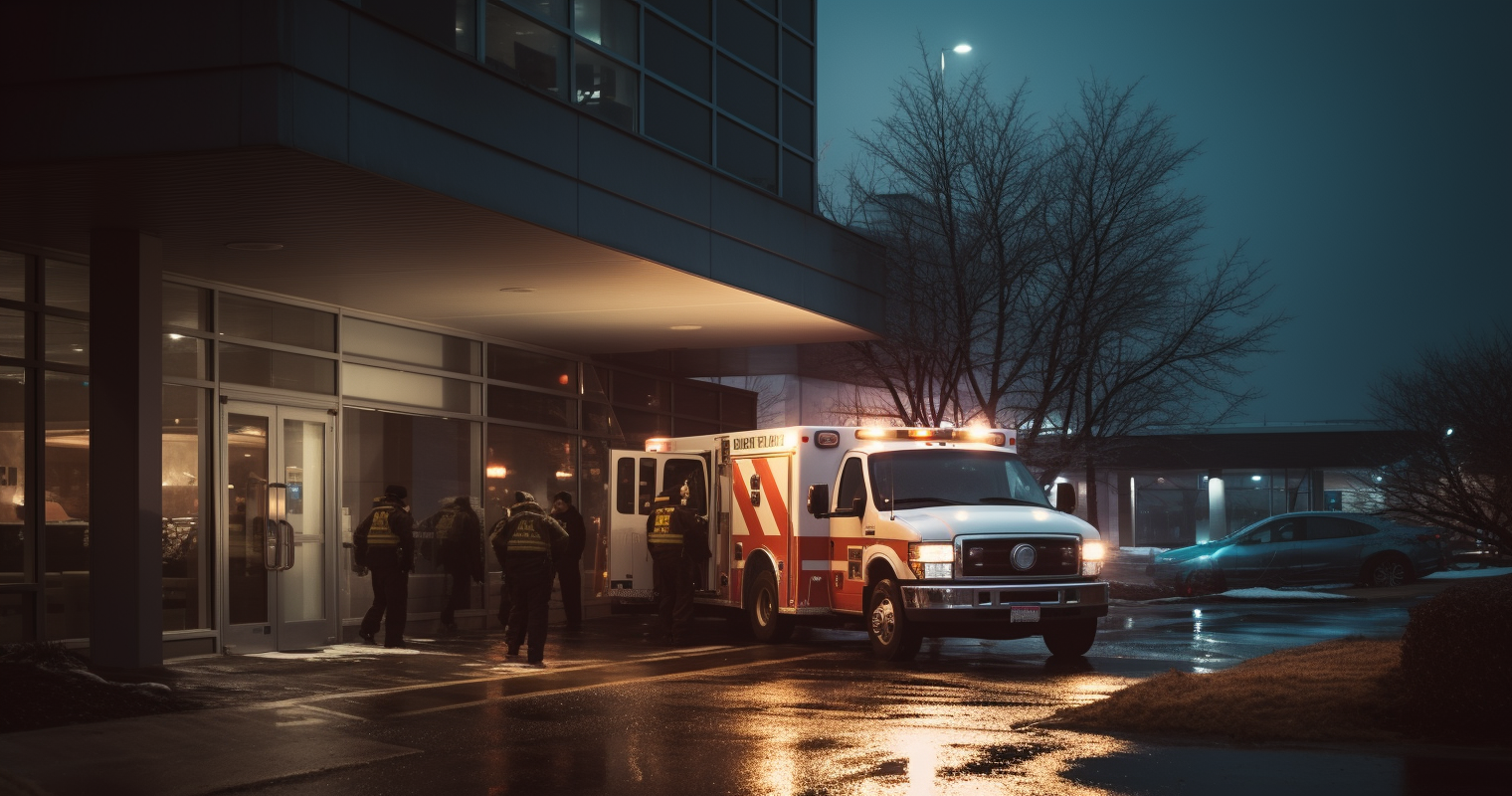
New Zealand operates a single emergency number — 111 — covering police, fire, and ambulance, with calls free from any phone. Public hospital emergency treatment is open to everyone regardless of insurance, though what you are charged depends on your residency status and the nature of your condition. New Zealand’s distinctive no-fault ACC scheme covers accident-related injuries for all people in the country, including visitors; emergency care for illness, however, may generate costs for those who do not qualify for publicly funded healthcare.
| Item | Details |
|---|---|
| Emergency number | 111 (police, fire, ambulance) — free from any phone, as of 2025 |
| Non-emergency police | 105 (as of 2025) |
| Ambulance callout charge (residents/2yr+ work visa holders) | Approx. NZD $125 per callout (as of 2024; verify with St John) |
| Ambulance callout charge (short-term visitors) | Up to approx. NZD $800 (as of 2024; verify with St John) |
| ACC coverage | No-fault accident injury cover for everyone in NZ, including visitors |
| Illness-related emergency care for tourists | Treated but billed; public healthcare eligibility required for free care |
What is the single emergency number in New Zealand, and does it cover police, fire, and ambulance?
The number to dial in any emergency in New Zealand is 111, and it connects you to police, fire, and ambulance services alike. There is no need to remember separate numbers for each service — one call reaches an operator who directs you to the right place. The concept is comparable to the 999 system in the UK or the 112 standard used across much of Europe.
Whether you need law enforcement, the fire brigade, or urgent medical attention, dialling 111 will get you through to an emergency operator who will route your call appropriately. There is no charge for 111 calls, and the number can be dialled from a mobile phone with no remaining credit.
Some other emergency scenarios — such as search and rescue operations or civil defence incidents — are also channelled through 111 and connected to New Zealand Police, who coordinate those responses.
When your call connects, the Spark 111 emergency operator will ask which service you require — fire, ambulance, or police — and transfer you accordingly, staying on the line until the relevant communications centre has picked up and a two-way conversation is confirmed.
A “111 TXT” service is available for people who have difficulty speaking or hearing during a phone call. Registration is required before you need it — do not wait until an emergency to sign up. Current registration details can be found on the New Zealand Police website.
For non-urgent police contact — for instance, reporting a minor theft or a vehicle collision without injuries — dial 105. This number was introduced as a straightforward way to reach police for non-emergency matters, ensuring people throughout New Zealand can access policing services without clogging the 111 line. Non-urgent reports can also be submitted online at 105.police.govt.nz.
How do you call for emergency medical assistance in New Zealand, and what should you expect when you call?
To summon an ambulance in New Zealand, dial 111 and request “ambulance.” Ambulance crews attend medical emergencies and accidents, treating patients on the spot and transporting them to hospital when necessary. This service runs around the clock, every day of the year.
Ambulance services across most of New Zealand are delivered by St John. The exception is the Greater Wellington region, which is served by Wellington Free Ambulance. Both organisations operate within the 111 dispatch system.
Giving the operator as precise a location as possible significantly helps the response. Mention street names, prominent buildings, intersections, bridges, or recognisable landmarks — if you are moving, continue providing updates as you go. Your mobile device may transmit location data to emergency services automatically, but this is a supplementary tool rather than a replacement for verbal directions; always try to describe your location as clearly as you can.
On arrival at a hospital emergency department, clinicians assess and rank patients using the Australian Triage Scale, a five-level system in which level one represents the most immediately life-threatening conditions and level five the least urgent. If you are asked to wait, this reflects clinical prioritisation rather than any disregard for your situation.
Note that ambulance callouts may carry a charge depending on your status — the section on costs below provides full details.
What should you do in a mental health crisis in New Zealand — is there a dedicated mental health emergency line, and can you go to a hospital emergency department?
Where there is an immediate risk to someone’s life during a mental health crisis, call 111 without hesitation. Mental health emergencies are treated as serious medical situations that warrant emergency department attendance or ambulance response.
For urgent mental health distress that does not yet involve immediate danger to life, New Zealand provides the 1737 helpline — a free service available by phone or text, around the clock every day, staffed by trained counsellors. This is the country’s primary crisis support line for mental health. Always confirm the service is still operating at www.1737.org.nz.
Attending a public hospital emergency department during a mental health crisis is also an option. Emergency departments are focused on preserving life, and staff will not turn a patient away on the basis of residency or insurance status — if you are not entitled to publicly funded care, a bill will be issued after your treatment, not at the door. Treatment comes first.
For situations where you feel uncertain about your safety or health but do not believe it is an immediate emergency, Healthline offers free telephone consultations. The Healthline number is 0800 611 116 (as of 2025 — verify at healthline.govt.nz). It is worth noting that New Zealand’s 1737 service differs from comparable overseas services in that it combines telephone and text support under a single memorable number — unlike, for example, the NHS crisis lines in the UK or the 988 Suicide and Crisis Lifeline in the United States, which operate separately.
Where can you go for emergency medical treatment in New Zealand — public hospitals, private hospitals, urgent care clinics?
New Zealand’s public health system encompasses hospitals and community health services throughout the country, funded primarily through general taxation so that eligible patients do not pay directly at the point of care. The system is now administered nationally by Te Whatu Ora – Health New Zealand, which plans and delivers publicly funded health services across all regions.
If you are dealing with a life-threatening emergency, go directly to — or be taken by ambulance to — the nearest public hospital emergency department (ED). Immediate care will be provided regardless of your status. In Auckland, Starship Hospital operates a dedicated children’s emergency department for patients aged 0–14, though older teenagers with acute conditions may sometimes also be treated there.
For conditions that are urgent but not immediately life-threatening, urgent care clinics — also referred to as after-hours clinics or accident and urgent care centres — offer a practical middle ground. These walk-in facilities allow you to see a general practitioner quickly without the wait times typical of a busy ED. Fees are generally higher than a scheduled GP appointment, but they handle a wide range of acute issues including minor fractures, cuts requiring stitches, and sudden infections.
To locate your nearest public hospital or urgent care facility, the official directory Healthpoint.co.nz is the most comprehensive resource. Private hospitals also operate in New Zealand and are generally better suited to elective and specialist procedures than to emergency care.
Emergency dental problems are not typically managed within hospital emergency departments. Dental clinics handle this type of need separately, and many offer after-hours emergency appointments — but routine dental care should be arranged through a registered dentist in the usual way.
Is emergency medical treatment free in New Zealand, or is there a charge — and does this differ for residents versus tourists?
New Zealand citizens and permanent residents generally receive public hospital care free of charge, including emergency treatment, surgical procedures, and hospital stays. However, eligibility is not universal — your visa category and how long you have been, or intend to be, in the country are both factors that affect what you can access at no cost.
Those likely to qualify for free or subsidised healthcare include New Zealand citizens and permanent residents, Australian citizens and permanent residents who live or intend to live in New Zealand for at least two years, and holders of a New Zealand work visa that is valid for two or more years.
Short-term visitors and tourists face a more complicated picture. Every person physically present in New Zealand — visitor or resident alike — is entitled to free treatment for injuries sustained in accidents, through the Accident Compensation Corporation (ACC) programme. This no-fault scheme is a defining feature of New Zealand’s healthcare landscape. However, ACC covers only accident injuries, not illness. A tourist hospitalised because of sickness — rather than injury — will be charged for that care.
Ambulance callout fees also vary by status. People who are citizens, permanent residents, or hold work visas of more than two years are charged approximately NZD $125 per callout (as of 2024). Overseas visitors and short-term visa holders not eligible for publicly funded care may face charges of up to NZD $800 per callout (as of 2024). These figures should be verified directly with St John New Zealand, as fees are subject to change. In the Greater Wellington and Wairarapa regions, Wellington Free Ambulance provides emergency ambulance services at no charge.
Regardless of your eligibility status, no one will be refused emergency treatment at the point of care. If you are not entitled to publicly funded healthcare, the hospital will issue an invoice once treatment is complete — payment does not precede treatment.
Do expats in New Zealand need travel or health insurance to access emergency care, and what happens without insurance?
New Zealand does not make health or travel insurance a general requirement for most visitor visa categories, but taking out cover before you travel is very strongly advised. A comprehensive travel insurance policy can absorb a broad range of medical costs — hospital stays, prescription medications, and emergency evacuation — that would otherwise fall entirely to you.
For certain visa types, however, holding insurance is not optional. If you are entering New Zealand on the Parent Boost Visitor Visa, you must hold approved medical and travel insurance that meets Immigration New Zealand’s minimum standards, covering emergency medical treatment, repatriation, and cancer care. International students are similarly required to carry comprehensive health insurance for the full duration of their study, including medical, hospital, and emergency evacuation cover — most educational institutions will refuse enrolment without verified proof of adequate insurance.
Arriving without insurance and without entitlement to publicly funded care means you bear the full cost of any treatment received. You will not be denied care in an emergency — but the bill that follows can be very substantial. An expat health insurance plan can provide meaningful financial protection and clarity about your entitlements if a medical emergency arises.
Even those who qualify for public healthcare may find private health insurance worthwhile. Waiting times to access certain specialists through the public system can stretch from three to nine months. Private cover can unlock significantly faster access to elective and specialist services, even where emergency care in the public system is already covered.
Are there bilateral health agreements entitling some foreign nationals to reduced-cost or free emergency treatment?
New Zealand maintains reciprocal healthcare arrangements with a limited number of countries. The most significant agreements are with Australia and the United Kingdom. These bilateral arrangements are narrower in scope than, for example, the European Health Insurance Card (EHIC) system that operates between EU member states, which provides broader cross-border healthcare access.
Visitors who become ill in New Zealand are generally expected to meet the costs of their care, with the notable exception of residents of Australia and the UK, who hold specific entitlements under their respective reciprocal agreements. Even so, these arrangements carry important limitations. For instance, visitors from Australia are not entitled to publicly funded emergency ambulance transport under the reciprocal agreement.
The arrangement with the UK covers some immediately necessary healthcare during a visit, but it does not confer the same entitlements as New Zealand residency. It is broadly comparable in intent to certain Commonwealth healthcare agreements, but should not be treated as equivalent to the EU EHIC in terms of scope. Before travelling, always verify the current terms of any applicable agreement with the New Zealand Immigration authority and your home country’s embassy, as these arrangements may be updated.
Citizens of countries that have no reciprocal agreement with New Zealand have no entitlement to reduced-cost illness-related emergency care. That said, ACC cover for accidental injuries applies to all visitors regardless of nationality — see the previous section for details.
How does New Zealand’s emergency healthcare system compare to systems expats may be familiar with?
In terms of overall structure, New Zealand’s public health system most closely resembles fully state-funded models such as the NHS in the United Kingdom or Australia’s Medicare system — both financed through taxation and designed to provide universal coverage to those who qualify. New Zealand’s system similarly operates on the principle that eligible residents should not pay directly at the point of care.
What makes New Zealand genuinely distinctive, however, is the ACC scheme. The Accident Compensation Corporation is the Crown entity that administers the country’s no-fault accidental injury scheme, providing financial assistance and support to citizens, residents, and temporary visitors who suffer personal injuries through accidents. In most other countries, seeking compensation after an injury means navigating litigation or relying on private insurance. New Zealand’s ACC replaces the right to sue with a guarantee of no-fault cover for everyone present in the country when an accident occurs.
Unlike the NHS, which treats both illness and accidental injury equally for eligible residents, New Zealand’s system draws a firm distinction: accidents are covered for everyone through ACC, while illness-related care is restricted to those who meet residency or visa requirements. This difference catches many newcomers off guard. Compared to heavily privatised systems such as that of the United States — where insurance status can dramatically influence access to care — New Zealand’s approach is considerably more accessible; emergency treatment will never be withheld because you cannot pay upfront. However, unlike some European countries where billing non-resident patients rarely occurs in practice, New Zealand does issue invoices to ineligible patients after the fact.
The publicly funded system maintains its reach partly by rationing non-essential services, which has allowed a parallel private sector to develop, offering faster access to elective and specialist care for those willing to pay.
What emergency services exist beyond medical — how do police and fire services work in New Zealand?
As with medical emergencies, the number for police and fire emergencies in New Zealand is 111. For matters that do not require an immediate response — such as a minor vehicle collision with no injuries or a low-level theft — dial 105 from your phone or submit a report online at 105.police.govt.nz.
Police stations are located in all major towns and cities and in many rural communities. One important cultural difference for international arrivals: New Zealand Police officers are not routinely armed during ordinary day-to-day duties. This sets New Zealand apart from many other countries and is worth bearing in mind when interacting with police. Specialist armed response teams do exist for high-risk situations, but firearms are not a feature of routine policing.
Fire and Emergency New Zealand (FENZ) is responsible for fire response, urban search and rescue operations, and a range of hazard-related emergencies. Fire services are reached via 111 in the same way as police and ambulance. Bushfire and rural fire risk is a genuine concern in many parts of New Zealand, particularly during dry summer months, and FENZ publishes current fire danger ratings for the public. Visit fireandemergency.nz for up-to-date information.
If you are uncertain whether your situation warrants an emergency call, dial 111 anyway — operators are trained to help callers assess the appropriate response. Expats who are unfamiliar with local systems should know that calling 111 in genuine good faith carries no penalty.
Are there country-specific emergency risks in New Zealand — natural disasters, extreme weather, or endemic diseases?
New Zealand experiences a wide range of natural hazards, including earthquakes, floods, landslides, severe storms, tsunami, and volcanic eruptions, often with very little advance warning. Civil Defence coordinates the national response to these events. New Zealand’s position on the Pacific “Ring of Fire” means it endures substantially more seismic activity than most comparable countries — the Canterbury earthquake sequence of 2010–2011 and the 2016 Kaikōura earthquake illustrate just how significant and sudden these events can be.
The main alert and warning systems available to residents and visitors include:
- Civil Defence emergency alerts — issued through radio, television, and directly to mobile phones. During a natural disaster, monitoring radio or TV broadcasts for Civil Defence instructions is essential.
- National Emergency Management Agency (NEMA) — the central government body responsible for coordinating emergency management across New Zealand. Preparedness guidance is available at civildefence.govt.nz.
- GeoNet — New Zealand’s geological hazard monitoring network, providing real-time data on earthquakes, volcanic activity, and tsunami at geonet.org.nz.
- MetService — the national weather service, issuing severe weather warnings at metservice.com.
New Zealand does not carry the same burden of endemic tropical diseases found in some other expat destinations. There is no malaria, dengue fever is not endemic (though travellers occasionally carry it back), and venomous wildlife is relatively scarce. The primary health hazards are environmental in nature: intense UV radiation causing sunburn, hazards around rivers and coastal waters, and hypothermia risk in alpine environments. New Zealand’s rivers carry the bacterial risk of leptospirosis and the waterborne parasite Giardia, so water from natural sources must be treated before drinking.
The Get Ready campaign at getready.govt.nz offers household emergency planning advice tailored specifically to New Zealand’s hazard profile and is an excellent first stop for anyone newly arrived in the country.
What should expats do to prepare for emergencies before they arise in New Zealand?
Taking preparatory steps before an emergency happens can make a significant difference when it does. The following actions are recommended for all new arrivals:
- Register with your home country’s embassy or consulate. Most countries operate schemes that allow their government to contact nationals in a crisis — for example, the UK’s FCDO runs LOCATE, while the US Embassy uses the STEP programme, and many other countries offer similar services. Search your home country’s foreign ministry website for “travel registration New Zealand” to find the relevant scheme.
- Enrol with a local GP as soon as possible. Registering with a general practitioner promptly after arrival — particularly if you have children — gives you an established healthcare contact for non-emergency concerns and reduces unnecessary emergency department visits.
- Familiarise yourself with how ACC works. The ACC no-fault scheme provides accident injury cover to everyone in New Zealand, regardless of nationality, residency status, or the circumstances of the accident. Understanding this in advance allows you to approach any treatment costs with confidence.
- Assemble an emergency kit. New Zealand’s Civil Defence recommends households keep a survival kit stocked with at least three days’ worth of water and food, a battery-powered radio, a torch, a first aid kit, and copies of critical documents. Full guidance on recommended contents is available at getready.govt.nz.
- Learn your local Civil Defence arrangements. Every region has its own Civil Defence Emergency Management (CDEM) group. Locate your group’s contact details, identify your nearest evacuation routes, and be aware if your home is in a tsunami or flood-prone zone.
- Store key phone numbers before you need them. Save 111 (emergencies), 105 (non-emergency police), Healthline (0800 611 116), 1737 (mental health), and your GP’s number in your phone in advance. As of 2025, confirm these numbers remain current at govt.nz.
- Arrange appropriate insurance coverage. Review health insurance, travel insurance, and contents insurance in light of your visa type and the expected length of your stay. Those not entitled to publicly funded healthcare should treat adequate insurance as a priority rather than an optional extra.
Where can expats get official and up-to-date emergency information for New Zealand?
The following official sources provide the most authoritative and current emergency-related information for anyone living in or visiting New Zealand:
- New Zealand Police — guidance on 111 and 105, emergency and non-emergency contacts.
- Hato Hone St John — ambulance services, callout fee schedules, and first aid resources.
- Wellington Free Ambulance — ambulance services for the Greater Wellington and Wairarapa regions.
- Fire and Emergency New Zealand (FENZ) — fire safety information and current fire danger ratings.
- National Emergency Management Agency (NEMA) / Civil Defence — disaster preparedness, warnings, and emergency response guidance.
- GeoNet — live monitoring of earthquakes, volcanoes, and tsunami activity.
- Health New Zealand – Te Whatu Ora — public healthcare eligibility, hospital directories, and service information.
- Accident Compensation Corporation (ACC) — full details of the no-fault accident cover scheme for residents and visitors alike.
- Immigration New Zealand — visa-related healthcare eligibility and entitlements.
- Healthpoint — searchable directory of hospitals, GPs, and urgent care clinics by location.
- Get Ready (NEMA) — household emergency preparedness tailored to New Zealand’s specific hazard environment.
Your home country’s embassy or high commission in Wellington is also a valuable resource for consular emergencies. A full list of foreign diplomatic missions in New Zealand is maintained by the New Zealand Ministry of Foreign Affairs and Trade at mfat.govt.nz.
Frequently asked questions
What is the emergency number in New Zealand?
111 is the number to call for police, fire, or ambulance in New Zealand. Calls are free from any phone, including a mobile with no credit. For non-urgent police matters, dial 105 instead. Confirm current numbers at govt.nz.
Will I be treated in a New Zealand emergency department even if I am not insured or not a resident?
Yes. Emergency departments focus on preserving life, and staff do not verify a patient’s healthcare eligibility during treatment. If you are not entitled to publicly funded care, you will receive an invoice after treatment — you will not be turned away at the door.
Does New Zealand’s ACC scheme cover me as a visitor?
Yes — the ACC no-fault scheme covers everyone in New Zealand who is injured in an accident, regardless of nationality or residency status. Visitors receive the same entitlement as residents for accident injuries. However, ACC applies only to injuries caused by accidents, not to illness.
How much does an ambulance cost in New Zealand for a tourist?
Overseas visitors and short-term visa holders not eligible for public healthcare may be charged up to NZD $800 per ambulance callout (as of 2024). In the Greater Wellington and Wairarapa regions, Wellington Free Ambulance provides emergency services without charge. Always confirm current fees directly with St John or Wellington Free Ambulance.
What should I do in a mental health emergency in New Zealand?
If there is immediate risk to life, call 111. For urgent support that is not immediately life-threatening, call or text 1737 — New Zealand’s free national mental health helpline, available 24 hours a day, seven days a week. You may also attend a public hospital emergency department; mental health crises qualify for emergency department care. Verify the 1737 service at www.1737.org.nz.
Is New Zealand prone to natural disasters?
Yes. Earthquakes, floods, storms, tsunami, landslides, and volcanic activity can all occur with little warning. New Zealand sits on the Pacific Ring of Fire and experiences considerable seismic activity. Expats should read Civil Defence guidance, sign up for local emergency alerts, and keep an emergency kit at home.
Do nationals of the UK or Australia get free healthcare in New Zealand?
New Zealand has reciprocal health agreements with both Australia and the UK that provide some entitlement to subsidised or free healthcare for illness during a visit. However, the scope of these agreements is limited — they do not confer the same rights as residency. For example, Australian visitors are not entitled to publicly funded emergency ambulance transport. Check current terms with the New Zealand Ministry of Health and your home country’s embassy before travelling.
Do I need private health insurance if I move to New Zealand on a work visa?
Holders of a New Zealand work visa valid for two years or more are generally eligible for publicly funded healthcare. If your visa covers a period of less than two years, you will typically not be entitled to publicly funded care for illness — though ACC covers accident injuries for everyone. Private health insurance is strongly recommended in that situation, and is worth considering for all visa holders who want faster access to specialist services.
Where can I find the nearest urgent care clinic or emergency department?
Visit Healthpoint.co.nz, New Zealand’s official health services directory, to search for hospitals, urgent care clinics, GPs, and other services by location. Most clinics include opening hours, making it easy to identify an after-hours option for conditions that are urgent but not life-threatening.