
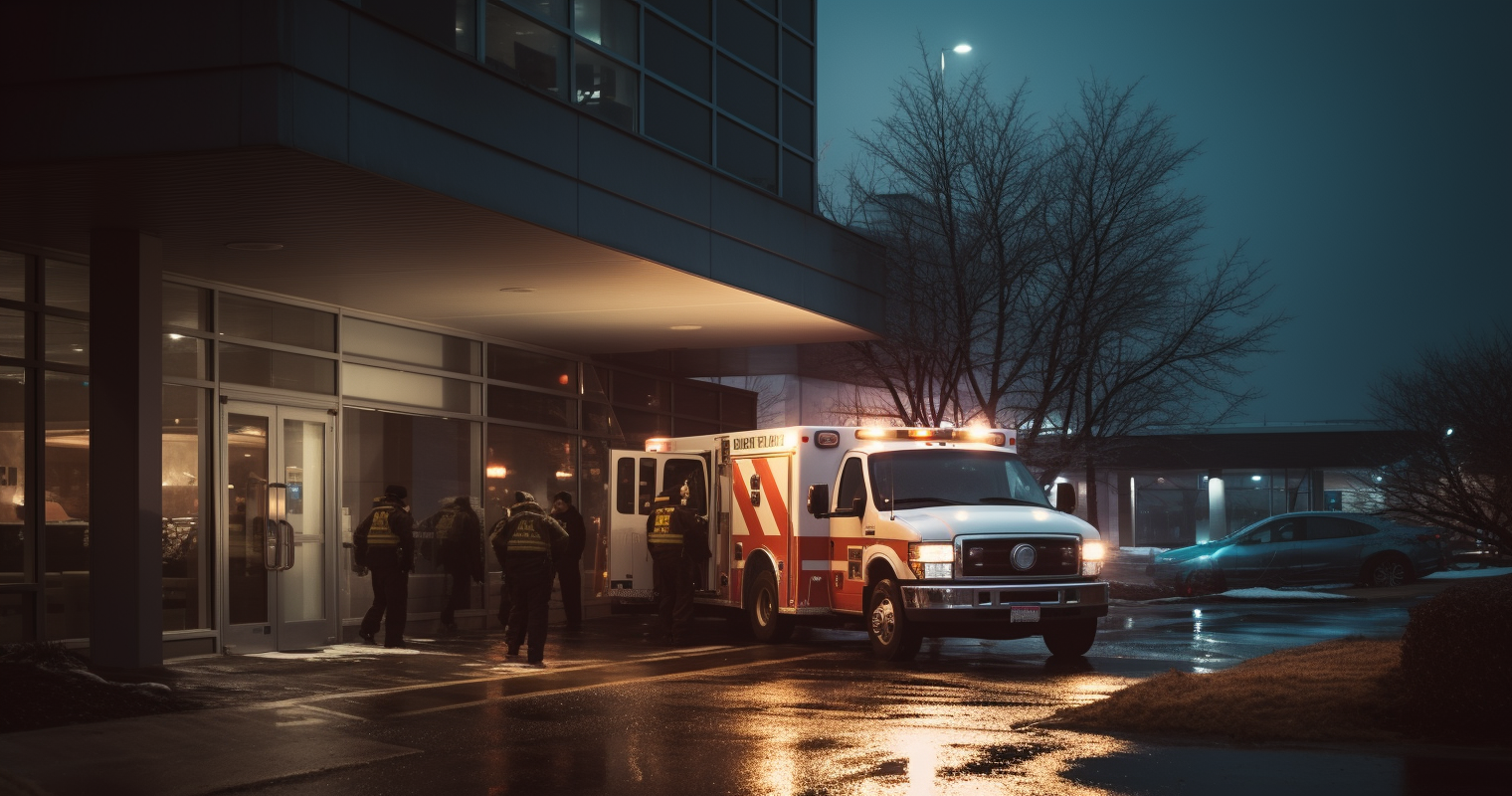
In Oman, the single emergency number for police, fire, and ambulance is 9999 (with 999 also widely cited as a general emergency number — verify the current primary number via the Oman Government Portal before you travel). Emergency treatment is available at both public and private hospitals, but it is not free for most expats and visitors — costs and eligibility depend on your residency status and insurance cover.
| Item | Details |
|---|---|
| Main emergency number | 9999 (police, fire, ambulance, civil defence) — verify via gov.om (as of 2025) |
| General emergency number | 999 also widely cited — confirm current usage with official sources |
| Ambulance operator | Public Authority for Civil Defence and Ambulance (PACDA) / Royal Oman Police |
| Emergency treatment cost for expats | Generally chargeable at public and private hospitals; upfront payment often required (as of 2025) |
| Mandatory private sector health insurance | Unified Health Insurance Policy (Dhamani) — inpatient cover up to OMR 3,000 per year for private sector workers (as of 2019 decree; verify current limits) |
| Key natural hazards | Cyclones, flash floods, extreme heat, dust storms, tsunami risk |
| Early warning system | National Multi-Hazard Early Warning System (NMHEWS), operated by the Directorate General of Meteorology |
What is the single emergency number in Oman?
Emergency services in Oman fall under the jurisdiction of the Royal Oman Police, operating in conjunction with the Public Authority for Civil Defence and Ambulance (PACDA). When you dial 9999, your call is routed to a central public service dispatch centre, which gathers the necessary details and directs the request to the closest appropriate unit. This differs from several neighbouring Gulf states that maintain separate three-digit lines for police, ambulance, and fire — Oman consolidates these into one point of contact.
The number 999 is also broadly associated with general emergency calls in Oman, while 9999 is specifically linked to fire, flood, and immediate police response. In practice, the distinction between these two numbers can be blurry, and different sources describe their roles differently. It is important to verify which number is currently the primary emergency contact by checking the official Oman Government Portal emergency page before you actually need it.
PACDA can be contacted directly on the number 24343666 in addition to 9999. For emergencies specific to certain regions — for example, in the Dhofar governorate — water-related emergencies in Salalah can be reported on 1445, while electricity-related emergencies in that region are handled on 154.
How do you call for emergency medical assistance in Oman?
To request an ambulance anywhere in Oman, dial 9999. The Omani police ambulance service covers at least 70% of the country, giving a reasonable level of reach across most inhabited areas. That said, coverage in more remote parts of the country is noticeably thinner, and response times can vary considerably based on your location and prevailing traffic conditions.
In built-up areas, ambulances can typically reach a patient in under 30 minutes, though this is not guaranteed. Once on scene, the medical crew will evaluate the patient’s condition and determine the most appropriate hospital to transport them to. Ambulance crew members in Oman are trained to advanced emergency medicine technician (AEMT) standard.
It is not unusual for people to drive themselves or take a taxi to hospital in an emergency, but an ambulance crew can begin life-saving treatment en route — a significant advantage over private transport. If you do call for an ambulance, provide clear directions using nearby landmarks, as GPS-based addressing is not always reliable across the country. Make sure to communicate clearly whether the situation is life-threatening so that responders can assign the appropriate level of priority.
What should you do in a mental health crisis in Oman?
Mental health emergencies are generally outside the scope of the standard ambulance response in Oman. Anyone experiencing a psychiatric or emotional crisis is best directed toward a qualified mental health professional or a hospital emergency department. Unlike some countries, Oman does not have a nationally recognised around-the-clock mental health helpline comparable to services like the Samaritans.
The Royal Hospital in Muscat is among the public facilities that provide emergency psychiatric care. If there is an immediate risk to life, calling 9999 and informing the dispatcher that it is a mental health emergency will enable the police or civil defence to attend and help facilitate appropriate care. Attending the emergency department of a major hospital directly is also an option.
Expats may find mental health support infrastructure in Oman less extensive than they are used to at home, and language can present an additional hurdle. Several private hospitals in Muscat have multilingual teams and dedicated psychological or psychiatric services. When selecting a health insurance policy, check that it provides adequate mental health coverage — a comprehensive plan should address not only emergency and hospital care but also psychological support, dental treatment, and other specialist needs.
Where can you go for emergency medical treatment in Oman?
Oman’s healthcare infrastructure now comprises close to 70 hospitals with roughly 15.5 beds per 10,000 people, supported by nearly 900 clinics and health centres stocked with contemporary medical equipment. Facilities are spread across the country, though the most comprehensively resourced hospitals are concentrated in Muscat. Major urban centres such as Salalah and Sohar also have well-equipped hospitals capable of handling serious emergencies.
Among the most well-regarded public hospitals are the Royal Hospital of Oman and Sultan Qaboos University Hospital, both situated in Muscat. Khoula Hospital in Muscat is another key facility, widely known for managing high volumes of trauma and emergency cases. These public hospitals will accept expats in emergency situations, though fees will generally apply.
In the private sector, Muscat Private Hospital is the largest private facility in the capital, staffed by doctors trained in Western and Asian medical institutions. Starcare Hospital and Atlas Hospital are well-established private alternatives in the region. The Badr Al Samaa Group operates hospitals in Muscat, Sohar, and Nizwa, and Starcare Hospital has a particular reputation for family and paediatric medicine.
Travellers venturing into Oman’s deserts, mountain ranges, or rural areas should be aware that smaller towns often have only basic health centres with limited emergency capacity, and reaching a fully equipped facility may involve a journey of several hours. Anyone planning trips to remote locations should carry a well-stocked first-aid kit, hold an insurance policy that includes medical evacuation cover, and inform someone of their itinerary.
Listings of public hospitals and health centres across all governorates are available on both the Oman Government Portal (gov.om) and the Ministry of Health website. Confirm these resources are current before relying on them in an emergency.
Is emergency medical treatment free in Oman?
Oman’s public healthcare system is provided free of charge to Omani nationals and to citizens of other Gulf Cooperation Council (GCC) member states, as well as to expatriates employed within the public sector — including Omani government employees. For all other foreign nationals, this is a meaningful distinction from countries like the UK, where NHS emergency care is accessible to everyone at no cost regardless of citizenship or residency.
While emergency treatment at government hospitals is available to non-residents, charges are typically levied, and private hospitals will bill patients for emergency care based on the nature and extent of the treatment received. Expats may in some cases obtain free access to public healthcare during emergencies or when referred by a health centre, but this is not guaranteed.
Ambulance transport and public hospital admission costs are billed to the patient. Settlement is typically expected at the time of discharge or immediately upon receiving care. Hospitals generally retain your passport and identification documents as security until the full balance has been cleared — a practice that can come as a considerable surprise to those accustomed to systems where payment is billed after the fact. This same policy applies to those in the country on tourist visas. Keeping certified copies of your key documents separately from the originals is a sensible precaution.
Do expats need insurance to access emergency care in Oman?
Medical costs in Oman can be substantial, and anyone without adequate insurance coverage or sufficient personal funds may find themselves unable to leave the country until their outstanding medical bills have been paid in full. This reality makes health insurance — or at minimum accessible financial reserves — an absolute necessity for anyone living in or visiting Oman.
The Unified Health Insurance Policy, known as Dhamani, requires private sector employers in Oman to provide foundational health coverage to their workforce. This basic coverage encompasses doctors’ consultations, medical treatments, ambulance services, and hospitalisation for private sector employees and their dependants, with an annual ceiling of OMR 4,500 as established under the 2019 decree — though current limits should be confirmed with official sources.
Not all Oman-based companies are required to extend health insurance to every expatriate employee, though many choose to do so voluntarily. Where health coverage is not included in an employment contract, expats are strongly encouraged to take out private medical insurance independently. An international health insurance policy tailored specifically to the needs of expatriates is the recommended option for foreign nationals living abroad.
For visitors, comprehensive travel health insurance is non-negotiable. A good policy should cover medical treatment costs, ambulance charges, hospitalisation, and medical evacuation if necessary. Other features worth seeking out include multilingual emergency assistance, rescue cost coverage, and provisions for pre-existing conditions. It is also worth checking that any policy covers adventurous pursuits such as scuba diving or desert excursions, which are among Oman’s most popular visitor activities.
Are there bilateral health agreements covering emergency treatment in Oman?
Oman does not participate in any broad multilateral healthcare reciprocity arrangement comparable to the European Health Insurance Card (EHIC) system, under which EU citizens can access state-funded emergency care across member states. No equivalent scheme is known to exist that would entitle foreign nationals from outside the GCC to free emergency treatment in Oman on the basis of their nationality alone.
The closest regional analogue to a reciprocal health arrangement in Oman is the provision of free public healthcare to nationals of Gulf Cooperation Council countries — Saudi Arabia, the UAE, Kuwait, Bahrain, and Qatar — under the GCC’s own arrangements. For the vast majority of nationalities beyond this group, no documented bilateral entitlement to complimentary emergency treatment is known to apply.
Limited bilateral agreements may exist under specific employment treaties or diplomatic protocols, but these are not publicly documented in a way that allows reliable independent verification. Prior to travelling or relocating to Oman, check with your home country’s embassy in Muscat and with Oman’s Ministry of Health whether any country-specific arrangement applies to your nationality. Never assume any entitlement exists without obtaining explicit confirmation from authoritative sources.
How does Oman’s emergency healthcare compare to other systems?
Oman operates a mixed public-private healthcare model, but with a defining characteristic that sets it apart from fully universal systems: public hospitals serve Omani nationals and certain public-sector workers at no charge, while the majority of expats and visitors are expected to pay for care or demonstrate valid insurance coverage. This contrasts sharply with systems like the UK’s NHS or many EU national health services, where emergency care is delivered free to all at the point of need.
Although Omani citizens benefit from publicly funded healthcare, expatriates and tourists are not entitled to free medical treatment and will in most cases be required to pay before or at the time of receiving services. This approach has more in common with healthcare systems in the United States or Singapore, where upfront payment or insurance verification is the standard expectation before treatment is administered.
In practical terms, most expatriates in Oman rely on private clinics and hospitals in Muscat and other major cities rather than the public system. Access, waiting times, and costs can vary considerably for non-nationals, which is why many employers and individual expats opt for comprehensive international medical insurance — an approach broadly mirrored by expat communities in countries such as Thailand, Indonesia, and the UAE.
Oman’s healthcare system has undergone a remarkable transformation over the past five decades, with the government constructing a nationwide infrastructure of publicly subsidised services while allowing the private sector to meet additional demand. Emergency care quality in major cities is generally strong, with facilities in Muscat in particular offering modern equipment and capabilities that meet or approach Western clinical standards.
What emergency services exist beyond medical — police and fire?
Emergency response in Oman — spanning law enforcement, fire services, rescue operations, and disaster management — is coordinated through the Royal Oman Police in partnership with the Public Authority for Civil Defence and Ambulance (PACDA). This integrated structure means that police and civil defence functions are closely intertwined, rather than operating as entirely independent services as they do in many Western countries.
For any criminal incident, accident, or threat to personal safety, the Royal Oman Police can be reached by dialling 9999. In particular, road traffic accidents require a police report: where property damage is involved, contacting the Royal Oman Police at 9999 to obtain an official incident report is essential, as this documentation will be required to support any subsequent insurance claims.
PACDA is responsible not only for firefighting but also for specialist rescue operations — including extractions from wadis, mountainous terrain, and at sea. Civil defence teams have been credited with saving numerous lives across the Sultanate through search and rescue missions in challenging and remote environments. If you find yourself in difficulty in an isolated location, calling 9999 is the correct first action, bearing in mind that response times will inevitably be longer the further you are from an urban centre.
One important consideration when interacting with authorities in Oman: the Royal Oman Police are widely regarded as professional and courteous, but Oman enforces strict laws governing conduct, dress standards, and freedom of expression. If you are detained or become involved in any legal matter, remain calm, cooperate fully, and make prompt contact with your embassy or consulate. Expats relocating to Oman should familiarise themselves with local legislation in advance, particularly regulations relating to alcohol consumption, photography in sensitive areas, and social media activity.
What are the country-specific emergency risks in Oman?
Oman faces a range of significant natural hazards, including cyclones, flash flooding, sand and dust storms, and drought. The country’s National Multi-Hazard Early Warning System (NMHEWS) addresses three primary categories of risk: a Tsunami Early Warning System (TEWS), a Tropical Cyclone Early Warning System (TCEWS), and Flash Flood Guidance (FFG). Tropical cyclones and flash floods represent the most acute threats to life and property.
Tropical cyclones originating in the Arabian Sea have grown more powerful and more frequent during the pre-monsoon period (April to June) and the post-monsoon window (October to December). The consequences can be severe: Cyclone Gonu in 2007 claimed 50 lives and inflicted approximately $4.2 billion in damage, making it the most destructive natural event in Oman’s modern history at that time. Cyclone Mekunu, which struck in May 2018, resulted in 31 deaths and caused an estimated $1.5 billion in losses.
Coastal zones and low-lying areas face mounting exposure to the combined effects of rising sea levels and increasingly intense tropical storms, with flash flooding events becoming more frequent in recent decades. A particularly severe rainfall episode in April 2024 triggered widespread inundation, displacing more than 1,200 people and resulting in the deaths of at least 20 individuals.
The extreme heat of an Omani summer brings its own medical risks. Heatstroke, heat exhaustion, severe sunburn, and dehydration are all common conditions affecting new arrivals who are not yet acclimatised. Temperatures in some inland regions routinely exceed 45°C during summer months, and newly arrived expats should take the heat seriously from their very first days in the country, ensuring they stay consistently and well hydrated.
Security risks also warrant attention. There is a possibility of terrorism, and potential targets can include government buildings, schools, places of worship, transport hubs, tourist sites, and crowded public spaces. Heightened vigilance is advisable at major gatherings — including sporting fixtures, religious festivals, and political events. Although Oman has a generally low crime rate, opportunistic crimes such as theft and vehicle break-ins do occur.
Official weather warnings are issued by Oman’s Directorate General of Meteorology, which also operates the NMHEWS. Bookmark this resource and monitor local media closely during cyclone season and periods of heavy rainfall.
How should expats prepare for emergencies before they arise?
Taking practical steps before an emergency strikes is vastly more effective than attempting to gather critical information while a crisis is already unfolding. The actions outlined below represent the essential preparations all expats should complete when moving to or living in Oman.
- Register with your home country’s embassy or consulate. The majority of countries provide a voluntary or mandatory registration service — examples include the UK’s LOCATE programme, the US STEP scheme, and equivalent services run by other national governments — which enables your authorities to reach you during a disaster, evacuation, or major emergency. Registration is free, takes only a few minutes, and can prove invaluable. Locate your country’s embassy in Oman through your government’s official foreign affairs website.
- Store emergency numbers before you need them. Save local emergency contacts, including 9999 for police and ambulance, in your mobile phone and keep a written copy at home. Carry copies of essential documents such as your passport at all times.
- Secure comprehensive health insurance. Anyone without adequate insurance or the personal financial means to cover medical costs may be prevented from leaving Oman until all outstanding bills are settled. Your policy should encompass emergency care, ambulance transport, hospitalisation, and medical evacuation.
- Identify your nearest hospital in advance. Before any emergency arises, confirm that the facility closest to you actually has an emergency department and is equipped to treat your condition. Locate at least two hospitals — one public and one private — near both your home and your workplace.
- Learn cyclone and flash flood safety procedures. Flash flooding in wadis and along coastal areas poses a serious and often underestimated risk during tropical storms. Never attempt to cross a flooded wadi on foot or by vehicle, regardless of how shallow the water appears.
- Follow official weather and hazard alerts. Save the Directorate General of Meteorology warnings page as a bookmark and follow PACDA and the Royal Oman Police on their official channels for live emergency updates.
- Keep key documents safe and accessible. Maintain both digital and physical copies of your passport, residency card, insurance documents, and emergency contact list. Given that hospitals may retain original documents until bills are paid, keeping copies separate from originals is a practical safeguard.
- Learn basic Arabic emergency phrases. While most emergency personnel in Oman have some command of English, having a few Arabic phrases ready — particularly for describing your location, your symptoms, and the type of assistance you need — can make a critical difference in a fast-moving situation.
Where can expats get official emergency information for Oman?
The most authoritative starting point for emergency information in Oman is the Oman Government Portal, which maintains a comprehensive directory of emergency contact numbers across the country. This should be used alongside the Ministry of Health website, which lists public hospitals and health centres and provides relevant health guidance.
For natural disaster and severe weather information, the Directorate General of Meteorology (Civil Aviation Authority) publishes live weather warnings and runs the National Multi-Hazard Early Warning System. The NMHEWS was established to address natural hazards including tsunamis, cyclones, and flash floods, developed with technical assistance from the Intergovernmental Oceanographic Commission of UNESCO.
Your home country’s embassy or consulate in Muscat will also be an essential source of country-specific travel guidance, emergency consular support, and registration services. Major travel advisory portals — including the UK Foreign Commonwealth and Development Office (FCDO), the US State Department, Australia’s Smartraveller, and equivalent bodies in other countries — publish regularly updated, Oman-specific safety and emergency guidance. Always consult these sources for the most current information before travelling to or relocating within Oman.
During any emergency event, monitor local media closely and follow all instructions issued by the relevant authorities. The Royal Oman Police and PACDA both maintain official communication channels through which emergency alerts and public guidance are disseminated during major incidents.
Frequently asked questions: emergencies in Oman
What is the emergency number in Oman?
The main emergency number in Oman is 9999, which connects callers to the central public service dispatch centre operated by the Royal Oman Police and PACDA. The number 999 is also widely referenced as a general emergency line. Both numbers handle police, fire, and ambulance requests. Confirm the current primary number via the official Oman Government Portal before you travel, as operational arrangements can change.
Will I be treated in an emergency if I have no insurance in Oman?
Emergency treatment can be provided at public and private hospitals regardless of whether you hold insurance, but payment will almost certainly be required — typically upfront or before you are discharged. Hospitals may retain your passport or identification documents until the bill is cleared. Without adequate insurance or available funds, you risk accumulating significant debt or encountering difficulties when attempting to leave the country. Always travel with at least basic health insurance covering emergency care.
Is ambulance transport free in Oman?
No. Ambulance fees are charged to patients in Oman and form part of the overall medical bill alongside hospital admission and treatment costs. This is unlike some European systems where emergency ambulance call-outs carry no charge at the point of use. Verify that your insurance policy explicitly covers the cost of ambulance services.
Which hospitals in Muscat handle emergency cases?
Key hospitals with emergency capability in Muscat include the Royal Hospital, Khoula Hospital, Sultan Qaboos University Hospital, and Muscat Private Hospital. For patients in the Dhofar region, Sultan Qaboos Hospital in Salalah serves as the primary referral centre. Always verify a facility’s emergency capability and operating hours before presenting there.
What are the main natural disaster risks for expats in Oman?
Oman is exposed to tropical cyclones, flash floods, dust storms, and drought. The cyclone season spans broadly from April to June and again from October to December. Flash flooding within wadis is especially hazardous during and immediately after heavy rain. Extreme inland heat is a year-round concern. Track alerts issued by the Directorate General of Meteorology and never attempt to cross a flooded wadi by foot or vehicle.
Is there a mental health crisis line in Oman?
Oman does not have a well-publicised, dedicated 24-hour mental health crisis hotline equivalent to services like the Samaritans or national crisis lines found in various other countries. In a psychiatric emergency, call 9999 or proceed directly to the emergency department of a major hospital. The Royal Hospital in Muscat offers emergency psychiatric services. Several private hospitals in Muscat also provide psychiatric assessment. Confirm with your insurer whether mental health emergencies are covered under your policy.
Do GCC nationals get free healthcare in Oman?
Yes. Public healthcare in Oman is provided free of charge to Omani citizens and to nationals of other Gulf Cooperation Council member states — covering residents of Saudi Arabia, the UAE, Kuwait, Bahrain, and Qatar. This reciprocal arrangement does not extend to most other nationalities. Nationals from outside the GCC should not assume any entitlement to free emergency care without first verifying their position through official channels.
How do I register with my embassy in Oman in case of an emergency?
Visit your home country’s foreign ministry or embassy website for Oman-specific registration guidance. Well-known examples include the US STEP programme, the UK’s LOCATE service, and Australia’s Smartraveller registration platform. Registering enables your government to contact you during a crisis, provide consular support, and facilitate evacuation if required. Keep your registration details current whenever your address or contact information changes.