
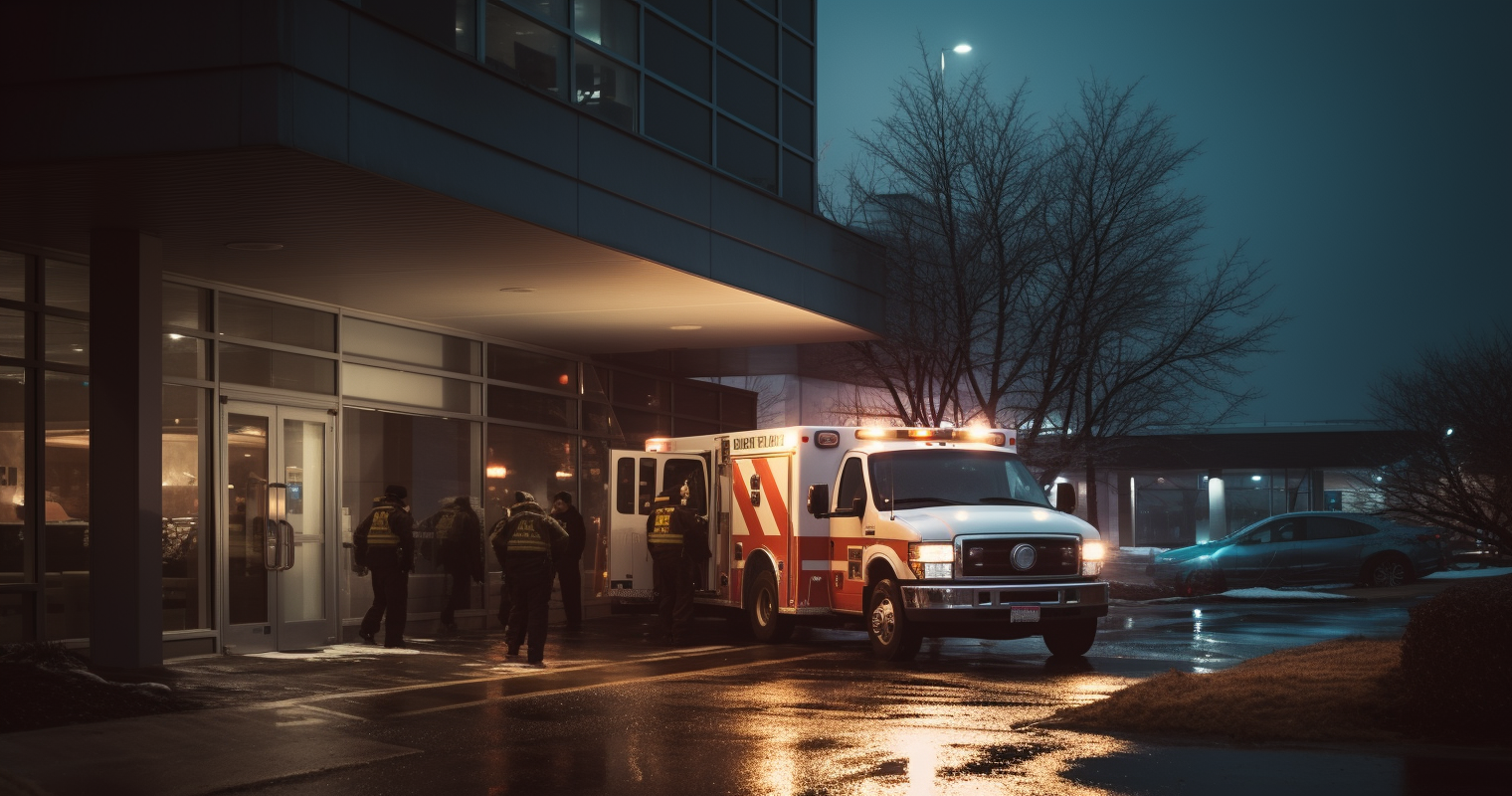
Panama operates a multi-number emergency system: dial 911 for ambulance services, 103 for the fire brigade (Bomberos), and 104 for the National Police. Emergency medical care at public hospitals is accessible to all — residents and visitors included — at minimal cost rather than being entirely free. Private facilities offer quicker service and higher standards but generally demand a financial guarantee before treatment begins. Comprehensive health insurance is strongly advised for all expats living in Panama.
| Item | Details |
|---|---|
| Ambulance (as of 2025) | 911 |
| Fire / Bomberos (as of 2025) | 103 |
| National Police (as of 2025) | 104 |
| Public ER visit cost (as of 2025) | Approx. USD $30–$100 (paid after treatment) |
| Private ER visit cost (as of 2025) | From USD $100; upfront payment guarantee typically required |
| Disaster alert system | SINAPROC — app “SINAPROC ALERTA” and *335 emergency line |
What is the single emergency number to call in Panama, and does it cover police, fire, and ambulance?
In contrast to nations that rely on a single unified emergency number — such as 112 throughout much of Europe or 999 in the United Kingdom — Panama maintains distinct dedicated lines for each service. The National Police (Policía Nacional de Panamá) is reachable on 104, the fire brigade (Bomberos) on 103, and ambulance services on 911. It is worth confirming that these numbers remain current by consulting official Panamanian government sources, as they are subject to change.
While a 911 service does exist in Panama, emergency operators are likely to communicate exclusively in Spanish. For those who do not speak the language, this presents a real obstacle — especially when every second counts. Expats residing outside major urban centres are particularly encouraged to identify a bilingual contact or private emergency provider ahead of time. A dedicated tourist police line, 511-9260, is also available, though its scope is primarily limited to Panama City. Always verify whether this number is active by consulting the Panama Tourism Authority (ATP) or your nearest embassy before you find yourself needing it.
How do you call for emergency medical assistance in Panama, and what should you expect?
When a medical emergency occurs, your first call should be to 911 for ambulance assistance. Operators will almost certainly respond in Spanish, so having a handful of key phrases memorised — or a translation app within easy reach — can prove invaluable. Be prepared to clearly state your exact location, describe what has happened, and indicate how many people require help.
Although the 911 centre dispatches ambulances, public vehicles are not always immediately available, and a combination of heavy traffic and inadequate road conditions can result in unacceptable delays. This is an especially important consideration in rural and remote locations. When an ambulance seems unlikely to arrive promptly, taking a taxi to the nearest hospital is a widely accepted alternative. Private ambulance providers also operate throughout Panama and can frequently offer a faster, bilingual response — particularly in areas with large expat populations. Speak with neighbours or local community groups to find out which services cover your area before an emergency ever arises.
What should you do in a mental health crisis in Panama?
Panama does not have a widely publicised, nationally accessible dedicated mental health emergency line comparable to services such as the Samaritans in the UK or the 988 Suicide and Crisis Lifeline in the United States. If you or someone nearby is experiencing an acute mental health crisis and there is a risk of harm, the primary course of action is to call 911 or proceed directly to the emergency department of the nearest hospital. You should verify what services are currently available through the Ministerio de Salud (MINSA), as provision in this area continues to evolve.
Vision, dental care, and mental health services are not routinely covered or subsidised within the public healthcare system. This means that any follow-up psychiatric or psychological treatment after an acute crisis is likely to incur costs, particularly within the private sector. MiniMed walk-in clinics located throughout Panama City offer a broad range of services, including psychiatric consultations, making them a practical option for non-life-threatening mental health concerns. If you have a pre-existing mental health condition, it is strongly advisable to make arrangements for private care before relocating.
Where can you go for emergency medical treatment in Panama?
Panama’s healthcare infrastructure encompasses both public and private facilities. Over the past decade, substantial investment has gone into the public sector, which is administered jointly by the Ministry of Health (MINSA) and the Social Security Fund (CSS) across a network of more than nine hundred facilities nationwide. The quality and availability of these facilities, however, varies considerably between cities and rural communities.
Among the most notable hospitals in Panama City are Punta Pacífica Hospital, Hospital Nacional, and Hospital Santo Tomás. The capital is consistently regarded as having some of the finest medical facilities and best-trained professionals in the whole of Latin America, and several of its hospitals hold Joint Commission International accreditation — the internationally recognised benchmark for hospital quality. Punta Pacífica Hospital (Pacifica Salud), a Johns Hopkins International affiliate, is widely considered one of the most technologically advanced medical centres in the region; Hospital Paitilla maintains ties with the Cleveland Clinic; and San Fernando Hospital is affiliated with Tulane University Health Services.
Smaller towns across the country typically have clinics, while larger cities offer hospitals capable of delivering immediate, basic emergency care. MiniMed walk-in clinics are dotted throughout Panama City and provide convenient access for non-critical situations. Because Panama is a relatively compact country, most locations are within a few hours’ drive of a hospital — but in a genuine emergency, that journey time may be too long. Before settling on a particular area, make it a priority to identify the nearest hospital with a 24-hour emergency department.
Is emergency medical treatment free in Panama, or is there a charge?
Emergency medical care in Panama is not free in the manner of a fully tax-funded system like the NHS in the United Kingdom, but it is available at extremely modest cost through the public sector. To use MINSA facilities, there is no advance payment required and no monthly subscription fee; treatment costs are kept very low — a complete emergency room visit may come to as little as USD $50–$100 — and if you are unable to settle the bill in full at the time, a monthly instalment arrangement can usually be made. These figures reflect costs as of 2025; always confirm current fees directly with the hospital or through MINSA.
Unlike some neighbouring Latin American countries, Panama does not require foreign nationals holding a visa, or Panamanian citizens, to pay recurring monthly fees in order to access public hospital care — you pay when you receive treatment. This is a meaningful distinction for short-term visitors and tourists. In a genuine emergency, you may also present yourself at the emergency department of a private hospital to be assessed and triaged. However, most private facilities require a financial guarantee covering the estimated cost of your care before proceeding with treatment, though this policy may vary depending on the severity of your condition.
Costs at private hospitals are substantially higher. At such facilities, an MRI scan costs at least USD $500, and an emergency room visit begins at a minimum of $100 but can escalate to $9,500 for an overnight admission involving surgery and recovery. These are indicative figures as of 2025 and can vary considerably between hospitals.
Do expats in Panama need travel or health insurance to access emergency care?
Health insurance is not a legal requirement for expats in Panama, but it is very firmly recommended. Taking out health insurance in Panama is entirely voluntary — residents may choose to pay for medical services directly at either public or private institutions without needing a monthly plan or facing any age-related restrictions. That said, without coverage you assume the full financial burden of care, which at a private hospital can be extremely significant.
Hospitals in Panama require a payment guarantee before commencing treatment, including in emergency situations, even when the final bill cannot yet be determined. If you arrive at a private hospital without insurance or a demonstrable ability to pay, you may encounter serious difficulties in obtaining anything beyond the most basic stabilisation. At public hospitals the barrier to entry is lower — payment is handled after care has been delivered — though waiting times are typically considerably longer.
Expats can obtain a Panama-specific health insurance plan covering medical expenses within the country, with premiums beginning at around USD $30–$40 per month, though costs vary depending on the procedures and treatments included. International health insurance that covers Panama as well as other countries is also widely available and popular among the expat community. An international private health insurance policy is often considered the most suitable option for expats and should include emergency medical evacuation coverage. Always scrutinise the fine print — particularly what is covered in emergency situations, whether your insurer provides direct billing to local hospitals, and any exclusions relating to pre-existing conditions.
Are there bilateral health agreements that entitle some foreign nationals to reduced-cost or free emergency care?
Panama does not participate in the broad reciprocal healthcare arrangements seen across much of Europe — such as the European Health Insurance Card (EHIC) scheme — or those that exist between certain Commonwealth nations. No widely established bilateral treaty exists that would entitle foreign nationals to reduced-cost or free emergency care in Panama purely on the basis of their nationality.
Some visitors holding specific Medicare Advantage plans (a US-specific insurance product) may find that their cover extends to urgent and emergency treatment in Panama. Holders of eligible Medicare Advantage plans can receive urgent and emergency care in Panama at participating hospitals without the need to prepay or file a claim — simply presenting your insurance card is sufficient. However, this reflects a particular insurance product rather than a government-to-government agreement, and you should verify your coverage directly with your insurer and confirm acceptance with the specific hospital before depending on it.
For nationals of all other countries, no comparable bilateral arrangement is known to be in effect as of 2025. Contact your home country’s embassy in Panama and the relevant consular or healthcare authorities in your country of origin for the most current information, since agreements can change.
How does Panama’s emergency healthcare system compare to systems expats may be familiar with?
Panama’s healthcare model is best characterised as a mixed public-private system — structurally closer to countries where upfront payment or insurance coverage is the norm than to a fully tax-funded universal model. Panama does not offer universal healthcare, though it comes reasonably close. Unlike the NHS, where anyone present in the country receives emergency treatment free of charge, Panama’s public hospitals levy fees — albeit very modest ones — and the private sector routinely requires advance payment or proof of insurance before treatment proceeds.
In a public hospital, fewer specialists attend to a higher volume of patients compared with private facilities, certain medicines may not always be on hand, and these factors can contribute to extended waiting times that may fall short of many expats’ expectations. The experience at private institutions is markedly different. The calibre of physicians is high in both settings, since doctors working in private practice are obliged to fulfil a set number of service hours within public hospitals; the principal distinction lies in the quality, modernity, and breadth of ancillary services and infrastructure, where the private sector holds a clear advantage.
Private medical centres offer expats and locals alike access to high-quality care with shorter waits and greater comfort, and hospitals in major urban centres such as Panama City boast modern facilities, cutting-edge technology, and multilingual staff. For expats who have grown accustomed to fully public systems, the most significant practical adjustment is the expectation that you will carry insurance or be ready to pay out of pocket.
What emergency services exist beyond medical — how do police and fire services work in Panama?
For non-medical emergencies, the police can be contacted by dialling 104 and the fire brigade by calling 103. As of 2025, these are the established dedicated numbers — confirm current details through official Panamanian government sources. If you are uncertain which service to call, directory assistance is available by dialling 102.
The National Police (Policía Nacional de Panamá) are responsible for law enforcement throughout the country. Interactions with officers may feel quite different from what expats are used to, particularly for those who do not speak Spanish — most personnel communicate exclusively in the language. Panama ranks as one of the safer nations in Latin America, with rates of violent crime lower than in many neighbouring Central American countries, though certain areas of Panama City do warrant extra caution. Expats generally report feeling safe, particularly in the communities where they tend to cluster, such as Boquete, Coronado, El Valle, Pedasí, and upscale districts of Panama City.
The Bomberos operate across the country, including in smaller towns, and respond to fires, traffic collisions, and other hazardous situations. Response times can vary significantly depending on whether you are in an urban or rural setting. If you reside outside a major city, it is worthwhile finding out in advance how quickly emergency services can realistically reach you, and planning accordingly. Always report incidents to the police through official channels and retain a copy of any formal report (denuncia) — this documentation will be essential when making any insurance claims.
Are there country-specific emergency risks in Panama, and what official alert systems exist?
Unlike many of its Central American neighbours, Panama has never been struck by a catastrophic hurricane, though it remains exposed to tropical storms, flooding, drought, and localised landslides. Panama sits at the junction of three tectonic plates — the Caribbean, Cocos, and Nazca plates — making it prone to seismic activity. Earthquakes are most commonly felt in Chiriquí Province near the Costa Rican border and along coastal areas.
Panama is largely shielded from the region’s most severe natural disaster risks — it lies outside the hurricane belt that menaces the Caribbean and the Gulf of Mexico, and no hurricane has ever made recorded landfall on Panamanian soil in modern history. However, flooding during the rainy season (typically May through November) is a recurring hazard in low-lying and riverside areas throughout the country.
The principal official body for disaster management is SINAPROC. Panama’s National Civil Protection System (SINAPROC) coordinates disaster risk management across multiple government ministries, and the rollout of early warning systems — including the nationwide *335 emergency phone line and the broader 911 network — has significantly improved the speed of emergency response. The official recommendation is to download the “SINAPROC ALERTA” application, available on Google Play, App Store, and AppGallery — an interactive tool that delivers real-time, geo-positioned alerts and enables users to report incidents directly to the Emergency Operations Centre. You can access SINAPROC’s official channels at sinaproc.gob.pa.
With regard to health risks, Panama’s tropical climate means that diseases including dengue fever, malaria (in certain rural regions), and chikungunya are present. The US Centers for Disease Control and Prevention (CDC) and your home country’s travel health authority publish regularly updated health guidance for Panama — consult these resources both before travelling and after arrival to stay informed about any outbreaks or recommended vaccinations.
What should expats do to prepare for emergencies before they arise in Panama?
- Register with your embassy or consulate. Most countries offer a voluntary registration scheme (such as the US STEP programme, the UK’s FCDO registration service, or a comparable system). Registering enables your government to reach you during a disaster, civil unrest, or national emergency, and ensures your next of kin can be informed if something happens to you. Embassies assign a liaison person to each province who can provide assistance if you are hospitalised, involved in an accident, or face other serious difficulties.
- Arrange health insurance before you arrive. Determine whether you require coverage limited to Panama or an international policy, and make certain it includes emergency evacuation in case you need to be transferred to another country for treatment. Check whether your insurer offers direct billing at Panamanian hospitals.
- Identify your nearest 24-hour hospital. If you are relocating to Panama with pre-existing health conditions, give serious thought to settling in an area with access to a private bilingual emergency service, and factor in travel time to the closest hospital with round-the-clock emergency care.
- Store emergency numbers in your phone. Save 911 (ambulance), 103 (fire brigade), and 104 (police) as contacts. Also note the address and direct telephone number of your nearest private hospital emergency department.
- Download SINAPROC ALERTA. Install the “SINAPROC ALERTA” app — available on Google Play, App Store, and AppGallery — which sends real-time, geo-positioned alerts and enables you to report incidents directly to the Emergency Operations Centre.
- Assemble a 72-hour emergency kit. Prepare an emergency backpack containing essential documents and supplies — this provides a critical buffer during the hours immediately following a disaster and forms the cornerstone of any family emergency plan.
- Learn basic emergency phrases in Spanish. Even a small repertoire of key expressions — “Necesito una ambulancia” (I need an ambulance), “Hay un incendio” (there is a fire), “Llame a la policía” (call the police) — can make a decisive difference when you find yourself somewhere that nobody speaks your language.
- Keep your documents accessible. Carry copies of your passport, residency card (if applicable), insurance policy details, and key medical information — including blood type, allergies, and current medications — either on your person or stored somewhere you can access them quickly at all times.
Where can expats get official and up-to-date emergency information for Panama?
The most dependable approach is to draw on a combination of official Panamanian government sources and the foreign affairs advice issued by your own country. The following are the key resources to bookmark:
- SINAPROC (National Civil Protection System): sinaproc.gob.pa — for natural disaster alerts, emergency preparedness guidance, and the SINAPROC ALERTA app.
- MINSA (Ministry of Health): minsa.gob.pa — for public health emergencies, disease outbreaks, and information on public hospitals and clinics.
- Panama Tourism Authority (ATP): atp.gob.pa — for tourist-focused emergency contacts and visitor assistance.
- Your home country’s foreign affairs or travel advice service: For example, the UK Foreign Commonwealth and Development Office (FCDO), the US State Department, or the equivalent authority in your country — all publish regularly updated travel and emergency guidance for Panama.
- Your nearest embassy or consulate in Panama: Register with your country’s embassy and save their emergency out-of-hours contact number in your phone.
- CDC (US Centers for Disease Control) or your country’s equivalent health authority: CDC Panama travel health page for current health risks and vaccination recommendations.
If you are caught up in a serious incident or emergency, contact your travel provider and your insurer immediately — they will clarify what assistance is available and what steps you need to take. Always treat official government websites as the primary source of reliable information, since conditions, fees, and procedures in Panama can change without warning.
Frequently asked questions about emergencies in Panama
What is the ambulance number in Panama?
The number to call for an ambulance in Panama is 911. This is a separate line from the police (104) and fire brigade (103). Bear in mind that emergency operators are likely to respond exclusively in Spanish, so having a few key phrases ready or a translation app on hand can make a real difference. Always verify these numbers remain current through official Panamanian government sources.
Will I be turned away from a hospital in Panama if I cannot pay?
At public MINSA hospitals, care is provided first and payment is collected afterwards, with fees kept extremely low — a full emergency room visit at a public facility typically costs around USD $30–$100 as of 2025, and instalment payment arrangements are available. At private hospitals, a financial guarantee is generally required before treatment commences, even in emergency situations. If you arrive at a private hospital without insurance or the means to pay, you may be redirected to a public facility.
Do I need health insurance to visit or live in Panama?
Health insurance is not a legal requirement in Panama — residents and visitors may pay for medical services directly at public or private institutions without needing a monthly plan or meeting any age criteria. However, given that private hospital bills can easily run into thousands of dollars, comprehensive health or travel insurance is very strongly recommended for all expats and visitors.
Is Panama at risk of earthquakes or hurricanes?
Unlike many Central American nations, Panama has never experienced a catastrophic hurricane, though it remains susceptible to tropical storms, flooding, drought, and localised landslides. Its position at the convergence of three tectonic plates makes it prone to seismic activity, most notably in the western part of the country. Downloading the SINAPROC ALERTA app and keeping an eye on official alerts during the rainy season is strongly advised.
What is SINAPROC and how does it help expats?
Panama’s National Civil Protection System (SINAPROC) coordinates disaster risk management in conjunction with multiple government ministries, including Health, Education, and Housing. The SINAPROC ALERTA app delivers real-time, geo-positioned alerts and allows users to report incidents directly to the Emergency Operations Centre. Expats are strongly encouraged to install the app and monitor SINAPROC’s official channels for updates during severe weather or other emergency situations.
Can I call emergency services in Panama if I only speak English?
Operators answering the 911 emergency line in Panama will in all likelihood communicate only in Spanish. In practice, expats who do not speak the language should prepare a few emergency phrases in advance, keep a translation app accessible, or have a Spanish-speaking contact they can reach immediately. Some private emergency and ambulance providers in popular expat areas offer bilingual services — ask within your local expat community which providers operate in your area.
Are there bilateral healthcare agreements between Panama and other countries?
There are no widely established government-to-government reciprocal healthcare agreements that entitle foreign nationals to free or subsidised emergency care in Panama on the basis of their nationality — unlike the EHIC arrangements that exist across Europe. Holders of certain Medicare Advantage insurance plans in the United States may have emergency coverage in Panama, but this is a feature of a specific insurance product rather than a bilateral government treaty. Confirm the situation for your particular nationality with your home country’s embassy in Panama.
What should I do if I have a mental health emergency in Panama?
As of 2025, there is no widely publicised dedicated national mental health crisis line in Panama. If you or someone nearby is in immediate danger, call 911 or go directly to the nearest hospital emergency department. Mental health care is not routinely covered or subsidised by the public healthcare system, meaning ongoing psychiatric or psychological support will generally need to be arranged and funded privately. Before you need it, check with your health insurer exactly what mental health coverage your policy includes.