
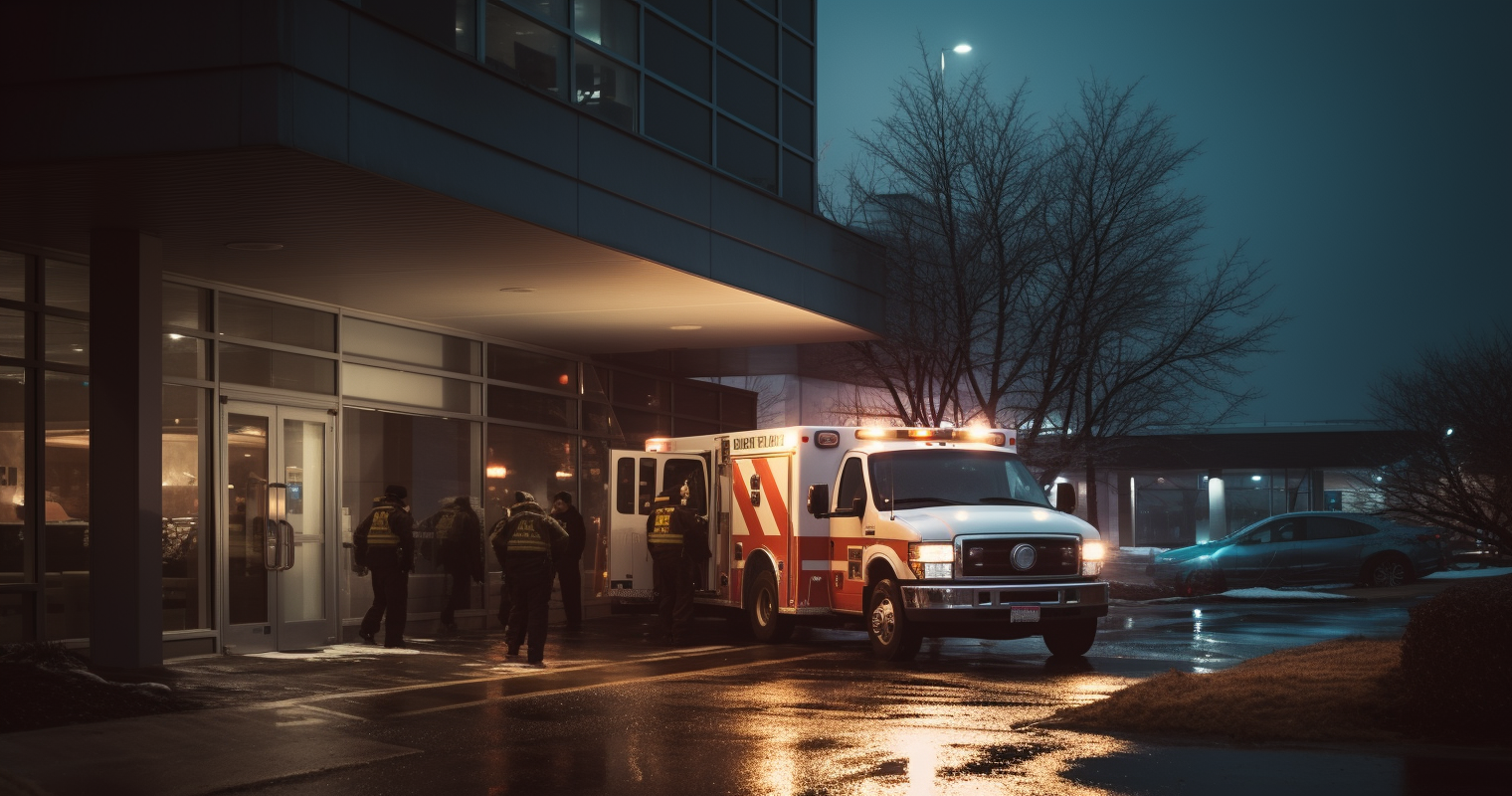
Norway’s emergency services operate on three dedicated numbers: 110 for fire, 112 for police, and 113 for ambulance. All three lines are staffed around the clock. Emergency medical treatment — covering ambulance transport and inpatient hospital stays — is provided at no cost to the patient regardless of nationality, though visitors arriving from outside the EEA may be charged for outpatient consultations and are strongly advised to carry comprehensive travel insurance.
| Item | Details |
|---|---|
| Ambulance (life-threatening) | 113 |
| Police (emergency) | 112 (also 911 from mobile) |
| Fire (emergency) | 110 |
| Urgent (non-life-threatening) medical care | 116 117 (legevakt) |
| Mental health helpline | 116 123 (free, anonymous, as of 2025) |
| In-patient hospital care cost | Free for all patients (as of 2024) |
| Emergency ambulance transport | Free (as of 2024) |
| Out-of-hours GP/legevakt consultation fee | Approx. 240–425 NOK for residents/EEA visitors (as of 2024); non-EEA visitors may pay full cost |
| Annual user fee cap (residents) | 3,165 NOK, after which an exemption card is issued (as of 2024) |
What are the emergency numbers in Norway — and are there separate numbers for police, fire, and ambulance?
Rather than operating a single catch-all number like the US’s 911 or the pan-European 112, Norway maintains three distinct three-digit lines for its principal emergency services. The numbers are 110 for the fire service, 112 for police, and 113 for ambulance. Each number connects the caller directly to the control centre of the relevant service closest to their location.
Dial 110 if you discover a fire, detect smoke, or require urgent help with a hazardous incident such as a gas leak. Use 112 for police when life or property faces immediate threat, or when a crime is actively under way. Call 113 for the ambulance service in the event of a life-threatening medical emergency — suspected stroke, chest pains, or loss of consciousness, for example.
All three services have the capacity to alert one another and transfer calls between control centres when a situation requires more than one response. If you call 113 but police assistance is also needed, the operator will handle the coordination on your behalf. Because 911 is widely recognised internationally as an emergency number, dialling it from a Norwegian mobile phone is also possible — the call will play a brief recorded message before connecting you to an operator, though this option does not function on all phone lines.
For those who are deaf or hard of hearing, 1412 provides a text-based emergency channel, ensuring that everyone can access urgent help regardless of hearing ability. When the situation is pressing but not life-threatening, 116 117 serves as the national out-of-hours medical helpline — if your regular GP surgery is closed and the problem cannot safely wait until the following day, this number routes you to your local legevakt (urgent care centre).
How do you call for emergency medical assistance in Norway, and what should you expect?
In the event of a medical emergency anywhere in Norway, call 113 from any phone — the call is free of charge. Operators are English-speaking and will despatch an ambulance where necessary. Provide your location as precisely as you can, giving a street address, building name, or a recognisable nearby landmark to help crews reach you as quickly as possible.
Ambulance services in Norway form an integral part of the publicly funded health system, managed by the country’s regional health authorities. Most vehicles carry trained paramedics, and in more sparsely populated rural areas, volunteer first responders often supplement the professional service. Given how widely Norway’s population is dispersed, response times can vary considerably by region, but the emergency system has been designed to deliver care even in isolated locations. When in doubt about whether your situation warrants an emergency call, you are encouraged to call anyway.
The air ambulance network is publicly funded and operated under the oversight of Norway’s four regional health authorities, with day-to-day flying contracted to professional aviation operators within a nationally coordinated framework. Every base runs continuously, 365 days a year, with helicopters crewed by pilots, paramedics, and anaesthesiologists — meaning advanced clinical care can begin while the patient is still en route to hospital.
For situations that are urgent but do not pose an immediate threat to life — a high temperature, a suspected fracture, or a laceration that may need suturing — dialling 116 117 will connect you to the nearest legevakt or out-of-hours urgent care centre. This line is intended for use when your GP practice is closed and your condition cannot be deferred until the next working day. A phone triage by a nurse means you are directed to the right facility before you set off, which can save valuable time.
What should you do in a mental health crisis in Norway?
Norway operates a clearly structured, tiered approach to mental health emergencies. Where a situation is immediately life-threatening, call 113. For less acute circumstances, 116 117 connects you to the out-of-hours medical service — legevakt centres handle both physical and psychiatric presentations, so you do not need to locate a specialist clinic to receive urgent support.
A dedicated mental health helpline is also available on 116 123. Operated by Mental Helse, this free and entirely anonymous service runs around the clock and is open to anyone experiencing emotional distress or a personal crisis. Where a situation deteriorates to the point of requiring urgent intervention, the legevakt provides both immediate medical attention and psychiatric assessment.
Another resource is Kirkens SOS, which offers compassionate, confidential, and free support twenty-four hours a day via telephone and online chat. Their number is 22 40 00 40. A wide range of additional helplines, chat services, and peer support groups where you can share your feelings anonymously and receive guidance are available, and a comprehensive, verified directory of these services is maintained at Helsenorge.no, Norway’s official health information portal.
Norwegian law requires that mental health assessment and treatment be voluntary wherever possible. Involuntary hospitalisation or other compulsory measures are permitted only when strictly necessary, and the legal threshold for their use is high. Children under the age of 16 pay no user fees for any healthcare, and those under 18 are exempt from charges for mental health treatment specifically.
Where can you go for emergency medical treatment in Norway?
The overwhelming majority of Norwegian hospitals are publicly owned. The country has 20 public hospital trusts forming an extensive network capable of delivering acute and specialist medical care. These institutions are supervised by four Regional Health Authorities — Central, Western, Northern, and Southern & Eastern Norway. Admission can occur via GP or specialist referral, or directly through the emergency services.
In life-threatening situations or serious injuries, call 113 immediately. For urgent but non-life-threatening conditions, you may go directly to the emergency department (akuttmottak) of your nearest hospital. The most widely used resource for issues that are pressing but not critical is the 116 117 out-of-hours line, which links you to your local legevakt — the right choice when your GP surgery is shut and you cannot safely wait until it reopens.
The legevakt is particularly well suited to visitors. No appointment is needed, though waiting times can be substantial. You check in at reception, describe your symptoms, and a nurse will triage you and determine how urgently you need to be seen. The clinic is equipped to carry out basic laboratory tests, wound closure, referrals for imaging, and prescription of medication. If staff suspect a serious underlying condition, they will arrange onward referral to hospital.
In major cities, the legevakt is typically centrally located and easy to reach. In smaller towns it may share premises with a municipal health centre. If you are in a rural area and uncertain where to go, ring 116 117 for guidance and directions. Private clinics do exist in the larger urban centres but charge considerably more than the public system. Current hospital and clinic locations can be verified at Helsenorge.no.
Is emergency medical treatment free in Norway — and does it differ for residents versus visitors?
A common misconception is that all healthcare in Norway is entirely free of charge. In reality, the system is heavily subsidised but does involve patient contributions. The key distinction lies between inpatient and outpatient care, and between different categories of patient.
Inpatient treatment in Norwegian hospitals carries no charge for anyone, and emergency ambulance transport is likewise free. Non-emergency patient transport, however, does attract a fee. For outpatient emergency attendances, as of 2024, a consultation at an out-of-hours emergency clinic costs between 240 and 425 NOK depending on the service involved.
Foreign nationals resident in Norway who are enrolled in the National Insurance Scheme hold the same healthcare entitlements as Norwegian citizens and pay the same standard user fees. Visitors from EEA countries who carry a valid European Health Insurance Card are entitled to access healthcare at resident rates during a temporary stay in Norway.
Nationals of countries outside the EU and EEA are entitled to emergency care, but will generally not benefit from subsidised rates. Helsenorge accordingly advises such travellers to hold health insurance. Residents enrolled in the National Insurance Scheme benefit from an annual expenditure ceiling: once a patient has paid more than 3,165 NOK in qualifying healthcare costs within a calendar year (as of 2024), an exemption card is issued that entitles them to free treatment for the remainder of that year. Always consult Helsenorge.no to confirm the current cap, as the figure is revised periodically.
Do expats need travel or health insurance to access emergency care in Norway?
Whether insurance is necessary depends primarily on your residency status and your country of origin. Foreign nationals living in Norway who have enrolled in the National Insurance Scheme enjoy the same healthcare rights as Norwegian citizens. Contributions are ordinarily deducted through your employer’s payroll, but until formal registration is complete, your coverage under the scheme is not yet in place.
Visitors arriving from outside Europe are entitled to emergency medical care, but will be required to cover the full cost of treatment unless their country has a specific agreement with Norway. Without such an agreement, there is no mechanism for reimbursement and no subsidy towards medical evacuation or repatriation. This makes private travel insurance essential for non-European visitors. A suitable policy should cover medical expenses, hospitalisation, prescriptions, and repatriation home, in addition to the more routine protection against lost belongings or cancelled travel.
Norwegian itineraries frequently include remote Arctic retreats or coastal settlements accessible only by ferry or light aircraft. In the event of a serious injury or medical emergency in such locations, evacuation coverage ensures that the patient can be transferred safely to an appropriate medical facility. The cost of such transfers can be very substantial, so policies offering generous Medical Evacuation cover are strongly advisable.
EEA visitors holding an EHIC should note that the card is not a replacement for travel insurance. If you fall ill and your condition is not deemed urgent, your treatment may not be covered in the absence of separate insurance. For this reason, European travellers are also encouraged to purchase a comprehensive travel insurance policy alongside their EHIC.
Are there bilateral health agreements that entitle some foreign nationals to reduced-cost treatment?
Yes. Norway participates in a number of reciprocal healthcare arrangements. The most significant is the European Health Insurance Card (EHIC) scheme. Citizens of EEA member states and Switzerland may access urgent medical care in Norway on the same terms as Norwegian residents. Presenting a valid EHIC at the point of care — whether at a GP surgery, out-of-hours clinic, or hospital — is the mechanism through which this entitlement is exercised and demonstrates your eligibility for treatment at resident rates during a temporary visit.
Beyond the EEA, a limited number of bilateral arrangements are also in force. Australia, for instance, has a reciprocal healthcare agreement with Norway. Certain Australian citizens may qualify for reimbursement of costs associated with urgent medical treatment, childbirth, oxygen therapy, or dialysis. The precise scope and terms of these bilateral deals change over time, so nationals of any country should verify their current entitlements with their home country’s health authority or with the Norwegian Health Economics Administration (HELFO) before travelling.
Citizens of the other Nordic countries — Denmark, Sweden, Finland, and Iceland — benefit additionally from the Nordic Convention on Social Security, which grants them broadly equivalent access to Norwegian healthcare as Norwegian nationals themselves. If your country is neither in the EEA nor party to a separate bilateral agreement with Norway, you should assume that you will bear the full cost of any treatment beyond strictly emergency inpatient care, and ensure your travel or international health insurance policy covers this exposure.
How does Norway’s emergency healthcare system compare to systems expats may be familiar with?
Norway’s healthcare model is most closely aligned with a fully public, tax-funded structure — broadly comparable in principle to the NHS in the United Kingdom or Medicare in Australia — but with one nuance that surprises many newcomers: despite Norway’s reputation as an advanced welfare state, healthcare is not entirely free. The system is heavily subsidised and patients pay regulated contributions, known as eigendelar, when using public health services.
This contrasts sharply with systems where virtually all care must be paid for upfront and then reclaimed through an insurer — as is typically the case in the United States. For emergency hospital admissions specifically, all immediate care costs are met, meaning you will not be presented with a bill before treatment begins. Norway consistently achieves high scores in international healthcare performance assessments, and the state funds the vast majority of the expenses a patient would otherwise bear.
The great majority of Norwegian hospitals are in public ownership, and private hospitals do not provide primary care. Arriving at an emergency department therefore feels much like attending any Western European public facility: you are assessed, treated, and charged a modest regulated fee — not asked to verify your insurance coverage before being seen. That said, Norway’s high-calibre system is not cost-free for tourists or non-citizens, and certain private facilities may request payment before providing non-emergency services.
For expats who come from mixed public-private systems — such as France or Germany, where statutory insurance funds pay a defined proportion of all healthcare costs — Norway’s framework may feel more streamlined at the point of use but more involved to understand in terms of residency-based eligibility. The fundamental practical principle remains: in a genuine emergency, treatment comes first and billing comes afterwards.
What emergency services exist beyond medical — how do police and fire services work in Norway?
The emergency number for police is 112, and should be used whenever life or property is under immediate threat or a crime is actively taking place. For non-urgent police matters — reporting an incident that has already concluded, filing a lost property report, or seeking general advice — you can contact your local police station directly. The non-emergency police number is 02800 (as of 2025; verify current details at politiet.no).
Norway’s police service (Politiet) operates as a single national organisation, unlike countries where law enforcement is divided across municipal, regional, and federal tiers. A unified national command structure means coordination between forces is seamless. Expats who have previously lived in countries where officers are routinely and visibly armed may notice that Norwegian police officers carry firearms but tend to do so less conspicuously as a matter of standard practice — the general policing style is measured. All standard police powers nonetheless apply in full.
The fire emergency number is 110. Call it if you discover a fire, smell smoke, or need urgent assistance with a hazardous situation such as a gas escape. Calls are routed to the nearest of 22 operation centres across the country. The fire service’s responsibilities extend beyond extinguishing fires to include extricating people from severely damaged buildings, vehicles, or structures, and responding to road traffic incidents and other rescue operations.
Norway’s extended coastline, expansive mountain plateaus, and severe Arctic climate create challenges that are distinctive compared with many other countries. When accidents occur at sea, on the mountains, or in remote communities, the response draws on a tightly coordinated search and rescue (SAR) framework. The air ambulance frequently supports rescue operations alongside police, fire services, and volunteer organisations. Dialling 112 from a remote area will connect you to a coordinated response that can mobilise mountain rescue teams and the coastguard as required.
Are there country-specific emergency risks in Norway — and what official warning systems exist?
Norway’s physical geography produces a risk landscape that may differ considerably from what many expats have encountered before. The country’s long coastline, broad mountain plateaus, and harsh Arctic climate all generate hazards specific to the region. The principal natural risks include avalanches, flooding, landslides, severe winter storms, and — particularly in the north — extreme cold and extended periods of polar darkness. Earthquakes occur occasionally, though they are relatively infrequent.
Norway runs a national hazard warning platform called Varsom.no (varsom.no), which delivers real-time avalanche, flood, and landslide alerts across the country. This service is operated jointly by the Norwegian Water Resources and Energy Directorate (NVE) and the Norwegian Meteorological Institute. The Meteorological Institute also runs yr.no, providing detailed weather forecasts and storm warnings, including colour-coded risk indicators that signal when outdoor conditions are hazardous enough to warrant staying indoors.
National emergency preparedness is coordinated by the Norwegian Directorate for Civil Protection (DSB), which publishes guidance for the public on how to respond to a wide range of emergency scenarios at sikkerhverdag.no. Norway has no significant history of civil unrest, and the terrorism risk is assessed as low, though national preparedness measures remain in place. No vaccinations are mandatory for entry to Norway, but standard immunisations are recommended. Tick-borne encephalitis (TBE) poses a risk in forested and coastal regions, especially during spring and summer — those planning to relocate should consult a travel health clinic in advance.
What should expats do to prepare for emergencies before they arise in Norway?
Taking steps before an emergency occurs is far more effective than attempting to navigate an unfamiliar system under stress. Below is a recommended step-by-step checklist for expats settling in Norway.
- Register with your home country’s embassy or consulate. Most governments offer a registration service — such as the US STEP programme, the UK’s FCDO registration, or equivalent schemes — that allows your government to reach you if a national or regional emergency occurs. Locate your nearest embassy through your home country’s foreign affairs ministry website.
- Enrol in the Norwegian National Insurance Scheme (Folketrygden). Once you register in the Population Registry and are issued a personal identity number, you will also be assigned a GP. Complete this as soon as possible after arrival rather than waiting until you need medical attention.
- Register with a fastlege (GP). All residents registered as living in Norway are entitled to a named general practitioner (fastlege), regardless of employment status. GP registration can be managed through Helsenorge.no.
- Take out comprehensive health and travel insurance. Even residents entitled to public healthcare can benefit from private cover, which can reduce waiting times and extend protection to services not included in the public system, such as dental emergencies and repatriation.
- Store key emergency numbers in your phone. At a minimum: 110 (fire), 112 (police), 113 (ambulance), 116 117 (legevakt / urgent care), and 116 123 (mental health helpline). Also save your GP’s contact details and the address of your nearest legevakt.
- Bookmark the official warning services. Subscribe to alerts from varsom.no for natural hazard warnings, and check yr.no for weather forecasts and storm alerts before outdoor activities or journeys.
- Carry identification and insurance documentation. Have your passport, travel insurance details, and a payment card accessible, as visitors typically pay at the point of care and claim reimbursement afterwards. EEA citizens should keep their EHIC card with them at all times.
- Learn a few basic Norwegian emergency phrases. While operators are English-speaking and trained to assist international callers, familiarity with words such as brann (fire), ambulanse (ambulance), and legevakt (urgent care) can help you communicate quickly under pressure.
Where can expats get official and up-to-date emergency information for Norway?
The primary official source for healthcare and emergency number information is Helsenorge — Norway’s national digital health portal — available in English at helsenorge.no. The site covers hospital locations, user fee schedules, GP registration procedures, and practical guidance on when to call 113 versus 116 117.
For billing enquiries, reimbursement claims, and questions about bilateral health agreements, the relevant authority is the Norwegian Health Economics Administration (HELFO), accessible at helfo.no. HELFO administers the health-related component of the National Insurance Scheme and can clarify your entitlements as a foreign national or newly arrived resident.
Natural hazard warnings are published at varsom.no (covering avalanche, flood, and landslide risks) and at yr.no (covering weather, including storm and extreme cold alerts). Public emergency preparedness guidance is provided by the Norwegian Directorate for Civil Protection (DSB) at sikkerhverdag.no. Police information and guidance can be found at politiet.no.
Many embassies and consulates publish country-specific travel advisories covering Norway that address current political and security conditions, entry requirements, and the forms of consular assistance available to their nationals in a crisis. Consulting both official Norwegian government sources and your home country’s foreign affairs guidance will give you the most thorough and reliable picture.
Frequently Asked Questions
What is the single most important number to memorise in Norway?
The three core emergency numbers are 110 for fire, 112 for police, and 113 for ambulance. If you can commit only one to memory, 113 will connect you to the ambulance service, whose operators are also able to coordinate responses from other emergency services on your behalf.
Will the emergency operator understand me if I don’t speak Norwegian?
Yes. Norway has exceptionally high levels of English proficiency, and emergency call handlers are specifically trained to assist callers in languages other than Norwegian. State your emergency clearly first, then provide your location. Operators will stay on the line and guide you through what to do while help is on its way.
Can I go directly to a hospital emergency department without calling first?
Yes. For urgent but non-life-threatening conditions, you may walk in to the nearest emergency department (akuttmottak) or legevakt without an appointment, though waiting times can vary. You check in at the reception desk, describe your symptoms, and a nurse will triage you to determine how quickly you need to be seen. For genuinely life-threatening emergencies, always call 113 rather than attempting to travel to hospital yourself.
Will I be turned away if I have no insurance and can’t pay upfront?
No. Inpatient treatment at Norwegian hospitals is provided free of charge to everyone, and emergency ambulance transport is also free. You will not be refused emergency treatment on the grounds of inability to pay. That said, patients who are not covered by the National Insurance Scheme may be billed for outpatient services once they have been treated, so having appropriate insurance in place is strongly advisable.
Does the EHIC cover everything in Norway?
The EHIC is not a substitute for travel insurance. While it entitles EEA citizens to medically necessary treatment at resident rates, it does not cover repatriation, non-urgent care, or treatment at private facilities. All travellers from Europe should carry a comprehensive travel insurance policy alongside their EHIC to ensure they are fully protected.
Is there a risk of avalanches or flooding where I’m living in Norway?
This depends on your specific location. Mountainous and fjord areas face elevated avalanche and landslide risk, while low-lying coastal and riverside areas are vulnerable to flooding, particularly during spring snowmelt. Consult varsom.no for real-time hazard warnings relevant to your area, and review the DSB’s preparedness information at sikkerhverdag.no to understand local risks before you settle.
What should I do if I have a mental health emergency in the middle of the night?
If the situation is immediately life-threatening, call 113. For less acute crises, call the out-of-hours medical line on 116 117. You can also reach 116 123 at any hour — this dedicated mental health helpline is free, entirely anonymous, and staffed around the clock by Mental Helse for anyone experiencing emotional distress or a personal crisis.
How do I find my nearest legevakt (urgent care clinic)?
Every Norwegian municipality is required to provide a round-the-clock out-of-hours medical service. Dialling 116 117 will put you through to the service covering your area, and the operator will direct you to the nearest open legevakt. You can also locate facilities using the clinic and hospital search function on Helsenorge.no.