
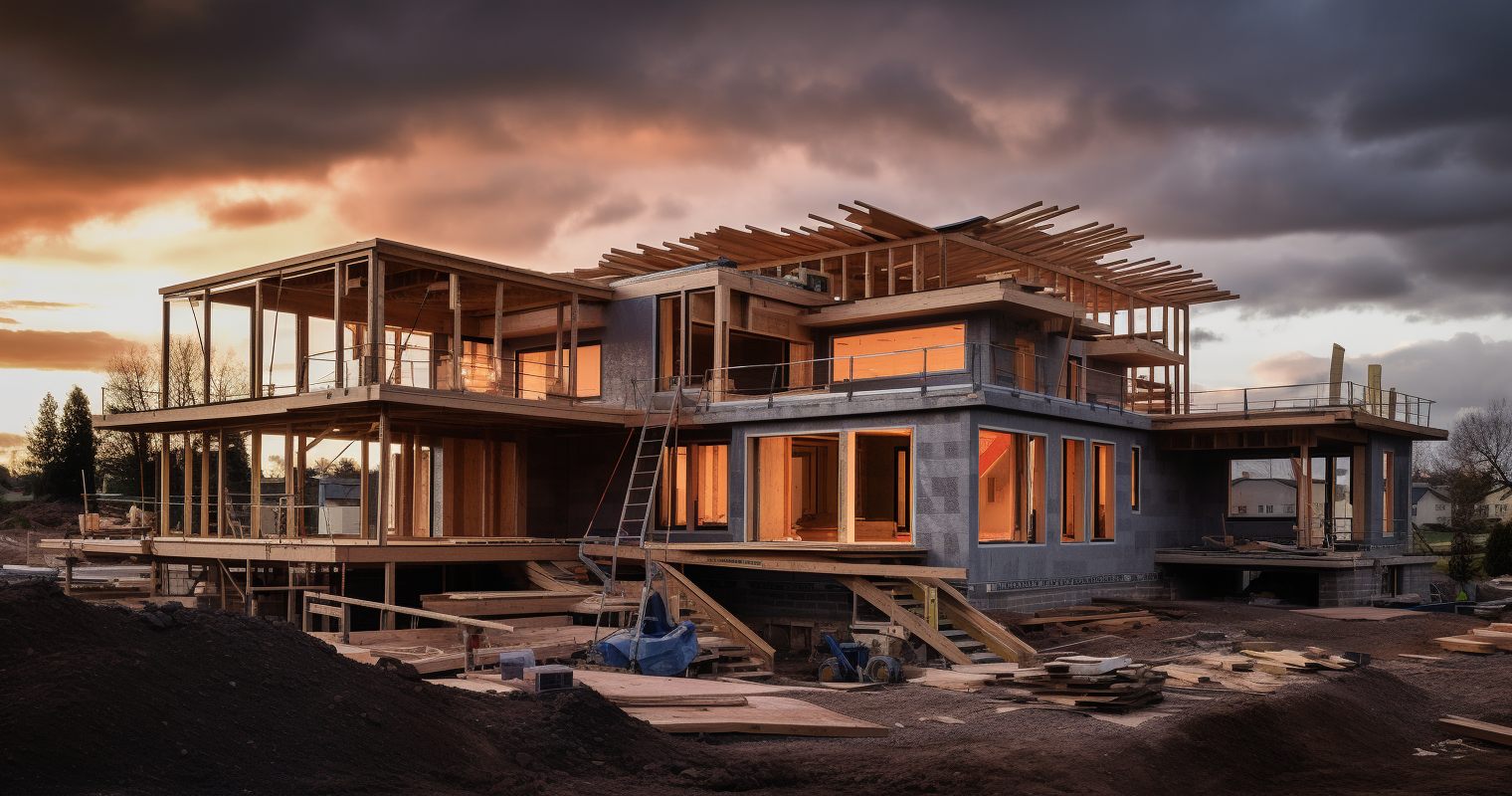
Undertaking a building or renovation project in Panama means navigating a permit system that spans both local municipalities and the national Ministry of Housing and Land Management (MIVIOT). Construction activity is governed by national legislation, and both architects and engineers must hold valid licences to practise. In most respects, foreigners enjoy property rights comparable to those of Panamanian citizens, with the notable exception of a constitutionally imposed restriction near international borders. Thorough due diligence ahead of any purchase is indispensable.
| Item | Details |
|---|---|
| Planning permission authority | Municipal Directorate of Works and Constructions; national oversight by MIVIOT |
| Municipal permit cost (as of 2024) | Typically 1–2% of declared construction cost; varies by municipality |
| Typical permit processing time (as of 2024) | 1–6 weeks depending on project complexity and agency; environmental studies add 1–4 months |
| Architect/engineer licensing body | Sociedad Panameña de Ingenieros y Arquitectos (SPIA) / Junta Técnica de Ingeniería y Arquitectura |
| Foreign ownership rights (as of 2026) | Foreigners may own titled property in their own name; restricted within 10 km of international borders |
| Heritage authority | Dirección Nacional del Patrimonio Histórico, Instituto Nacional de Cultura (INAC) |
Do you need planning permission to build or renovate a property in Panama?
The vast majority of building work in Panama requires planning permission before it can proceed. This encompasses new builds, significant extensions, structural modifications, and changes of use. Purely cosmetic improvements — repainting walls, swapping out fixtures, or non-structural internal upgrades — generally fall outside formal permit requirements, but any work that affects a building’s structure, footprint, or external appearance will almost certainly require authorisation. Because thresholds differ between districts, it is always prudent to check with your local municipality before any work begins.
Agreement No. 281 of 6 December 2016 establishes that, prior to commencing any construction activity, a permit must be secured from the Directorate of Works and Constructions of the Municipality of Panama, without prejudice to any other authorisations the project may require. Each municipality issues these permits according to its own regulations, though they broadly follow the spirit of this agreement. Consequently, the precise requirements, forms, and fee schedules will differ depending on whether the project is located in Panama City, Boquete, Coronado, or a more remote district.
Unlike centralised planning frameworks — such as the UK’s national planning policy or Canada’s provincial planning acts — Panama operates a system that is fundamentally municipality-led. MIVIOT establishes overarching national policy and zoning frameworks, but the day-to-day issuance of permits is handled at the level of each individual municipality.
The step-by-step process for securing planning or building permission in Panama is as follows:
- Engage a licensed architect or engineer. For any substantial build, hiring a licensed architect is essential. They can adapt your designs to comply with Panama’s construction codes — which emphasise concrete block construction for seismic resilience — and will prepare the technical drawings and supporting documentation your application requires.
- Confirm zoning classification. Before lodging any application, verify that your planned land use is consistent with the applicable zoning designation. MIVIOT is the governmental body responsible for approving the zoning of real estate developments at the national level.
- Submit plans to the municipality. File your completed application — comprising architectural drawings, a site survey, and evidence of title — with the Directorate of Works and Constructions at your local municipal office. Certain municipalities now accommodate electronic submissions; check with your local office to confirm the preferred method.
- Secure MIVIOT approval where required. Pre-project plans can be submitted to MIVIOT for zoning clearance, a process that generally takes one to two months. Note that this stage ordinarily cannot be initiated until after the property has been acquired.
- Submit to the Ministry of Public Works (MOP) where applicable. The MOP (Ministerio de Obras Públicas) reviews and approves road access, drainage schemes, and pavement works. Typically, once MIVIOT has given its approval, MOP follows suit. Road and drainage plans must be prepared by a qualified engineer to meet MOP’s specific technical standards.
- Obtain environmental clearance if required. Projects of a larger scale or in ecologically sensitive locations will need environmental review before work can commence (see the Permits section below for detail).
- Pay the municipal construction tax. Fee structures vary by municipality; in general, municipal construction permit costs range from 1 to 2% of the declared construction cost (as of 2024). Always confirm the current figure directly with your municipality before budgeting, as these amounts are subject to change.
- Receive your permit and commence construction. Once designs are finalised and all approvals obtained, building permits from local authorities can be collected and construction may begin. The time required to assemble all permits should be built into your project schedule from the outset.
It is important to verify current fees and documentation requirements with your specific municipal authority, since rules are periodically revised. The MIVIOT official website provides national-level guidance, while your local Alcaldía (mayor’s office) handles municipal-level applications.
What are the rules around listed buildings, conservation areas, and heritage protection in Panama?
Panama maintains a formal system of heritage protection for historic buildings and areas, although it differs in scope and enforcement from regimes such as the UK’s listed building framework or France’s Secteurs Sauvegardés. The principal authority is the Dirección Nacional del Patrimonio Histórico, a division of the Instituto Nacional de Cultura (INAC). This body is charged with authorising and overseeing any construction, renovation, restoration, or remodelling activity within or immediately adjacent to designated historic monuments and zones.
The construction, rehabilitation, restoration, remodelling, and expansion of property — whether for commercial or residential use — within historic monuments where such activity is permitted is subject to specific regulatory controls. The National Directorate of Historic Patrimony of the National Institute of Culture is the competent authority for authorising and regulating all work in these settings, with the aim of safeguarding their historical and cultural significance.
The most prominent example of a formally protected area is Casco Viejo (also referred to as Casco Antiguo or San Felipe) in Panama City, a UNESCO World Heritage Site. Any work within this zone — whether structural or cosmetic in nature — requires prior sign-off from INAC’s heritage directorate, typically in addition to standard municipal permits. Non-compliance can result in fines, a requirement to undo the works carried out, and in serious cases, criminal proceedings.
Panama also designates national parks and environmentally protected zones within which construction is tightly restricted or entirely prohibited. These areas fall under the jurisdiction of the Ministerio de Ambiente (MiAmbiente), the successor to the former ANAM. Before purchasing land or planning any work, prospective buyers should establish whether the property or surrounding land lies within a protected environmental or heritage zone. The INAC website and the MiAmbiente website hold registers of protected areas, and your Panamanian lawyer can conduct an official search before you commit to any transaction.
What permits and licences are required when building or renovating in Panama?
In Panama, the specific permits needed will vary depending on the nature and scale of the construction involved. Various authorisations are required at different stages — before work starts, during the build, and on completion. Beyond the core construction permit from the municipality, the following are typically needed for a substantial building or renovation project:
- Building permit (Permiso de Construcción): Required for the majority of building work, including new construction, structural alterations, and extensions. Issued by the Directorate of Works and Constructions of the relevant municipality.
- Electrical permit: Required for any electrical installation forming part of the building or renovation works. Issued through the municipality, with grid connection coordinated through ETESA or the relevant local electricity distribution company.
- Plumbing permit: Required for any plumbing work carried out in connection with the building or renovation project.
- Environmental Impact Assessment (EIA): The Unified Text of Law 41 of 1 July 1998 (General Environmental Law) sets out the regulatory framework for environmental impact studies relating to construction works. A qualified environmental engineer must conduct this study. Depending on the scale of the project, it may be classified as a Category II assessment. The study itself typically takes approximately one month to complete, with approval from MiAmbiente taking a further three months (as of 2024). Smaller, lower-impact projects may qualify for the simpler Category I process; consult MiAmbiente to determine which category is applicable to your project.
- MOP approval (for road and drainage works): Necessary where the project entails new road access, drainage infrastructure, or connections to public thoroughfares. MOP approval costs are generally modest.
- MIVIOT zoning approval: Required for larger developments to confirm compliance with the applicable zoning designation. MIVIOT approval costs are minimal provided the architectural master plan has been completed.
- Tourism Authority (ATP) approval: Where a project is purely residential and has no tourism component, ATP approval is not required. Where it is needed, ATP approvals are generally straightforward to obtain.
- Occupancy certificate (Permiso de Ocupación): Before a completed building can be lawfully occupied, an inspection of electrical installations and, where present, fire detection and suppression systems must take place. This is typically arranged by the general contractor upon completion of construction.
The requirement for these permits stems from agreements adopted by the municipal authorities in whose territory the construction site is located. These agreements are updated over time to reflect evolving construction practices, adding or removing requirements as necessary. Always confirm the current checklist with your local municipality and MiAmbiente before commencing work. The fees and timescales cited here are indicative as of 2024; verify current figures with the issuing authority before finalising your budget.
How do you find a reliable, trustworthy builder in Panama?
Construction standards in Panama are regulated by both MIVIOT and the National College of Engineers and Architects (SPIA). Any contractor undertaking licensed building work must hold a valid licence from the relevant municipal and national authorities. Before engaging a builder, ask to see their current licence and registration documentation as a matter of course.
Executive Decree No. 2 of 15 February 2008, which governs safety, health, and hygiene in the construction industry, sets out the measures and activities required to prevent risk during the execution of works. Any reputable builder operating in Panama should be thoroughly familiar with these obligations and should carry adequate workers’ compensation and public liability insurance. Always request written proof of insurance before allowing work to begin on your property.
The principal professional and trade association for the construction sector in Panama is:
- Cámara Panameña de la Construcción (CAPAC) — the Panamanian Chamber of Construction. CAPAC represents contractors, developers, and construction industry professionals, and maintains a directory of member companies.
Website: www.capac.org
Address: Vía España, Edificio CAPAC, Panama City, Republic of Panama
Always verify current contact details on the official website, as these may change.
Practical steps for vetting contractors in Panama include:
- Ask for references and inspect completed work. Request the names and contact details of at least three previous clients and, where possible, visit completed projects in person to assess the quality of the work first-hand.
- Insist on a written contract in Spanish (with a certified translation if needed). Standardised construction contracts are not commonly used in private agreements between individuals in Panama. However, as their use is not prohibited, the parties to a private contract are free to adopt standardised clauses, forms, and contracting models as they see fit. Have a local lawyer review any contract before you sign.
- Use staged payments or escrow arrangements. Avoid paying large sums in advance. Structure payment to coincide with defined milestones — foundation, walls, roof, and so on — and withhold a final percentage until all defects have been rectified.
- Verify insurance coverage. Confirm that the contractor holds current public liability and workers’ compensation policies. Obtain the policy number and the insurer’s contact details for your own records.
- Stay alert to risks targeting foreign property owners. Common problems include contractors submitting unrealistically low bids only to demand repeated additional payments once work is underway; unlicensed operators presenting forged or expired credentials; and verbal agreements that cannot subsequently be enforced. Always communicate and agree terms in writing, and engage a local lawyer with construction dispute experience. Panama’s Consumer Protection Agency (ACODECO) accepts and investigates complaints against developers and contractors for false advertising and contractual breaches.
How do you find a qualified local architect in Panama?
Law 15 of 26 January 1959, which regulates the practice of engineering and architecture in Panama, sets out the conditions under which these professions may be exercised — both by individuals and by legal entities. This means that any architect working on a project in Panama, regardless of whether they trained domestically or abroad, must hold a valid licence and be registered to practise under Panamanian law.
Both individual architects and the firms to which they belong must be authorised by the Panamanian Board of Engineering and Architecture. This regulatory function is carried out by the Junta Técnica de Ingeniería y Arquitectura, which operates within the framework of the Sociedad Panameña de Ingenieros y Arquitectos (SPIA).
The primary professional body and regulatory authority for architects in Panama is:
- Sociedad Panameña de Ingenieros y Arquitectos (SPIA)
Website: www.spia.org.pa
Address: Avenida Ricardo J. Alfaro, Panama City, Republic of Panama
Always verify current contact details, telephone numbers, and email addresses on the official SPIA website before making contact, as these are subject to change.
To identify a suitably qualified architect, you can search the SPIA membership directory on their website or seek recommendations through CAPAC. When speaking with prospective architects, prioritise those with proven experience in your type of project — whether residential, rural, historic renovation, or large-scale development — and who have previously worked with international clients. While there is no specific language requirement for architects, on complex projects it is strongly advisable to work with a professional who can communicate clearly in a language you both share, and who has successfully navigated the municipal permit process on numerous occasions.
Architect fees in Panama typically represent 5–10% of the total construction cost (as of 2025). For new builds and projects requiring multiple agency approvals, bringing an architect on board at the earliest possible stage — ideally before the land purchase — can prevent costly problems by identifying planning or zoning issues before they become contractual obligations.
What are the common pitfalls when buying land to build on in Panama?
Acquiring land for development in Panama carries a distinct set of risks and verification requirements that differ from purchasing a finished property. A solid understanding of the land registration and ownership framework is the essential starting point.
In Panama, land can be held either as Titled Property or through a Right of Possession (ROP). Titled Property represents full legal ownership, formally recorded in the Public Registry, and is the most legally secure form of property holding available. Rights of Possession (Derechos Posesorios) are informal claims founded on occupation and use, prevalent in rural areas. They carry considerable legal risk: they are not entered in the Public Registry, can be difficult to convert into full title, and are susceptible to challenge by competing claimants. Foreign buyers should, wherever possible, purchase only titled, registered land.
One of the most costly errors made by foreigners in Panama is paying deposits on properties that have not yet been titled and entered in the Public Registry, which can result in the total loss of funds paid. Before paying any deposit, always confirm that the property has a clean, registered title (escritura pública) at the Registro Público de Panamá.
Key issues to investigate before purchasing land include:
- Zoning and permitted use: Examine the local zoning plan to confirm that the land is appropriate for your intended development. Land classified for agricultural use cannot simply be converted to residential development without formal rezoning — a lengthy process with an uncertain outcome.
- Boundary disputes: Disagreements over boundaries can prove expensive and protracted. Commissioning a boundary survey from a qualified surveyor before exchange is strongly advisable.
- Title history and encumbrances: Verify that the vendor holds unencumbered title and that no ownership disputes exist. Instruct your lawyer to carry out a thorough title search at the Registro Público, looking for any registered mortgages, liens, easements, or legal claims attached to the property.
- Environmental restrictions and flood risk: Consult MiAmbiente to establish whether the land falls within a protected zone, wetland, or flood-prone area. Coastal and riverside plots are particularly likely to be subject to strict development restrictions or to be classified as national maritime zone (Zona Maritimo Terrestre), land that cannot be held in private ownership.
- Utility availability: Establish whether water, electricity, and sewerage services can be connected, and at what cost. In rural locations, connection costs and lead times can be substantial and must be factored into your budget before any purchase is finalised.
- Confirm planning viability before committing: Before exchanging contracts on any land, seek written confirmation — ideally from your architect — that planning permission can realistically be obtained for your intended development. Discovering a fundamental planning obstacle after contracts are signed can be ruinously expensive.
Working with a reputable and experienced local real estate agent or lawyer is essential when acquiring land in Panama. Always use a qualified Panamanian notary (Notario Público) to prepare the purchase deed (escritura pública), and retain a local lawyer — ideally one specialising in property and construction matters — to conduct all due diligence. The Registro Público de Panamá (www.registro-publico.gob.pa) is the official land registry where title status can be verified.
What are the rules around foreign ownership and financing for construction projects in Panama?
As of early 2026, foreigners in Panama benefit from a property ownership framework that is broadly comparable to that enjoyed by Panamanian nationals for most residential real estate. This encompasses the right to purchase, sell, mortgage, and inherit titled property. Panama’s approach in this regard is among the most open in Latin America, and there is no obligation for foreign buyers to hold residential titled property through a locally incorporated company or joint venture arrangement.
As of early 2026, foreigners in Panama may hold titled residential property entirely in their own personal name, without any requirement to involve a local partner or corporate vehicle. This applies equally to titled houses, titled land parcels, and condominium units (propiedad horizontal), all of which can be registered directly in a foreigner’s name at the Registro Público de Panamá.
There is, however, one constitutionally entrenched restriction that exclusively affects foreign nationals: as of early 2026, foreigners are prohibited from owning property within 10 kilometres of Panama’s international borders with Costa Rica or Colombia. In practice, this restriction is most likely to affect foreign buyers considering rural or beachfront land near Chiriquí (on the Costa Rica side) or Darién (on the Colombia side). Always verify the precise distance from the relevant border before proceeding with any transaction in these regions.
Residency status is not a precondition for purchasing property or commissioning construction in Panama. Foreigners may own titled property and engage contractors without needing to be residents. That said, property investment can create a pathway to residency: purchasing property valued at a minimum of $300,000 in Panama City may qualify a buyer for the Qualified Investor Visa under Executive Decree 722, which offers a direct route to Panamanian residency.
Regarding financing, Panama’s mortgage reference rate reached 6.50% in late 2025, meaning foreign borrowers typically encounter interest rates of between 6% and 8% when securing finance for a Panama City property as of January 2026. Construction loans are available to foreigners from Panamanian banks, although lenders typically impose higher deposit requirements, demand proof of income, and require comprehensive source-of-funds documentation — often requiring a deposit of 30% or more from non-residents. Loan-to-value ratios and documentation requirements vary between institutions; the Superintendencia de Bancos de Panamá (www.superbancos.gob.pa) maintains a list of licensed lenders and provides regulatory guidance.
To register property in your own name in Panama, you will generally need your passport, a notarised purchase agreement (escritura pública), and will be subject to anti-money-laundering checks, through which both the notary and the bank may request proof of income and evidence of the source of funds. Ensuring your financial documentation is fully in order before commencing any purchase or construction finance application will help the process proceed smoothly.
What official sources should you consult when planning to build or renovate in Panama?
The institutional landscape in Panama can appear complex, with responsibilities divided between national ministries and individual municipalities. The following are the key bodies and resources to consult at every stage of a building or renovation project. Always check official websites directly for the most current information, since requirements, fees, and contact details are regularly updated.
| Body | Responsibility | Website |
|---|---|---|
| MIVIOT (Ministerio de Vivienda, Ordenamiento Territorial y Asuntos Indígenas) | National housing policy, zoning approval, urban development | www.miviot.gob.pa |
| Your Local Municipality (Alcaldía) | Construction and building permits, municipal zoning, occupancy certificates | Search for your specific municipality online |
| Registro Público de Panamá | Official land registry and title verification | www.registro-publico.gob.pa |
| MiAmbiente (Ministerio de Ambiente) | Environmental permits, protected areas, Environmental Impact Assessments | www.miambiente.gob.pa |
| INAC – Dirección Nacional del Patrimonio Histórico | Heritage protection, listed monuments, historic zones | www.inac.gob.pa |
| MOP (Ministerio de Obras Públicas) | Roads, drainage, public infrastructure approvals | www.mop.gob.pa |
| SPIA (Sociedad Panameña de Ingenieros y Arquitectos) | Architect and engineer licensing, professional register | www.spia.org.pa |
| CAPAC (Cámara Panameña de la Construcción) | Construction industry association, contractor directory | www.capac.org |
| Superintendencia de Bancos de Panamá | Banking and mortgage regulation, licensed lender list | www.superbancos.gob.pa |
| ACODECO (Autoridad de Protección al Consumidor y Defensa de la Competencia) | Consumer protection, complaints about contractors and developers | www.acodeco.gob.pa |
Given that regulations and fee schedules in Panama are subject to frequent revision, and that municipal requirements can differ substantially from one district to another, it is strongly advisable to engage a qualified local lawyer and a licensed architect at the earliest stage of your project. These professionals are best placed to advise on the current requirements applicable to your specific location and project type.
Frequently asked questions: building and renovating in Panama
How much does it typically cost to build a house in Panama?
Construction costs in Panama generally range from $370 to $2,200 per square metre, depending on the location and the materials and finishes selected (as of 2025). Standard concrete block construction in rural areas tends to sit towards the lower end of this spectrum, while premium builds in Panama City or established beach resort areas can reach the upper end. It is advisable to obtain at least three written quotations from licensed contractors and to set aside a contingency of at least 15–20% to cover unforeseen expenditure.
How long does the building permit process typically take in Panama?
Processing times vary considerably according to the complexity and location of the project. A simple residential application in Panama City may secure municipal approval within a few weeks, while larger or environmentally sensitive developments can take considerably longer to work through the system. An environmental impact study typically takes approximately one month to prepare and a further three months to receive approval from MiAmbiente (as of 2024). For planning purposes, allow a minimum of three to six months to assemble all necessary permits before construction is due to commence, and more for complex schemes.
Are building qualifications or licences from other countries recognised in Panama?
A licence or professional qualification obtained outside Panama does not automatically entitle the holder to practise as an architect or engineer in the country. Law 15 of 26 January 1959 governs the conditions under which engineering and architecture professions may be practised in Panama, both by individuals and by firms. Foreign professionals who wish to operate in Panama must have their credentials formally recognised by the Junta Técnica de Ingeniería y Arquitectura and must register with SPIA. In practice, most foreign property owners find it simpler and more expedient to engage Panamanian-licensed professionals rather than pursuing the recognition of overseas qualifications.
What happens if planning rules are breached or construction begins without a permit?
Commencing building work without the requisite permits in Panama can trigger enforcement action by the municipality, including stop-work orders, mandatory removal of unauthorised structures, and financial penalties. Within designated heritage zones, the consequences can be more severe. Developers may face fines equivalent to 1% of the total project value for breaches of advertising and sales regulations, and comparable financial penalties apply to illegal construction activity. While it is sometimes possible to regularise unpermitted work retrospectively, the process is costly, time-consuming, and by no means guaranteed to succeed. The only reliable approach is to secure all permits before any work begins.
Do I need to speak Spanish to manage a building project in Panama?
All official permits, contracts, and legal documentation in Panama are in Spanish. Although many professionals in Panama City — including architects, lawyers, and some contractors — are proficient in other languages, all formal paperwork must be in Spanish and executed before a Panamanian notary. If your Spanish is limited, it is essential to work with a bilingual lawyer and architect, and to have all contracts professionally translated before signing. Never rely on informal translations for legally binding documents.
Can I get a local mortgage or construction loan as a foreign national?
Panama’s mortgage reference rate reached 6.50% in late 2025, which means that foreign borrowers typically face interest rates of between 6% and 8% when financing property in Panama City as of January 2026. Construction loans are available to foreign nationals from Panamanian banks, but lenders generally require a larger deposit, documentation of income, and detailed evidence of the source of funds. Non-residents may find it more straightforward to arrange financing through international lenders or through developer-structured finance packages offered on new-build projects.
What is the difference between titled land and a Right of Possession (ROP) in Panama?
Titled Property in Panama represents full legal ownership formally recorded in the Public Registry and is the most secure form of land holding available. A Right of Possession (ROP) is an informal claim arising from occupation and use of land, and is common in rural and coastal regions. ROP land is considerably riskier for foreign buyers: it cannot easily be mortgaged, conversion to full title can be difficult or impossible to achieve, and the legal protection it affords is weaker than that offered by registered title. Independent legal advice should always be sought before acquiring any land held on the basis of a Right of Possession.
How do I resolve a dispute with a contractor in Panama?
If a disagreement arises with a contractor, the first step should be to attempt resolution through written correspondence, citing the specific provisions of your signed contract. Should that prove unsuccessful, a formal complaint can be filed with ACODECO (Panama’s Consumer Protection Authority) for matters involving misleading advertising or breach of contract, or civil proceedings can be commenced through the Panamanian courts. For more substantial disputes, resolution through a recognised arbitration body may be both faster and more cost-effective than litigation. Instructing a local lawyer with construction dispute experience from the outset — and ensuring your contract contains an explicit dispute resolution mechanism — is the most effective safeguard against costly disagreements further down the line.