
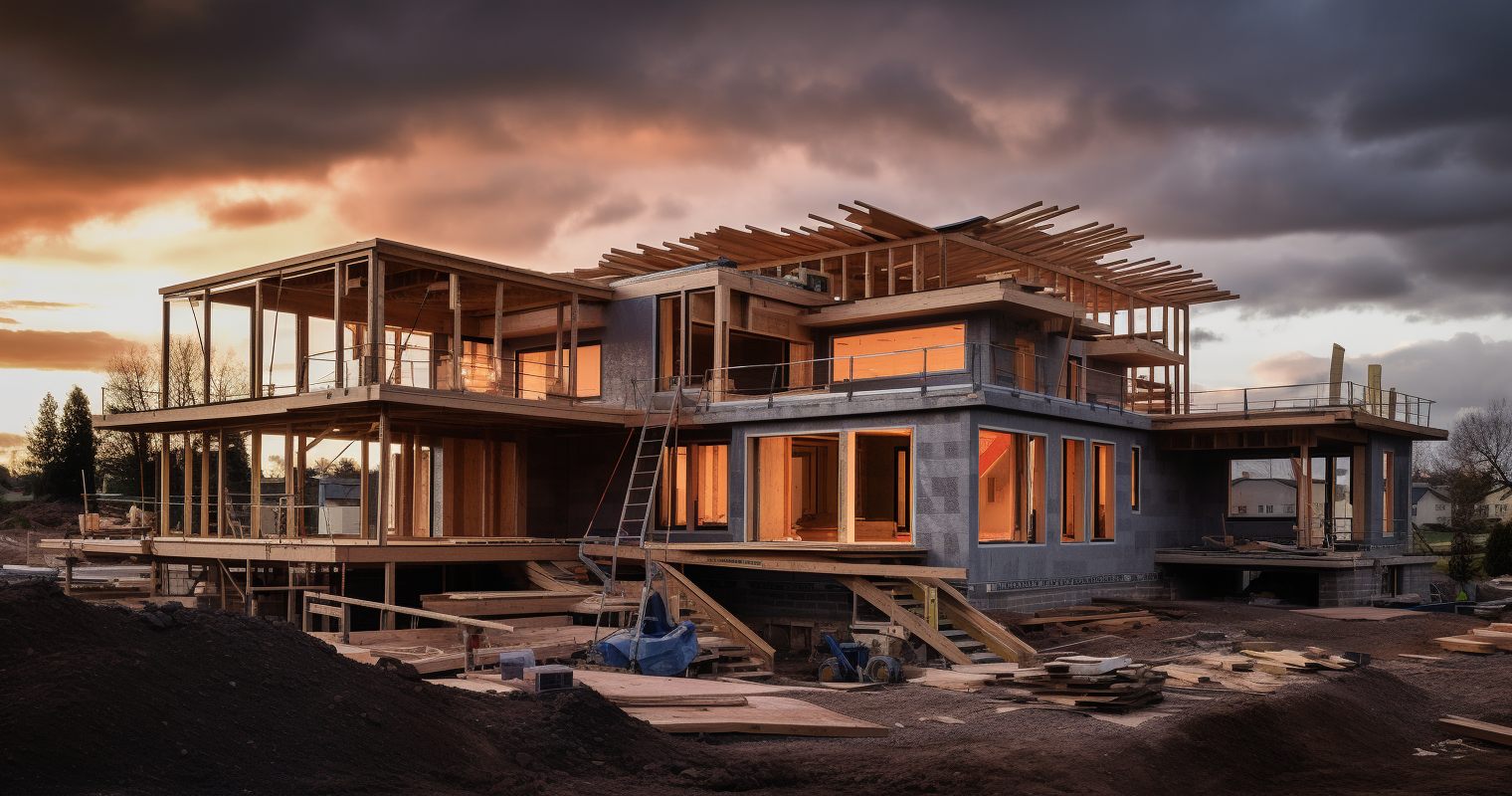
Any significant construction activity in Peru demands a licencia de edificación (building permit) issued by the district municipality where your property sits. The sector is governed at the local level, with technical standards established nationally by the Ministry of Housing, Construction and Sanitation. In most respects, foreign nationals enjoy the same rights as Peruvian citizens when it comes to land ownership and commissioning construction work, though one important restriction applies in zones close to international borders.
| Item | Details |
|---|---|
| Building permit authority | District municipality (municipalidad distrital) where the property is located |
| Typical permit processing time | Approximately 45 days for standard residential applications (as of 2024; verify with your municipality) |
| National building code | Reglamento Nacional de Edificaciones (RNE), approved by Supreme Decree No. 011-2006-VIVIENDA and amendments |
| Heritage authority | Ministerio de Cultura del Perú — governs all Patrimonio Cultural de la Nación |
| Land registry | SUNARP (Superintendencia Nacional de los Registros Públicos) |
| Foreign ownership restriction | Foreigners may not own property within 50 km of an international border without special state authorisation (as of 2026) |
Do you need planning permission to build or renovate a property in Peru?
Peru’s equivalent of planning permission is the licencia de edificación (building licence). This authorisation must be secured before any construction begins, and all projects must satisfy the technical requirements contained in the National Building Regulation (Reglamento Nacional de Edificaciones), which was approved under Supreme Decree No. 011-2006-VIVIENDA and subsequently amended by the Ministry of Housing. New builds, significant extensions, and material structural alterations all fall within the scope of this requirement.
Routine cosmetic works — repainting interior walls, swapping out floor tiles, or installing new kitchen fittings without touching the structure — generally fall below the permit threshold. However, any work that modifies the structure, footprint, height, or designated use of a building will almost invariably need a licence. If you have any doubt about whether your intended work crosses that line, speak to your local municipalidad distrital before picking up a tool, since the definition of what counts as “minor” can differ from one district to another.
District municipalities are responsible, within the jurisdictional zoning limits set by provincial municipalities, for issuing building, demolition, and occupation permits. Because this system is decentralised, the rules and procedures can vary meaningfully between districts. It is therefore vital to approach the specific municipality that has jurisdiction over your property, rather than assuming uniform rules apply across the country.
Unlike the situation in some countries — such as England, which has a centralised national planning portal — Peru’s permit system is administered almost entirely at the local level. No single national online platform handles permit submissions; every municipalidad distrital operates its own procedures and documentation requirements.
Step-by-step application process
- Obtain a Certificado de Parámetros Urbanos y Edificatorios. Before lodging a building licence application, you must first obtain a Certificate of Urban Parameters (Certificado de Parámetros Urbanos). This document sets out the characteristics of the land and the standards you must comply with, including required setbacks, maximum floor area ratios, permitted building height, and approved land use.
- Engage a licensed architect or engineer. Plans must be drawn up and signed by a registered professional. Your architect will produce architectural, structural, and technical drawings in conformity with the Reglamento Nacional de Edificaciones.
- Submit the application to your district municipality. Lodge the building application with the local municipality and await its decision, which typically arrives within around 45 days (as of 2024). Upon approval, the municipality will issue the building permit.
- Respond to any requests for additional information. The municipality may ask for clarifications or supplementary documents during its review. Your architect or a local planning specialist can assist with managing these requests promptly.
- Receive your licence and begin construction. All work must proceed strictly in accordance with the approved plans. Municipal inspectors may visit the site at various stages during construction.
- Apply for a conformidad de obra (certificate of completion). Once construction is finished, you must request an official inspection to confirm that the completed work matches the approved plans. This certificate is a prerequisite for registering the property with SUNARP.
Permit fees are set by individual municipalities and are ordinarily calculated as a proportion of the declared construction value. Amounts vary considerably depending on the district and the size of the project — always confirm the current fee schedule directly with your municipalidad, as figures are subject to regular revision. If your application is refused, you may appeal the decision, and it is advisable to enlist the support of a professional architect or planning consultant to navigate that process.
Where land is undeveloped (non-urban), a development licence must be obtained before a building permit can be applied for. Whether development is even permitted depends on whether the provincial municipality has designated the land as suitable for development. If it has, an urban development licence must be sought to formalise the conversion of the rural parcel into an urban one — a process that involves creating access routes and enabling water supply, electricity, and other infrastructure. This step is frequently overlooked by buyers acquiring agricultural or rural plots, often to their significant cost.
What are the rules around listed buildings, conservation areas, and heritage protection in Peru?
Peru’s archaeological and colonial legacy is extraordinarily rich, and the legal framework protecting it is both expansive and rigorously enforced. Rather than operating a system of individually designated buildings comparable to those found in the UK or Australia, Peru works under the overarching concept of the Patrimonio Cultural de la Nación (Cultural Heritage of the Nation).
The Peruvian Constitution establishes that archaeological ruins, monuments, bibliographic and archival materials, artistic objects, and documents of historical value — whether expressly declared as cultural assets or provisionally presumed to be so — constitute the cultural patrimony of the nation. This protection applies regardless of whether the property in question is privately or publicly owned, and the state is obligated to safeguard it. The scope of this protection is notably wide and carries considerable legal force.
The 1993 Constitution and Law No. 28296 (the General Law of the Cultural Heritage of the Nation) together form the current legislative basis for cultural property protection. They affirm that cultural heritage belongs to the nation while simultaneously guaranteeing private ownership rights over such property and encouraging private-sector involvement in conservation.
Responsibility for protecting cultural heritage in Peru rests with the Ministry of Culture (Ministerio de Cultura del Perú). This body is the essential authority to consult if you are purchasing or developing a property that may be located near, or may form part of, any protected site or structure. Its website is www.gob.pe/cultura.
Protection of land categorised as cultural property extends to both the surface and the subsurface. Any development or change in use affecting land that constitutes cultural property requires prior approval from the national authority responsible for cultural matters — a function that now sits within the Ministry of Culture. In practical terms, if your land falls within or borders an archaeological zone, a historic colonial district, or any other protected area, you must secure Ministry of Culture authorisation before beginning any construction or renovation — and this approval process is entirely separate from your municipal building licence.
The Penal Code provides that exploration, excavation, or removal of items found in pre-Hispanic archaeological areas without the required authorisation is a criminal offence, punishable by imprisonment and a fine, along with asset seizure and civil compensatory obligations. Criminal sanctions equally apply to anyone who destroys or illegally removes items forming part of the cultural patrimony. These are not trivial administrative penalties — the consequences of violating Peru’s heritage rules can be extremely serious.
Before purchasing any property — particularly in cities such as Cusco, Trujillo, Arequipa, or Lima’s historic centre, all of which encompass significant protected zones — commission an independent search of the Ministerio de Cultura‘s registers and ask your notary to verify the heritage status of both the property and the surrounding land. Cross-reference the Ministry of Culture’s national register at www.gob.pe/cultura with SUNARP records to identify any registered encumbrances relating to cultural heritage.
What permits and licences are required when building or renovating in Peru?
The building licence issued by your district municipality is the principal permit, but it is rarely the only approval a project will require. The full range of consents depends on the scale, location, and character of what you intend to build or alter.
Environmental regulation affecting buildings and structures — including the construction phase — and land use is directed at the national level through the Ministry of Environment, the Ministry of Housing, and, for commercial developments such as shopping centres, the Ministry of Production. For most private residential projects, environmental obligations are less demanding than for large-scale commercial or industrial schemes.
Depending on the scale of a project, it may be necessary to carry out an Environmental Impact Assessment (Estudio de Impacto Ambiental — EIA). This study evaluates the potential effects of construction on the surrounding environment and is obligatory for larger developments. The EIA is submitted to the Ministerio del Ambiente (Ministry of Environment): www.gob.pe/minam.
For certain types of projects, environmental certification is a condition that must be satisfied before a building permit will be granted. Clarify with your municipality at the very start of the process whether your specific project will attract this requirement, since obtaining it adds both cost and time to the pre-construction phase.
Some projects also require permits relating to basic services — water supply, electricity, and sanitation — as well as safety approvals. Connection to public utilities typically involves separate applications to the relevant service providers: water and sanitation connections through the appropriate water company (such as SEDAPAL in Lima) and electricity connections through the regional distribution company.
Where any existing structure is to be demolished, a separate demolition licence (licencia de demolición) is also required. This is issued by the same district municipality. Ownership of the land does not automatically confer the right to pull down structures on it without this additional consent.
Fire safety approval and structural engineering certification are incorporated within the building permit process itself: the Reglamento Nacional de Edificaciones sets mandatory technical standards covering fire safety, seismic resilience (a particularly significant consideration given Peru’s earthquake exposure), and structural performance. Your architect and structural engineer are responsible for certifying compliance in the plans they submit to the municipality. Always check current permit fees and processing times directly with your municipalidad distrital, since these are determined locally and reviewed periodically.
How do you find a reliable, trustworthy builder in Peru?
Construction standards in Peru are governed by the Reglamento Nacional de Edificaciones, and the national body responsible for overseeing housing and construction policy is the Ministerio de Vivienda, Construcción y Saneamiento (Ministry of Housing, Construction and Sanitation). The sector’s principal industry association is CAPECO (Cámara Peruana de la Construcción) — the Peruvian Chamber of Construction — which represents contractors, developers, and suppliers nationwide and provides a useful starting point for identifying established firms.
- Website: www.capeco.org
- Address: Av. Víctor Andrés Belaúnde 147, Torre Real 6, Piso 4, San Isidro, Lima 15073, Peru
- Phone: +51 (1) 230-2700
When assessing a prospective contractor, apply the following practical checks:
- Request written references from comparable recent projects. Where feasible, visit completed work in person and speak directly with former clients about their experience.
- Verify professional credentials. Engineers and architects overseeing construction must hold valid registration with their respective professional colleges (see the architecture section below). Ask to see their current registration certificate (habilitación profesional).
- Insist on a comprehensive written contract. The agreement should define the scope of work in detail, specify the materials to be used, set out the project timeline, establish a payment schedule, and include penalties for delays or defective work. Have a bilingual lawyer review it before you sign.
- Structure payments in stages tied to milestones. Never pay the full contract sum before work begins. Link each payment to a verified stage of completion — for example, foundations, walls, roof, and fit-out — and consider using an escrow arrangement through a Peruvian notary for larger sums.
- Confirm insurance coverage. Ask for evidence of civil liability insurance covering the construction works. While not universally required for smaller contractors, any reputable firm should be able to provide this.
Recurring pitfalls for foreign property owners include contractors who demand substantial upfront cash payments and then disappear from the project, the substitution of inferior materials despite contractual specifications, and the commencement of work without the necessary permits — leaving the property owner legally exposed. Exercise extreme caution if any contractor proposes bypassing the permit process to “save time or money.” This approach can result in stop-work orders, fines, demolition requirements, and lasting difficulties when trying to register or sell the property.
How do you find a qualified local architect in Peru?
In Peru, architects must be licensed by and registered with the Colegio de Arquitectos del Perú (CAP) — the official professional body that regulates architectural practice in the country. Only architects holding a current habilitación profesional (professional licence) from CAP are legally entitled to sign and submit plans for building permits. This is an absolute requirement: a municipality will not accept plans that have not been stamped and signed by an architect who is both registered with CAP and currently licensed to practise.
- Website: www.cap.org.pe
- Address: Av. San Felipe 999, Jesús María, Lima 15072, Peru
- Phone: +51 (1) 261-8836
CAP operates regional councils (Consejos Regionales) across Peru’s main cities, including Lima, Cusco, Arequipa, Trujillo, and others. You can use the CAP website or contact the relevant regional council to confirm whether a given architect is currently registered and in good standing. Always ask any prospective architect for their CAP registration number and independently verify it with the appropriate regional council before engaging them.
For expats, several additional considerations are worth bearing in mind. The entire permit application and construction oversight process takes place in Spanish, and all official documentation, contracts, and technical plans will be in that language. Architects are not required to speak any language other than Spanish, but many practitioners in Lima and major tourism-oriented cities such as Cusco have worked with international clients and may be comfortable in English or another language. It is worth asking whether a candidate has prior experience with foreign-owned projects.
Make sure your architect’s experience matches the type of project you have in mind. Heritage-zone renovations in colonial districts call for quite different expertise from new residential construction in a modern urban development. If your project is near a protected site, seek out an architect who has successfully navigated Ministry of Culture approval processes before, since this is a technically demanding and often lengthy undertaking.
What are the common pitfalls when buying land to build on in Peru?
Acquiring land for development in Peru carries a range of risks that are especially pronounced for buyers who are unfamiliar with local legal and administrative practices. Rigorous due diligence before committing to any purchase is not optional — it is essential.
Title and ownership verification
Your ownership of property becomes legally secure only once it is properly recorded with SUNARP, Peru’s national public registry — a private sale contract alone does not adequately protect your rights. Before parting with any money, obtain a Certificado Registral Inmobiliario (CRI) from SUNARP. This document identifies the registered owner, reveals any liens or encumbrances, and flags outstanding legal issues. It is the single most important piece of documentation to review before proceeding with a purchase.
Zoning and buildability
Every district in Peru has zoning regulations that are shaped by environmental, cultural, and social considerations, and that determine what may be built where. If a proposed project does not fall within the permitted zoning category, a formal rezoning application must be made to the local government. Always obtain the Certificado de Parámetros Urbanos for any plot before exchanging contracts, so you have a clear picture of what the land permits you to build.
Undeveloped and rural land
As noted above, a development licence is required before a building permit can be sought on non-urban land, and the possibility of obtaining such a licence depends on whether the provincial municipality has approved the land as developable. Many buyers have been drawn in by the low price of rural or agricultural plots only to discover that converting the land to residential or commercial use is either impossible or involves protracted bureaucratic engagement spanning years.
Environmental and contamination risks
National environmental quality standards set the framework for projects that may cause or risk soil contamination. These apply to construction activities capable of generating soil pollution. Where a project is to be developed on land where historical activities may have left contamination, the project owner must assess whether contaminated sites exist within the direct area of influence. Flood risk is also material across parts of Peru — particularly in coastal and Amazonian regions that are vulnerable to El Niño weather patterns.
Utility availability
Do not take it for granted that buildable land has access to mains water, electricity, or sewerage. Establish utility availability and the likely cost of connection before purchase, especially for rural or peri-urban parcels. Converting rural land to urban land requires the development of access routes and the provision of water supply, electricity, and other infrastructure — all of which can be both expensive and time-consuming to arrange.
Border-zone restrictions
The primary legal constraint specific to foreign buyers in Peru is the 50-kilometre border restriction, which bars foreigners from owning property within 50 kilometres of an international border without obtaining special state authorisation. This affects land near Peru’s borders with Ecuador, Colombia, Brazil, Bolivia, and Chile.
Using professional advisers
Always engage a qualified Peruvian notary (notario público) and an independent property lawyer before signing any purchase agreement. While a notary is legally required to formalise the final deed of sale, retaining a separate lawyer to review the contract, investigate title, and advise on zoning matters before reaching the notarial stage provides an important additional layer of protection. Never place sole reliance on the seller’s notary or the estate agent to conduct due diligence on your behalf.
What are the rules around foreign ownership and financing for construction projects in Peru?
Peru is considerably more open to foreign property ownership than many of its regional neighbours. The country broadly welcomes foreign nationals as property owners, and Peruvian law does not impose general restrictions on foreigners acquiring real estate.
Foreign nationals may purchase property in Peru — even as tourists. There is no requirement to hold residency status or an immigration card (Carné de Extranjería), except in the case of border-area properties, which do require special state authorisation before a foreign buyer can proceed.
As of early 2026, foreign nationals in Peru may legally purchase and fully own the same types of residential property as Peruvian citizens, including apartments, houses, townhouses, and condominiums. There is no requirement to hold the asset through a local company or a joint venture structure — you may own land and buildings directly in your own name.
Unlike in countries such as the Philippines or Thailand, where foreign ownership of apartment buildings is subject to a ceiling percentage, Peru imposes no foreign-ownership quota for condominiums or apartment complexes. This is a notable advantage for foreign investors.
Residency is not a prerequisite for commissioning construction work. Provided you hold a valid building permit from the relevant municipality, you may engage a contractor and manage a construction project as a foreign national.
Financing
Foreign nationals have access to property loans from the Peruvian banking system, which permits non-residents to apply for mortgage finance subject to meeting specific criteria. Qualifying for a property loan as a foreigner typically requires a valid residence permit and documentary evidence of income or employment.
Mortgage rates for foreign borrowers in Lima in 2026 typically range from 7.5% to 9.5% in soles and 7% to 9% in US dollars, with non-residents generally placed toward the upper end of those bands. For construction financing — as distinct from a straightforward mortgage on an existing finished property — access to local lending is more constrained, and terms tend to be less favourable for foreign nationals without an established local credit history. Many expats choose to fund construction projects through personal capital or by arranging finance in their country of residence.
For authoritative guidance on investment rules and property rights, contact ProInversión (Peru’s investment promotion agency): www.proinversion.gob.pe, and consult SUNARP for all land registry matters: www.sunarp.gob.pe.
What official sources should you consult when planning to build or renovate in Peru?
Rules, fees, and procedures in Peru are subject to regular revision. Always verify requirements directly with the relevant authority rather than relying solely on third-party guidance, including this article.
| Body | Role | Website |
|---|---|---|
| Ministerio de Vivienda, Construcción y Saneamiento | Sets national building regulations (RNE); oversees housing policy | www.gob.pe/vivienda |
| District Municipality (Municipalidad Distrital) | Issues building licences, demolition licences, and occupation certificates; enforces local zoning | Find your local municipality via www.gob.pe |
| SUNARP (Superintendencia Nacional de los Registros Públicos) | National property and land registry; issues CRI documents confirming title, liens, and encumbrances | www.sunarp.gob.pe |
| Ministerio de Cultura del Perú | Governs all cultural heritage and archaeology protections; must approve any work near protected sites | www.gob.pe/cultura |
| Ministerio del Ambiente (MINAM) | Environmental permits and Environmental Impact Assessments (EIA) | www.gob.pe/minam |
| Colegio de Arquitectos del Perú (CAP) | Registers and regulates architects; verify an architect’s licence here | www.cap.org.pe |
| CAPECO (Cámara Peruana de la Construcción) | Construction industry body; directory of member companies | www.capeco.org |
| ProInversión | Foreign investment guidance and property rights information | www.proinversion.gob.pe |
| SENCICO (Servicio Nacional de Capacitación para la Industria de la Construcción) | Publishes the National Building Regulations (RNE) online; construction training and standards | www.sencico.gob.pe |
The Reglamento Nacional de Edificaciones (RNE) is available free of charge in Spanish through the SENCICO website and serves as the definitive technical reference for all construction standards in Peru. Even those working through an architect will benefit from familiarising themselves with its key provisions before embarking on any building project.
Frequently asked questions: building and renovating in Peru
How long does it typically take to get a building permit in Peru?
The statutory target for a municipality to respond to a standard building application is approximately 45 days (as of 2024), though this is a guideline rather than a guarantee. In practice, assembling the prerequisite documentation — including the Certificado de Parámetros Urbanos, architect-prepared plans, and any environmental certifications — can add several weeks or months before you are even in a position to lodge the application. For a typical residential project, allow three to six months from initial engagement with professionals through to permit in hand.
How much does it cost to build a house in Peru?
Construction costs vary considerably depending on the region, specification, and site conditions. In Lima, mid-range residential construction generally runs between USD 400 and USD 800 per square metre (as of 2024), with premium finishes pushing the figure above USD 1,000 per square metre. Costs in regional cities such as Cusco or Arequipa may be different. Obtain at least three written quotations from registered contractors, ensure all quotes are based on an identical detailed specification, and confirm current market rates with local professionals, as material prices fluctuate.
Is there a language barrier for expats managing a building project in Peru?
Yes, and it is a significant practical challenge. All official permits, contracts, and technical documentation are in Spanish, and the majority of municipal officials and contractors will work exclusively in that language. Having a functional command of Spanish yourself, or engaging a bilingual project manager or architect to represent you throughout the process, is strongly recommended. Any legal documents should be reviewed by a bilingual lawyer before you commit to signing them.
Are building standards from other countries recognised in Peru?
No. Peru’s construction sector is governed exclusively by its own national building code — the Reglamento Nacional de Edificaciones — and Peruvian municipalities will only accept plans prepared and certified under that framework. Professional qualifications or registrations from other countries, such as those held by UK-registered architects or US-licensed engineers, carry no automatic recognition in Peru. Any professional signing and submitting plans to a Peruvian municipality must hold a current habilitación profesional from the relevant Peruvian professional college — CAP for architects, CIP for engineers.
What happens if planning rules or building regulations are breached in Peru?
Building without a permit or deviating materially from approved plans can trigger a paralización de obra (stop-work order), administrative fines, and in serious cases a demolition order (orden de demolición) from the municipality. Any construction that is unregistered or non-compliant cannot be recorded with SUNARP, which means obtaining clear title, selling the property, or mortgaging it all become impossible. Retroactive legalisation (regularización) is theoretically available for some minor non-compliances but is expensive, uncertain in outcome, and can drag on for years.
What are the risks of working with contractors who ask for large cash payments upfront?
This is among the most frequent traps encountered by foreign property owners in Peru. Contractors who insist on receiving 50–100% of the contract sum before commencing work present a serious fraud risk. Reputable contractors will accept payment schedules tied to verified stages of completion. For larger projects, consider asking a Peruvian notary to structure an escrow arrangement. Make sure all payment terms are set out in a written contract and document every transaction with receipts or bank transfer records.
Can I dispute a contractor’s work or claim compensation if the build is defective?
Yes. Peruvian civil law provides remedies for construction defects, and your contract should include explicit warranty provisions. Disputes may be pursued through the civil courts or, in certain circumstances, through INDECOPI (Peru’s consumer protection and competition authority: www.gob.pe/indecopi). That said, litigation in Peru can be slow and costly. Prevention is far more effective: use detailed written contracts, conduct regular site inspections during the build, retain a qualified architect to supervise progress, and hold back final payment until you have carried out a thorough inspection of the finished work.
Can I build near an archaeological site or in a UNESCO World Heritage area such as Cusco?
Any development affecting land that constitutes cultural property requires prior approval from the Ministry of Culture. In the historic centre of Cusco — a UNESCO World Heritage Site — the restrictions are extremely rigorous: every construction and renovation project is subject to Ministry of Culture scrutiny, and there are tight controls governing materials, building heights, façade treatments, and visual impact on the historic streetscape. Engage an architect with demonstrated experience of obtaining heritage-zone approvals in your target city, and budget substantially more time for the permit process — six to eighteen months is not unusual for Cusco’s historic centre.