

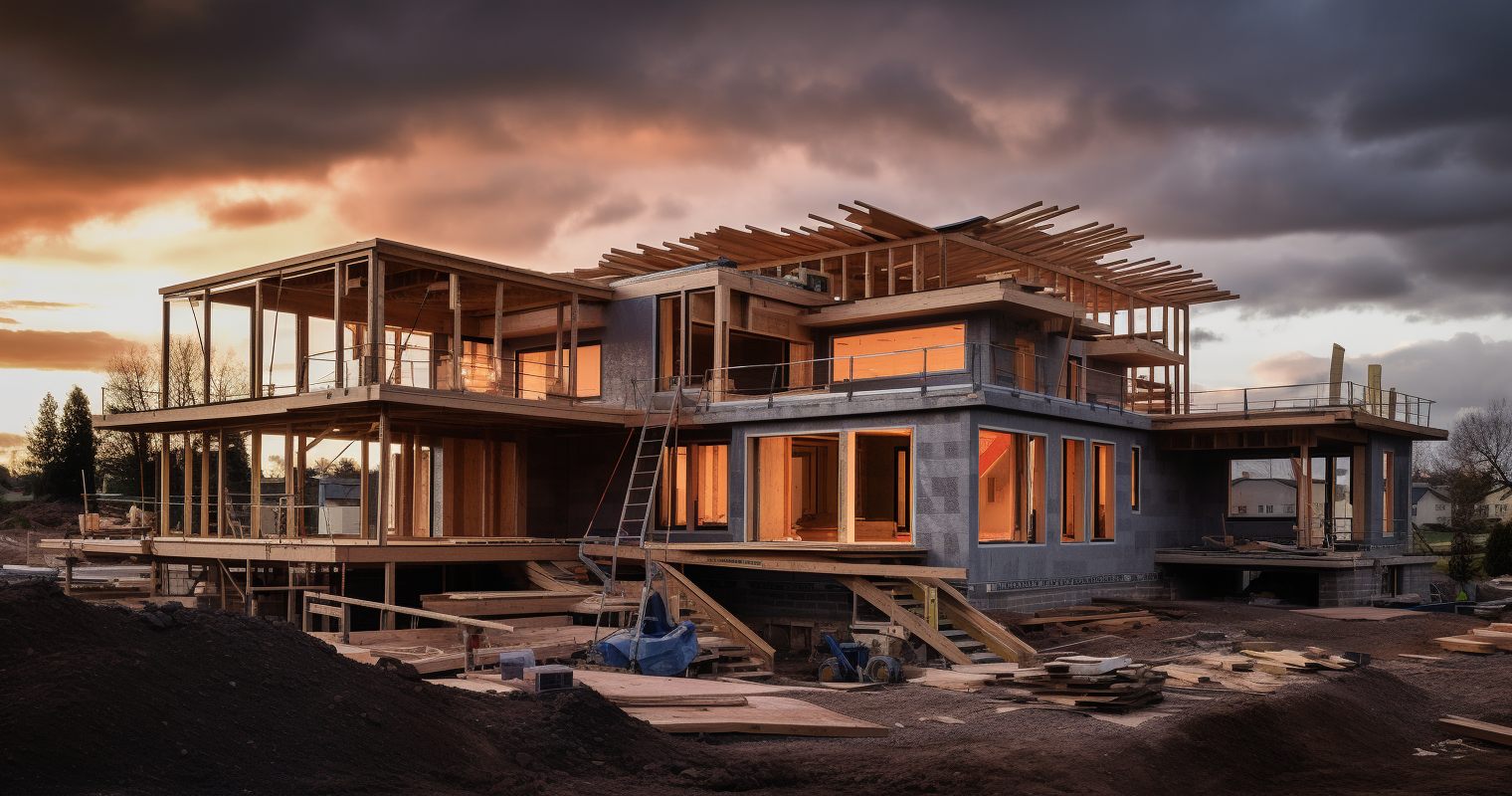
Anyone wishing to build or renovate property in the Philippines must obtain a building permit under the National Building Code (Presidential Decree 1096), which applies to virtually all construction activity — including substantial renovations and extensions. Administration of the permit process falls to local government units (LGUs), so the exact requirements differ from one municipality to the next. Foreign nationals are barred from owning land directly, but they may build on leased land or through certain legally permitted ownership arrangements. Both national agencies and local authorities regulate the construction sector, and the use of licensed architects and engineers is a legal requirement, not merely best practice.
| Item | Details |
|---|---|
| Primary legislation | National Building Code of the Philippines (Presidential Decree 1096) |
| Permit-issuing authority | Office of the Building Official (OBO) at local government unit (LGU) level |
| Typical building permit cost (as of 2024) | ₱15,000–₱50,000+ for residential builds; varies widely by floor area and LGU |
| Typical processing time (as of 2024) | 3–8 weeks in provinces; 1–3 months or longer in Metro Manila |
| Permit validity | 1 year from issue; null and void if work does not start within 1 year |
| Foreign land ownership | Prohibited under the 1987 Constitution; leasehold up to 99 years available for qualified foreign investors (as of 2025) |
| Heritage authority | National Historical Commission of the Philippines (NHCP); National Commission for Culture and the Arts (NCCA) |
Do you need planning permission to build or renovate in the Philippines?
A building permit is an official government document authorising an individual or organisation to carry out construction or renovation at a specified location. It serves as formal legal approval to build a new structure or alter an existing one, and obtaining it is a prerequisite for any work that must comply with the standards established under the National Building Code of the Philippines.
Under the National Building Code of the Philippines (PD 1096), a building permit is compulsory for the erection of any new building or structure, additions and extensions to existing buildings, major renovations that involve structural alterations, demolition of standing structures, and changes of use — for instance, converting a residential property to commercial premises.
Routine maintenance tasks such as repainting, re-roofing using identical materials, or repairs that leave structural elements untouched may not require a full building permit, but the applicable thresholds vary by municipality and you should always confirm the position with your LGU before commencing any work.
Unlike countries such as Canada or Australia — where either a national or a provincial framework defines clear exemption categories — the Philippines operates on a decentralised basis. The application process can differ from one city or town to the next, although the fundamental requirements are broadly consistent. For this reason, checking with the specific LGU in which your property sits is essential before a single nail is driven.
The regulatory framework covering construction permits draws on a range of legislation, ordinances, and guidelines issued by several government bodies, including the Department of Public Works and Highways (DPWH), the Housing and Land Use Regulatory Board (HLURB), and individual LGUs, all of which play a role in overseeing how permits are granted.
Step-by-step: applying for a building permit
- Engage licensed professionals. Retain licensed professionals to produce your project plans — an architect for the architectural drawings and a civil or structural engineer for the structural components. Every set of plans must be signed and sealed by the appropriate licensed professional before submission.
- Prepare your lot documents. You will typically need a Certified True Copy of the Transfer Certificate of Title (TCT) or Original Certificate of Title (OCT); where you are not the registered owner, a Contract of Lease, Deed of Sale, or written authorisation; a current Tax Declaration; and a current Real Property Tax Receipt.
- Obtain required clearances. Bring valid identification and your property documents to your barangay hall to secure a barangay clearance. Then submit to the City/Municipal Planning and Development Office (CPDO) with your barangay clearance and site plan to obtain a zoning clearance. Present your building plans to the Bureau of Fire Protection (BFP) for a fire safety evaluation. If your property lies within a subdivision, the homeowners’ association must also review and approve your plans.
- Submit to the Office of the Building Official (OBO). Lodge your complete document package with the OBO. Officials will examine your plans against the building code and may ask for amendments before granting approval.
- Await assessment and pay fees. Once the OBO is satisfied, you will receive a fee assessment. Pay the required amount and your building permit will be issued. Fees are calculated based on floor area and total project cost.
- Collect your permit. Make a photocopy of your Official Receipt and hand an extra copy to the OBO Releasing Section, from where you will receive your building permit.
As of 2024, typical building permit costs for residential projects range from ₱15,000 to ₱50,000 or above, depending on floor area. When all supporting clearances are already in hand, processing generally takes between three and eight weeks. Metro Manila applications commonly extend to one or two months — or longer — while provincial applications are often resolved in under a month. Always confirm the latest fees and expected timeframes with your local OBO, as these figures are subject to regular revision.
A building permit becomes null and void if construction has not commenced within one year of the date of issue, and equally if works are suspended or abandoned for 120 consecutive days after starting.
Proceeding without a building permit is a criminal offence and can attract demolition orders, financial penalties, or imprisonment. This is a stricter position than many expatriates are accustomed to — in certain countries, small outbuildings can be erected without prior authorisation — so securing all permits before any ground is broken is absolutely non-negotiable.
What are the rules around listed buildings, conservation areas, and heritage protection in the Philippines?
The National Cultural Heritage Act — formally designated Republic Act No. 10066 — is a Philippine law that established the Philippine Registry of Cultural Property (PRECUP) and introduced measures to preserve historic structures aged more than 50 years. It was enacted on 25 March 2009.
Unless a contrary determination has been made by the National Historical Commission of the Philippines, works associated with national heroes, movable or immovable structures marked by the NHCP or any predecessor agency, or structures that are at least fifty (50) years old are regarded as Important Cultural Property. This designation is the closest equivalent in the Philippines to what is known as “listed building” status in countries like the United Kingdom or Ireland.
The Philippine Registry of Cultural Property records all cultural properties across the country. The National Commission for Culture and the Arts (NCCA) is mandated to establish and maintain this registry in collaboration with the relevant cultural agencies and local governments.
A residence deemed to be of significant importance to Filipino culture may be declared a “Heritage House” by the National Historical Commission of the Philippines (NHCP). The commission places historical markers on such buildings to signal their importance, and ancestral homes connected to historic events or associated with national heroes may be designated as National Shrines or National Historical Landmarks.
If you are considering purchasing or renovating an older property — especially one more than 50 years old — you should search the PRECUP registry and consult both the NHCP and your local government unit before undertaking any structural or aesthetic modifications. Violations of heritage protection law can lead to work stoppage orders, compulsory restoration at the property owner’s cost, and criminal prosecution under Republic Act No. 10066.
The principal government bodies responsible for heritage protection are:
- National Historical Commission of the Philippines (NHCP) — nhcp.gov.ph
- National Commission for Culture and the Arts (NCCA) — ncca.gov.ph
- National Museum of the Philippines — nationalmuseum.gov.ph
Always consult the PRECUP database and obtain guidance from the NHCP before acquiring any property that may qualify as Important Cultural Property. Unlike some jurisdictions where heritage designations are clearly noted on title documents, in the Philippines you may need to proactively investigate a property’s age and provenance before any formal classification becomes apparent.
What permits and licences are required when building or renovating in the Philippines?
While the building permit sits at the heart of any construction project, it is by no means the only approval you will need. The broader regulatory framework draws on multiple pieces of legislation and guidelines from a range of government bodies, all of which collaborate in overseeing the issuance of construction approvals. Several distinct permits and clearances are typically required at various stages of a project.
| Permit/Clearance | Issuing Authority | When Required |
|---|---|---|
| Building Permit | Office of the Building Official (OBO) / LGU | Before construction begins |
| Zoning Clearance | City/Municipal Planning and Development Office (CPDO) | Before permit application |
| Fire Safety Evaluation Clearance | Bureau of Fire Protection (BFP) | Before permit application; again at completion |
| Electrical Permit | OBO / LGU | During and after construction |
| Sanitary/Plumbing Permit | OBO / LGU | During construction |
| Certificate of Occupancy | OBO / LGU | Before the building is occupied |
| Environmental Compliance Certificate (ECC) | Department of Environment and Natural Resources (DENR) | For larger or environmentally sensitive projects |
| Barangay Clearance | Barangay Hall | Before permit application |
The National Building Code of the Philippines (PD 1096) sets minimum standards governing the construction of all improvements, covering materials, location, dimensions, and building installations. The Fire Code of the Philippines (RA 9514) mandates fire prevention and suppression standards, and compliance is obligatory for all new construction projects.
Electricity distributors such as Meralco (in the Luzon Grid) have tightened their connection procedures: although a temporary supply line may be provided while building work is under way, a Certificate of Final Electrical Inspection (CFEI) from the relevant City Hall or Municipal Hall will be required before any permanent electrical connection is approved.
There is no single integrated portal through which all these approvals can be obtained simultaneously; documents typically pass through several separate departments before the permit is eventually released. Many expatriates find it worthwhile to appoint their architect or a dedicated permit facilitator to navigate this multi-stage process on their behalf.
For projects located near coastlines, rivers, or areas of environmental sensitivity, an Environmental Compliance Certificate (ECC) from the DENR may be a prerequisite before any construction can start. This is an entirely separate process from the building permit and can add a meaningful amount of time to an overall project schedule. Refer to the DENR website for current requirements and applicable thresholds.
How do you find a reliable, trustworthy builder in the Philippines?
The Philippine construction industry is subject to regulation at several tiers. Contractors and construction companies are required to register with the Philippine Contractors Accreditation Board (PCAB), a body operating under the Construction Industry Authority of the Philippines (CIAP), which is itself an attached agency of the Department of Trade and Industry (DTI).
Before appointing any builder or contractor, confirm that they hold a valid and current PCAB licence. PCAB categorises contractors by scope and scale of work — a contractor whose licence covers only small residential projects should not be engaged to undertake a large commercial development. The PCAB register can be accessed via:
- Philippine Contractors Accreditation Board (PCAB) / CIAP
Website: ciap.dti.gov.ph
Address: 4th Floor, CIAP Building, 361 Sen. Gil Puyat Avenue, Makati City, Metro Manila
Phone: (02) 8897-6965
Email: contact details available on the official website
In general, project timelines in the Philippines can extend from several months to over a year, and delays more often originate with contractors than with the permitting process itself. To protect your interests, the following practical measures are advisable:
- Verify PCAB registration. Confirm that the contractor’s PCAB licence is current and that its scope covers the type of work your project entails.
- Request references. Ask for the contact details of at least two or three previous clients, and visit completed projects in person where that is possible.
- Use a written contract. Insist on a detailed, written construction agreement setting out the scope of work, timeline, payment schedule, variation procedures, and dispute resolution mechanism. Have a qualified Filipino lawyer review the contract before you sign.
- Use staged payments. Release payments in instalments linked to verified construction milestones — never pay the entire amount in advance. A common arrangement in the Philippines involves an initial mobilisation payment (typically 10–30%) followed by staged releases tied to defined stages of the build.
- Check insurance. Ensure the contractor carries appropriate insurance covering third-party liability and worker injuries during construction.
- Avoid “dummy” arrangements. If a contractor proposes registering work under another name or using a local intermediary to sidestep regulations, this should be treated as a serious red flag — such arrangements can expose you to severe legal and financial consequences.
Risks frequently encountered by foreign property owners include contractors who disappear after receiving upfront payments, undisclosed substitution of inferior materials for those specified in the contract, and incomplete work that ultimately requires costly remediation. Retaining a qualified local professional — whether your architect, a dedicated project manager, or a registered quantity surveyor — to carry out regular site inspections is one of the most effective safeguards available.
How do you find a qualified local architect in the Philippines?
The examination of architectural plans, designs, drawings, specifications, cost estimates, and contract documents submitted as part of a building permit application must be performed exclusively by a Registered and Licensed Architect (RLA), in full compliance with Republic Act No. 9266. This means engaging an architect who is not properly licensed is not merely poor practice — it will result in your building permit application being rejected outright.
From 1 January 2024, Offices of the Building Official (OBO) across many cities have been strictly enforcing the requirement that all architectural plans and permit applications be signed and sealed by a Registered and Licensed Architect. This requirement applies throughout the Philippines.
The key regulatory and professional bodies for architects in the Philippines are:
- United Architects of the Philippines (UAP) — the national professional organisation for architects
Website: uap.org.ph
Address: UAP National Center, 53 Scout Rallos Street, Quezon City, Metro Manila
Phone: (02) 8374-1487 to 88
Email: Available via the official website - Professional Regulation Commission (PRC) — the government authority responsible for licensing architects
Website: prc.gov.ph
Address: PRC Main Office, P. Paredes Street, Sampaloc, Manila
Phone: (02) 8736-2251
You can verify whether a particular architect holds a current registration and licence by using the PRC’s online verification portal at prc.gov.ph. Always check that the architect’s PRC identification card and Professional Tax Receipt (PTR) remain valid — both are required for signing and sealing plans submitted with a building permit application.
For expatriates, there are several practical factors to consider when selecting an architect. While the working language of architecture in the Philippines is largely English — making communication relatively straightforward for many international clients — you should still look for an architect with a demonstrated track record in the type of project you have in mind, whether a residential home, a heritage property renovation, or a commercial development. Review their portfolio and enquire whether they have previously navigated the permit process with your specific LGU, as familiarity with local officials and procedures can meaningfully accelerate approval timelines.
What are the common pitfalls when buying land to build on in the Philippines?
Acquiring land for development in the Philippines demands thorough due diligence. The country’s land registration system is founded on the Torrens title framework, and there are a number of specific risks that buyers — particularly those unfamiliar with Philippine law — need to guard against carefully.
Verifying title and ownership history: Always obtain a Certified True Copy of the Torrens title and examine it for adverse claims, liens, or overlapping ancestral domain assertions. Fraudulent and counterfeit titles do exist; always obtain the Certified True Copy directly from the Registry of Deeds — not from the seller or a broker — and engage a lawyer to conduct a full title search.
Confirming land classification: Establish that the land is classified as alienable and disposable (A&D). Forest or mineral land cannot be held as private property — even by Filipino citizens — unless it has been formally reclassified. Purchasing land without the correct classification could leave you unable to secure a building permit.
Checking zoning: Before committing to a purchase, verify that the land’s zoning classification permits your planned use. Zoning clearances are issued by the City/Municipal Planning and Development Office (CPDO), and attempting to build anything that falls outside the applicable zoning will result in permit refusal and potentially a demolition order.
Ancestral domain claims: Search for any ancestral domain claims arising under the Indigenous Peoples’ Rights Act (IPRA). In certain parts of the country — particularly in Mindanao and highland areas — land may be subject to indigenous community claims that can override a private title.
Environmental and flood risk: The Philippines is highly vulnerable to typhoons, flooding, and seismic activity. Consult the relevant LGU and the DENR for flood hazard maps, and review assessments from the Philippine Institute of Volcanology and Seismology (PHIVOLCS) for volcanic and earthquake hazards before purchasing land in areas known to be at risk.
Utility availability: Confirm before purchase that water, electricity, and sewerage connections are accessible. In rural and peri-urban locations, utility infrastructure may be absent or unreliable, and establishing connections can add significant cost and delay to your project.
Foreign ownership restrictions: The 1987 Philippine Constitution explicitly prohibits foreign nationals from owning land in the Philippines, a restriction designed to safeguard the country’s resources for Filipino citizens. Foreign buyers must structure their property interests through legally permitted mechanisms (see the foreign ownership section below). Using a Filipino national as a nominal “dummy” land owner on your behalf is unlawful and carries serious criminal penalties.
Always instruct a qualified Filipino lawyer to conduct due diligence, review all contracts, and oversee the transfer process. The Registry of Deeds is the official custodian of land title records — visit lra.gov.ph (Land Registration Authority) for the authoritative national land registry resource.
What are the rules around foreign ownership and financing for construction projects in the Philippines?
The 1987 Philippine Constitution categorically prohibits foreign nationals from owning land in the Philippines. This is a constitutional prohibition rather than a simple statutory rule, which means it cannot be overturned through ordinary legislation and has remained intact despite numerous reform proposals. That said, there are several legitimate structures through which foreign nationals can hold and develop property:
- Long-term leasehold: The Philippines has extended the maximum land lease period available to foreign nationals to 99 years under legislation signed by President Ferdinand Marcos Jr. in September 2025, replacing the previous arrangement of a 50-year term with a single 25-year extension. The new law amends the Investors’ Lease Act (RA 7652) and allows lease periods of up to 99 years for qualifying projects in priority sectors. As a leaseholder, you may build and legally own any structures erected on the land for the duration of the lease.
- Condominium units: Foreign nationals may purchase condominium units outright, provided that aggregate foreign ownership within any given development does not exceed 40% of total units. The condominium route is one of the most straightforward property ownership options for expatriates and does not require a local partner.
- Philippine corporation: The 60/40 rule governs corporate capital: at least 60% of both voting and outstanding shares must be held by Filipino nationals. A corporation structured in this way is permitted to own land. However, dummy arrangements — where a foreign national supplies all the capital and exercises effective control while Filipinos nominally hold 60% of shares or title — carry the risk of imprisonment for 5–15 years, forfeiture of land, corporate dissolution, and blacklisting.
- Marriage to a Filipino citizen: A foreign national married to a Filipino citizen cannot hold a land title in their own name, but the Filipino spouse may do so, and the couple may jointly benefit from that ownership.
With respect to financing, access to local mortgage or construction loans for foreign nationals is limited. Most Philippine banks require a Filipino co-borrower, or confine their lending products to Philippine citizens and holders of permanent residency. The Bangko Sentral ng Pilipinas (BSP) — the central bank — sets lending regulations; refer to bsp.gov.ph for current guidance. A number of foreign nationals fund construction projects through offshore financing arrangements or through developer-linked financing products.
Holding a qualifying property interest in the Philippines can assist applications for certain residency visas, such as the Special Resident Retiree’s Visa (SRRV), which is offered to foreign nationals seeking to retire in the country and provides multiple-entry privileges together with long-term residency rights.
For comprehensive and current official guidance on foreign investment regulations, consult the Board of Investments (BOI) at boi.gov.ph and the Philippine Economic Zone Authority (PEZA) at peza.gov.ph.
What official sources should you consult when planning to build or renovate in the Philippines?
Rules, fees, and procedures in the Philippines are revised regularly and can differ substantially between municipalities. You should always confirm current requirements directly with the relevant authority before making any commitment to a project. The official bodies and resources listed below are your primary points of reference:
| Body / Resource | Responsibility | Website |
|---|---|---|
| Department of Public Works and Highways (DPWH) | Administers the National Building Code (PD 1096) and building regulations at national level | dpwh.gov.ph |
| Office of the Building Official (OBO) — your local LGU | Issues building permits, conducts site inspections, and enforces the building code at the local level | Contact your city or municipal hall |
| Land Registration Authority (LRA) | Maintains the national Torrens title land registry and Registry of Deeds | lra.gov.ph |
| Professional Regulation Commission (PRC) | Licenses and regulates architects, engineers, and other construction professionals | prc.gov.ph |
| Philippine Contractors Accreditation Board (PCAB) / CIAP | Registers and accredits construction contractors | ciap.dti.gov.ph |
| Bureau of Fire Protection (BFP) | Issues fire safety clearances and certificates of occupancy | bfp.gov.ph |
| Department of Environment and Natural Resources (DENR) | Issues Environmental Compliance Certificates; manages flood and hazard mapping | denr.gov.ph |
| National Historical Commission of the Philippines (NHCP) | Heritage protection; designates Heritage Houses and National Historical Landmarks | nhcp.gov.ph |
| National Commission for Culture and the Arts (NCCA) | Maintains the Philippine Registry of Cultural Property (PRECUP) | ncca.gov.ph |
| Board of Investments (BOI) | Foreign investment rules and registration for qualifying projects | boi.gov.ph |
| Bangko Sentral ng Pilipinas (BSP) | Banking and lending regulations, including construction finance rules | bsp.gov.ph |
In addition to these national bodies, your City/Municipal Planning and Development Office (CPDO) is an indispensable local resource — it handles zoning clearances and can advise on local development plans that may affect what you are permitted to build. Always instruct a qualified Filipino lawyer for any land transaction, and verify title information directly with the Registry of Deeds rather than relying on documents presented by a seller or agent.
Frequently asked questions
How much does it typically cost to build a house in the Philippines?
Construction costs differ considerably depending on location, the level of specification, and the materials chosen. As a broad reference, entry-level residential construction in provincial areas may start from approximately ₱15,000–₱25,000 per square metre, while higher-specification projects in Metro Manila or popular tourist destinations will be considerably more expensive. These figures shift as material and labour costs change, so obtaining several detailed quotations from PCAB-licensed contractors and confirming current pricing locally is essential before finalising any budget.
How long does the building permit process typically take?
When all supporting clearances are already in place, processing generally takes between three and eight weeks. Applications lodged in Metro Manila commonly extend to one or two months — and can go longer — whereas provincial applications tend to be resolved in less than a month. Incomplete or inconsistent documentation is the most frequent cause of delays, so investing time in preparing a thorough application from the outset is the most reliable way to avoid an extended wait.
What happens if I build without a permit in the Philippines?
Constructing without a permit is a criminal offence and may result in a work stoppage order, demolition, financial penalties, or imprisonment. The Building Official holds the authority to declare a structure ruinous or dangerous and to impose fines. Unpermitted buildings may also prove impossible to sell or mortgage, and utility providers may decline to supply permanent connections. Unlike certain other countries where retrospective planning consent is sometimes obtainable, no equivalent route exists in the Philippines — avoiding the problem in the first place is by far the better approach.
Are building qualifications or standards from other countries recognised in the Philippines?
No. Architectural and engineering credentials obtained abroad are not automatically recognised in the Philippines. Every set of architectural plans submitted as part of a building permit application must be signed and sealed by a Philippine Registered and Licensed Architect (RLA) holding a current PRC licence. If you wish to involve an overseas architect in your project, they would need to work in collaboration with a locally registered professional who assumes legal responsibility for the submitted plans. The PRC governs foreign credential recognition — consult prc.gov.ph for current procedures.
Can I manage a construction project remotely from abroad?
Managing a project from overseas is technically feasible, but it carries significant risks. Navigating the building permit process can be complex, and many architectural firms treat permit management as an integral part of their design service, taking responsibility for seeing clients through the process from initial plans to completion. Appointing a trustworthy in-country project manager or architect who delivers regular photographic and written progress reports — and who oversees the release of staged payments — is strongly advisable for any build managed remotely.
What if I have a dispute with my builder or contractor?
Construction disputes in the Philippines can be pursued through a number of channels. First, ensure that your contract contains a dispute resolution clause — preferably specifying mediation or arbitration before either party resorts to litigation. The Construction Industry Arbitration Commission (CIAC) is a specialist arbitration body dedicated to construction disputes and is generally quicker and less costly than proceedings through the ordinary courts. Visit ciap.dti.gov.ph for information about the CIAC process. Where the contractor holds a PCAB licence, a formal complaint may also be lodged with the PCAB.
Is there a language barrier when dealing with planning authorities or builders?
In urban and semi-urban settings, English is broadly used for official purposes — government forms, the National Building Code, and most professional correspondence are available in English — so language is rarely a significant obstacle in these areas. In more rural municipalities, local dialects may predominate in day-to-day dealings. Engaging a local architect or project manager who is fluent in both English and the regional language of the area where you are building will substantially reduce the risk of miscommunication. All official building permits and related documents are issued in English or Filipino.
What are my options if a property I want to buy turns out to be in a heritage zone or affected by an ancestral domain claim?
Both situations call for specialist legal advice before proceeding with any purchase. For properties that carry a heritage designation, consult the NHCP and your LGU to determine precisely what alterations are permissible — sympathetic restoration work may be sanctioned in some cases, but structural changes could be prohibited outright. For properties subject to ancestral domain claims under the Indigenous Peoples’ Rights Act (IPRA), the National Commission on Indigenous Peoples (NCIP) — at ncip.gov.ph — is the competent authority, and a Free, Prior, and Informed Consent (FPIC) process is likely to be required before any development can take place. In both scenarios, retain a specialist Filipino lawyer before committing to a purchase.
Can a foreign national get a construction or mortgage loan from a Philippine bank?
Access to bank financing in the Philippines for foreign nationals is restricted. Most local banks limit standard mortgage and construction loan products to Filipino citizens or holders of permanent residency, although certain institutions offer products to foreign nationals who hold specific visa categories or who have a Filipino co-borrower. The Bangko Sentral ng Pilipinas (BSP) at bsp.gov.ph sets the applicable lending standards, and individual loan products and eligibility criteria are updated regularly. Approach individual banks directly and obtain independent financial advice before making any decisions.