











The following transcript was generated by AI and may contain inaccuracies.
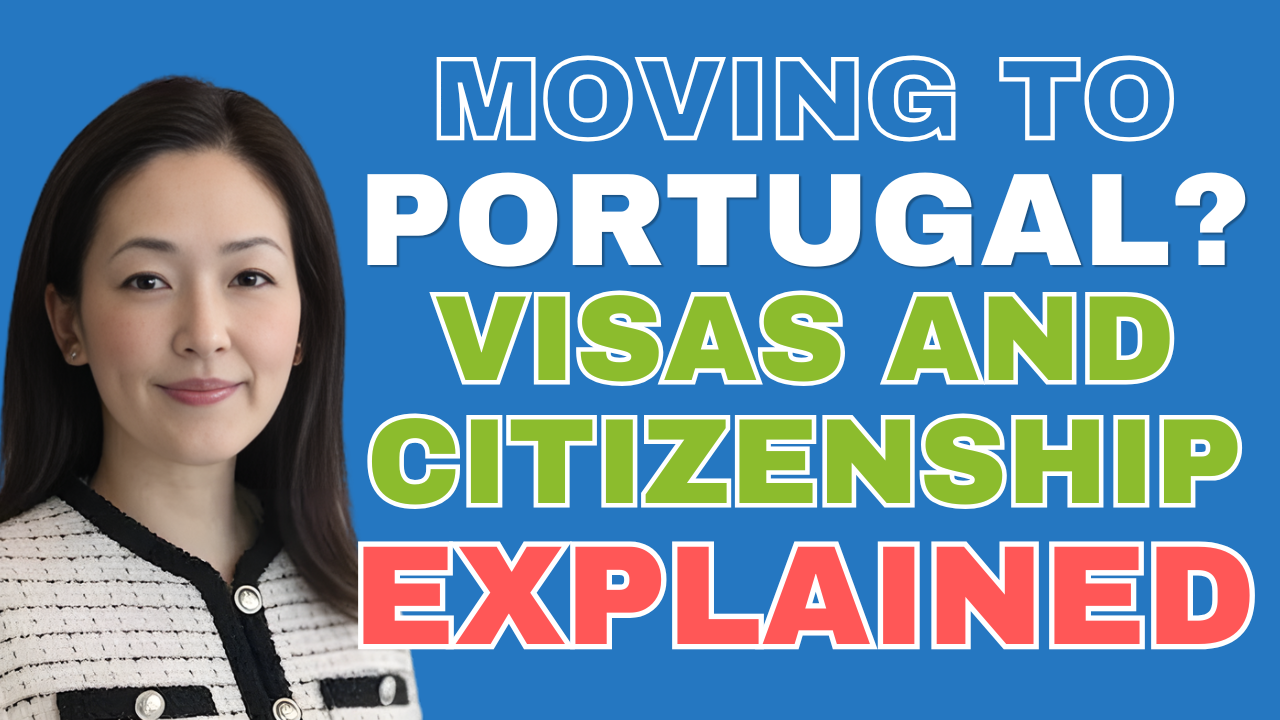
Carlie: Hello there. It’s Carlie with the Expat Focus Podcast. If you have your eye on Portugal for retirement, you are not alone. The number of foreign citizens living in Portugal quadrupled over seven years. Susana Yang moved to the country herself from Hong Kong to join her husband and their daughter.
She is the CEO and founder of immigration agency The Golden Portugal, and she joins me to chat visas, cost of living essentials, and what foreigners already in Portugal should do ahead of an expected citizenship law change. Susana, can you tell me, how did you come to start The Golden Portugal?
Susana: I moved to Portugal in 2018, and at that time I used a lawyer who handled my immigration paperwork. But it was a nightmare experience and it didn’t go through, so I had to find another lawyer.
Carlie: Your application wasn’t successful the first time?
Susana: I didn’t even start it. She just stopped responding. After the first meeting, she did the first step of making an appointment at SEF at that time. But that was nine months or a year out in advance. I wanted to book my appointment earlier, and she didn’t respond. I sent her two emails and nothing.
I really felt the gap between someone like me, who’s used to responsive services and quick communication, and the local way of doing business. So after that, in 2020, I started The Golden Portugal. My aim is to help people like me go through the immigration process with a standardised service. We respond within 48 hours, via email and WhatsApp. That’s really why I set up this company.
Carlie: I can really relate to that, being an Australian in France. The different approach to customer service here — I understand it’s just the culture, but sometimes I personally find it quite lacking. I don’t expect American-style customer service that’s above and beyond because people are working for tips, but there’s a lack of interest in being helpful or proactively seeking out a solution for you.
And you would think if you’re contacting someone to help you with a visa application, you’re willing to give them money. Maybe they would reply and want your business, but that’s not necessarily how it feels sometimes.
Susana: That’s my personal experience. I’ve been through a lot in Portugal with lawyers, accountants, bankers, architects — all those high-level service firms — and their service level is not really on par with American or Asian standards.
Carlie: So where did you move from?
Susana: I was born in Hong Kong. I went to Canada, grew up there, and then I went back to Hong Kong to work. And here I am.
Carlie: What was the attraction of Portugal?
Susana: It’s personal. My partner is Portuguese and my daughter is Portuguese as well. So I used the family reunification path.
Carlie: Made a lot of sense for you to come.
Susana: Yes. And it’s been great.
Carlie: I hear the lifestyle in Portugal is just beautiful.
Susana: The weather and the food — the people in general are very friendly.
Carlie: And so who are your typical clients?
Susana: Right now it’s almost 50% American. For the past few years, a lot of Americans have been interested in moving to Europe and Portugal specifically, through various different types of visas. Then the other 30% to 40% are Asian — mainly Taiwanese, Hong Kong and Chinese clients — and then 20% rest of the world, like British, Canadians and so on.
Carlie: And what visa options are available to people from these countries if they’re interested in spending an extended time in Portugal?
Susana: If people want to relocate to Portugal and live there, we have three main visas. One is the passive income visa, which is more suited to retirees — that’s the D7. Then there’s the D8, which is the digital nomad visa, where people who have remote work outside of Portugal can apply. And then there’s the D2 visa, which is an entrepreneurial visa for people who want to create a company or get freelancer status in Portugal.
Carlie: And is there also a visa specifically for retirees?
Susana: Yes, that’s the D7 — the passive income visa. So retirees would use that.
Carlie: Right. So if you are getting a pension, that’s considered passive income.
Susana: Yes. Pension, interest, dividends, rental income or IP. Anything that you don’t have to work for.
Carlie: And for foreigners looking at the D7 visa to come to Portugal, are there specific passive income requirements? Do you need to be receiving a certain amount per month to qualify?
Susana: For the main applicant, right now in 2026, it’s €920 per month. And if you bring your spouse or dependents, it’s going to increase by another 50% of that €920. If you have children, it’s another 30% for each minor dependent.
Carlie: And I know some countries require you to have a certain amount of savings in the bank and show proof of that before you move. Is that the case for Portugal as well?
Susana: Yes. You need one year of the minimum amount, which is 12 times the €920. So that’s about €11,000, and it’s still a very friendly amount.
Carlie: It’s less than I thought it might be. €920 a month in this economy — it’s quite reasonable.
Susana: It’s very reasonable. It’s the minimum wage of Portugal. That’s how they set it.
Carlie: That makes sense. And in that case, is it realistic for a foreigner moving to Portugal who might have just the minimum requirement to actually live on that?
Susana: Not really. If you’re earning the minimum, you’re really stretching it.
Carlie: You’re pushing it.
Susana: If you live in a small town, maybe. But you need rent, food, electricity — it’s not enough. Sometimes people rent a room rather than an apartment.
Carlie: So in your opinion, what is a comfortable amount of passive income to have if you’re making a move to Portugal? And what are costs of living like?
Susana: Portugal is at the lower end of the cost of living within Western Europe, compared to France, Germany and so on. But I think if you want to live comfortably, at least €1,500.
Carlie: I think that is more aligned with the minimum wage here in France, for example.
Susana: Otherwise you’d need to live in a co-living space and you probably couldn’t eat out too many times. If you want to enjoy life a bit —
Carlie: Part of the joy of Portugal is going out for that daily coffee and pasta dinner. Right.
Susana: I think €1,500 would be good, but if you want to live in Lisbon, it’s going to be more than that. The rental in Lisbon is a bit crazy right now.
Carlie: I’ve heard there’s been this influx of digital nomads and it’s increasing the rent prices.
Susana: Yes, definitely. Some people use the co-living option instead of renting an apartment, because if you want to rent a studio, it’s already around €1,000.
Carlie: That’s a big chunk of your monthly income. I mean, when I moved to London as a 28-year-old, co-living was great — I love that term for share housing, it sounds a lot more sophisticated. But when you’re middle-aged or approaching retirement or retired, I can see the pros and cons. You might want a bit more of your own space and be able to choose rather than be forced to share a kitchen with someone.
Susana: The digital nomads tend to be younger, so they like the co-living environment — they have friends or people similar to them living in the same space. But for middle-aged people or retirees, you might want a quiet space for yourself.
Carlie: Another consideration when you are looking at a move to Portugal would be healthcare and the level of health insurance you need. How does Portugal treat foreigners within its healthcare system?
Susana: It’s pretty good. As soon as you get your resident card, you can use the public health system in Portugal. There’s a public healthcare system and a private healthcare system. If you use your resident card for public healthcare, it’s almost free. Or you could also use private healthcare, which is more expensive, but you can buy insurance to cover around 70% of the fees.
Carlie: Here in France, we seem to do a mixture of both — private healthcare alongside the universal healthcare system. As a foreigner, are you obligated to have a private policy or not?
Susana: You are obligated when you first come here. When you apply for your visa, you need to have healthcare — it’s one of the requirements. But afterwards, when you get your resident card, it’s not a requirement anymore. It’s an option.
Carlie: So once you’ve been registered as a resident, you have access to the same services as locals?
Susana: Yes. It’s one of the main benefits.
Carlie: That’s really great. And how difficult is the visa process? Obviously the first time you tried to get help with it, it fell on deaf ears. How did you find your family reunification process? And with your clients, how easy or difficult do they find meeting the requirements and getting their visas?
Susana: My process was quite straightforward. You just need to get the documents ready and the appointment. But the D visa — if you want to apply, you need to apply at the nearest consulate where you live, with all the documents. It’s a little more complicated, but it’s not difficult.
For example, you need proof of your funds — if it’s passive income, you need that plus your savings, your tax ID. If possible, get a bank account set up in Portugal first, and then you need insurance and a lease agreement — at least a 12-month lease agreement.
You apply first, and then they may ask for additional requirements if needed. Within about 60 to 90 days, you’ll get a reply. Then you’ll receive a four-month temporary visa to move to Portugal. After you move, you don’t have the resident card yet — you just have a temporary visa on your passport, and you need to wait for your biometric appointment. That’s taking some time right now. We’re seeing the biometric appointment coming about nine months to one year after the first temporary visa.
Carlie: This sounds like France timelines.
Susana: Before, it was about two months. But there’s been an influx of D7 and other visa applications, so the timeline is extending. We can see it from last year to this year.
Carlie: And in this process, is it advantageous to work with someone like yourself? Or could you sort it out alone?
Susana: You could sort it out alone, but you’d need a lot more time because you need to communicate with the consulate — that’s the issue. You can prepare all your documents and submit, but then they could come back and ask you a lot of questions. That’s when people get nervous and need guidance.
Having an agency helps — first of all to review all your documents so that everything is correctly presented the first time. That reduces the chances they’ll ask for further information. And if they do ask, our lawyer will be advising them on what to do.
Carlie: Even when I applied for an exchange of driving licence here in France, after waiting about six months, they sent all my paperwork back because I was missing one document. I had to go through the entire process again. Some of my documents only had a six-month validity, so I had to order them again.
Susana: You need to do it all over again.
Carlie: So it’s really important to have someone checking everything is in order and making sure you get it right the first time.
Susana: Because otherwise the timeline is going to extend double. As your case already shows.
Carlie: I think it was about 18 months in the end from application for an exchange of driver’s licence to when I actually got one. It was a little bit insane.
Susana: In Europe it’s like this. If they don’t accept you — OK, here’s all your documents, do it again. They don’t care. They don’t want to answer.
Carlie: And I wonder — you mentioned timelines. Once you do get the approval, for example on a D7 visa, how many years does that give you in Portugal? As a retiree, are you on a limited time span or can you stay indefinitely?
Susana: After you go to the biometric appointment and everything goes through, you get your first residence permit, and that’s valid for two years. Afterwards you can renew, and that’s valid for three years. After that, you can keep renewing.
But you need to provide updated documents as well. The good thing is, after five years you can apply for permanent residence.
Carlie: And then you wouldn’t have to keep applying.
Susana: You still need to keep renewing the permanent resident card. But right now you can apply for citizenship as well after five years. The timeline is still five years, but as I mentioned, the government is considering extending it to 10 years. We don’t know yet, but we’ll probably know soon.
Carlie: We’ve been having this correspondence over email about some legislative changes the government in Portugal is looking at. Can you briefly explain what the implications are?
Susana: Right now, anyone with any visa can apply for citizenship after five years. But they want to change it to 10 years for all nationalities, except Portuguese-speaking countries, which would be seven years.
Carlie: So you’d have to wait longer to have the right to apply?
Susana: Yes. Previously, people would get temporary residency — two years, three years — and then they could apply for citizenship. But now, what we recommend is: get the two years, then the three years, get permanent residence, and then apply for citizenship at the end. Because after you get permanent residence, you’re safe — you don’t need to deal with a lot of the requirements.
Carlie: And when do you think the government will make a decision about changing that time span from five to 10 years?
Susana: They’ve been talking about it for more than nine months. They’ve passed it through the legislature to the president, but the Constitutional Court rejected it. So they have to review it and do it again. I think they’re going to do it probably in March, because we just had a presidential election and the new president is going to be taking over in March. I think they’re going to wait for the new president to submit the new law.
Carlie: So for people already in Portugal who may have just clocked up five years of residency, what do you advise they do while this potential rule change is going through the motions?
Susana: I suggest everyone who’s in Portugal, has a resident card and has already got five years should apply for citizenship right away. And even for those who haven’t reached the five-year mark yet, we suggest they also apply now, because the review of citizenship applications takes about two years. So you apply now, and they won’t review your application until maybe 2028.
Carlie: Gosh, two years to wait.
Susana: So if you’ve been here for three years, or have a resident card for three years, you could apply now. It’s not a guarantee, but a lot of lawyers and law firms are advising people to do it this way. There’s a lot of upside. If it gets rejected, the only cost is the fees you need to pay.
Carlie: So the worst case, you have to eat some fees. But best case scenario, you benefit from being grandfathered in under the current rules.
Susana: Five years instead of waiting another five years.
Carlie: Definitely makes sense. We spoke a little before about renting and co-living in Portugal. I’m curious to know, particularly for foreigners moving to Portugal to retire — how easy or difficult is it to find a rental?
Susana: It’s not difficult to find a rental. However, it depends on the area you’re looking in. In Lisbon it’s going to be much harder because the demand is high and rental isn’t cheap.
You can always look in the Algarve in the south, but it’s not easy there either. I’ve had clients who wanted to look for rentals in the south, and a lot of landlords there don’t want to rent on a yearly basis. If you want a short-term rental of six months during the off-peak season, that’s fine — but they always want to keep June to September for peak-season rentals because they can charge more. They can get more than a full year’s rental income in those three to four months. So it’s hard to get a yearly rental in the south, but in other parts of the country it’s OK. Rental prices vary.
Carlie: And how do you normally find a rental? I was speaking to a woman who retired to Thailand who said it’s really more word of mouth than looking at online listings. And online listings are more likely to be scams than just going through someone who knows someone. What’s the culture like around that in Portugal?
Susana: Here, it’s best to find an agent to help you. We also have a real estate licence, so we or other agencies can do virtual viewings for you. That’s the easiest way to find a rental.
Word of mouth isn’t as easy because the country is quite big. If someone is in Lisbon and you want to find something in Porto, it’s not easy. A lot of the time they won’t have the right apartment for you if you want a one-bedroom, a studio, or something with an elevator. It’s always best to look at listings on the internet and then contact the agency.
Carlie: And when it comes to deposits and fees, is that a typical one-month bond plus a finder’s fee to the agency?
Susana: Typically, the fee to the agency is about one and a half months’ rent, and then the deposit is about two months. But sometimes the landlord will ask for more, especially if the tenants are foreigners and they don’t have a rental record in Portugal.
Carlie: It’s like a catch-22, especially in Paris as well — needing a guarantor, needing pay slips, needing proof that you’re going to pay the rent.
Susana: They are quite strict when looking for tenants. You need a guarantor, you need proof of income, you need a lot of things. In France, I know it’s very hard to evict a tenant who doesn’t pay. In Portugal it’s less so, but it can also be a long process.
Carlie: What if you just want to avoid that altogether and buy a property, if you’re in a position to do that? Does Portugal allow foreign investors and people on, for example, D7 visas to buy property in the country?
Susana: Yes, definitely. Some of our D7 clients buy property for themselves. They don’t have to look for a rental, and they pay the same taxes as locals, residents or citizens. That’s great.
Carlie: Definitely. And if you have the means, it would certainly save the hassle of going the other way.
Susana: And the housing prices in Portugal have been going up year on year.
Carlie: I did hear though it can be difficult and a little bit slow, depending on where you are in the country, if you are looking to sell again.
Susana: If it’s in the more popular city centres, it’s easy. But if you’re in the countryside, it will take some time.
Carlie: To find that perfect buyer. If you come to Portugal on a D7 visa, are you limited in terms of how many days you can stay in the country?
Susana: That’s a very important point. You’re not limited in how many days you can stay — you can stay a full year. But there are requirements about not staying outside of the country for too long. For your first two-year permit, you cannot be out of Portugal for eight months in total, non-consecutive. And consecutively, no more than six months. So you couldn’t be out of Portugal for six months and 10 days straight.
For the next permit, which is three years, it’s the same. You cannot be out of Portugal for eight months over the entire three years. And you can’t be out consecutively for more than six months.
Carlie: So over three years, no more than eight months total, and no more than six months in one go.
Susana: You’re basically living full-time in Portugal.
Carlie: So you need to make sure you move to Portugal and plan to stay there.
Susana: They’re getting more and more strict. A few years back, they would automatically renew people with D visas. But right now they’re really looking at the paperwork and your entry records. They’re getting more and more strict.
Carlie: And why is that?
Susana: I think it’s the change of government — there was a change of government last year. This government is more strict. And before, because of COVID, the war with Ukraine and a lot of refugees, they didn’t really have the energy to scrutinise a lot of D visa applications. Now everything is clearing out and they’re looking at things more carefully with all the formalities. The requirements have always been there, but before they weren’t enforcing them.
Carlie: You could have flown under the radar a little bit more before.
Susana: But now, no. I’ve heard stories — they have to provide a lot of documents again.
Carlie: Susana, I’d like to know, who is the Golden Visa typically for?
Susana: The Golden Visa is typically for those who don’t want to move to Portugal yet, or they can’t meet the stay requirement — for example, the eight months thing. They usually have a job in the States or wherever they are, but they want to start the immigration process now. They don’t want to wait until they retire. They want to have an option — an optionality of getting the resident card but not needing to relocate.
The requirement of the Golden Visa is only 14 days every two years.
Carlie: Wow. 14 days that you have to be in Portugal every two years — that is like a vacation.
Susana: Most of our clients for that aren’t people who are living in Portugal or planning to move in the next few years. They are mainly entrepreneurs, executives, or people who are planning to retire but haven’t yet — who want to start their immigration process so they have the resident card.
And the requirement for the Golden Visa is an investment programme. They need to invest €500,000 into an investment fund.
Carlie: So this is for people who have the money for the privilege of this visa too, really.
Susana: It’s an investment programme where you get the privilege of residence without meeting the requirement to actually live there.
Carlie: Through the Golden Visa, is there a pathway to citizenship?
Susana: Exactly the same as every other visa. After five years of having the card, you can apply for citizenship. And eventually, if the new law comes through, it might be extended.
Carlie: So 10 years. I’m curious for yourself, Susana — what is it that you really love about living in Portugal?
Susana: The environment is the most amazing thing. The weather is really good. Having lived in Hong Kong for so long — all the high buildings, a lot of people, very crowded — but here you can be out in nature right where you live. You can be at the coast in 30 minutes. I don’t surf, but a lot of my friends go surfing. They go hiking and so on. We’re very close to nature. The food is good and the people are generally very friendly.
Carlie: And just finally, where can people find you if they would like some help with their visa applications to move to Portugal?
Susana: They can find us on the internet. Our website is www.dgoldenportugal.com. They can also find us on YouTube and Facebook — just search for Golden Portugal and you should find us there.
Carlie: Well, thanks so much for coming on the Expat Focus Podcast today to talk about moving to Portugal and your visa options.
Susana: Thank you, Carlie. Thanks for your invitation.
Carlie: That’s it for today. If you have a burning question about moving to Portugal that wasn’t covered in this conversation, ask away in the comments on our YouTube channel — just search for Expat Focus. Be the first to know when new episodes drop by signing up to our monthly newsletter. Get on the list by heading to expatfocus.com/newsletter, and I will catch you in the next one.