
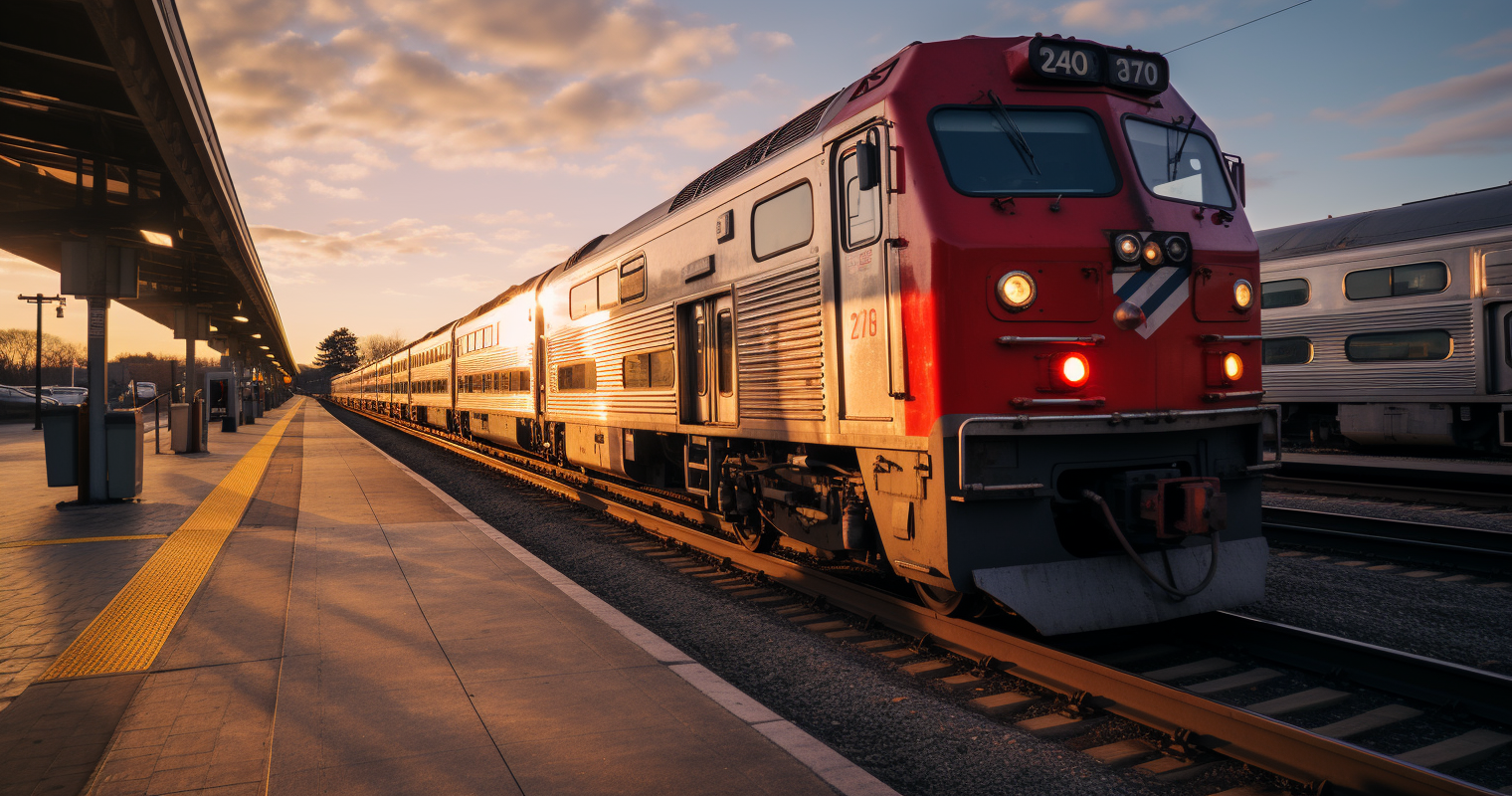
Saudi Arabia’s rail infrastructure is experiencing a period of dramatic growth and is now genuinely valuable for those living in the kingdom, providing modern intercity services linking key cities alongside a newly opened metro system in Riyadh. Although coverage is still narrower than long-established networks like Germany’s Deutsche Bahn or Japan’s JR, the quality of trains and onboard amenities is impressive, and substantial Vision 2030 investment is reshaping transport across the country.
| Item | Details |
|---|---|
| National rail operator | Saudi Arabia Railways (SAR) — sar.com.sa |
| Main intercity routes | Riyadh–Dammam (East Line), Riyadh–Qurayyat (North Line), Makkah–Madinah via Jeddah (Haramain High-Speed Railway) |
| Haramain top speed | Up to 300 km/h |
| SAR intercity top speed | Up to 200 km/h |
| Riyadh Metro (opened) | Fully operational January 2025 — 176 km, 6 lines, 85 stations |
| Riyadh Metro standard fare (as of 2025) | SAR 4 for a 2-hour pass; SAR 140 for a 30-day pass |
| Planned network expansion | From ~5,300 km to over 8,000 km (Vision 2030 target) |
| SAR customer service | 8001262000 (07:00–23:00) | [email protected] |
What is the overall standard of rail travel in Saudi Arabia?
Saudi Arabia’s rail network has long been limited in scale, but it is now undergoing a fundamental transformation. SAR runs passenger services on the North Line linking Riyadh and Qurayyat, the East Line connecting Riyadh to Dammam, and the Haramain High-Speed Railway between Makkah and Madinah. These corridors serve the country’s most economically significant centres, yet much of the kingdom — including the corridor between Riyadh and Jeddah — remains without passenger rail coverage.
SAR intercity trains achieve speeds of up to 200 km/h, cutting journey times considerably between major urban centres — the Riyadh to Dammam trip, for instance, can be completed in as little as three hours. The Haramain High-Speed Railway surpasses this, reaching up to 300 km/h and standing as the fastest rail option in the Makkah–Madinah region.
Haramain services have demonstrated both high ridership — with load factors exceeding 80% — and strong punctuality, running on schedule roughly 93% of the time. This is a solid performance benchmark that holds up well against many European counterparts. That said, the intercity network is better suited to direct long-haul journeys between specific city pairs than to the kind of flexible daily commuting found in countries with denser rail coverage.
The kingdom intends to grow its rail network from approximately 5,300 kilometres to more than 8,000 kilometres, with the $7 billion Saudi Landbridge Project poised to link Jeddah with Dammam while boosting trade and logistics capacity. The National Transport and Logistics Strategy, launched in 2021 as part of Vision 2030, places rail expansion at the forefront, targeting connections between major cities, ports, and economic zones. For those moving to Saudi Arabia now, the network is functional but selective — residents of Riyadh, Dammam, Jeddah, Makkah, and Madinah are positioned to benefit most.
What classes of rail travel are available in Saudi Arabia, and what are the differences between them?
SAR provides a range of travel options spanning Economy Class, Business Class, and private Sleeper Cabins, allowing passengers to choose whichever tier suits their budget and preferences. The exact classes offered will depend on the specific route and train type.
Economy Class is the most budget-friendly choice, furnished with comfortable seats well suited to short and medium distances. It includes a standard baggage allowance and represents a perfectly acceptable way to travel between cities. Business Class upgrades the experience with improved seating and added amenities. Business Class travellers also gain access to a dedicated lounge at the station before departure, and a light meal is served during the journey.
First Class — referred to as Business Class on certain routes — features premium seating with wider reclining chairs, foldable tables, headrests, power sockets, and individual screens, with meals provided after boarding. Some routes additionally offer an overnight sleeper service with private four-berth compartments, sold as a unit for single, double, triple, or quadruple occupancy.
On the Haramain High-Speed Railway, passengers choose between Economy and Business Class only. Both classes include complimentary Wi-Fi and power outlets throughout the train. Class distinctions on SAR services can vary from one route to another, so it is advisable to review available options at sar.com.sa when planning your specific journey.
Where can you find rail timetables and ticket prices in Saudi Arabia?
The definitive source for SAR schedules and fares is the official SAR website at sar.com.sa or the SAR mobile app. Both platforms offer live information and direct ticket purchasing. The website is fully available in English as well as Arabic. For the Haramain High-Speed Railway specifically, schedules are also listed at sar.hhr.sa/timetable.
SAR uses dynamic pricing in keeping with most contemporary rail operators, meaning fares shift according to demand. Booking early generally yields a better price. As a rough reference (as of 2024–2025, subject to change), Riyadh to Dammam Economy Class tickets typically start around SAR 50–80, while Business Class tickets may fall between SAR 150–250. On the Haramain High-Speed Railway, Economy Class fares may range from SAR 150–250, Business Class from SAR 250–400, and First Class from SAR 400–600 or above at peak times. Always confirm current pricing through the official SAR website before you travel, as fares vary considerably by date and demand.
Third-party booking platforms such as Bookaway can also supply timetable and fare data and may prove more intuitive for those unfamiliar with the system. Metro information for Riyadh is published by the Riyadh Public Transport Authority at rpt.sa.
How do you buy rail tickets in Saudi Arabia, and can you book in advance?
All SAR trains operate on a full reservation basis, which means a ticket must be secured before boarding. SAR offers several purchasing channels to make this as convenient as possible. Arriving at the station without a ticket is simply not an option — there is no walk-on boarding.
Here is a step-by-step overview of how to purchase a ticket for SAR intercity trains:
- Go to the official website or app: Navigate to sar.com.sa (select “En” at the top left for the English version) or download the SAR mobile app. Input your departure point, destination, travel date, and passenger count.
- Choose your train and class: Browse the available departure times and select your preferred class — Economy, Business, or Sleeper where offered. Fares are displayed dynamically and change depending on the date selected.
- Enter passenger details and pay: Fill in the required traveller information and complete payment by credit or debit card. International cards are generally accepted through the website.
- Receive your e-ticket: Once the booking is confirmed, your ticket will arrive by email. You may show it on your phone screen or produce a printed copy at the station.
- Arrive at the station with time to spare: Airport-style security screening takes place before boarding, and you may check in larger bags if preferred. Budget extra time at the station, especially on busy routes.
The booking window opens 30 days ahead of departure. Trains tend to fill up quickly, so reserving a few days in advance is advisable. Online fares are typically lower than those available at station counters on the day of travel. For the Haramain High-Speed Railway, tickets can be purchased at sar.hhr.sa or through the HHR Train app (compatible with iPhone and Android). Many travellers report difficulties using foreign credit cards at station machines, and sales offices are not always open, so securing your ticket online beforehand is strongly encouraged.
SAR’s customer service team is available on 8001262000 (07:00–23:00) or by email at [email protected].
What types of rail tickets are available in Saudi Arabia, and are there discount schemes?
SAR gives passengers the flexibility to select the ticket type that best meets their needs, with optional extras such as additional baggage allowance, meals, or lounge access available to tailor the experience. Should plans change, a full or partial refund may be available depending on the fare type purchased. Always review the specific cancellation and refund terms at the time of booking, as these differ between fare categories.
Single and return tickets are the standard offerings on intercity routes. The Haramain High-Speed Railway operates on a reserved-seat basis for all ticket holders. Fares across the SAR network vary considerably based on route length, travel class, season, and how far in advance you book — prices can range from around SAR 50 for short Economy Class journeys to upwards of SAR 500 for longer trips in Business or First Class during busy periods (as of 2024–2025). Always check live pricing at sar.com.sa for the most accurate figures.
SAR provides reduced fares for certain categories of passenger. Concessions are extended to students holding a valid student ID, senior citizens with proof of age, groups travelling together, and children under a qualifying age who receive reduced fares. Specific discount thresholds and eligibility criteria are subject to change, so consulting the SAR website or app for the latest promotional offers and qualification requirements is recommended.
The Riyadh Metro operates on a structured pass system rather than individual single tickets. Standard metro passes cost SAR 4 for two hours, SAR 20 for three days, SAR 40 for seven days, and SAR 140 for 30 days. First Class passes through the Darb app are priced at SAR 10 for two hours, SAR 50 for three days, SAR 100 for seven days, and SAR 350 for 30 days (as of 2025). Students, passengers aged over 60, and those with disabilities are entitled to a 50% reduction on all pass types (as of 2025). Children aged six and under travel at no charge.
How accessible is the rail network in Saudi Arabia for disabled passengers?
SAR is dedicated to making rail travel accessible to everyone. Trains and stations across the network are equipped with facilities designed for passengers with disabilities, including wheelchair access, adapted restrooms, and reserved seating. Newer stations — particularly those constructed as part of the Haramain High-Speed Railway — have been built to modern accessibility standards throughout.
Passengers who require assistance are encouraged to contact SAR customer service ahead of their journey to arrange appropriate support. SAR can be contacted on 8001262000 (07:00–23:00) or via email at [email protected]. Advance planning is especially important on longer routes where specific boarding assistance may be required.
As a newly constructed system, the Riyadh Metro was designed from the outset to comply with contemporary accessibility standards. The 50% discount on all metro passes extended to passengers with disabilities (as of 2025) reflects a conscious commitment to inclusive travel. The metro provides step-free access throughout, lifts at all stations, and tactile guidance systems comparable to those found in newer metro networks in cities such as Dubai or Singapore. All signage and announcements are delivered in both Arabic and English.
Metro tickets are available through the DARB app, station kiosks, and staffed counters, with payments accepted by credit card, mobile wallet, or bank transfer. The presence of staffed counters is particularly valuable for passengers who require additional support when navigating the system. The Riyadh Public Transport Authority helpline can be reached on 19933 around the clock, with staff able to assist in both Arabic and English.
Are there metro or urban rail systems in Saudi Arabia’s cities?
Riyadh is now home to one of the most extraordinary urban transit systems on the planet. In 2025, the Riyadh Metro earned recognition from Guinness World Records as the world’s longest fully automated, driverless metro network, covering 176 km across six lines and 85 stations. All six lines entered full service on 5 January 2025, following a phased opening that began in December 2024.
Each of the six metro lines is colour-coded for straightforward navigation and together they provide broad coverage across residential neighbourhoods, business districts, universities, hospitals, and cultural sites. The four principal interchange hubs are King Abdullah Financial District, STC, Qasr Al Hokm, and Western Station. The Royal Commission for Riyadh City (RCRC) operates the network as a cornerstone of the city’s Vision 2030 transport agenda.
The driverless trains deliver a smooth, contemporary travel experience. Dedicated family carriages offer comfort for women and families, while separate carriages are designated for men. This arrangement reflects Saudi Arabia’s social customs and is something new residents should familiarise themselves with before travelling.
Payment on the Riyadh Metro is handled through the Darb Card — a rechargeable smart card functioning much like London’s Oyster card or Hong Kong’s Octopus card. The Darb Card costs SAR 10 and remains valid for five years from purchase; passengers can load passes onto it for unlimited travel. A single tap covers both metro and bus journeys, uniting all of Riyadh’s public transport under one card. Apple Pay’s Express Mode was fully rolled out on the metro by February 2025, enabling tap-to-pay for compatible device holders. The Darb app (rpt.sa) lets passengers plan routes, purchase digital tickets, and top up their card balance.
Makkah is served by a separate urban rail system — the Mashair Train (also known as the Sacred Sites Metro), which operates exclusively at the holy sites during the Hajj season. SAR also manages the Mashair Train in Makkah. This service exists primarily to handle the vast passenger volumes associated with Hajj and Umrah rather than to support everyday travel. A significant expansion of the Riyadh Metro is already in progress, including a proposed Line 7 — a 65-kilometre extension featuring 19 new stations linking Qiddiya Entertainment City to King Khalid International Airport.
What should expats know about using the rail network day-to-day in Saudi Arabia?
Once you get to grips with a few practical fundamentals, travelling by rail in Saudi Arabia is a straightforward affair. Both the SAR intercity network and the Riyadh Metro display signage and make announcements in Arabic and English, which makes finding your way around manageable for newly arrived residents who have yet to learn Arabic. Riyadh Metro helpline staff are equally comfortable in both languages, providing accessible assistance whenever it is needed.
All SAR intercity services operate on a reservation-only basis — you must hold a valid ticket before boarding. Unlike some European rail systems where walk-up travel is the norm, there is no equivalent option on Saudi intercity routes. On the Riyadh Metro, the system works on a tap-in, tap-out basis using the Darb Card or contactless payment, much like any other modern metro network worldwide.
On SAR intercity trains, the luggage policy permits one large checked bag of up to 25 kg along with a personal item. Airport-style security screening applies before boarding, and passengers may check in bulkier luggage if they prefer. Train carriages can be kept at quite cold temperatures by the air conditioning, so packing a light jacket or jumper is a sensible precaution. Passengers travelling the North Line between Riyadh and Qurayyat also have the option to ship their vehicle by train — either unaccompanied or on the same service as the passenger.
Prayer times are observed throughout Saudi Arabia, and train operations generally continue during these periods, though station shops and facilities may close briefly. It is important to note that non-Muslims are prohibited from entering Makkah entirely — a significant consideration for anyone travelling the Haramain High-Speed Railway. Services through Madinah and Jeddah on the same line, however, are accessible to all passengers.
Saudi Arabia’s terrain presents unique operational challenges, ranging from sand drifting onto tracks to extreme heat conditions, and the rolling stock has been specifically engineered to withstand heat and sandstorms while keeping passengers comfortable. Occasional delays do occur despite the modern infrastructure, so keeping an eye on the official SAR app or social media channels before departure is a useful habit for anyone travelling regularly.
The Riyadh Metro runs daily from 6:00 a.m. until midnight. It connects seamlessly with the Riyadh Bus network, which spans 80 routes and 2,860 stops, giving residents across the capital comprehensive access to public transport without needing a private vehicle.
Frequently asked questions
Can I use international credit or debit cards to buy SAR train tickets?
Yes, the official SAR website typically accepts international cards for online purchases. However, ticket machines at certain stations can be unreliable with foreign cards, so booking ahead online at sar.com.sa is strongly advised to prevent any difficulties on the day of travel.
Is it possible to travel by train from Riyadh to Jeddah?
Not on the current network. No direct passenger rail service exists between Riyadh and Jeddah at present. The planned Saudi Landbridge Project would eventually establish this connection, but it remains in development. In the meantime, flying or driving are the primary alternatives. Monitor the official SAR website for updates on new route openings.
How far in advance can I book SAR intercity train tickets?
The SAR booking window opens 30 days before the departure date. Trains on popular services — particularly Riyadh to Dammam and the Haramain High-Speed Railway — frequently sell out, so reserving your seat as soon as the window opens is strongly recommended, especially around public holidays and during religious seasons such as Ramadan and Hajj.
Are there discounts on the Riyadh Metro for students and seniors?
Yes — students, passengers aged over 60, and those with disabilities are all entitled to a 50% reduction on Riyadh Metro passes (as of 2025). Students can obtain the discounted card at any ticket office by presenting a university ID or proof of enrolment. Always confirm current eligibility conditions via the Darb app or the Riyadh Public Transport Authority website at rpt.sa.
What is the Darb Card and do I need one for the Riyadh Metro?
The Darb Card is a rechargeable smart card that works across the Riyadh Metro and bus network. Priced at SAR 10, it remains valid for five years from the date of purchase. Although you can also pay using Mada contactless bank cards or QR codes through the Darb app, the Darb Card offers the most practical and economical solution for regular travellers and is available at every metro station.
Can non-Muslims travel on the Haramain High-Speed Railway?
Non-Muslims are free to travel on the Haramain High-Speed Railway between Jeddah, King Abdullah Economic City (KAEC), and Madinah. However, non-Muslims are not permitted to enter Makkah under any circumstances, and the same restriction applies to the Prophet’s Mosque in Madinah, though the broader city of Madinah may be visited. Only Muslim passengers may board or alight at Makkah station.
How do I contact SAR if I need help or want to arrange accessibility assistance?
SAR’s customer service number is 8001262000, staffed from 07:00 to 23:00. Alternatively, you can write to [email protected]. Passengers with disabilities or those needing particular assistance should get in touch with SAR before travelling so that the necessary arrangements can be made. For the Riyadh Metro and bus network, call 19933, which operates 24 hours a day, seven days a week, in both Arabic and English.
Is the Saudi rail network suitable for daily commuting?
This depends greatly on your location and workplace. Residents of Riyadh now have a credible daily commuting option in the metro, with 85 stations, consistent fares, and full integration with the bus network. For those travelling between cities, the Riyadh–Dammam East Line is a practical choice for certain workers. Outside Riyadh, however, Saudi Arabia remains fundamentally car-dependent, and the intercity rail network is generally better suited to occasional long-distance trips than to everyday commuting.