

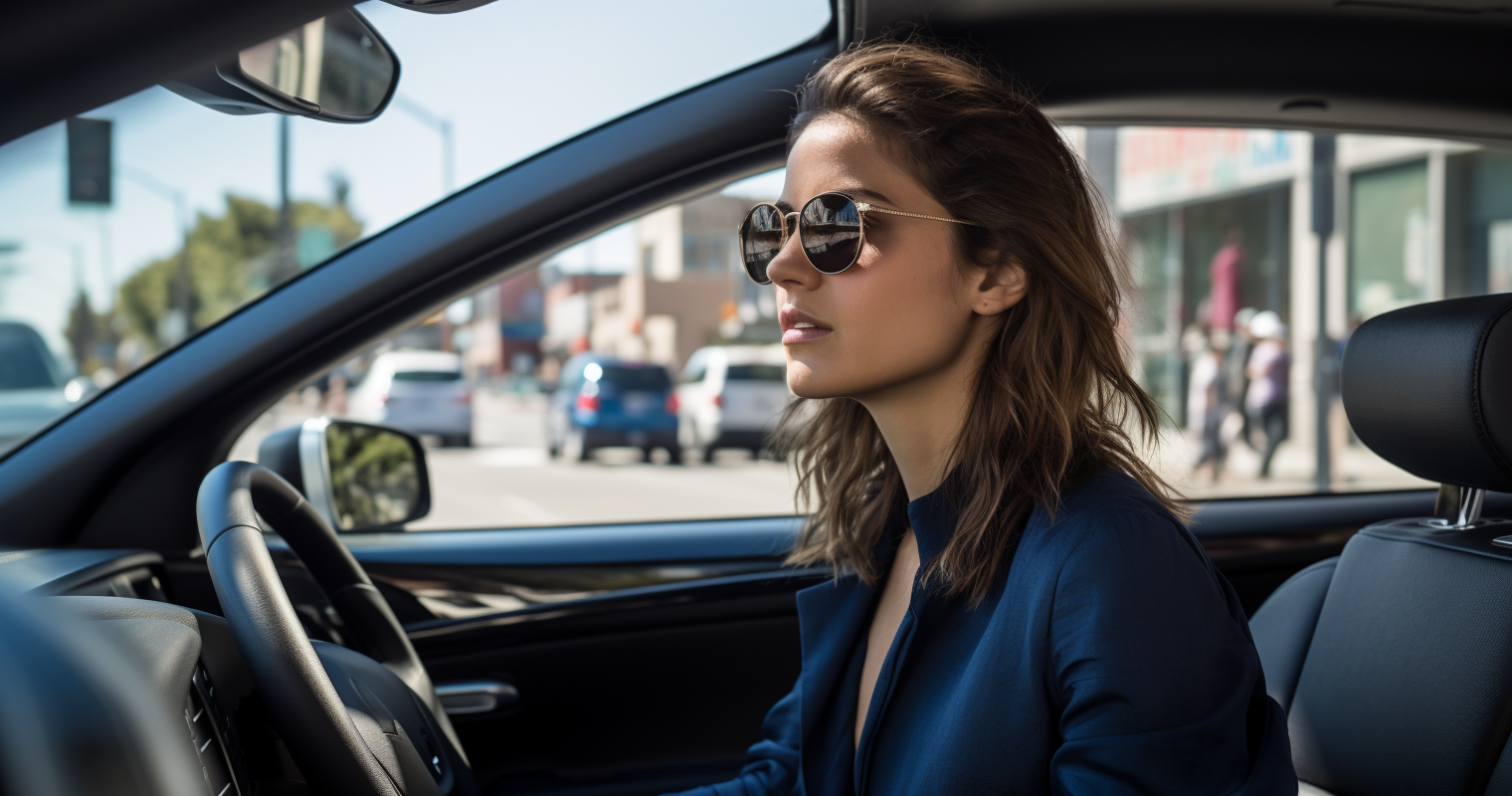
Traffic in Mexico flows on the right-hand side of the road. Licences issued abroad are generally accepted during tourist stays, but taking out Mexican auto insurance is compulsory — foreign policies carry no legal weight in the country. Speed limits, drink-drive thresholds, and the condition of roads all differ considerably depending on where you are. Toll motorways provide the safest and best-maintained driving experience, whereas secondary and rural routes demand considerably greater caution.
| Item | Details |
|---|---|
| Side of the road | Right-hand side |
| Speed limits (as of 2024) | Urban: 40–50 km/h; Rural/open roads: 80–90 km/h; Motorways: 100–110 km/h |
| Blood alcohol limit (as of 2024) | 0.5 g/l in blood (federal standard); some states differ — always check locally |
| Foreign licence validity | Valid for tourists for duration of permitted stay (typically up to 180 days); residents must obtain a Mexican licence |
| Mexican insurance | Mandatory — overseas policies are not valid in Mexico |
| Emergency number | 911 (national emergency number for police, ambulance, fire) |
Is Mexico safe to drive in?
Road safety is a serious issue that newcomers to Mexico need to confront early. The “Report on the State of Road Safety in Mexico 2022” recorded 14,715 road fatalities in 2021, equivalent to a rate of 11.4 deaths per 100,000 inhabitants. Estimates suggest that around 44 people lose their lives on Mexican roads every single day, and approximately 40% of those victims are young adults of working age. These numbers are substantially higher than those found in Western Europe or Australasia, and expats should recalibrate their expectations from the outset.
Vulnerable road users — motorcyclists, pedestrians, and cyclists — made up 81% of all traffic fatalities between 2019 and 2022, with motorcyclists alone accounting for 47% of that total. This highlights how important it is for all drivers to remain acutely aware of two-wheeled road users, particularly in urban environments.
Road infrastructure across the country spans a wide spectrum of quality. Mexico operates an interstate highway network comprising both toll roads (cuotas) and free roads (libres). The toll roads are constructed using contemporary engineering standards and are perfectly suited for motorway-speed travel. They typically link major urban centres — such as the Guadalajara–Mexico City corridor — while the free roads branch out into rural areas and towards the coast. The federal body responsible for road infrastructure is the Secretaría de Infraestructura, Comunicaciones y Transportes (SICT).
Road quality is one of the most notable challenges for drivers in Mexico. While certain routes are kept in good repair, many others are characterised by potholes, uneven surfaces, and inadequate signage — conditions that become considerably more treacherous during heavy rainfall or after dark. Anyone accustomed to the predictable markings, consistent lighting, and well-maintained surfaces of Western European motorways will find Mexico’s rural and secondary roads markedly more unpredictable.
The US Department of State recommends using toll roads wherever possible for their superior safety record and road conditions. This advice is especially relevant outside major cities, where emergency and police services may be thin on the ground. If free roads or rural routes cannot be avoided, it is strongly advisable to complete all journeys before nightfall.
Data from the Mexican Transportation Institute (IMT) attributes 32% of driver-related accident causes to what is described as “recklessness or intention.” Speeding, ignoring traffic signals, and unpredictable lane changes are widespread. In response, the Mexican government developed its National Strategy for Mobility and Road Safety (ENAMOV), and in October 2023 it published the National Strategy for Mobility and Road Safety 2023–2042, marking a significant new commitment to improving conditions on the country’s roads.
What side of the road do you drive on in Mexico?
In Mexico, vehicles travel on the right-hand side of the road, and overtaking is carried out on the left. This is the same convention followed throughout most of the Americas, continental Europe, and numerous other regions worldwide. Drivers arriving from countries where traffic keeps to the left — such as the United Kingdom, Japan, Australia, or India — will need time to adapt before they feel fully comfortable.
The most frequent errors made by drivers transitioning between sides involve turning into the wrong lane when pulling away from a stop or negotiating a roundabout, and misjudging the vehicle’s position relative to the road edge when overtaking. Particular care is needed at intersections, on quiet stretches where ingrained habit can reassert itself, and when leaving petrol stations or car parks. Sticking a small reminder note on the dashboard for the first few weeks is a practical precaution many expats find helpful.
Even seasoned right-side drivers may encounter some uniquely Mexican road conventions that take adjustment. On roads and highways, indicating with a turn signal carries a different meaning than in many other countries. If the driver ahead of you activates their left-turn signal, they are generally signalling that it is safe for you to overtake — not that they intend to pass the vehicle in front of them. This convention is the reverse of what drivers from many other countries would instinctively expect and can cause confusion initially.
Rather than using exit ramps or overpasses to cross to the opposite direction of travel, Mexico employs a “return system.” Designated areas along major roads allow drivers to pull over and execute a U-turn just beyond their intended exit point. This arrangement takes some getting used to, especially on busy urban expressways.
What are the main driving rules in Mexico?
The framework for road rules across Mexico is established by the General Law on Mobility and Road Safety, enacted in 2022, with individual states able to expand on these provisions at a local level. As of June 2024, sixteen states had revised their own legislation to better align with the national law. Because state-level rules can differ, drivers are advised to familiarise themselves with local regulations for every area they plan to travel through.
Speed limits
National maximum speed limits are set at: 40 km/h within cities; 80 km/h on open roads outside built-up areas; and between 100 and 110 km/h on highways. In practice, city limits vary considerably depending on road type. In Mexico City, for instance, ring roads such as the Circuito Interior or Periférico are limited to 80 km/h; primary roads carry a maximum of 50 km/h; side streets are capped at 40 km/h; traffic-calmed areas at 30 km/h; and school zones, hospitals, nursing homes, and residential complexes are subject to a 20 km/h limit. Posted signs are the final authority and should always be observed.
Mobile phones
Operating a mobile device without a hands-free system while driving is prohibited throughout Mexico. No driver may use a phone or any other communication device while the vehicle is moving. Fines apply, and enforcement has become more rigorous in recent years, most notably in urban centres.
Drink-driving
Under Mexico’s Law of Mobility and Road Safety, it is illegal to drive with a blood alcohol concentration exceeding 0.25 mg/l in exhaled air, or 0.5 g/l in blood, with no distinction made for novice or young drivers. This threshold broadly mirrors the legal limit applied in many European countries and is more restrictive than certain other jurisdictions. State regulations may set different limits, so it is worth confirming the rules applicable to the specific state you are driving in. DUI checkpoints are frequently set up, and breathalyser tests are routinely administered.
Seatbelts and child restraints
All vehicle occupants are required by law to wear a seatbelt. Children under 7 years of age — irrespective of their weight — and any child weighing less than 60 pounds must travel in an appropriate child restraint, whether rear-facing, forward-facing, or a booster seat suited to older children. Precise requirements around child seats can vary between states, so checking local rules before any journey is sensible.
Right of way and other notable rules
Turning right at a red light is not permitted unless an additional sign or signal explicitly authorises the manoeuvre. This differs from the rules in some other countries — certain Canadian provinces and US states, for example, allow a right turn on red as a general principle. In Mexico, pedestrians hold the highest priority under traffic law. An oncoming vehicle flashing its headlights is a signal to slow down, which may indicate a narrow section ahead, a road hazard, or a police checkpoint.
Speed bumps (topes)
Speed bumps are called topes in Mexico and appear on roads throughout the country, with the notable exception of toll roads. Topes represent a genuine hazard: they are frequently unmarked, and even when signposted, their dimensions vary so considerably that drivers unfamiliar with a stretch of road can sustain damage to their vehicle — or worse — if they fail to slow down in time. Reduce speed significantly when approaching towns and villages, and use the behaviour of drivers ahead of you as a guide.
What equipment are you legally required to carry in your car in Mexico?
Mexico’s federal requirements for vehicle equipment are less detailed than those of some other countries — France, for example, mandates a breathalyser and high-visibility vest by law, while Germany requires a first aid kit and warning triangle as standard. Mexico’s federal rules concentrate primarily on insurance documentation and basic safety equipment, though state-level requirements may add to this. Regardless of strict legal obligations, carrying the following items is strongly recommended for all drivers:
- Valid driving licence — your home-country licence, and ideally an International Driving Permit (IDP) as a translation
- Passport or valid ID — required at police checkpoints and to be presented alongside your licence
- Vehicle registration documents — proof of ownership or rental agreement
- Mexican auto insurance certificate — mandatory; overseas policies are not valid (see below)
- Warning triangle(s) — highly recommended to alert other drivers in the event of a breakdown
- High-visibility vest — a reflective vest for drivers is required in case of an emergency, and is standard safety practice
- First aid kit — strongly advised, especially for long or rural journeys
- Fire extinguisher — recommended for all vehicles, and required for certain commercial vehicles under federal regulations
- Spare tyre and jack — essential given road conditions on secondary routes
Any foreign driver must have their valid driving licence accessible at all times, together with an international driver’s licence if required, a passport, vehicle registration papers, proof of auto insurance, and evidence of ownership or a rental agreement. Always carry physical copies of these documents — digital versions alone may not be accepted at police or military checkpoints.
Foreign-registered vehicles entering Mexico beyond the immediate border zone require a Temporary Vehicle Importation Permit (TVIP). This document confirms that you are in Mexico on a temporary basis and will be returning the vehicle when you leave. The TVIP is valid for up to 180 days and can be arranged at the border crossing or online ahead of your trip. For current requirements and fees, consult the Servicio de Administración Tributaria (SAT) or Banjército.
What are the most important road signs in Mexico?
Mexico’s road signs and traffic signals follow international conventions. As a signatory to road sign standards broadly aligned with international norms, the country uses shape and colour coding that will be recognisable to most drivers from around the world. That said, all text on signs appears in Spanish, which makes learning some key vocabulary before you drive an important step.
Key sign categories and terms every driver in Mexico should know include:
- ALTO — Stop (the equivalent of “STOP” on a red octagonal sign)
- CEDA EL PASO — Give way / yield
- LIMITE DE VELOCIDAD — Speed limit (circular sign with a number in the centre)
- NO REBASE — No overtaking
- UN SOLO CARRIL — Single lane ahead
- CONSERVE SU DERECHA — Keep right
- NO ESTACIONARSE — No parking (red circle with a white horizontal bar)
- TOPE — Speed bump ahead
- CURVA PELIGROSA — Dangerous curve ahead
Cautionary signs — typically rendered in orange and yellow — alert drivers to upcoming hazards or situations requiring action, such as road works, school crossings, or speed bumps. Regulatory signs — displayed in red and black — govern traffic behaviour and encompass speed limit signs, Stop signs (ALTO), and Give Way signs.
Traffic lights in Mexico use the same colour scheme seen in most parts of the world: red means stop, green means go, and yellow signals caution. Some traffic lights include a flashing green phase, which indicates that drivers should proceed carefully while yielding to other vehicles and pedestrians. In Mexico City specifically, a yellow light is treated as a stop signal rather than a prompt to slow down in preparation for stopping.
Right turns at red lights are legal in some states but prohibited in others, so never assume the same rules apply across the country. When uncertain, simply wait for a green light before proceeding.
What must you do if you have a road accident in Mexico?
The obligations following a road accident in Mexico differ in important respects from the procedures most expats will be used to in their home countries. Knowing what to do before an incident occurs is essential. As of 2025, the steps below reflect standard practice, but always confirm current procedures with your insurer upon arriving in the country.
- Stop your vehicle — Never leave the scene of an accident, regardless of how minor it may appear. Fleeing the scene is a criminal offence under Mexican law.
- Call emergency services — Dial 911, the national emergency number, to reach police, ambulance, or fire services. The Guardia Nacional (National Guard) patrols federal highways and serves as the primary authority for road incidents outside urban areas. Within cities, contact the local municipal transit police (policía de tránsito).
- Do not move the vehicles — Unless instructed otherwise by police, leave all vehicles in position so that a proper scene assessment and official report (acta de accidente) can be completed.
- Exchange information — Obtain the name, contact details, vehicle registration number, and insurance details of the other driver. Photograph all vehicles involved, the scene, and any visible damage.
- Contact your insurer immediately — Proof of Mexican insurance must be carried at all times, as overseas policies are not valid in Mexico. Driving without a Mexican policy and being involved in an accident could leave you personally liable for all damages. Call the claims line printed on your Mexican insurance certificate without delay.
- Obtain a police report — A formal police report (acta de accidente de tránsito) is required to process any insurance claim. Do not sign any document you do not fully understand before seeking legal or consular advice.
- Seek legal advice if in doubt — In accidents involving injury or significant damage, it is advisable to contact your country’s consulate or embassy and engage a local lawyer, as Mexican law may differ considerably from what you are accustomed to.
Some insurers may request both your home-country licence and an IDP — this is more common when official accident reports are in Spanish or when additional documentation is needed for verification purposes. Keep all relevant documents within easy reach at all times.
The national emergency number in Mexico is 911, connecting callers to police, ambulance, and fire services. The Guardia Nacional handles incidents on federal roads. For roadside assistance on toll highways, the Ángeles Verdes (Green Angels) service — run by the Secretaría de Turismo — provides free mechanical help and first aid along major routes. They can be reached on 078 or through their dedicated app.
Where can you find up-to-date road traffic information for Mexico?
Staying informed about road conditions in Mexico is straightforward thanks to a range of websites and apps. The tools most widely relied upon by residents and expats are outlined below:
- Waze — Hugely popular across Mexico, with an active user community supplying real-time reports of accidents, police checkpoints, road closures, and speed cameras. Particularly dependable in major cities.
- Google Maps — Widely used for navigation and live traffic updates. Together with Waze and local news apps, it provides real-time intelligence on road conditions and areas of concern.
- C5 / C4 Control Centres — Several Mexican states operate C4 or C5 urban control centres that publish live incident data. C4 Jalisco, for example, regularly shares traffic updates for the state of Jalisco via social media channels.
- SICT toll estimator app — This Mexican government application allows drivers to calculate toll costs for planned routes and also provides road condition and route information. Further details are available at sct.gob.mx.
- Local radio — AM and FM traffic services broadcast regularly in major cities including Mexico City, Guadalajara, and Monterrey. Stations such as Formato 21 (790 AM) and W Radio carry frequent traffic bulletins.
- Offline maps — Downloading offline maps for your intended route before setting off is highly advisable, since mobile data coverage is often intermittent along many roads, and you may find yourself unable to access navigation information while driving.
For official highway information, consult the SICT website or the Mexican government portal (gob.mx). Always verify that any websites or links you rely on are current and official, as government web addresses are occasionally updated.
How does parking work in Mexico?
Finding and managing parking in Mexico — particularly in cities — can be a challenge. Arrangements differ considerably between cities and even between individual neighbourhoods, so learning the local conventions wherever you live or visit will save you time and frustration.
On-street and paid parking
Paid parking in urban areas is typically available in designated lots or multi-storey car parks (estacionamientos), which charge an hourly or daily rate. On-street paid parking zones (parquímetros) operate in many city centres, including Mexico City, Guadalajara, and Monterrey, and are managed through pay-and-display machines or parking attendants known as viene-viene. Always collect a ticket or receipt and take note of any time restrictions in force. Current parking rates change regularly, so check with the relevant local municipality for up-to-date pricing.
Time-limited parking zones exist in a number of areas, with permitted durations typically ranging from one to three hours. Drivers must be mindful of these limits and move their vehicles before they expire.
No parking rules
Parking is prohibited wherever signs indicate it. Double-parking, leaving vehicles on pavements, and blocking disabled access areas are all forbidden. Many zones are designated no-parking areas, generally identified by red kerb markings or posted signs. Vehicles parked illegally may be towed or clamped by municipal authorities; recovering a vehicle from the impound (corralón) involves a fee and can take considerable time.
Resident parking permits
Resident parking schemes are available in certain neighbourhoods, particularly in Mexico City, and are administered at municipal or delegación level. Contact your local alcaldía (borough office) or town hall (ayuntamiento) for details on current application processes, required documents, and applicable fees, as these vary across the country.
Disabled parking permits
Disabled parking badges (tarjeta de discapacidad or equivalent) in Mexico are issued at state or municipal level, typically through the state DIF (Sistema Nacional para el Desarrollo Integral de la Familia) or the relevant disability authority. Requirements and procedures differ by state. Foreign disabled parking permits are not automatically recognised in Mexico; holders should contact their local municipal authority or state DIF office to clarify whether reciprocal recognition applies or whether a locally issued permit is necessary. The gob.mx portal or your state DIF office can provide current guidance.
Can you drive in Mexico on a foreign or international licence?
Mexico’s road regulations permit drivers to operate a vehicle within the country using a licence or permit issued by the relevant authority in their country of residence or abroad, provided it corresponds to the appropriate vehicle category. In practical terms, any foreign national holding a valid driving licence from their home country and a valid passport may drive in Mexico as a tourist.
A foreign licence is typically valid for the full duration of your permitted stay as a tourist — often up to 180 days. Beyond that point, or once you register a vehicle in your own name, a Mexican licence becomes a requirement.
Do you need an International Driving Permit (IDP)?
Mexico has harmonised its driving licence system in accordance with the 1968 Vienna Convention. If you hold a driver’s licence from one of the 67 countries that have done likewise, an International Driving Permit is NOT required to drive in Mexico. Drivers from countries not on that list will need an IDP, unless a specific bilateral agreement exists between Mexico and the country that issued their licence.
Even where an IDP is not strictly obligatory, carrying one is advisable. It can simplify car hire arrangements and interactions with Mexican authorities, and it provides a useful backup when language barriers arise. Some insurers may request both your home licence and an IDP, particularly where official accident documentation is in Spanish or when extra verification is required.
How to obtain a Mexican driving licence
Anyone living and driving in Mexico will eventually need to obtain a Mexican driver’s licence. While there is no immediate obligation upon arrival, a local licence must be obtained within one year of registering a vehicle in your name.
- Gather your documents — You will typically need: a valid immigration document confirming your legal status in Mexico (such as a temporary or permanent resident card), your foreign driving licence, a valid passport, proof of a Mexican address, and a recent photograph. Requirements may vary by state.
- Visit the relevant office — Go to the state authority responsible for vehicle registration and licensing. In some states this is the Secretaría de Movilidad; in others it falls under the Secretaría de Seguridad Pública. Confirm which office handles licensing in your particular state.
- Complete a written test — A written theory examination covering road rules, signs, and safety is required. The test is conducted in Spanish.
- Pass a practical driving test — The practical element typically involves a parallel parking exercise using cones positioned 1.5 metres in front of and behind the vehicle. Instructions are given in Spanish. Candidates are permitted five manoeuvres and have three attempts in total. The final position of the vehicle is measured to confirm it is correctly centred.
- Pay the fee and collect your licence — Once you have passed, return to the office, wait for your paperwork to be processed, and settle the applicable fee. Your photograph and fingerprints will be taken, and your licence will be printed within a few minutes. Fees differ by state; contact your local Secretaría de Movilidad for current charges.
Mexican driving licences remain valid for between two and five years depending on where they are issued. A Mexican licence also functions as an accepted form of identification within the country and may be required for transactions such as opening a bank account or dealing with government agencies.
For the most current requirements in your state, contact the relevant state Secretaría de Movilidad or Secretaría de Seguridad Pública.
Frequently Asked Questions About Driving in Mexico
Is Mexican car insurance compulsory, and can I use my existing overseas policy?
Proof of insurance must be carried by all drivers in Mexico at all times. Overseas car insurance policies are not recognised in Mexico — if you are in an accident without a valid Mexican policy, you could be held personally liable for all resulting damages. Arrange Mexican auto insurance before you begin driving, either through a specialist broker or at the border crossing. Do not assume that any international extension on your existing policy provides cover in Mexico — verify this directly with your insurer.
How do toll roads work in Mexico, and how do I pay?
Mexico’s highway network is divided into toll roads (cuotas) and free roads (libres). The cost of the tolls often surprises first-time visitors, but those with experience of long-distance driving in Mexico generally consider them good value for the time they save. Tolls are paid in cash (Mexican pesos) at toll booths, or via the IAVE or TeleVía electronic transponder systems for frequent users. The Mexican government app can be used to calculate expected toll costs for your route.
What are the penalties for drink-driving in Mexico?
Being caught driving under the influence of alcohol in Mexico can result in arrest, impoundment of the vehicle, and significant fines. DUI checkpoints are operated frequently, and breathalyser tests are standard procedure. A drink-driving conviction can also severely complicate any insurance claim arising from an accident. Always nominate a sober driver or rely on a taxi or ride-share service if alcohol has been consumed.
Are there restrictions on which days I can drive in Mexico City?
Mexico City, Guadalajara, Puebla, and an increasing number of municipalities have introduced pollution-control measures that restrict which vehicles may be driven on certain days without additional permits or emissions testing. Mexico City’s Hoy No Circula (One Day Without a Car) scheme prohibits vehicles from circulating on specified days of the week based on the last digit of the licence plate and the vehicle’s emissions category. Newly arrived residents should consult the current schedule on the SEDEMA (Mexico City Environment Secretariat) website before driving in the capital.
Is it safe to drive at night in Mexico?
Night driving in Mexico carries substantially elevated risks. Highway travel after dark is best avoided — roads are frequently unlit, and hazards such as stray animals or debris can appear with little warning. Secondary and rural roads are particularly dangerous at night, with poor visibility making it even harder to spot topes (speed bumps) in time. If night driving cannot be avoided, keep to well-lit toll motorways, lock the doors, and remain alert throughout.
Do I need winter tyres or special equipment for driving in Mexico?
There is no nationwide requirement for winter tyres in Mexico, unlike countries such as Finland or Austria. However, drivers heading to high-altitude regions — including parts of the Sierra Madre, the volcanoes around Puebla, or mountain passes — during the colder months (broadly November to March) may encounter icy surfaces, snow, or frost. Winter tyres or snow chains are strongly recommended in such conditions, and some mountain routes may be temporarily closed. Always check local road conditions on the SICT website or via Waze before departing.
Can children travel in the front seat in Mexico?
Children under 7 years of age — regardless of their weight — and any child weighing less than 60 pounds must be secured in an appropriate child restraint. Children should always be placed in age-suitable seats in the rear of the vehicle. Additional rules regarding child seats may apply depending on the state, so reviewing local regulations before travelling is advisable. Contact the relevant state Secretaría de Movilidad for specific local requirements.
What is the Green Angels service and how does it work?
The Ángeles Verdes (Green Angels) is a free roadside assistance programme run by the Mexican Secretaría de Turismo. Green patrol vehicles travel federal highways during daylight hours and can help with mechanical breakdowns, flat tyres, minor repairs, fuel supply, and basic first aid. The service itself is provided free of charge, though any parts or fuel required must be paid for. They can be contacted on 078 from a Mexican SIM card, or via the Secretaría de Turismo website. Coverage is confined to the main federal toll and free highway network.