

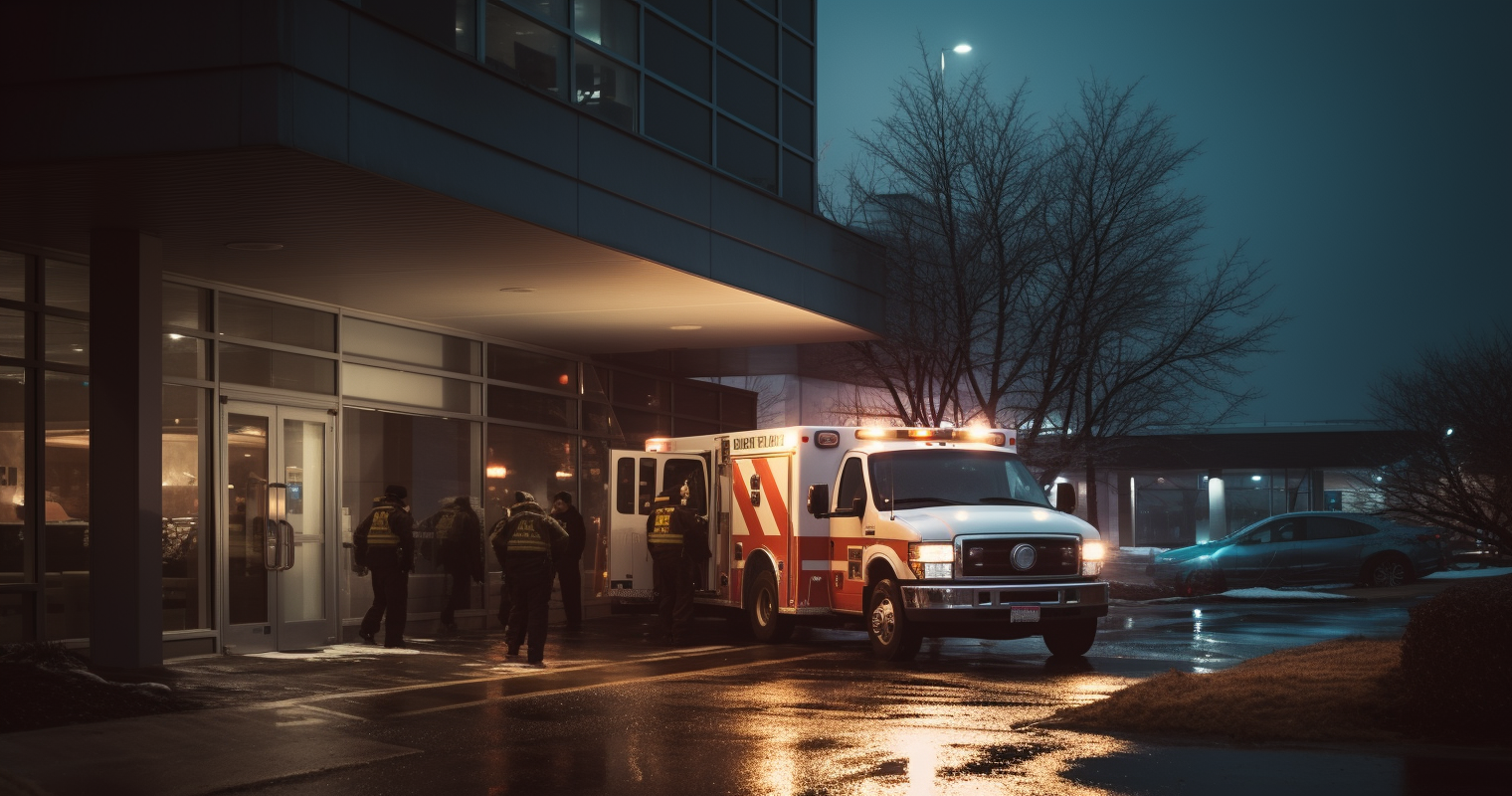
Japan operates two distinct emergency telephone numbers: 110 for police and 119 for fire and ambulance. While the ambulance ride itself costs nothing, hospital treatment always comes with a bill — discounted for residents enrolled in public insurance, but charged at the full, unsubsidised rate for tourists without coverage. Japan maintains no sweeping reciprocal healthcare treaties with other nations comparable to those within the European Union.
| Item | Details |
|---|---|
| Police emergency number | 110 (as of 2025) |
| Fire and ambulance number | 119 (as of 2025) |
| Coast guard emergency number | 118 (as of 2025) |
| Ambulance call-out cost | Free; hospital treatment costs extra |
| Resident co-payment (insured) | Approx. 30% of regulated fee (as of 2025) |
| Uninsured tourist ER cost (indicative) | ¥20,000–¥500,000+ depending on treatment (as of 2025; verify with official sources) |
| Multilingual tourist helpline | JNTO Japan Visitor Hotline: 050-3816-2787, 24/7 |
| National disaster alert system | J-Alert (push alerts to phones, TV, radio, loudspeakers) |
What is the emergency number in Japan — and are there separate numbers for police, fire, and ambulance?
Where many countries rely on a single number — such as 911 or 999 — to handle all categories of emergency, Japan assigns dedicated numbers to different services: 110 for police and 119 for fire and ambulance. Committing both to memory before you arrive could prove critical, since reaching the wrong service during a genuine crisis takes time you may not have.
If you are dealing with a fire, sudden illness, accident, or a situation requiring rescue, 119 is the number to dial. If you witness or are a victim of a crime — theft, assault, a traffic collision, or any incident requiring police intervention — call 110 instead.
A third dedicated line, 118, connects callers directly to the Japan Coast Guard and should be used exclusively for maritime emergencies: accidents at sea, rescues, and other offshore incidents. Interpreter support for non-Japanese speakers is available on this line around the clock.
Emergency calls can be made free of charge from any telephone in Japan, including public payphones. One important caveat: many corporate office telephone systems that use IP-based telephony are unable to connect to 110 or 119. It is worth confirming in advance whether your workplace landline can reach these numbers, and keeping a mobile phone to hand as a backup in case it cannot.
How do you call for emergency medical assistance in Japan, and what should you expect?
To summon an ambulance, dial 119. The line connects you to the local fire department, which is responsible for dispatching both fire trucks and ambulances. Speak slowly and clearly at the outset, indicating whether you need an ambulance (救急車です, kyuu-kyuu desu) or are reporting a fire (火事です, kaji desu).
Operators will typically respond in Japanese, though interpreter services connecting you to a third-party linguist are available in many municipalities. English is the most commonly supported language. The Tokyo Fire Department maintains English-speaking staff on its 119 line. If you are outside a major city, language assistance may take slightly longer to arrange.
During the call, you will be asked to describe the nature of the emergency — what happened, when it started, where on the body any injury or pain is located — along with your name, a callback number, and your precise location. If you cannot state a street address, describe the situation using nearby landmarks: a convenience store, a train station, a major intersection, or a distinctive building.
Ambulance crews are responsible for deciding which hospital to transport the patient to based on symptoms, available capacity, and proximity. You cannot simply request a particular facility. Before the call ends, confirm that the dispatcher has understood your location correctly, and if at all possible, send someone outside to flag down the ambulance at the nearest accessible road.
If you are uncertain whether your situation is serious enough to warrant an ambulance, some prefectures operate non-emergency telephone consultation lines for exactly this purpose. The relevant number varies by region, so check with your local municipal office in advance to find the one that applies to your area.
What should you do in a mental health crisis in Japan?
Japan does not have a single, unified national mental health emergency line equivalent to, for example, the 988 Suicide and Crisis Lifeline in the United States. That said, meaningful support options do exist. In any situation where there is an immediate risk to life — whether physical or psychological — you should call 119 for an ambulance or 110 for police, exactly as you would for any other emergency. Emergency responders can then arrange appropriate medical intervention.
Psychiatric care is covered by Japan’s public health insurance, but the mental health infrastructure has historically lagged behind the physical health system. Providers are comparatively few in number, appointments tend to be brief and focused on medication, and waiting times for non-urgent psychiatric consultations can be long. Expats accustomed to more comprehensive community mental health services may find the system less immediately accessible than they expect.
For crisis support in English, the TELL Lifeline (Tel: 03-5774-0992) has long served Japan’s international community, offering confidential telephone counselling during set operating hours. The current schedule and further information are available at telljp.com. TELL’s Lifeline Support Workers are available to listen to whatever is troubling you.
Hospital emergency departments (kyukyu byoin) are also an option during a mental health crisis. Clinical staff can carry out an initial assessment and refer you on to psychiatric services where required. Bring your health insurance card and some form of identification if you have them. As with any support service, verify the current operating hours and availability of any helpline directly before relying on it, since details can change.
Where can you go for emergency medical treatment in Japan?
In a clear medical emergency, your destination should be a kyukyu byoin — an emergency hospital operating around the clock with physicians and nursing staff equipped to handle serious and acute cases. If you have called 119, the ambulance team will transport you to whichever facility is best suited to your condition and circumstances.
For international patients in particular, JMIP-certified facilities offer a higher standard of multilingual support. JMIP — the Japan Medical Service Accreditation for International Patients scheme — accredits hospitals and clinics that meet defined criteria for accommodating overseas patients, including English-language assistance and 24-hour emergency provision. You can search for JMIP-certified institutions through the Japan National Tourism Organization’s medical institution finder at jnto.go.jp.
The JNTO’s search tool allows you to filter by region, language, medical specialty, and JMIP certification status — a valuable resource when you need a facility that can communicate with you in your own language. The tool is available in several languages.
For situations that are urgent but not life-threatening, and during regular daytime hours, general clinics (shinryojo) and hospitals (byoin) are found throughout the country. Seeing a clinic first is generally the recommended approach. Outside normal hours, emergency clinics provide care for conditions that cannot wait until the next morning. If you find yourself unable to reach emergency services directly, Japan’s neighbourhood police boxes — koban — are widely distributed and officers there can help contact the appropriate services on your behalf.
Is emergency medical treatment free in Japan, or is there a charge?
Ambulance dispatch and patient transport by fire and rescue services in Japan are provided at no cost to the patient. What is not free is the clinical treatment you receive once you reach hospital. This distinction matters: unlike some healthcare systems where emergency care itself is provided without charge at the point of delivery, Japan always bills for the medical services rendered, with the amount depending on your insurance status.
Japan introduced universal healthcare in 1961. All residents — including foreign nationals residing in the country for more than three months — are required to enrol in either the National Health Insurance (NHI) system or Employee Health Insurance (SHI) through their employer. Enrolled patients pay approximately 30% of regulated medical costs, with the scheme covering the remainder. Tourists and short-term visitors staying fewer than 90 days are ineligible for either plan and must either pay out of pocket or rely on private travel insurance.
For uninsured visitors, a first emergency room or outpatient visit at a Japanese hospital may cost anywhere from ¥20,000 to ¥50,000, depending on the treatment required and whether the facility is public or private. Accidents or sudden illnesses requiring intensive emergency care can generate bills well in excess of ¥500,000 depending on severity. These are indicative figures as of 2025 — always confirm actual costs with the treating institution at the time.
Foreign visitors who leave Japan without settling their medical bills risk being denied re-entry in the future. Japan treats unpaid medical debt as a serious matter, and this is increasingly reflected in immigration enforcement decisions.
Do expats need insurance to access emergency care — and what happens without it?
All foreign nationals who are registered residents of Japan and hold a long-term visa are legally required to participate in either the National Health Insurance (NHI) scheme or their employer’s Social Health Insurance (SHI) plan. Once enrolled, you will receive a health insurance card — keep it on you at all times. Presenting up without it at a clinic or hospital means you will be billed for the full amount, with any reimbursement for your insurance entitlement only possible after the fact.
Visitors on short-term visas are not covered by Japan’s public insurance system, making comprehensive travel insurance an absolute necessity. Your policy should cover outpatient and inpatient care, hospitalisation, ambulance transportation, and emergency medical evacuation. Carry both a printed and a digital copy of your policy details, as some hospitals may ask for proof of coverage before beginning treatment.
Arriving at a Japanese hospital without insurance or funds in a genuine emergency will generally result in treatment being provided — hospitals are not permitted to turn away patients in life-threatening situations. However, the financial liability is not extinguished. Some facilities have become more hesitant about treating uninsured patients due to accumulated experience with unpaid debts, and navigating this without coverage can be stressful even when you are unwell. Carrying even a basic travel insurance policy — and knowing the details — dramatically smooths the process.
Many long-term expats choose to supplement their public insurance with private international health insurance, which can offer broader coverage limits, direct billing arrangements with hospitals, and access to a wider network of facilities. Whether this is appropriate for your situation is a personal decision; independent financial or insurance advice is recommended before committing to any policy.
Are there bilateral health agreements between Japan and other countries?
Japan does not participate in any wide-ranging reciprocal healthcare framework comparable to Europe’s European Health Insurance Card (EHIC) scheme, under which residents of one EU member state can access state-funded healthcare in another at local resident rates. Nor does Japan have equivalent arrangements with Commonwealth nations or other major trading partners that would automatically entitle visitors to subsidised emergency treatment based on their nationality.
This is a meaningful distinction for expats who may be accustomed to such protections. Within the EU, an EHIC holder visiting another member state can access public healthcare on the same basis as a local resident. No such provision applies when visiting Japan from any country. There are some narrow bilateral agreements covering occupational injuries in specific employment contexts, but these do not function as general healthcare entitlements for tourists or ordinary residents. Always consult your home country’s embassy in Tokyo and Japan’s Ministry of Health, Labour and Welfare for the most current information on any bilateral arrangements that may be relevant to your situation, as treaty provisions can be updated over time.
The practical consequence is straightforward: if you are visiting Japan as a tourist, every medical expense is your personal responsibility unless you hold adequate private insurance. Travel medical insurance, short-term health insurance, or an international health insurance plan are the only reliable mechanisms for managing this exposure.
How does Japan’s emergency healthcare system compare to systems expats may know?
By global standards, Japan’s healthcare system is consistently ranked among the finest — distinguished by its clinical quality, technological sophistication, and its longstanding commitment to universal coverage. Since 1961, all residents, including qualifying foreign nationals, have been entitled to participate in the public health insurance system. In that sense, the model shares a philosophical foundation with fully public systems such as the UK’s National Health Service or Australia’s Medicare.
The critical operational difference is that Japan does not deliver care free at the point of use. Rather than the NHS model, in which most treatment for residents carries no direct charge, Japan employs a co-payment system. Residents pay monthly insurance premiums and then contribute 30% of the cost of each medical episode, with that cost itself tightly regulated by the national government. This structure more closely resembles the statutory insurance arrangements in France or Germany, where patients bear a fixed, regulated share of costs and insurance absorbs the remainder.
Japan’s Ministry of Health, Labour and Welfare publishes a national fee schedule that assigns a point value to every medical procedure, consultation, and prescription — one point equalling ¥10. This nationwide price control ensures that the same procedure costs the same amount regardless of which hospital performs it, a fundamental difference from markets such as the United States, where hospital pricing is largely unregulated and billing for the same treatment can vary enormously between facilities.
For uninsured visitors, Japan’s system functions much like a fully private one: the entire, unsubsidised cost falls to the patient, in a manner comparable to an uninsured individual seeking treatment in the United States. This is precisely why travel insurance is not merely advisable but practically essential for anyone visiting Japan without public health coverage.
What emergency services exist beyond medical — how do police and fire services work in Japan?
Japan’s police emergency line is 110, intended for crimes and accidents — including theft, physical assaults, road traffic incidents, and any other situation requiring immediate law enforcement attendance. Interpreter services can typically be connected to 110 calls, either through a direct English-speaking officer or via a three-way conference arrangement. Police response times in urban centres are generally swift.
An integral feature of Japan’s policing model is the koban — the neighbourhood police box. These small outposts are stationed near railway stations, in commercial districts, and throughout residential neighbourhoods. Officers conduct both day and night patrols, working to deter crime and maintain community safety. The koban is also a practical resource beyond emergencies: officers routinely assist lost pedestrians and people struggling to locate an address. This community-embedded function may differ considerably from what expats expect based on policing models in their home countries.
Fire services deploy specialised vehicles appropriate to the type of incident. High-rise buildings require ladder trucks; pump trucks carrying advanced equipment are used for larger blazes. In many incidents, both an ambulance and a fire unit may be dispatched simultaneously — you do not normally need to request both separately, as the dispatch team will determine what resources to send.
A practical consideration for anyone who may need to contact police or fire services: few frontline officers or fire department staff speak languages other than Japanese. Being able to state your address in Japanese, or having a Japanese-speaking contact who can assist you, is genuinely valuable. Save your home address written in Japanese characters as a note on your phone so it is accessible the moment you need it.
Are there country-specific emergency risks in Japan — and what warning systems exist?
Japan sits astride the Ring of Fire — the zone where multiple tectonic plates converge — and is consequently one of the most seismically and volcanically active countries on earth. The range of natural hazards that residents must be prepared for is broad: earthquakes, tsunamis, typhoons, heavy rainfall, flooding, landslides, volcanic eruptions, and severe snowfall in northern regions. These events are not statistical outliers; they are recurring features of life in Japan that demand consistent, active preparation.
In August 2024, Japan’s Meteorological Agency issued its first-ever alert warning of a possible megaquake along the Nankai Trough — a notification that was lifted after one week. Scientists place the probability of a major seismic event in that corridor within the next 30 years at between 70 and 80 percent. Separately, typhoon season runs from July through October, with storms forming over the Pacific and tracking toward the Japanese archipelago; Okinawa bears the most frequent direct impact.
To ensure that warnings reach the public rapidly during major incidents, Japan operates J-Alert — a national instant warning system that simultaneously broadcasts emergency information through television, radio, community loudspeakers, and direct push notifications to mobile phones. The system covers earthquakes, tsunamis, and civil protection events including missile threats. Alerts may interrupt television broadcasts with a scrolling message and an audible alarm.
Importantly, overseas mobile phones, MVNO SIM cards, and certain SIM-free smartphones may not be able to receive J-Alert notifications. To ensure you are not left without warning, install a disaster alert application such as the Yahoo! JAPAN disaster prevention app on your Android or iOS device. The Safety tips app, produced by the Japan Tourism Agency, delivers disaster push notifications in multiple languages and is widely recommended for all foreign residents and visitors.
Following a major disaster, a free public Wi-Fi network called 00000JAPAN (Five Zero Japan) is activated to allow broad public access to communications. Because this network is open and unsecured, you should take care to protect personal information when using it.
What should expats do to prepare for emergencies before they arise?
Advance preparation is far more effective than attempting to gather information during an active emergency. The steps below are strongly recommended for all long-term residents and extended-stay visitors in Japan.
- Register with your country’s embassy or consulate. Enrol in your home government’s citizen registration programme — the US STEP programme, for example — so that your embassy can reach you during a crisis and you receive relevant alerts. Most countries provide this service free of charge; consult your foreign ministry’s website before departure.
- Enrol in health insurance without delay. If you qualify for National Health Insurance, register at your local municipal office as soon as you have your residence card in hand. Because NHI is administered at the municipal level, you will need to re-register whenever you relocate to a different area.
- Store your address in Japanese. Being able to provide your home address in Japanese — spoken or shown on screen — when contacting 119 or 110 is one of the most practically useful things you can prepare. Save it as a note on your phone.
- Identify your nearest evacuation centre. Locate the designated emergency shelter for your neighbourhood before you need it. Evacuation maps are available from your local municipal office, and many are published online in multiple languages.
- Assemble an emergency kit. Prepare a go-bag for rapid evacuation in the event of an earthquake, fire, or tsunami. Essential utilities — electricity, gas, water — may be disrupted after a major disaster, so stock emergency food rations, water, and other supplies to sustain yourself independently for several days.
- Download disaster alert applications. Install the Safety tips app and consider a local disaster alert app as well. Confirm that your phone is able to receive J-Alert push notifications; if not, the app is your primary alternative.
- Locate your nearest 24-hour emergency hospital. Identify the closest kyukyu byoin to your home before an emergency arises, and take note of any JMIP-certified hospitals in your area that provide multilingual services.
- Save key emergency numbers to your phone. Programme 110 (police), 119 (fire and ambulance), 118 (coast guard), and the JNTO Japan Visitor Hotline (050-3816-2787) into your contacts before you ever need them.
Where can expats get official and up-to-date emergency information for Japan?
The sources listed below are authoritative starting points for emergency information in Japan. Always confirm specific figures, procedures, and contact details directly with the relevant authority, as information is subject to change.
- Japan National Tourism Organization (JNTO) — Japan Visitor Hotline: For non-life-threatening situations where you need guidance, the JNTO Visitor Hotline operates 24 hours a day, 365 days a year at 050-3816-2787, offering assistance in English, Chinese, Korean, and Japanese. Website: jnto.go.jp
- Ministry of Health, Labour and Welfare (MHLW): The ministry’s English-language website is the primary official source for information about Japan’s healthcare and insurance systems. mhlw.go.jp/english
- Japan Meteorological Agency (JMA): Monitoring weather, seismic activity, and volcanic conditions around the clock since its establishment in 1875, the JMA disseminates forecasts and disaster warnings for the entire country. jma.go.jp
- Cabinet Office Disaster Management: Japan’s Cabinet Office coordinates national disaster preparedness policy and publishes guidance for residents on how to prepare for and respond to natural disasters. bousai.go.jp
- NHK World: During a major disaster, NHK World provides continuous English-language news coverage, evacuation updates, and emergency information. nhk.or.jp/nhkworld
- Your home country’s embassy in Tokyo: Every embassy maintains emergency contact lines and citizen welfare services. Locate your embassy’s emergency contact details and store them before you need them.
- Tokyo Metropolitan Government Multilingual Guide: Although produced for the capital, much of the emergency guidance on this site is applicable across Japan. tabunka.tokyo-tsunagari.or.jp
Frequently asked questions about emergencies in Japan
What number do I call for an ambulance in Japan?
Dial 119 to request an ambulance in Japan. This single number handles both fire and ambulance dispatch. Calls are free of charge from any telephone, including public payphones.
Will I be charged for an ambulance call-out in Japan?
The dispatch and transportation service itself is provided at no charge, as ambulances operate as part of municipal fire departments. Once you reach hospital, however, you become responsible for all medical costs incurred during treatment. The journey is free; the care is not.
Can I call emergency services in Japan if I don’t speak Japanese?
Interpreter access is available on emergency lines in many parts of Japan, and in Tokyo and other major cities, English-speaking staff are generally reachable on 119. However, communication in Japanese may sometimes be unavoidable. Learning a few key phrases in advance and being prepared to describe your situation clearly can make a significant difference to how quickly your call is resolved.
Does Japan have a national health agreement with my country?
Japan does not operate broad reciprocal health arrangements with other nations comparable to the EU’s EHIC framework. Visitors bear the full cost of medical treatment unless they hold sufficient private insurance. For any specific bilateral agreement that might apply to your nationality, contact your home country’s embassy in Tokyo for current information.
What happens if I arrive at a Japanese hospital without insurance or money?
Hospitals are generally required to treat patients in genuine, life-threatening emergencies regardless of payment status. However, the financial debt is not cancelled — it remains outstanding. Some facilities have become more cautious about treating uninsured patients following repeated experience with unpaid bills. Additionally, foreign visitors who leave Japan with outstanding medical debts may face refusal of entry on future visits.
What is J-Alert and will my phone receive it?
J-Alert is Japan’s national instant warning system, used by the government to push emergency notifications — covering earthquakes, tsunamis, and civil protection events — simultaneously across television, radio, community loudspeakers, and mobile phones. Overseas handsets, MVNO SIMs, and certain SIM-free smartphones may not receive these alerts. If your device is not compatible, download a dedicated disaster alert app such as the Yahoo! JAPAN disaster prevention app as a substitute.
Is there an English-language mental health helpline in Japan?
Yes. The TELL Lifeline (03-5774-0992) offers confidential English-language telephone counselling and has supported Japan’s international community for many years. In life-threatening situations, call 119 for an ambulance. Check current operating hours at telljp.com before relying on the service, as schedules can change.
What should I do immediately after a major earthquake in Japan?
First, assess your immediate environment for hazards — fire, escaping gas, shattered glass, structural instability. Open windows or doors to prevent yourself from being trapped if aftershocks cause frames to warp. Switch on a local television or radio — including NHK World — for evacuation guidance and official instructions. If J-Alert directs you to evacuate, make your way to the designated shelter you identified in advance during your preparations.